

Walk the levee, explore the prison, taste the river breeze—you’ll find Yuma offers history, outdoor fun, and a mellow desert vibe. You’ll wander museum rooms, chase sunsets at Gateway Park, paddle quiet backwaters, and spot migratory birds in lush wetlands. Practical tips, best seasons, and a few local favorites will help you plan smartly, so keep going to map out the experiences that fit your pace and interests.
Explore Yuma Territorial Prison State Historic Park
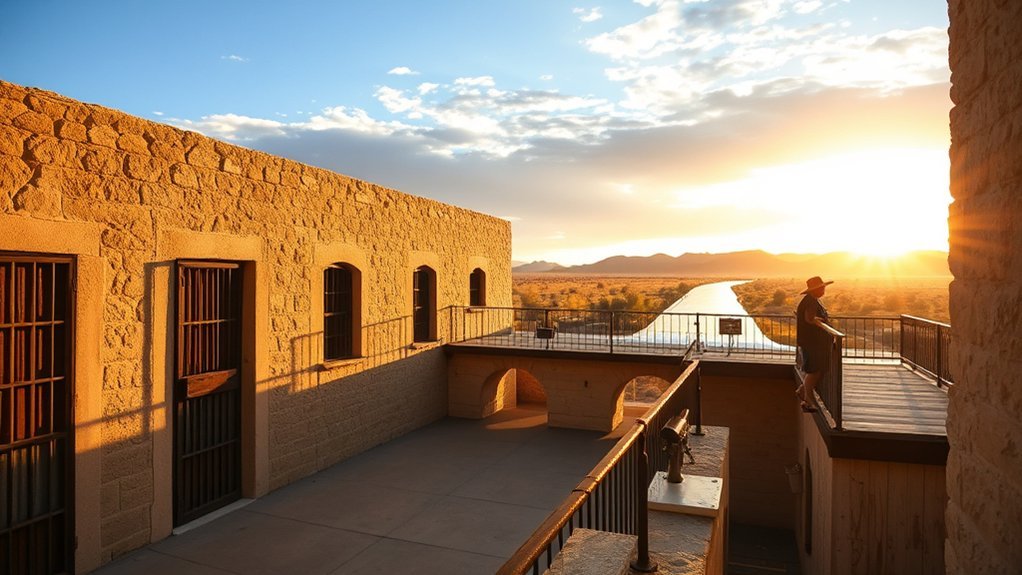
Step back into Arizona’s rough-and-tumble past at Yuma Territorial Prison State Historic Park, where you can walk through rust-streaked cellblocks, climb the guard tower for wide river and desert views, and read real inmates’ etched names on stone walls. You’ll move through narrow cells, imagining the heat and solitude prisoners endured; interpretive panels explain daily routines, crimes, and punishments, giving context without romanticizing hardship. The guard tower rewards you with a panorama that frames the Colorado River and surrounding scrub, helping you picture why this spot controlled regional movement. Don’t miss the museum exhibits displaying artifacts, original cell doors, and archival photos that track Arizona’s territorial era. Park staff often offer guided talks that point out architectural details and notable inmates, sharpening your understanding. Time your visit for cooler morning hours and bring water; surfaces heat quickly. You’ll leave with a clearer sense of frontier justice, the prison’s role in state formation, and vivid memories of a place where history feels tangible and immediate.
Walk the Yuma Crossing National Heritage Area
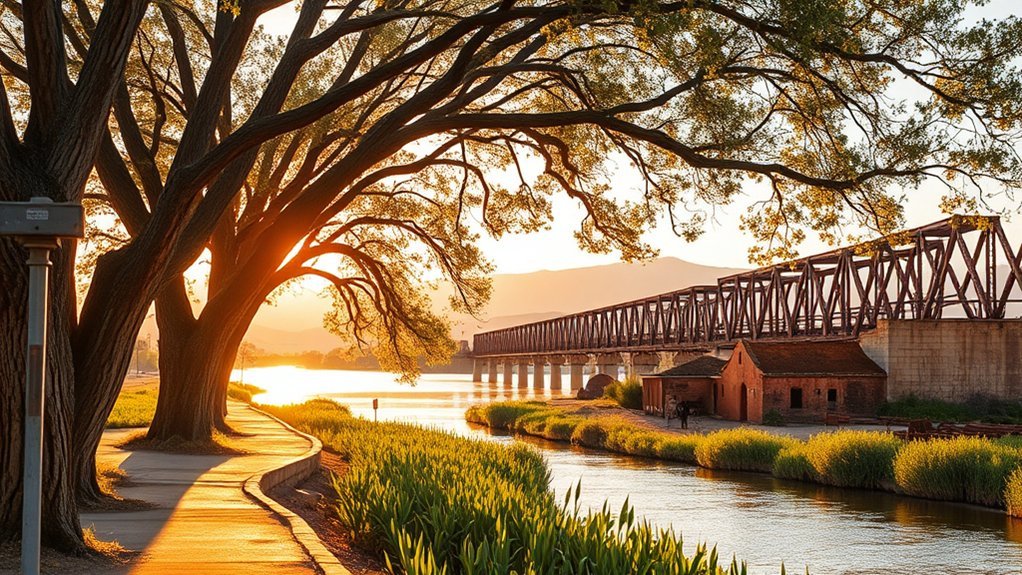
After absorbing the prison’s stark history, head to the riverfront where Yuma Crossing National Heritage Area unfolds as a living tapestry of waterways, sand, and steel. You’ll stroll levee paths, cross historic bridges, and watch barges slip past cottonwood stands. Interpretive signs explain the Colorado’s role in westward travel while plazas and restored rail artifacts anchor the past to the present. You can picnic beneath palms, photograph iron trusses, or join a ranger-led walk to learn about floods, irrigation, and Native trade routes. The site’s mix of urban park and riparian habitat makes birding and quiet reflection rewarding. Wear comfortable shoes, bring water, and time your visit for cooler morning light. Accessibility is good along main routes, and nearby cafes invite a post-walk break.
| Feature | What to See | Tip |
|---|---|---|
| Bridges | Historic trusses | Bring a wide-angle lens |
| Trails | Levee and plaza | Flat, stroller-friendly |
| Wildlife | Birds, riparian plants | Binoculars helpful |
| Interpretation | Signs, exhibits | Read before tours |
| Amenities | Benches, restrooms | Carry water bottle |
Watch Sunsets Along the Colorado River at Gateway Park
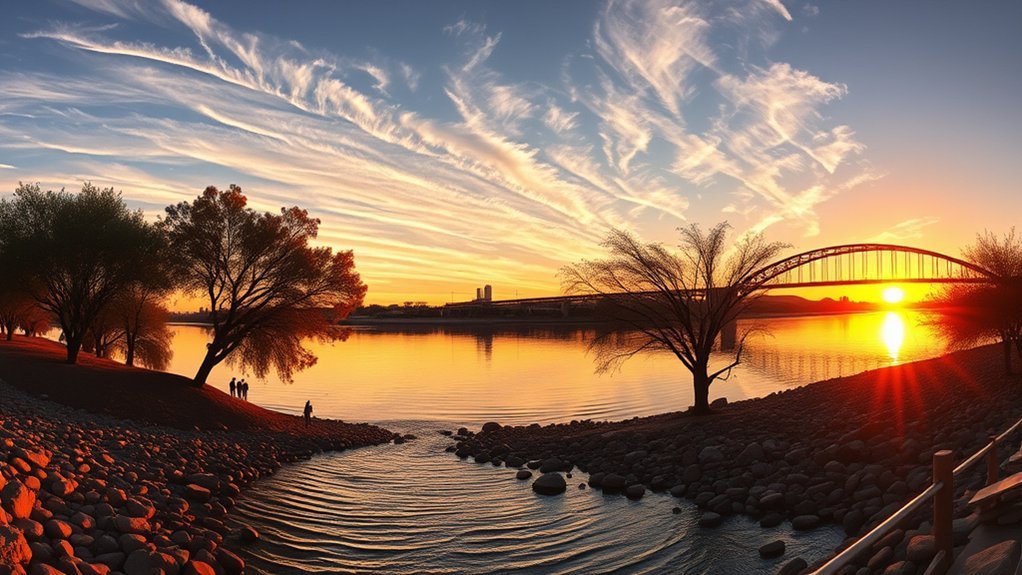
Head to the shoreline near the pedestrian bridge or the grassy knoll by the river for the best viewing spots—both offer wide, unobstructed views of the glowing horizon. Bring a blanket, a low folding table, and a small cooler for a sunset picnic so you can relax without fumbling as the light fades. Arrive 20–30 minutes early to claim a spot and watch the colors deepen while the river reflects the sky.
Best Viewing Spots
When the sky starts to melt into color, Gateway Park gives you a front-row seat to sunsets that paint the Colorado River in molten gold and violet. Walk the riverside promenade and you’ll find wide, paved viewpoints with benches oriented toward the west; they offer unobstructed vistas and easy access for cameras or a quick moment of quiet. Head to the elevated grassy knoll near the playground for panoramic sightlines and fewer people, or move toward the shaded trees along the water for cooler air and reflected color on the river. If you want a longer stretch of solitude, follow the levee path eastward until the crowds thin. Lighting changes fast—plan to arrive 30 minutes early and stay at least 20 minutes after sundown.
Sunset Picnic Tips
Gateway Park’s viewpoints aren’t just for watching— they’re perfect for settling in with a sunset picnic that makes the most of the riverlight. Bring a low blanket, collapsible chairs, and a small cooler; the river breeze can be cool after sundown. Pack easy-to-eat items: charcuterie, pre-sliced fruit, pita with hummus, and chilled lemonade or a thermos of coffee for late light. Don’t forget a light jacket, insect repellent, and a small portable light for packing up. Arrive 20–30 minutes before sunset to claim a spot with an unobstructed view and to watch color changes over the water. Leave no trace: pack out trash, recycle what you can, and respect wildlife and other visitors enjoying the dusk.
Tour the Quartermaster Depot State Historic Park

Step into the Quartermaster Depot State Historic Park and you’ll find a compact, impeccably preserved slice of 19th-century military life where officers lived, supplies were stored, and the Colorado River’s role in westward expansion becomes tangible. You’ll walk wooden floors, examine original adobe and brick structures, and imagine steamboats unloading freight nearby. Signs and displays explain logistics, daily routines, and regional strategy; docents answer questions and point out details you might miss.
| Feature | What to See | Tip |
|---|---|---|
| Commissary | Original storage rooms | Notice labels |
| Officer’s Quarters | Restored furnishings | Look for period textiles |
| Depot Grounds | Warehouses, walkways | Bring sun protection |
| Exhibits | Maps, tools, photos | Read captions |
| Visitor Center | Intro film, shop | Start here |
You’ll leave with a clear sense of how the depot shaped Yuma’s growth and the desert’s connection to national commerce.
Visit the Sanguinetti House Museum and Gardens
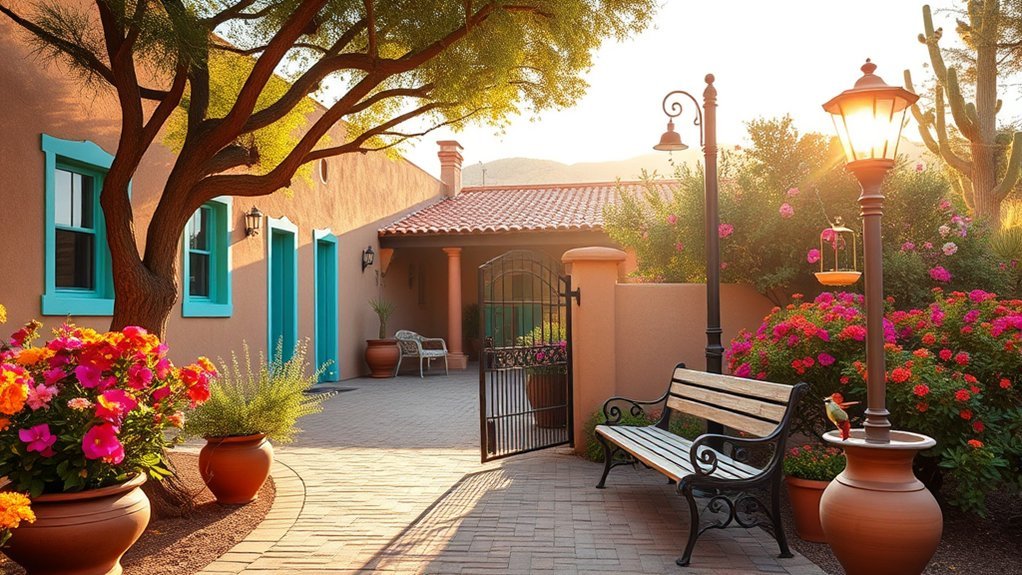
Wander into the Sanguinetti House Museum and Gardens and you’ll feel the gentle hush of a restored Victorian home where Yuma’s riverfront past comes alive; you can tour richly furnished rooms, stroll fragrant citrus and rose gardens, and learn how the Italianate mansion reflected the civic pride and commerce of late-19th-century Yuma. You’ll step through rooms that keep original wallpaper patterns, period furniture, and interpretive displays that explain daily life, river trade, and the Sanguinetti family’s role. Outside, shaded paths and espaliered citrus invite slow exploration; the scent of orange blossoms and roses makes the house’s history sensory, not just visual. Staff and volunteers share concise stories and point out architectural details — pressed tin ceilings, decorative trim, transom windows — that reveal craftsmanship and status. Before you leave, check for temporary exhibits and garden events that connect local history with seasonal blooms.
- Take a guided tour for insider stories.
- Photograph architectural details.
- Smell the citrus and rose plantings.
- Visit rotating exhibits and Garden Days.
Birdwatch at the Arizona Western College Wetlands
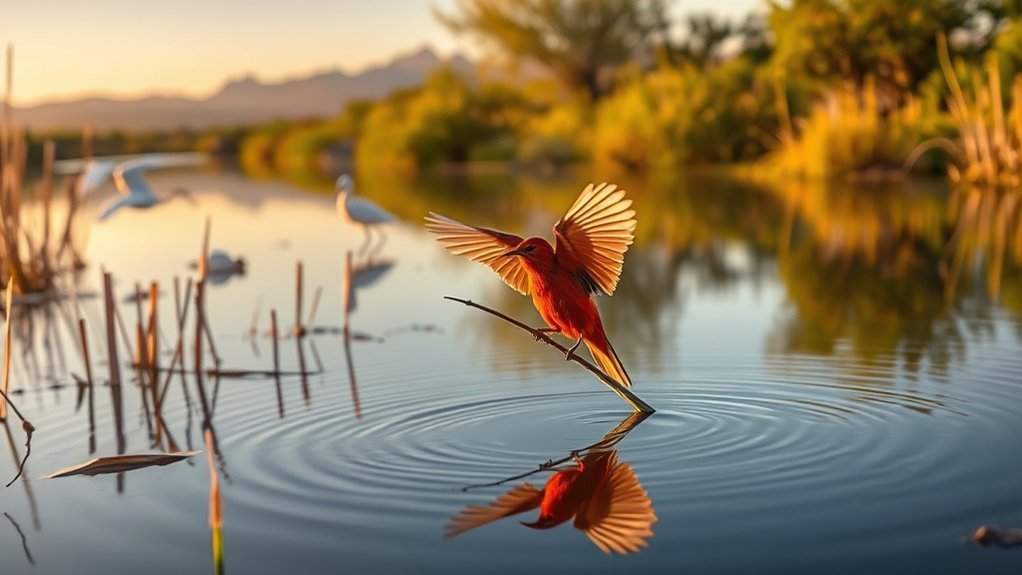
At the Arizona Western College Wetlands, you’ll find a surprisingly lush stopover where ponds, cattails, and cottonwoods attract both local resident birds and migrating species, making it an ideal spot for mornings with binoculars. You’ll stroll narrow paths and pause at observation points where herons and egrets hunt shallow water, while warblers flit through the understory. Early light highlights iridescent feathers on duck species and brings out the subtle calls of sparrows and vireos. Bring a field guide or app to help identify plumage, songs, and behavior; seasonal checklists note spring and fall migrations. The wetland’s compact size makes targeted visits rewarding—you can cover main viewing areas in an hour but linger if you find a cooperative raptor or a shy bittern. Respect posted signs, keep noise low, and stay on trails to protect nesting sites. Binoculars, a hat, water, and patience will make your visit especially productive and peaceful.
See the Historic Yuma County Courthouse Museum

A walk through the Historic Yuma County Courthouse Museum takes you into a stunning example of 1920s Mediterranean Revival architecture where original tile floors, ornate plasterwork, and sunlit courtrooms set the scene for Yuma’s civic past. You’ll explore exhibits that trace law, local government, and daily life from territorial days to the mid-20th century. Hands-on displays and period furnishings make it easy to imagine courtroom drama and courthouse routines. Docents offer context about landmark trials, restoration efforts, and the building’s role in community identity. You can study photographs, legal artifacts, and maps that reveal how Yuma shaped—and was shaped by—borderland dynamics.
- Browse courtroom galleries with original fixtures and interpretive labels.
- Read archival documents and newspaper clippings spotlighting notable cases.
- View rotating exhibits on local culture, law enforcement, and civic projects.
- Ask staff about building restoration and behind-the-scenes archival work.
Stroll Downtown Main Street and Boutiques
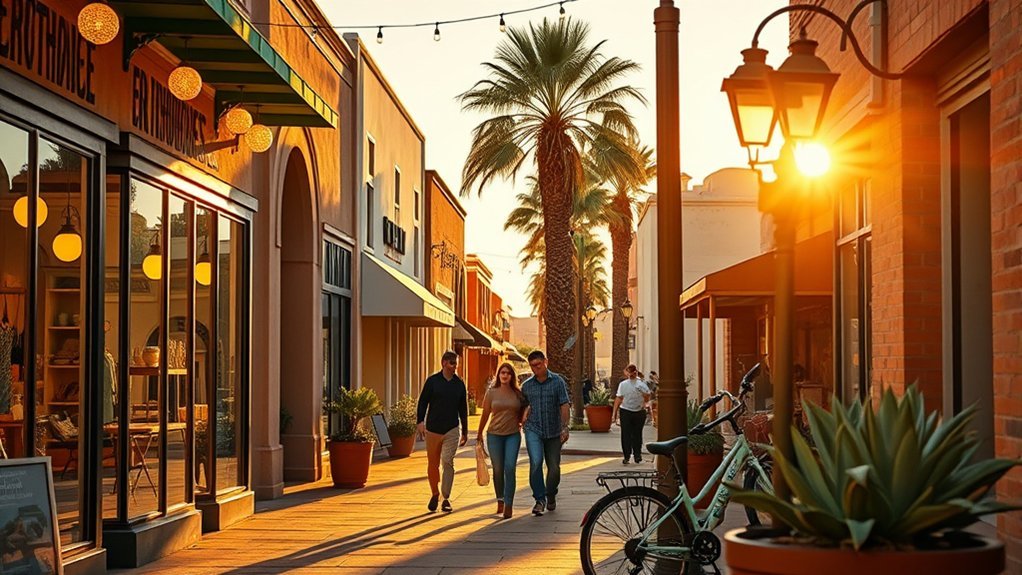
Walk down Main Street and you’ll pass restored historic storefronts and colorful murals that make for great photos. Pop into local shops and galleries to find handmade goods, then grab a coffee or craft beer at a café or brewery with a shady patio. The mix of art, shopping, and relaxed outdoor seating makes it easy to spend an afternoon exploring.
Historic Storefronts and Murals
Stroll down Yuma’s Downtown Main Street and you’ll find yourself surrounded by restored brick storefronts, vibrant murals, and independent boutiques that invite you to linger. You’ll notice period facades with decorative cornices, original tilework, and plaques that tell each building’s story. Murals splash color across alleyways and blank walls, depicting river scenes, agricultural heritage, and community faces—perfect for photos or slow appreciation. As you walk, read interpretive signs that explain historical context and artist intent; pauses reveal layers of Yuma’s past. Look up: vintage signs and wrought-iron details reward close attention. Engage with the streetscape at your own pace, and use this list to orient your stroll.
- Self-guided mural hop
- Plaque-reading stops
- Architectural sketching spots
- Photo vantage points
Local Shops and Galleries
When you wander Downtown Main Street, independent boutiques and small galleries unfold like curated discoveries—each storefront offers handcrafted jewelry, Southwestern homewares, vintage clothing, and rotating local art that reflect Yuma’s culture and climate. You’ll browse sun-faded textiles, locally thrown ceramics, and leather goods made with desert sensibility. Gallery owners chat about artists, upcoming shows, and the stories behind landscape paintings and river-inspired photography. Window displays change seasonally, so repeat visits reveal new makers. Narrow side streets hide artisan workshops where you can watch glassblowers, jewelers, or printmakers at work and ask questions. Many shops accept cards and offer shipping for larger pieces, and shopkeepers gladly point you to nearby cultural spots, making exploring feel effortless and rooted in community.
Cafés, Breweries, Patios
After browsing galleries and artisan shops, you’ll find plenty of spots to sit, sip, and soak up Main Street’s easy rhythm—sun-dappled patios, cozy cafés, and small-batch breweries line the blocks between storefronts. You can grab a strong espresso, nurse a cold IPA, or share a citrusy cocktail beneath string lights while watching pedestrians drift by. Outdoor tables invite people-watching; tiled interiors showcase local art. Baristas and brewers love to chat about origins and pairings, so ask for recommendations. Whether you want a quiet corner to read or a lively patio to meet friends, Main Street delivers.
- Try a neighborhood café for breakfast pastries and single-origin coffee.
- Sample seasonal brews at a small downtown brewery.
- Choose a shaded patio for evening cocktails.
- Ask staff about locally made food pairings.
Experience the Yuma Art Center and Cultural Events
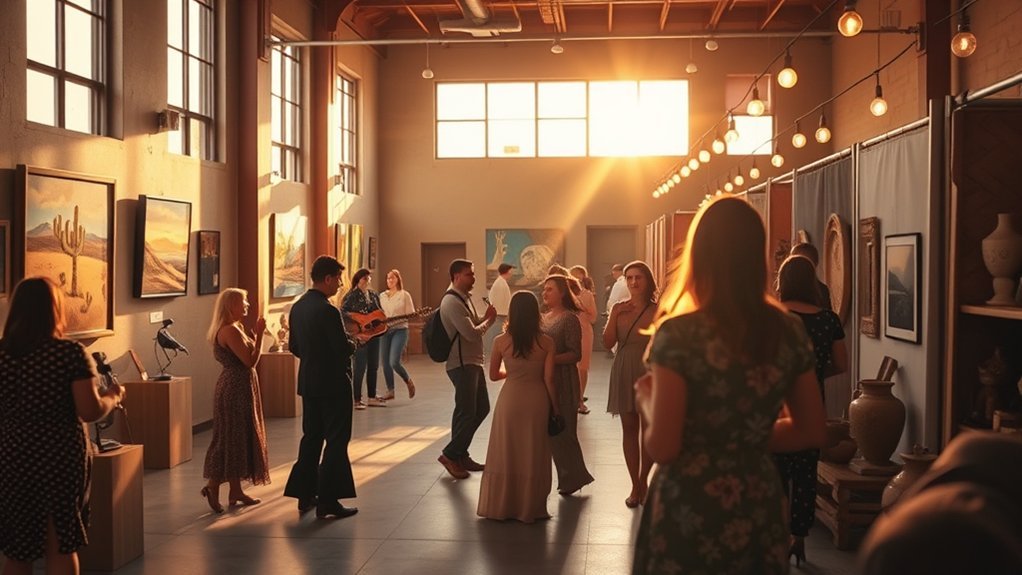
Step into the Yuma Art Center and you’ll find a lively hub where contemporary exhibits, rotating galleries, and hands-on workshops bring the region’s creative spirit to life. You’ll move through sunlit galleries hung with work by local painters, sculptors, and photographers, each piece reflecting desert textures, river landscapes, and borderland narratives. Interactive studios invite you to try printmaking or clay, guided by instructors who tailor sessions to beginners and experienced makers alike. Check the calendar for artist talks, gallery openings, and community-curated shows that offer insider context and chances to meet creators. Seasonal cultural events—film screenings, public art walks, and collaborative pop-up markets—expand the center beyond its walls into nearby plazas and historic blocks. Practical info is clear: modest admission, accessible spaces, and free parking nearby make visits easy. You’ll leave with a deeper sense of Yuma’s artistic pulse and ideas for where to explore more creative scenes around town.
Attend a Performance at the Historic Yuma Theatre

Catch a show at the Historic Yuma Theatre and you’ll feel the town’s past and present converge in an ornate, lovingly restored space that still hums with energy. You’ll step into a richly detailed lobby, feel the warmth of vintage lighting, and settle into comfy seats as velvet curtains part. Programming ranges from live music and classic films to regional theater, so you can pick a night that fits your mood. Acoustics are intimate; performers connect with the audience, and you’ll notice local pride in every clap.
- Check the calendar online for concerts, plays, and film nights.
- Arrive early to tour the lobby and spot historic photos and architecture.
- Buy tickets in advance for popular shows; walk-ups can sell out.
- Stay for post-show conversations or nearby downtown dining to extend the evening.
You’ll leave energized, having shared a cultural moment in one of Yuma’s most beloved landmarks.
Drive Out to Imperial Sand Dunes Recreation Area
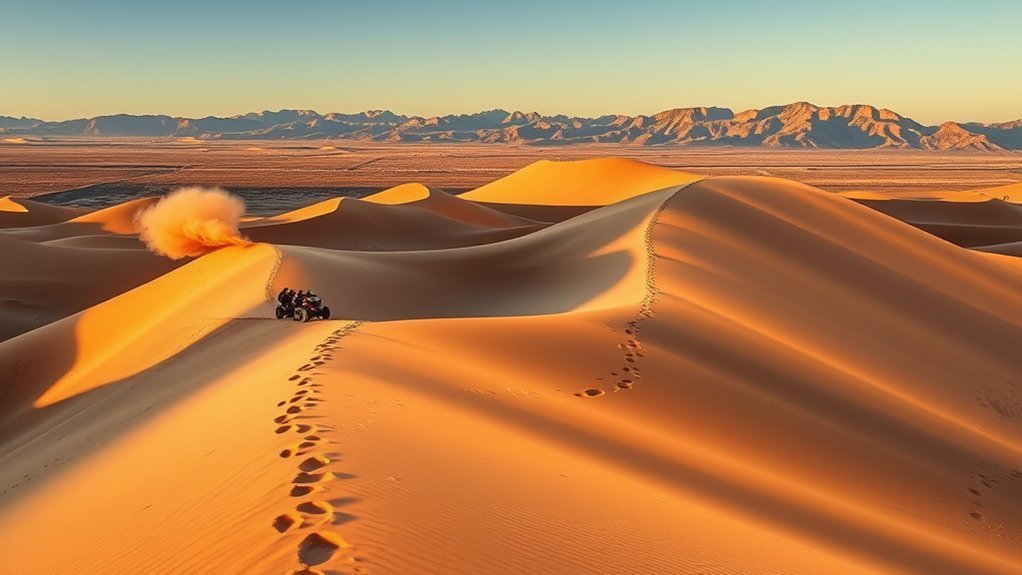
Drive out to the Imperial Sand Dunes Recreation Area and feel the rush as your off‑road vehicle climbs towering dunes and carves fresh trails across the golden landscape. You’ll find endless scenic photography opportunities at sunrise and sunset, with dramatic shadows and sweeping desert vistas that change by the hour. Before you go, check permit requirements, carry recovery gear and water, and follow safety guidelines to protect yourself and the fragile environment.
Off‑Road Vehicle Adventures
Roar across towering dunes at the Imperial Sand Dunes Recreation Area and you’ll feel why off‑roading is Yuma’s most addictive outdoor rush: the landscape stretches in golden waves, punctuated by wind‑sculpted ridges and wide, open basins that invite ATVs, sand rails, and dirt bikes. You’ll plan routes, check tide‑flat maps where needed, and tune suspension for soft sand. Expect sudden crests, suctioning troughs, and bursts of speed that demand focus and quick handling. Wear goggles, secure loose gear, and carry recovery gear and plenty of water. Respect closure signs and avoid sensitive habitat.
- Rent ATVs or join a guided tour for local tips and safe lines.
- Scout entry points and ride with a buddy system.
- Learn sand driving techniques before deep runs.
- Pack recovery kit, flag, and emergency comms.
Scenic Photography Opportunities
When you roll out to the Imperial Sand Dunes Recreation Area at golden hour, the shifting ridgelines and wind‑carved patterns turn into a photographer’s dreamscape, offering stark contrasts, long shadows, and endless compositions that change minute by minute. You’ll hike short distances to frame abstract dunes, silhouette riders, or capture reflective pools after rare rains. Bring a wide lens for sweeping vistas and a telephoto for distant textures; use low angles to emphasize curves. Watch how light sculpts the sand and how footprints create leading lines. Plan shots around changing light and wind direction, and stay mobile to chase soft hues as they evolve.
| Subject | Tip |
|---|---|
| Wide vistas | Use 16–35mm |
| Textures | Telephoto 70–200mm |
| Silhouettes | Shoot at sunrise/sunset |
| Patterns | Low angles |
| Color shifts | Bracket exposures |
Safety and Permit Tips
Although the dunes feel wild and boundless, you’ll need permits, planning, and respect for the environment to stay safe and legal. Plan ahead: check Bureau of Land Management (BLM) rules and obtain a permit if you’re using motorized vehicles; signage and rangers will point you to staging areas. Bring navigation tools, plenty of water, sun protection, and a spare tire — shifting sand can strand you fast. Travel with others and tell someone your route; cellphone coverage is patchy, so a GPS beacon helps. Avoid fragile vegetation and wildlife areas; ride only in designated corridors to prevent erosion and fines. Pack out trash and respect private property boundaries.
- Get BLM permits and check seasonal closures.
- Carry water, sunscreen, and recovery gear.
- Travel with companions and a GPS or beacon.
- Stay on designated routes; leave no trace.
Enjoy Family Fun at the Yuma Quartermaster Depot Farmers Market

Often bustling with local energy, the Yuma Quartermaster Depot Farmers Market is a perfect weekend stop for families looking to mix fresh finds with hands-on fun. You’ll stroll shady aisles of seasonal produce, colorful flowers, and artisanal goods while kids sample fruit and watch demonstrations. Vendors love to chat, so you can ask about how crops are grown, taste olive oils or honey, and learn quick recipe ideas to use what you buy.
There’s often live music and community booths offering interactive activities—face painting, craft stations, or simple gardening projects—that keep little ones engaged. Bring a reusable bag, sunscreen, and a stroller if you have toddlers; seating areas make snack breaks easy. Parking and restroom facilities are convenient, and the market’s friendly atmosphere makes it low-stress for families. Plan to arrive early for the best selection and to catch cooking demos or chef tastings that turn a trip into an educational, tasty outing.
Explore Fortuna Foothills and Panoramic Desert Views
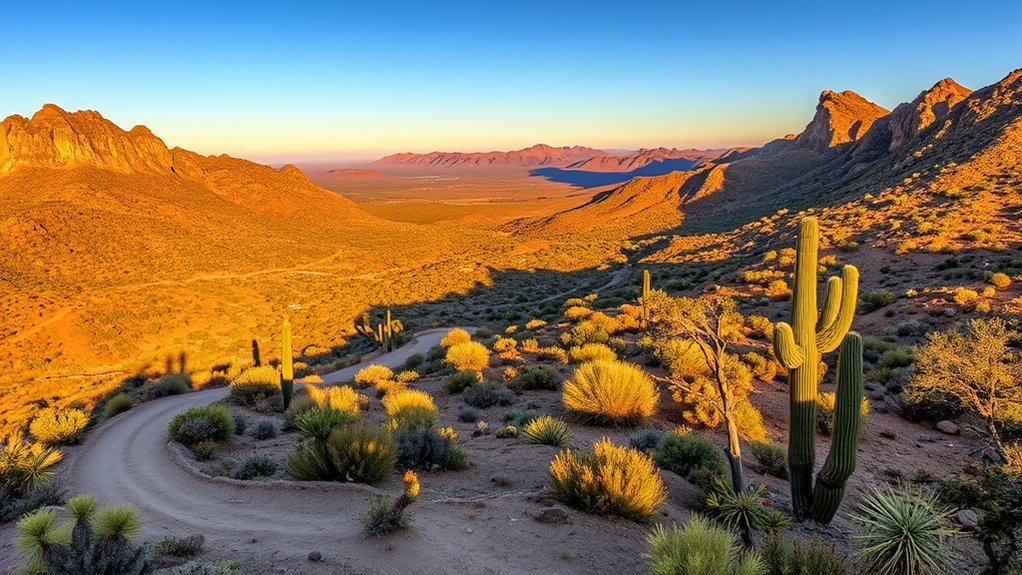
Perched on the eastern edge of Yuma, Fortuna Foothills offers sweeping desert panoramas that invite you to stretch your legs and soak in the open sky. You’ll find short hikes, rocky overlooks and quiet spots where the light turns the mountains gold at sunrise and burns deep orange at sunset. Trails are mostly easy to moderate, so you can wander among creosote and palo verde, spot lizards basking on sun-warmed stones, and feel the hush of wide, open land.
- Hike the local foothill paths for cliff-edge views and photo ops of the valley below.
- Catch sunrise or sunset from a high vantage to watch colors shift across distant ranges.
- Pack binoculars to scan for raptors, quail, and seasonal migratory birds in scrub habitat.
- Bring water, sun protection, and a map—cell signal can be patchy, and conditions are arid.
Take a Scenic Drive on the Gila River Backway
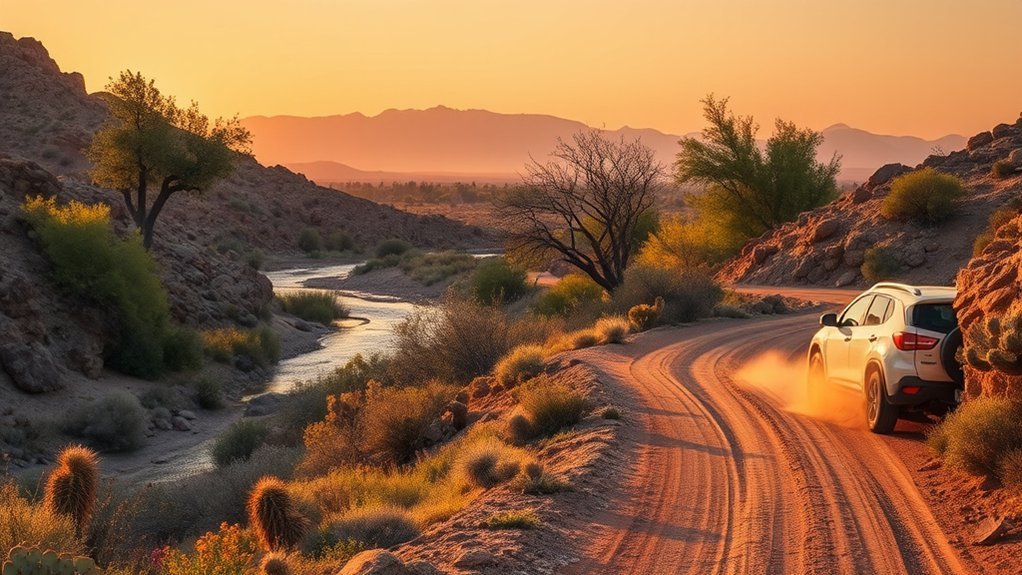
Take the Gila River Backway for a relaxed, scenic drive that traces the river’s green corridor against wide desert skies. You’ll pass cottonwood-lined bends, historic bridges, and small pullouts perfect for photos or a short walk. Keep an eye out for interpretive signs and wildlife as you stop at viewpoints to soak in the contrasts of river, farmland, and mountains.
Gila River Backway Overview
When you turn off the highway onto the Gila River Backway, you’ll immediately notice how the landscape opens up—broad riverbed panoramas, cottonwood-lined stretches, and distant mesas set a quiet, expansive tone. You’ll follow a mostly unpaved route that traces the river’s seasonal course, where wildlife activity, agricultural edges, and historic remnants reveal the region’s rhythm. The road’s low speed invites slow observation, and you can plan for short stops, respect private property, and bring water and a spare tire. Navigation is straightforward but cell service can be spotty, so download maps. Best times are cooler months and early mornings.
- Road conditions and vehicle recommendations
- Wildlife and seasonal notes
- Access points and permissions
- Safety essentials and gear
Scenic Stops & Views
After you’ve settled into the slow rhythm of the Backway, start looking for pullouts where the riverbed opens into wide views—cottonwood groves, meandering sandbars, and sunlit mesas that change with the hour. You’ll step onto sandy banks, listen to wind through leaves, and watch birds wheel over shallow channels. Bring binoculars for herons, egrets, and raptors; a camera with a zoom will capture layered textures at dawn and dusk. Read roadside signs about historic irrigation canals and native plants to understand human and natural histories here. Picnic at shaded spots, but pack out all trash and stay on designated paths to protect fragile riparian habitat. Drive slowly; the Backway rewards patience with quietly evolving panoramas and unexpected wildlife encounters.
Sail or Kayak on the Colorado River
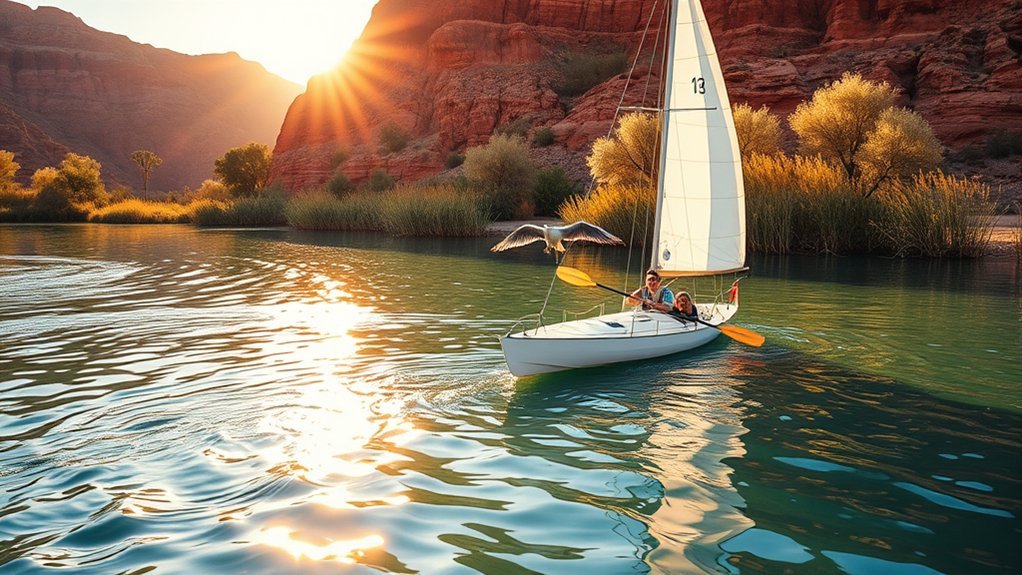
On the Colorado River you’ll find a calm, sun-drenched way to explore Yuma from the water—whether you hop into a kayak for a close-up paddle along the banks or climb aboard a sailboat for longer, breezier stretches. You’ll feel the warm breeze, watch herons lift from reedy edges, and glide past palm-lined shores and historic irrigation structures. Beginners can rent stable kayaks or join guided tours that teach strokes, safety, and how to read currents. If you prefer sailing, local charters handle rigging and navigation while you relax, sip water, and scan for wildlife. Pack sunscreen, a hat, water, and a dry bag for phones. Morning trips offer softer light and cooler air; late afternoons bring golden reflections and quieter banks. Reservations are wise on weekends and holiday seasons.
- Rent a kayak for a flexible, intimate route.
- Book a sailboat charter for relaxed cruising.
- Join a guided eco-tour for local insights.
- Time trips for morning or late afternoon light.
Taste Local Brews at Yuma’s Craft Breweries
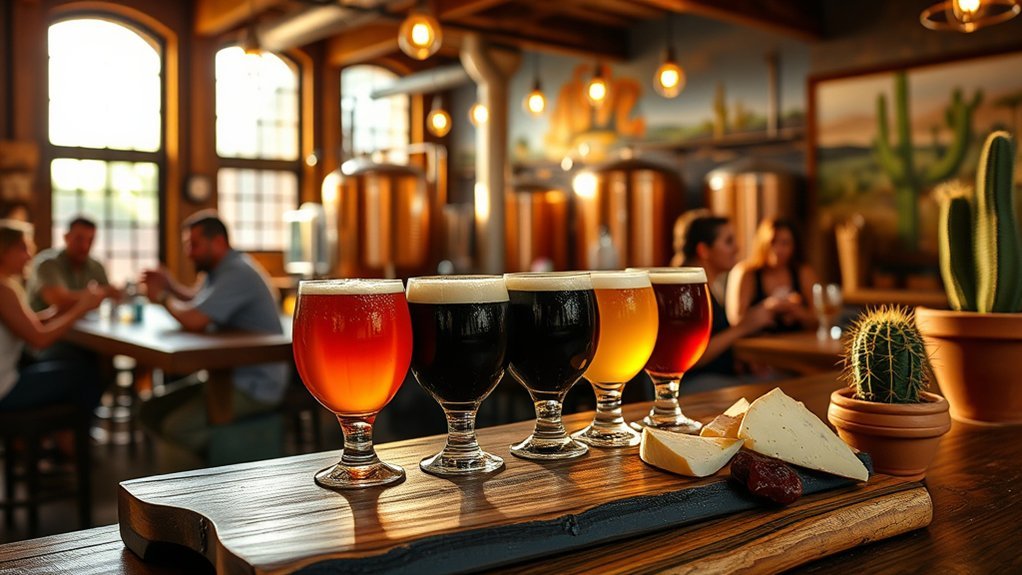
You’ll often find Yuma’s craft breweries serving up more than just beer—they’re neighborhood hubs where small-batch creativity meets desert hospitality. You’ll step into taprooms with sun-faded murals, long community tables, and the scent of toasted malt. Ask for a flight to sample sessionable pales, hop-forward IPAs, malty ambers, and surprising fruit-infused saisons brewed with local ingredients. Brewers are usually happy to chat about water sources, grain choices, and seasonal experiments — they’ll explain how heat and water shape brewing in the desert.
Sit on a patio, watch the evening light soften the industrial skyline, and pair a crisp pilsner with light bites from on-site kitchens or rotating food trucks. Look for tasting events, trivia nights, and brewery tours that show you the tanks and fermentation process. If you’re buying cans to go, check labels for ABV and freshness dates. Exploring Yuma’s breweries gives you a casual, social way to taste the region’s evolving beer scene.
Sample Sonoran-Style Mexican Food in Yuma’s Eateries

When you wander Yuma’s busy streets seeking Sonoran-style Mexican food, expect bright, savory flavors rooted in cross-border tradition and local produce. You’ll find hand-pressed flour tortillas, smoky carne asada, and grilled green chiles that taste of desert sun. Meals feel honest and homey: early-morning breakfast burritos, lunchtime menudo, or late-night tacos packed with cilantro and onion. Servers often offer salsa varieties—roasted tomato, smoky chipotle, tangy tomatillo—so you can tailor heat and acidity. Watch as chefs sear meats on flat-top grills, char peppers over open flame, and layer toppings with practiced care.
- Try a Sonoran hot dog wrapped in bacon and garnished with pinto beans, onions, and salsa for a local twist.
- Order carne asada tacos with handmade tortillas and a side of charred nopales.
- Sample enchiladas drenched in rich, slightly spicy chile sauce.
- Savor fresh ceviche or shrimp dishes that use Yuma’s produce and regional seafood influences.
Tour the Castle Dome Mine Museum and Ghost Town
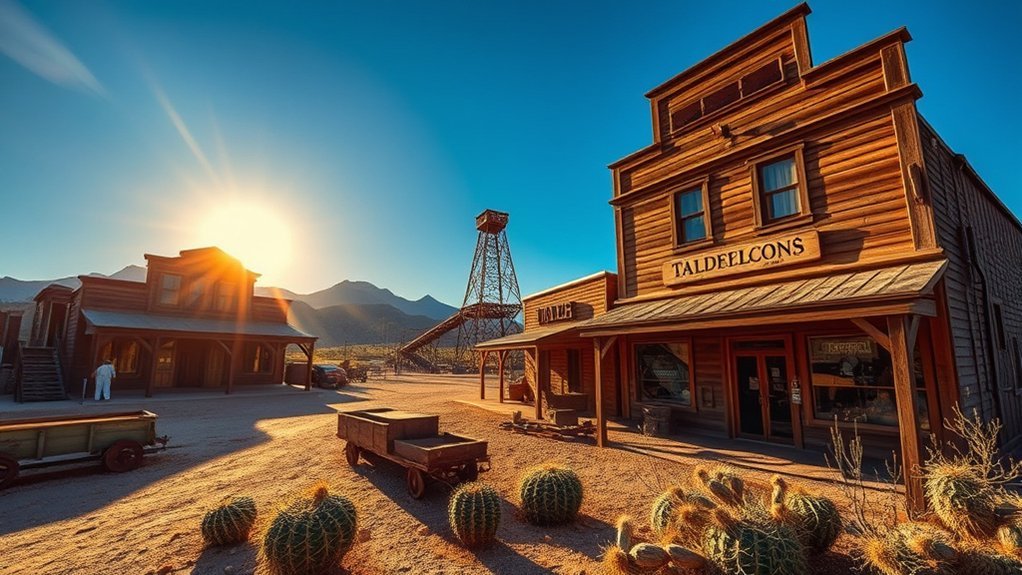
You’ll step back into the boom-and-bust era as you explore the Castle Dome Mine Museum, where interpretive displays trace the mine’s rise and fall. Wander the restored ghost town buildings to see period homes, a saloon, and mining equipment preserved in place. Try the hands-on mining exhibits to pan for ore and get a feel for the hard work miners did.
History of the Mine
Step back into the grit and bustle of a 19th-century mining camp at Castle Dome, where rusted headframes, weathered buildings, and interpretive exhibits tell the story of silver, lead, and zinc extraction that shaped Yuma’s frontier economy. You’ll learn how veins were discovered, how ore was processed on-site, and how boom-and-bust cycles dictated life here. Hands-on displays and guided interpretations reveal drilling methods, stamp mills, and the hazards miners faced. As you move through the site, imagine packed ore cars, the clang of machinery, and the community that supported extraction.
- Follow chronological exhibits tracing discovery to decline.
- Examine original mining tools and machinery.
- Hear miner stories and labor conditions.
- Learn environmental and economic impacts.
Restored Ghost Town
A stroll through the Castle Dome Ghost Town drops you into a carefully restored pocket of the Old West, where weathered storefronts, a saloon, and original miner cabins invite you to explore at your own pace. You’ll wander wooden boardwalks, peer into period rooms furnished with authentic relics, and read crisp interpretive signs that trace daily life during the mining boom. Photo opportunities are plentiful: sun-bleached facades, rusted equipment, and a scenic desert backdrop create striking compositions. Staff and volunteers often share anecdotes about residents and the town’s decline and revival, giving context without overwhelming you. The site’s layout makes self-guided exploration easy, but guided tours offer extra stories if you want deeper background.
Hands-on Mining Exhibits
Wander through the Castle Dome Mine Museum and Ghost Town and you’ll find hands-on exhibits that bring mining life to your fingertips, from hefting a miner’s pick to sifting for flakes in a replica sluice. You’ll touch heavy ore samples, listen to lived stories at restored cabins, and learn how equipment shaped daily work. The layout guides you through shafts, machinery, and artifacts so you can piece together the rhythm of mining life. Docents explain techniques and safety, and the sensory details — grit under your nails, the clank of tools — make history vivid.
- Try a sluice box to pan for gold flakes and learn basic prospecting.
- Handle genuine ore and identify minerals by sight and weight.
- Climb into a model shaft to experience cramped miner conditions.
- Watch restored machinery operate and hear explanations from guides.
Visit the West Wetlands Park and Trail System
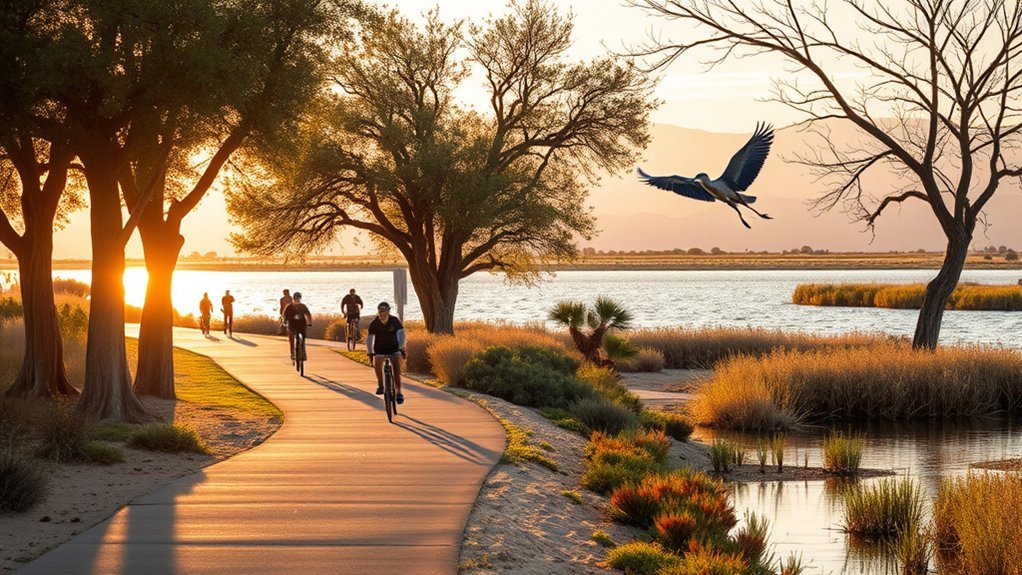
Head down to Yuma’s West Wetlands Park and you’ll find a peaceful ribbon of riverfront trails, shaded picnic spots, and wildlife viewing right by the Colorado River. You’ll walk along paved and crushed‑gravel paths that meander through cottonwoods and mesquite, watch herons and migratory songbirds from observation decks, and pause at interpretive signs that explain the river’s ecology and restoration efforts. Bring water and sun protection—river breezes cool but desert sun can be intense. You can bike, jog, or take a gentle stroller-friendly loop; several access points lead to quiet side trails and fishing spots. Picnic tables and ramadas invite a relaxed lunch while kids explore native-plant gardens and play areas. Seasonal events and volunteer cleanups let you connect with local conservation work. Parking is easy near the visitor areas, and restrooms are available. Whether you’re seeking a short nature break or a longer outdoor outing, the West Wetlands offers accessible riverfront recreation and abundant birding opportunities.
Hike in Kofa National Wildlife Refuge
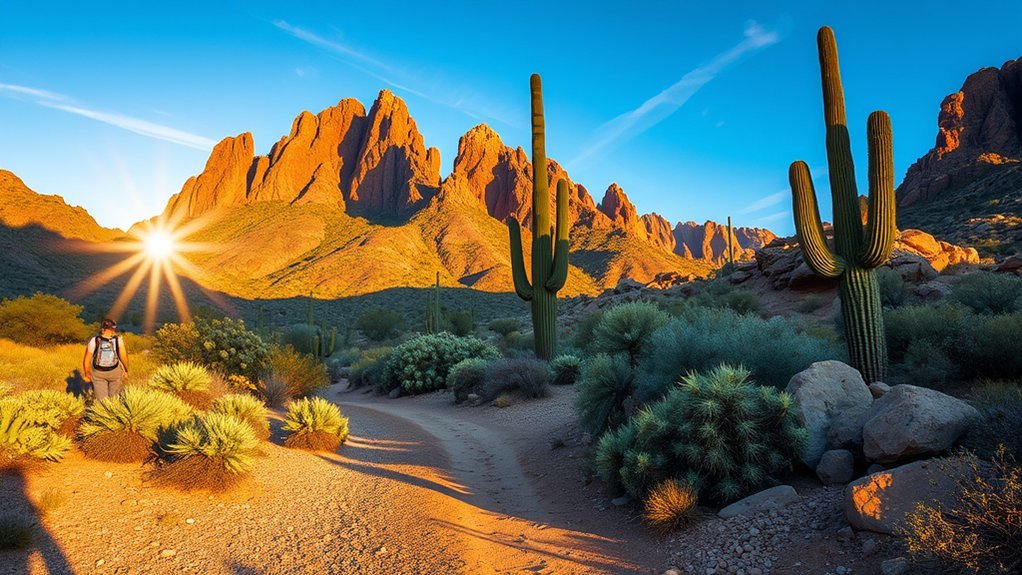
Framed by rugged granite spires and sweeping desert vistas, Kofa National Wildlife Refuge offers you a raw, sun‑baked landscape where bighorn sheep, desert tortoises, and heat‑tolerant plants rule. You’ll hike trails that climb broken ridgelines, cross washes blooming after rare rains, and open onto panoramic views that feel ancient. Pay attention to shadow and rock: wildlife uses every crevice, and you might spot sheep high on cliffs or a hawk circling thermals.
Plan for heat — start early, carry extra water, wear sun protection, and leave no trace. Trails range from easy loops to strenuous scrambles; maps and a GPS are smart since cell service is spotty. Respect closures for sensitive species and seasonal conditions.
- Choose a trail based on distance and elevation gain.
- Carry 1–2 liters of water per hour in hot months.
- Use sturdy shoes and trekking poles for rocky terrain.
- Pack a map, compass, and emergency kit.
Discover Historic Mission Sites Near Yuma
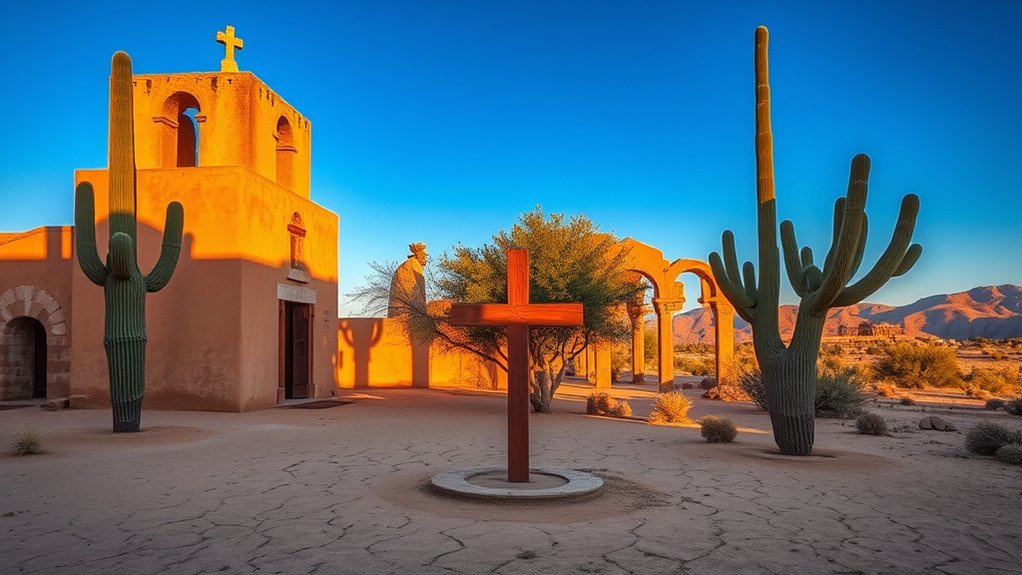
Curious about the region’s layered past? You can explore historic mission sites a short drive from Yuma that reveal Spanish colonization, Jesuit and Franciscan influence, and Indigenous resilience. Walk through adobe ruins, imagine prayer gatherings under broad desert skies, and read interpretive plaques that place each mission in chronological context. At sites like the old mission churches and mission-associated ranchos, you’ll see stone foundations, carved lintels, and restored chapels where guides explain construction techniques, water management, and mission life.
You’ll learn how missions shaped travel routes, agriculture, and cultural exchange along the Colorado River. Bring sun protection and comfortable shoes—some locations sit on uneven ground and offer limited shade. Photography is rewarding at golden hour, when warm light accentuates adobe textures. If you want deeper insight, check local museum exhibits and ranger-led talks that connect mission narratives to Yuma’s broader historical tapestry without romanticizing difficult histories. These visits give you a grounded, thoughtful view of the area’s past.
Go Fishing at Martinez Lake or Mittry Lake
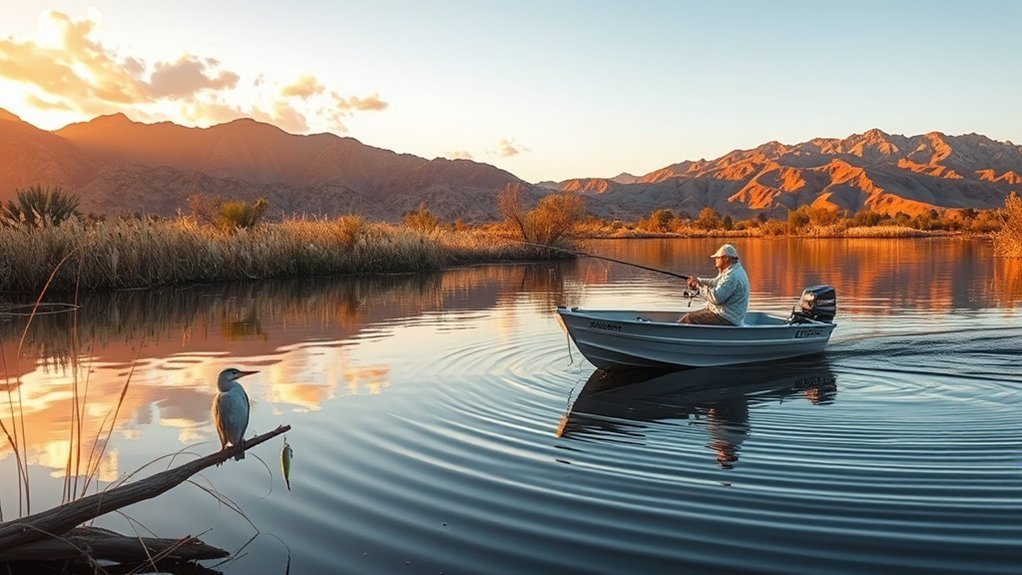
Cast a line into the calm waters of Martinez Lake or Mittry Lake and you’ll find why local anglers swear by these spots—clear shallows, plentiful bass, catfish, and crappie, and easy shore or boat access. You’ll feel the desert sun soften as ripples carry your lure; shorebank stretches invite quiet stalking while boat ramps put you in open water where schools gather. Bring polarized sunglasses to read structure, light tackle for lively bass, and heavier rigs for stubborn catfish. Watch for seasonal patterns—early morning and late afternoon give the best action.
Cast into Martinez or Mittry’s calm shallows—bass, catfish, and crappie await; dawn and dusk bring the best action.
- Pack: tackle, bait, life jacket, sunscreen, and plenty of water.
- Launch: use public ramps at either lake for quick access to prime fishing flats.
- Techniques: try topwater plugs at dawn, soft plastics near cover, and cut bait for catfish.
- Licenses: purchase an Arizona fishing license and check local regulations before you cast.
Attend Seasonal Events at the Yuma County Fairgrounds

After a morning on the water, head inland to the Yuma County Fairgrounds where seasonal events bring the community to life all year long. You’ll find a parade of experiences: spring agricultural shows where you can smell fresh hay and watch livestock judging, summer rodeos that pulse with energy under bright lights, and fall festivals full of craft booths and local food. You’ll stroll wide walkways, hear live music, and spot families lingering at artisan stalls. Practical details help plan your visit—check event calendars for dates, parking maps for easy arrival, and sunscreen for daytime outdoor events. Bring cash for rides and food trucks, and arrive early for good seating at shows. Whether you’re chasing sunset light over exhibition halls or sampling a regional treat between demonstrations, the fairgrounds give you a vivid, local snapshot of Yuma’s seasonal rhythms.
| Event Type | Sights | Tips |
|---|---|---|
| Rodeo | Dust, arena lights | Buy tickets early |
| Fair | Booths, animals | Bring cash |
| Concert | Live bands | Arrive early |
Explore the Pottery, Murals, and Public Art Around Town
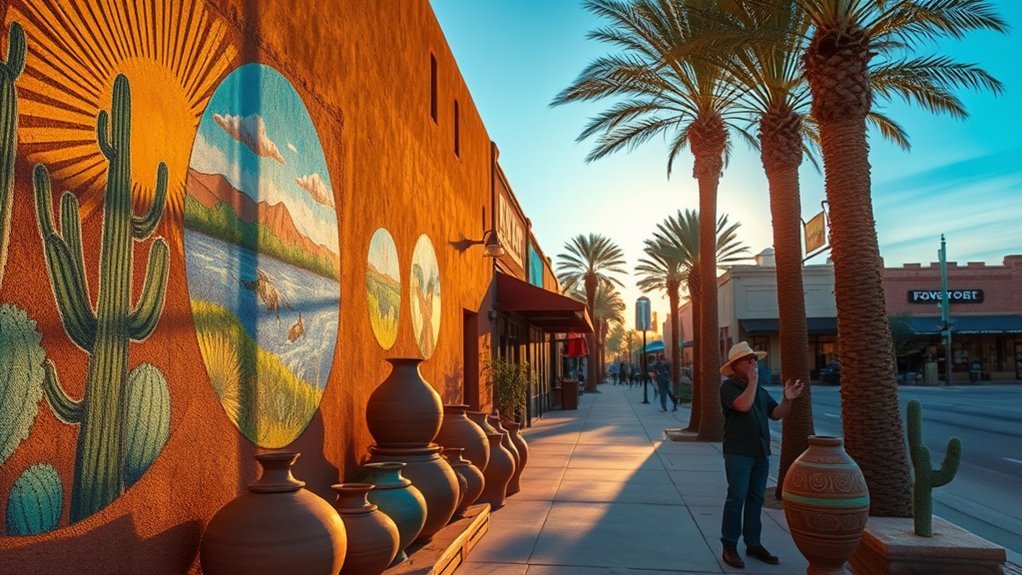
Want to wander streets where color and clay tell local stories? You’ll find pottery studios, bold murals, and inventive public sculptures that map Yuma’s culture. Walk downtown and the Historic Quarter to spot tile-adorned benches, painted utility boxes, and wall-sized narratives about river life, agriculture, and border history. Visit working studios to see wheel-throwing, glazing, and hear artists explain techniques and inspirations; many sell small pieces you can take home.
- Visit local pottery studios to watch demonstrations and buy hand-thrown bowls, tiles, and ornaments.
- Follow mural corridors to see large-format works depicting community history, migration, and desert ecology.
- Seek out public sculptures and installations near parks and plazas—each piece often has a plaque explaining context.
- Time your visit for open-studio nights or gallery walks to meet artists, ask questions, and learn about materials and methods.
This route sharpens your eye for craft, connects you with makers, and reveals stories otherwise missed on a typical tour.
Take a Day Trip to Nearby Algodones, Mexico
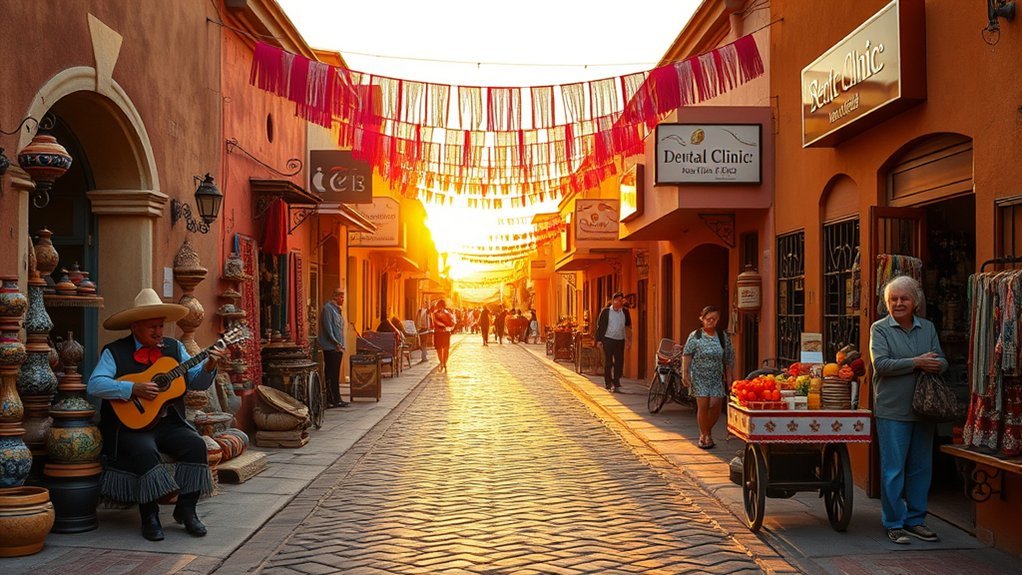
Walk across the border for a lively day trip to Algodones, Mexico, where lively streets are lined with pharmacies, artisan shops, and eateries—perfect for bargain hunting, quick dental or optical services, and sampling authentic Sonoran flavors. You’ll step into compact blocks where vendors display silver, leather, and colorful textiles; friendly haggling is part of the rhythm. Stop at a farmacia for affordable meds or at an optical shop for same-day glasses; bring cash and ask for receipts if you plan follow-up care. Taste street tacos, fresh churros, and strong coffee while you watch families and visitors mingle. Keep your passport ready, stay aware of pickpocket risks in crowds, and set a clear return time to avoid long wait times at the pedestrian crossing. If you prefer a guided visit, local tours explain history and point out trusted providers. A half- or full-day here feels efficient and lively—a cultural and practical extension of your Yuma itinerary.
Frequently Asked Questions
Are There Guided Ghost Tours After Dark in Yuma?
Yes — you can join guided ghost tours after dark in Yuma. You’ll wander historic streets, hear eerie local legends, and see lantern-lit sites; guides’ll share spooky stories, safety tips, and photo-friendly stops for memorable nighttime exploration.
What Are Typical Summer Temperatures and Heat Safety Tips?
Summers routinely hit the 100s°F (38–110°F); it’s brutal. You’ll hydrate constantly, wear lightweight breathable clothes and a wide hat, avoid midday sun, seek AC breaks, use sunscreen, and watch for heat exhaustion signs.
Is Public Transportation Available to Outdoor Sites and Trails?
A friend once waited an hour by a lone stop like a cactus — yes, you can reach some outdoor sites by Yuma Transit and regional buses, but routes and schedules are sparse, so plan transfers, timing, and summer heat carefully.
Where Can Visitors Find RV Hookups and Long-Term Parking?
You’ll find RV hookups and long‑term parking at Yuma Lake, River Island, and several private RV parks near downtown and Interstate 8; check KOA, Desert Trails, and city-run lots for rates, hookups, and seasonal availability.
Are There Seasonal Pest Concerns Like Mosquitoes or Scorpions?
Yes — you’ll encounter mosquitoes in summer and scorpions year-round; think of them as unwanted roommates. Use repellent, wear closed shoes at night, seal RV gaps, and clear debris to reduce encounters and bites.
Conclusion
You’ve seen Yuma’s history, riverfront sunsets, art, and desert wilds—now go feel it for yourself. Pack water, sun protection, and a curious mind: a picture’s worth a thousand words, but nothing beats standing where history and sky meet. Wander the levee at dusk, taste local brews, and let guides show hidden spots; each trail and museum tells a story you’ll want to bring home.