

Meguiar’s Cleaner Wax stands out as a top choice for vehicle care, offering a dual action of cleaning and protecting. This 16 oz liquid formula boasts a 4.7 out of 5-star rating, effectively eliminating fine scratches and swirl marks. Its application is straightforward, suitable for both hand use and a Dual Action Polisher. Regular application every three months can greatly enhance and maintain your vehicle’s glossy finish. Discover the specifics of its performance and benefits further.
Key Takeaways
- Meguiar’s Cleaner Wax effectively cleans, polishes, and protects in one step, simplifying car care for users.
- The product removes fine scratches and swirl marks, enhancing the vehicle’s glossy finish.
- Formulated with conditioning oils and protective polymers, it provides a durable protective layer against environmental contaminants.
- Customers appreciate its ease of application, making it suitable for both novices and experienced detailers.
- With a high rating of 4.7 out of 5 stars from over 4,431 reviews, it’s well-received for its performance and results.
Why Meguiar’s Cleaner Wax Is the Best Choice for Your Vehicle
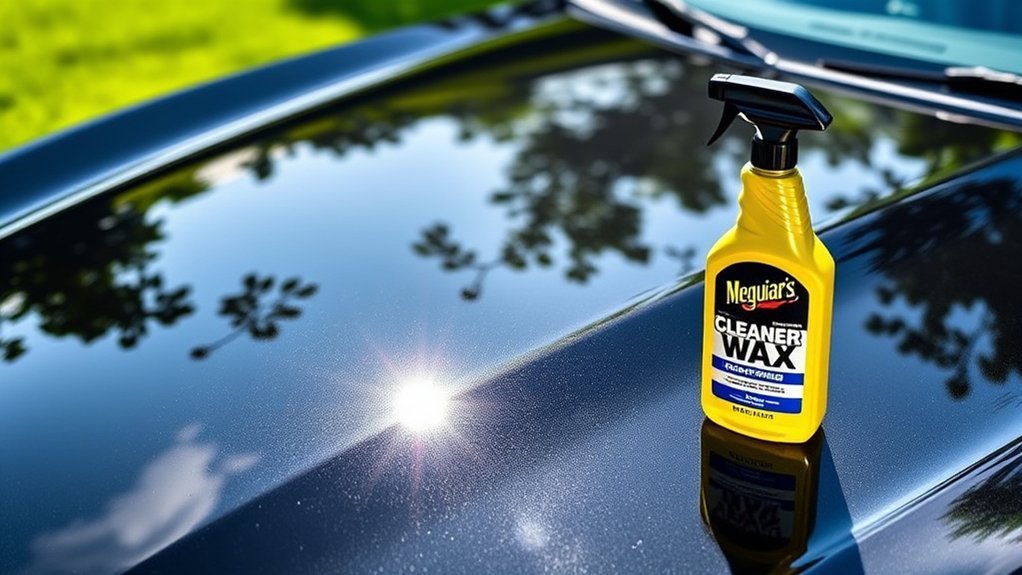
When considering the best options for maintaining a vehicle’s appearance, Meguiar’s Cleaner Wax stands out due to its multifunctional capabilities that effectively address various car care needs.
This 16 oz liquid wax excels in product comparisons, offering cleaning, polishing, and protection in one step. User experiences frequently highlight its ability to remove fine scratches and swirl marks, enhancing the vehicle’s glossy finish.
With a rating of 4.7 out of 5 stars, it has proven to be a reliable choice among DIY enthusiasts. Its ease of application, whether by hand or machine, further solidifies its status as a top-tier vehicle care solution.
How Does Meguiar’s Cleaner Wax Work Its Magic?
Meguiar’s Cleaner Wax works its magic through a carefully formulated blend of cleaning agents, conditioning oils, and protective polymers.
To achieve ideal results, proper surface preparation is essential; this involves washing and drying the vehicle thoroughly.
Application techniques vary, as the wax can be applied by hand or with a Dual Action Polisher, allowing users to select their preferred method.
As it gently removes surface contaminants, fine scratches, and swirl marks, the product enhances the paint’s appearance while providing a durable protective layer.
This one-step solution caters to those seeking an efficient way to maintain their vehicle’s finish.
The Benefits of Using Cleaner Wax on Your Car
Utilizing a cleaner wax on a vehicle offers numerous advantages that enhance both its appearance and longevity.
Cleaner wax, such as Meguiar’s, combines cleaning and protection in one step, simplifying car care. It provides effective surface protection against environmental contaminants while enhancing paint through the removal of fine scratches and swirl marks.
Additionally, the rich conditioning oils promote a high gloss shine, making the paint look refreshed. This product is ideal for daily drivers, as it offers a balance between ease of use and professional results.
Tips for Applying Cleaner Wax
Applying cleaner wax effectively can make a significant difference in achieving a polished finish on a vehicle. For best results, users should consider various application techniques, such as using a soft foam applicator or a Dual Action Polisher.
A thin, even layer should be spread across the surface, allowing it to haze before buffing with a microfiber towel. Waxing frequency is essential; for daily drivers, applying cleaner wax every three months helps maintain a vibrant shine and protection against contaminants.
Proper surface preparation, including washing and drying the vehicle, enhances the effectiveness of the cleaner wax application, ensuring a brilliant and long-lasting finish.
Customer Reviews and Ratings of Meguiar’s Cleaner Wax
Customer reviews and ratings for Meguiar’s Cleaner Wax reveal a generally favorable reception among users.
With an impressive 4.7 out of 5 stars from over 4,431 reviews, customer satisfaction is evident. Many users appreciate the product’s effectiveness in removing fine scratches and swirl marks while also providing a high gloss finish.
Its ease of application, whether by hand or with a polisher, has garnered praise, making it accessible for both novices and experienced detailers.
This wax is particularly beneficial for daily drivers, offering a protective layer that enhances vehicle appearance against environmental elements.
Frequently Asked Questions
Is Meguiar’s Cleaner Wax Safe for All Paint Types?
Meguiar’s Cleaner Wax boasts excellent paint compatibility, suitable for all glossy finishes, including clear coats. Its carefully crafted product ingredients guarantee effective cleaning without damaging surfaces, empowering users to maintain their vehicle’s appearance confidently.
How Long Does the Shine From Cleaner Wax Last?
The shine from cleaner wax glistens like morning dew, enchanting for weeks. With impressive shine longevity and wax durability, it offers car enthusiasts the chance to bask in their vehicle’s brilliance, liberated from dullness and imperfections.
Can I Use Cleaner Wax on Glass Surfaces?
Cleaner wax is not recommended for glass surfaces, as its primary effectiveness lies in vehicle paint. For best results, users should employ dedicated glass cleaning techniques to guarantee clarity and avoid potential residue or streaking.
Does It Protect Against UV Damage?
It provides UV protection, helping to shield vehicle surfaces from sun damage. The wax longevity contributes to maintaining the finish, empowering users to preserve their vehicles while enjoying the freedom of a brilliant shine.
Is a Dual Action Polisher Necessary for Application?
A dual action polisher is not necessary for application; users can achieve impressive results with various application techniques. Utilizing polishing pads enhances the experience, allowing for a liberating and effective approach to vehicle care.
Conclusion
To summarize, Meguiar’s Cleaner Wax stands out as an excellent choice for car care, combining effective cleaning and protective qualities in one product. With a remarkable 4.7 out of 5 stars, it highlights the satisfaction of many users. Regular application every three months can greatly enhance your vehicle’s appearance, while the 16 oz bottle provides ample supply for multiple uses. By eliminating fine scratches and swirl marks, it guarantees your car remains glossy and protected from environmental damage.