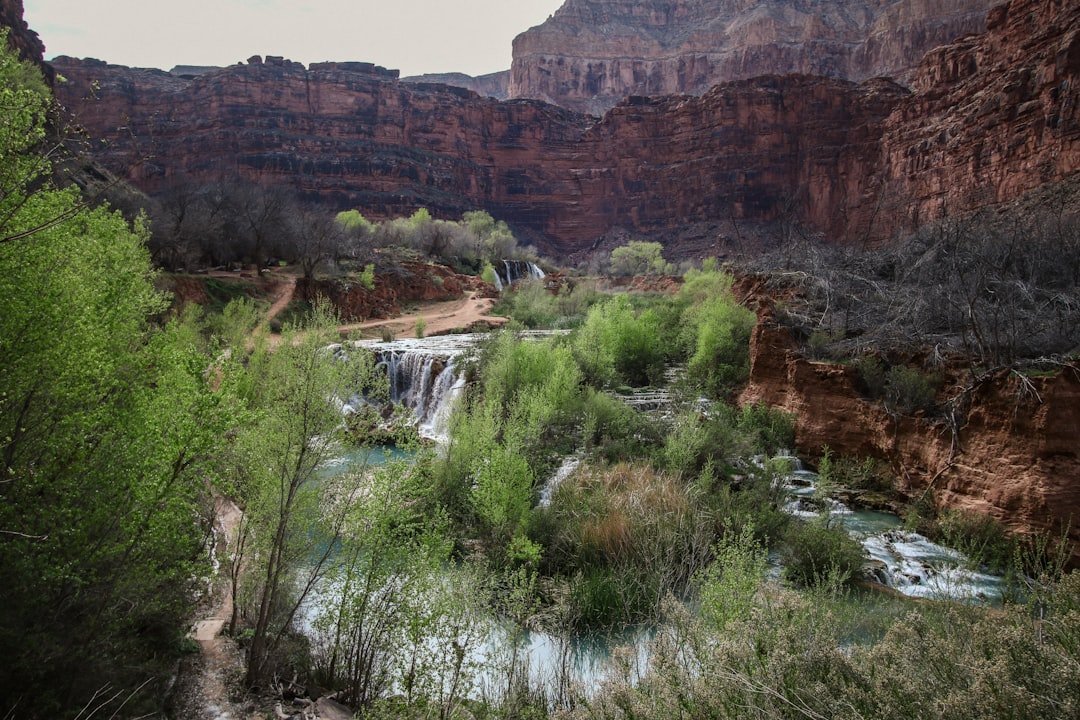
Rickwood Caverns State Park near Warrior, Alabama, gives visitors a close look at ancient limestone, marine fossils, underground pools, living cave formations, and specialized cave wildlife. The guided Rickwood Caverns cave tour follows an approximately one-mile underground route, so understanding the stairs, temperature, history, and current tour rules before you arrive makes the experience much easier to plan.
Quick Answer
The Rickwood Caverns cave tour is an approximately one-mile guided trip through 260-million-year-old limestone formations near Warrior, Alabama. Expect about an hour underground, 365 stairs, a year-round temperature near 62°F, marine fossils, stalactites, stalagmites, flowstone, underground water, and occasional cave wildlife.
Key Takeaways
- Rickwood Caverns was developed as a tourist attraction by Eddie Rickles and Sonny Arwood after Boy Scout exploration brought the cave greater public attention in the early 1950s.
- The cave route passes through limestone formations dating to the Mississippian Period, roughly 260 million years ago.
- The standard guided tour is approximately one mile long and includes 365 stairs, with 110 stairs leading toward the exit.
- The cave remains close to 62°F year-round, so a light layer and sturdy walking shoes are useful even during Alabama’s warmer months.
- Blind cave fish, cave crayfish, bats, frogs, and salamanders are among the animals documented in or around the underground environment.
- Cave access is available only with a guide, and reservations are highly recommended because tours can sell out.
At a Glance
| Tour Length | About 1 mile and roughly 1 hour |
| Physical Difficulty | Moderate for many visitors; 365 stairs total, including 110 stairs near the exit |
| Cave Temperature | About 62°F year-round |
| What to Wear | Sturdy walking shoes and a light jacket or other layer |
| Current Admission | Alabama State Parks currently lists $19 for ages 12 and older, $9 for ages 5–11, and free admission for children under 5 with a parent or guardian |
| Reservations | Highly recommended because tours may sell out |
Warning: The standard tour includes 365 stairs, uneven cave surfaces, enclosed passages, and 110 stairs near the exit. Visitors with limited mobility, significant balance problems, or difficulty climbing stairs should consider these conditions before purchasing a walking tour ticket.
History of Rickwood Caverns
The documented history of Rickwood Caverns differs from the story sometimes repeated about a farmer discovering the cave in the 1950s. According to the Encyclopedia of Alabama, a Boy Scout troop and its leader, Eddie Rickles, explored the caverns in the early 1950s and helped bring them to wider public attention.
Local residents already knew that the cave existed. Graffiti dating to the 1890s provides evidence of earlier visits. Rickles later partnered with Sonny Arwood to develop the cave as a tourist attraction. The name Rickwood combines parts of the names Rickles and Arwood.
Private cave tours operated from 1954 until 1974, when Alabama acquired the property. Rickwood Caverns opened as a state park in June 1974.
Native American artifacts have also been found within the cave and displayed at the park, showing that human connections to the site predate its development as a modern tourist attraction. Claims about a precise number of thousands of years of continuous use, however, should not be made without stronger archaeological evidence specific to Rickwood Caverns.
The Geological Formation of Rickwood Caverns
One of Rickwood Caverns’ most important features is its ancient limestone. The Alabama State Parks system describes the cavern’s formations as approximately 260 million years old and notes evidence that the limestone originated in an ancient ocean environment.
During the Mississippian Period, the region was associated with shallow marine environments. Remains of marine organisms became incorporated into sediment that eventually formed limestone. Today, visitors can see fossilized shells and other marine remains in parts of the cave’s walls and ceilings.
The cave passages themselves developed as water moved through cracks and openings in soluble limestone. Rainwater and groundwater naturally become slightly acidic when water combines with carbon dioxide. The resulting weak carbonic acid can slowly dissolve limestone and enlarge fractures over very long periods. The U.S. Geological Survey describes this as a major process responsible for the development of many limestone cave systems.
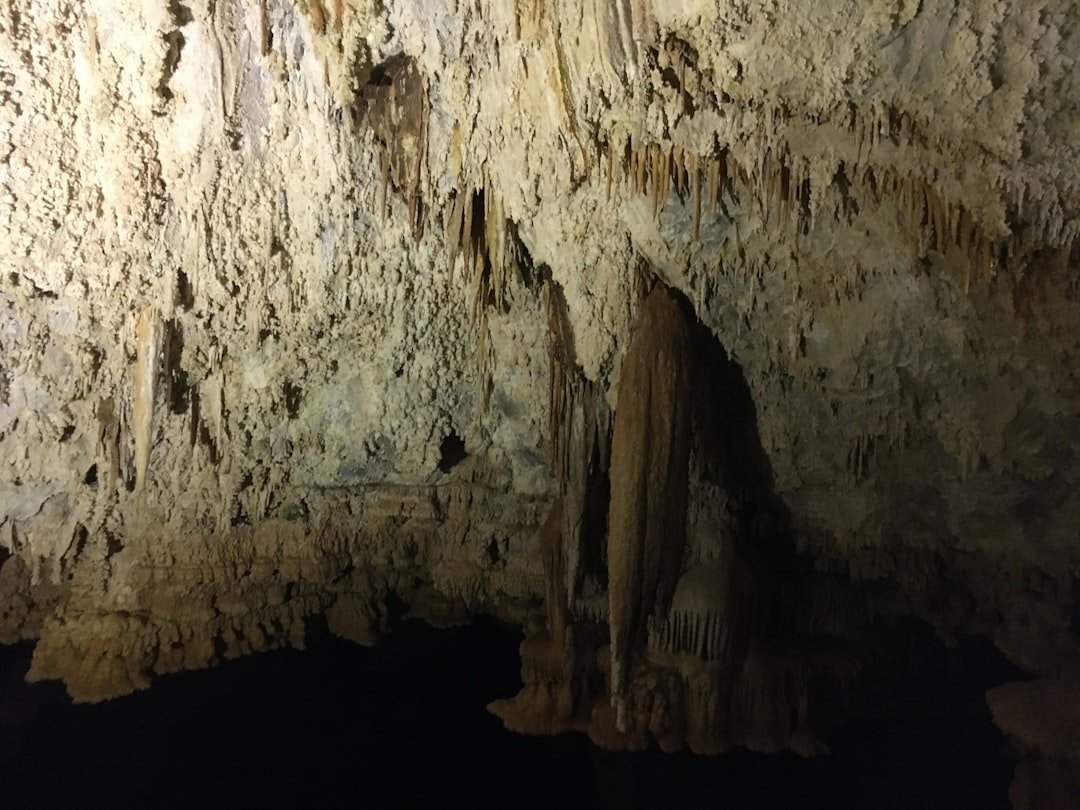
Mineral-rich water continues to enter Rickwood Caverns. As dissolved calcium carbonate is redeposited, it can gradually build stalactites hanging from ceilings, stalagmites rising from floors, columns where formations join, and sheets of flowstone. Because water is still contributing to mineral deposition, Rickwood is commonly described as a living cave.
Note: Saying that the limestone is about 260 million years old does not mean every visible stalactite or every open cave passage has existed in its present form for 260 million years. The bedrock is ancient, while cave enlargement and mineral deposition occurred over later periods and continue today.
What You Can See Inside Rickwood Caverns
The guided route is known for stalactites, stalagmites, columns, flowstone, fossil-bearing limestone, underground water, and unusual shapes created by mineral deposition and erosion.
Two formations described in the historical record are the Frozen Castle and the Bridal Column. Both feature large column-like formations surrounded by stalactites. The route also passes an underground lake and areas where visitors can see marine fossils preserved in the limestone.
Another memorable part of the experience is the change in perspective as the tour travels underground. Visitors descend to approximately 175 feet below the surface during the route before eventually climbing toward the exit.
Pro Tip: Look at the cave walls as well as the larger illuminated formations. Fossilized marine remains in the limestone help explain why park descriptions refer to Rickwood Caverns as evidence of an ancient ocean environment.
Wildlife Inside Rickwood Caverns
| Cave Life or Feature | What Is Documented | Visitor Note |
| Bats | A small resident population has been documented in the cavern. | Sightings are never guaranteed. Avoid disturbing resting animals. |
| Blind cave fish | Blind cave fish have been documented in underground water within Rickwood Caverns. | These specialized cave animals may be difficult to spot. |
| Cave crayfish | Cave crayfish have also been reported in the subterranean water. | Look carefully into suitable pools when the guide points them out. |
| Salamanders and frogs | Both are documented within the cave environment. | Animals should be observed without touching or handling them. |
| Stalactites and stalagmites | Living geological formations continue to develop where mineral-bearing water enters the cave. | These are geological formations, not wildlife, and should never be touched. |
Cave ecosystems differ greatly from surface environments because sunlight is absent beyond the entrance zone. Animals that spend their entire lives underground can develop specialized traits suited to darkness, limited food, and stable cave conditions.
Rather than relying on estimated population counts, it is more accurate to describe the species that authoritative sources document. Wildlife numbers can change naturally, and many cave animals are difficult to survey.
Rickwood Caverns Cave Tour: Route, Stairs, and Current Details
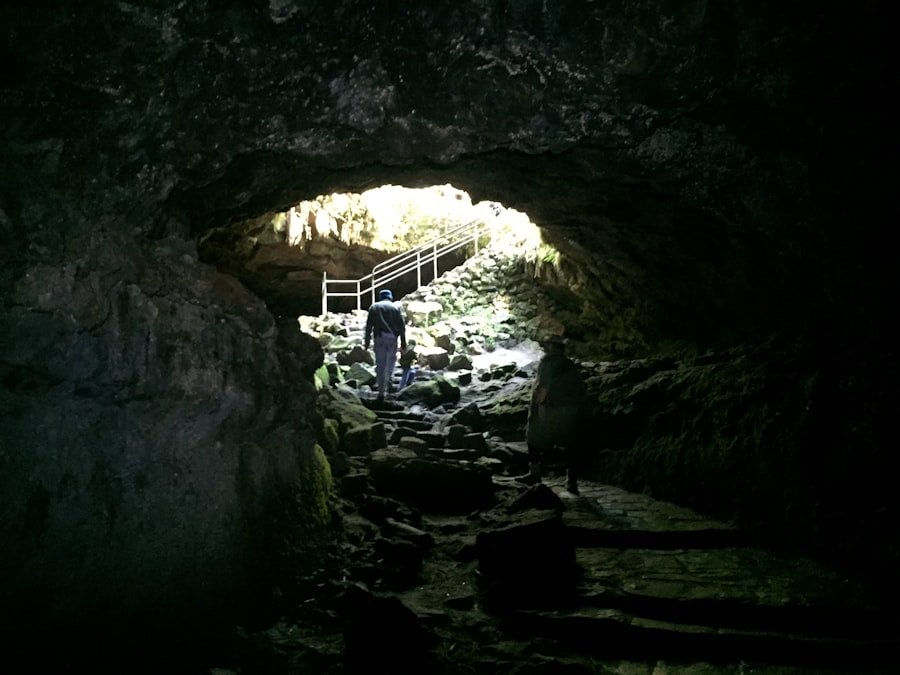
Access to Rickwood Caverns is available only on a guided tour. According to the official Rickwood Caverns cave-tour information, the walking route is approximately one mile long and contains 365 stairs. Of those, 110 stairs are located near the exit.
The tour normally takes about an hour. Guides lead visitors through lighted chambers and passages while explaining the geology, history, fossils, formations, and underground environment.
The cave remains around 62°F throughout the year. That can feel pleasantly cool during an Alabama summer, but visitors who become cold easily may want a light jacket, sweater, or long-sleeved layer.
Current Tour Times and Admission
Alabama State Parks currently lists standard cave-tour departures at 10:00 a.m., 12:00 p.m., 2:00 p.m., and 4:00 p.m. Tour schedules can vary with park operations and special events, so the official reservation calendar is the best source for the departure times offered on a particular date.
The official park page currently lists cave-tour admission at $19 for visitors ages 12 and older, $9 for ages 5 through 11, and free for children under age 5 when accompanied by a parent or guardian. Cave-tour admission includes the park entrance fee.
Do You Need a Reservation?
Reservations are not described as mandatory for every visitor, and tickets may also be purchased at the gift shop. However, Alabama State Parks strongly recommends booking online because large groups may occupy significant tour capacity and individual tours can sell out.
Visitors can check current availability through the official Alabama State Parks reservation system.
Accessibility and the VR Cave Tour
The walking tour’s 365 stairs make the underground route inaccessible or impractical for some guests. Alabama State Parks offers a guided virtual-reality cave tour for visitors who cannot walk through the cavern. The park currently describes the VR experience as free and subject to availability.
If stair climbing, balance, or prolonged walking is difficult, the VR option provides a way to experience the cave without attempting the full underground route.
Preserving Rickwood Caverns
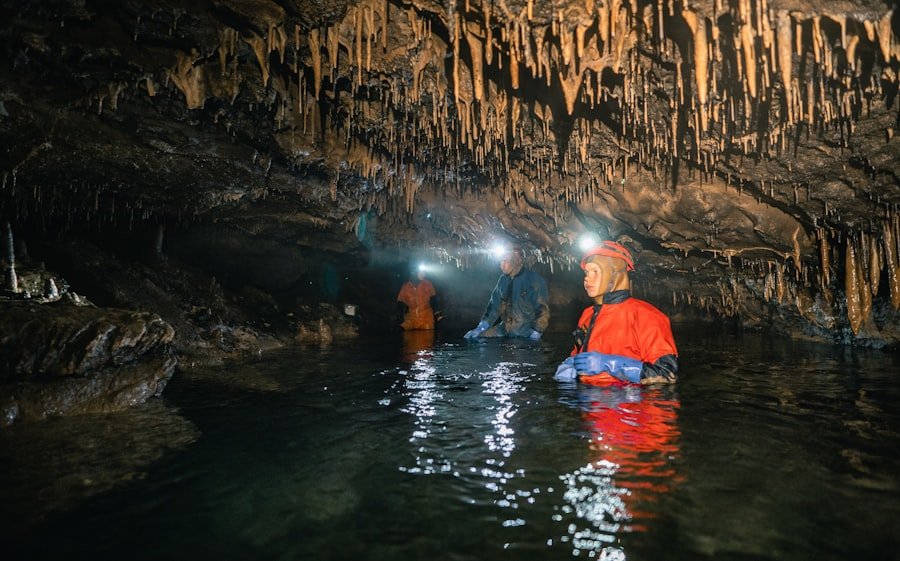
Caves are unusually sensitive environments. Mineral formations grow slowly, wildlife can be disturbed by human activity, and oils or dirt from a person’s hands can alter delicate surfaces.
The most useful conservation practice for visitors is simple: stay with the guide, remain on the designated route, leave fossils and formations where they are, avoid touching cave surfaces unnecessarily, and never disturb wildlife.
Guided access also limits unsupervised travel into sensitive or hazardous portions of the cave. Rickwood Caverns is not promoted as a self-guided spelunking destination. Visitors enter the show cave only with an authorized guide.
Warning: Do not leave the established tour route or enter closed cave passages. Caves can contain steep drops, slippery surfaces, low ceilings, deep water, fragile formations, and sensitive wildlife habitat.
Things to Do Above Ground at Rickwood Caverns State Park
The cave is the main attraction, but the surrounding state park offers additional activities. Alabama State Parks currently lists picnicking, gemstone mining, camping, a playground, hiking, a gift shop, and a large swimming pool supplied by cave water.
The Fossil Mountain Hiking Trail is approximately 1.25 miles long. It climbs through a limestone-covered landscape where fossil impressions can be seen among exposed rocks. Wildflowers and resurrection ferns grow around some of the limestone outcrops.
The park also has the easier Picnic Loop Trail, an approximately 0.8-mile walk through wooded terrain. Scheduled educational programs and seasonal activities may provide additional things to do depending on the date of your visit.
Tips for Visiting Rickwood Caverns
Wear shoes with secure traction. The tour includes hundreds of stairs and natural underground surfaces, so sturdy closed-toe walking shoes are a better choice than loose sandals or slick footwear.
Bring a light layer. A temperature near 62°F feels cool after spending time outdoors during Alabama’s warmer months.
Think seriously about the stairs. The 365-step total is more useful for planning than simply describing the tour as a one-hour walk. The 110-step climb near the exit can be tiring, especially after the rest of the route.
Reserve before a busy visit. Online reservations are highly recommended because individual departure times can sell out.
Arrive with enough time to check in. Give yourself time to park, use the restroom, visit the gift-shop/check-in area, and be ready before your scheduled tour begins.
Do not expect a self-guided cave visit. Access to the cave is provided only with a guide.
Leave pets outside the cave and park buildings. Alabama State Parks states that pets are not permitted inside the cave or buildings.
Protect the formations. Observe stalactites, stalagmites, fossils, pools, and wildlife without touching or collecting them.
Pro Tip: If your main goal is photography or close observation, avoid rushing from one large formation to another. Some of Rickwood’s most informative details are the marine fossils embedded directly in the limestone walls.
Frequently Asked Questions
What is the Rickwood Caverns cave tour?
It is a guided underground tour at Rickwood Caverns State Park near Warrior, Alabama. The approximately one-mile route passes limestone formations, marine fossils, underground water, stalactites, stalagmites, flowstone, and other features of the cave.
How long is the Rickwood Caverns cave tour?
The walking route is approximately one mile long and generally takes about one hour.
How many stairs are on the Rickwood Caverns tour?
Alabama State Parks states that the route contains 365 stairs, including 110 stairs near the exit. Visitors should consider the stair requirement before booking the standard walking tour.
What is the temperature inside Rickwood Caverns?
The cave stays around 62°F throughout the year. A light jacket, sweater, or long-sleeved layer can make the tour more comfortable.
What can visitors see during the cave tour?
Visitors can see stalactites, stalagmites, columns, flowstone, fossil-bearing limestone, underground pools and water features, and formations such as the Frozen Castle and Bridal Column. Wildlife such as blind cave fish, cave crayfish, bats, frogs, or salamanders may also be present, although sightings are not guaranteed.
Is the Rickwood Caverns tour suitable for all ages?
Many families can enjoy the tour, but suitability depends more on a person’s ability to walk the approximately one-mile route and manage 365 stairs than on age alone. Young children need close supervision, and people with mobility or balance limitations should consider the physical requirements carefully.
Is there an accessible alternative to the walking cave tour?
Yes. Alabama State Parks says a guided virtual-reality cave tour is available for guests unable to walk through the cavern. The VR experience is currently free and subject to availability.
Are reservations required for Rickwood Caverns?
Online reservations are highly recommended because tours can sell out, especially when large groups are booked. The park also states that tickets can be purchased in person at the gift shop when space is available.
What should I wear for the Rickwood Caverns cave tour?
Wear comfortable, sturdy walking shoes with good traction. Because the cave stays around 62°F year-round, bringing a light jacket or another layer is also useful.
Can visitors explore Rickwood Caverns without a guide?
No. Alabama State Parks states that access to the cave is available only with a tour guide. The regular visitor experience should not be treated as an independent spelunking or self-guided cave trip.
Sources
- Alabama State Parks: Rickwood Caverns Cave Tours — official tour distance, stairs, temperature, admission, departure times, reservations, guided-access rule, pets policy, and VR tour information.
- Alabama State Parks: Rickwood Caverns State Park — official park information, cave geology, depth, activities, current fees, and visitor planning details.
- Alabama State Parks: Hiking at Rickwood Caverns — Fossil Mountain and Picnic Loop trail information.
- Encyclopedia of Alabama: Rickwood Caverns State Park — documented history, Rickles and Arwood, 1954–1974 timeline, geological formations, fossils, cave wildlife, and historical cave features.
- U.S. Geological Survey: Geology of Mammoth Cave National Park — authoritative explanation of how weakly acidic water dissolves limestone and forms cave passages.