Gruyères Castle is one of the most photogenic landmarks in Switzerland’s Fribourg region, but getting a strong photograph takes more than pointing a camera at its towers. The best results come from choosing the right viewpoint, matching your lens to the scene, and knowing where tripods, flash, and other equipment are allowed. The medieval castle, surrounding countryside, traffic-free village, and Fribourg Pre-Alps give photographers several very different compositions within a relatively small area.
Quick Answer
The best Gruyères Castle photo spot for a full exterior is the official Grand Tour Photospot at the foot of the castle, where you can frame the fortress with Dent de Broc. For wider landscapes, walk below the castle hill. Use golden-hour light outdoors, but remember that tripods and flash are not allowed inside.
Key Takeaways
- For a recognizable exterior composition, start with the official Grand Tour Photospot at the foot of Gruyères Castle.
- The countryside below the castle hill gives you more room to combine the fortress, pastures, trees, and Fribourg Pre-Alps in one frame.
- A wide or standard lens works well near the castle, while a telephoto lens is more useful when photographing it from distant countryside or mountain viewpoints.
- Golden hour is excellent for exterior views, but sunrise and sunset may fall outside castle opening hours.
- Inside Gruyères Castle, photography is for private use and must be done without flash or tripod. Drones are forbidden over the town, castle, and gardens.
At a Glance
| Time Required | About 1 hour for the castle itself; allow 2 to 3 hours if you also want exterior viewpoints and village photography. |
| Difficulty | Easy around the village and castle; easy to moderate if you extend the visit onto countryside walking routes. |
| Tools Needed | Camera or phone, wide-to-standard lens, optional telephoto lens, spare battery, lens cloth, and optional polarizer. Use a tripod only where it is permitted outdoors. |
| Cost | Public exterior viewpoints are free. Castle admission is currently CHF 13 for an adult as of August 2026; check the official visitor information before traveling. |
Why Gruyères Castle Is So Photogenic
Gruyères Castle, or Château de Gruyères, combines medieval defensive architecture with later residential additions and a dramatic hilltop setting. According to the castle’s official history, it first appears in written records in 1244 and was built in the 13th century as the principal residence of the Counts of Gruyère. Its plan follows the military form known as a carré savoyard, with an almost square enclosure, keep, tower, and smaller defensive turrets.
It is more accurate to describe the building as a fortified noble residence than simply as a fortress built to repel invasions. The castle was never attacked during the Middle Ages, although its military form reflects the defensive needs and architectural traditions of the period.
Major 15th-century changes made the castle more comfortable as a residence. Stone galleries, larger windows, a staircase tower, and a chapel were added. The Chapel of St. John the Baptist still contains stained glass made in 1482, one of several historic interior details that reward careful photography when light levels permit.
Gruyères Castle is not only a medieval landmark. Its rooms, collections, temporary exhibitions, gardens, and panoramic setting connect more than seven centuries of architecture, art, and regional history.
The castle’s hilltop position is especially valuable to photographers. Depending on your location, you can photograph the fortress as the main subject, use it as a small element within a large Alpine landscape, or turn around and photograph views of the countryside from the castle itself.
Best Viewpoints for Capturing Gruyères Castle
1. The Official Grand Tour Photospot
The most straightforward place to begin is the official Grand Tour of Switzerland Photospot at the foot of Gruyères Castle. La Gruyère Tourism specifically identifies this location as a photo point with a view of the castle and Dent de Broc.
This is a strong choice if you want an immediately recognizable photograph without spending hours scouting. A standard zoom or phone camera works well here. Start with a wider composition showing the castle, hillside, and mountain backdrop, then zoom in for a cleaner architectural frame.
2. The Streets Leading Through Medieval Gruyères
The traffic-free medieval village creates a second style of photograph. Instead of isolating the whole fortress, use cobbled streets, old buildings, signs, roofs, walls, and archways to build a layered approach toward the castle.
These compositions work particularly well with a standard focal length because it avoids exaggerating the foreground too much. Walk slowly and look for openings between buildings where a tower, roofline, or section of wall appears in the distance.
Pro Tip: Instead of photographing every street from the center, move close to one side and use a wall, doorway, hanging sign, or row of buildings as a natural frame. This gives the picture more depth and makes the castle feel part of the village rather than a separate object.
3. The Countryside Below the Castle Hill
If you want the classic castle-in-the-landscape look, move farther away. The official At the Foot of Gruyères walking route follows countryside below the castle hill and provides repeated views across pastures and small wooded areas toward the castle and Fribourg Pre-Alps.
The complete loop is about 8 km, but photographers do not need to walk the entire route to benefit from the lower viewpoints. Increasing your distance from the castle lets you include more foreground and gives the surrounding hills a stronger role in the composition.
A standard or short telephoto lens is often more useful here than an ultra-wide lens. Longer focal lengths visually compress the distance between the castle and mountains, which can make the background appear more prominent.
4. Moléson for a Wider Regional Panorama
Another option is the nearby Moléson area. Going higher by trail or mountain lift opens a much broader view across the Gruyère region. This is best treated as a landscape-photography opportunity rather than a close portrait of the castle.
The farther you move from Gruyères, the smaller the castle becomes in the frame. If you want to isolate it from a distant elevated position, bring a telephoto lens. If you use a wide-angle lens, make the mountains, valleys, fields, and sky the main story, with Gruyères forming only one element within the scene.
Mountain-lift operation depends on season and conditions, so check the official Moléson mountain-lift information before planning a high viewpoint specifically around sunset or changing weather.
5. The Castle Esplanade, Courtyard, Garden, and Terrace
Once you reach the castle, turn the camera away from the building as well. The panoramic esplanade and elevated areas offer views across the countryside and Alpine foothills. These photographs explain why the hilltop location was so significant and give your photo set more variety than exterior castle pictures alone.
The garden, walls, windows, and architectural openings can also frame distant mountains. Garden access is seasonal, so confirm current access on the castle’s official visitor-information page before relying on it for a specific composition.
Photography Tips for Capturing Gruyères Castle
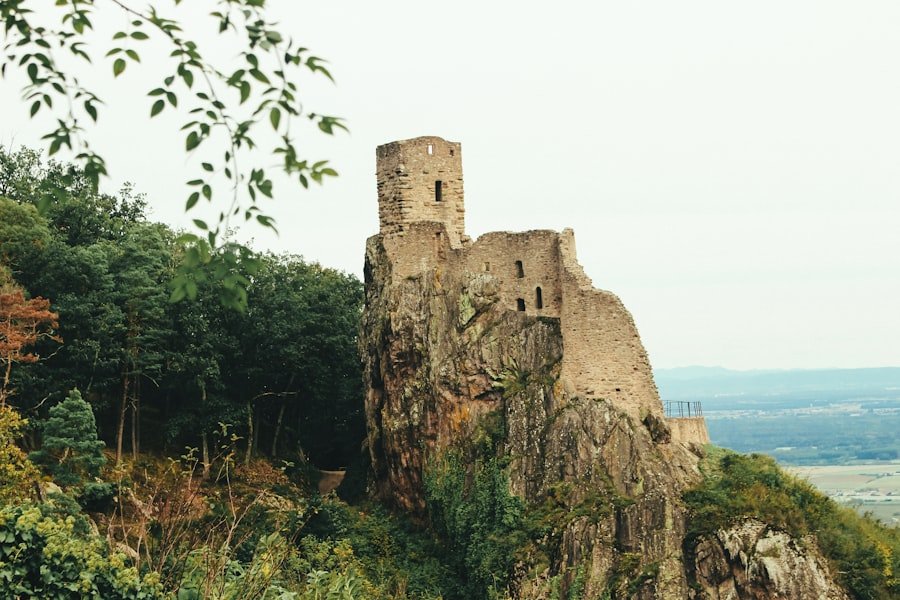
A tripod can significantly improve stability in low light, but location matters. Use one only at outdoor public viewpoints where it is permitted. Gruyères Castle currently prohibits tripods inside the building, so interior photography needs a different approach.
Warning: Tripods and selfie sticks are prohibited inside Gruyères Castle. Interior photography must be without flash and is for private use. Drones are also forbidden over the town of Gruyères, the castle, and its gardens. Check the official castle FAQ before bringing specialized equipment.
Choose the Lens for the Photograph You Want
| Lens Type | Best Use at Gruyères |
|---|---|
| Wide angle | Castle plus foreground, tight village streets, courtyard, and broad landscapes. |
| Standard zoom | Most exterior viewpoints, street scenes, architectural details, and natural-looking perspective. |
| Telephoto | Distant countryside viewpoints, mountain compression, towers, windows, and isolated architectural details. |
| Phone camera | Excellent for village scenes and general viewpoints; use the main camera when possible for better image quality. |
Start With Simple Outdoor Camera Settings
For a daylight exterior photograph, start with your camera’s lowest practical ISO and an aperture around f/8 when you want both the castle and landscape reasonably sharp. Adjust the shutter speed for the available light. If the shutter becomes too slow for handheld shooting, raise ISO rather than accepting motion blur.
When the sky is much brighter than the stone walls, watch the histogram or highlight warning. It is usually easier to recover moderately dark stone from a RAW file than a completely blown-out sky. Exposure bracketing can also help when the contrast is extreme.
Handle Interior Light Differently
Inside, you cannot rely on flash or a tripod. Use image stabilization if your camera or lens provides it, keep the camera steady against your body, and increase ISO when needed. Take several frames of important subjects because small changes in hand movement can make the difference between a sharp and soft photograph.
Pay attention to the chapel, windows, decorative ceilings, furniture, wall art, and other preserved details rather than trying to force every room into a single ultra-wide composition.
Use Foreground Elements
Flowers, grass, trees, stone walls, paths, and fences can all add depth to an exterior photograph. Place them deliberately rather than allowing random branches or signs to cut across the castle.
Experiment with low angles, elevated positions, and off-center framing. Changing your position by only a few meters can separate overlapping towers, remove distracting objects, or place a mountain peak in a cleaner part of the frame.
Time of Day for the Best Lighting
| Time / Conditions | Photography Use |
|---|---|
| Early morning | Often quieter around public exterior areas; low-angle light can reveal texture and shape. |
| Midday | Useful for scouting and architectural details, but direct sun can create strong contrast and hard shadows. |
| Late afternoon / golden hour | Warm, directional light can give stone walls more depth and add color to the landscape. |
| Blue hour | Good for exterior village scenes when the sky remains blue but artificial lights have started to appear. |
| Overcast weather | Soft light reduces harsh contrast and can reveal detail in stone, roofs, vegetation, and narrow streets. |
Golden hour remains one of the most attractive times for photographing the exterior because low-angle sunlight can create warmer colors and longer shadows. However, do not assume that sunrise or sunset gives you access to the interior, courtyard, or garden.
Gruyères Castle currently opens from 9 a.m. to 6 p.m. from April through October and from 10 a.m. to 5 p.m. from November through March, with last entry before closing. If sunrise or sunset falls outside those hours, use public exterior viewpoints instead.
Note: Do not dismiss cloudy weather. Soft cloud cover can be excellent for photographing pale stone walls because it reduces the difference between bright highlights and deep shadows.
Capturing the Surrounding Landscape
Gruyères Castle is the obvious focal point, but the surrounding landscape is what gives many photographs their sense of place. Meadows, wooded slopes, Dent de Broc, Moléson, village roofs, and the wider Fribourg Pre-Alps can turn a simple castle record shot into a regional landscape.
One effective technique is to use leading lines within the composition. Paths, fences, walls, and rows of trees can guide the viewer’s eye toward the castle rather than competing with it.
Seasonal changes also affect the scene. Spring and summer usually emphasize green countryside, autumn can bring warmer foliage tones, and winter can produce a more graphic landscape when vegetation is sparse or snow is present. Snow is weather-dependent, so never build a one-day photography plan around expecting it.
Use Layers to Show Scale
Try dividing the frame into three visual zones: foreground, castle, and distant mountains. A fence or patch of grass can form the foreground; Gruyères Castle becomes the middle subject; and the mountain ridge completes the background.
This layered approach often works better than simply centering the castle against an empty sky. It also helps viewers understand the hilltop location and the relationship between the medieval town and surrounding countryside.
Use a Polarizer Carefully
A circular polarizing filter can reduce reflections and deepen the appearance of blue sky and foliage when the sun is at a useful angle. Rotate it while looking through the viewfinder rather than automatically using maximum polarization. With a very wide lens, aggressive polarization can make one part of a blue sky noticeably darker than another.
Composition and Framing Techniques
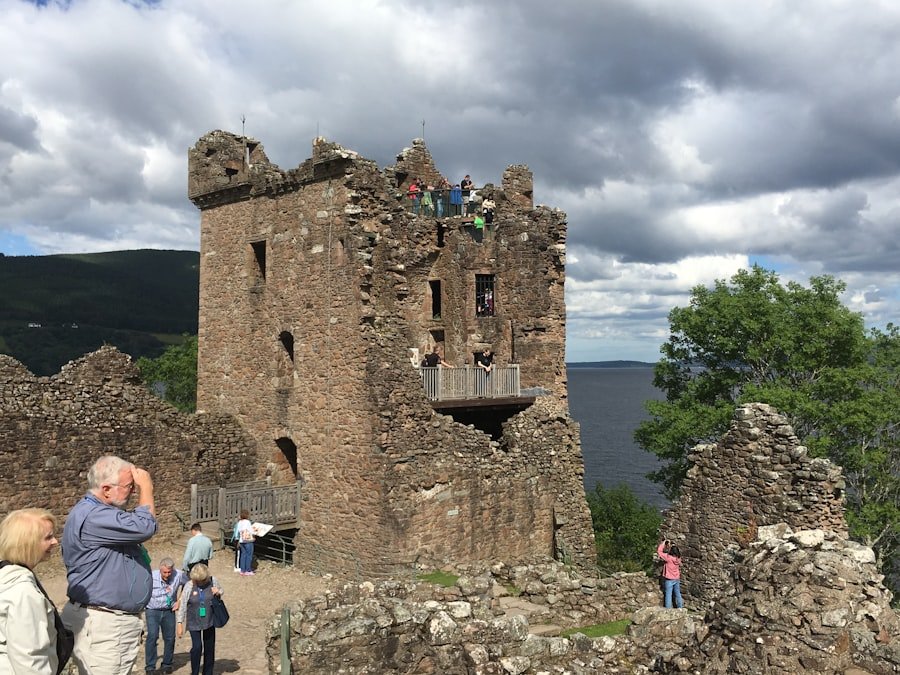
The rule of thirds is a useful starting point for photographing Gruyères Castle. Imagine the frame divided into nine sections and place the castle, a tower, or the horizon near one of the lines or intersections. This often creates more visual movement than putting every subject directly in the center.
Do not treat the rule as a requirement. A centered composition can work very well when the scene has strong symmetry, such as a doorway, corridor, courtyard, or formal architectural view.
Frame the Castle With Its Environment
Trees, stone archways, doorways, walls, and nearby buildings can frame part of the castle and add depth. Make sure the framing element looks intentional. A complete arch or clean edge usually works better than a random branch entering the frame.
Use Leading Lines
Roads, paths, fences, walls, rooflines, and rows of trees can guide attention toward the fortress. Move left or right until the line points toward the main subject rather than taking the viewer out of the frame.
Control Perspective
When photographing tall walls from close range with a wide lens, vertical lines may appear to lean inward. Step farther back when possible, keep the camera more level, and leave extra space around the building so you can make modest perspective corrections later.
Try Telephoto Compression
A longer focal length can visually bring the mountains and castle closer together. This is especially effective from countryside viewpoints where the castle would otherwise appear small against a broad landscape.
Pro Tip: Before leaving a viewpoint, take three versions: one wide environmental photograph, one medium composition, and one tight detail. This simple habit gives you much more variety than taking ten almost identical frames.
Best Seasons and Weather for Gruyères Photography
Spring and Summer
Longer days give you more flexibility for walking around the village and countryside. Green vegetation can create a strong contrast with the castle’s stone and roofs. In bright weather, watch for harsh midday contrast and consider returning to your chosen viewpoint later in the day.
Autumn
Autumn foliage can add warmer colors around the fortress and hills. A telephoto composition that layers colored trees in front of the stone architecture can work particularly well.
Winter
Winter changes the shape and color of the landscape even when snow is absent. Bare trees may reveal parts of the castle hidden during the growing season. If snow does fall, protect highlights carefully because bright snow can make the camera underexpose darker castle walls.
Mist, Cloud, and Changing Weather
Clear blue skies are not the only useful conditions. Mist can separate the castle from distant hills, while textured cloud can create a more dramatic background. Keep a lens cloth accessible because moisture and light rain can quickly leave spots on the front element.
Managing Crowds and Planning Your Route
Gruyères is a popular visitor destination, so composition can become harder as the village fills. Arriving earlier in the day can give you more opportunities to photograph streets and exterior areas without large groups crossing the frame.
The medieval town is closed to visitor traffic. According to the castle’s official visitor information, drivers park below the town and should allow roughly 10 to 20 minutes to walk to the castle, depending on the parking area. From Gruyères railway station, the walk is about 20 minutes; the Gruyères-Ville bus stop is closer.
If photography is your main purpose, scout your exterior viewpoint before entering the castle. Note the sun direction, background, and any unwanted objects, then return later if the light is likely to improve.
Gruyères Castle Photo Rules You Should Know
Photography rules matter here because Gruyères Castle is both a historic monument and museum. The current official rules state that photography inside is allowed without flash and tripod and is intended for private use. Commercial use of images of the castle, its interiors, and collections is restricted.
- Flash: Do not use it inside the castle.
- Tripods: Prohibited inside.
- Selfie sticks: Listed among prohibited items.
- Drones: Flying over the town of Gruyères, castle, and gardens is forbidden.
- Large equipment: The castle reserves the right to restrict shooting with larger equipment.
- Private photography: Normal visitor photography is allowed subject to the site’s rules.
Rules and access can change, especially around exhibitions or events, so verify them on the official website shortly before your visit.
A Simple Gruyères Castle Shot List
If you want a varied set of photographs instead of dozens of similar castle pictures, work through this list:
- Full exterior from the official Grand Tour Photospot.
- Castle plus Dent de Broc or another mountain backdrop.
- Wide countryside composition below the castle hill.
- Telephoto view compressing the castle against distant terrain.
- Approach photograph through a medieval village street.
- Tower, roof, window, or stone-detail photograph.
- Courtyard composition during opening hours.
- Historic interior detail without flash.
- Landscape photograph looking outward from the castle.
- One vertical composition suitable for mobile or social-media viewing.
- One quiet detail that shows texture, such as stone, wood, stained glass, or a doorway.
- One late-day exterior image if the light and access conditions work.
Editing and Enhancing Your Photos
Post-processing can improve Gruyères Castle photographs, but the goal should be to reveal what the camera recorded rather than create an artificial version of the scene. Software such as Adobe Lightroom or Photoshop can adjust exposure, contrast, color, sharpness, and perspective.
Start by checking highlights in the sky and shadows on the stone walls. Recovering some shadow detail can help the castle read more clearly, but lifting every shadow until it matches the sky can remove the natural depth created by directional light.
Correct Perspective Before Heavy Color Editing
Architecture often looks better after modest vertical and lens corrections. Make those adjustments before applying strong vignettes or cropping tightly, because perspective correction may remove part of the original frame.
Keep Color Believable
Gruyères already provides strong natural color from stone, red-brown roofs, green fields, autumn foliage, and mountain light. Heavy saturation can quickly make grass and sky look artificial. Increase color selectively and compare the result with the unedited file.
A subtle vignette can direct attention toward the center, but it should not be so dark that viewers notice the effect before the castle.
Check Small Details Before Exporting
Zoom in and look for dust spots in the sky, distracting signs near frame edges, crooked horizons, or excessive sharpening around rooflines and mountain ridges. Small corrections often improve an architectural photograph more than a dramatic preset.
Preserving Your Memories of Gruyères Castle
Photographs become more meaningful when they are organized instead of left in a camera roll. After your visit, select a small group that tells the complete story: an exterior establishing shot, a village approach, architectural details, an interior photograph, and a landscape view.
A printed photo book or album can combine these images with short notes about where each photograph was taken, the weather, and what you remember about the visit. Keeping those details with the images makes the collection more useful years later.
For digital preservation, keep more than one copy of the photographs. Store the edited files and important originals on separate devices or backup locations rather than relying on a single phone, laptop, or memory card.
Sharing selected photographs on a photography blog or social platform can also help you compare compositions and learn which images communicate the place most clearly. Avoid uploading twenty nearly identical frames; a smaller, varied selection usually tells the story better.
For a completely different exercise in observing color, shape, and fine detail, the existing article about the delightful world of Asian melon offers another subject to study. It is not a Gruyères travel resource, but comparing subjects as different as architecture and close-up natural detail can be a useful composition exercise.
Frequently Asked Questions
What is Gruyères Castle?
Gruyères Castle is a historic castle and museum in the medieval town of Gruyères in Switzerland’s canton of Fribourg. It was built in the 13th century as the principal residence of the Counts of Gruyère and today contains rooms, art, historic objects, and temporary exhibitions.
Where is the best viewpoint for photographing Gruyères Castle?
For an easy full-castle view, start at the official Grand Tour Photospot at the foot of Gruyères Castle. For wider landscape compositions, explore the countryside below the castle hill, where you can combine the fortress with fields, trees, and the Fribourg Pre-Alps.
Can I use a tripod at Gruyères Castle?
Not inside the castle. Tripods are on the site’s prohibited-item list. You can use a tripod at suitable outdoor public viewpoints where local rules and conditions permit it, but leave it secured before entering the castle.
Can I use flash inside Gruyères Castle?
No. The castle’s current rules allow interior photography only without flash. Use image stabilization, steady handheld technique, and a higher ISO when the rooms are dim.
Can I fly a drone over Gruyères Castle?
No. The castle’s official FAQ states that flying a drone over the town of Gruyères, the castle, and its gardens is forbidden for safety reasons.
What is the best time of day to photograph Gruyères Castle?
Golden hour often gives the exterior warm, directional light and long shadows. Early morning can also be quieter. For interior, courtyard, and garden photographs, plan around official opening hours because sunrise or sunset may occur when the castle grounds are closed.
Is Moléson a good place to photograph Gruyères Castle?
Moléson is better for broad regional panoramas than for a close castle portrait. From distant elevated positions, Gruyères Castle occupies a much smaller part of the scene, so a telephoto lens is more useful if you want to isolate it.
How long should I allow for Gruyères Castle photography?
The castle recommends about one hour for a normal visit. For photography, allow roughly two to three hours so you can photograph the village, an exterior viewpoint, the castle interior, and surrounding scenery without rushing.
Can I use my Gruyères Castle photographs commercially?
Normal visitor photography is intended for private use. The castle states that commercial use of images of the Château de Gruyères, its interiors, and collections is strictly restricted, so photographers planning commercial work should consult the castle before shooting or publishing commercially.
Can wheelchair users reach a viewpoint at Gruyères Castle?
The official castle information says wheelchair users can access the panoramic esplanade and courtyard, plus part of the garden depending on the season. Interior floors are more difficult because the historic rooms are reached by stairs.
Sources
- Gruyères Castle: History — 13th-century construction, 1244 documentary record, Savoyard military layout, later alterations, and ownership history.
- Gruyères Castle: Visitor Information — current hours, prices, transport access, photography rules, tripods, flash, accessibility, and visitor policies.
- Gruyères Castle: Official FAQ — visit duration, private photography, drone restrictions, accessibility, and equipment rules.
- La Gruyère Tourism: Grand Tour Photospot — official castle photo location and view toward Dent de Broc.
- La Gruyère Tourism: At the Foot of Gruyères — countryside walking route with views of the castle and Fribourg Pre-Alps.
- Moléson: Funicular and Cable Car — mountain access and panoramic viewpoint information.