Needing medicine in Switzerland can feel stressful when you do not know the local rules. Swiss pharmacies can help with minor health problems, prescription medicines, and professional advice, but a product that is easy to buy at home may have different restrictions in Switzerland. This guide explains what you can buy, when a pharmacist may need to assess you, and what travelers should prepare.
Quick Answer
Swiss pharmacies sell many nonprescription medicines, but access depends on the product. Categories A and B are generally prescription medicines, Category D requires professional advice, and Category E is freely available. Pharmacists may supply some Category B medicines without a prescription in defined situations after a personal assessment.
Pharmacies in Switzerland are more than places to collect medicine. Pharmacists can discuss symptoms, check for interactions, explain how to use a product, and decide whether you need a doctor. Federal medicine rules are supervised by Swissmedic and the Federal Office of Public Health, while cantons regulate many pharmacy services and professional permissions.
Key Takeaways
- Swiss medicines are placed in dispensing categories A, B, D, or E.
- Many everyday remedies are available without a doctor’s prescription, but some require advice from a pharmacist.
- A pharmacist may dispense certain Category B medicines without a prescription in defined cases, but this is not guaranteed.
- Travelers may generally bring only a one-month personal supply into Switzerland, with extra rules for controlled medicines.
- Keep medicines in their original packaging and carry a prescription copy or medical letter.
- Call 144 for a medical emergency and 145 for urgent poisoning advice.
How Swiss Medicine Categories Work
Swissmedic assigns each authorized medicine to a dispensing category. The category applies to the specific product, including its strength, pack size, dosage form, and approved use. Two products with the same active ingredient can therefore have different access rules.
| Category | General rule | Where you obtain it |
| A | Prescription required for a single dispensing | Pharmacy or an authorized dispensing medical practice |
| B | Usually prescription-only, although pharmacists may dispense certain products without a prescription in legally defined cases | Pharmacy or an authorized dispensing medical practice |
| D | No prescription, but professional advice is required | Pharmacy or drugstore |
| E | Available without professional advice | Pharmacies, drugstores, and some retail outlets |
The Federal Office of Public Health explains that pharmacists have been allowed since 2019 to dispense certain Category B medicines without a doctor’s prescription in defined circumstances. These include listed conditions, justified exceptional cases, and continuation of some long-term treatments. The pharmacist must personally assess the situation and document the dispensing. See the official Category B dispensing guidance.
Note: “Over the counter” does not always mean self-service. A pharmacist may need to ask about your symptoms, age, pregnancy status, allergies, medical conditions, and other medicines before selling a product.
What Medications Can You Buy Over the Counter in Switzerland?
Swiss pharmacies commonly offer nonprescription products for mild pain, fever, colds, allergies, digestive problems, skin irritation, and minor wounds. Examples may include certain formulations of paracetamol, ibuprofen, antihistamines, cough or cold remedies, antacids, rehydration products, and first-aid supplies. The exact category can vary by active ingredient, strength, pack size, age group, and intended use.
Do not assume that a brand sold without a prescription in another country has the same status in Switzerland. Ask for the active ingredient and tell the pharmacist what you already take. The pharmacist may suggest a different strength, a smaller pack, another product, or medical review.
Swiss pharmacies also sell vitamins, minerals, herbal medicines, homeopathic products, skincare products, and wellness items. “Natural” does not mean risk-free. Herbal products and supplements can interact with blood thinners, diabetes medicines, heart medicines, antidepressants, and other treatments.
Warning: Do not combine products just because they have different brand names. Cold, flu, pain, and sleep products may contain the same active ingredient, which can lead to accidental overdose.
How to Access Prescription Medications

Categories A and B are generally prescription medicines. A Swiss doctor or another authorized prescriber can assess you and issue a prescription when needed. A pharmacist may also dispense certain Category B medicines without a prescription after a personal assessment, but only when the legal conditions are met.
The medicine category is only the starting point. The pharmacist must also check whether the product, dose, duration, and your health situation make the supply safe and lawful.
Bring the prescription and a list of your current medicines to the pharmacy. If the medicine is not in stock, the pharmacy may order it, contact the prescriber, offer an authorized equivalent, or explain how to get medical help. Never switch to a different active ingredient or dose without professional advice.
Can a Swiss Pharmacy Fill a Foreign Prescription?
Bring the original foreign prescription, the medicine package, and a doctor’s letter, but do not rely on the prescription being accepted automatically. The pharmacist must check the medicine, the document, and the applicable Swiss rules. You may be referred to a Swiss doctor for a local prescription, especially for controlled medicines, unusual products, unclear documents, or treatment that requires monitoring.
What if the Same Medicine Is Not Sold in Switzerland?
Brand names and approved products differ between countries. Give the pharmacist the generic or active ingredient name, strength, dosage form, and your usual dose. Under specific legal conditions, authorized healthcare professionals can obtain a medicine from abroad for an individual patient when no suitable Swiss product is available. This process is handled by the healthcare professional, not by the traveler ordering from an unknown website.
Bringing Medicine Into Switzerland
Swissmedic states that a private individual may bring a personal supply of ordinary medicine for up to one month. The amount is based on the prescribed dose or the dosage in the package information. You may not import medicine for another person, including a family member.
Medicines containing controlled substances, which can include some strong painkillers, sleeping medicines, and psychotropic medicines, have additional rules. The maximum is generally 30 days of treatment. Carry the medicine in its original packaging and obtain the appropriate certificate or medical documentation before travel. Swissmedic provides separate information for travelers arriving from Schengen and non-Schengen countries.
Pro Tip: Keep medicines, prescription copies, and medical certificates in your carry-on bag. Save clear photos of the labels and documents in a secure place in case the originals are lost.
If you will stay longer than one month, do not pack a larger supply without checking the rules. Swissmedic says there is no general exception allowing travelers to import more than one month’s supply. Discuss the treatment with a Swiss pharmacy and arrange a Swiss medical appointment before your supply runs out. Read the official Swissmedic guidance for entering Switzerland with medicines.
Do not assume that ordering online follows the same rules as buying in person. Swissmedic warns against unregulated foreign sellers. Under the current Swiss mail-order system, an authorized mail-order pharmacy requires a prescription for each medicine order, including products that may be available without a prescription in a walk-in pharmacy. See the Swissmedic guidance on medicines and the internet.
How to Find a Pharmacy in Switzerland
| What to look for | Practical guidance |
| Local name | “Apotheke” in German-speaking areas, “pharmacie” in French-speaking areas, and “farmacia” in Italian-speaking areas |
| Sign | A pharmacy cross and the pharmacy name |
| Common locations | Shopping streets, train stations, medical centers, airports, and residential neighborhoods |
| After hours | Search for the local duty or emergency pharmacy, check the notice posted on a closed pharmacy, or ask a hotel, clinic, or local emergency service |
Opening hours vary by canton, town, and location. Station and airport pharmacies may open longer than neighborhood pharmacies, while smaller towns may have shorter hours. A duty pharmacy system may cover urgent needs at night, on Sundays, or on public holidays. An extra service fee may apply outside normal hours.
Use a current map listing, a cantonal health website, or the pharmacy’s own website to confirm that it is open. Calling first is useful when you need a specific prescription product, vaccination, test, or language.
Common Health and Wellness Products in Swiss Pharmacies
Swiss pharmacies sell more than medicine. Common products include sunscreen, skincare, wound-care supplies, pregnancy tests, thermometers, contact-lens products, compression items, personal-care products, and some medical devices.
You may also see vitamins, minerals, herbal supplements, and products marketed for sleep, energy, digestion, or seasonal wellness. Ask the pharmacist whether the product has proven benefits for your goal and whether it is safe with your medicines or health conditions.
What Services Do Swiss Pharmacists Provide?
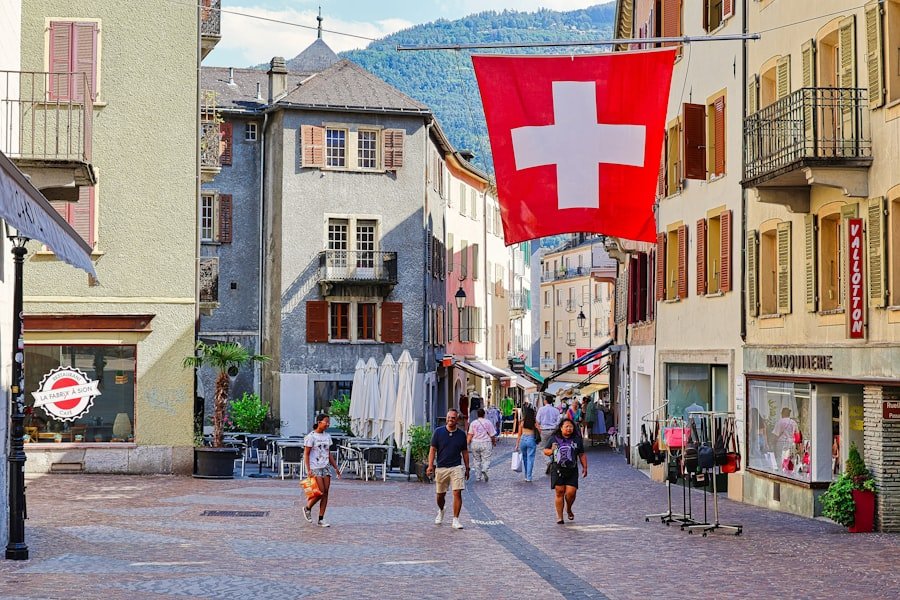
Pharmacists can advise on symptoms, dosage, timing, side effects, interactions, storage, missed doses, and safe use. They can also help you decide whether self-care is reasonable or whether you should see a doctor urgently.
Depending on the pharmacy and canton, services may include blood pressure checks, blood glucose or cholesterol measurements, wound care, medication reviews, vaccination advice, and vaccinations. Pharmacy vaccination is possible across Switzerland, but the vaccines offered, age rules, appointment requirements, and fees can differ. Contact the pharmacy before visiting for a specific service.
Warning: Call 144 for chest pain, severe breathing trouble, signs of stroke, a severe allergic reaction, unconsciousness, or another life-threatening problem. For suspected poisoning or medicine overdose, call Tox Info Suisse on 145.
Insurance and Reimbursement for Medications
People who live in Switzerland are generally required to have compulsory basic health insurance. Medicine reimbursement depends on the product, the prescription, the approved use, and the conditions in the Federal Office of Public Health’s Specialities List. A Swissmedic authorization alone does not mean every use will be reimbursed.
If you have Swiss insurance, show your health insurance card and keep the receipt. You may still pay your annual deductible, the statutory co-payment, pharmacy service charges, or the full cost of products that are not covered. Ask the pharmacy for the price before purchase when cost matters.
Tourists should not assume that Swiss compulsory insurance covers them. Visitors from the EU, EFTA, or the United Kingdom may be entitled to medically necessary care with a valid European Health Insurance Card or replacement certificate, subject to the applicable rules and patient charges. Other visitors should have travel or private health insurance that covers treatment and medicines. See the Federal Office of Public Health’s insurance guidance for tourists in Switzerland.
Tips for Travelers Using Swiss Pharmacies
- Check import rules before departure: Pay special attention to controlled medicines, injections, and products that may be treated differently in Switzerland.
- Carry no more than the permitted personal supply: The general Swiss limit is one month, not the full length of a long trip.
- Use original packaging: Keep the pharmacy label, active ingredient, strength, and your name visible.
- Bring supporting documents: Carry the prescription, a doctor’s letter, and any required controlled-medicine certificate.
- Know the generic name: Swiss brand names may differ from those in your home country.
- List allergies and medicines: Include prescription drugs, nonprescription products, vitamins, and herbal supplements.
- Ask before replacing a medicine: Similar packaging or a familiar brand name does not prove that the active ingredient and dose are the same.
- Plan before your supply ends: A Swiss doctor may need to examine you and issue a local prescription.
Emergency numbers: Call 144 for an ambulance or medical emergency. Call 145 for urgent poisoning advice. The general European emergency number 112 can also connect you to emergency help.
English is often available in larger cities and tourist areas, but it is not guaranteed. Show the package, active ingredient, written dosage, and a translation of your medical information when communication is difficult. Do not rely only on an automatic translation for a dose or allergy warning.
Frequently Asked Questions
What are the opening hours of pharmacies in Switzerland?
Opening hours vary by canton, town, and pharmacy. Many open during daytime business hours from Monday to Saturday. Station, airport, and central-city pharmacies may open longer, while duty pharmacies cover some urgent needs outside normal hours.
Are there 24-hour pharmacies in Switzerland?
Some cities have a late-opening pharmacy or an emergency duty system, but a true walk-in 24-hour pharmacy is not available everywhere. Check local listings, the notice on a closed pharmacy, or ask a hotel, clinic, or emergency service for the nearest open option.
Do Swiss pharmacies sell medicine without a prescription?
Yes. Category D medicines are sold after professional advice, while Category E products are available without professional advice. Some formulations of common pain, allergy, cold, digestive, and first-aid products are nonprescription, but the exact category depends on the product.
Can a pharmacist dispense prescription medicine without a doctor’s prescription?
Sometimes. Pharmacists may dispense certain Category B medicines without a prescription for listed conditions, justified exceptions, or continuation of some long-term treatments. The pharmacist must assess you personally, document the supply, and may still refer you to a doctor.
Can I fill a prescription from my home country in Switzerland?
Bring the original prescription and supporting medical documents, but do not assume that a Swiss pharmacy can fill it automatically. The pharmacist must verify the medicine and document under Swiss rules. You may need a Swiss medical consultation and local prescription.
How much medicine can I bring into Switzerland?
A private traveler may generally bring up to one month’s supply for personal use. The quantity is based on the prescribed dose or package information. You cannot use your allowance to bring medicine for another person.
What documents do I need for controlled medicine?
Carry the medicine in its original packaging and obtain the appropriate certificate or medical document before travel. The maximum quantity is generally 30 days of treatment. Ask your doctor, pharmacist, Swissmedic, and the authorities of any transit country which form applies.
What should I do in a medical or poisoning emergency?
Call 144 for an ambulance or urgent medical emergency. Call Tox Info Suisse on 145 for suspected poisoning or medicine overdose. You can also call 112 for general emergency assistance. Do not wait for a pharmacy to open when symptoms are life-threatening.
Medical Disclaimer: This article is for general information and does not replace advice from a doctor, pharmacist, insurer, customs authority, or emergency professional. Medicine rules and individual risks vary. Always confirm the requirements for your product and health situation.
Swiss pharmacies can help with everyday health needs, medicine questions, and referrals, but Swiss dispensing and import rules may differ from those in your home country. Learn the active ingredient names, carry clear documents, and speak to a pharmacist before changing a dose or replacement product.
Travelers visiting Switzerland should plan before their supply runs low. Confirm the one-month import limit, arrange any controlled-medicine certificate, and identify a nearby pharmacy or medical clinic. Good preparation makes it easier to get safe help without delaying treatment.
Sources
- Swissmedic: Entering Switzerland with medicinal products — personal import limits, controlled-medicine documents, and dispensing categories.
- Federal Office of Public Health: Simplified provision of Category B medicines — when pharmacists may supply certain prescription medicines without a prescription.
- Federal Office of Public Health: Pharmaceuticals and medicinal products — medicine reimbursement and the Specialities List.
- Federal Office of Public Health: Health insurance for tourists — healthcare rights and insurance guidance for visitors.
- Tox Info Suisse: First aid and emergency number 145 — urgent poisoning advice.
- Swiss Confederation: Useful travel information — medical emergency number 144.