When I think of Switzerland, the first image that comes to mind is the Matterhorn rising above Zermatt. But the country offers far more than one famous mountain. Lakeside towns, medieval castles, waterfalls, scenic railways, alpine meadows, street art, and tiny mountain villages can all produce memorable photos. The best results usually come from choosing the right viewpoint, light, foreground, and time of day rather than simply arriving at a famous location and pointing the camera.
Quick Answer
Switzerland’s best Instagram spots include the Matterhorn and Gornergrat above Zermatt, Chapel Bridge in Lucerne, Chillon Castle near Montreux, Rhine Falls, Lauterbrunnen Valley, scenic rail routes, and alpine villages. For better photos, visit early or late, use foregrounds and reflections, and check local access and drone rules before shooting.
Key Takeaways
- Gornergrat, Zermatt, and Riffelsee offer some of the classic Matterhorn compositions.
- Montreux, Lucerne, Lauterbrunnen, and Gruyères combine scenery with recognizable Swiss architecture.
- Rhine Falls and Trümmelbach Falls work especially well when you include rocks, walkways, or surrounding landscape for scale.
- The Glacier Express and Bernina Express provide excellent mountain scenery, but reflections through train windows can affect photographs.
- Early morning, late afternoon, changing weather, and quieter weekdays often produce more interesting photos than busy midday conditions.
Quick Comparison of Switzerland’s Most Photogenic Spots
| Location | Best For | Photo Idea |
| Gornergrat | Mountain panoramas | Matterhorn framed by surrounding peaks |
| Riffelsee | Reflections | Matterhorn reflected in calm water |
| Montreux and Chillon | Lake and architecture | Castle, lake, and Alps in one frame |
| Lucerne | Historic city scenes | Chapel Bridge with river reflections |
| Lauterbrunnen | Valleys and waterfalls | Village foreground with cliffs and waterfalls |
| Gruyères | Medieval atmosphere | Castle walls, towers, and village streets |
| Rhine Falls | Waterfall photography | Wide view showing the scale of the falls |
| Bernina Line | Rail and alpine landscapes | Red train against snow, lakes, or mountains |
Matterhorn Photo Spots Around Zermatt
The Matterhorn remains the image I most strongly associate with Switzerland. Its sharp pyramid shape is recognizable even in a simple composition, but I find that the surrounding landscape is what makes a photograph memorable.
Gornergrat
One of my favorite viewpoints is Gornergrat. The railway terminus stands at 3,089 metres above sea level, giving me a broad panorama of the Matterhorn and surrounding high peaks.
Instead of filling the entire frame with the mountain, I like to include a ridge, hiking path, snowfield, or patch of alpine vegetation in the foreground. That extra layer gives the image depth and makes the scale of the landscape easier to understand.
Zermatt Village
Zermatt gives me a completely different composition. Traditional wooden buildings, narrow streets, meadows, and rooftops create a human-scale foreground beneath the Matterhorn. The contrast between village life and the mountain is often more interesting than a mountain-only photograph.
Early morning can work especially well because the streets are usually quieter and the light is softer. Late-afternoon light can also add warmth and texture to buildings and mountain ridges.
Riffelsee
For a classic reflection photograph, I also look toward Riffelsee. When the water is calm and the Matterhorn is visible, the mountain can appear reflected on the lake surface. Wind can quickly break the reflection, so patience matters more here than rushing from one viewpoint to another.
Pro Tip: Arrive before the busiest part of the day and give yourself time for clouds to move. Mountain weather changes quickly, and a few minutes can completely change the light, reflection, and visibility of the Matterhorn.
Photogenic Lakeside Towns
Switzerland’s lakeside towns give me a different type of photograph. Instead of relying only on dramatic peaks, I can combine water, architecture, flowers, boats, and distant mountains in the same scene.
Montreux and Chillon Castle
Montreux sits along Lake Geneva and offers long waterfront views. I enjoy walking the promenade and looking for combinations of flowers, lake reflections, boats, and mountain layers.
A short distance away, Chillon Castle sits on the shore near Montreux in Veytaux. Its stone walls and towers create a strong architectural subject against the lake.
Rather than photographing the castle only from close range, I prefer to step back when possible so the water and surrounding mountains remain part of the composition. Calm conditions can also create useful reflections.
Lucerne and Chapel Bridge
Lucerne offers another strong mix of water, mountains, and historic architecture. Chapel Bridge is the obvious landmark, but the best composition can depend on where you stand along the Reuss River.
I like to include part of the riverbank, nearby buildings, flowers, or reflections instead of isolating the bridge. Around sunset and blue hour, the balance between natural light and city lighting can create a completely different mood from a bright midday photograph.
Alpine Meadows and Mountain Landscapes
The alpine meadows are among my favorite places to slow down with a camera. In warmer months, wildflowers, grazing livestock, trails, and rolling grass can soften the huge scale of the surrounding mountains.
Grindelwald and the Eiger
Around Grindelwald, I look for compositions that place meadow grasses or flowers low in the frame while the Eiger rises behind them. Getting slightly lower to the ground can make a small cluster of flowers feel much more important in the photograph.
The scene changes significantly through the year. Spring and summer emphasize green meadows and flowers, autumn can bring warmer vegetation tones, and winter produces a much more minimal landscape dominated by snow and rock.
Aletsch Region
The Aletsch area gives me a broader mountain environment where glacier views, rocky slopes, meadows, and alpine vegetation can appear close together. I prefer wider compositions here because the relationship between the landscape elements is often more impressive than any single detail.
When photographing flowers or vegetation, I stay on permitted paths and avoid trampling fragile alpine plants simply to improve a composition.
Medieval Castles and Historic Architecture
Switzerland’s castles give me a chance to combine landscape photography with architectural detail. Stone walls, towers, courtyards, lake views, and old streets can produce completely different images depending on focal length and light.
Chillon Castle
Chillon Castle remains one of my favorites because the setting is as important as the building. Lake Geneva forms a natural foreground and background, while the Alps add another layer behind the castle.
Inside and around the complex, I look for arches, doorways, stone textures, windows, and repeating architectural lines. Outside, wider views usually communicate the setting better than a tight photograph of the walls alone.
Gruyères Castle
Another remarkable Swiss location is Gruyères Castle in Canton Fribourg. The castle has stood above the medieval town since the 13th century and offers a very different atmosphere from lakeside Chillon.
The defensive walls, towers, surrounding hills, and historic village streets give me several types of composition in one stop. I especially like using gateways or narrow streets as natural frames that lead the eye toward the castle.
Scenic Train Rides for Photography
One of my favorite ways to experience Switzerland is by rail. The scenery changes constantly, so train photography forces me to notice compositions quickly rather than spending a long time perfecting one viewpoint.
Glacier Express
The Glacier Express crosses a remarkable range of Alpine scenery between the Zermatt area and St. Moritz. The official route describes an approximately eight-hour panoramic journey that crosses 291 bridges and passes through 91 tunnels.
The large panoramic windows are excellent for viewing the landscape, but glass can create reflections in photographs. I get cleaner results by keeping the lens close to the window without touching it, avoiding bright clothing reflected in the glass, and watching for interior lights.
Bernina Express
The Bernina Express is another route that never disappoints me. Rhaetian Railway describes a journey across 196 bridges and through 55 tunnels, continuing through the Bernina Pass area toward Tirano in Italy.
Ospizio Bernina is particularly memorable because the high-alpine landscape creates striking contrasts between rail infrastructure, rocky terrain, lakes, snow, and the bright red trains.
Note: A moving train is not always the best place for a carefully framed photograph. I also look for safe public viewpoints near stations and along permitted walking routes, where I can photograph the railway as part of the landscape without approaching tracks or restricted areas.
Street Art in Zurich and Basel
Switzerland’s cities are not only about historic streets and mountain views. Zurich and Basel also offer contemporary urban scenes that add color and texture to a photo collection.
Zurich
In Zurich, I enjoy exploring areas such as Kreis 5, where modern buildings, industrial details, public art, and changing street scenes create a different visual language from the Swiss Alps.
For street photography, I pay attention to geometry, signs, bicycles, shadows, and people moving through the scene rather than photographing every mural straight on.
Basel
Basel also rewards slow exploration. Areas around Klybeck and other creative districts can mix contemporary artwork with older architecture and industrial surroundings.
Street art is temporary by nature. A mural visible during one visit may be painted over or replaced later, so I treat specific artwork as something to discover rather than a permanent attraction guaranteed to look exactly like an older social-media post.
Waterfalls Worth Photographing
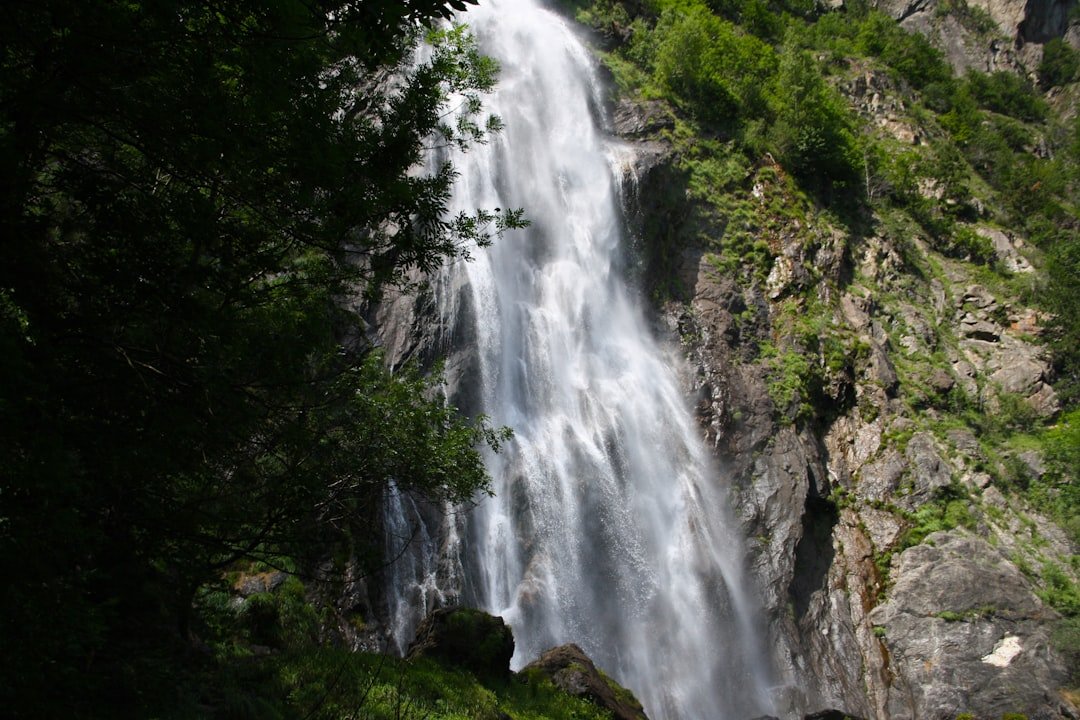
Waterfalls give me opportunities to experiment with both fast and slow shutter speeds. A fast shutter can freeze individual droplets, while a slower exposure can soften moving water. The more important choice is usually the composition around the water.
Rhine Falls
Rhine Falls near Schaffhausen is described by Switzerland Tourism as Europe’s largest waterfall. It stretches about 150 metres across and drops approximately 23 metres.
Rhine Falls is roughly 150 metres wide and 23 metres high, which is why including people, rocks, platforms, or surrounding landscape can make its scale much clearer in a photograph.
I like experimenting with more than one viewpoint. A wide composition communicates the scale of the falls, while a tighter frame can emphasize the power and texture of the water.
Trümmelbach Falls
Trümmelbach Falls in Lauterbrunnen Valley provides a completely different experience. Lauterbrunnen Tourism highlights the waterfalls as a major local attraction, with water running through the mountain environment.
The enclosed rock, darker conditions, narrow spaces, and powerful moving water make photography more challenging than at an open waterfall. I steady the camera carefully, protect it from spray, and work with the available viewpoints rather than trying to reach unsafe positions.
Warning: Never cross barriers, climb onto unstable rocks, enter rail infrastructure, stand in roads, or move toward cliff edges for a photograph. Around waterfalls and mountains, wet surfaces and sudden weather changes can make apparently easy locations dangerous.
Quaint Villages and Classic Swiss Scenes
The villages scattered through the Alps are some of the places where I most enjoy photographing everyday details rather than a single landmark.
Lauterbrunnen
Lauterbrunnen sits in a dramatic valley bordered by steep cliffs and waterfalls. Traditional buildings, roads, fields, church architecture, and the surrounding mountains create layers that work well in both wide landscapes and tighter village photographs.
I often look for a foreground that explains where I am: a chalet, fence, path, meadow, or flower box can give the cliffs and waterfalls a stronger sense of scale.
Gimmelwald
Gimmelwald, high above Lauterbrunnen Valley, feels quieter and more rural. Narrow paths, wooden buildings, grazing cows, gardens, and mountain views make it easy to find smaller scenes as well as broad landscapes.
I enjoy photographing these villages slowly. Instead of chasing only the most recognizable viewpoint, I watch for details such as weathered wood, window boxes, farm paths, changing clouds, and the relationship between homes and the mountains around them.
How I Plan Better Instagram Photos in Switzerland
Choose Light Before Locations
Famous places do not automatically produce strong photographs. Whenever possible, I decide which location matters most for sunrise, morning, late afternoon, or evening and build the rest of the day around it.
Midday light can still work well for street scenes, lakes, architecture, or cloudy mountain conditions, so I do not treat the middle of the day as wasted time.
Use Weather Instead of Fighting It
Clear skies are useful for classic postcard views, but clouds, fog, fresh snow, and changing light can create more distinctive photographs. In mountain regions, I keep the schedule flexible enough to return to an important viewpoint if visibility is poor.
Avoid Crowds Without Blocking Other Visitors
Early starts and weekdays often make photography easier. At popular viewpoints, I take the photograph efficiently and then move aside instead of occupying the best position for a long period.
Respect Villages, Farms, and Private Property
A beautiful chalet, meadow, barn, or garden is not automatically a public photo set. I stay on public routes unless access is clearly permitted, avoid disturbing livestock, and respect signs and residents.
Check Drone Rules Before Every Flight
Drone photography requires additional planning. The Swiss Federal Office of Civil Aviation states that drone pilots must check applicable geographical restrictions before each flight because national and cantonal restrictions can apply and the map can change.
I therefore never assume that a location is legal to fly simply because I have seen drone footage of it online.
If I am planning a trip mainly around photography, I also leave time for the food, culture, and daily life between the famous viewpoints. Montreux, Lucerne, Zermatt, Gruyères, and the mountain villages are more than backdrops. Spending time in each place usually leads to more varied and natural photographs than rushing from one viral location to another.
Conclusion
Switzerland offers an extraordinary range of Instagram-worthy locations, from the Matterhorn and alpine meadows to medieval castles, waterfalls, scenic trains, city streets, lakes, and quiet villages.
The photographs I remember most are rarely the ones created by simply copying a famous composition. They come from noticing how the light changes, finding a useful foreground, waiting for reflections or clouds, and giving each location enough time to reveal something different.
Whether I am photographing the Matterhorn above Zermatt, Chillon Castle beside Lake Geneva, a red train crossing the Alps, or a wooden chalet in Gimmelwald, I try to let the place remain the subject rather than treating it only as content for social media. That approach gives me better photographs and a better experience of Switzerland at the same time.
Frequently Asked Questions
What are Instagram spots in Switzerland?
Instagram spots in Switzerland are particularly photogenic locations that work well for travel photography and social media. They include mountain viewpoints, lakes, waterfalls, historic towns, castles, scenic rail routes, villages, and urban locations.
What are some popular Instagram spots in Switzerland?
Popular choices include the Matterhorn and Gornergrat near Zermatt, Chapel Bridge in Lucerne, Chillon Castle near Montreux, Lauterbrunnen Valley, Rhine Falls, Gruyères, the Bernina railway route, and alpine landscapes around Grindelwald and the Aletsch region.
How can I find Instagram spots in Switzerland?
Start with official destination websites, maps, hiking information, tourism accounts, and photography guides. Location tags and social-media posts can provide inspiration, but confirm access independently because trails, viewpoints, transport services, murals, and local restrictions can change.
What should I consider when visiting Instagram spots in Switzerland?
Respect barriers, private property, local residents, livestock, wildlife, and other visitors. Wear appropriate footwear in mountain areas, check weather and transport information, stay on permitted routes, and never take unnecessary risks near cliffs, waterfalls, roads, or railway infrastructure for a photograph.
When is the best time to photograph Switzerland?
There is no single best season. Spring and summer suit green valleys and flowers, autumn can add warmer foliage, and winter creates snow-covered landscapes. For individual locations, early morning and late afternoon often provide softer light and fewer people than the middle of the day.
Can I use a drone at Instagram spots in Switzerland?
Not automatically. Swiss drone rules include geographical restrictions, and additional national or cantonal limits may apply. Check the current Swiss Federal Office of Civil Aviation drone map and relevant local rules before every flight instead of relying on older social-media posts.
Sources
- Zermatt Tourism: Gornergrat Mountain Station — supports Gornergrat’s elevation and location.
- Château de Chillon — official information about Chillon Castle and its Lake Geneva setting.
- Switzerland Tourism: Gruyères Castle — supports the castle’s Swiss location and history.
- Glacier Express — official route and panoramic-journey information.
- Rhaetian Railway: Bernina Express — official information about the Bernina route.
- Swiss Federal Office of Civil Aviation — current geographical drone restriction guidance.