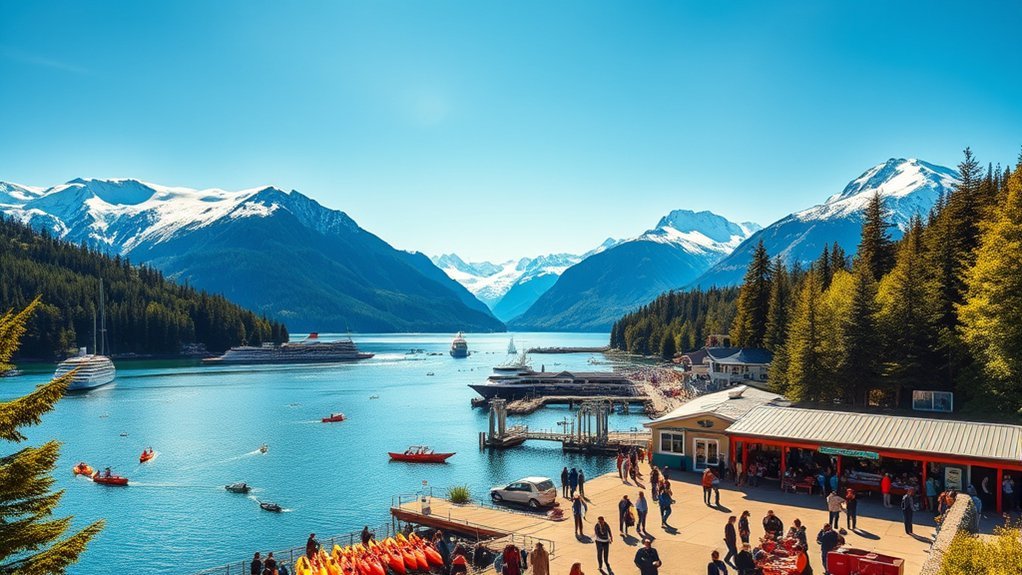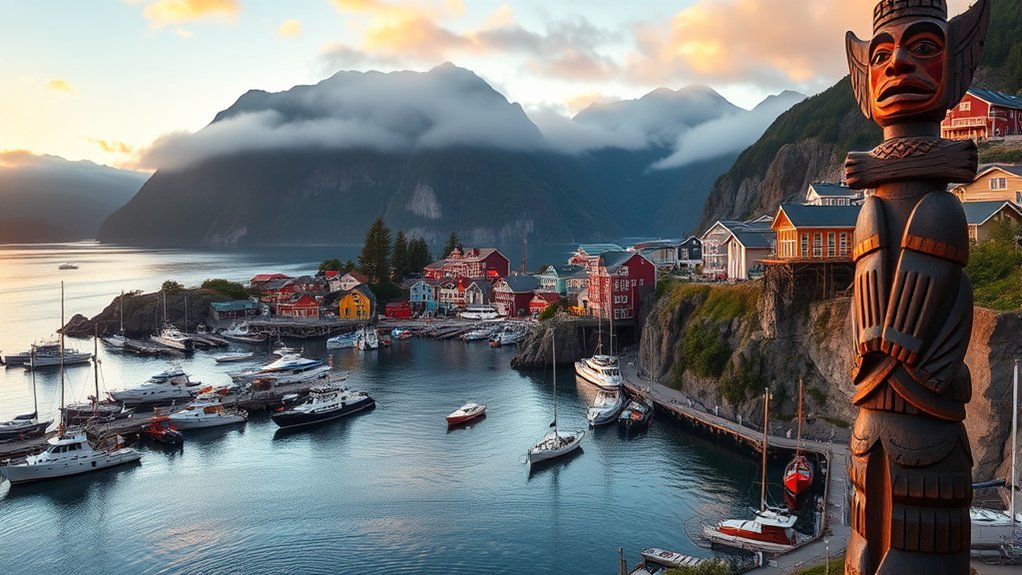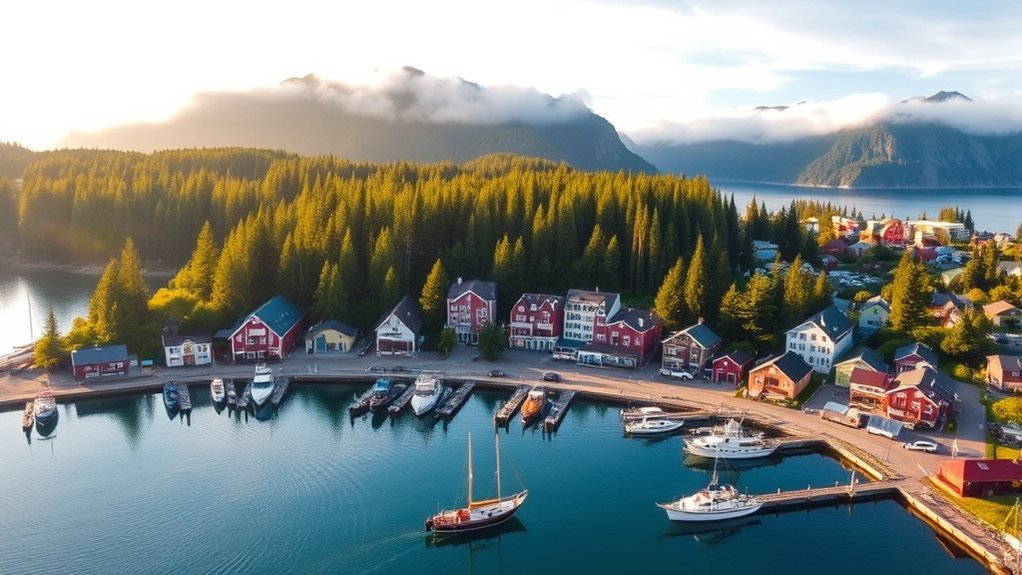
Ketchikan, Alaska, known as the “Salmon Capital of the World” and the ancestral home of the Tlingit, Haida, and Tsimshian peoples, offers a dramatic coastal backdrop where the temperate rainforest of the Tongass National Forest meets the Tongass Narrows. Choosing where to stay in Ketchikan depends largely on whether you want immediate walkability to historic boardwalks, easy access to the Alaska Marine Highway ferry terminal, or a secluded fishing lodge nestled along a secluded cove.
Quick Answer
The best area to stay in Ketchikan for first-time visitors is Downtown near Historic Creek Street, offering walkable access to shops, totem parks, and harbor tours. For luxury and panoramic harbor views, choose Cape Fox Lodge. For ferry travelers and business, stay near the Ferry Terminal / West End at The Landing Hotel, or book Salmon Falls Resort for an all-inclusive wilderness fishing experience.
Key Takeaways
- Downtown & Creek Street: Best for walkability, historic atmosphere, dining, and travelers without a rental car.
- West End / Ferry Terminal: Ideal for travelers arriving via the Alaska Marine Highway System or seeking modern conveniences near grocery stores.
- North & South Tongass Highway: Best for sportfishing lodges, quiet waterfront vacation rentals, and access to hiking trailheads.
- Airport Transfer Logistics: Ketchikan International Airport (KTN) is located on Gravina Island and requires a mandatory 5-minute ferry crossing to reach the main town on Revillagigedo Island.
Overview of Ketchikan Neighborhoods & Geography
Ketchikan is situated on Revillagigedo Island in Southeast Alaska. The city is linear, stretching roughly 30 miles along the coastline along the North and South Tongass Highway, pinned between the ocean waters of the Tongass Narrows and steep, forested mountain ridges. Because the town is long and narrow, understanding its core districts will save you time and transit expenses.
Note: Ketchikan sits within a temperate rainforest receiving an average of over 140 inches of rainfall annually. Selecting accommodations with dry-room facilities, covered decks, or central locations reduces weather-related travel friction.
The Best Areas to Stay in Ketchikan
1. Downtown & Historic Creek Street
Downtown Ketchikan surrounds the cruise ship docks and the mouth of Ketchikan Creek. The historic boardwalk of Creek Street—built on pilings over the water—was the town’s red-light district during the Gold Rush era and is now home to boutique art galleries, local restaurants, and the iconic Married Man’s Trail.
- Best For: First-time visitors, short stays, and travelers without a vehicle.
- Highlights: Immediate walking access to the Chief Johnson Totem Pole, the Tongass Historical Museum, and the Creek Street salmon ladder.
- Atmosphere: Bustling during summer cruise ship port hours (8:00 AM to 5:00 PM), transforming into a quiet, atmospheric coastal village in the evenings.
2. West End & Ferry Terminal District
Located roughly two miles north of Downtown along the Tongass Narrows, the West End serves as the practical and commercial core of Ketchikan. This area houses the Alaska Marine Highway System ferry terminal, the inter-island ferry to Prince of Wales Island, grocery stores, and local dining favorites.
- Best For: Independent travelers arriving by ferry, road-trippers, and business travelers.
- Highlights: Proximity to the Ketchikan airport ferry slip and convenient transit links into downtown via the local “Silver Line” bus system.
- Atmosphere: Practical, local, and less tourist-dense than the historic district.
3. North & South Tongass Highway (Out of Town)
If you prefer wilderness solitude, sportfishing access, or private cabins, head beyond city limits. North Tongass leads toward Ward Cove, Refuge Cove, and Clover Pass. South Tongass heads toward the native village of Saxman, Herring Cove (a prime black bear viewing area during salmon runs), and Beaver Falls.
- Best For: Anglers, wildlife enthusiasts, families renting standalone cabins, and extended stays.
- Highlights: Direct ocean charters, private boat docks, and trailhead access into the Tongass National Forest.
- Atmosphere: Quiet, forested, and rustic. A rental car is required in this area.
Top Hotels & Lodges in Ketchikan
Ketchikan’s hotel inventory ranges from landmark cliffside lodges to restored boardwalk guesthouses. Below are the most reputable verified accommodations in the region.
| Property | Location | Style / Tier | Key Feature |
|---|---|---|---|
| Cape Fox Lodge | Downtown / Hillside | Upscale Lodge | Private funicular (tram) down to Creek Street; museum-grade Native art. |
| The Inn at Creek Street | Historic Creek Street | Boutique Historic Inn | Rooms perched directly over the water and harbor. |
| The Landing Hotel | West End | Full-Service Hotel | Located directly across from the AMHS Ferry Terminal; on-site dining. |
| The Gilmore Hotel | Downtown Waterfront | Historic Boutique | 1920s architecture on the National Register of Historic Places. |
| Salmon Falls Resort | North Tongass (Mile 16) | All-Inclusive Luxury Lodge | Fully guided sportfishing charters, custom fish processing, gourmet cuisine. |
Cape Fox Lodge
Perched high on a hillside overlooking the Tongass Narrows, Cape Fox Lodge is Ketchikan’s premier full-service lodging. Owned by the Cape Fox Corporation (an Alaska Native Corporation), the property features an expansive collection of authentic Tlingit totem poles and Northwest Coast Native art. The on-site restaurant, the Heen Kahidi Dining Room, serves fresh halibut and King salmon with panoramic ocean views. Guests can take the lodge’s private funicular railway directly down the cliff face to Creek Street.
The Inn at Creek Street & Gilmore Hotel
For heritage lovers, The Inn at Creek Street offers multi-room suites and restored apartments located across historic boardwalk buildings. You can watch harbor seals hunt migrating salmon right beneath your window. Nearby on Front Street, the Gilmore Hotel provides classic 1927 historic charm with direct access to the downtown waterfront and on-site seafood dining at Annabelle’s Famous Keg and Chowder House.
Pro Tip: If booking at Cape Fox Lodge, request a water-facing room on the second or third floor of the main lodge to watch floatplanes land on the Tongass Narrows against the backdrop of Pennock Island.
Waterfront Bed & Breakfasts and Boutiques
Ketchikan has an established network of licensed bed-and-breakfasts and private oceanfront rentals that provide a more personal touch than standard commercial hotels.
- Black Bear Inn: Located on North Tongass Highway, this waterfront B&B offers luxury suites, covered outdoor fireplaces, and a private dock where guests can spot humpback whales, orcas, and bald eagles.
- Clover Pass Resort: Situated at the northern end of the road system, this historic resort caters to independent fishermen, offering skiff rentals, moorage, RV hookups, and waterfront rooms.
- My Alaska Cabins: Standalone private cedar cabins offering full kitchens, private decks, and ocean views for families or small groups.
Budget-Friendly Accommodations & Wilderness Cabins
Because Ketchikan is an island community where most goods are barged in, lodging prices reflect high operating costs. However, budget-conscious travelers have several viable strategies:
Warning: Traditional youth hostels are no longer operating in Ketchikan. Avoid booking unverified shared-dorm listings. During the peak summer cruise season (May to September), standard motel rates routinely exceed $200 per night.
- Standard City Motels: Properties like the Super 8 by Wyndham Ketchikan provide basic, clean accommodations with airport-ferry shuttle services.
- USFS Public Use Cabins: The US Forest Service manages rustic wilderness cabins throughout the Tongass National Forest surrounding Ketchikan (such as Phocena Bay and Deer Mountain Cabins). These rent for $45–$75 per night via Recreation.gov and require hiking in or chartering a floatplane/water taxi.
- Ward Lake & Settlers Cove Campgrounds: Maintained USFS campgrounds offering vehicle and tent camping sites north of town with potable water and fire rings.
Essential Ketchikan Booking & Travel Tips
To ensure a seamless stay in Ketchikan, plan around the town’s unique geographical and seasonal realities:
- The Gravina Island Airport Ferry: Ketchikan International Airport (KTN) is on a separate island. When arriving by air, you collect your luggage, board the Ketchikan Borough Airport Ferry for a 5-minute crossing ($6.00 passenger fare), and meet taxis, city buses, or hotel shuttles on the Revillagigedo Island side.
- Advance Booking Windows: Summer cruise season runs from May through September. Book downtown accommodations 6 to 9 months in advance. Fishing lodges require booking 9 to 12 months ahead for peak king and silver salmon runs.
- Transportation Options: If you are staying Downtown, you do not need a rental car. The Ketchikan Transit System operates year-round bus routes connecting Downtown, the West End, and Saxman Native Village. If staying in North or South Tongass, reserve a rental car well ahead of arrival, as local fleets are limited.
Exploring Ketchikan: Top Attractions Near Lodging
Ketchikan’s attractions are closely tied to its coastal and cultural heritage:
- Totem Heritage Center: Located within walking distance of Creek Street, housing an unparalleled collection of preserved 19th-century totem poles retrieved from abandoned Tlingit and Haida village sites.
- Saxman Native Village: Located 2.5 miles south of Downtown, showcasing active totem carving sheds, a clan house, and traditional dance performances.
- Misty Fjords National Monument: A 2.3-million-acre wilderness area of sheer 3,000-foot granite sea cliffs and glacial fjords, accessible via floatplane excursions or boat tours departing from the downtown harbor.
- Rainbird Hiking Trail: A scenic trail running along the bluffs above the city, offering panoramic vistas of the Tongass Narrows and marine traffic.
Frequently Asked Questions
What is the best time of year to visit Ketchikan?
The best time to visit Ketchikan is between June and August when daily temperatures average 60°F to 65°F (15°C to 18°C) and salmon runs draw bald eagles, harbor seals, and black bears. May and September offer fewer crowds and lower hotel rates, but experience higher average rainfall.
Are there pet-friendly hotels in Ketchikan?
Yes. Several established properties offer pet-friendly rooms, including The Landing Hotel and The Gilmore Hotel. Always notify the property in advance, as pet-designated rooms are limited and typically carry a daily sanitation fee ($25–$50/night).
How do I get to Ketchikan from Anchorage or Seattle?
The fastest way is via commercial jet service. Alaska Airlines operates daily nonstop flights from Seattle-Tacoma International Airport (SEA) to Ketchikan (KTN) in under two hours. Flights from Anchorage (ANC) connect through Juneau or Sitka on Southeast Alaska “milk run” routes. Alternatively, Ketchikan is accessible by sea via the Alaska Marine Highway System ferries departing Bellingham, Washington, or Prince Rupert, British Columbia.
Is public transportation available in Ketchikan?
Yes. The Ketchikan Gateway Borough operates public transit buses (the Green Line and Silver Line) that service Downtown, the Ferry Terminal, Saxman, and major shopping centers. During the summer, the city also operates a free downtown shuttle connecting cruise ship berths with key cultural landmarks.
What are the best local dining options near downtown hotels?
Top dining within walking distance of downtown accommodations includes The Alaska Fish House (known for fish and chips and smoked salmon chowder), Annabelle’s Famous Keg and Chowder House (crab cakes and prime rib), Heen Kahidi at Cape Fox Lodge (fine seafood dining), and New York Cafe (historic dining on Creek Street).
Conclusion
Selecting the right accommodation in Ketchikan sets the foundation for your Southeast Alaska adventure. Staying in Downtown or along Creek Street at Cape Fox Lodge or The Inn at Creek Street puts you in the center of historic boardwalks, totem parks, and harbor life. If you require seamless transit connections, The Landing Hotel near the ferry terminal provides outstanding utility, while outer lodges like Salmon Falls Resort and Black Bear Inn deliver quintessential wilderness seclusion. Book well in advance of the summer season, pack reliable rain gear, and prepare to experience one of Alaska’s most vibrant coastal communities.
Sources
- Travel Alaska — Official state travel planner and regional destination profiles.
- U.S. Forest Service: Tongass National Forest — Wilderness guidelines, recreation areas, and public use cabin reservations.
- Alaska Marine Highway System (AMHS) — Route schedules, port facilities, and ferry transit logistics.
- Ketchikan Gateway Borough — Public transit operations, ferry schedules, and municipal visitor guidelines.