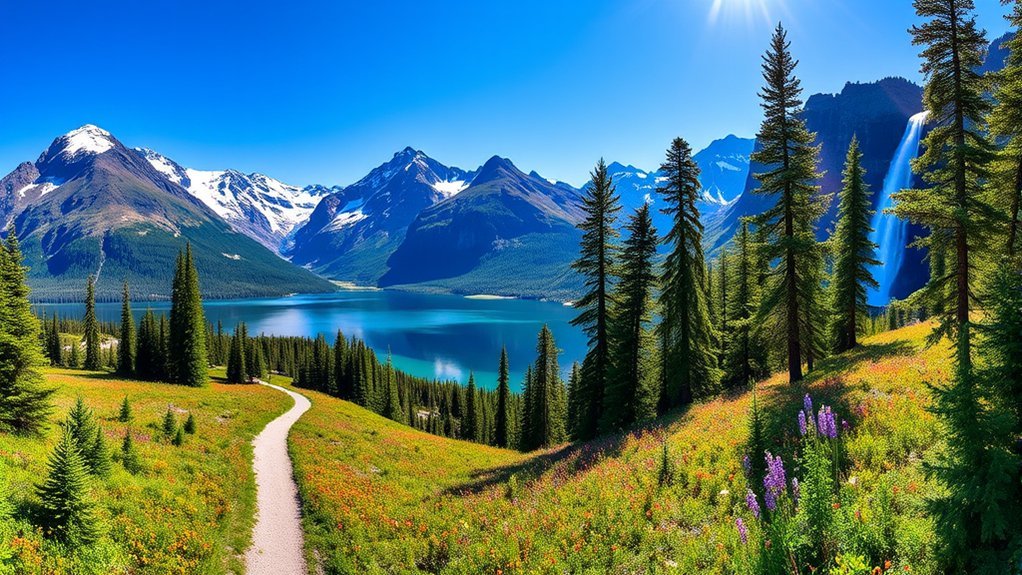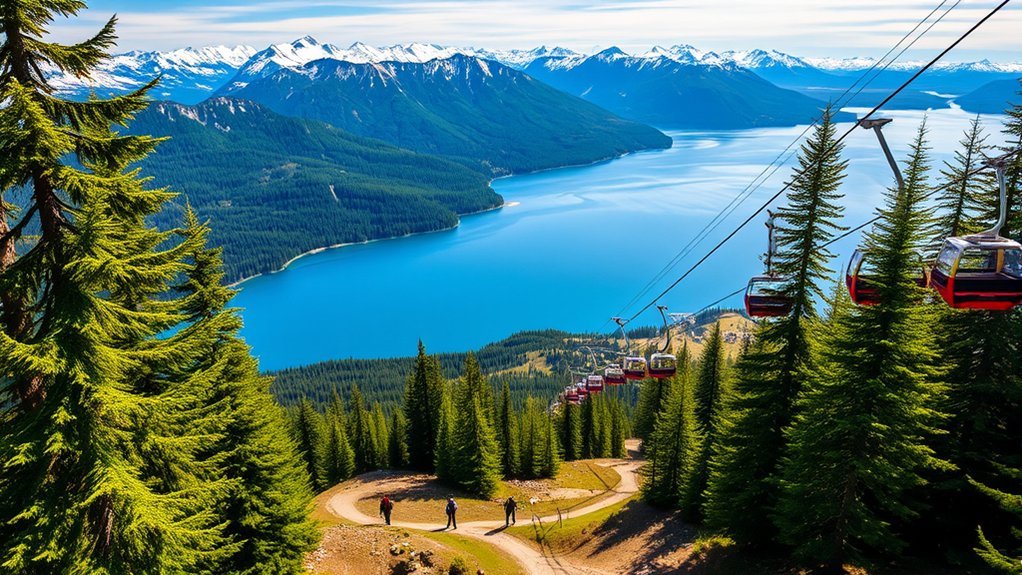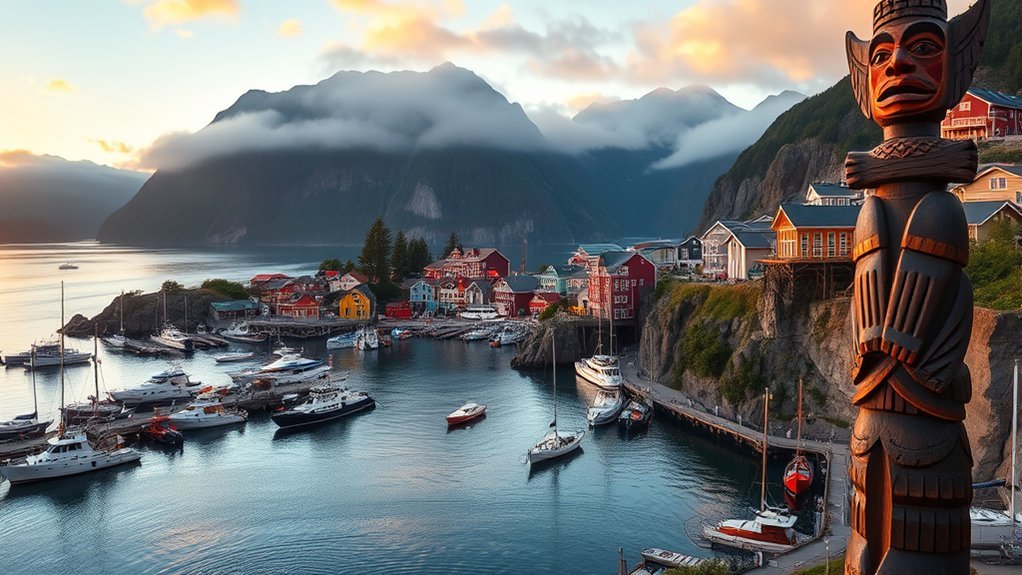
Ketchikan, Alaska, known as the “First City” and the Salmon Capital of the World, serves as the southernmost gateway to the Inside Passage. Renowned for possessing the world’s largest collection of standing totem poles, a rich Indigenous heritage spanning the Tlingit, Haida, and Tsimshian peoples, and dramatic temperate rainforest landscapes, this historic fishing hub offers an array of outdoor adventures and cultural landmarks within easy reach of its historic waterfront.
Quick Answer
The best things to do in Ketchikan include strolling the historic wooden boardwalks of Creek Street, viewing authentic 19th-century poles at the Totem Heritage Center and Totem Bight, taking a floatplane flightseeing tour over Misty Fjords National Monument, watching timber sports at the Great Alaskan Lumberjack Show, and chartering a boat for world-class halibut and salmon fishing.
Key Takeaways
- Compact Downtown: Most central attractions—including Creek Street, Married Man’s Trail, Tongass Historical Museum, and the Great Alaskan Lumberjack Show—are within a 10- to 15-minute walk of cruise berths 1–4.
- Two Port Locations: Downtown berths allow direct foot access, while ships docking at Ward Cove require a complimentary 20-minute shuttle bus into the city center.
- Rainforest Preparedness: Ketchikan receives an average of 140 to 150 inches of rain annually; waterproof outerwear and sturdy footwear are essential year-round.
- Indigenous Art Epicenter: Over 80 historic and replica totem poles are spread across the Totem Heritage Center, Saxman Native Village, and Totem Bight State Historical Park.
Explore the Totem Heritage Center
Located near Ketchikan Creek on Deermount Street, the Totem Heritage Center houses one of the world’s most significant collections of original 19th-century totem poles. Unlike the modern replicas found outdoors in local parks, these 33 unrestored cedar poles and fragments were carefully salvaged from abandoned Tlingit and Haida villages—including Tongass Island, Village Island, and Old Kasaan—during a major preservation effort in the late 1960s.
The museum environment is climate-controlled to preserve the delicate, weathered cedar from further fungal decay. In addition to towering mortuary and heraldic poles, exhibits feature historic basketry, regalia, ceremonial masks, and traditional carving tools. The center also functions as an active cultural learning hub, hosting regular classes where master Native carvers and weavers pass traditional Southeast Alaskan art forms down to new generations.
Pro Tip: Combine your visit with the Tongass Historical Museum downtown by purchasing a discounted two-museum combo pass at either front desk.
Visit Creek Street
Creek Street is Ketchikan’s most famous historic landmark, constructed entirely on wooden pilings suspended over Ketchikan Creek. During the late 19th and early 20th centuries, this boardwalk served as the town’s red-light district, housing more than 30 brothels that catered to local fishermen, miners, and timber workers during the regional boom years.
Historic Fishing District & Dolly’s House
Today, the historic wooden district is preserved as a pedestrian-only corridor lined with restored pastel-painted buildings. Its centerpiece is Dolly’s House Museum (No. 24 Creek Street), the former residence of Ketchikan’s most famous madam, Dolly Arthur. Left virtually untouched since Arthur’s retirement in the 1940s, the brothel museum contains original vintage furnishings, secret liquor hiding spots from the Prohibition era, and authentic memorabilia from Ketchikan’s frontier past.
Scenic Boardwalk Views & Salmon Runs
The boardwalk provides sweeping views of tidal water, surrounding lush hillsides, and coastal architecture. Between mid-July and September, Creek Street becomes an prime salmon-viewing location. Thousands of pink, chum, and silver salmon fight their way up Ketchikan Creek to spawn, frequently attracting harbor seals and bald eagles directly beneath the boardwalk pilings.
Unique Shops and Galleries
The former boarding houses and cottages along Creek Street now operate as independent art galleries, gift shops, and craft boutiques. Visitors can purchase genuine Native Alaskan carvings, silver and copper jewelry, handwoven cedar bark baskets, and gourmet canned or smoked wild Alaskan salmon.
Take a Ketchikan Fishing Charter
Billed as the “Salmon Capital of the World,” Ketchikan sits along the primary migratory highway of the Inside Passage, providing some of the most productive saltwater sport fishing in North America.
Warning: All non-resident anglers aged 16 and older must purchase an official Alaska sport fishing license from the Alaska Department of Fish and Game (ADF&G) before boarding. If you plan to target Chinook salmon, an additional King Salmon Stamp is legally required.
Types of Fishing Charters
Charters operate primarily out of downtown harbors, Clover Pass, or Knudson Cove, offering half-day (4–5 hours) and full-day (8 hours) excursions tailored to cruise passenger schedules and serious anglers alike.
| Charter Type | Target Species | Best Suited For |
|---|---|---|
| Salmon Trolling | King (Chinook), Silver (Coho), Pink | Half-day trips, cruise excursions, beginners |
| Deep-Sea Halibut | Pacific Halibut, Rockfish, Lingcod | Full-day anglers looking for bottomfish meat |
| Freshwater Fly Fishing | Cutthroat Trout, Dolly Varden, Salmon | Stream/lake anglers seeking remote wilderness |
Best Seasons to Fish
Fishing success depends heavily on annual migration windows across Southeast Alaska:
- May to Late June: Peak run for large King (Chinook) Salmon.
- Late June to July: Halibut bottom fishing peaks, with King Salmon still present.
- Mid-July to August: Enormous runs of Pink (Humpback) and Chum (Dog) Salmon flood local channels.
- August to September: Prime season for aggressive Silver (Coho) Salmon, offering excellent sport fishing.
Fish Processing and Shipping
Most reputable Ketchikan charter operators coordinate directly with local commercial fish processors (such as Gateway Seafoods or Ketchikan Processing). Your catch can be filleted, vacuum-sealed, flash-frozen, packed in airline-approved insulated coolers, and shipped via overnight air freight straight to your home.
Discover Misty Fjords National Monument
Spanning 2.3 million acres within the Tongass National Forest, Misty Fjords National Monument Wilderness sits roughly 22 miles east of Ketchikan. Carved by ancient glaciers, this protected wilderness features sheer 3,000-foot granite cliffs rising directly from deep ocean canals, cascading waterfalls, and dense temperate rainforest.
Because no roads lead into Misty Fjords, exploration is limited to floatplanes (seaplanes) or high-speed catamarans. Key geological landmarks include Rudyerd Bay, Punchbowl Cove, and New Eddystone Rock—a dramatic 237-foot volcanic basalt pillar standing isolated in the center of Behm Canal.
“Misty Fjords preserves an untouched glacier-carved sanctuary where 3,000-foot vertical granite walls plunge into waters hundreds of feet deep.”
Stroll Through the Ketchikan Rainbird Trail
The Rainbird Trail is a 1.3-mile one-way trail situated on the hillside directly above central Ketchikan. Winding through old-growth western redcedar, Sitka spruce, and western hemlock, the trail offers elevated vantage points overlooking the Tongass Narrows, cruise ship berths, and Gravina Island.
The trail is rated moderate, with certain sections featuring exposed tree roots, uneven rocky surfaces, and wooden stairs that become slick in wet weather. Access points are located along the Third Avenue bypass and near the University of Alaska Southeast Ketchikan campus.
Experience the Great Alaskan Lumberjack Show
Located on Spruce Mill Way within a brief 5-minute walk from cruise dock Berth 2, the Great Alaskan Lumberjack Show celebrates the logging history that defined Southeast Alaska. The 60-minute exhibition features professional athletes competing in events that test strength, balance, and precision.
| Event | Competition Description |
|---|---|
| Log Rolling (Birling) | Competitors sprint on floating cedar logs to unseat their opponent. |
| Speed Climbing | Athletes scale 50-foot vertical cedar spars using spurs and ropes. |
| Underhand & Standing Chop | Speed chopping through horizontal and vertical wood blocks with racing axes. |
| Jackleg Sawing & Carving | Timed competition using high-powered custom competition chainsaws. |
The arena features covered, heated grandstands, making it an all-weather entertainment option suitable for visitors of all ages.
Tour the Alaska Rainforest Sanctuary
Located in Herring Cove, approximately 8 miles south of downtown Ketchikan, the Alaska Rainforest Sanctuary is a 40-acre private reserve. The property encompasses coastal wetland estuaries, salmon-bearing streams, and dense old-growth temperate rainforest.
Guided nature walks take visitors along elevated wooden boardwalks, where naturalists explain the rainforest ecosystem. Herring Cove is one of the most reliable areas in Ketchikan to view wild black bears foraging for salmon between mid-July and September. The sanctuary also hosts a historic sawmill, a live raptor center, and an Alaska Native totem carving shed.
Enjoy a Floatplane Flightseeing Tour
With road access completely cut off from the continental mainland, aviation is fundamental to life in Ketchikan. Taking a floatplane tour in a de Havilland Beaver or Otter provides panoramic views of coastal fjords, subalpine lakes, and glacier-cut mountain valleys.
Scenic Aerial Views
Departing directly from Tongass Narrows, flightseeing routes soar over Revillagigedo Island, alpine tarns, and cascading mountain runoffs. Many flight operators include a remote water landing on a secluded wilderness lake or deep within Misty Fjords, allowing passengers to step out onto the plane’s pontoons in complete silence.
Wildlife Spotting Opportunities
Low-altitude flight paths offer bird’s-eye views of coastal wildlife habitats. Passengers frequently spot pods of orcas (killer whales) or humpback whales surfacing in the channels, mountain goats navigating steep granite cliffs, and coastal black bears foraging along shoreline estuaries.
Visit the Tongass Historical Museum
Situated downtown along the banks of Ketchikan Creek, the Tongass Historical Museum presents an in-depth look into the diverse human history of the region. Through rotating exhibits and permanent archives, the museum documents the ancestral heritage of the Tlingit, Haida, and Tsimshian peoples, the growth of commercial salmon canning, mining ventures, and the 20th-century timber industry.
Exhibits showcase vintage fishing gear, historical photography, Indigenous basketry, and personal artifacts from Ketchikan’s pioneer era, providing vital cultural context before touring the surrounding historical districts.
Visit Totem Bight & Saxman Native Villages
Ketchikan features two primary open-air cultural parks dedicated to the living traditions of Pacific Northwest Native cultures.
Saxman Native Village
Located 2.5 miles south of downtown Ketchikan, Saxman Native Village features 25 authentic totem poles carved by renowned Tlingit master carver Nathan Jackson and his apprentices. Visitors can tour the Beaver Clan House to watch traditional dance performances, explore the active carving shed to see new poles crafted from raw cedar logs, and learn the lineage stories behind each monument.
Totem Bight State Historical Park
Located 10 miles north of downtown on the waterfront, Totem Bight State Historical Park was established in the late 1930s under the Civilian Conservation Corps (CCC). The 33-acre state park features 14 replicated totem poles set along a coastal rainforest path, as well as a large hand-hewn Clan House with an ocean-facing entrance facing the Tongass Narrows.
Note: Totem Bight is accessible via Ketchikan’s local public transit bus (Silver Line North), while Saxman Native Village can be reached via the Silver Line South or a quick 5-minute taxi from the cruise docks.
Go Whale Watching & Marine Wildlife Tours
The nutrient-dense waters of Revillagigedo Channel and Clarence Strait support abundant marine wildlife. Dedicated whale watching excursions utilize heated, high-speed catamarans with outdoor viewing decks to track marine life.
- Humpback Whales: Present from May through September, often observed bubble-net feeding, breaching, and tail-slapping.
- Orcas (Killer Whales): Both resident fish-eating pods and transient mammal-eating pods travel through local waterways year-round.
- Marine Mammals & Birds: Frequent encounters include Steller sea lions, harbor seals, sea otters, and bald eagles nesting in old-growth canopy trees.
Hike the Married Man’s Trail
The Married Man’s Trail is a short, historic 0.25-mile wooden boardwalk path that connects Creek Street to Park Avenue along the banks of Ketchikan Creek. During the early 1900s, this discreet, unlit trail was used by married men to visit the Creek Street brothels without being seen walking through downtown.
Today, the path offers a peaceful creekside stroll past a dramatic salmon ladder. During the peak late-summer salmon runs, visitors can stand just feet above the rushing rapids to watch thousands of salmon jumping up the wooden baffles on their way to upstream spawning beds.
Experience Ketchikan’s Local Cuisine
Ketchikan’s culinary identity is anchored in fresh, sustainable seafood harvested directly from Southeast Alaskan waters.
- Wild Alaska Salmon: Savor grilled King or Coho fillets, salmon chowder, and locally cured and smoked candy salmon.
- Fresh Halibut: Available at waterfront seafood eateries as beer-battered fish and chips, fish tacos, or pan-seared fillets.
- Dungeness & King Crab: Indulge in steamed whole Dungeness crab clusters or wild red king crab legs dipped in melted garlic butter.
- Local Bakeries & Cafes: Sample pastries made with hand-picked wild Alaskan berries (salmonberries, blueberries, and lingonberries) alongside artisan coffee.
Frequently Asked Questions
What is the best time of year to visit Ketchikan?
The best time to visit Ketchikan is during the summer cruise season from mid-May through September. July and August offer the warmest average temperatures (60°F to 65°F), the most active salmon runs, peak whale watching opportunities, and prime wildlife viewing throughout the Tongass National Forest.
How do I get around Ketchikan without a car?
Ketchikan’s central downtown area is highly walkable. Berths 1 through 4 are directly adjacent to town, and the city operates a free Downtown Shuttle bus loop during cruise season. For attractions farther out (such as Totem Bight or Saxman), visitors can utilize the Ketchikan Transit public bus system (Silver Line North and South), book licensed taxis, or join organized shore excursions.
Where do cruise ships dock in Ketchikan?
Cruise ships dock either downtown at Berths 1–4 (directly along Front and Water Streets) or at The Mill at Ward Cove, located 7 miles north of downtown. Ward Cove provides continuous, complimentary shuttle buses that transport guests to the Ketchikan downtown core in roughly 15 to 20 minutes.
What wildlife can you see in Ketchikan?
Common wildlife sightings include bald eagles, harbor seals, and sea otters along the waterfront. In surrounding waters, humpback whales and orcas are frequently spotted. Along local creeks and rainforest estuaries (such as Herring Cove), coastal black bears are regularly seen feeding on spawning salmon from mid-July through early September.
Is Ketchikan suitable for family travel with children?
Yes. Ketchikan offers several family-friendly attractions, including the high-energy Great Alaskan Lumberjack Show, accessible boardwalks along Creek Street, wildlife exploration at the Alaska Rainforest Sanctuary, and interactive totem pole carving demonstrations at Saxman Native Village.
Conclusion
Ketchikan provides a quintessential Southeast Alaska experience, balancing profound Native cultural heritage with rugged wilderness access. Whether you spend your day admiring the historic poles at the Totem Heritage Center, flightseeing above the granite cliffs of Misty Fjords, or watching spawning salmon from the wooden boardwalks of Creek Street, this coastal hub delivers unforgettable adventures for cruise passengers and independent travelers alike.
Sources
- U.S. Forest Service (USFS) — Misty Fjords National Monument Wilderness Management and Regulations
- Alaska Department of Fish and Game (ADF&G) — Southeast Alaska Sport Fishing Regulations and Salmon Migration Calendars
- City of Ketchikan Museums — Totem Heritage Center Historical Archives and Salvage Documentation
- Alaska State Parks (DNR) — Totem Bight State Historical Park History and CCC Carving Project Records