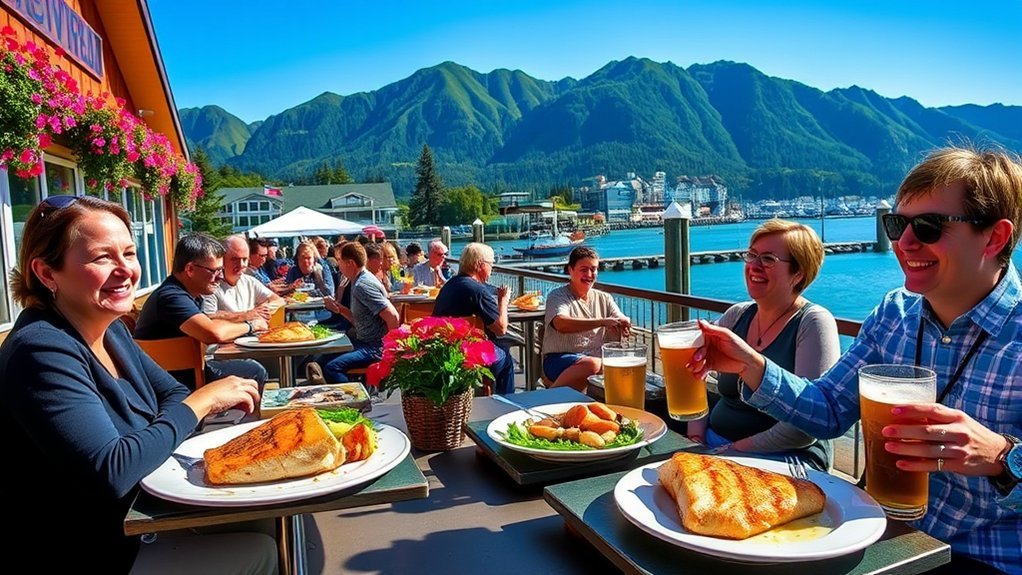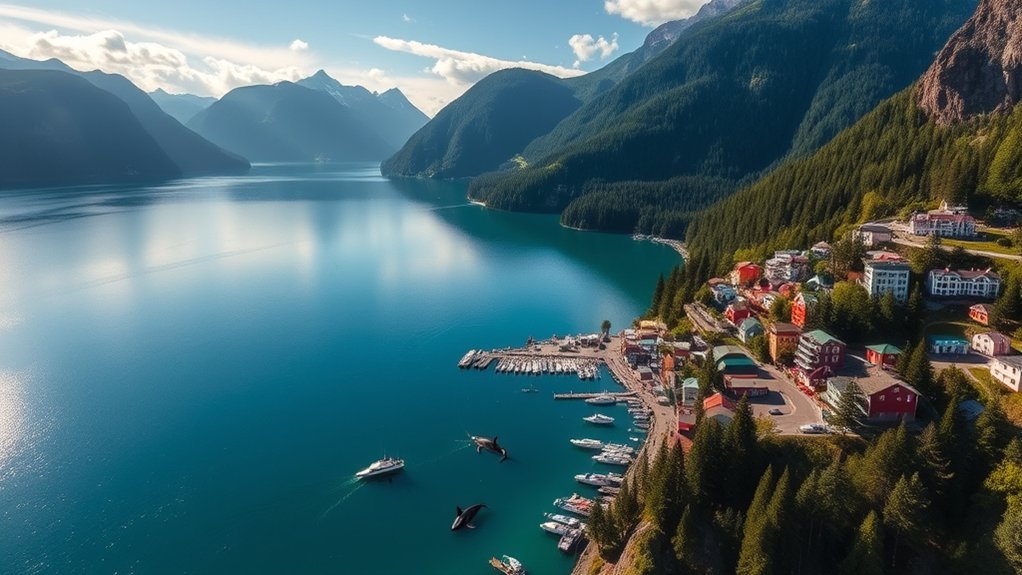
Known as the “First City” of Alaska and the Salmon Capital of the World, Ketchikan is situated along the Tongass Narrows at the southern tip of the Inside Passage. Renowned for containing the world’s largest collection of standing Native totem poles, an iconic stilted boardwalk district, and immediate access to the 17-million-acre Tongass National Forest, Ketchikan serves as a premier destination for cultural immersion and wilderness excursions.
Quick Answer
The best things to do in Ketchikan include exploring the 19th-century poles at the Totem Heritage Center, walking the historic stilted boardwalk of Creek Street, flightseeing over Misty Fjords National Monument, attending the Great Alaskan Lumberjack Show, and salmon fishing or wildlife watching in the Tongass National Forest.
Key Takeaways
- Rich Indigenous Heritage: View authentic 19th-century preserved poles at the Totem Heritage Center and carved collections at Totem Bight State Historical Park and Saxman Native Village.
- Historic Waterfront: Creek Street offers shopping, local art, and historic landmarks like Dolly’s House Museum along an elevated wooden boardwalk over Ketchikan Creek.
- Wilderness & Flightseeing: Floatplane tours to Misty Fjords National Monument and guided walks through the Alaska Rainforest Sanctuary provide prime black bear, bald eagle, and harbor seal viewing.
- World-Class Angling: Peak salmon runs run from May through September across five Pacific salmon species.
Explore the Totem Heritage Center
Established in 1976, the Totem Heritage Center houses one of the world’s largest collections of original, unrestored 19th-century totem poles. Retrieved from uninhabited Tlingit and Haida village sites—including Tongass Island, Village Island, and Old Kasaan—these historic cedar monuments are preserved in a climate-controlled environment to protect their natural aging process.
Unlike modern replicas, these artifacts reveal original tool marks and traditional pigments derived from natural minerals and organic materials. Visitors can examine detailed carvings representing family crests, historical events, and oral histories, while on-site Alaska Native artisans often demonstrate traditional Northwest Coast arts, such as spruce root basketry, wool weaving, and cedar carving.
Pro Tip: If you want to see standing outdoor totem poles in natural coastal environments, pair your visit with a trip to Totem Bight State Historical Park (10 miles north of downtown) or Saxman Native Village (2.5 miles south).
Visit the Alaska Rainforest Sanctuary
Located at Herring Cove, approximately 8 miles south of downtown Ketchikan, the Alaska Rainforest Sanctuary is a 40-acre private reserve situated in a coastal temperate rainforest. The reserve features an elevated boardwalk system traversing wetland estuaries, hemlock groves, and cedar forests.
Rainforest Sanctuary Wildlife Highlights
Because Herring Cove features a major salmon hatchery return, the sanctuary serves as an active foraging ground for bald eagles, black bears, coastal birds, and harbor seals during spawning season.
| Species | Peak Viewing Window | Primary Habitat Area |
|---|---|---|
| Bald Eagles | May through September | Rainforest canopy & estuary shorelines |
| Black Bears | July through September (Salmon Run) | Herring Creek & estuary tide flats |
| Harbor Seals | May through September | Herring Cove coastal waters |
| Pacific Salmon | Mid-July through September | Herring Bay freshwater streams |
Guided Nature Tours
Naturalist-led excursions navigate the sanctuary’s half-mile trail system, providing education on temperate rainforest ecology, nurse logs, epiphytes, and carnivorous plants like sundews. Tours regularly include visits to the historic Herring Bay Lumber Company sawmill, the Alaska Raptor Center raptor display, and an on-site master carver’s studio.
Take a Scenic Cruise through Tongass Narrows & Fjords
Boat excursions departing from Ketchikan’s downtown harbor cruise along the Tongass Narrows, Nichols Passage, and into the protected fjords of Southeast Alaska. These maritime routes offer views of steep granite cliff faces, marine wildlife, and remote lighthouse installations such as the historic Guard Island Lighthouse, established in 1904.
High-speed catamarans and expedition vessels navigate close to shoreline waters, allowing passengers to spot humpback whales, orcas, Steller sea lions hauled out on navigational buoys, and bald eagles nesting in old-growth spruce tops.
Discover the Tongass Historical Museum
Situated in downtown Ketchikan on the banks of Ketchikan Creek, the Tongass Historical Museum chronicles the cultural evolution of Ketchikan from an indigenous summer fish camp to the “Canned Salmon Capital of the World” and a regional timber powerhouse.
Unique Local Artifacts & Archival Collections
The museum holds an extensive collection of historical photographs, commercial fishing gear, native beadwork, mining equipment, and historical logging implements. Rotating exhibitions highlight the diverse communities that shaped the region, including Tlingit, Haida, and Tsimshian peoples, alongside Scandinavian, Filipino, and Japanese cannery workers.
Interactive Learning Opportunities
Visitors can engage with interpretive displays depicting 20th-century cannery operations, historic steamship navigation along the Inside Passage, and indigenous toolmaking. The museum serves as an orientation point for self-guided historic walking tours through downtown Ketchikan.
Experience the Great Alaskan Lumberjack Show
Located within walking distance of the downtown cruise ship berths, the Great Alaskan Lumberjack Show is an open-air, covered stadium performance that celebrates Southeast Alaska’s timber heritage. World-champion timber athletes compete in traditional logging disciplines that were vital during the height of the region’s logging industry.
| Event | Description |
|---|---|
| Log Rolling (Birling) | Athletes balance and spin on floating cedar logs in a 90-foot pool. |
| Axe Throwing | Competitors throw double-bitted axes at a bullseye from a distance of 20 feet. |
| Springboard Chop | Lumberjacks scale a pole using springboards to chop through a mounted log block. |
| Speed Climbing | Athletes scale 50-foot vertical cedar spar poles using spurs and wire-core ropes. |
| Crosscut Sawing | Competitors operate two-man “misery whip” handsaws through thick white pine. |
Stroll Through Creek Street
Built directly over Ketchikan Creek on heavy wooden pilings, Creek Street is a historic boardwalk that served as the city’s red-light district from the turn of the 20th century until the mid-1950s. During this era, the boardwalk hosted over 30 boarding houses and brothels catering to local fishermen, miners, and timber workers.
Historic District Landmarks
Today, the restored pastel-painted buildings house local art galleries, souvenir shops, and cafes. Notable stops include:
- Dolly’s House Museum: The preserved 1919 home and brothel of Ketchikan’s most famous madam, Dolly Arthur, containing original furnishings, hidden liquor compartments from Prohibition, and vintage decor.
- Married Man’s Trail: A wooden staircase and trail extending from Creek Street up into the forest, historically used by patrons seeking a discreet route away from the downtown business district.
- Salmon Viewing: From July to September, thousands of pink and silver salmon gather in Ketchikan Creek directly beneath the boardwalk, leaping upstream toward the fish ladder.
Go Wildlife Watching
Ketchikan’s maritime coastline and dense rainforest support high concentrations of wildlife. Key areas for independent and guided wildlife viewing include Ward Cove, Herring Cove, and Rotary Beach.
- Humpback Whales & Orcas: Regularly seen surfacing in Clarence Strait and Revillagigedo Channel between May and September.
- Black Bears: Concentrate along salmon-bearing streams like Herring Creek and Margaret Creek from mid-summer through early autumn.
- Bald Eagles: Abundant year-round, nesting along shorelines and feeding on discarded fish near harbor docks and canneries.
- Marine Mammals: Harbor seals, Steller sea lions, and sea otters inhabit the nearshore kelp beds and rocky outcroppings.
Warning: Always maintain a distance of at least 100 yards from black bears. Carry EPA-registered bear spray when hiking regional trails, make noise in dense brush, and never leave food or fish waste unattended.
Hike the Rainbird Trail
The Rainbird Trail is a 1.3-mile one-way trail traversing the steep ridge above Ketchikan. The route winds through temperate rainforest consisting of western red cedar, Sitka spruce, and western hemlock, offering elevated vantage points of Tongass Narrows, Pennock Island, and the cruise ship terminals below.
“The Rainbird Trail delivers a pristine rainforest hike within minutes of downtown Ketchikan, rewarding hikers with panoramic vistas over the Inside Passage.”
The trail surface includes natural rock outcroppings, exposed tree roots, wooden staircases, and gravel switchbacks. Hikers can access trailheads near the University of Alaska Southeast Ketchikan campus or along the Third Avenue bypass.
Fish for Salmon
Ketchikan earned its moniker as the “Salmon Capital of the World” due to the massive annual migrations of all five Pacific salmon species through its surrounding waters. Guided charters depart daily from downtown harbors for saltwater trolling or freshwater fly fishing.
- King Salmon (Chinook): Peak runs occur from late May through June; these are the largest trophy fish, often exceeding 30 pounds.
- Silver Salmon (Coho): Peak runs occur from August through September, known for aggressive top-water strikes and aerial fights.
- Pink Salmon (Humpback): Run in massive numbers from July through mid-August, providing consistent action for light tackle and fly anglers.
- Regulations & Licenses: All non-resident anglers aged 16 and older must purchase a valid Alaska State Sport Fishing License and a separate King Salmon Stamp if targeting Chinook, available via the Alaska Department of Fish and Game.
Enjoy Local Cuisine
Ketchikan’s culinary culture centers around freshly harvested Pacific seafood, regional game meats, and locally foraged rainforest ingredients.
| Dish | Culinary Profile | Where to Find |
|---|---|---|
| Dungeness Crab | Steamed whole crab served with clarified butter | Waterfront Lodges & Crab Houses |
| Wild Alaskan Halibut Fish & Chips | Crispy beer-battered halibut filets served with tartar sauce | Downtown Ketchikan Seafood Pubs |
| Wild Salmon Burgers | House-ground wild coho or sockeye patties with dill aioli | Local Cafes & Boardwalk Grills |
| Reindeer Sausage | Grilled seasoned game sausage served on toasted rolls | Street Carts & Local Diners |
Visit the George Inlet Lodge
Located 15 miles south of Ketchikan at the head of George Inlet, this historic 1940s lodge was originally a cannery bunkhouse that was towed over water to its current fjord location. Accessible via scenic coastal drive or boat tour, the lodge is famous for hosting traditional all-you-can-eat Dungeness crab feasts.
Visits are frequently paired with eco-tours, guided crabbing demonstrations where guests pull commercial pots from local waters, and floatplane departures over the surrounding mountain passes.
Tour the Tongass National Forest
Covering nearly 17 million acres, the Tongass National Forest is the largest national forest in the United States and the world’s largest remaining intact temperate rainforest. Ketchikan sits nestled directly within its boundaries on Revillagigedo Island.
Tongass Forest Habitats
The forest ecosystem receives an average of 140 to 160 inches of rainfall annually, creating an understory of mosses, lichens, and berry bushes under a dense canopy of ancient hemlocks and cedars. The forest provides critical habitat for Sitka black-tailed deer, gray wolves, brown and black bears, and bald eagles.
Scenic Hiking Trails
Beyond the Rainbird Trail, hikers can access several maintained Forest Service paths:
- Deer Mountain Trail: A strenuous 3,000-foot vertical ascent over 2.5 miles (one-way) leading to alpine tundra and panoramic views of Revillagigedo Channel.
- Ward Lake Trail: A flat, accessible 1.3-mile gravel loop surrounding Ward Lake, lined with old-growth timber and picnic shelters.
- Perseverance Lake Trail: A 2.2-mile trail leading to an isolated backcountry lake through muskegs and dense forest.
Discover Local Art Galleries
Ketchikan has one of the highest concentrations of working artists per capita in Alaska. The combination of indigenous carving traditions, rugged natural scenery, and seasonal maritime commerce has created a thriving visual arts community.
Galleries across downtown Ketchikan and along Creek Street showcase authentic Northwest Coast native art, including hand-carved yellow cedar masks, copper jewelry, argillite carvings, and ravenstail weaving, as well as landscape photography, fine oils, and pottery.
Take a Floatplane Tour to Misty Fjords National Monument
Departing directly from the Tongass Narrows seaplane bases, floatplane excursions fly east to **Misty Fjords National Monument**, a 2.3-million-acre wilderness preserve managed by the U.S. Forest Service. Glacially carved over millennia, the monument features 3,000-foot sheer granite cliffs plunging directly into deep saltwater fjords.
- Aerial Highlights: Soar above Rudyerd Bay, New Eddystone Rock (a 237-foot volcanic basalt pillar rising from the sea), and Punchbowl Cove.
- Water Landings: Most floatplane charters execute a water landing on a remote fjord or alpine lake, cutting the engine to let passengers experience absolute wilderness silence.
- Wildlife Sightings: Spot mountain goats navigating high cliff ledges, harbor seals resting on tidal ledges, and brown bears foraging along river estuaries.
Experience the Ketchikan Art Walk
Organized by the Ketchikan Area Arts and Humanities Council, the Ketchikan Art Walk occurs on the first Friday of each month. Downtown businesses, art galleries, and cultural centers host open houses featuring local artists, musical performances, and demonstrations.
This community-wide event allows visitors to interact directly with local carvers, painters, and printmakers while exploring local retail shops and food vendors after hours.
Frequently Asked Questions
What is the best time of year to visit Ketchikan?
The best time to visit Ketchikan is between May and September. June and July typically offer the mildest temperatures and longest daylight hours, while August and September provide peak viewing for spawning salmon and feeding black bears.
Are there any local festivals or events in Ketchikan?
Major annual events include the Ketchikan Blueberry Arts Festival (August), the King Salmon Derby (May/June), the Monthly First Friday Art Walks, and the Fourth of July community celebrations featuring timber sports demonstrations.
What transportation options are available in Ketchikan?
Downtown Ketchikan is highly walkable. For destinations outside downtown, visitors can use the Ketchikan Borough Transit bus system (including seasonal shuttles), licensed local taxis, rental cars, or water taxis and floatplanes for remote wilderness access.
Is Ketchikan family-friendly for travelers with children?
Yes. Family-oriented activities include the high-energy Great Alaskan Lumberjack Show, looking for jumping salmon from Creek Street boardwalk, easy trail walks at Ward Lake, and exploring interactive exhibits at the Tongass Historical Museum.
What accommodations are recommended for staying in Ketchikan?
Options include downtown waterfront hotels overlooking Tongass Narrows, bed-and-breakfasts along historic residential hillsides, remote wilderness fishing lodges like George Inlet, and rustic U.S. Forest Service cabins accessible via trail or boat.
Conclusion
From the world-class collection of indigenous masterworks at the Totem Heritage Center to the dramatic vertical granite walls of Misty Fjords National Monument, Ketchikan delivers a rich cross-section of Alaskan history, coastal ecology, and wilderness adventure. Whether you are walking the historic boardwalk of Creek Street, angling for wild Pacific salmon, or hiking beneath the old-growth canopy of the Tongass National Forest, Alaska’s “First City” offers an unforgettable introduction to the Inside Passage.
Sources
- Visit Ketchikan (Official Visitors Bureau) — Regional attractions, visitor logistics, and seasonal activity schedules.
- U.S. Forest Service: Tongass National Forest — Forest management data, recreation trail guides, and Misty Fjords Wilderness monument details.
- City of Ketchikan Museums — Historical archives and Totem Heritage Center permanent collection records.
- Alaska Department of Fish and Game — Southeast Alaska salmon run timings, sport fishing regulations, and licensing requirements.
- Alaska State Parks: Totem Bight State Historical Park — CCC-era totem restoration history and park trail profiles.