Camping in Denali National Park gives you several ways to stay close to Alaska’s wilderness, from developed campgrounds near the park entrance to backcountry sites away from the Park Road. The right choice depends on your comfort level, access needs, equipment, and willingness to plan for wildlife and changing weather.
Quick Answer
Denali National Park offers developed campgrounds plus backcountry camping. Developed sites provide easier access to toilets, water, and designated facilities, while backcountry trips require a free permit and more preparation. Before your trip, check campground availability, current fire rules, road and shuttle conditions, wildlife guidance, and seasonal closures.
Key Takeaways
- Denali has developed campgrounds as well as a large backcountry camping area.
- Backcountry overnight trips require a free permit and an orientation.
- Campground facilities vary. Some have potable water, flush toilets, RV access, and designated fire grates.
- Wonder Lake Campground is closed through 2026, so check current park conditions before planning a stay.
- Wildlife safety and careful food storage are essential when camping in Denali.
- Popular hikes include Savage River Loop, Mount Healy, Horseshoe Lake, McKinley Station, and Triple Lakes.
At a Glance
| Time Required | Varies from a single campground night to several days in the backcountry |
| Difficulty | Easy for developed camping; moderate to demanding for backcountry trips |
| Tools Needed | Tent, sleeping bag, food-storage system, cooking stove, layers, map, navigation tools, and weather-ready clothing |
| Cost | Developed campground fees vary; backcountry permits are free, but transportation and other park costs may apply |
Overview of Denali National Park Campgrounds
Denali has developed campgrounds along the Park Road, giving visitors different choices for access, facilities, and distance from the park entrance. The National Park Service currently lists Riley Creek, Savage River, Sanctuary River, Teklanika River, and Igloo Creek as available campgrounds. Wonder Lake Campground is currently closed through 2026.
Campgrounds do not provide electrical or water hookups for RVs. All developed campgrounds have toilets, but water availability differs. Riley Creek, Savage River, and Teklanika River have potable water, while Sanctuary River and Igloo Creek do not. Visitors staying at those two campgrounds should bring an appropriate water filter or purification method.
| Campground | Location | Key Information |
|---|---|---|
| Riley Creek | Mile 0.4 | 145 sites; accessible by private vehicle; potable water; flush and vault toilets |
| Savage River | Mile 12.8 | 32 sites; private vehicles and shuttle access; potable water; flush and vault toilets |
| Sanctuary River | Mile 22.6 | 7 sites; shuttle access; no potable water; vault toilets; no fires |
| Teklanika River | Mile 29.1 | 53 sites; special vehicle-access rules; potable water; vault toilets |
| Igloo Creek | Mile 34 | 7 sites; shuttle access; no potable water; vault toilets |
| Wonder Lake | Mile 85.9 | Currently closed through 2026 |
Developed campgrounds are the simpler option if you want established facilities and easier logistics. Reservations and operating dates can vary by campground and season, so check the National Park Service before traveling.
National Park Service: Denali Campgrounds
Note: Campground availability can change because of wildlife activity, fire restrictions, weather, construction, or other park conditions. Always check the official Denali current-conditions information shortly before your trip.
Established Campgrounds: Amenities and Features
Developed campgrounds provide a more predictable camping experience than the backcountry. Facilities vary by location, so do not assume every campground has the same services.
Riley Creek, Savage River, and Teklanika River provide potable water. Sanctuary River and Igloo Creek do not, so campers there need to bring a way to treat water. Toilets are available at all developed campgrounds, with flush toilets available at some locations.
Riley Creek and Savage River also provide useful services close to the park entrance. Riley Creek has a mercantile and other visitor services nearby. These conveniences can make it a practical choice for campers who want easier access to supplies.
Some developed campgrounds have designated fire grates, but fire rules are not identical everywhere. Riley Creek, Savage River, and Teklanika River have established fire grates. Sanctuary River does not permit fires. Temporary fire restrictions can also override normal campground rules.
Fire rules can change with conditions. Check the current restriction before lighting any fire, even when a campground normally has a fire grate.
Food and scented items also require care. Store food, garbage, and scented items securely and follow the storage system provided at your campground. Bears and other wildlife can enter developed camping areas.
NPS campground facilities and regulations
Backcountry Camping: Essential Tips and Guidelines
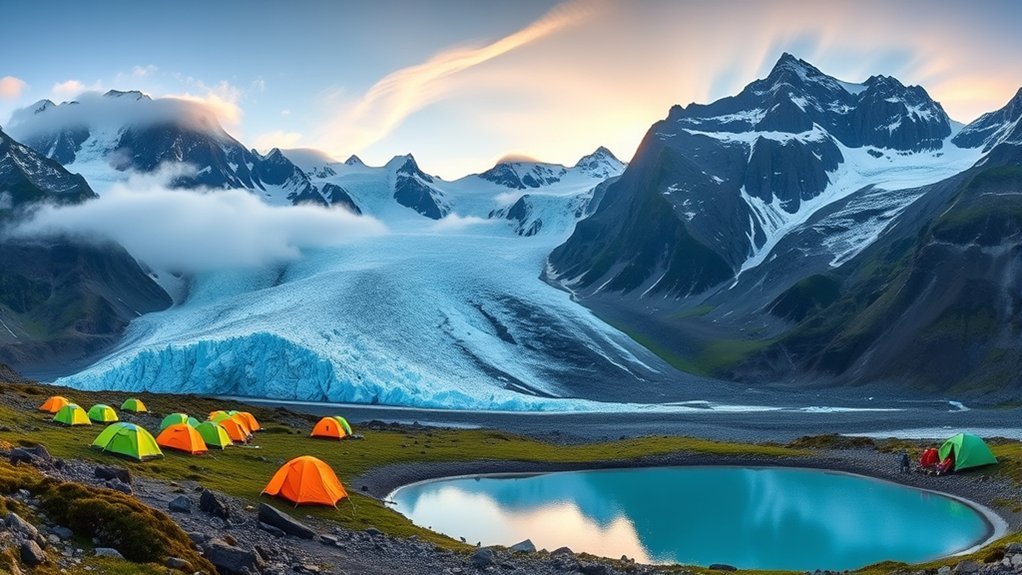
Backcountry camping in Denali is much less structured than developed camping. There are no established campsites across the backcountry, so visitors must choose a suitable location while protecting fragile vegetation and following park rules.
An overnight backcountry trip requires a free backcountry permit. During the main summer season, permits are issued in person at the Backcountry Information Center no more than one day before the trip begins. Everyone in the backpacking party must attend the required orientation before the permit is issued.
Plan time for the permit process. The National Park Service recommends allowing at least an hour at the Backcountry Information Center. After receiving the permit, you can arrange the appropriate camper-bus transportation for areas that require it.
Backcountry camping also requires careful campsite selection. Your tent must be at least 0.5 miles from and out of sight of the Park Road and developed areas, including Wonder Lake. Use durable surfaces such as gravel bars when possible, avoid fragile tundra, and leave the site as you found it.
Cooking fires are not permitted in the Denali Wilderness during the summer season. Bring a portable camp stove instead.
Warning: Backcountry camping is not simply campground camping without facilities. You need to handle navigation, water treatment, food storage, sanitation, weather changes, wildlife encounters, and emergency planning without the services available at a developed campground.
Bear-resistant food containers are required for backcountry campers from April 15 through September 30. Protect food, garbage, and scented items from wildlife and never leave them unattended.
NPS Backcountry Camping and Permit Information
How to Get a Backcountry Permit
- Plan your route and identify potential backcountry units.
- Visit the Backcountry Information Center during the applicable operating season.
- Have every member of the backpacking party attend the required orientation.
- Complete the permit process with park staff.
- Obtain the free permit before starting the overnight trip.
- Arrange camper-bus transportation if your selected area requires it.
- Carry the required food-storage equipment and follow your unit’s rules.
Wildlife Encounters: What to Expect While Camping
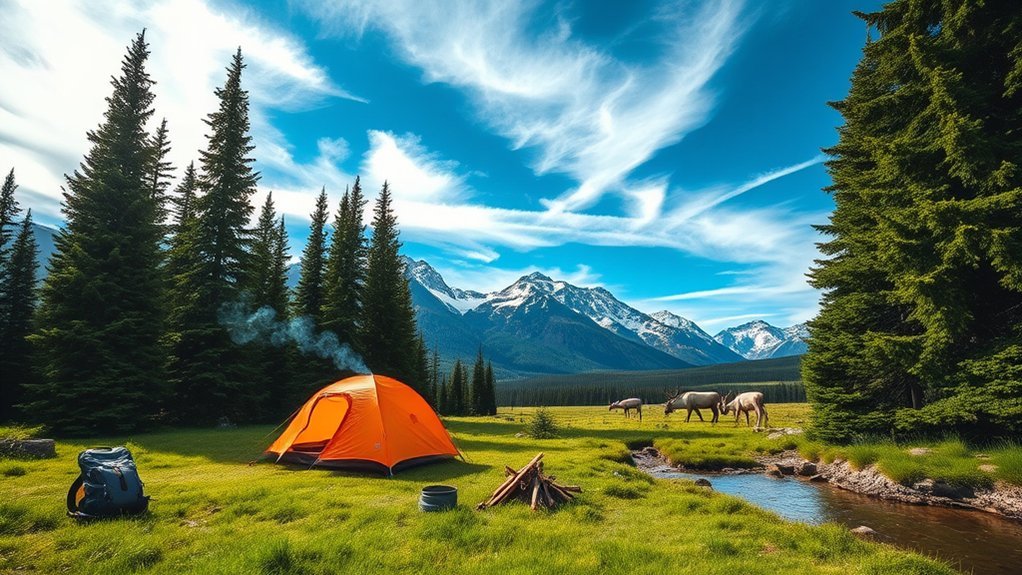
Wildlife is one of the major reasons people visit Denali, but animals should always be treated as wild. Moose, bears, wolves, caribou, Dall sheep, and many bird species live in or move through the park.
Do not approach wildlife for photographs. Give animals plenty of space and never feed them. Wildlife activity can also result in temporary closures, so check current park notices before entering an area.
- Bears: Keep food, garbage, and scented items secured. Follow current bear-safety rules and carry the required food-storage equipment in the backcountry.
- Moose: Give them a wide berth, especially cows with calves.
- Wolves: Do not approach, feed, or follow them.
- Dall sheep and caribou: Observe them from a safe distance without blocking their movement.
- Birds: Watch nesting areas and avoid disturbing wildlife for a closer view.
Pro Tip: Keep your campsite clean from the moment you arrive. Secure food and scented items instead of waiting until you see wildlife nearby.
Best Hiking Trails in and Around Campgrounds
Denali has both maintained trails and opportunities for off-trail hiking. Trail conditions, terrain, and access can change with the season, so check current NPS information before setting out.
Top Trails Near Campgrounds
Several official trails provide good options for visitors staying near the park entrance or Savage River area.
- Savage River Loop: A relatively short loop beside the Savage River. The current NPS listing gives a round-trip distance of about 1.7 miles.
- Horseshoe Lake Trail: A moderate trail leading toward Horseshoe Lake. The full route from the Visitor Center is longer than the shorter route from the Horseshoe Lake trailhead.
- Mount Healy Overlook Trail: A strenuous climb with steep terrain and views from higher elevations.
- McKinley Station Trail: A 1.6-mile trail connecting the Denali Visitor Center area and Riley Creek Campground.
- Triple Lakes Trail: Denali’s longest maintained trail, measuring 9.5 miles one way and requiring planning for transportation if you do not want to return the same way.
Scenic Views and Wildlife
Trail conditions and wildlife sightings are not guaranteed. Instead of choosing a hike based only on the chance of seeing animals, choose one that matches your time, fitness, weather, and navigation ability.
| Trail | Current NPS Distance | General Character |
|---|---|---|
| Savage River Loop | About 1.7 miles round trip | Short loop with river and canyon scenery |
| McKinley Station Trail | 1.6 miles one way | Connects the Visitor Center area and Riley Creek Campground |
| Mount Healy Overlook Trail | 2.7 miles one way | Strenuous climb with significant elevation gain |
| Triple Lakes Trail | 9.5 miles one way | Long, strenuous route through forest and lake country |
For current trail distances and conditions, use the National Park Service trail pages rather than relying on an older hiking table.
Trail Difficulty Levels
Denali’s maintained trails range from short, relatively easy walks to strenuous routes with steep sections. Weather can make a familiar trail harder, and off-trail travel requires additional navigation and wilderness skills.
- Easy: Shorter routes with limited elevation change and more manageable surfaces.
- Moderate: Trails with more elevation gain, uneven ground, or longer distances.
- Strenuous: Longer or steeper routes that require good fitness and preparation.
- Off-trail: Requires strong navigation, route-finding, weather awareness, and wildlife awareness.
Warning: Off-trail hiking can involve steep slopes, unstable footing, dense vegetation, river crossings, and wildlife encounters. Do not treat an unmarked route as an ordinary maintained trail.
Preparing for Your Camping Adventure in Denali
Good preparation matters in Denali because weather, trail conditions, transportation, and wildlife activity can change your plans. Start by checking official park information for current campground availability, road conditions, closures, fire restrictions, and transportation options.
Pack clothing in layers. A waterproof outer layer, warm sleeping system, sturdy footwear, and spare clothing can make a major difference when conditions turn cold or wet.
For developed camping, bring a suitable tent, sleeping bag, sleeping pad, cooking equipment, food, water containers, and basic first-aid supplies. For backcountry camping, add navigation equipment, water-treatment equipment, required food-storage equipment, and emergency supplies appropriate for your route.
Do not depend on a phone alone for navigation. Carry a detailed map and compass and know how to use them. Weather can affect visibility and make route finding harder.
Plan your food carefully. Keep food, garbage, and scented products secured according to Denali’s current wildlife-storage rules. In the backcountry, carry the required bear-resistant food container during the applicable season.
Finally, leave a trip plan with someone who is not traveling with you. Include your route, expected return time, transportation plans, and any important changes to your itinerary.
Denali Camping Packing Checklist
- Four-season or weather-appropriate tent
- Sleeping bag rated for expected temperatures
- Sleeping pad
- Warm and waterproof clothing layers
- Sturdy hiking footwear
- Portable cooking stove and fuel
- Food and secure food-storage equipment
- Water containers and a water-treatment method
- Map and compass
- Headlamp with spare batteries
- First-aid supplies
- Rain gear
- Insect protection during buggy periods
- Emergency communication equipment appropriate for your trip
NPS Denali Basic Information and Current Planning Resources
Frequently Asked Questions
What are the best times of year to camp in Denali?
Summer is the main season for developed campground use, but exact opening and closing dates vary by campground. Conditions can change quickly, so check the National Park Service for current operating dates, weather, road access, and closures before your trip.
Are campfires allowed in Denali National Park campgrounds?
Fire rules depend on the campground and current fire restrictions. Riley Creek, Savage River, and Teklanika River have established fire grates under normal conditions, while Sanctuary River prohibits fires. Temporary park-wide fire restrictions can also prohibit wood fires. A portable stove is the reliable option for cooking.
How do I obtain a permit for backcountry camping?
Backcountry overnight trips require a free permit. During the main summer season, permits are issued in person at the Backcountry Information Center no more than one day before the trip. Everyone in the backpacking party must attend the required orientation before the permit is issued. Allow at least an hour for the process.
What are the fees for camping in Denali National Park?
Developed campgrounds charge camping fees that vary by campground and current season. Backcountry permits are free. Backcountry visitors may still need to pay for transportation, park entrance, equipment, or other trip expenses.
Can I bring my pet camping in Denali?
Pets are allowed in certain developed areas, including campground roads and the Park Road, but they must be kept on a leash no longer than six feet and cleaned up after. Pets are generally not allowed on park trails or off-trail in the wilderness, and they are not permitted on park buses. There are limited exceptions for certain trails, so check current NPS rules before traveling with a pet.
Conclusion
Camping in Denali can range from a relatively simple stay at a developed campground to a demanding backcountry trip. Developed campgrounds are the better choice when you want established facilities and simpler logistics. Backcountry camping offers more solitude but requires a free permit, careful route planning, proper food storage, navigation skills, and preparation for changing conditions.
Before leaving, check the National Park Service for current campground availability, fire restrictions, wildlife notices, transportation information, and closures. Those updates can affect where you can camp and how you reach your destination.
Sources
- National Park Service — Denali Campgrounds — campground availability, facilities, water, pets, and fire information.
- National Park Service — Backpacking — backcountry permits, orientation, and planning requirements.
- National Park Service — Backcountry Camping, Cooking, Water, Sanitation — campsite selection, cooking, water, and sanitation guidance.
- National Park Service — Denali Trail Guides — maintained trail information and distances.
- National Park Service — Pets — pet restrictions and permitted areas.
- National Park Service — Fees & Passes — camping and backcountry permit information.