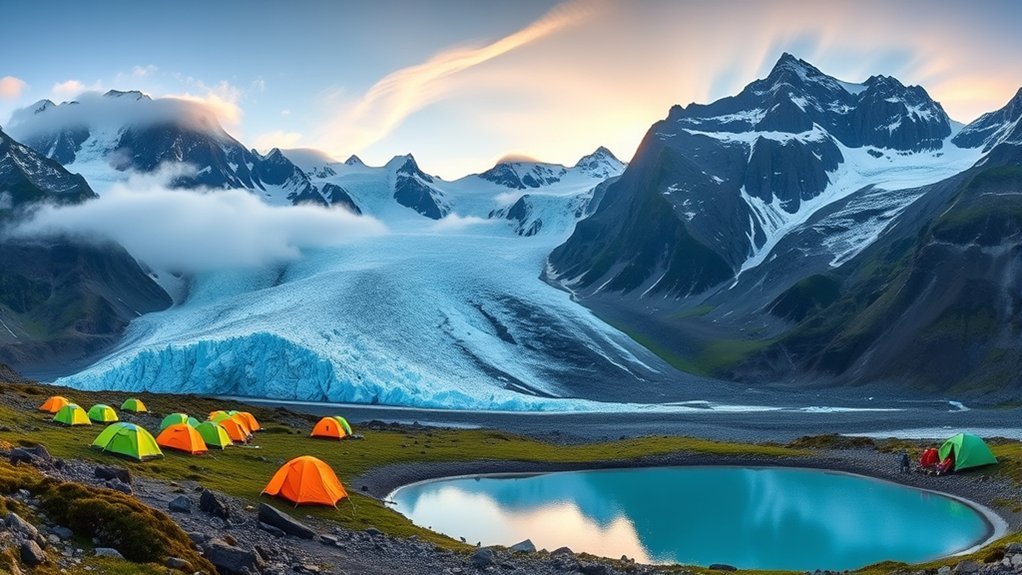
Camping near Matanuska Glacier gives you a scenic base along Alaska’s Glenn Highway, but the campground and the glacier entrance are not the same place. The public state recreation site is designed for camping and glacier viewing, while current on-ice access is offered through guided tours at a separate private entrance. Plan for cold ground, rain, wind, wildlife, limited services, and changing road or fire conditions.
Quick Answer
Camp at the Matanuska Glacier State Recreation Site or a nearby private campground, then use the separate guided-access entrance if you want to walk on the glacier. Reserve private sites early, carry warm waterproof gear, store food securely, treat natural water, and check Alaska 511, fire rules, and access policies before leaving.
Key Takeaways
- The Matanuska Glacier State Recreation Site at Glenn Highway Mile 101 offers camping and glacier views, but it does not provide a route onto the ice.
- As of July 2026, the glacier-access operator at Mile 102 says visitors must join a guided tour to enter the glacier.
- The public campground is first come, first served; private campgrounds are the better choice when you need a confirmed reservation, hookups, showers, or a tent site with more services.
- Knik River and Knik Glacier are separate destinations near Palmer and should not be treated as nearby camping for a Matanuska Glacier visit.
- Pack for wet, windy, and cold conditions, and follow bear-safe food storage, moose safety, water-treatment, and Leave No Trace practices.
At a Glance
| Closest Public Camping | Matanuska Glacier State Recreation Site at Mile 101 of the Glenn Highway. |
| Glacier Access | No ice access from the state recreation site. Current visitor access at Mile 102 is guided only. |
| Reservations | State campsites are first come, first served with no online reservations. Reserve private campgrounds directly. |
| Best Camping Window | June through August is usually simplest. Late May and early September may work when campgrounds, roads, and weather cooperate. |
| Essential Gear | Rain-ready tent, warm sleep system, layered clothing, sturdy footwear, bear-safe storage, water treatment, first-aid kit, offline maps, and backup communication. |
Understand Camping, Viewing, and Glacier Access
The most important planning detail is the difference between the public recreation site and the private glacier entrance. The Alaska Division of Parks and Outdoor Recreation states that the Matanuska Glacier State Recreation Site provides camping, an interpretive trail, and glacier-viewing platforms, but there is no glacier access from the park.
The separate entrance at Glacier Park Road is near Mile 102. As of July 2026, the current glacier-access website says the only offered way to enter the glacier is through a guided tour. Policies, departure times, prices, and equipment rules can change, so verify them directly before your trip.
The state recreation site is a campground and public viewing area, not a walk-on entrance to Matanuska Glacier.
Note: A campsite near the glacier does not include a tour, private-land permission, parking at the glacier entrance, or authorization to step onto the ice.
Top Campgrounds Near Matanuska Glacier
The right base depends on whether you value the closest public campground, guaranteed reservations, RV hookups, showers, restaurant access, or a backup location farther along the Glenn Highway. Confirm seasonal opening dates before driving because small businesses and public sites may change operations based on weather or staffing.
Matanuska Glacier State Recreation Site
Matanuska Glacier State Recreation Site is the most direct public camping choice for glacier views. It sits at Mile 101 of the Glenn Highway and has a gravel camping loop, water pump, toilets, fire pits, picnic tables, and access to the short Edge Nature Trail and viewing platforms.
The campground is first come, first served, has no online campsite reservations, and has a 14-day camping limit. The state says it remains open until winter snow and ice conditions force closure. Firewood is not supplied, so bring your own if fires are permitted and use only the provided fire ring.
The state’s web pages currently show conflicting campsite totals, so do not plan around a precise number. Treat it as a small campground and contact Long Rifle Lodge, the listed site manager, before arrival when capacity matters.
Note: The state’s current fee table lists a $7 day-use fee, $20 upper-site camping, and $25 RV camping. Verify fees before travel because rates can change.
Sheep Mountain Lodge Area
The Sheep Mountain Lodge area offers a comfortable alternative when tent or RV camping is not essential. The lodge is at Mile 113.5 and advertises cabins, guesthouse rooms, a restaurant, and activities. Its current accommodation pages do not advertise a campground, so describe it as lodging near Matanuska Glacier, not as a campsite.
This option can work well after a cold or wet day, for travelers who want a bed and shower, or as a weather backup. The lodge says cell service is poor but Wi-Fi is available to guests, which shows why reception should be checked by property rather than described as reliable across the entire corridor.
Knik River Area Is a Separate Destination
The Knik River Public Use Area offers rugged camping, boating, off-highway vehicle use, and access toward Knik Glacier. However, Knik River and Knik Glacier are different destinations near Palmer; they are not close substitutes for camping beside Matanuska Glacier.
Keep this option only as a separate Mat-Su Valley adventure. The area includes state, federal, and private land, and its terrain can be rough, braided, flood-prone, and heavily used by motorized recreation. Study the official Knik River Public Use Area rules and maps before camping there.
Private Campgrounds and RV Options
Private campgrounds are useful when you need a confirmed booking or more services. At Mile 109.7, Grand View RV Park and Campground currently lists full-service RV sites, a small number of tent sites, restrooms, showers, laundry, fire pits, water, and an on-site restaurant. Its posted 2026 season runs from late May to mid-September, but dates and rates should be confirmed directly.
Before reserving any private site, ask about tent acceptance, RV length, hookups, generator rules, potable water, pets, fire pits, cancellation terms, check-in times, and late arrival. Do not assume every business with “lodge,” “glacier,” or “RV” in its name accepts tent campers.
King Mountain State Recreation Site
King Mountain State Recreation Site at Mile 76 is a useful backup south of Matanuska Glacier. It is farther from the glacier entrance but may fit a Glenn Highway road trip when the closest public campground is full. Check current campground status and fees before relying on it.
Compare the Main Camping Options
| Option | Best For | Main Limitation |
|---|---|---|
| Matanuska Glacier State Recreation Site | Closest public camping and glacier viewing | No reservations and no glacier access |
| Grand View RV Park and Campground | Reserved tent or RV camping with more facilities | Seasonal operation and higher private rates |
| Sheep Mountain Lodge | Cabins, rooms, meals, and a weather backup | Not currently advertised as a campground |
| King Mountain State Recreation Site | Public-campground backup on the Glenn Highway | Farther from the glacier entrance |
Best Time to Camp Near Matanuska Glacier
June through August is usually the easiest window for tent and RV camping because daylight is long and seasonal businesses are more likely to be operating. It can still rain, blow hard, and feel cold near the glacier, especially at night or when wind moves down the valley.
Late May and Early June
Expect colder nights, lingering wet ground, possible snow at higher elevations, and a mix of opening dates. The quieter atmosphere can be appealing, but call private campgrounds and check the public site’s status before driving.
July and August
These are the simplest months for most first-time visitors. Campgrounds and tours are usually busiest, so reserve private sites and glacier tours early. Carry rain gear, insect repellent, and warm evening layers even when the daytime forecast looks mild.
September and Winter
Early September may offer cooler weather and fewer visitors, but campground closures can begin. The state recreation site closes when winter snow and ice conditions require it. Guided glacier tours may operate beyond the main camping season, but winter travel needs cold-weather driving preparation and a lodging or winter-camping plan that matches your experience.
Essential Backcountry Camping Tips
Backcountry camping around the broader Matanuska and Glenn Highway region requires land-status research, conservative route choices, and self-reliance. Do not assume an unoccupied pullout, river bar, trailhead, or side road is legal or safe for camping. Private parcels and special-use rules occur throughout the region.
| Essential Tip | What to Do | Why It Matters |
|---|---|---|
| Confirm Land Status | Use official maps and posted signs; obtain permission when required. | Prevents trespass and entry into restricted land. |
| Plan Your Route | Study maps, trail conditions, river hazards, and turnaround points. | Reduces the chance of getting lost or trapped by terrain. |
| Pack for Cold and Rain | Carry waterproof shells, dry sleep clothes, and insulated bedding. | Wet clothing and wind can chill you quickly. |
| Treat Water | Carry safe water and use an appropriate filter, purifier, chemical treatment, or boiling method. | Clear-looking streams can still contain germs. |
| Leave No Trace | Use durable surfaces, pack out waste, minimize fire impacts, and respect wildlife. | Protects vegetation, water, wildlife, and future campsites. |
Choose a Safe Campsite
Use an established campsite or a durable, legal surface. Avoid animal trails, unstable riverbanks, dry channels, loose slopes, dead trees, and low gravel bars that could flood. Do not pitch directly beside fast-moving or braided water because rain and glacier melt can change conditions upstream.
Choose some wind protection without camping beneath dead branches. Stake every corner, tension the rainfly, and keep gear secured. A tent that is comfortable in a sheltered forest may behave very differently in an exposed glacier valley.
Tell Someone Your Plan
Give a trusted person your campground, route, vehicle description, group members, planned activities, and return time. Include instructions for when they should seek help. Update them if plans change and service is available.
Carry Backup Navigation and Communication
Download maps before leaving reliable service, carry a power bank, and keep a paper map or another simple backup. For remote routes, consider a satellite messenger or personal locator beacon and learn how it works before the trip.
Manage Waste and Sanitation
Use campground toilets where provided. In backcountry areas, follow the land manager’s human-waste rules rather than assuming one method applies everywhere. Pack out toilet paper, hygiene products, food scraps, and all trash. Wash dishes away from camp and water, strain food particles, and pack the particles out.
Pro Tip: Store sleep clothes and one warm insulating layer in a sealed dry bag. Change into them only after camp chores are complete so you do not carry rain, sweat, or food odors into your sleeping bag.
What to Pack for Matanuska Glacier Camping
Your packing list should prioritize warmth, rain protection, food safety, and backup systems. Avoid cotton for key layers because it dries slowly. Test your tent, stove, water treatment, headlamp, and bear-spray holster before leaving home.
Shelter and Sleep System
- Weather-ready tent: Use a tent with a full rainfly, strong poles, secure stakes, and good ventilation.
- Warm sleeping bag: Choose a comfort rating that fits the lowest expected overnight temperature, not only the daytime forecast.
- Insulated sleeping pad: Ground insulation is essential because cold soil and gravel can drain body heat.
- Footprint or groundsheet: Protect the tent floor from wet or abrasive sites.
- Dry bags: Protect bedding, base layers, electronics, and emergency supplies.
Clothing Layers
- Base layer: Moisture-wicking wool or synthetic top and bottom.
- Insulating layer: Fleece or a puffy jacket for mornings and evenings.
- Rain shell: Waterproof jacket and rain pants.
- Hat and gloves: Pack both even in summer.
- Spare socks: Keep at least one dry pair reserved for camp.
- Sturdy footwear: Waterproof hiking boots or trail shoes with reliable traction for wet rock and mud.
Camp Kitchen and Water
- Compact stove: Carry a stove rather than depending on a campfire.
- Fuel and ignition backup: Bring enough fuel plus a lighter and waterproof matches.
- Low-mess meals: Choose filling food that creates little grease or waste.
- Safe drinking water: Start with enough water for arrival and camp setup.
- Water treatment: Follow CDC backcountry water-treatment guidance; clear appearance does not make natural water safe.
- Bear-safe storage: Use the method required by your campground or land manager for food, trash, cookware, toiletries, pet food, and other scented items.
Safety and Comfort Items
- First-aid kit and personal medicines
- Headlamp with spare batteries
- Power bank and charging cables
- Offline map and paper backup
- Emergency blanket or bivy
- Repair tape, cord, and tent-pole repair sleeve
- Bear spray carried where you can reach it quickly
- Insect repellent and head net
- Sunscreen and sunglasses
- Trash bags and odor-resistant storage
- Satellite messenger or personal locator beacon for remote travel
Warning: Do not walk onto glacier ice outside the current access rules or without appropriate guidance and equipment. Crevasses, moulins, slick ice, unstable edges, falling ice, and hidden voids can injure or kill visitors even when the surface appears solid.
Wildlife and Safety Considerations
Black bears, brown bears, and moose live in the broader region. Wildlife may enter camp because of food odors or pass through established travel routes. Keep a clean camp, stay alert in brush and near water, and never approach an animal for a photograph.
Bear-Aware Camping Basics
- Store food, coolers, trash, toiletries, pet food, and scented gear in the approved storage location whenever they are unattended.
- Cook and eat away from your sleeping area when the campsite layout allows it.
- Clean cookware promptly and never bury or burn food scraps.
- Make noise in brush or other low-visibility areas so you do not surprise a bear.
- Carry bear spray where it is immediately accessible and know how to deploy it.
- Never run from a bear. Stay calm and follow current Alaska Department of Fish and Game bear-safety guidance for the type of encounter.
Moose Safety
Moose can charge when surprised, crowded, harassed by dogs, or protecting calves. Give them a wide escape route. Warning signs can include ears pinned back, raised neck hair, lip licking, or movement toward you.
If a moose charges, the Alaska Department of Fish and Game advises running away and getting behind a solid object such as a tree, building, or vehicle. This differs from bear guidance, so learn both before the trip.
Weather and Terrain Hazards
Cold rain, wind, wet rock, loose moraine, riverbanks, muddy pullouts, and poor visibility can turn a short outing into a serious problem. Turn back before your group becomes cold, tired, or separated. Do not attempt a river crossing when the water is fast, deep, cloudy, braided, or rising.
Campfires and Fire Safety
Alaska State Parks says campfires in developed parks belong in designated fire rings, while backcountry fires are prohibited under its general guidance. Local restrictions or emergency closures can be stricter. Bring a stove, check posted rules, keep water nearby, and extinguish every fire until the ashes are cold.
Must-See Attractions and Activities
Camping makes it easier to explore the glacier corridor without rushing. Keep activities flexible so strong wind, rain, road work, or tour changes do not force unsafe decisions.
Guided Glacier Hike
A guided glacier trek is the current way for ordinary visitors to enter Matanuska Glacier. Depending on conditions and the operator, the trip may include traction equipment, helmets, route selection, and interpretation of blue ice, crevasses, meltwater channels, and glacier movement.
Arrive early, wear the footwear and layers requested by the operator, and keep both hands available while walking. Stop in a stable location before using a camera or phone.
Ice Climbing
Ice climbing requires technical equipment, instruction, and an appropriate guide unless you already have relevant glacier and climbing experience. Ask about age, fitness, footwear, equipment, and weather requirements before booking.
Scenic Drives and Viewpoints
The Glenn Highway is a National Scenic Byway with mountain, river, and glacier views. Use designated pullouts, keep your vehicle fully off the travel lane, and avoid stopping on blind curves or narrow shoulders. Check Alaska 511 for current road conditions, construction, incidents, and closures.
Photography and Evening Views
Evening light can bring soft color to the glacier and surrounding peaks, but summer daylight lasts late and weather may hide the horizon. Use a legal pullout or campground viewpoint, keep children and pets away from traffic, and use a zoom lens rather than approaching wildlife or unstable terrain.
Take time to enjoy the changing light without turning every stop into a photo mission. A slower pace reduces rushed driving and gives weather time to move through the valley.
Sample Two-Day Camping Plan
Day One: Arrival and Public Viewing
- Check Alaska 511, the forecast, campground status, and fire restrictions before leaving Palmer or Anchorage.
- Arrive early enough to find a first-come state site or check in at your reserved private campground.
- Set up the tent and food-storage system before exploring.
- Walk the Edge Nature Trail and use the public viewing platforms.
- Prepare dinner on a stove, clean camp completely, and organize warm layers for the night.
Day Two: Guided Glacier Tour and Scenic Stops
- Eat an early breakfast and pack the clothing requested by the tour operator.
- Drive to the separate Mile 102 entrance with time for check-in.
- Complete the guided glacier activity without adding unapproved side trips.
- Use legal Glenn Highway pullouts for photographs on the return drive.
- Return to camp, check the next day’s weather, and secure all food and scented items before sleeping.
Preparing for Your Camping Adventure
Good preparation begins before you enter the Glenn Highway corridor. Services are spread out, and a small change in weather, access, or campground capacity can affect the entire plan.
Check Weather and Road Conditions
Review daytime and overnight forecasts, wind, precipitation, and any weather alerts. Check Alaska 511 for road work and incidents. Fuel the vehicle before entering the more rural part of the route, and carry seasonally appropriate emergency supplies.
Plan Your Meals and Water
Choose simple, calorie-dense meals such as oats, tortillas, nut butter, rice meals, pasta, soup, dried fruit, and trail mix. Avoid foods that create greasy cleanup or strong lingering odors. Bring enough treated water to cover arrival, cooking, and the first night even if a campground normally has a water pump.
Glacier-fed water may contain fine sediment that clogs some filters. Let cloudy water settle, pre-filter it when practical, and still use a proper treatment method. Never assume cold or clear water is free of germs.
Match Your Trip to Your Goals
Choose a public site for a simple scenic base, a private campground for reservations and services, or a lodge when warmth and indoor comfort matter more than sleeping outside. Families should keep routes short and avoid riverbanks or steep moraine. Pet owners must confirm campground and tour policies, leash pets, secure pet food, and keep animals away from wildlife.
Build a backup into the trip. A lodge night, alternate campground, or scenic-drive day can save the trip when weather or access makes the original activity unsuitable.
Final Pre-Trip Checklist
- Confirm campground opening status, fees, reservation rules, and check-in time.
- Confirm the separate glacier tour, meeting address, arrival time, and required clothing.
- Save offline maps and reservation details.
- Check road, weather, fire, and wildlife information.
- Share the trip plan and return time with a trusted person.
- Fill the fuel tank and carry food, water, first aid, warm layers, and vehicle emergency gear.
Common Mistakes to Avoid
A little planning prevents most avoidable problems near Matanuska Glacier.
- Confusing the campground with the glacier entrance: The Mile 101 state site has no route onto the ice.
- Expecting self-guided glacier access: Current visitor access is guided only.
- Treating Sheep Mountain Lodge as a campground: Its current site advertises lodging, not campsites.
- Using Knik River as a nearby base: It serves a different glacier corridor and needs separate planning.
- Arriving late at the public campground: Sites are first come, first served.
- Packing only summer clothing: Bring insulation and waterproof layers.
- Depending on a campfire: Carry a stove and obey current restrictions.
- Leaving attractants outside: Secure food, trash, toiletries, cookware, and pet food.
- Drinking untreated natural water: Use safe water or an appropriate treatment method.
- Relying on cell service: Download information and carry backup communication for remote plans.
- Stopping on unsafe shoulders: Use legal, fully off-road pullouts.
Frequently Asked Questions
Does the Matanuska Glacier State Recreation Site provide glacier access?
No. The state recreation site provides camping, a nature trail, and glacier-viewing platforms, but the Alaska Division of Parks and Outdoor Recreation states that there is no glacier access from the park.
Do I need a guide to hike on Matanuska Glacier?
As of July 2026, the current glacier-access operator says the only offered visitor access is through a guided tour. Confirm the latest policy, schedule, price, and equipment directly before traveling.
Can you camp directly on Matanuska Glacier?
Do not plan an independent overnight camp on the ice. Glacier entry is controlled, and overnight glacier camping requires explicit authorization, advanced glacier-travel skills, technical equipment, and an appropriate commercial or permitted arrangement.
Can I reserve a campsite at the state recreation site?
No online campsite reservations are offered for the state recreation site. Campsites are first come, first served, so arrive early and keep a private campground or another Glenn Highway campground as a backup.
Are campfires allowed near Matanuska Glacier?
At developed Alaska State Park campsites, use only designated fire rings and follow posted rules. Backcountry fires are prohibited under the state park’s general guidance, and emergency restrictions can ban fires more broadly. Carry a stove and check current rules before lighting anything.
What is the best time of year to camp near Matanuska Glacier?
June through August is generally the simplest camping period. Late May and early September may also work, but private opening dates, cold nights, wet ground, and the state site’s weather-related closure can affect availability.
Are there camping or day-use fees?
Yes. As of July 2026, the Alaska State Parks fee table lists a $7 day-use fee, $20 upper-site camping, and $25 RV camping at Matanuska Glacier State Recreation Site. Private campground and tour prices vary and can change.
Is there cell phone reception near the campgrounds?
Reception varies by property, carrier, terrain, and weather. Sheep Mountain Lodge describes cell service as poor, while Grand View reports reliable coverage for major carriers. Download maps and booking details instead of depending on continuous service.
Can I bring pets?
Some campgrounds and lodging properties allow pets, but policies vary. Keep pets controlled or leashed, clean up waste, secure pet food, and never allow an animal to chase or approach wildlife. Ask the glacier-tour operator separately because campground permission does not mean pets are allowed on a tour.
Conclusion
Camping near Matanuska Glacier works best when you separate three decisions: where you will sleep, where you will view the glacier, and how you will legally enter the ice. The state recreation site offers the closest public camping and viewing, private campgrounds provide reservations and extra facilities, and the current glacier entrance operates through guided tours.
Prepare for cold rain, wind, wildlife, and limited services. Confirm current fees and openings, carry a stove and safe water plan, secure every attractant, and check the road before driving. With those details handled, you can enjoy the glacier corridor at a slower and safer pace while leaving the area clean for the next visitor.
Sources
- Alaska Division of Parks and Outdoor Recreation: Matanuska Glacier State Recreation Site — campground management, facilities, first-come policy, closure conditions, and no-glacier-access notice.
- Matanuska Glacier Access — current visitor-access policy, tour location, and guided access.
- Alaska Department of Fish and Game: Traveling in Bear Country — bear avoidance, attractant control, and encounter basics.
- Alaska Department of Fish and Game: Aggressive Moose — moose warning signs and charge response.
- Alaska 511: Glenn Highway — current road conditions, incidents, construction, and closures.
- Centers for Disease Control and Prevention: Backcountry Water Treatment — safe treatment of natural water while hiking and camping.