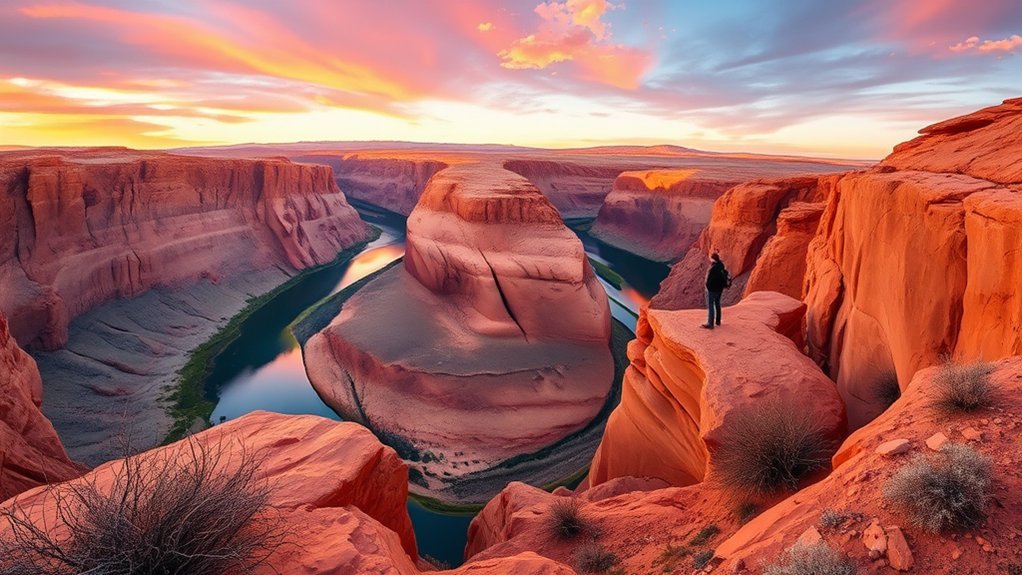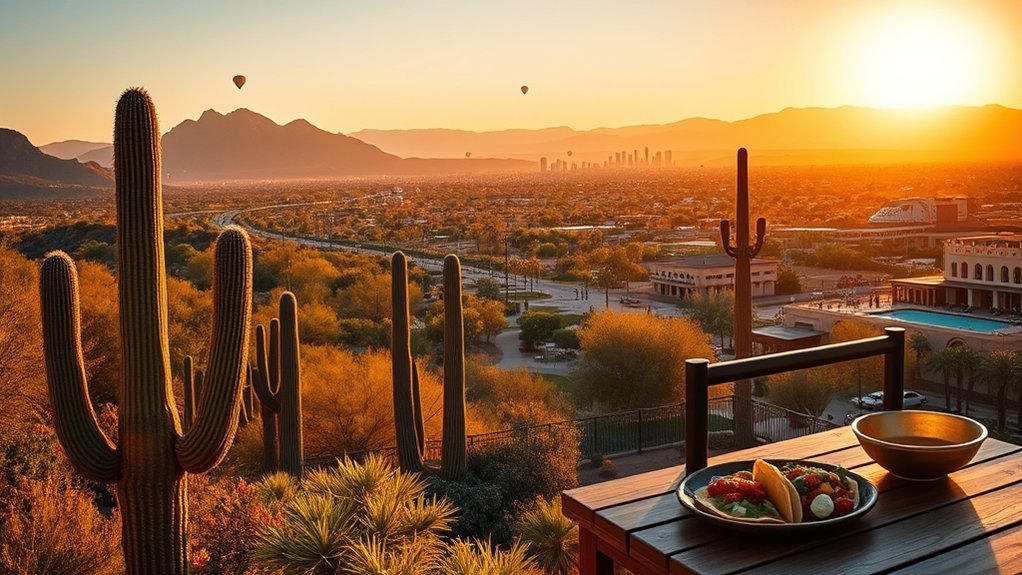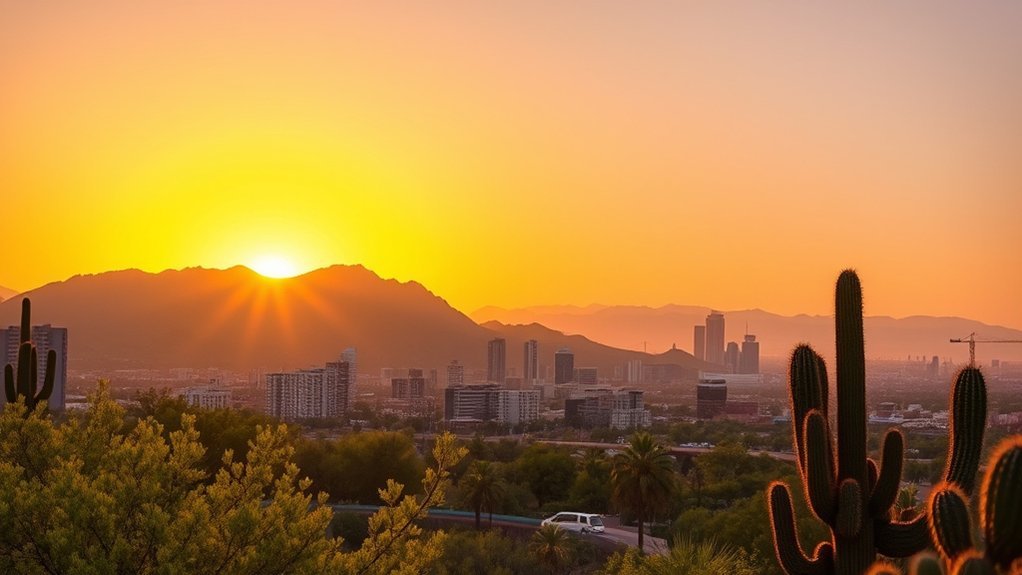
Phoenix combines Sonoran Desert scenery, major museums, family attractions, historic neighborhoods, Southwestern food, and an active arts scene. The key to enjoying the city is planning around its size and climate. You can spend the morning on a desert trail, cool off inside a museum during the afternoon, and finish the day with tacos, galleries, or dinner downtown.
Quick Answer
Phoenix is best explored by mixing desert scenery with culture and food. Hike an official city trail early, visit the Desert Botanical Garden or Phoenix Zoo, spend a few hours at the Heard or Phoenix Art Museum, then eat in Roosevelt Row, downtown, Arcadia, or another local neighborhood. In hot months, plan outdoor stops around heat restrictions.
Key Takeaways
- Camelback Mountain is a strenuous, exposed hike, not a casual sightseeing walk. Check trail conditions and heat restrictions before leaving.
- Papago Park, Desert Botanical Garden, Phoenix Zoo, Heard Museum, and Phoenix Art Museum are among the most useful first-time visitor choices.
- Phoenix is spread out. Downtown is easier to explore without a car, but a vehicle or rideshare is useful for many mountain parks and neighborhoods.
- Late fall through spring usually offers the easiest weather for outdoor sightseeing. Summer trips require early-morning and indoor planning.
- Some popular attractions and events marketed as part of Greater Phoenix are actually in Scottsdale, Tempe, Chandler, or other nearby communities.
Exploring the Desert: Top Hiking Trails in Phoenix
The Sonoran Desert is one of Phoenix’s defining attractions, but its trails vary dramatically in difficulty. Choose a route based on your fitness, experience, weather, and the amount of shade available rather than choosing only by the view.
Camelback Mountain
Camelback Mountain is one of the city’s best-known hiking landmarks, but its main routes are demanding. The City of Phoenix rates the Echo Canyon and Cholla trails as extremely difficult, with steep grades, rocky footing, significant exposure, and little shade. This is a better choice for experienced, well-prepared hikers than for casual walkers or families seeking a simple nature outing.
South Mountain Park and Preserve
South Mountain Park and Preserve gives you far more route variety. Its large trail network includes options for hiking, mountain biking, and horseback riding, with routes ranging from easier outings to strenuous climbs. It is a better choice when your group wants several difficulty levels in one general area.
Phoenix Mountains Preserve
Phoenix Mountains Preserve includes rugged desert terrain and popular routes around Piestewa Peak. Some trails are strenuous, so check the official trail description before choosing a route.
Desert Botanical Garden
If you want desert scenery without committing to a mountain hike, Desert Botanical Garden offers maintained walking trails through collections of Sonoran Desert plants. It is particularly useful for first-time desert visitors who want to learn what they are seeing instead of simply hiking past it. The garden may adjust access during periods of intense summer heat, so check its current visitor information before going.
Warning: Phoenix desert heat can become dangerous quickly. The City of Phoenix restricts access to selected mountain trails during qualifying Extreme Heat Warnings. Bring more water than you expect to need, protect yourself from the sun, avoid the hottest part of the day, and check the City of Phoenix Trail Heat Safety Program before hiking.
Pro Tip: If you are unsure whether your group is ready for Camelback Mountain, start with Papago Park or a maintained garden walk. You will still get desert scenery without committing to an extremely difficult climb.
Cultural Hotspots: Must-Visit Art Galleries and Museums
Phoenix’s cultural attractions are especially useful during hot afternoons, when a museum visit can fit naturally between an early outdoor activity and dinner.
- Phoenix Art Museum: A strong choice for visitors who want broad collections spanning American, Latin American, Asian, European, modern, contemporary, and fashion-related works.
- Heard Museum: One of the city’s most important cultural stops, focused on American Indian art, history, and culture. Visit the official Heard Museum website for current exhibitions and visitor information.
- Arizona Science Center: A family-friendly downtown attraction with hands-on science experiences, demonstrations, and immersive programming.
- Roosevelt Row Arts District: A walkable downtown district known for murals, galleries, restaurants, bars, and independent businesses.
- Desert Botanical Garden: The garden also blends plant interpretation with rotating art, exhibitions, and seasonal programming.
If you only have time for one museum, choose based on your interests. The Heard Museum is the stronger fit for Indigenous art and cultural history, while Phoenix Art Museum provides a wider survey of visual art from multiple regions and periods.
Family-Friendly Activities: Fun for All Ages
Phoenix has several attractions that work well for families, particularly when you need indoor or partly shaded activities during warmer weather.
| Activity | Why Families Choose It | Best For |
|---|---|---|
| Phoenix Zoo | The zoo says it cares for more than 3,000 animals representing nearly 400 species. | Animal lovers and half-day family outings |
| Children’s Museum of Phoenix | Hands-on, open-ended play designed to encourage movement, creativity, and exploration. | Younger children |
| Arizona Science Center | Interactive science exhibits and immersive educational experiences. | School-age children and science fans |
| Desert Botanical Garden | Maintained paths make it easier to explore desert plants together. | Families wanting an outdoor nature experience |
For the most current Phoenix Zoo animal and visitor information, check the Phoenix Zoo’s official animal guide.
Culinary Delights: Best Restaurants and Local Cuisine
Phoenix’s food scene reflects its location close to Mexico and the broader Sonoran Desert region. Mexican and Sonoran influences are especially visible, but the city also has strong Southwestern, contemporary American, Asian, Mediterranean, and plant-forward dining.
Must-Try Local Dishes
- Sonoran hot dogs: A bacon-wrapped hot dog typically served in a soft bolillo-style bun with beans and assorted toppings. Preparations vary by stand.
- Sonoran-style tacos: Look for carne asada and other meats cooked over mesquite charcoal at restaurants specializing in northern Mexican cooking.
- Nopales: Cactus paddles appear in salads, tacos, and other Mexican dishes throughout the Valley.
- Prickly pear flavors: You may see prickly pear used in lemonades, desserts, sauces, and cocktails, although recipes vary widely.
Instead of choosing a restaurant only because it appears on an old “best of” list, check its current hours and menu before driving across the city. Phoenix’s restaurant scene changes quickly.
Popular Dining Neighborhoods
Roosevelt Row and downtown Phoenix make sense if you want to combine dinner with galleries, murals, sports, performances, or nightlife. Arcadia has a dense collection of restaurants in a more residential setting, while Melrose offers independent businesses, bars, vintage shopping, and dining along Seventh Avenue.
South and central Phoenix are also worth exploring for Mexican and Sonoran food. If you venture beyond Phoenix proper, nearby Scottsdale has a separate and substantial restaurant scene of its own.
Unique Culinary Experiences
Try building your food plans around experiences instead of a single famous restaurant:
- Visit the Downtown Phoenix Farmers Market for locally produced food, prepared dishes, and small Arizona businesses.
- Plan a self-guided Sonoran taco or Sonoran hot dog outing rather than relying on one restaurant.
- Choose a neighborhood such as Roosevelt Row, Arcadia, or Melrose and combine dinner with nearby shops, art, or nightlife.
- If you are exploring Greater Phoenix, consider dining in Scottsdale, Tempe, or another neighboring city while clearly allowing for the extra travel time.
Note: Older Phoenix dining guides may still recommend restaurants that have closed. Verify the current location, opening hours, and reservation policy before making a restaurant the centerpiece of your itinerary.
Outdoor Adventures: Parks and Recreational Areas
You do not have to climb a major mountain to enjoy Phoenix outdoors. City parks and preserves offer everything from rugged desert routes to lakes, picnic areas, and easy walks.
- South Mountain Park and Preserve: Best for a large network of desert trails and scenic viewpoints.
- Papago Park: Known for sandstone buttes and generally easier trails. It also sits close to Phoenix Zoo and Desert Botanical Garden, making the area easy to combine into a full day.
- Encanto Park: A greener urban park with picnic areas, recreation facilities, a lagoon, and family attractions.
- Phoenix Mountains Preserve: Best for hikers seeking more rugged urban mountain terrain.
Early mornings are generally the safest and most comfortable time for outdoor activities during hotter months. In summer, an indoor museum, zoo early-entry visit, or evening activity may make more sense than an exposed midday hike.
Historic Landmarks: Discovering Phoenix’s Heritage
Phoenix is often associated with modern growth, but historic buildings and neighborhoods still reveal how the city developed from a smaller desert community into a major metropolitan area.
Iconic Buildings and Structures
- Arizona Capitol Museum: The historic Capitol building provides a useful introduction to Arizona’s territorial and state history.
- Heritage Square and Rosson House: Heritage Square preserves late-19th-century buildings from Phoenix’s original town site, with the restored Rosson House as its architectural centerpiece.
- Orpheum Theatre: Opened in 1929, the historic theater is known for Spanish Medieval and Baroque-inspired architecture, decorative murals, and elaborate interior details.
Cultural Museums and Exhibits
The Heard Museum adds essential Indigenous perspectives to a Phoenix history-focused itinerary. Arizona Science Center takes a different approach, using interactive exhibits and demonstrations, while Phoenix Art Museum broadens the experience through visual art from around the world.
If time is limited, avoid trying to rush through all three in one afternoon. Choose one major museum and leave enough time to explore it properly.
Historic Districts Exploration
- Willo Historic District: A central Phoenix neighborhood known for historic homes representing several early-20th-century architectural styles.
- Encanto-Palmcroft: Another central historic neighborhood with distinctive residential architecture and mature landscaping.
- Roosevelt Row: Better understood today as a walkable arts and adaptive-reuse district than as a traditional residential historic district. Its murals, galleries, shops, and older buildings show a different side of central Phoenix’s evolution.
Remember that residential historic districts are neighborhoods first. Enjoy the architecture from public streets and sidewalks while respecting private property.
Shopping and Entertainment: Where to Go for Local Finds
Phoenix shopping ranges from independent art and vintage stores to luxury retail and farmers markets.
| Location | Highlights | Best For |
|---|---|---|
| Roosevelt Row | Murals, galleries, boutiques, restaurants, bars | Local art and an evening stroll |
| Biltmore Fashion Park | Upscale outdoor retail and dining | Higher-end shopping |
| Downtown Phoenix Farmers Market | Local growers, prepared foods, and small businesses | Local food and Arizona-made products |
Market days and retailer hours can change, so confirm schedules before making a special trip.
Free and Low-Cost Things to Do in Phoenix
You can enjoy Phoenix without paying admission at every stop. Many city parks and preserves are free to enter, although parking rules, special facilities, tours, and events can carry separate fees.
- Walk the easier trails and view the sandstone formations at Papago Park.
- Explore murals and public art around Roosevelt Row.
- Drive or walk through historic neighborhoods such as Willo while respecting private homes.
- Browse a farmers market or neighborhood shopping district.
- Use a city park for a picnic instead of scheduling another ticketed attraction.
A good budget strategy is to pair one paid attraction, such as a major museum or garden, with one free park, neighborhood, or public-art stop on the same day.
Suggested Itineraries: Planning Your Perfect Trip
Phoenix is spread across a large area, so grouping nearby attractions saves time. Do not assume that every destination labeled “Phoenix” or “Greater Phoenix” is close to downtown.
One-Day Phoenix Itinerary
- Morning: Start with Papago Park for an easier desert outing or choose a more difficult mountain hike only if the weather and your experience make it appropriate.
- Late morning: Visit Desert Botanical Garden or Phoenix Zoo. Both are in the Papago Park area, so they are easier to combine geographically.
- Afternoon: Cool off at the Heard Museum, Phoenix Art Museum, or Arizona Science Center.
- Evening: Have dinner downtown or in Roosevelt Row and explore nearby murals, galleries, shops, or entertainment.
Two-Day Phoenix Itinerary
Day 1: Focus on Papago Park, Desert Botanical Garden, Phoenix Zoo, and downtown dining. You do not need to visit both the zoo and garden unless you have enough time and energy for a long day.
Day 2: Choose an early South Mountain or Phoenix Mountains Preserve outing, then spend the afternoon at a museum. Finish with dinner in Arcadia, Melrose, Roosevelt Row, or another neighborhood that interests you.
If temperatures are very high, reverse the emphasis: schedule outdoor attractions for early morning and rely on museums, shopping, pools, restaurants, and evening activities later in the day.
Travel Tips: Navigating Phoenix Like a Local
Phoenix is much easier to enjoy when you plan transportation before building your itinerary.
- Use Valley Metro for supported corridors: Bus and light rail can be convenient for downtown Phoenix and destinations along the rail network. Check the official Valley Metro trip-planning information for current routes, fares, and service details.
- Consider a car for mountain parks: A rental car can make it easier to reach trailheads, suburban neighborhoods, and destinations outside the central transit network.
- Use rideshare strategically: Rideshare can work well when you do not want a rental car for your entire trip but need to reach one or two attractions beyond downtown.
- Group nearby stops: Phoenix Zoo, Papago Park, and Desert Botanical Garden are natural geographic companions. Downtown museums and Roosevelt Row also combine more efficiently than cross-city attractions.
- Carry water: Do not wait until you begin a hike to think about hydration.
- Check parking: Downtown garages, event parking, trailhead lots, and attraction parking all have different rules.
Best Time to Visit Phoenix and Desert Safety
Late fall, winter, and spring are generally the easiest seasons for visitors who want to spend substantial time outdoors. Mild parts of the year make hiking, patios, gardens, walking districts, and outdoor events easier to enjoy.
Summer requires a different strategy. Schedule exposed outdoor activities around the coolest available hours and prioritize indoor attractions during peak heat. Desert Botanical Garden, for example, can impose seasonal trail closures during the hottest portion of the day; check its current visitor information before arriving.
The best Phoenix itinerary is not the one with the most stops. It is the one that matches the season, keeps driving manageable, and puts exposed desert activities at a safe time of day.
Seasonal Events: What to Experience Throughout the Year
Phoenix and surrounding Greater Phoenix communities host major events throughout the year, but dates, locations, and formats change. Always verify the current schedule before buying flights or hotel nights around a festival.
Spring Festivals and Events
- Phoenix Film Festival: A spring film event with feature films, shorts, discussions, and related programming.
- Arizona Renaissance Festival: A large seasonal festival in Gold Canyon, east of Phoenix. It is a Greater Phoenix-area excursion rather than a downtown Phoenix attraction.
- Chandler Chamber Ostrich Festival: A spring festival in the Chandler area with entertainment, rides, and family activities. Chandler is a separate city southeast of Phoenix.
If a festival is essential to your trip, confirm both its dates and its city. Greater Phoenix event listings frequently include attractions outside Phoenix proper.
Summer Outdoor Activities
Summer is the season to rethink the traditional all-day outdoor itinerary. Very early walks, pool time, indoor museums, air-conditioned attractions, and evening programming are usually more practical than long exposed daytime hikes.
Tempe Town Lake, water parks, resort pools, and evening events can add variety, but remember that Tempe and several other commonly advertised attractions are outside Phoenix city limits.
Fall Cultural Celebrations
- Arizona State Fair: One of the major fall events in Phoenix. For 2026, the fair is scheduled to run Thursdays through Sundays from October 1 through November 1. Check the official Arizona State Fair website for current admission, entertainment, and operating details.
- Día de los Muertos programs: Museums, arts organizations, and community groups may host exhibitions, performances, markets, or remembrance events. Dates and formats vary by organizer.
- Arts and neighborhood events: Fall’s cooler weather brings more outdoor markets, performances, and community events throughout central Phoenix and the broader Valley.
Frequently Asked Questions
What is the best time of year to visit Phoenix?
Late fall through spring is usually the easiest period for outdoor sightseeing because temperatures are more comfortable than during peak summer. Summer can still work if you plan outdoor activities very early and use museums, pools, restaurants, shopping, and other indoor attractions during the hottest hours.
Are there public transportation options in Phoenix?
Yes. Valley Metro operates buses and light rail in the Phoenix metropolitan area. Transit is especially useful along supported central corridors, but many trailheads and spread-out attractions are easier to reach by car or rideshare.
How safe is it to travel around Phoenix?
Visitors should use the same precautions they would in any large city: stay aware of their surroundings, secure valuables, research unfamiliar areas, and use well-traveled routes at night. Outdoor safety is equally important. Heat, sun exposure, dehydration, and difficult mountain terrain can create serious risks on desert trails.
What are average hotel prices in Phoenix?
There is no reliable year-round average that applies to every trip. Prices vary widely by neighborhood, hotel type, season, weekend demand, major events, and resort amenities. Compare live rates for your exact dates rather than relying on a fixed price range from an older travel guide.
Can I find vegan or vegetarian dining options in Phoenix?
Yes. Phoenix has vegetarian, vegan, and plant-forward options ranging from casual cafes to full-service restaurants. Many Mexican, Mediterranean, Asian, and contemporary restaurants also offer meat-free dishes. Check current menus if you have strict dietary requirements.
Do I need a car in Phoenix?
Not necessarily if your trip is concentrated downtown and along Valley Metro routes. A car becomes much more useful if you plan to visit multiple mountain parks, spread-out neighborhoods, Scottsdale, Chandler, Tempe, or other Greater Phoenix destinations.
How many days do I need in Phoenix?
Two to three days gives most first-time visitors enough time for a desert outing, one or two major cultural attractions, local dining, and a neighborhood or shopping stop without rushing. Add more time if you want longer hikes, resort days, sporting events, or trips to surrounding Valley cities.
Can I hike in Phoenix during summer?
Summer hiking requires extreme caution. Phoenix may restrict selected mountain trails during Extreme Heat Warnings, and exposed trails can become dangerous quickly. Check official trail status before leaving, choose the coolest safe time available, carry adequate water, and skip the hike if conditions are unsuitable.
Conclusion
Phoenix is at its best when you balance the Sonoran Desert with the city’s cultural and food scenes. You might begin with the sandstone formations at Papago Park, spend the afternoon learning at the Heard Museum or Phoenix Art Museum, and finish with dinner near Roosevelt Row. If you want a tougher adventure, save Camelback Mountain or another strenuous trail for appropriate weather and proper preparation.
Most importantly, build your itinerary around the season rather than trying to force the same schedule year-round. Group nearby attractions, verify current hours and events, respect the desert heat, and leave enough time to enjoy each stop instead of racing across the Valley.
Sources
- City of Phoenix Trail Heat Safety Program — trail restrictions and desert hiking safety.
- Desert Botanical Garden — current garden hours, seasonal access, and visitor information.
- Phoenix Zoo — current animal and species information.
- Heard Museum — official museum information and exhibitions.
- Valley Metro — current bus and light rail information.
- Arizona State Fair — current fair dates, schedules, and visitor information.