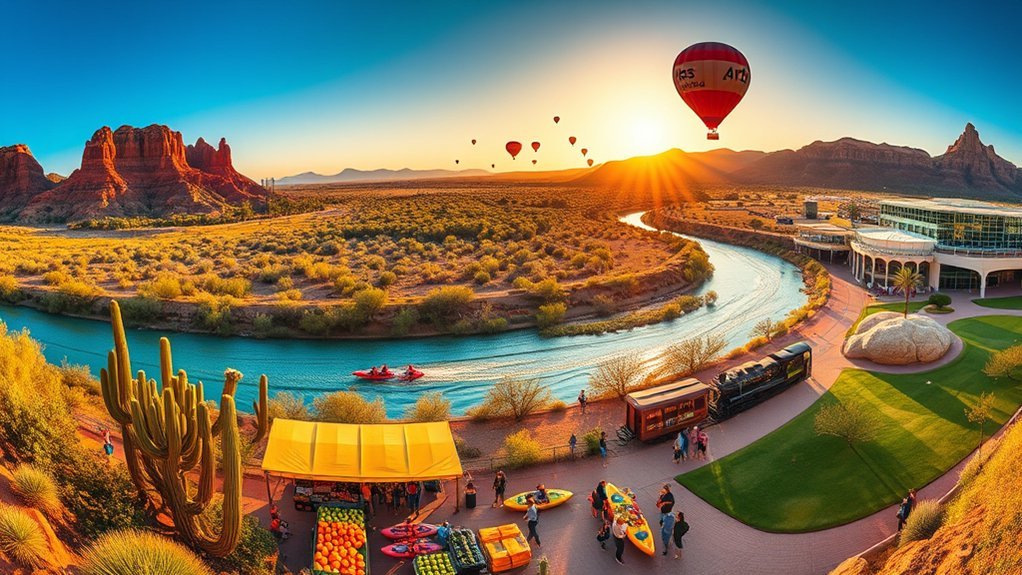
Mesa gives you an unusually broad mix of Sonoran Desert scenery, archaeology, museums, public art, baseball, family attractions, food, and outdoor recreation. The best trip combines a few downtown stops with one or two desert experiences, while treating places such as Saguaro Lake, Lost Dutchman State Park, Gilbert, and the Verde Valley as separate outings outside Mesa itself.
Quick Answer
The best things to do in Mesa include hiking at Usery Mountain, exploring downtown museums and public art, seeing Cubs spring training at Sloan Park, visiting Sce:dagĭ Mu:val Va’aki, enjoying family attractions, and using Mesa as a base for Saguaro Lake and the Superstition Mountains.
Key Takeaways
- Downtown Mesa works especially well for museums, public art, dining, and Mesa Arts Center in one compact outing.
- Usery Mountain Regional Park is one of the strongest outdoor choices, but Wind Cave Trail is about 3 miles round trip, not 1.5 miles.
- Saguaro Lake, Lost Dutchman State Park, Gilbert’s Riparian Preserve, and the Verde Valley are worthwhile nearby trips rather than attractions inside Mesa.
- Summer heat can make exposed desert activities dangerous, so check current weather, trail status, closures, and operating hours before leaving.
- A car is useful for desert parks and regional day trips, while central Mesa attractions are easier to combine with transit, walking, or short rides.
Plan Your Mesa Visit
Know What Is in Mesa and What Is Nearby
Mesa itself contains downtown museums, Mesa Arts Center, Sloan Park, Falcon Field, Usery Mountain Regional Park, golf courses, Golfland Sunsplash, Mesa Market Place, parks, and a growing restaurant scene. Saguaro Lake lies in Tonto National Forest, Lost Dutchman State Park sits near Apache Junction, the Riparian Preserve at Water Ranch is in Gilbert, and the Verde Valley is a much longer northern Arizona day trip. Treating those places separately makes your itinerary more realistic.
Getting Around Mesa
Downtown Mesa is the easiest area to explore without relying entirely on a car. Valley Metro Rail serves Mesa, and local buses connect additional neighborhoods. A car or rideshare is much more practical for Usery Mountain, Saguaro Lake, Lost Dutchman State Park, Falcon Field, and widely separated east-Mesa attractions.
Warning: Desert heat can become dangerous quickly. Check the National Weather Service Phoenix heat guidance, carry adequate water, use sun protection, avoid unnecessary midday exertion, and turn around if conditions exceed your ability or preparation.
Pro Tip: Group Arizona Museum of Natural History, idea Museum, Mesa Arts Center, Mesa Contemporary Arts Museum, downtown murals, and restaurants into the same downtown day instead of driving back and forth across the city.
Visit Park of the Canals
For a quieter look at Mesa’s relationship with desert waterways, stop at Park of the Canals at 1710 N Horne. The City of Mesa lists picnic tables, shaded areas, restrooms, a playground, and an unpaved walking path. The setting also provides useful context for understanding how water management has shaped settlement and agriculture in this part of the Salt River Valley.
Explore Sce:dagĭ Mu:val Va’aki

Formerly known as Mesa Grande Cultural Park, Sce:dagĭ Mu:val Va’aki received its current O’odham name in November 2024. The City of Mesa and Arizona Museum of Natural History steward the ancestral site in partnership with the Salt River Pima-Maricopa Indian Community and Gila River Indian Community.
The site preserves a large platform mound associated with an extensive ancestral irrigation network. Interpretive material helps place the mound, canals, farming, community organization, and the site’s continuing cultural significance in context. Approach it as a protected ancestral place rather than simply another archaeological attraction, remain within visitor areas, and follow all posted photography and preservation rules.
Note: As of August 16, 2026, the official site lists Sce:dagĭ Mu:val Va’aki as closed for the season and says it will reopen in fall. Check the official page immediately before planning a visit.
Hike Usery Mountain Regional Park and Wind Cave Trail

Usery Mountain Regional Park is one of Mesa’s strongest choices for a close-up Sonoran Desert experience. Its popular Wind Cave Trail climbs toward an alcove on Pass Mountain and opens broad views across the East Valley. The route is exposed, rocky in places, and much more demanding in hot weather than its mileage may suggest.
Trail Overview
According to Maricopa County Parks, Wind Cave Trail is approximately 3 miles round trip. It is not the same route as the park’s separately listed 3.2-mile Scenic Loop. Expect dirt, rock, gradual climbing followed by steeper sections, and little dependable shade.
- Distance: About 3 miles round trip
- Typical visit: Roughly 1–2 hours for many visitors, depending on pace and conditions
- Terrain: Rocky desert trail with climbing and exposed sections
- Alternative: Merkle Trail is a 1-mile barrier-free interpretive trail
Scenic Lookouts and Alternative Routes
You do not need invented “summit” names to find good views at Usery. The park’s official trail system gives you several verified choices depending on time and ability.
| Route | Approximate Distance | Best For |
|---|---|---|
| Wind Cave Trail | 3 miles round trip | Popular climb and valley views |
| Merkle Trail | 1 mile | Barrier-free desert interpretation |
| Scenic Loop | 3.2 miles | Broader desert loop |
| Pass Mountain viewpoint | About 4 miles round trip | Longer scenic outing |
Practical Tips
Check park alerts before leaving, especially during extreme heat, fire restrictions, or temporary parking controls. Carry water, use sunscreen and a hat, wear footwear suited to loose rock, stay on designated routes, and let someone know where you are going. Early starts are generally preferable when temperatures are rising.
Wander the Arizona Museum of Natural History

The Arizona Museum of Natural History is one of downtown Mesa’s most useful all-ages stops. Its collections and exhibitions cover dinosaurs, prehistoric life, Arizona geology, archaeology, Native American cultural material, and regional history. The museum is also an active research institution rather than simply an entertainment venue.
Families can expect a more hands-on experience than at a traditional display-only museum, while adults interested in paleontology or Southwest history can spend time with the deeper interpretive material. Allowing roughly 1.5–2 hours is reasonable for a relaxed visit, although families who stop at every interactive feature may stay longer. Check current hours and special-event schedules on the museum’s official site.
Stroll Through Downtown Mesa’s Art District

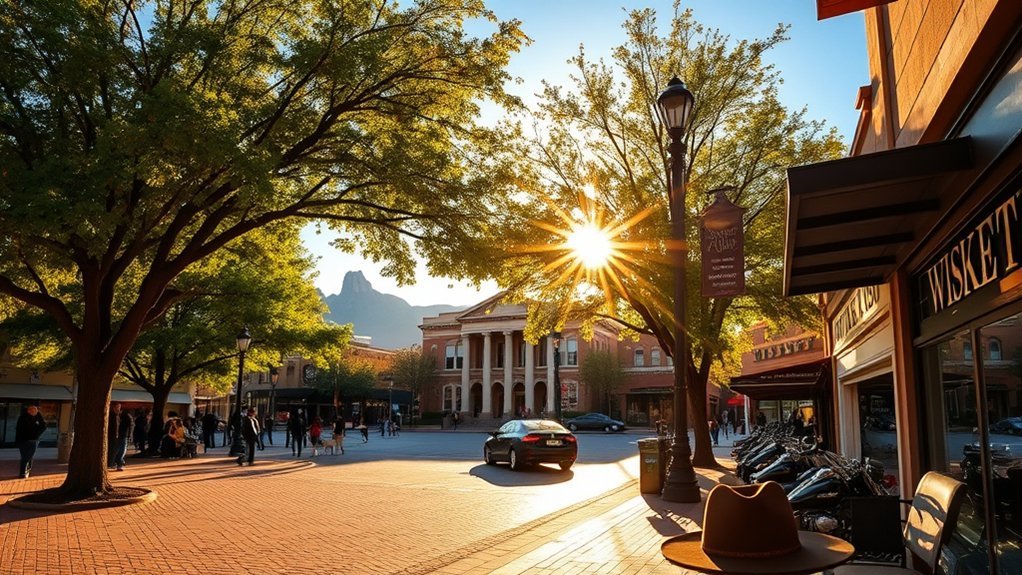
Downtown Mesa makes an easy follow-up to the natural-history museum. The district combines murals, public sculpture, galleries, locally owned businesses, restaurants, and the Mesa Arts Center campus. The City of Mesa Public Art Program is a better guide to established public artworks than relying on unsourced mural lists.
Pair downtown Mesa’s museums with public art, galleries, food, and an evening performance for one of the city’s easiest car-light itineraries.
- Walk Main Street and nearby blocks looking for murals and public sculpture.
- Visit independent galleries and shops when they are open.
- Combine the walk with Mesa Arts Center or Arizona Museum of Natural History.
- Check the current calendar for 2nd Friday Night Out rather than assuming a generic First Friday event.
Visit the idea Museum for Hands-On Creativity

The idea Museum is designed around creative learning for children and families. Instead of promising a fixed menu of activities, plan around the museum’s permanent creative spaces, rotating exhibitions, drop-in programs, and scheduled workshops.
Interactive Art Spaces
The museum’s verified spaces include The HUB, a gallery with interactive creative areas, and ArtVille, an environment designed specifically for children from birth through age four. Because exhibitions and prompts change, the experience can differ from one visit to another.
Art and Technology
The idea Lab explores the intersection of art and technology. Rotating exhibitions can introduce invention, portrait-making, experimentation, design, and other creative themes. Check the current exhibitions page before promising children a particular activity.
Family-Friendly Workshops
Workshops, camps, drop-in programs, and special events are scheduled separately from general admission. Look at the official calendar before visiting if a structured activity is important to your family. As of August 2026, the museum lists regular Tuesday-through-Sunday public hours, with Mondays closed, but hours and admission can change.
Tour the Mesa Contemporary Arts Museum

Mesa Contemporary Arts Museum, part of Mesa Arts Center, presents regional, national, and international contemporary visual art. Exhibitions rotate, so current artists and installations are more useful planning information than a permanent list of specific works.
Admission is currently free. The museum also offers artist lectures, workshops, a docent program, and scheduled public tours. Because exhibitions turn over between seasons, confirm that galleries are open on your intended date.
2026 update: Mesa Contemporary Arts Museum lists a summer closure from June 29 through September 11, 2026, with its fall exhibition opening on September 11.
Catch a Spring Training Game at Sloan Park

Sloan Park is the Chicago Cubs’ spring-training home in Mesa and one of the city’s biggest seasonal draws. Spring training gives you a more relaxed baseball atmosphere than the regular MLB season, with warm-up activity, close views of the field, and a strong mix of visiting and local fans.
For baseball fans, Sloan Park is one of Mesa’s signature February-and-March experiences.
- Check the official Cactus League/Cubs schedule before choosing travel dates.
- Buy high-demand weekend and rivalry games early.
- Use sun protection and review the stadium’s current bag, bottle, and entry policies before leaving.
- Arrive early enough to handle parking, security, food, and seating without rushing.
Kayak or Paddleboard on Saguaro Lake

Saguaro Lake is not inside Mesa, but its location in Tonto National Forest makes it a popular regional outing from the city. The reservoir’s desert cliffs, coves, saguaros, and open water create a dramatic paddling setting for kayaks and paddleboards.
Check the Tonto National Forest Saguaro Lake information for current recreation rules, launch access, passes, closures, and fire restrictions. Conditions can change quickly when wind increases, so wear an appropriate personal flotation device, protect electronics in a waterproof bag, and stay within your skill level. Rental availability is separate from Forest Service access, so arrange equipment before arriving if you do not own a boat or board.
Discover the Superstition Mountains and Lost Dutchman State Park

Lost Dutchman State Park, near Apache Junction rather than inside Mesa, is a convenient gateway to the Superstition Mountains. Trails range from short interpretive walks to difficult mountain routes, so match the route to your experience instead of choosing only by scenery.
- Treasure Loop: About 2.4 miles round trip, moderate, with roughly 500 feet of elevation change.
- Siphon Draw: About 4 miles round trip and considerably more demanding.
- Flatiron: About 5.8 miles round trip when continued beyond Siphon Draw. The upper route is not maintained or designated all the way and should be attempted only by experienced, well-prepared hikers.
- Native Plant Trail: A better choice when you want an easier interpretive outing.
Warning: Arizona State Parks advises allowing at least five hours for Flatiron and does not recommend the upper route during hot weather. Check current park restrictions before departing.
Visit Riverview Park and Gilbert’s Riparian Preserve Separately

Riverview Park and the Riparian Preserve at Water Ranch are not one connected park. Riverview is in Mesa beside the Sloan Park area, while the preserve is a separate wetland destination in Gilbert.
Riverview Park has a fishing lake, playground, splash pad, picnic facilities, shaded areas, restrooms, and paved walkways. It is a practical family stop before or after an event at Sloan Park.
For dedicated birding and wetland trails, drive to Gilbert’s Riparian Preserve at Water Ranch. Its ponds, wildlife habitat, walking routes, viewing areas, and extensive birdlife make it a stronger choice for nature observation. Bring binoculars and allow more time if birding is your main goal.
Attend a Performance at the Mesa Arts Center

Mesa Arts Center brings performing arts, visual arts, classes, public spaces, and Mesa Contemporary Arts Museum together on one downtown campus. Its multiple theaters host touring concerts, theater, dance, comedy, speakers, and community productions.
A downtown Mesa evening works especially well when you combine dinner, public art, gallery time, and a ticketed performance.
- Check the official performance calendar rather than relying on a fixed list of genres.
- Review parking and arrival instructions before popular shows.
- Visit the visual-arts spaces when their opening hours overlap with your performance.
- Check accessibility information when you need wheelchair seating, assistive listening, or other accommodations.
Browse the Mesa Market Place Swap Meet

Mesa Market Place is a large covered outdoor shopping market at 10550 E Baseline Road. Vendors sell crafts, clothing, jewelry, tools, décor, collectibles, food, and many other goods. Admission and parking are currently free.
What to Expect
The market combines covered shopping aisles, food, live entertainment, and a broad vendor mix. Current 2026 operating hours vary by season. Summer hours from June through September are Saturday and Sunday, 8 a.m.–2 p.m.; winter and May schedules differ, so check the official site before driving across town.
- Atmosphere: Casual outdoor market
- Admission: Currently free
- Parking: Currently free
- Accessibility: The market states that it is handicap accessible
Tips for Bargains
Bring a reusable bag, compare similar items before buying, and ask individual merchants about accepted payment methods. Some independent sellers may negotiate while others may use fixed prices, so do not assume every booth expects haggling. Earlier hours generally offer cooler conditions during warm months.
Know Before You Go: Hohokam Pima National Monument Is Closed to the Public

Hohokam Pima National Monument protects the important archaeological site of Snaketown on the Gila River Indian Reservation near Sacaton. It is not a Mesa neighborhood attraction, and there are no public trails to explore.
Hohokam Pima National Monument has no public visitor access. Respect the Gila River Indian Community’s decision to protect this sensitive ancestral site.
According to the National Park Service archive, archaeological excavations were backfilled to protect Snaketown, and the Gila River Indian Community has chosen not to open the monument to visitors.
- Do not attempt to enter the monument or seek unofficial access.
- Use Sce:dagĭ Mu:val Va’aki in Mesa as a legitimate public archaeological stop when it is open.
- Visit the Arizona Museum of Natural History for regional archaeological interpretation.
- Follow tribal and museum guidance when discussing, photographing, or visiting culturally significant places.
Bike Mesa’s Eastern Canal Path and Gilbert’s Riparian Trails

For a Mesa-focused ride, use the City’s Eastern Canal Shared Use Path and the broader bicycle network rather than treating the Arizona Canal and Gilbert’s preserve as one linked route.
The canal path provides flatter riding suited to transportation and recreation. If you also want to ride in Gilbert’s Riparian Preserve, make it a separate stop and follow preserve rules, including yielding to pedestrians. Carry water, use a helmet, cross roads cautiously, and avoid the hottest part of the day in summer.
Explore Mesa’s Asian District and Southwestern Food Scene

Gilbert Road and Dobson Road should not be treated as one dining corridor. For one of Mesa’s clearest food districts, focus on the Asian District along Dobson Road, especially around the Main Street-to-Broadway area, where restaurants, markets, bakeries, cafés, and murals reflect a wide range of Asian cuisines and communities.
Elsewhere in Mesa, Mexican and Southwestern cooking adds carne asada, tacos, chile-based dishes, Sonoran influences, grilled meats, fresh tortillas, salsas, and regional desserts to the mix.
- Explore several restaurants in the Asian District rather than trying to define it by a single cuisine.
- Look for locally owned Mexican restaurants and taquerias across central and east Mesa.
- Use current menus if dietary restrictions or child-friendly options matter.
- Pair downtown dining with Mesa Arts Center or a museum visit to reduce driving.
Photograph Sunrise or Sunset at Usery or the Goldfield Mountains

Usery Mountain’s cactus-filled slopes and the Goldfield Mountains east of Mesa can deliver strong sunrise and sunset compositions. Usery is the simpler Mesa-area choice, while Goldfield viewpoints may take you farther toward the Superstition region.
Arrive early enough to identify a legal, safe viewpoint before light changes. Use established trails and parking areas rather than stepping into fragile desert vegetation. A wide lens helps with broad landscapes, while a longer lens compresses distant ridges. Carry a headlamp if you will be walking before sunrise or after sunset.
| Time | Typical Look | Planning Tip |
|---|---|---|
| Sunrise | Cooler, softer light | Reach your viewpoint before dawn |
| Sunset | Warm directional light | Plan your return before darkness |
| Blue hour | Lower light and deeper sky tones | Tripod and headlamp can help |
Tour the Arizona Commemorative Air Force Museum

The Arizona Commemorative Air Force Museum at Falcon Field focuses on historic military aviation. Aircraft, artifacts, interpretive displays, volunteers, and changing exhibits give visitors context about aircraft technology and the people connected to wartime aviation.
- Walk around historic aircraft and study their scale and construction.
- Use museum interpretation to understand missions, crews, maintenance, and preservation.
- Look for current events and special programs rather than assuming a specific aircraft will always be accessible.
- Ask about optional behind-the-scenes or cockpit experiences when available.
The museum normally lists Wednesday-through-Saturday hours. During excessive summer heat it may close early, so call or check the official site on the day of your visit.
Experience Falcon Field Aviation History

Falcon Field dates to 1941 and is closely tied to World War II-era pilot training. Today it remains an active municipal airport, so visitors should not assume unrestricted access to ramps, hangars, or working areas.
Historic Aviation Tours
When public airport history programs or tours are scheduled, they can provide context about Falcon Field’s wartime origins, surviving architecture, and transition into a modern general-aviation airport. These programs are event-dependent, so check Falcon Field’s official calendar rather than arriving expecting a daily guided tour.
- Check scheduled public programs in advance.
- Stay within designated visitor areas at the active airport.
- Use the adjacent CAF Museum for a more predictable museum experience.
- Bring questions about pilot training, airport development, and preserved aviation history.
Aircraft Restoration Displays
Restoration work is most reliably associated with the aviation museum and its programs rather than unrestricted access around Falcon Field itself. When restoration areas are open to visitors, docents can explain preservation, parts sourcing, structural repairs, corrosion control, paint schemes, instruments, and the challenge of keeping historic aircraft safe and interpretable.
Attend a Public Native American Cultural Program or Powwow Respectfully

The Phoenix-Mesa region is home to living Indigenous communities, and public cultural programs can offer meaningful opportunities to learn directly from Native artists, educators, performers, and community members. Attend only events that are publicly advertised by the host community, museum, or authorized organizer.
Do not treat every dance, song, prayer, gathering, or cultural object as a tourist attraction. Etiquette differs by event, and photography may be restricted during particular moments.
- Use the host tribe’s or official organizer’s calendar for current dates.
- Follow announcements about photography, recording, seating, and participation.
- Purchase art directly from Native artists when authentic vendor markets are part of the event.
- Listen to the terminology and cultural guidance used by community members themselves.
Tee Off at One of Mesa’s Golf Courses

Mesa’s golf options range from dramatic desert layouts to more forgiving public courses. Tee times, rates, maintenance schedules, dress rules, rental equipment, and summer operating practices vary, so book directly with the course.
Mesa Golf Courses to Consider
- Longbow Golf Club — an 18-hole championship-style public course in north Mesa.
- Dobson Ranch Golf Club — a public Mesa course with a more traditional layout and practice facilities.
- Las Sendas Golf Club — a desert-style course with elevated East Valley scenery.
- Augusta Ranch Golf Club — an 18-hole course designed for a faster, more approachable round.
Desert Golfing Tips
Summer golf can mean intense heat and strong sun exposure. Hydrate before and during the round, use sunscreen, wear lightweight clothing and a hat, and choose a tee time appropriate for the weather. Keep carts and foot traffic out of protected desert vegetation, follow course rules, and never reach blindly into cactus, brush, or rocky areas for a lost ball.
Enjoy Family Fun at Golfland Sunsplash

Golfland Sunsplash combines year-round amusement activities with a seasonal waterpark. That distinction matters when planning outside summer: Golfland activities can operate beyond waterpark season, while Sunsplash’s water attractions follow a shorter seasonal calendar.
Depending on current operations, families can choose from water slides, pools and splash attractions during waterpark season along with mini-golf, arcade games, and other amusement options.
- Check which attractions are operating on your exact date.
- Review height and safety requirements before promising children a particular ride.
- Bring sun protection and appropriate swimwear for waterpark visits.
- Compare day passes and attraction-specific tickets before buying.
Try Revel Surf at Cannon Beach
For a newer Mesa recreation option, Revel Surf at Cannon Beach brings surf sessions and beach-style recreation to southeast Mesa at 4503 S Power Road. The venue offers different wave experiences and session types, so beginners and experienced surfers should book the product that matches their ability.
Reservations, waivers, admission policies, session availability, and operating hours can change. Check the official site before arriving, especially if surfing is the main reason for your visit.
Make a Day Trip to Verde Valley Wineries and Tasting Rooms

The Verde Valley is a northern Arizona wine destination, not a nearby Mesa neighborhood. Treat it as a dedicated day trip rather than an add-on after a full Mesa attraction day. Cottonwood, Clarkdale, Jerome, and surrounding vineyard areas contain tasting rooms and producers working with a variety of grapes and wine styles.
Reserve tastings when required, verify hours with each winery, and use a designated driver or organized transportation if anyone in your group will be drinking. Drive time varies substantially with destination and traffic, so check navigation on the day of travel rather than relying on a fixed 90-minute estimate.
| Stop Type | What to Expect | Planning Tip |
|---|---|---|
| Vineyard winery | Estate setting and tasting | Reserve when required |
| Downtown tasting room | Walkable flights and food nearby | Check closing time |
| Multi-stop wine day | Several producers | Use a sober driver or tour |
Attend a Community Event at Pioneer Park or the Fiesta District

Pioneer Park, downtown Mesa, and the broader Fiesta District host different public events throughout the year. Instead of assuming weekly festivals, use current City of Mesa and Visit Mesa calendars to see what is actually scheduled during your trip.
Live Music & Performances
Seasonal city events may include concerts, community performances, holiday gatherings, cultural programming, youth activities, or outdoor entertainment. Event format changes from date to date, so check start times, parking instructions, prohibited items, and whether seating is provided.
- Check the current event calendar before building the day around a performance.
- Arrive early for large free community events.
- Bring sun protection for daytime programs and an extra layer for cooler evenings.
- Follow posted rules for chairs, pets, coolers, and outside food.
Local Food & Crafts
Food trucks, artisans, community organizations, and local businesses often participate in larger festivals and markets, but vendor lineups change. Carry a backup payment method and reusable bag, and buy directly from makers when you want locally produced art or crafts.
Explore Historic Lehi and Mesa’s Agricultural Heritage

Lehi is one of Mesa’s historic settlement areas, but it is more accurate to place its story within Mesa’s broader agricultural development than to label the neighborhood itself the Valley’s definitive “fruit-packing hub.” Irrigation, citrus cultivation, farms, packing operations, and transportation all contributed to Mesa’s growth.
The Mesa Historical Museum, housed at the Old Lehi School at 2345 N Horne, is the best structured stop for learning about Mesa’s local history.
- Use museum exhibits to understand Mesa’s settlement and agricultural development.
- Look at historic school architecture and the surrounding Lehi area respectfully.
- Connect agricultural history with Mesa’s canal system and Park of the Canals.
- Check museum hours before visiting; the current schedule lists Tuesday through Saturday opening.
Visit the Mesa Historical Museum
If local history matters to you, give the museum its own stop rather than treating Lehi as an unsupported self-guided heritage attraction. Exhibits cover Mesa’s past, changing community stories, and Arizona baseball history. Because exhibitions rotate, use the museum’s current site to see what will be on display during your visit.
Relax and Picnic at Red Mountain Park

Red Mountain Park is a useful east-Mesa option when you want an easy outdoor break instead of another major attraction. Paved sidewalks cross and circle portions of the park, and the broader recreation complex supports casual walking, sports, picnicking, and community use.
For a longer walk, use designated paths and check the City of Mesa’s current park maps and facility information. Dogs in Mesa parks must be physically controlled on a leash no longer than six feet unless they are inside a designated dog park, so do not assume an ordinary section of Red Mountain Park is off-leash.
Frequently Asked Questions
What are the best things to do in Mesa for a first visit?
A strong first visit combines downtown Mesa’s museums and arts district with Usery Mountain Regional Park. Add Sloan Park during spring training, or choose Saguaro Lake or Lost Dutchman State Park as a separate regional outdoor day.
Are there guided birdwatching tours at the Riparian Preserve?
Programs change throughout the year, so check Gilbert’s official Riparian Preserve calendar for current guided walks, educational events, and nature programs. You can also bird independently on the preserve’s trails and viewing areas.
Is public transportation convenient for reaching Mesa attractions?
Public transit is most useful for downtown Mesa and some central-city destinations. Valley Metro Rail serves Mesa, but a car or rideshare is usually more practical for Usery Mountain, Saguaro Lake, Lost Dutchman State Park, Falcon Field, and widely separated east-Mesa attractions.
What are some family-friendly places to eat in Mesa?
Mesa has family-friendly options throughout downtown, the Asian District, and major shopping corridors. Organ Stop Pizza is a distinctive Mesa family experience, while casual Mexican, barbecue, burger, and Asian restaurants give families many less formal choices. Check current menus, hours, and reservation policies before visiting.
Are there wheelchair-accessible trails and attractions in Mesa?
Yes. Usery Mountain Regional Park lists the 1-mile Merkle Trail as barrier-free and suitable for wheelchairs and strollers. Downtown museums and Mesa Arts Center also provide accessibility information. Always check the specific attraction before visiting because access can differ between buildings, trails, exhibits, and temporary events.
Can I bring my dog to Mesa parks and outdoor sites?
Many Mesa parks allow controlled dogs, but City rules require a physical leash no longer than six feet outside designated dog parks. Rules at county parks, state parks, preserves, museums, lake recreation areas, and special events can differ, so check the individual destination.
How many days do you need in Mesa?
Two or three days gives most first-time visitors enough time for downtown Mesa, one major desert outing, and a family, sports, or cultural attraction. Add another day if you want Saguaro Lake, Lost Dutchman State Park, or another regional excursion without rushing.
When is the best time for outdoor activities in Mesa?
Cooler months are generally easier for hiking and prolonged outdoor sightseeing. Summer requires much more heat planning, early starts, water, sun protection, and willingness to cancel exposed activities when warnings or conditions make them unsafe.
Conclusion
Mesa works best when you build the trip around what the city genuinely does well: Sonoran Desert access, downtown museums and arts, spring-training baseball, aviation history, family attractions, golf, parks, and a diverse food scene. Keep nearby destinations such as Saguaro Lake, Lost Dutchman, Gilbert’s Riparian Preserve, and the Verde Valley in their proper geographic context, and always check current heat conditions, trail alerts, seasonal closures, and attraction hours before leaving. With that planning, you can spend less time driving or correcting plans and more time enjoying Mesa itself.
Sources
- Arizona Museum of Natural History — Sce:dagĭ Mu:val Va’aki — current name, cultural context, access, admission, and seasonal status.
- Maricopa County Parks — Usery Mountain Regional Park itinerary — Wind Cave distance, Merkle Trail accessibility, and alternative routes.
- Arizona State Parks — Lost Dutchman trails — Treasure Loop, Siphon Draw, Flatiron distance, difficulty, and safety guidance.
- U.S. Forest Service — Saguaro Lake — lake recreation, access, and current Tonto National Forest information.
- City of Mesa — parks, public art, trails, Falcon Field, recreation facilities, and local regulations.
- National Weather Service Phoenix — Heat Safety — official desert heat precautions and outdoor-safety guidance.