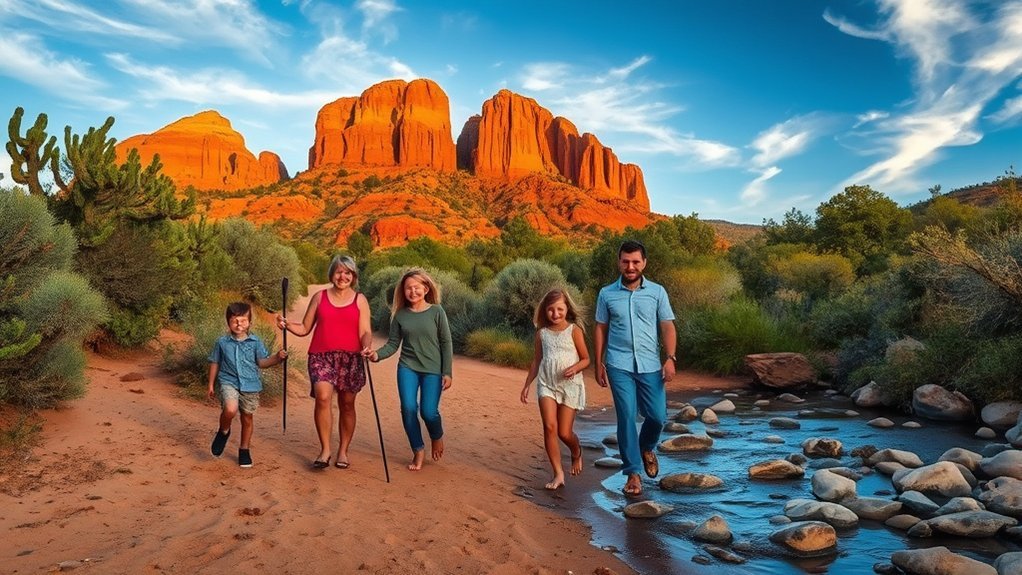
If you’re bringing kids to Sedona, focus on easy red-rock walks, creek-side picnic stops, short cultural attractions, and plenty of breaks. Most Sedona hiking trails have natural dirt, rock, or slickrock surfaces, so a child carrier is often more useful than a regular stroller. Heat, monsoon storms, parking, and changing creek conditions also matter, especially when you’re planning around younger children.
Quick Answer
For a family-friendly Sedona trip, start with an easy portion of Bell Rock Pathway or the main Fay Canyon Trail, add a picnic or museum break, and save strenuous scrambles for another trip. Carry plenty of water, use a child carrier on rough trails, check weather and closures, and keep outings short in hot weather.
Key Takeaways
- Bell Rock Pathway and Fay Canyon are among the easier family hiking choices, but you do not need to complete the entire trail.
- Do not assume an easy Sedona trail is stroller-friendly. Natural surfaces can be sandy, rocky, or uneven.
- As of August 16, 2026, Slide Rock’s swimming area is closed through September 2026, although the park remains open for hiking and picnicking.
- Start outdoor activities early during warm weather and check the forecast before entering creeks, washes, or canyons.
- Keep children close, keep dogs leashed, pack out trash and pet waste, and leave archaeological objects exactly where you find them.
Best Family-Friendly Activities and Trails in Sedona
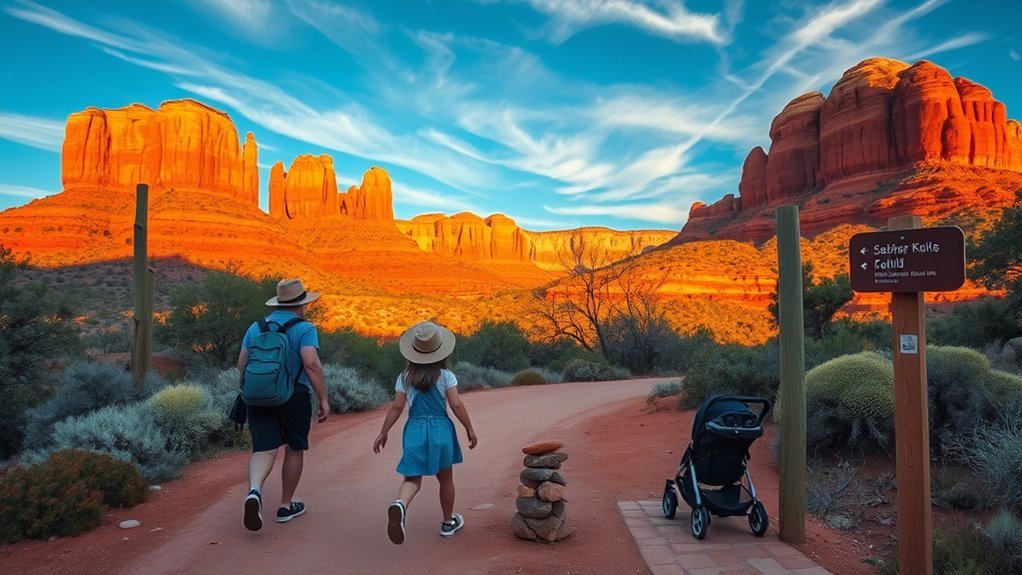
Sedona works well with children when you treat hikes as flexible outings rather than routes that must be finished. A short walk followed by a snack, picnic, or indoor stop is often more enjoyable than pushing young hikers toward a summit. The options below let you adjust the day to your family’s energy, weather, and mobility.
Walk Part of Bell Rock Pathway
Bell Rock Pathway is officially rated an easy, family-friendly trail by the U.S. Forest Service. The full pathway is 3.5 miles one way, so families with young children usually do not need to walk the entire route.
Walk toward Bell Rock, enjoy the views, and turn around whenever your youngest hiker starts losing energy. This gives children the red-rock experience without committing the family to a long outing.
Pro Tip: Treat distance as optional. A 20- to 40-minute out-and-back can be a better family experience than completing a trail simply because the map shows a longer route.
Although Bell Rock Pathway is relatively gentle by Sedona standards, it is still an outdoor dirt-and-rock trail. Do not count on a lightweight city stroller working comfortably. A sturdy all-terrain stroller may handle selected sections in good conditions, but a child carrier is the more dependable choice when terrain becomes uneven.
Keep Fay Canyon Simple
Fay Canyon Trail is another strong family option because the Forest Service describes it as a shorter hike with minimal elevation gain. Red sandstone walls surround the route, and sections of vegetation provide welcome relief from exposed desert scenery.
With younger children, stay on the obvious main trail and make the canyon itself the destination. An arch can be seen in the canyon area, but optional side routes and scrambling should not be treated as required family activities. Loose rock, route-finding, and steeper terrain can quickly change the difficulty.
Picnic and Play Near Oak Creek
Oak Creek adds a welcome change from Sedona’s exposed red-rock terrain. Crescent Moon Picnic Site is a popular day-use area where families can slow down, eat lunch, enjoy views of Cathedral Rock, and explore near the creek when conditions allow.
Creek access should never be treated like a supervised swimming pool. Water depth, temperature, current, slippery rocks, bacteria, debris, and weather-related conditions can change. Keep younger children within arm’s reach near water and check current land-manager notices before allowing anyone to wade.
Visit Slide Rock State Park, but Check the Current Closure
Slide Rock State Park is famous for the natural rock chute in Oak Creek, but families planning a 2026 trip need an important update.
Warning: As of August 16, 2026, the Slide Rock swimming area is closed through the end of September 2026. Arizona State Parks says ash, sediment, debris, water-quality concerns, and flash-flood risk following the Pocket Fire contributed to the closure. Do not plan your current visit around swimming or using the natural slide.
The official Arizona State Parks closure notice says the park itself remains open for activities such as picnicking, viewing its historic homestead area, and taking a short hike. Because conditions can change again, check the park’s alerts before leaving your hotel or vacation rental.
Visit the Chapel of the Holy Cross
The Chapel of the Holy Cross gives children a break from a conventional hike while still surrounding them with Sedona’s red-rock scenery. The building’s dramatic setting and unusual architecture can turn a short visit into a simple observation activity: ask younger children to notice shapes in the rocks, building materials, shadows, and distant formations.
There is still walking involved, including sloped approaches, so comfortable shoes are useful. Keep voices respectful inside the chapel because it remains an active religious site.
Explore the Sedona Heritage Museum
The Sedona Heritage Museum is a useful option when children need a break from sun, trails, or long drives. Its exhibits cover early settlers, ranching, orchards, filmmaking, transportation, and local history, and the museum currently includes interactive displays.
For younger children, keep the visit short and turn it into a scavenger hunt: find an old tool, a cowboy-related object, a movie reference, or something that shows how people traveled before modern Sedona developed.
Use Posse Grounds Park for a Low-Key Break
Not every family stop needs to be a famous red-rock attraction. If children simply need room to play, a city park can reset the day. Posse Grounds Park includes a playground and other recreation facilities, making it useful between sightseeing stops.
This is especially helpful when a toddler has had enough sightseeing but older family members still want to explore later.
Save a Short Viewpoint for Sunset
If everyone still has energy, finish with a sunset viewpoint such as Airport Mesa. Keep the outing simple rather than adding a long evening hike. Uneven rock becomes harder to judge as light fades, so carry a flashlight or headlamp, supervise children closely, and begin heading back before full darkness.
How to Choose a Sedona Activity by Your Child’s Age
Babies and Young Toddlers
Prioritize short outings, shade, paved attractions, picnic areas, and places where you can leave quickly. A supportive child carrier is generally more useful than a standard stroller on natural trails. Avoid carrying a child onto steep slickrock or exposed scrambling routes simply because the overall hike is short.
Preschoolers
Choose outings with a clear reward every 15 to 30 minutes: a rock formation, snack stop, creek view, museum object, or picnic. Bell Rock and Fay Canyon work best when you set your own turnaround point rather than expecting a preschooler to finish the mapped distance.
School-Age Children
Older children may enjoy longer portions of easy trails, simple nature challenges, geology discussions, wildlife spotting from a safe distance, and history stops. They are also old enough to carry a small amount of their own water, but adults should still monitor hydration and weather closely.
Teens
Teens may be ready for more demanding hikes, but Sedona’s famous short trails can still include steep slickrock, exposure, route-finding, and heat. Choose by actual terrain and the teenager’s hiking experience, not distance alone.
Practical Tips for Traveling With Kids in Sedona
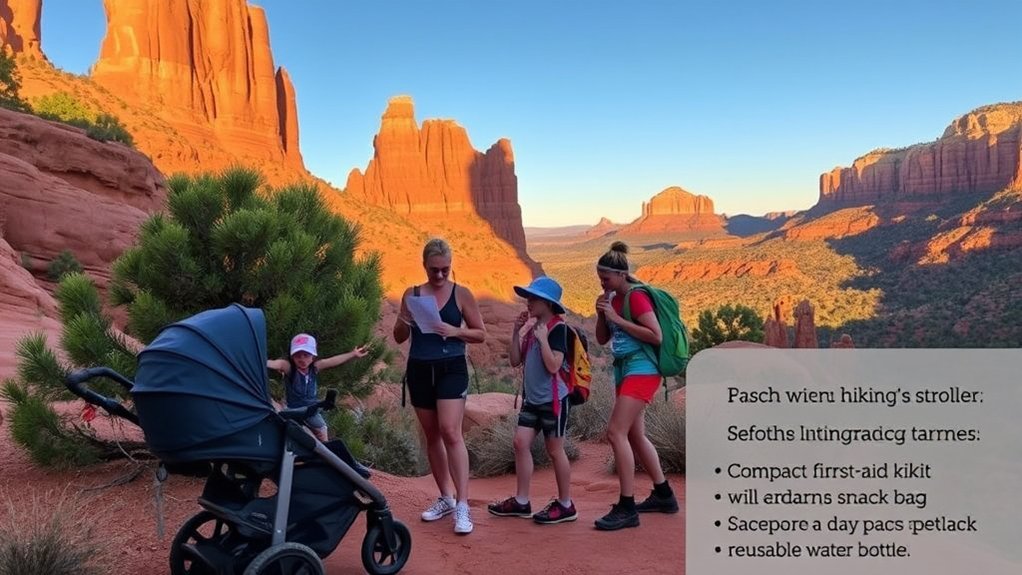
Start Early and Carry More Water Than You Expect to Need
When you travel to Sedona with kids, pack sun protection, plenty of water, salty or energy-rich snacks, and weather-appropriate layers. Warm, dry conditions can make an easy-looking trail feel much harder, especially for children who may not recognize thirst or overheating early.
Schedule active outdoor time for the cooler part of the day when possible. Save museums, meals, scenic drives, shopping, or hotel downtime for hotter afternoon hours.
Take Flash-Flood Warnings Seriously
Creeks and canyons need extra attention during Arizona’s summer monsoon period. The National Weather Service in Flagstaff warns that flash floods are common in northern Arizona and can move through washes and creeks even when the storm itself is some distance away.
Warning: If thunderstorms or heavy rain are forecast, reconsider creek, wash, or narrow-canyon plans. If water begins rising or a flash-flood warning is issued, move to higher ground immediately and never attempt to cross a flooded creek.
Pack a Small Family Safety Kit
Bring a small first-aid kit, blister treatment, required medications, sunscreen, hats, snacks, and enough water for the entire group. A clear medication pouch makes essential items easier to find.
Charge your phones before leaving and carry a portable battery if you rely on your phone for maps. Download important map information before hiking because cellular reception can vary once you move away from developed areas.
Choose a Carrier Over a Lightweight Stroller on Trails
A lightweight stroller works best around paved town attractions and other smooth developed surfaces. Sedona’s hiking trails can include loose sand, stones, roots, steps, and slickrock. A properly fitted child carrier is usually more practical for babies and toddlers once you leave pavement.
Note: “Easy” describes hiking difficulty, not wheelchair or stroller accessibility. Check the specific site’s accessibility information if anyone in your group needs a reliably firm, smooth, or step-free route.
Check Parking, Passes, Shuttles, and Closures Before Leaving
Some Sedona-area National Forest recreation sites require a Red Rock Pass, America the Beautiful pass, or a separate day-use fee. Rules differ by location, so check the specific trailhead instead of assuming one pass covers every attraction.
Sedona also operates trailhead shuttle services for several popular hiking areas. Routes and operating days can change, so check current transportation information before building a family schedule around a particular parking lot.
Make Creek Safety Non-Negotiable
Natural creek areas do not have the controlled conditions of a swimming pool. Keep small children close enough to reach immediately. Water shoes with good traction can help on wet surfaces, but they do not eliminate slipping risk.
Never encourage children to jump from unfamiliar rocks into water. Depth can change, submerged rocks may not be visible, and debris can move after storms.
Teach Simple Trail Etiquette
Give children a few rules they can remember:
- Stay on the established trail.
- Do not climb on fragile plants or biological soil.
- Do not feed or approach wildlife.
- Carry out every wrapper, tissue, and piece of trash.
- Leave rocks, plants, pottery pieces, and other natural or archaeological objects where they are.
- Give other hikers space and use indoor voices around cultural or religious sites.
Keep Wildlife at a Distance
Rattlesnakes, javelina, coyotes, and other wildlife live throughout northern Arizona. Most encounters do not become problems when visitors give animals room and do not feed them.
Teach children never to reach toward a snake, baby animal, burrow, or unfamiliar wild mammal. If you see wildlife on or beside a trail, stop at a safe distance and let the animal move away.
Javelina deserve particular caution when dogs are present because they can respond defensively to dogs. Do not corner or approach them.
Keep Dogs Leashed
You can bring dogs on many Coconino National Forest trails, but the Forest Service requires dogs to be leashed and controlled. Bring water for your dog, collect waste, and carry the waste bag out rather than leaving it beside the trail.
A family hike becomes much harder if one adult is trying to manage a pulling dog while also supervising a toddler, so consider whether bringing the dog actually makes sense for that outing.
Respect Native and Archaeological Sites
Sedona and the Verde Valley contain places with continuing cultural importance as well as archaeological resources. Teach children that pottery fragments, structures, rock art, and other objects are not souvenirs.
The Coconino National Forest’s safety and outdoor-ethics guidance prohibits damaging archaeological resources or removing artifacts. Stay on designated routes, do not touch rock art, and leave every object where it is found.
If you attend a Native cultural event or meet an artist, ask permission before photographing people, demonstrations, or ceremonies when appropriate. Encourage children to listen respectfully and learn rather than treating living cultures as tourist props.
Plan Shorter Outings Than You Think You Need
Shorter hikes and frequent breaks usually work better than trying to complete an adult sightseeing checklist. Leave room for bathroom stops, unexpected hunger, tired legs, weather changes, and children who suddenly become fascinated by one rock for twenty minutes.
Keep identification and an emergency contact with each child who is old enough to carry it, and make sure older children know what to do if separated from the group.
Simple One-Day Sedona Itinerary With Kids
Morning: Start early with a short portion of Bell Rock Pathway or the main Fay Canyon Trail. Turn around while everyone is still enjoying the hike rather than waiting until children are exhausted.
Late morning: Stop for a snack or early lunch. If the weather is warming quickly, transition away from exposed hiking.
Midday: Visit the Sedona Heritage Museum or Chapel of the Holy Cross for a slower-paced activity.
Afternoon: Choose a picnic area, playground, pool if operating, or downtime at your accommodation. If you’re considering Oak Creek, verify weather, water conditions, and current access first.
Evening: Have an early dinner, then choose a short designated viewpoint for sunset if the children still have energy. Carry lights for the walk back and do not turn sunset into an unplanned after-dark hike.
Pro Tip: Give every day one “must-do” family activity and treat everything else as optional. Sedona is much easier with children when your schedule has room for weather, traffic, naps, and spontaneous stops.
Frequently Asked Questions
Are There Pediatric Clinics or Emergency Services in Sedona?
Yes. Northern Arizona Healthcare provides 24/7 emergency care in Sedona for adults and pediatric patients at 3700 Arizona 89A. Call 911 for a life-threatening emergency. For routine pediatric or urgent-care needs, check current local availability before traveling because specialty and appointment options can vary.
What Wildlife Should Kids Avoid Near Trails?
Children should avoid approaching all wildlife, including rattlesnakes, javelina, coyotes, bobcats, skunks, porcupines, and any animal with young nearby. Keep children close, never feed wildlife, and give an animal enough room to leave on its own. Keep dogs especially far from javelina.
Can You Bring Well-Behaved Dogs on Family Hikes?
Dogs are allowed on many Coconino National Forest trails, but they must be properly leashed and controlled. Bring water, pick up all waste, and carry waste bags out with you. Check the rules for any state park, heritage site, or other managed attraction separately because pet policies can differ.
Are There Toddler-Friendly Museums or Indoor Play Spaces?
Sedona has fewer indoor children’s attractions than a large city, but the Sedona Heritage Museum provides a useful weather break and includes interactive exhibits. Posse Grounds Park offers a playground for active downtime, and the city operates a community pool. Check current hours and seasonal schedules before going.
What Cultural or Native American Etiquette Should Families Know?
Treat archaeological and cultural places as living heritage rather than playgrounds. Stay on designated routes, never remove artifacts, do not touch rock art, and follow posted restrictions. At cultural events, listen to guides and ask before photographing people or ceremonies when appropriate. Buying directly from Native artists is also a respectful way to support living traditions.
Is Slide Rock State Park Open for Swimming Right Now?
Not currently. As of August 16, 2026, Arizona State Parks says the Slide Rock swimming area will remain closed through September 2026 because of post-fire water-quality and flash-flood concerns. The park remains open for hiking, picnicking, and other permitted activities. Check the official park page before your visit because conditions can change.
What Are the Easiest Sedona Hikes for Kids?
Bell Rock Pathway and the main Fay Canyon Trail are good starting points for many families. The best strategy with younger children is to walk only as far as everyone is comfortable, then return. Avoid adding steep scrambles simply because they appear close on a map.
Is Sedona Stroller-Friendly?
Developed areas, museums, shops, parks, and some viewpoints are easier with a stroller, but most hiking trails should not be assumed stroller-friendly. Dirt, sand, rocks, roots, steps, and slickrock are common. For babies and toddlers on trails, a properly fitted child carrier is often the more practical option.
Do You Need a Pass to Hike in Sedona?
It depends on where you park and which recreation site you use. Some Coconino National Forest trailheads require a Red Rock Pass or accept an America the Beautiful pass, while certain developed day-use areas charge separate fees. Check the official listing for each destination before arriving.
Conclusion
Sedona’s red rocks can be a memorable family playground when you match the outing to your children’s actual energy and experience. Pack sun protection, snacks, water, first-aid basics, and a carrier when trails are too rough for a stroller. Choose easy portions of scenic hikes, mix outdoor time with museum or picnic breaks, and turn around before tired legs turn a good day into a struggle.
Most importantly, check weather and current closures before creek or canyon outings. In 2026 that includes the temporary Slide Rock swimming closure. A little flexibility leaves more room for the best parts of a family trip: muddy shoes, strange-shaped rocks, unexpected wildlife sightings, and the moments your kids decide are more interesting than anything on the itinerary.
Sources
- Arizona State Parks and Trails: Slide Rock Swimming Closure — current 2026 swimming-area closure, water conditions, flash-flood concerns, and activities that remain available.
- U.S. Forest Service: Bell Rock Pathway No. 96 — official trail difficulty, distance, and family-friendly classification.
- U.S. Forest Service: Fay Canyon Trail No. 53 — official information on the shorter, minimal-elevation-gain canyon hike.
- U.S. Forest Service: Coconino National Forest Safety and Outdoor Ethics — pet control, outdoor safety, and archaeological-site protection guidance.
- National Weather Service Flagstaff: Flash Flood Safety — northern Arizona flash-flood risks and safety actions.
- Northern Arizona Healthcare: Sedona Emergency Department — verified 24/7 emergency care for adults and pediatric patients in Sedona.