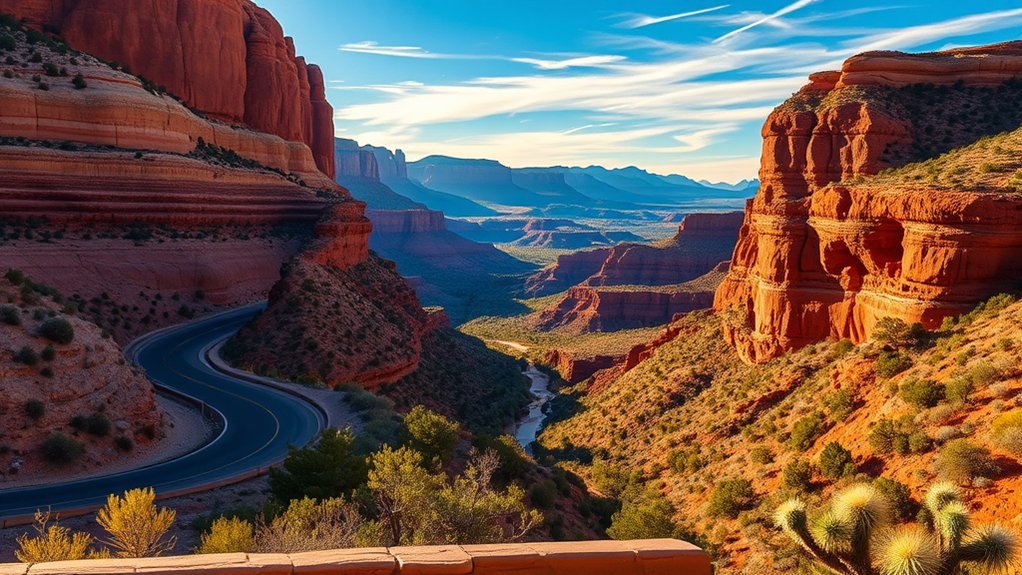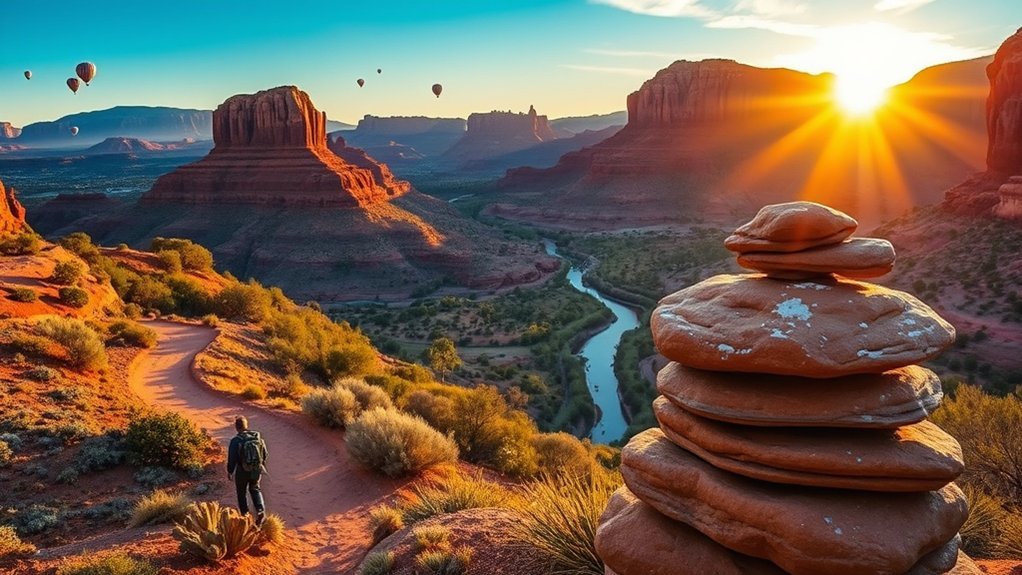
If you’re planning a trip to Sedona, you can mix classic red-rock hikes with scenic drives, art, history, wellness, wine, and quieter places to slow down. Cathedral Rock, Devil’s Bridge, Bell Rock, Airport Mesa, and Oak Creek Canyon are highlights, but access conditions can change quickly because of weather, wildfire, flooding, parking rules, and seasonal closures. Use this guide to choose experiences that fit your time, mobility, and comfort level while keeping current conditions in mind.
Quick Answer
The best things to do in Sedona include hiking Cathedral Rock and Devil’s Bridge, exploring Bell Rock, watching sunset from Airport Mesa, visiting the Chapel of the Holy Cross, browsing Tlaquepaque, taking a guided off-road tour, exploring Verde Valley wine country, and making time for art, history, and quieter desert trails.
Key Takeaways
- Start popular hikes early and use the Sedona Shuttle when it serves your trailhead.
- Check Coconino National Forest alerts before every hike because fire, flood, maintenance, and weather closures can change access.
- Treat Sedona’s vortex tradition as a spiritual or personal experience rather than a scientifically proven physical phenomenon.
- For paddling, look to the Verde River area rather than assuming Oak Creek is a suitable or open kayak route.
- During the summer monsoon period, hike early and take lightning, heat, and flash-flood warnings seriously.
Warning: As of August 16, 2026, Coconino National Forest lists active Pocket Fire and Oak Creek closures. The West Fork area is affected, and the swimming area at Slide Rock State Park is closed until October 1, 2026 because of post-fire flash-flood risk. Check the current Coconino National Forest alerts and Slide Rock State Park notices immediately before visiting.
Plan Before You Go: Closures, Shuttles, Passes, and Weather
Sedona is easy to explore once you understand how its busiest trailheads work. Before leaving your hotel, check the Coconino National Forest alerts page for closures, fire danger, flood restrictions, and maintenance notices. Do not rely on an older blog post or saved map to confirm that a trail is open.
The Sedona Shuttle serves several popular trailheads and can save you from circling small parking lots. Cathedral Rock and Soldier Pass have special parking arrangements when trailhead shuttle service is running, so check the current schedule before driving directly to them.
Some Forest Service parking and day-use areas require a recreation pass or site fee. The Red Rock Pass program covers many Sedona-area Forest Service fee sites, while some concession-operated recreation areas use separate fees and may not accept the Red Rock Pass.
Pro Tip: Download your route for offline use before leaving town. Cell coverage can weaken in canyons and remote trail areas, so your phone should not be your only navigation or emergency plan.
Summer also brings monsoon hazards. The National Weather Service in Flagstaff warns northern Arizona visitors about lightning, heat, and especially flash flooding during the monsoon period. Check the forecast before entering washes, creek corridors, exposed ridges, or narrow canyons.
Hike Cathedral Rock
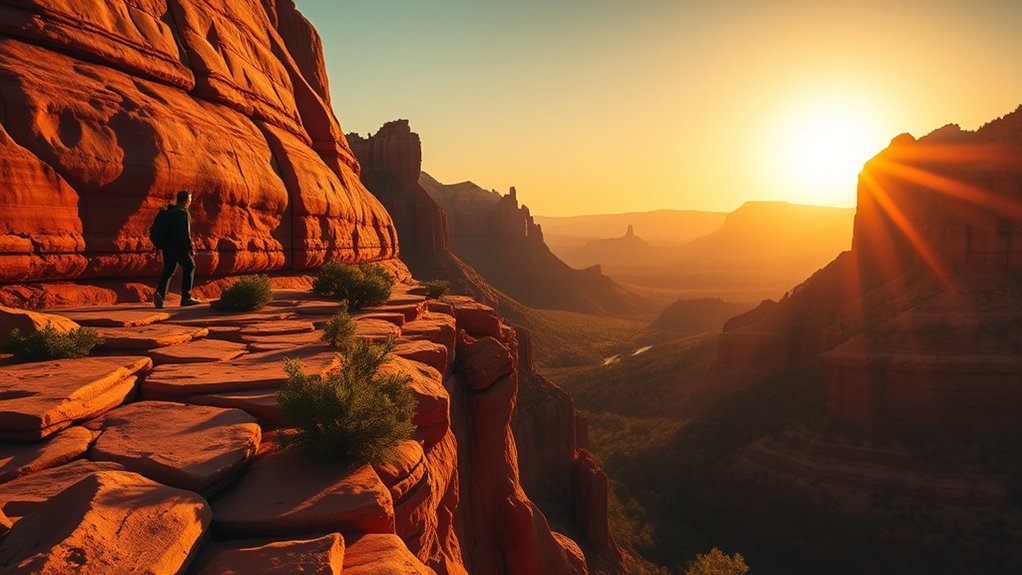
Cathedral Rock is short on mileage but demanding on terrain. The Forest Service lists the route at about 1.1 miles round trip with roughly 669 feet of elevation gain and rates it strenuous. Parts feel more like a scramble than an ordinary trail, with steep sandstone where you may use both hands and feet.
Take your time on the rock slabs, especially while descending. The exposed route has little shade, so early morning is usually more comfortable in warm weather. The saddle near the top gives you broad views across Sedona’s red-rock country without requiring you to climb onto unsafe edges.
When the Sedona Shuttle is operating, Cathedral Rock Trailhead parking is managed differently and visitors should use the designated shuttle service. Check the current Sedona Shuttle schedule before driving to the trailhead.
Warning: Cathedral Rock has steep sandstone, exposed ledges, and little shade. Skip the climb during thunderstorms, icy conditions, or when wet rock makes footing uncertain.
Explore Bell Rock and Courthouse Butte
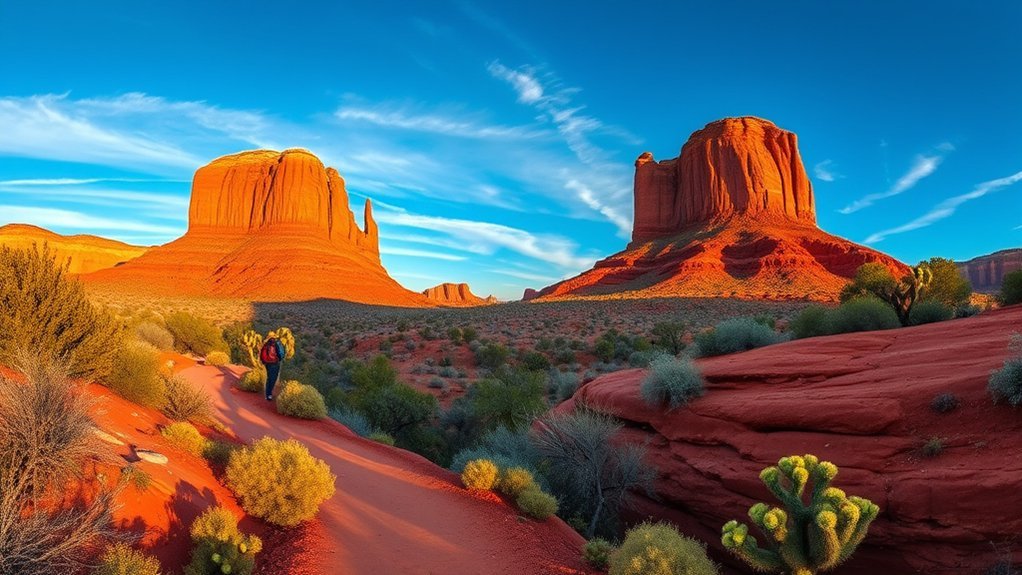
Bell Rock and neighboring Courthouse Butte offer some of Sedona’s easiest ways to get close to the red-rock landscape without committing to a steep summit hike. A network of paths around the formations lets you choose anything from a short viewpoint walk to a longer loop.
The lower trails are generally more approachable than scrambling high onto Bell Rock itself. Stay on established routes, carry water, and avoid creating shortcut paths across fragile desert soil. Sunrise and late afternoon usually provide cooler temperatures and softer light.
| Feature | Tip |
|---|---|
| Trails | Use the pathway and connecting loops for flexible distances |
| Difficulty | Easy to moderate on lower established routes |
| Best time | Early morning or late afternoon |
Walk the Devil’s Bridge Trail
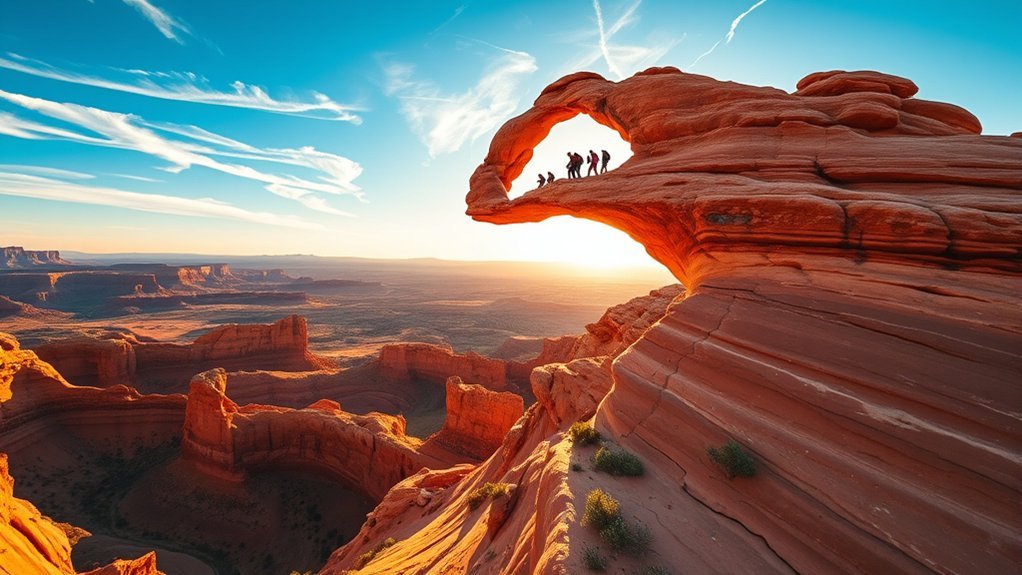
Devil’s Bridge is one of Sedona’s most photographed natural features, but it is not reached by heading east from Bell Rock. The usual approaches come from the Dry Creek Vista/Mescal area west of central Sedona. Your total mileage depends on where you start because ordinary passenger vehicles do not drive the roughest access road all the way to the short official trail.
The Forest Service rates the official Devil’s Bridge Trail as moderate and lists the trail itself at about 1.6 miles round trip. Starting from paved parking or a shuttle-accessible trailhead makes the outing substantially longer. Expect exposed sections, rock steps near the arch, and little shade on parts of the approach.
You can walk onto the sandstone bridge where access is permitted, but there are no guardrails. Stay well back from exposed edges, give other visitors space, and do not step backward while taking photographs. Early starts help with both heat and crowds.
Stroll the West Fork of Oak Creek
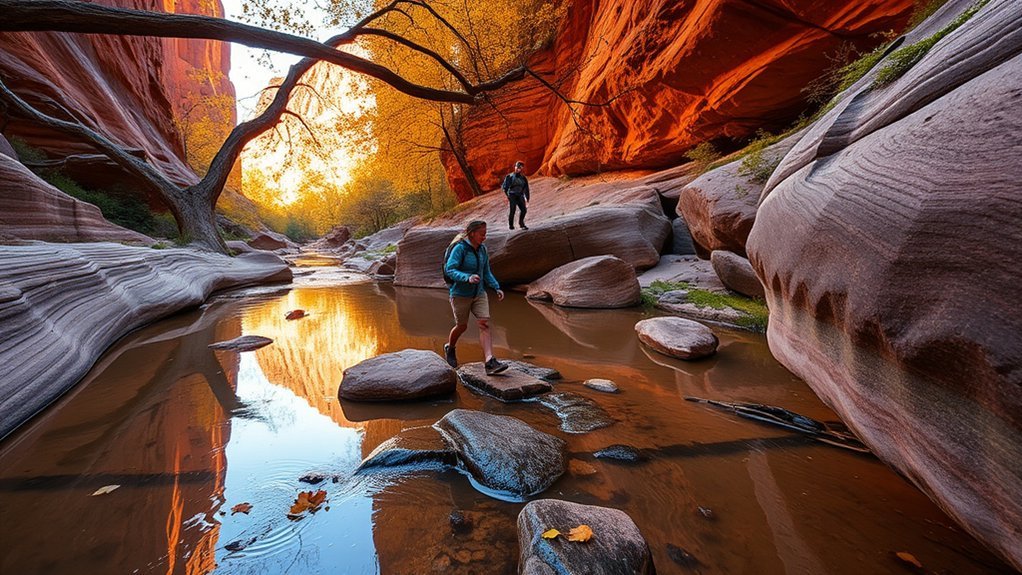
The West Fork Trail normally offers a striking contrast to Sedona’s exposed red-rock hikes. The route follows a shaded canyon beside Oak Creek, with repeated creek crossings, cottonwoods, sandstone walls, and cooler conditions than many open desert trails.
Warning: Do not attempt West Fork while the current Pocket Fire/Oak Creek closure remains in effect. As of August 16, 2026, the Forest Service still lists closure orders affecting this area because of post-fire hazards and flash-flood risk. Check current Forest Service alerts before planning this hike.
When access eventually reopens, expect uneven trail surfaces and multiple stream crossings. Water levels vary, so footwear that can handle wet rock is useful. Never enter a narrow creek corridor when thunderstorms or flash-flood warnings threaten the watershed upstream.
Drive the Red Rock Scenic Byway

The Red Rock Scenic Byway along State Route 179 gives you broad views of Bell Rock, Courthouse Butte, and other formations while connecting the Village of Oak Creek with Sedona. It is one of the easiest options for visitors who want major scenery without a long hike.
Use designated viewpoints and parking areas rather than stopping on shoulders that are not signed for parking. Traffic can build during busy weekends and holidays, so allow extra time. Late-afternoon light can be beautiful, but keep your attention on the road rather than trying to photograph from a moving vehicle.
Sunset at Airport Mesa
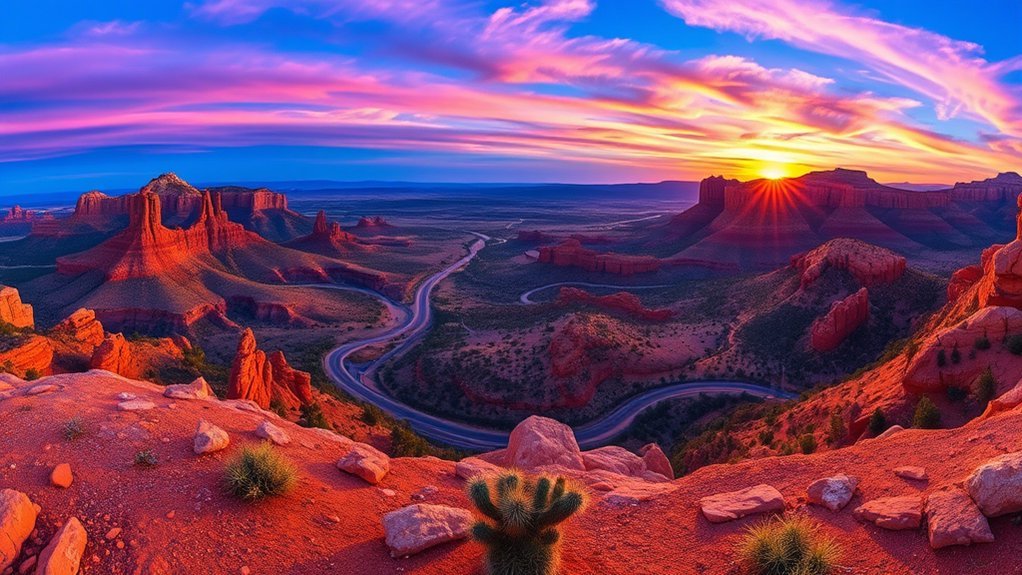
Airport Mesa is one of Sedona’s best-known sunset areas because its elevated viewpoints look across multiple red-rock formations. It can also become extremely busy around sunset, so plan your transportation before the sky starts changing color.
Best Viewpoints for Sunset
Choose an established overlook or trail viewpoint where you can stand well away from traffic and exposed edges. The broader Airport Mesa area gives you views toward formations such as Cathedral Rock and the surrounding mesas. A light jacket is useful because temperatures and wind can change quickly after sunset.
For photography, expose for the highlights in the sky and let the red rocks form darker layers as the sun drops. You do not need to stand at an edge to get a dramatic composition.
Tips for Parking
Parking near Airport Mesa is limited and can fill before sunset. Arrive early enough to use a designated legal parking space rather than improvising on an unmarked shoulder.
- Aim for a weekday when possible.
- Allow extra time for traffic and walking.
- Use only signed parking spaces and legal pullouts.
- Bring a headlamp or flashlight for the return walk.
- Carry water and a light layer.
- Never block a driveway, travel lane, emergency access point, or private property.
Visit Chapel of the Holy Cross
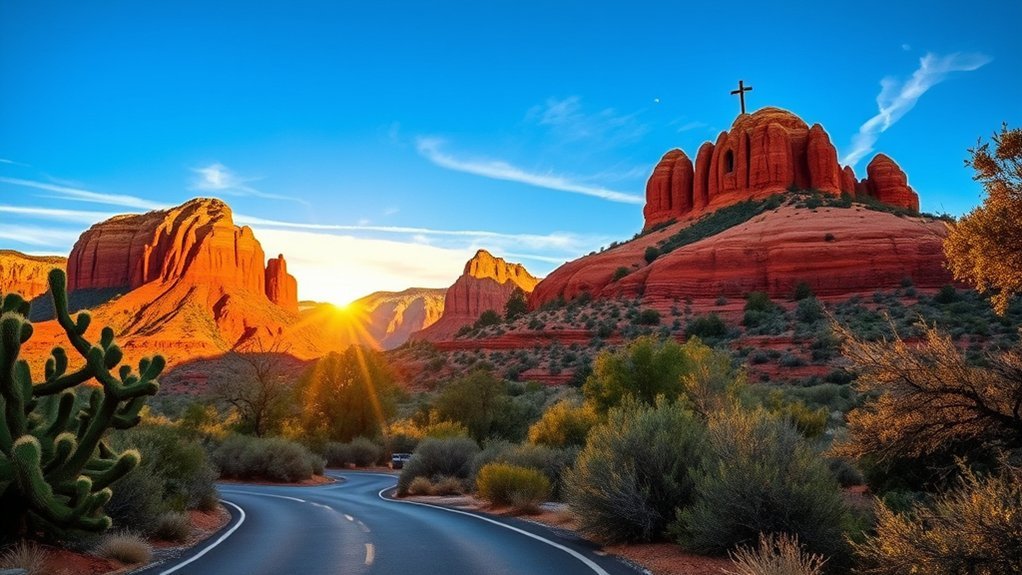
The Chapel of the Holy Cross combines modern architecture with one of Sedona’s most dramatic settings. The Roman Catholic chapel is built into the red-rock landscape and remains an active religious site, so visit respectfully even if you are there mainly for architecture or views.
Architectural Highlights and Design
The design uses simple geometric forms, concrete, glass, and a dominant cross to direct attention toward both the sanctuary and surrounding rock. The architecture is deliberately restrained rather than ornate, allowing the setting to remain central to the experience.
- Strong geometric forms frame the surrounding landscape.
- Concrete and earth-toned materials complement the cliffs.
- Vertical elements draw your eye upward.
- Windows bring changing daylight into the interior.
- The compact sanctuary creates a quieter scale than the dramatic exterior suggests.
Best Viewpoints and Photos
Use the established approach and designated viewpoints for photographs. Wider compositions can show how the chapel sits against the cliffs, while tighter frames emphasize the cross, windows, and structural lines. Respect signs concerning photography inside the sanctuary and avoid obstructing worshippers or access routes.
Visiting Hours and Access
The chapel’s official website currently lists hours of 9 a.m. to 5 p.m. seven days a week, with last entry at 4:45 p.m. Services and special observances can affect the visitor experience, so check the official schedule before going.
- Visit earlier in the day if you want a better chance of lighter crowds.
- Use designated parking and follow traffic directions.
- Dress and behave respectfully because this is an active Catholic chapel.
- Check current holiday and service information before your visit.
- Allow extra time if mobility limitations make the uphill approach slower.
Browse Tlaquepaque Arts & Shopping Village
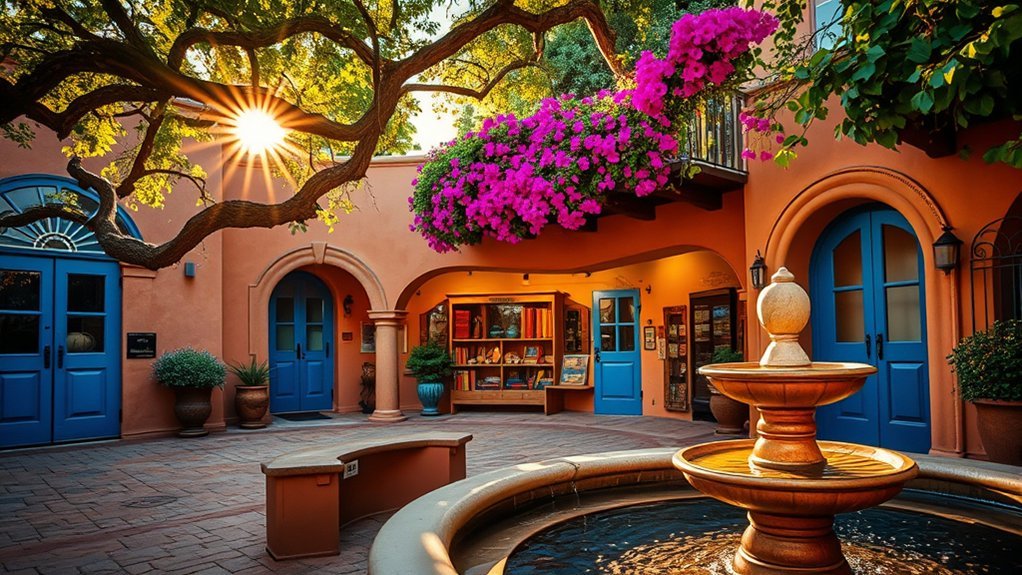
Tlaquepaque Arts & Shopping Village is a good change of pace between hikes. Shaded courtyards, fountains, galleries, boutiques, restaurants, and architectural details make it an easy place to spend an hour or several hours.
Browse slowly rather than treating the complex only as a souvenir stop. Galleries cover a broad range of Southwestern and contemporary work, while restaurants and cafés make the village useful during the hotter middle part of the day.
If you are buying artwork represented as Native American-made, ask for the artist’s name and tribal affiliation rather than relying on appearance alone. The federal Indian Arts and Crafts Act prohibits falsely marketing products as Native American-made when they are not.
Take a Pink Jeep Tour
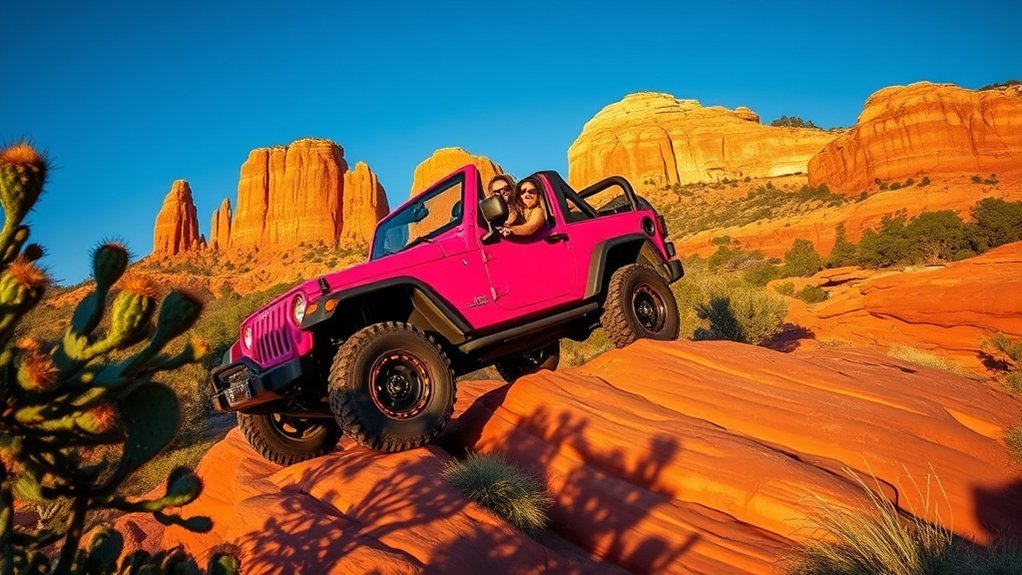
A guided off-road tour is a useful option if you want red-rock scenery without doing a long hike. Sedona’s well-known pink vehicles have become part of the destination’s tourism identity, and different routes emphasize scenery, geology, local history, or rougher four-wheel-drive terrain.
Do not assume every stop is otherwise unreachable; many tours share landscapes that hikers, cyclists, or other permitted users can also visit. The benefit is having a driver handle navigation while a guide explains the surroundings.
- Expect bumps and jolts on rough routes.
- Secure cameras, phones, hats, and loose belongings.
- Ask about physical restrictions if you have back, neck, mobility, or pregnancy concerns.
- Bring water, sun protection, and layers.
- Choose a tour difficulty that matches your comfort level rather than simply booking the roughest route.
Experience a Sedona Vortex Site
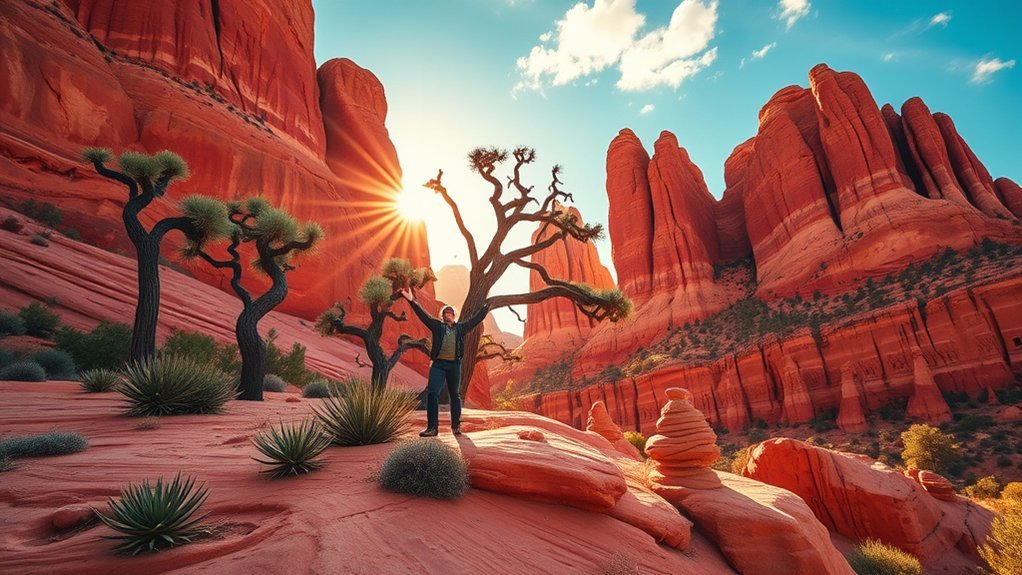
Sedona’s vortex tradition is an important part of the city’s modern spiritual culture. Sites commonly associated with vortex beliefs include Airport Mesa, Bell Rock, Cathedral Rock, and Boynton Canyon. Some visitors describe these places as energetically significant, while others simply enjoy them as beautiful settings for meditation or quiet reflection.
Note: Claims about measurable vortex energy or specific healing effects are matters of spiritual belief and personal experience, not established scientific findings.
You do not need a ritual or guide to appreciate these locations. Sit quietly, meditate, journal, photograph the landscape, or simply take a slow walk. Respect other visitors who may be using the area for spiritual practice, and stay on durable surfaces rather than creating new paths.
Photograph Broken Arrow Trail
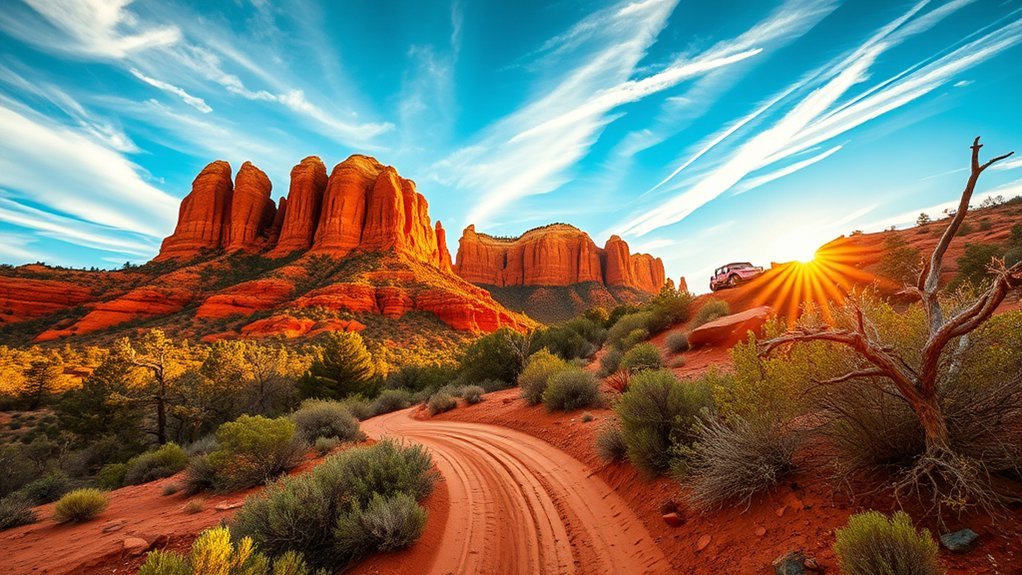
Broken Arrow Trail gives photographers access to sculpted sandstone, broad red-rock views, and landmarks such as Submarine Rock and Chicken Point. The route also passes near the fenced Devil’s Dining Room sinkhole, giving you several different geological subjects in one outing.
Broken Arrow works best when you treat the landscape as the subject: use established trails, keep your distance from edges, and let changing light create the drama.
- Early or late light creates stronger texture on sandstone.
- Use foreground vegetation without stepping off trail to reach it.
- A polarizing filter can help control glare, but its effect varies with your angle to the sun.
- Bracket exposures when the sky is much brighter than the rocks.
- Keep tripods and bags out of the trail where hikers and cyclists need to pass.
Paddle Near Sedona on the Verde River Instead of Assuming Oak Creek Is Open
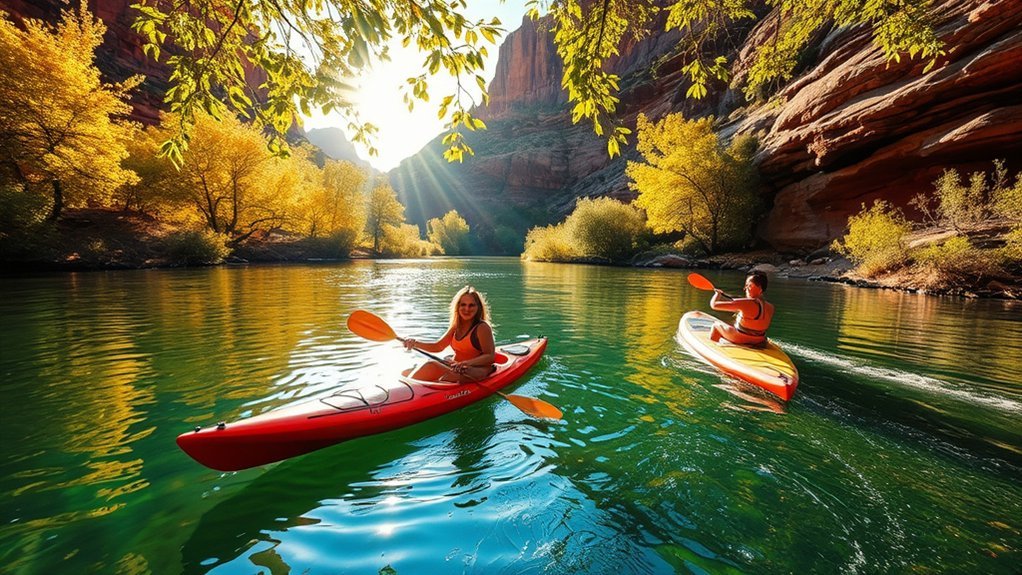
If paddling is on your Sedona itinerary, the Verde River area near Cottonwood is a more established choice than treating Oak Creek as a routine kayak or paddleboard route. Official Sedona tourism information promotes guided and self-guided kayaking experiences on the Verde River, including stretches southwest of Sedona.
This distinction is especially important in 2026 because portions of Oak Creek are currently closed for public safety following the Pocket Fire. Never launch into a creek or river simply because you can physically reach the bank.
Choose an Established Paddling Area
Your best put-in depends on river conditions, experience, access permissions, and whether you are joining an outfitter. For an easier flat-water environment, Dead Horse Ranch State Park in Cottonwood has lagoons, a boat ramp, and water-access infrastructure. For moving-water trips on the Verde River, use a reputable outfitter or a route you have verified for current flow and access.
- Verde River: established guided kayaking opportunities near Cottonwood.
- Dead Horse Ranch State Park lagoons: calmer setting with a boat ramp and day-use facilities.
- Oak Creek: do not assume paddling access is legal, safe, practical, or currently open.
Rental and Guided Options Nearby
Rather than relying on unverified Oak Creek rental listings, search for current Verde Valley outfitters and confirm exactly what a booking includes. Some guided experiences combine a Verde River paddle with other Verde Valley activities.
| Option | Water Type | Best For |
|---|---|---|
| Guided Verde River trip | Moving river | Visitors who want equipment and route guidance |
| Dead Horse Ranch lagoons | Flat water | A calmer paddling environment |
| Independent river outing | Varies | Experienced paddlers who have verified access and conditions |
Safety and Etiquette
Moving water deserves more planning than a casual shoreline visit. Confirm flows, weather, access, take-out points, and equipment requirements before launching.
- Wear a properly fitted personal flotation device.
- Do not paddle a flooded or officially closed waterway.
- Check weather upstream as well as at your launch point.
- Respect private property and designated access points.
- Pack out all trash and secure loose equipment.
- Tell someone your planned route and expected return time.
Relax at a Sedona Spa
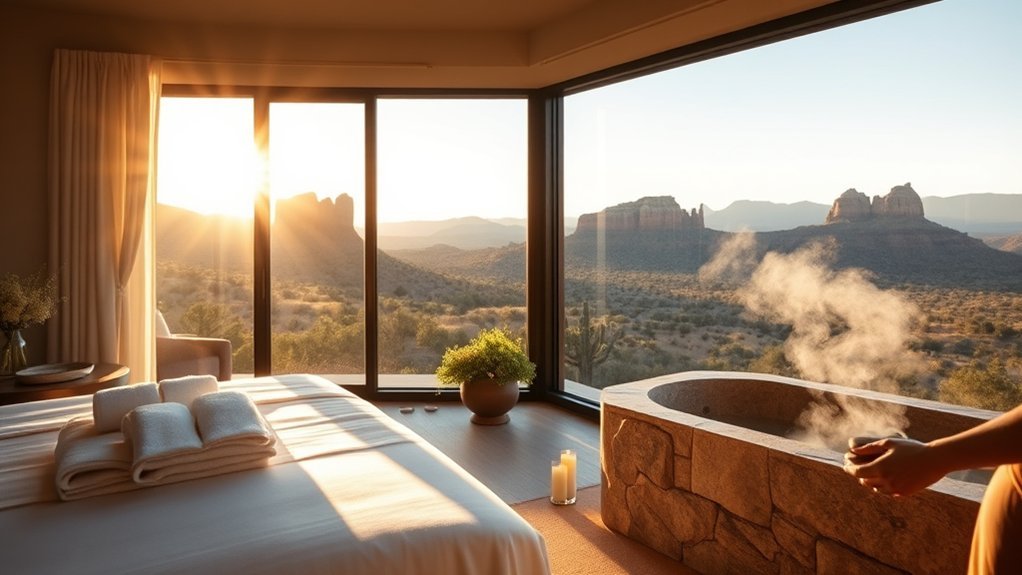
A spa day gives your legs a break after several hikes and fits naturally into Sedona’s wellness-focused tourism scene. Depending on the property, you may find massage, facials, body treatments, yoga, meditation, pools, or relaxation areas with red-rock views.
Choose treatments based on your preferences rather than claims that they diagnose, detoxify, or medically treat a condition. Deep-tissue or hot-stone massage may feel good after travel, but tell your therapist about injuries, pregnancy, medications, recent surgery, or other relevant health concerns before treatment.
Popular resorts and spas can fill during weekends and holidays, so advance reservations are sensible.
Explore Slide Rock State Park
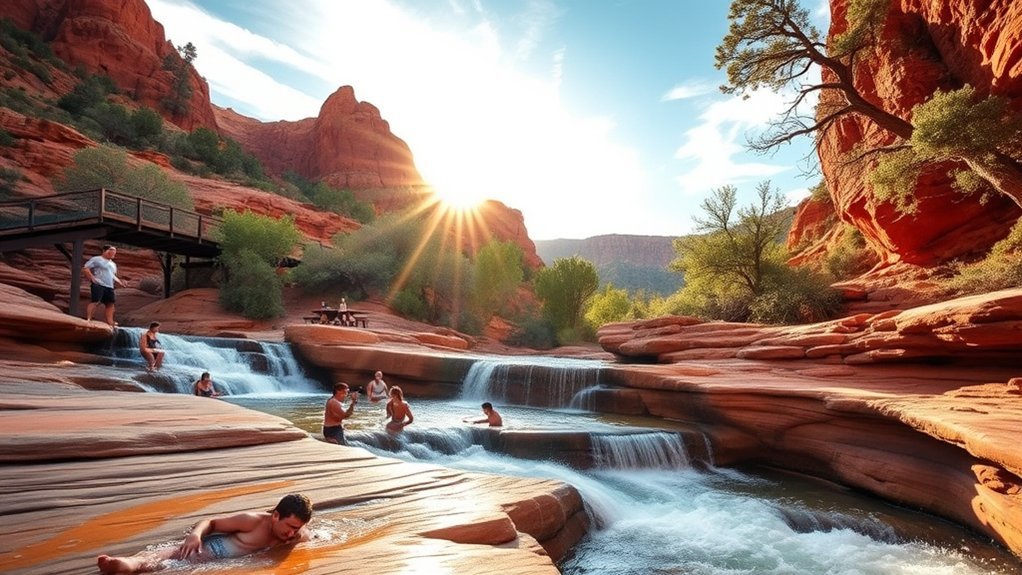
Slide Rock State Park is famous for the natural sandstone chute in Oak Creek, but current conditions change what you can safely do there.
Warning: As of August 16, 2026, the Oak Creek swimming and sliding area at Slide Rock State Park is closed until October 1 because of flash-flood risk associated with the Pocket Fire burn scar. Do not enter the closed creek area.
The park itself remains worth visiting for its historic Pendley Homestead, orchard history, short trails, picnic areas, and canyon scenery. Current park rules also state that entry is by vehicle through the entrance station, with no walk-ins, bicycle entries, or passenger drop-offs.
- Explore the historic homestead buildings and displays.
- Walk the park’s short trails where they are open.
- Use designated picnic areas.
- Follow all creek-closure fencing and signs.
- Check Slide Rock State Park for current hours, fees, and reopening information.
Wine Tasting in Page Springs/Cottonwood
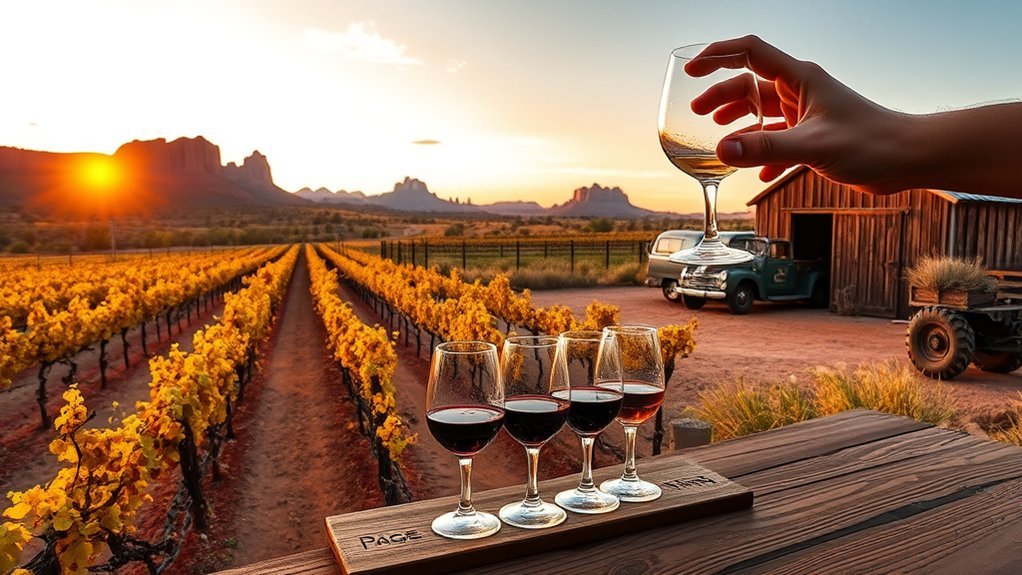
The Verde Valley around Page Springs and Cottonwood gives you an easy day-trip option when you want a break from hiking. Local vineyards and tasting rooms serve Arizona-grown and Arizona-produced wines in settings ranging from creekside properties to compact tasting rooms in Cottonwood.
A tasting flight is a simple way to compare styles without committing to a full glass. Ask staff where the grapes were grown, which wines were produced on site, and whether reservations are recommended.
If you are driving, designate a sober driver or arrange transportation. Wine-country roads and Sedona traffic are not places to guess whether you are safe to drive.
Visit the Sedona Heritage Museum
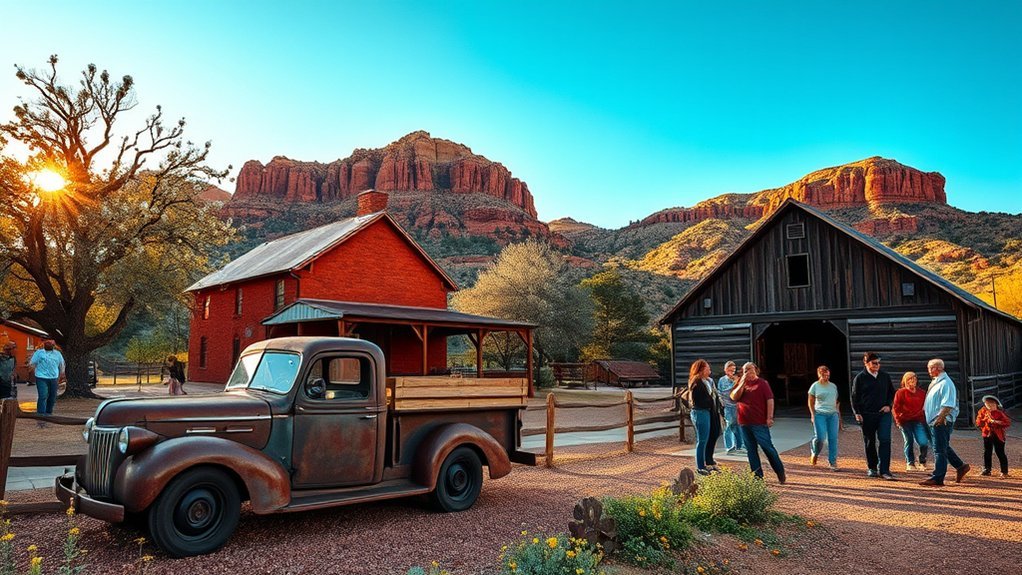
The Sedona Heritage Museum, in Jordan Historical Park, is a useful stop when you want context for the city beyond its scenery. Its regular exhibits focus on early settlers, ranching and cowboys, the orchard industry, films made in Sedona, and Sedona Schnebly, the town’s namesake.
Museum Exhibits Overview
Give yourself time to explore both indoor exhibits and historic structures. The museum’s collection helps explain how agriculture, ranching, transportation, tourism, and filmmaking influenced Sedona before it developed into the destination visitors know today.
- Early-settler and homestead history
- Ranching and cowboy artifacts
- Orchard and agricultural history
- Sedona’s film and Hollywood connections
- Displays about Sedona Schnebly
- Changing and special exhibits
The museum’s official visitor page currently lists daily hours of 11 a.m. to 3 p.m., with major-holiday closures.
Historic Ranch Life
The ranching exhibits work best when you focus on the tools, buildings, photographs, and documented stories rather than trying to imagine details that are not supported by the collection. Everyday equipment shows how physically demanding ranch and orchard work could be in the Verde Valley.
Docent programs and special events can add context, so check the museum calendar if history is a major reason for your visit.
See Devil’s Dining Room and Hike Fay Canyon as Two Separate Outings
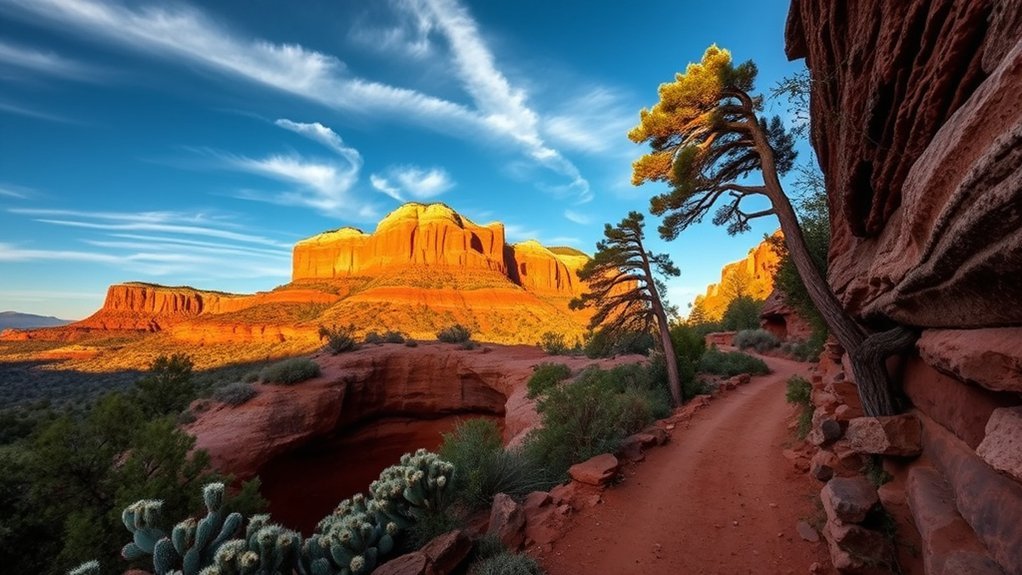
Devil’s Dining Room and Fay Canyon are both worthwhile, but they are not one combined hike. Devil’s Dining Room is a fenced sinkhole reached from the Broken Arrow trail system. Stay outside the barrier and do not approach an unstable edge.
Fay Canyon is a separate Forest Service trail west of Sedona. It is popular with hikers who want a shorter route with relatively little elevation gain while still getting close to high sandstone walls.
Treat Devil’s Dining Room as a geological viewpoint and Fay Canyon as its own hike rather than trying to connect two unrelated attractions into one route.
- Stay behind the barrier at Devil’s Dining Room.
- Use Broken Arrow Trail for the sinkhole viewpoint.
- Drive separately to the Fay Canyon trailhead.
- Carry water even though Fay Canyon has lower elevation gain than many Sedona hikes.
- Check Forest Service alerts before either outing.
Attend a Sound Bath or Meditation Session
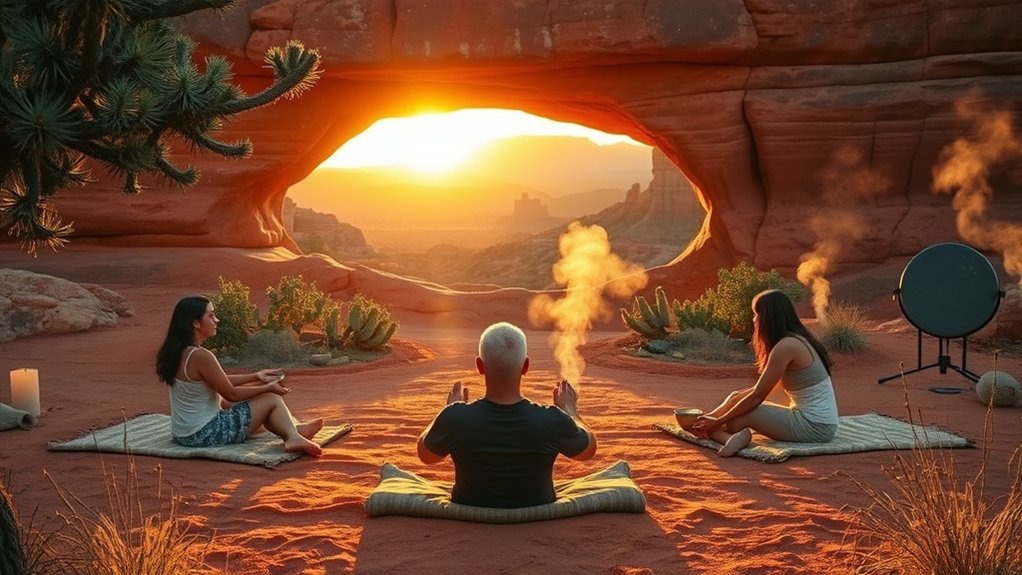
Sedona has a large wellness and spiritual-services scene, so you will find meditation classes, sound baths, yoga, and vortex-themed experiences. These sessions can provide a quiet break from hiking and sightseeing, especially if you enjoy guided relaxation.
Guided Vortex Meditations
A guided vortex meditation usually combines breath work, quiet observation, visualization, or reflective prompts with Sedona’s spiritual traditions. You may find the experience calming or meaningful, but there is no need to assume that a particular physical sensation proves the presence of measurable vortex energy.
- Wear comfortable layers.
- Bring water for outdoor sessions.
- Choose a facilitator whose description and boundaries are clear.
- Respect other trail users if the session takes place on public land.
- Leave natural and cultural resources untouched.
Crystal Singing Bowls
Crystal singing bowls produce sustained tones that some people enjoy during meditation or relaxation. Sessions typically involve lying or sitting comfortably while a facilitator plays bowls or other instruments.
Your response to the sound is subjective. If you are sensitive to loud or sustained sound, ask about volume and room size before booking.
Private Sound Baths
A private sound bath offers a quieter setting and more control over session length, instrument choice, volume, and meditation style. That can be useful if you prefer not to participate in a large group.
- Ask what instruments will be used.
- Discuss sound sensitivity before the session.
- Clarify whether the experience is spiritual, secular, or a mixture of both.
- Choose a comfortable position and speak up if the volume is unpleasant.
- Treat the session as a wellness experience rather than a substitute for medical or mental-health care.
Mountain Bike the Bell Rock Pathway

Bell Rock Pathway is a popular introduction to Sedona mountain biking because it offers broad red-rock views and connections to a larger trail network. Do not interpret “beginner-friendly” as completely smooth, though. Rocky sections, sand, other trail users, heat, and route junctions still require attention.
Wear a helmet, carry water and a basic repair kit, and ride at a speed that lets you yield safely. Hikers and riders share many Sedona routes, so announce passes politely and follow posted right-of-way rules.
If you are new to desert riding, consider renting from a shop that can recommend a route for your actual experience level rather than choosing a trail solely from an online difficulty label.
Attend a Moonlight Hike or Star Party at Red Rock State Park
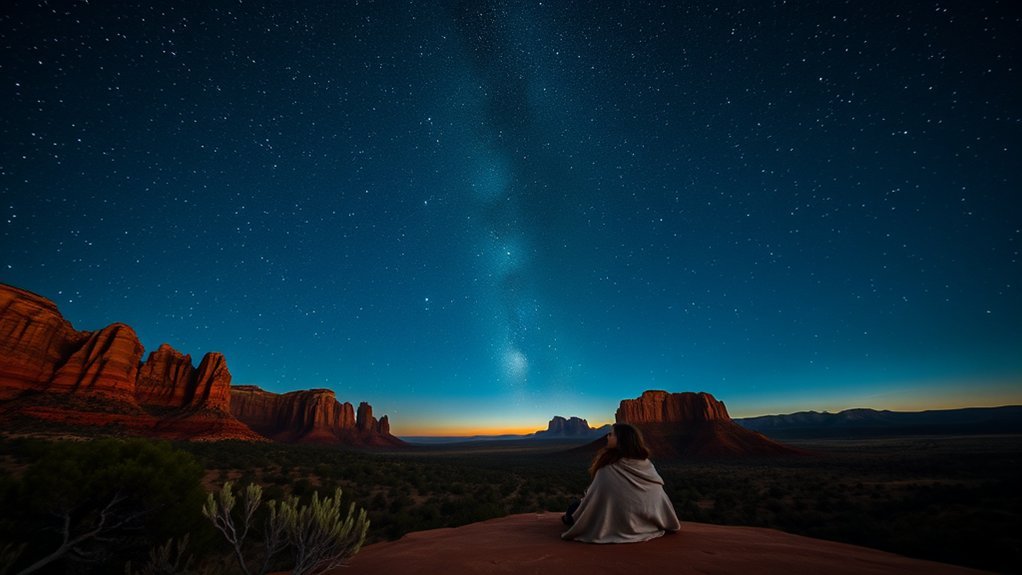
Red Rock State Park can be a memorable place to experience Sedona after sunset, but ordinary park admission does not mean you can remain there all night. The park’s regular hours are currently 8 a.m. to 5 p.m., with last entry before closing.
For legal nighttime access, look for official programs. In 2026 the park schedules registered moonlight hikes, and a star party is listed for November 7. These programs allow visitors to experience the park after normal hours under organized conditions.
- Register in advance when an event requires reservations.
- Bring a layer because temperatures drop after dark.
- Use a red-light mode or dim flashlight when appropriate.
- Follow staff instructions about trails and gathering areas.
- Do not remain in the park after closing unless you are authorized for an official program.
Check the Red Rock State Park event calendar and current hours before making nighttime plans.
Take a Hot Air Balloon Ride Over the Desert
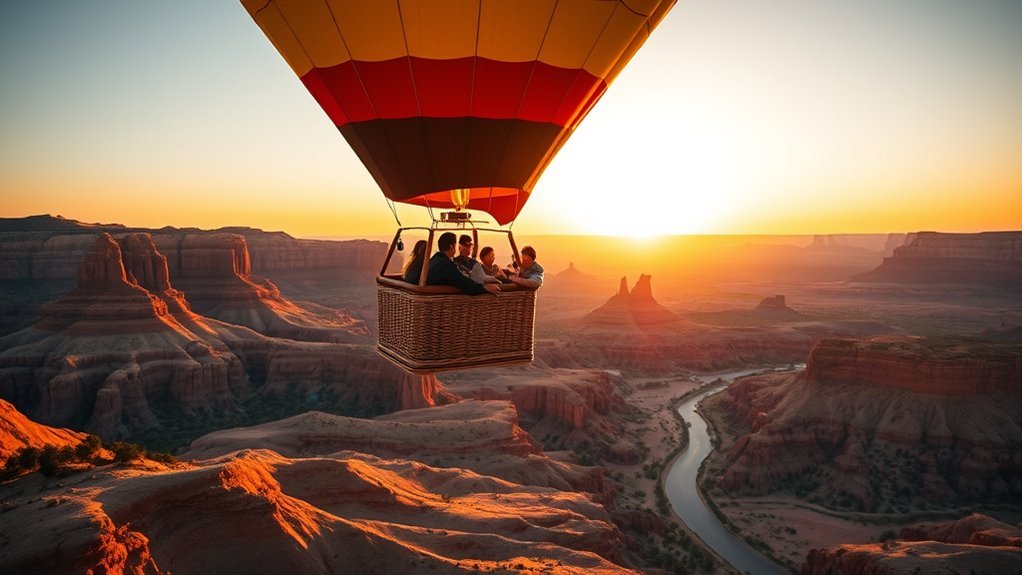
A hot-air-balloon flight offers a completely different view of Sedona and the Verde Valley. Flights commonly launch early because morning winds tend to be more favorable, but every departure depends on actual weather conditions and the pilot’s judgment.
The balloon moves with the wind rather than following a fixed sightseeing track, so exact landmarks and landing locations vary. Listen carefully during the safety briefing and follow the pilot’s instructions throughout the flight.
Note: Balloon landings are not guaranteed to be soft. Depending on wind and terrain, a basket can touch down firmly, tip, or drag briefly. Use the landing position your pilot demonstrates and disclose mobility limitations before booking.
Tour Local Galleries and Crystal Shops
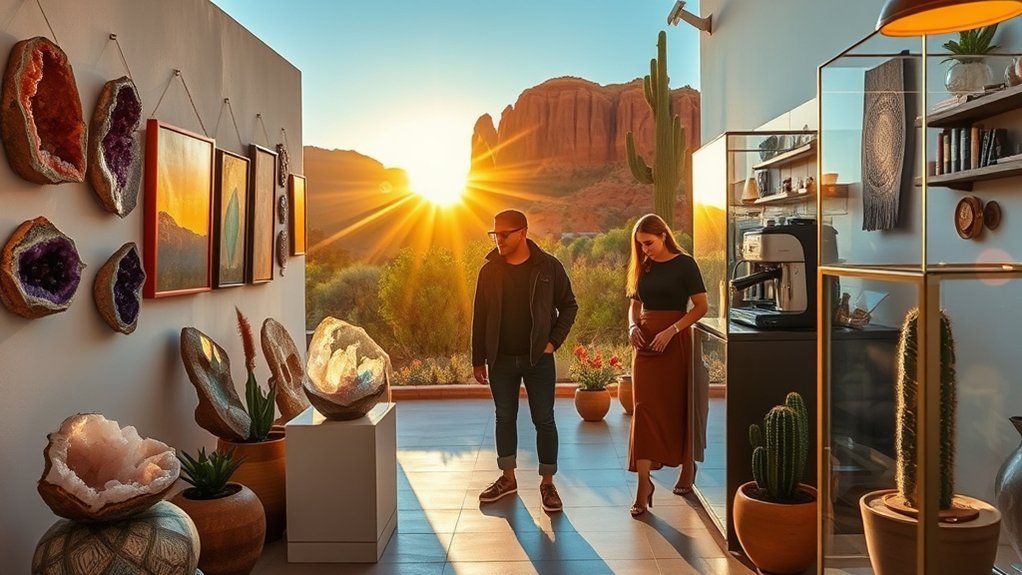
Sedona has a dense mix of galleries, jewelry stores, metaphysical shops, and mineral retailers. Tlaquepaque and Uptown are easy places to begin, but smaller studios elsewhere in town can be worth seeking out if a particular artist or medium interests you.
Browse Native Art Responsibly
When artwork is represented as Native American-made, ask for the artist’s name, tribal affiliation, materials, and documentation. Authenticity should come from accurate representation and provenance, not from whether a piece simply looks traditional.
- Ask who made the piece.
- Look for clear artist and tribal-identification information.
- Request a receipt that describes valuable work accurately.
- Distinguish handmade work from mass-produced souvenirs.
- Do not buy archaeological objects that appear to have been illegally removed from public or tribal lands.
The U.S. Department of the Interior’s Indian Arts and Crafts Board explains federal protections against falsely marketing products as Indian-made.
Crystal Shopping Tips
Do not rely on temperature, tapping sounds, perceived “pull,” or weight alone to authenticate a mineral. Those impressions are not reliable tests of whether a specimen is natural, synthetic, dyed, irradiated, heat-treated, or otherwise altered.
Instead, ask the seller to identify the mineral, where it came from, whether it has been treated, whether any part is synthetic, and what return policy applies. For expensive gems or specimens, independent gemological documentation may be worth requesting.
| What to Check | Why It Matters | Question to Ask |
|---|---|---|
| Mineral identity | Trade names can be vague | What mineral is this exactly? |
| Treatment | Color or clarity may be altered | Has it been dyed, heated, coated, or irradiated? |
| Origin | Provenance affects collectibility | Do you know the mine, region, or country of origin? |
Note: Metaphysical meanings assigned to crystals are spiritual or cultural beliefs. They should not be treated as evidence that a stone can diagnose, prevent, or cure a medical condition.
Gallery Hopping Routes
A simple route is to begin at Tlaquepaque, continue into Uptown, and then visit specific studios elsewhere in Sedona if an artist or medium catches your interest. Leave enough flexibility to spend more time in a gallery you genuinely enjoy rather than trying to visit every store.
- Begin at Tlaquepaque for concentrated galleries and architecture.
- Continue to Uptown for a broad mix of shops and souvenirs.
- Seek smaller studios by artist or medium rather than driving randomly.
- Photograph art only when the gallery permits it.
- Keep receipts and artist information for significant purchases.
Hike Soldier Pass and Visit the Seven Sacred Pools
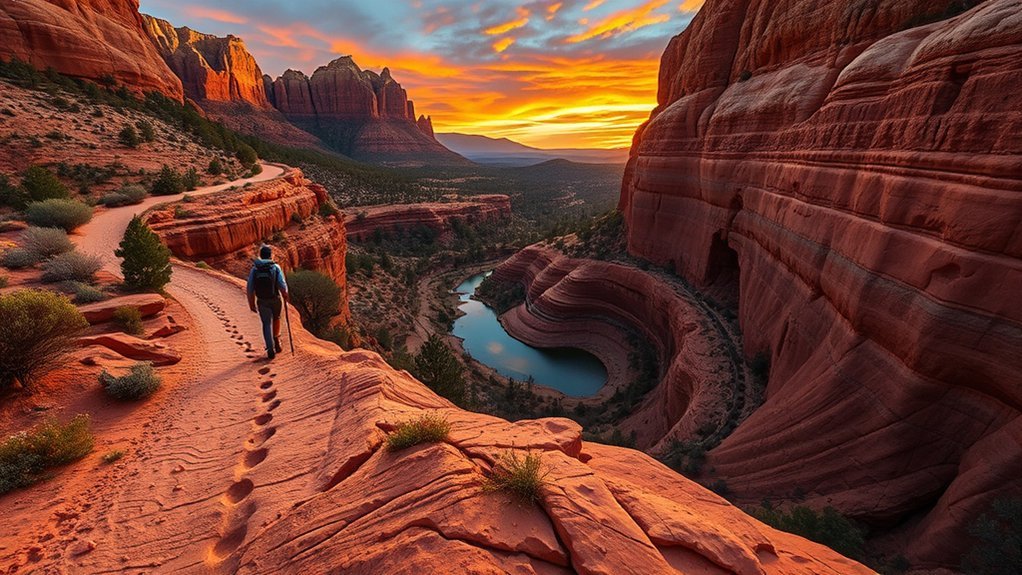
Soldier Pass Trail combines several distinctive geological features in one outing. The Forest Service lists the trail at about 4 miles round trip, with Devil’s Kitchen sinkhole and the Seven Sacred Pools among its best-known landmarks.
The Seven Sacred Pools are natural sandstone basins that may hold water after precipitation. Their appearance varies dramatically with recent weather, so do not expect deep pools year-round.
Stay on the established route and avoid entering or disturbing the basins, which can provide water and habitat for wildlife. Wear shoes with good tread because sandstone can become slippery when wet.
Soldier Pass Trailhead has limited access and is served by the Sedona Shuttle on operating days. Check current shuttle information instead of assuming you can park at the trailhead.
Dine With a View at a Cliffside Restaurant
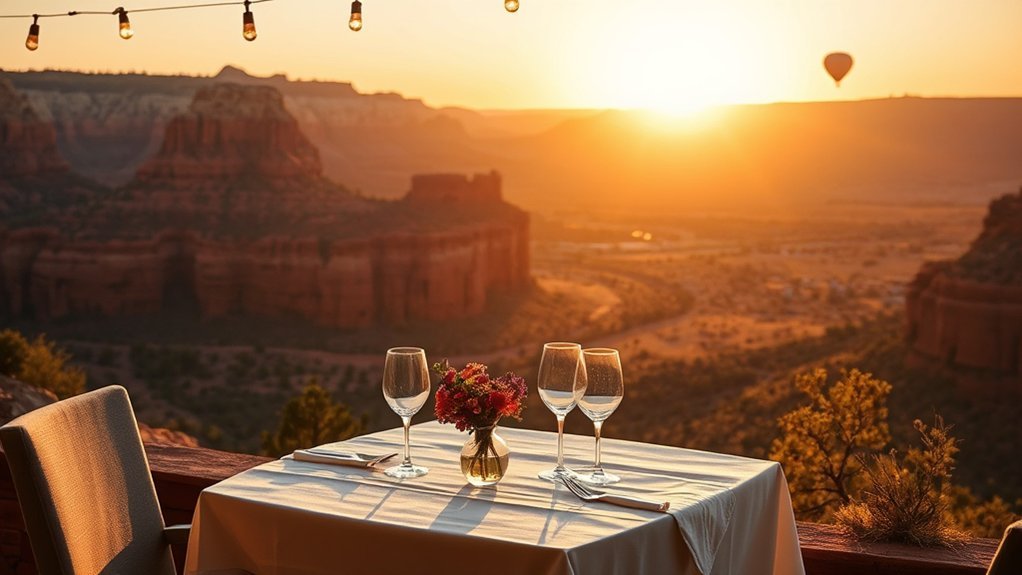
Sedona has several restaurants and resort dining rooms where patios or large windows face the red rocks. A sunset reservation can combine dinner with the changing evening light without requiring another hike.
- Reserve ahead for popular sunset seating.
- Ask whether patio seating is guaranteed or weather-dependent.
- Bring a light layer for outdoor tables.
- Tell the restaurant about food allergies when reserving rather than waiting until the meal arrives.
- If you drink alcohol, arrange a sober driver or other transportation.
The best table is not necessarily the one closest to an exposed edge. Choose a comfortable legal seating area and enjoy the panorama without turning dinner into a photo contest.
Join a Guided Geology or Nature Walk
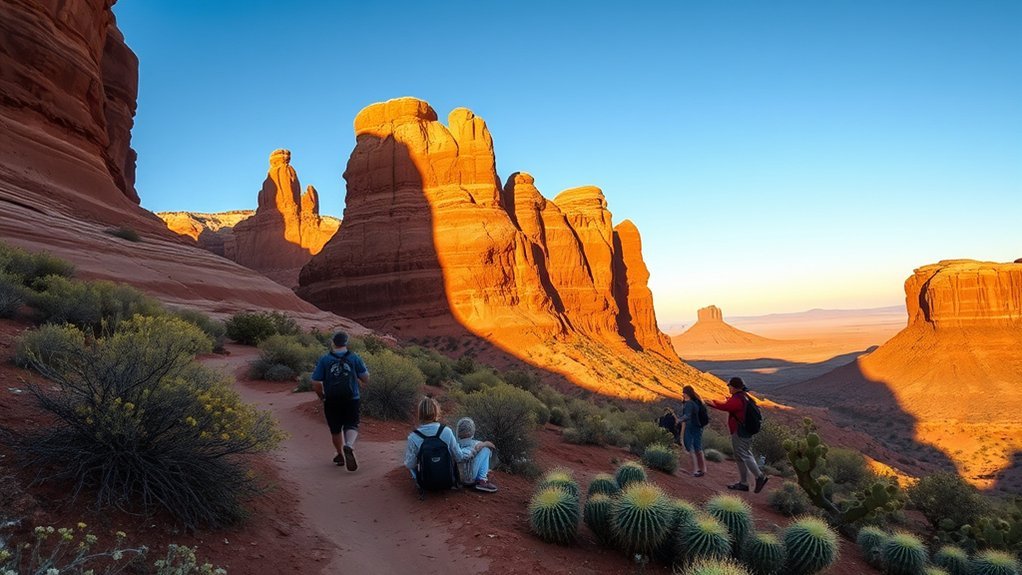
A guided geology or nature walk can make Sedona’s scenery more understandable. A knowledgeable guide can explain sedimentary layers, erosion, desert and riparian plants, wildlife habitat, and how water continues to shape the landscape.
For the strongest educational experience, choose a program that clearly identifies the guide’s credentials or is operated by a park, public-land agency, museum, educational organization, or established outfitter. Ask whether the pace and terrain are appropriate for children or visitors with limited mobility.
Red Rock State Park also offers scheduled naturalist programs, making it a useful option if you want structured interpretation without committing to a long backcountry hike.
Frequently Asked Questions
When is monsoon season in Sedona?
For outdoor planning, treat roughly mid-June through late September as northern Arizona’s main monsoon-risk period. Thunderstorms vary from day to day, but lightning and flash flooding can develop quickly. Check the National Weather Service forecast before hiking and avoid washes, narrow canyons, exposed ridges, and creek corridors when storms threaten.
Are dogs allowed on most Sedona trails?
Dogs are allowed on many Coconino National Forest trails around Sedona, but they must generally be leashed and owners must pack out waste. Rules differ at state parks, private attractions, and specific recreation sites, so check the destination before bringing your dog. Carry extra water and protect paws from hot rock in warm weather.
What permits are needed for commercial photography in Sedona?
Personal photography and ordinary scenery-only still photography on Coconino National Forest land generally do not require a special-use permit. Commercial, staged, restricted-location, large-crew, or resource-intensive shoots can have additional requirements. Because the rules depend on what you are doing and where, commercial photographers should review the Forest Service filming and photography guidance and contact the permit administrator when uncertain.
Where is the nearest emergency department in Sedona?
Northern Arizona Healthcare operates a 24/7 freestanding Emergency Department at 3700 Arizona 89A in Sedona. Verde Valley Medical Center in Cottonwood is another hospital-based emergency-care option. For a life-threatening emergency, call 911 rather than relying on estimated driving times.
Is cell service reliable across Sedona’s red-rock areas?
Do not assume it will be. Coverage is generally easier to find in developed areas, but canyons and remote trails can have weak or missing service. Download offline maps before hiking, carry enough water and supplies to handle a delay, and tell someone your route when heading into less-developed terrain.
Do I need a Red Rock Pass to hike in Sedona?
You do not need a Red Rock Pass simply to walk every Sedona trail, but many Forest Service fee sites require a recreation pass or day-use fee for parking or facility use. Some concession-operated sites use separate fees and do not accept the Red Rock Pass. Check the exact trailhead or recreation site before arriving.
What is the best time of year to visit Sedona?
Spring and fall are popular because daytime conditions are often comfortable for hiking, but they also bring heavier crowds and parking pressure. Summer can be hot and includes monsoon hazards, while winter is quieter but can bring freezing temperatures, snow, or icy sandstone. Check the forecast and trail conditions for your exact dates rather than relying only on seasonal averages.
How many days do you need in Sedona?
Two to three full days is enough for several major hikes, a sunset viewpoint, the Chapel of the Holy Cross, and time in town. Four or five days gives you more room for wine country, museums, a guided tour, mountain biking, spa time, or weather-related changes without packing every day too tightly.
How can I avoid parking problems at popular Sedona trailheads?
Use the Sedona Shuttle when it serves your destination, start early, visit on weekdays when possible, and never create your own parking space on an unsafe shoulder. Cathedral Rock and Soldier Pass have special access arrangements when trailhead shuttles operate, so check the current shuttle schedule before driving there.
Conclusion
Sedona rewards a trip that balances famous sights with enough flexibility to respond to weather, crowds, and changing public-land conditions. Hike Cathedral Rock or Devil’s Bridge, explore Bell Rock, watch the evening light from Airport Mesa, visit the Chapel of the Holy Cross, browse local art, or spend a slower day in the Verde Valley.
The most important planning habit is simple: check current Forest Service, state-park, weather, and shuttle information before setting out. That matters especially in 2026, when fire and flood impacts are still affecting parts of Oak Creek Canyon. Give yourself time, stay on established routes, respect closures and cultural sites, and Sedona offers plenty to experience without taking unnecessary risks.
Sources
- Coconino National Forest Alerts — current trail, fire, flood, and recreation closures.
- Coconino National Forest Trails — official Sedona-area trail descriptions, distances, difficulty, and restrictions.
- Sedona Shuttle — current trailhead routes, operating information, and parking arrangements.
- National Weather Service Flagstaff: Northern Arizona Monsoon — lightning, flash-flood, heat, and summer recreation safety.
- Slide Rock State Park — current swimming closure, park rules, hours, and visitor information.
- Red Rock State Park — current park hours, naturalist programs, moonlight hikes, and astronomy events.