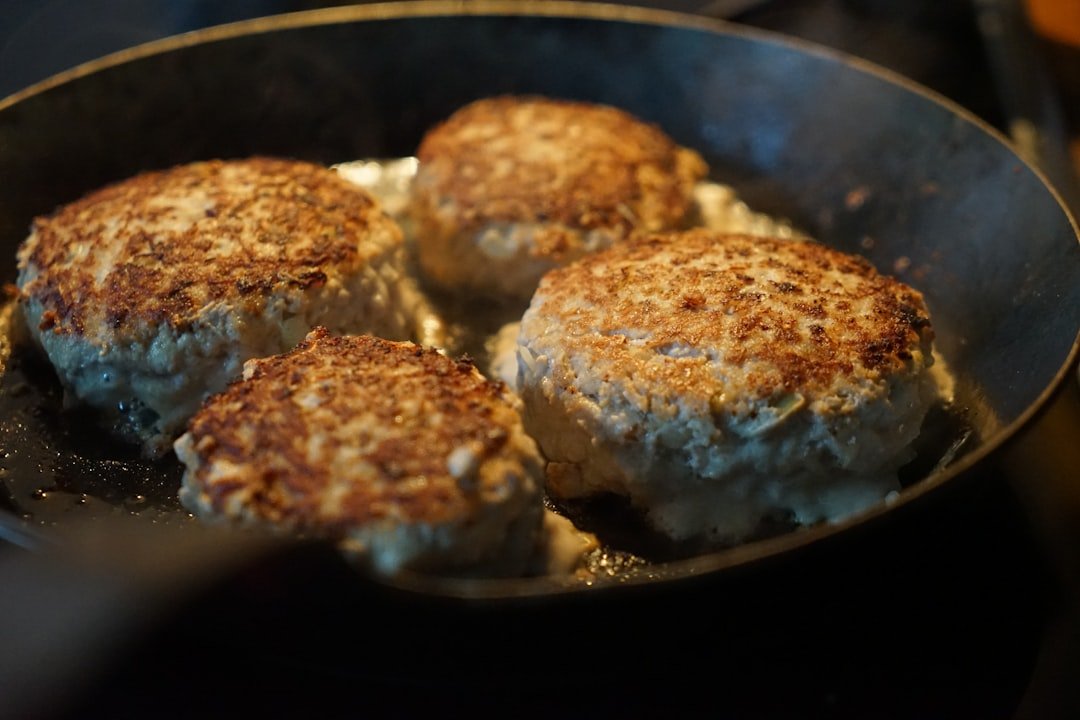
Burgers cook quickly on a George Foreman grill because a contact grill heats the patty from both the top and bottom at the same time. The exact George Foreman burger cook time depends on the grill model, patty thickness, starting temperature, and whether the burger is fresh or frozen. For safety, use cooking time as a guide and confirm that ground beef reaches 160°F (71°C) in the center.
Quick Answer
For a current George Foreman GRS075 contact grill, the manufacturer lists 6–8 minutes for fresh 4-ounce, ½-inch beef burgers. Other George Foreman models can cook faster or slower. Preheat the grill, close the lid, and use a food thermometer to make sure each burger reaches 160°F (71°C).
At a Glance
| Time Required | About 6–8 minutes for a fresh 4 oz, ½-inch burger on the GRS075; other models vary |
| Tools Needed | George Foreman contact grill, drip tray, heat-safe utensil, and instant-read food thermometer |
How Long Do You Cook Burgers on a George Foreman Grill?
For fresh beef burgers, there is no single cooking time that fits every George Foreman model. The current GRS075 use and care manual lists 6–8 minutes for 4-ounce burgers that are ½ inch thick, with beef cooked to 160°F.
Other George Foreman contact grills have different heating elements, plate sizes, temperature controls, and cooking charts. Patty thickness also changes how quickly heat reaches the center. Treat the timer as a starting point rather than proof that the meat is done.
| Burger | Starting Point | Safe Center Temperature |
|---|---|---|
| Fresh beef burger, GRS075 | 6–8 minutes for 4 oz, ½-inch patty | 160°F (71°C) |
| Thicker fresh burger | Usually longer than the model’s standard chart | 160°F (71°C) |
| Frozen beef burger | Longer than fresh; check temperature rather than relying on a fixed time | 160°F (71°C) |
Because the top plate touches the burger, a George Foreman contact grill cooks both surfaces at once. That is why you normally do not use the same per-side timing as an open charcoal or gas grill.
Prepare the George Foreman Grill First
Start with a clean grill, install the drip tray, close the lid, and preheat the unit according to its manual. On models with a ready or thermostat light, wait until the grill indicates that it has reached cooking temperature.
Place the appliance on a stable, heat-resistant surface with enough clearance around it. Do not overload the cooking plates. If several burgers are crowded together, the grill may recover heat more slowly and the patties may cook unevenly.
Many Foreman grills have nonstick plates, so you should follow the care instructions for your exact model rather than treating them like bare outdoor grill grates. The GRS075 manual specifically warns against aerosol cooking spray because residue can build up on the nonstick surface.
Choose Ground Beef That Stays Juicy
The fat level in ground beef affects both flavor and moisture. The GRS075 manual specifically recommends 80% lean/20% fat ground beef for a juicy burger, which fits the original article’s general recommendation of roughly 15% to 20% fat.

Ground chuck is a common choice because it naturally falls near this range. Leaner beef can still work, but it has less fat available to keep the patty moist as it cooks.
Color alone does not tell you whether packaged ground beef is fresh or spoiled. Beef can look grayish-brown inside a package simply because less oxygen reaches the interior. Instead, pay attention to the use-by date, storage temperature, odor, texture, and whether the package is damaged or leaking.
Season and Shape the Burgers
Simple seasoning lets the beef stay at the center of the flavor. Salt and black pepper are enough for a basic burger, while garlic powder, onion powder, smoked paprika, Worcestershire sauce, or herbs can add more depth.
| Seasoning | Amount | Result |
|---|---|---|
| Salt | 1 tsp | Enhances flavor |
| Pepper | 1/2 tsp | Adds mild heat |
| Garlic Powder | 1/2 tsp | Provides savory taste |
The table keeps the original seasoning proportions; adjust them to the amount of meat you are preparing. Mix gently. Heavy kneading compacts the meat and can make the finished burger firmer than you want.
Shape patties to an even thickness so the center of each burger cooks at a similar rate. If you are cooking several at once, keeping them similar in size also makes temperature checks more predictable.
How to Cook Burgers on a George Foreman Grill
Once the grill is preheated, the actual cooking process is simple. Keep the lid closed so both heated plates can make contact with the burger.

- Preheat the grill. Close the lid and wait for the model’s ready indicator or the preheating instructions in its manual.
- Set the drip tray in place. Make sure it is properly positioned before adding the meat.
- Place the patties on the lower plate. Leave enough room for the lid to close evenly.
- Close the lid. Do not press down hard on the top of the grill or squash the burgers with a spatula.
- Start checking near the end of the recommended time. For the GRS075 example, that means checking a 4-ounce, ½-inch patty within its 6–8 minute range.
- Measure the center temperature. Remove the burger only after ground beef reaches at least 160°F (71°C).
If you are adding cheese, place it on the hot burger near the end of cooking only if your grill can be opened and used safely that way. Avoid leaving the lid resting directly on loose cheese unless your model’s instructions allow it.
How to Check Whether a Burger Is Done
A food thermometer is the most reliable way to check a burger. The USDA safe minimum temperature chart says ground beef, pork, veal, and lamb should reach 160°F (71.1°C).
Warning: Do not use a pink center, brown color, clear juices, grill marks, or cooking time alone to decide whether ground beef is safe. Check the center with a food thermometer.
For a thin patty, insert the thermometer through the side so the sensing area reaches the center. The USDA’s ground beef safety guidance specifically recommends inserting the probe sideways or at an angle when a burger is too thin to measure accurately from the top.
Ground beef can remain pink after reaching a safe temperature, and it can also turn brown before it is hot enough. That makes appearance a poor substitute for a thermometer.
Do You Need to Flip Burgers on a George Foreman Grill?
On a classic clamshell-style George Foreman contact grill, you normally do not need to flip burgers. The upper and lower grill plates heat both sides at the same time.
That advice does not apply to every product carrying the George Foreman name. Indoor/Outdoor models and other single-surface designs may tell you to flip food because heat is coming mainly from below. Follow the instructions for your particular grill rather than assuming all Foreman models work the same way.
Can You Cook Frozen Burgers on a George Foreman Grill?
You can cook meat from frozen, but it takes longer for heat to reach the center. The USDA’s freezing and food safety guidance says frozen meat may take about one and a half times as long to cook as thawed meat.
That figure is a general food-safety guideline, not a model-specific George Foreman timing chart. Frozen burger thickness, grill power, and plate design can change the actual time considerably.
For that reason, avoid relying on one universal frozen-burger time. Start with your model’s instructions if they cover frozen patties, then verify that the center reaches 160°F before serving.
Rest the Burgers Before Serving
After cooking, you can let burgers rest for about five minutes before assembling them. This gives the hot juices inside the patty time to settle instead of immediately running onto the plate or bun.
This resting period is mainly about texture and moisture. It does not replace the requirement to cook ground beef to a safe center temperature first.
Burger Toppings and Serving Ideas
Classic toppings such as lettuce, tomato, onion, pickles, and sliced cheese work well because they add freshness, crunch, acidity, or richness without making the burger difficult to assemble.
Brioche buns add a soft, slightly rich texture, while pretzel-style buns are denser and chewier. Avocado, jalapeños, caramelized onions, blue cheese, pepper jack, aioli, or spicy ketchup can change the flavor without changing the basic cooking method.
Serve the burger as soon as it has rested. Fries, sweet potato fries, coleslaw, salad, or grilled vegetables can round out the meal.
How to Clean a George Foreman Grill After Burgers
Unplug the grill and let it cool before cleaning. The official George Foreman cleaning guidance says to wash the plates and drip tray after use and use a nylon or nonmetallic pad for stubborn residue.
If your model has removable plates, check whether they are dishwasher-safe. Some models have removable dishwasher-safe plates, while others use fixed plates that must be wiped or washed according to the manual.
Avoid steel wool, harsh abrasive pads, or metal tools on a nonstick surface. These can scratch the coating and shorten the useful life of the plates.
Tips for Juicier George Foreman Burgers
The best results usually come from controlling thickness, temperature, and handling rather than extending the cooking time. A few small habits make a noticeable difference.
- Preheat the grill before adding the patties.
- Use evenly shaped burgers so they finish at about the same time.
- Avoid packing the ground beef too tightly when shaping it.
- Do not press down on the patties while they cook.
- Keep the grill lid closed unless you are checking temperature or following a model-specific step.
- Use the manufacturer’s cook time as a guide, then finish by internal temperature.
- Choose 80/20 ground beef when you want the richer, juicier result recommended in the GRS075 manual.
Pro Tip: For thin burgers, slide the thermometer probe horizontally into the side of the patty. You are more likely to place the sensing area in the true center than if you push it straight down from the top.
Key Takeaways
- George Foreman burger cook time varies by grill model and patty thickness, so your manual should take priority over a generic timer.
- The current GRS075 manual lists 6–8 minutes for fresh 4-ounce burgers that are ½ inch thick.
- Ground beef should reach 160°F (71°C) in the center before serving.
- Classic contact grills cook from both sides, so flipping is usually unnecessary.
- Frozen patties take longer, and temperature is more dependable than a fixed frozen-burger time.
Frequently Asked Questions
How long should I cook burgers on a George Foreman grill?
Cooking time depends on the grill model and burger thickness. The current GRS075 manual lists 6–8 minutes for fresh 4-ounce, ½-inch burgers, but other George Foreman models may differ. Use a food thermometer and cook ground beef to 160°F (71°C).
What factors affect George Foreman burger cooking time?
Patty thickness, weight, starting temperature, whether the burger is fresh or frozen, grill model, and how many patties are cooking can all affect the time. Thicker or colder burgers generally need longer than thin, refrigerated patties.
How can I tell when a burger is done?
Use a food thermometer to check the center of the patty. Ground beef is safely cooked at 160°F (71°C). Color, clear juices, firmness, and grill marks are not reliable substitutes for an internal temperature reading.
Can I cook frozen burgers on a George Foreman grill?
Yes, meat can be cooked from frozen, but it normally takes longer than thawed meat. Follow your grill model’s instructions if they include frozen patties, and always verify that the center of a beef burger reaches 160°F (71°C).
Should I flip burgers on a George Foreman grill?
You usually do not need to flip burgers on a clamshell-style George Foreman contact grill because heated plates touch both sides. Indoor/Outdoor and other single-surface models may require flipping, so follow the instructions for your specific grill.
Sources
- George Foreman GRS075 Series Use and Care Manual: Supports the 6–8 minute timing for 4-ounce, ½-inch burgers, 160°F beef temperature, 80/20 beef recommendation, grill setup, and cleaning instructions.
- USDA Safe Minimum Internal Temperature Chart: Supports the 160°F minimum internal temperature for ground meats.
- USDA Ground Beef and Food Safety: Supports thermometer use, side insertion for thin patties, safe handling, and the limits of color as a safety indicator.
- USDA Freezing and Food Safety: Supports cooking meat from frozen and the general increase in cooking time.
- George Foreman Frequently Asked Questions: Supports cleaning guidance for grill plates and drip trays.