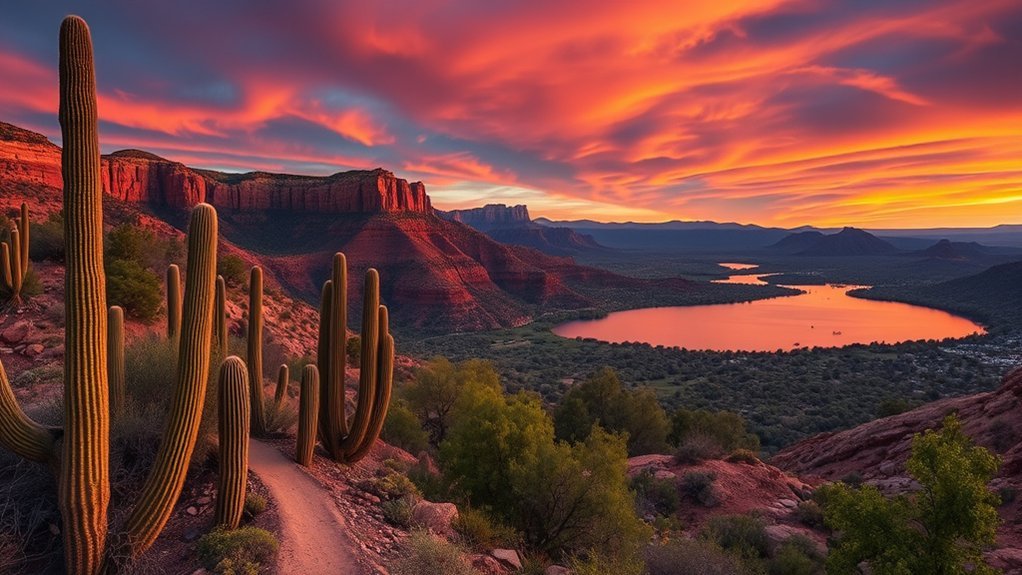
You’ll crest a low ridge and the Colorado River will suddenly appear, curling around a sandstone escarpment nearly 1,000 feet below the rim. Horseshoe Bend is easy to reach from Page and makes a practical side trip from Flagstaff, but the desert heat, exposed cliff edges, parking rules, and short but sun-baked trail deserve some planning. Here’s what you need to know before you go.
Quick Answer
Horseshoe Bend is reached by a 1.5-mile round-trip trail from the City of Page parking lot south of Page, Arizona. Allow roughly 1–2 hours for a typical visit. Parking currently costs $10 per passenger vehicle or $5 per motorcycle, and the overlook is open from sunrise to sunset.
Key Takeaways
- The official Horseshoe Bend Trail is 1.5 miles round trip with about 137 feet of elevation gain.
- The City of Page currently charges $10 per passenger vehicle and $5 per motorcycle for parking.
- America the Beautiful and Glen Canyon passes do not cover the City of Page parking fee.
- The main viewing platform has railings, but much of the surrounding rim is exposed above an approximately 1,000-foot drop.
- There is very little shade and no drinking water along the trail, so carry water and avoid the hottest part of summer days.
- Antelope Canyon requires an authorized guided tour, while Horseshoe Bend itself does not require a tour or reservation.
At a Glance
| Time Required | About 1–2 hours for most visits; allow longer for sunset photography or crowds |
| Difficulty | Moderate; 1.5 miles round trip with about 137 feet of elevation gain and little shade |
| Tools Needed | Water, sun protection, sturdy shoes, weather-appropriate clothing, and camera or phone |
| Cost | $10 per passenger vehicle or $5 per motorcycle for City of Page parking; commercial rates vary |
History and Geology of Horseshoe Bend

Though you first notice the dramatic cliff and looping river, Horseshoe Bend tells a much longer geological story. The National Park Service describes it as an entrenched meander, where the Colorado River follows a sweeping bend while cutting deeply into the surrounding sandstone.
According to the National Park Service, the river already meandered across the landscape when uplift of the Colorado Plateau, beginning roughly 5 million years ago, helped trap rivers in their existing courses. Continued erosion then cut downward through the rock. At Horseshoe Bend, that process produced a roughly 270-degree curve surrounded by canyon walls about 1,000 feet deep.
As you look across the cliffs, you can also see bedding and cross-bedding in the sandstone, evidence of the ancient environments in which those sediment layers formed. The overlook and Colorado River below are within Glen Canyon National Recreation Area, even though the trailhead parking operation is managed by the City of Page.
Horseshoe Bend is a roughly 270-degree entrenched meander with the Colorado River approximately 1,000 feet below the canyon rim.
How to Get There and Parking Details

Getting to Horseshoe Bend is straightforward. The official parking lot and trailhead sit off U.S. Highway 89 between mile markers 545 and 544, roughly 5 miles south of Page. Follow the signed entrance rather than stopping along the highway.
The City of Page operates the parking area. Current published rates are $10 for a passenger vehicle, including cars, trucks, and private RVs, and $5 for a motorcycle. Commercial vehicle rates vary by passenger capacity.
Note: Horseshoe Bend is within Glen Canyon National Recreation Area, but its parking lot is operated by the City of Page. America the Beautiful and Glen Canyon passes do not cover the Horseshoe Bend parking fee.
Directions From Flagstaff
If you’re driving from Flagstaff, take U.S. Highway 89 north toward Page. The City of Page describes the drive from Flagstaff to the Page area as roughly two hours under normal conditions. Before reaching central Page, watch for the well-marked Horseshoe Bend turnoff on Highway 89.
Once parked, follow the hardened Horseshoe Bend Trail toward the overlook. The full walk is 1.5 miles round trip. The City of Page estimates roughly 20 minutes of walking each way, although heat, mobility, children, photography stops, and crowds can extend that time.
Parking Lot Fees
Plan to pay the City of Page parking fee when you arrive. The current fee is $10 for a passenger vehicle and $5 for a motorcycle. The City currently accepts cash and cards, although payment procedures can change if equipment or traffic conditions require temporary adjustments.
The area is normally open from sunrise to sunset year-round. Parking can become busy around sunset, holidays, and heavily visited weekends. The National Park Service notes that the City of Page may require visitors to use a shuttle when the lot fills during certain busy periods, so check current City information before a holiday visit.
Drop-Off and Rules
Use the designated parking area rather than stopping along Highway 89. The City of Page prohibits passenger drop-offs and pickups at the Horseshoe Bend entrance and along the Highway 89 corridor. Roadside parking is also prohibited.
If someone in your group has limited mobility, plan to enter through the regular parking system and use the accessible trail rather than arranging a roadside drop-off. Follow posted signs and staff directions, especially when traffic is heavy.
The Trail and Overlook Experience

The Horseshoe Bend Trail is 1.5 miles round trip over a hardened surface, with about 137 feet of elevation gain. There are two shade structures along the route, but shade is otherwise limited and there is no shade structure at the main overlook.
The trail is designed to meet accessibility standards and is suitable for wheelchairs and strollers, although desert heat, wind, and the gradual grade can still make the outing tiring. Restrooms are available near the parking area, but there are no toilets or drinking-water stations along the trail.
At the end of the trail, the main viewing platform is flat and protected by railings. Outside that platform, however, much of the natural sandstone rim remains unrailed and exposed. Keep children and pets close and avoid backing toward the edge while taking photographs.
Warning: The Colorado River is roughly 1,000 feet below the rim. Railings protect the main viewing platform, not the entire rim. Stay well back from exposed edges and never rely on loose sandstone for footing.
Accessibility, Pets, and Facilities
All ages are welcome, and the hardened route provides an accessible way to reach the main viewing platform. Pets are permitted on the trail but must remain on a leash six feet or shorter. Bring water for your pet as well as yourself.
During hot weather, exposed ground can become much hotter than the surrounding air. Check the surface before allowing a dog to walk on it, consider protective booties in summer, and never leave a pet unattended inside a vehicle.
Best Times to Visit and Photography Tips

There is no single perfect time to photograph Horseshoe Bend because the canyon looks different as the sun moves. Sunrise and late afternoon can give the sandstone softer, warmer light, but the canyon walls may cast deep shadows across the river. Midday can illuminate more of the canyon interior, although the overhead sun creates harsher contrast.
If photography is your priority, choose your timing based on the effect you want rather than assuming sunset is automatically best. Sunrise generally means cooler conditions and can feel calmer, while sunset often creates warm color but may also attract more visitors.
Pro Tip: Arrive early enough to walk to the overlook before your preferred light arrives. At sunset, remember that you still have a 0.75-mile walk back to the parking area as daylight fades.
Keep photography secondary to cliff safety. Stop walking before looking through a camera or phone, avoid stepping backward for a wider composition, and use the main viewing platform when you want a protected shooting position.
Weather and Seasonal Planning
Horseshoe Bend sits in an exposed high-desert environment. The National Park Service weather guidance for Glen Canyon warns that summers can be extremely hot, with temperatures in the recreation area reaching around 110°F in June and July. Winter nights can fall below freezing, while spring can bring strong and unpredictable winds.
Summer and early-fall monsoon weather can also produce thunderstorms, lightning, high winds, and heavy rain. Check the forecast before leaving Page. If thunder or lightning develops while you are at the exposed rim, leave the overlook and seek safe shelter rather than waiting for a storm to reach you.
For many visitors, spring and fall offer a more comfortable balance of daylight and temperature. In summer, favor the cooler portions of the day and avoid turning a short sightseeing walk into a heat emergency.
What to Bring and Safety Considerations

Carry enough water for everyone in your group because no drinking water is available along the trail. Pack light snacks if you expect to stay for photography or are traveling with children. Closed-toe shoes, sunglasses, a wide-brimmed hat, and sunscreen are practical choices for the exposed desert environment.
Most importantly, stay well back from unprotected sandstone edges. The main platform has railings, but nearby sections of the rim do not.
Water, Snacks & Hydration
Bring your water with you from the parking area and drink regularly rather than waiting until you feel overheated. The amount you need depends on temperature, age, exertion, and how long you stay, so carry extra during hot weather rather than relying on a rigid formula.
| Item | Purpose |
|---|---|
| Water | Hydration on an exposed trail with no drinking-water station |
| Electrolyte drink or mix | Optional support during heavy sweating or prolonged heat exposure |
| Snacks | Convenient energy if you stay longer for photography |
| Closed-toe shoes | Traction and foot protection |
| Sunglasses | Protection from glare and bright desert sun |
Slow your pace if the heat feels intense. There is little shade, so returning to the parking area is the better choice if anyone in your group begins struggling with the conditions.
Sun Protection Essentials
The trail is highly exposed, so sun protection matters even though the walk is short. Apply broad-spectrum sunscreen before you start and reapply according to the product directions. A wide-brimmed hat, UV-protective sunglasses, and lightweight clothing can reduce direct sun exposure.
Do not let the short distance create a false sense of security. The combination of heat, reflected sunlight, dry air, and minimal shade can make the return walk feel much harder than expected.
Edge Safety & Footwear
Because large sections of the rim have no railings, stay aware of your position before taking photos or moving around other visitors. Wear sturdy closed-toe shoes that give you reliable footing on hard-packed trail surfaces and uneven sandstone.
Keep children within immediate reach near the rim. If you bring a dog, keep it on a leash no longer than six feet and monitor the temperature of the ground. Pack out pet waste and other trash.
Drone Rules
Do not plan on using a drone for aerial photographs. The National Park Service prohibits launching, landing, or operating uncrewed aircraft from or on NPS-administered lands and waters within Glen Canyon National Recreation Area unless specifically authorized in writing.
Nearby Attractions and Where to Stay

If you stay in Page, you’ll have a wide range of hotels, motels, and vacation rentals within easy driving distance of Horseshoe Bend. Staying in or near Page also makes an early-morning visit easier and gives you convenient access to Lake Powell, Antelope Canyon, and Glen Canyon Dam.
Lake Powell Resort at Wahweap Marina puts you close to Lake Powell, onsite dining, and marina activities. Hyatt Place Page/Lake Powell offers modern rooms and complimentary breakfast. The hotel also allows dogs in designated rooms under its current pet policy, so confirm current fees and restrictions when booking.
Antelope Canyon
Antelope Canyon is one of the most popular nearby additions to a Horseshoe Bend trip, but you cannot simply walk into the slot canyon independently. Navajo Nation Parks & Recreation requires visitors to use an authorized guide for Antelope Canyon locations. Reservations are strongly advisable because tour capacity can fill.
Navajo Nation Parks currently lists a $15 per-person park entry fee per location per day, with the guided-tour price charged separately by the authorized operator. Check the official site when planning because fees and operating conditions can change.
Glen Canyon Dam and Carl Hayden Visitor Center
Glen Canyon Dam and the Carl Hayden Visitor Center are also close to Page. The visitor center offers exhibits and views around the dam area. Current National Park Service information states that Glen Canyon Dam tours are closed, so check the NPS visitor-center page before building a dam tour into your itinerary.
You can also consider a Lake Powell outing or an authorized Colorado River trip. If you are combining several attractions in one day, leave extra time between reservations instead of assuming every stop will run exactly on schedule.
Frequently Asked Questions
How much time do you need at Horseshoe Bend?
Allow roughly 1–2 hours for a typical visit, including parking, the 1.5-mile round-trip walk, time at the overlook, and photos. Sunset visits or crowded days may take longer.
What is the best time to see Horseshoe Bend?
Early morning and late afternoon offer softer light and cooler conditions, while midday can illuminate more of the canyon interior but creates harsher contrast. Sunrise is useful if you want cooler weather; sunset can deliver warmer color but often attracts more visitors.
Can I see Horseshoe Bend without a tour?
Yes. You can visit the Horseshoe Bend overlook independently and no guided tour is required. Park in the designated City of Page lot and walk the official trail to the overlook.
Is Horseshoe Bend worth the trip?
For most visitors to Page, yes. The short trail leads to a distinctive 270-degree Colorado River bend surrounded by dramatic sandstone cliffs, making it one of the area’s highest-impact scenic stops for the amount of walking required.
How much is parking at Horseshoe Bend?
The City of Page currently lists parking at $10 for passenger vehicles, including private cars, trucks, and RVs, and $5 for motorcycles. Commercial vehicle prices vary by capacity.
Does an America the Beautiful pass cover Horseshoe Bend parking?
No. The overlook is within Glen Canyon National Recreation Area, but the parking lot is operated by the City of Page. America the Beautiful and Glen Canyon passes are not accepted for the City parking fee.
Is Horseshoe Bend wheelchair accessible?
The hardened trail and main viewing platform are designed to meet accessibility standards, and NPS describes the route as wheelchair and stroller friendly. The trail is exposed, however, so heat and weather can still affect comfort and difficulty.
Are dogs allowed at Horseshoe Bend?
Yes. Dogs are allowed but must remain on a leash six feet or shorter. Bring water, pick up waste, and protect your dog’s paws from hot summer ground.
Can I fly a drone at Horseshoe Bend?
No for ordinary recreational use on NPS-administered land. The National Park Service prohibits launching, landing, or operating uncrewed aircraft within Glen Canyon National Recreation Area unless specifically authorized in writing.
Conclusion
You’ll come to Horseshoe Bend for the famous Colorado River view, but a little preparation makes the visit much better. Plan for a 1.5-mile round-trip walk, pay the City of Page parking fee, carry water, protect yourself from the sun, and remember that only the main viewing platform has railings.
Time your visit around the light and weather you prefer rather than chasing a single “perfect” hour. With its short approach, accessible viewing platform, dramatic geology, and convenient location near Page, Horseshoe Bend delivers one of northern Arizona’s most memorable landscapes without requiring a long backcountry hike.
Sources
- National Park Service: Horseshoe Bend — trail distance, geology, cliff safety, water availability, pets, and drone rules.
- City of Page: Horseshoe Bend — parking fees, trail elevation gain, payment information, and local parking rules.
- National Park Service: Glen Canyon Fees & Passes — Horseshoe Bend parking jurisdiction and national-pass restrictions.
- National Park Service: Glen Canyon Weather — seasonal heat, cold, wind, and monsoon conditions.
- Navajo Nation Parks & Recreation: Antelope Canyon Tour Operators — mandatory guided-tour requirements and current park entry information.
- National Park Service: Glen Canyon Visitor Centers — Carl Hayden Visitor Center and current Glen Canyon Dam visitor information.