If you are planning a Havasupai trip, the hardest part is not choosing a waterfall. It is getting the permit, completing check-in correctly, reaching Hualapai Hilltop with enough fuel, and managing a remote canyon hike where heat, flash floods, steep terrain, and limited rescue access are real risks. This guide covers the current 2026 rules, the 10-mile approach to the campground, and the side hikes to Havasu, Mooney, Beaver Falls, and the Colorado River confluence.
Quick Answer
A Havasupai visit requires an advance booking and pre-entry check-in at Grand Canyon Caverns & Inn. From Hualapai Hilltop, hike 8 miles to Supai Village and about 2 more miles to the campground. Plan for desert heat, no water on the approach trail, steep waterfall routes, flash-flood risk, and limited emergency assistance.
Key Takeaways
- For 2026, campground permits cost $455 per person for three nights; lodge permits cost $2,277 per room for three nights and cover up to four people.
- Permit check-in happens at Grand Canyon Caverns & Inn before you drive to Hualapai Hilltop. A trip leader or listed Potential Alternate Trip Leader must complete check-in with valid photo ID.
- Indian Road 18 to Hilltop is paved, but it is remote, has open-range animals, unreliable cell service, and no fuel or food at the trailhead.
- The hike is about 8 miles to Supai Village and another 2 miles to the campground. There is no water along the Hilltop-to-Supai trail.
- Flash floods can occur any time of year. Summer monsoon months bring higher risk, and the Tribe says not to hike past the top of Mooney Falls or enter narrow canyon sections during rain or flooding.
At a Glance
| Time Required | Bookings are 4 days / 3 nights; allow most of Day 1 for check-in, the drive to Hilltop, and the hike to your lodging or campsite. |
| Difficulty | Strenuous and remote. The main route has major elevation change, long exposed sections, and a demanding uphill return. |
| Tools Needed | Supportive footwear, enough water for the approach, sun protection, food, headlamp, first-aid supplies, phone battery, weather protection, and camping gear if staying at the campground. |
| Cost | 2026: $455 per person for a campground permit or $2,277 per lodge room for up to four people, each for 3 nights. Optional pack mule service is $400 round trip per mule; tourist helicopter flights are currently $300 per person one way when available. |
Warning: Havasupai is remote. The Tribe says there are no public medical or health facilities for tourists in Supai Village, trained emergency rescue teams are not available, and evacuation can take many hours or even days. Do not plan around a helicopter rescue or routine tourist flight.
Planning Your Havasupai Permit and Reservation Strategy
Start with the official Havasupai tourism booking system. For the 2026 season, the regular on-sale date was February 1, 2026 at 8:00 a.m. Arizona time. The current official information does not describe the old December-to-January lottery used in the original article, so do not plan around that process. Future on-sale dates and procedures can change each season.
All tourist visits require a booking before arrival. Campground bookings are 4 days / 3 nights and can include up to 12 people. For 2026, campground permits are $455 per person. Lodge permits are $2,277 per room for 3 nights and include up to four people. The Tribe requires full payment at booking.
When you book, name one or two Potential Alternate Trip Leaders, or PATLs, if appropriate. PATLs must be named during booking and cannot be added later. The original trip leader does not have to be present at check-in if a listed PATL checks in with proper identification.
Pro Tip: Review every date and traveler before paying. The current terms state that bookings cannot be changed after payment. The cancellation policy currently provides a 50% refund of the permit fee when an eligible cancellation is completed at least 90 days before the start date; the early-access fee, if applicable, is excluded.
Booking Rules, Cancellation, and Resale
- No walk-ins or day-use permits: every tourist needs an advance booking.
- No resale or transfer: the Tribe prohibits reselling or transferring bookings. People on the same booking may reimburse the purchaser up to face value.
- Within 90 days: cancellations made within 90 days of arrival are not eligible for a refund under the current policy.
- Rules can change: check the official booking account, terms, and current permit-holder notices shortly before travel.
Getting to Hualapai Hilltop: Parking and Logistics
Hualapai Hilltop is at the end of Indian Road 18, about 60 miles from the Route 66 turnoff. Contrary to the original article, Indian Road 18 is paved. It is still a remote open-range road, so expect livestock or wildlife on the pavement, unreliable cell service, and a long drive with few nearby services. The Tribe advises allowing at least about 1.5 hours for the Indian Road 18 segment.
Fuel before you turn onto Indian Road 18. The Tribe says the nearest gas stations are roughly 70 to 90 miles from Hilltop and recommends starting the road with enough fuel for at least 200 miles of driving. There is no gas or food service at Hilltop.
Parking is limited. Visitors must use the tourist parking area or legal roadside spaces and must not use the tribal-member lot near the helipad. You may have to park one-half mile to one mile from the trailhead. Register each vehicle during permit check-in so you receive the required parking permit. Camping or sleeping in your vehicle at Hilltop is not allowed. The Tribe also states that there is currently no public transportation to or from the trailhead.
Check In Before Driving to Hilltop
Permit check-in is at Grand Canyon Caverns & Inn, not in Supai Village. Check in on your permit start date or one day before. The trip leader or listed PATL must show valid photo identification. You will receive wristbands, permit tags, paperwork, and a vehicle parking permit. Every tourist must wear the issued wristband while on the Havasupai Reservation.
As of August 2026, the official permit-holder notice lists check-in hours of 6:00 a.m. to 6:00 p.m. for August 1 through August 31. Hours can change with the month, weather, holidays, or staffing, so verify them just before you travel.
The 10-Mile Hike to Havasu Campground: What to Expect
The main approach begins at Hualapai Hilltop. The National Park Service and the Tribe both describe the route as about 8 miles to Supai Village and another 2 miles to the campground. The Lodge is in Supai Village. Day hiking into Supai is not permitted, so this is an overnight trip tied to a valid booking.
From Hualapai Hilltop, plan on about 10 miles one way to the campground: 8 miles to Supai Village, then roughly 2 more miles on the main trail.
Hilltop is about 5,200 feet above sea level and Supai Village is about 3,205 feet, a drop of nearly 2,000 feet before you continue lower toward the campground. That makes the return hike a sustained climb. The upper trail includes steep switchbacks, while lower sections mix rocky trail, wash, and canyon terrain.
There is no water along the trail between Hilltop and Supai. Carry enough for the full approach based on heat, pace, body size, and your medical needs. Do not depend on finding water along the route. The Tribe lists drinking water in Supai Village and a freshwater spring at the campground, and it advises treating or filtering other water.
Much of the trail lacks consistent shade, and temperatures in the warmer season can exceed 100°F. Hike during the coolest practical part of the day, but remember that the Tribe does not recommend hiking at night. Pace conservatively and save energy, food, and water for the uphill return.
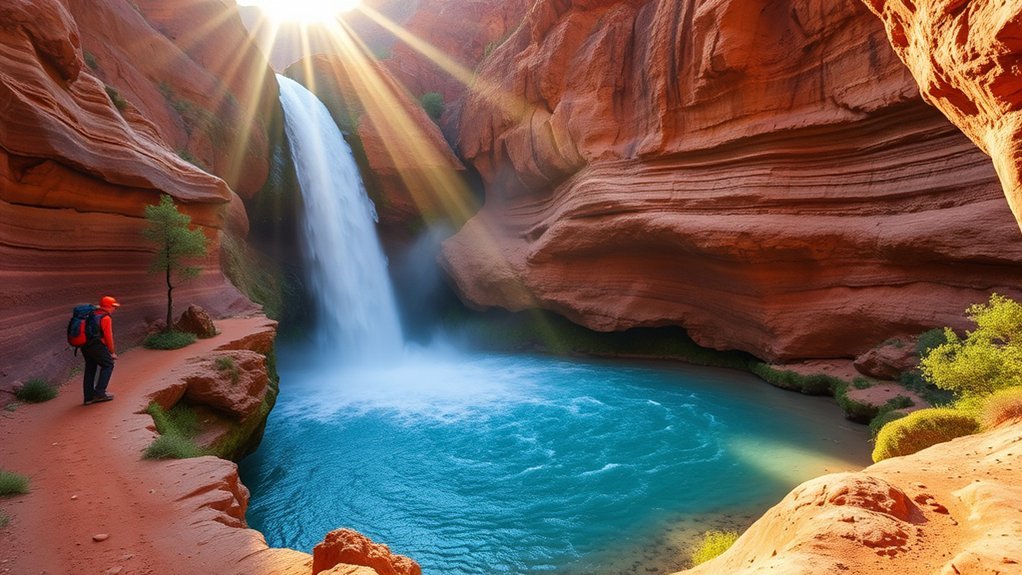
Havasu Falls: Access, Safety, and Best Viewing Spots
Havasu Falls is on Havasupai tribal land and is reached only as part of a valid overnight booking. You do not need a separate Havasu Falls day permit. Keep your wristband and permit tags with you, stay on visitor trails, obey posted closures, and remember that conditions around the falls can change after flooding.
Use established viewpoints and stable shoreline areas rather than scrambling onto wet ledges. The Tribe prohibits diving, jumping, climbing on walls or waterfalls, and related stunts. Personal photos of yourself and the surrounding natural scenery are generally allowed, but privacy rules apply in and around the village.
Trail Access & Permits
The approach from Hilltop to the campground is about 10 miles one way, so simply reaching the campground and returning already means roughly 20 trail miles before side trips. All tourists must have a valid booking, check in before entering the Reservation, and wear the issued wristband. The current Havasupai Entrance Permit Rules and Regulations also require visitors to stay on prescribed trails and out of residential or closed areas.
Do not assume a calm forecast at Hilltop means the canyon is safe. Flash floods can arrive from storms that fall miles away. Check current weather before leaving the rim and again whenever you have a signal, then watch the sky and water throughout the trip.
Viewing Spots & Safety
Plan waterfall time during daylight. Starting the main hike around first light can reduce heat exposure without relying on night hiking. Around the waterfalls, move slowly on wet travertine and rock, keep footwear secure, and do not crowd exposed ledges.
- Base and established areas at Havasu Falls: use stable access points and obey any posted barriers or temporary closures.
- Mooney Falls descent: expect an exposed, steep route with tunnels, chains, and ladders. Spray can make the rock slippery.
- Beaver Falls corridor: allow extra time for creek crossings, uneven terrain, and the return climb past Mooney Falls.
If rain starts, runoff changes suddenly, or the creek becomes muddy or rises, leave low ground and follow official emergency directions.
Mooney Falls and the Descent to the Base
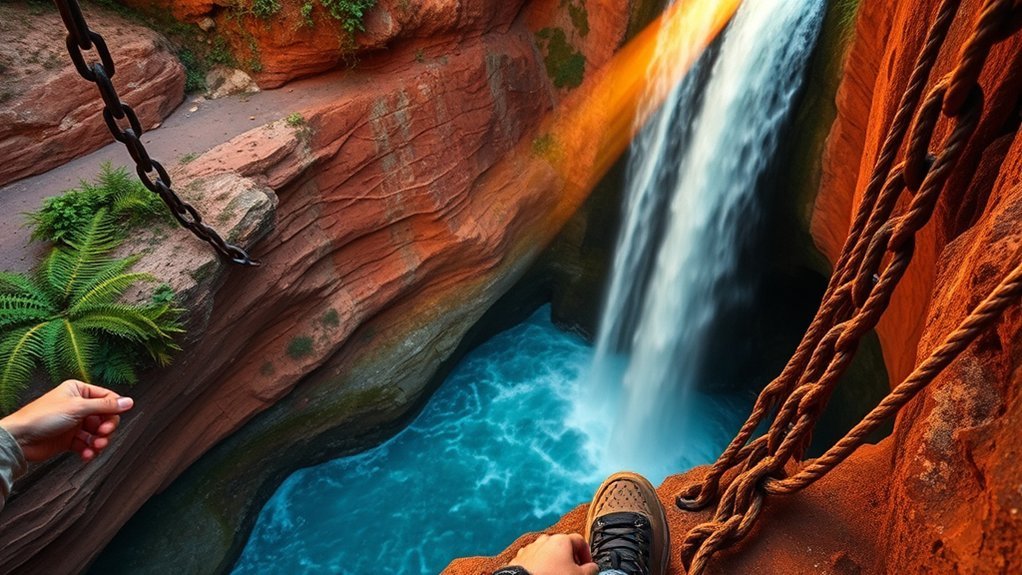
Mooney Falls is downstream from the campground. The final descent to its base is short but very steep, using rock-cut passages, chains, and ladders. Waterfall spray can make the route wet and slick. Keep three points of contact where practical, keep both hands available, avoid a loose or oversized daypack, and wait for other hikers to clear exposed sections before moving.
Do not treat the descent as a casual staircase. If you are uncomfortable with heights, have limited mobility, or encounter wet, stormy, crowded, or unstable conditions, turning around at the top is a reasonable choice. The Tribe specifically warns visitors not to hike past the top of Mooney Falls when it is raining or flooding.
At the base, stay away from prohibited climbing and jumping areas. The current tribal rules prohibit diving, jumping, and climbing from canyon walls and waterfalls. Enjoy the view from established areas and keep an eye on both weather and creek behavior.
Beaver Falls Day Hike: Route and Swim Spots
Beaver Falls is farther downstream beyond Mooney Falls. Mileage estimates vary by mapping method, but a practical plan from the campground is roughly 5 to 6 miles round trip, plus the steep Mooney descent and repeated creek crossings. Do not use the original article’s 4-mile round-trip figure as a firm planning number.
The route is slower than its mileage suggests. Expect wet feet, uneven ground, ladders or steep steps in places, vegetation, and multiple crossings of Havasu Creek. Carry a daypack with water, food, first-aid supplies, sun protection, and a headlamp in case the return takes longer than expected.
Route Overview & Distances
From the campground, first reach and descend Mooney Falls. From the base of Mooney Falls, the commonly mapped route to Beaver Falls is a little over 2 miles one way, but GPS tracks and on-the-ground routes can vary. Use current signs and conditions rather than treating a decimal mileage as exact.
- Terrain: rocky trail, creek crossings, ladders, and short exposed sections can make the trip feel much longer than a flat trail of the same distance.
- Navigation: stay on the established visitor route along Havasu Creek. Do not explore side canyons or residential routes.
- Timing: leave enough daylight to climb back through the Mooney Falls descent safely. Do not count on a night return.
Swim Spots & Safety
Havasu Creek has pools and cascades where visitors may be tempted to cool off, but water conditions can change quickly. Enter only where access is clearly allowed and safe, avoid strong current, keep away from the lip of cascades, and never dive or jump from walls or falls.
| Spot | Quick Tip |
|---|---|
| Creek crossings | Unbuckle your pack hip belt if appropriate, test footing, and do not cross fast or rising water |
| Beaver Falls pools | Use only permitted access points and avoid diving, jumping, or climbing |
| Pools below Mooney | Stay alert to spray, slick rock, changing flow, and approaching storms |
After heavy rain or any sign of a flash flood, stay out of the water and move to higher ground.
Trail Hazards & Tips
The Beaver Falls route combines slippery rock, steep sections, creek crossings, heat exposure, and a demanding climb back through the Mooney Falls route. These are more important than the raw mileage.
- Wear footwear that grips wet rock and stays secure during creek crossings. Trekking poles can help where the trail and water conditions allow.
- Carry enough drinking water and food for the full outing. The Tribe advises filtering or treating water other than designated drinking sources.
- Turn around early if storms build, the creek rises or changes color, or your group is moving too slowly to return in daylight.
The Confluence Hike to the Colorado River
The hike from the campground to the confluence of Havasu Creek and the Colorado River is a long, remote full-day undertaking. Practical route measurements are commonly around 17 to 18 miles round trip from the campground, depending on the exact track. It continues beyond Beaver Falls into increasingly remote canyon terrain, with multiple water crossings and little margin for delays.
Only strong, well-prepared hikers should consider this route. Start with current information from Tribal staff, obey any closure or turnaround notice, and do not continue if rain or flooding is possible. Below Beaver Falls, the route reaches Grand Canyon National Park lands, so visitors must also respect National Park Service rules where they apply.
| Feature | Planning Figure | Key Tip |
|---|---|---|
| Round trip | About 17 to 18 miles from campground | Treat mileage as approximate |
| Terrain | Remote canyon and creek crossings | Expect slow travel |
| Weather exposure | High consequence | Do not enter during rain or flood risk |
| Time | Full day | Turn around early enough for daylight return |
Seasonal Conditions, Weather, and Flash Flood Safety
Havasupai can be hot, cold, wet, or stormy depending on the season. The Tribe says temperatures can exceed 100°F during the warmer tourist season, while shoulder periods can be cold and may even bring snow. Cooler months are generally better for hiking; warmer months make the water more appealing but require careful heat planning.
Flash flooding deserves year-round attention. The National Park Service weather-safety guidance says flash floods can occur at any time of year and warns that severe thunderstorms are especially common from July to mid-September. A storm does not have to be directly overhead for a canyon flood to reach you.
Warning: If you see or hear floodwater approaching, encounter sudden runoff, or get caught in a rainstorm, move to high ground immediately. The Tribe says not to hike past the top of Mooney Falls or enter narrow canyon sections when it is raining or flooding.
- Check the current forecast and official Havasupai notices before leaving for Hilltop and again before side hikes.
- In hot weather, hike during cooler daylight hours, cover exposed skin, eat regularly, and carry enough water for the route.
- Know where higher ground is before entering low creek corridors. Never camp in a wash or other obvious flood channel.
Camping, Lodging, and Village Check-In Procedures
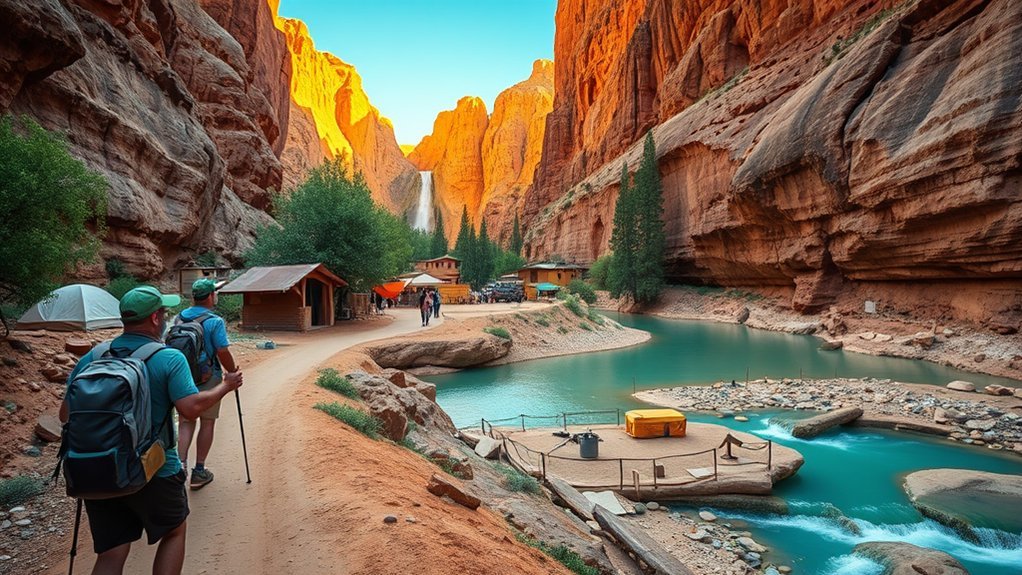
Choose between a campground permit and a lodge permit when booking. Campground permits are priced per person. Lodge permits are priced per room and include up to four people. Both require the first permit check-in at Grand Canyon Caverns & Inn before you enter the Reservation.
Campers carry their own gear unless they have an approved pack-mule arrangement. The designated campground lies along Havasu Creek beyond Havasu Falls. Sites are not assigned; camping spots are first-come, first-served within the approved campground area. Campfires are prohibited, and visitors must pack out their trash and gear.
Campground vs. Lodge
The campground gives you a creek-side backcountry experience but requires more self-sufficiency. The campground has composting toilets and a freshwater spring, but no electricity. Bring your shelter, sleep system, food, light, charging power, and a secure way to protect food and trash from small animals.
The Havasupai Lodge is in Supai Village, about 8 miles from Hilltop. Current lodge bookings cover three nights and up to four people per room. The official tourism site lists two queen beds, a private bathroom, bedding, towels, soap, and a couch, but the Tribe cautions that some usual hotel amenities, including consistent hot water, may not always be available.
- Choose the campground if you are comfortable carrying and managing backcountry gear.
- Choose the lodge if reducing carried camping gear matters more than staying beside the creek.
- For either choice, prepare to hike the route unless you independently obtain an available tourist helicopter flight on the day of travel.
Reservation & Check-In
Reservations are mandatory. For 2026, campground permits are $455 per person for three nights, and lodge permits are $2,277 per room for three nights and up to four people. Check in at Grand Canyon Caverns & Inn on the start date or one day before. The trip leader or a listed PATL must present valid photo ID.
At check-in, provide required traveler information and the license plate number for each vehicle that will be left at Hilltop. Keep your wristband on for the whole visit and attach issued tags as directed. Lodge guests complete an additional lodge check-in after reaching Supai Village; current terms list lodge check-in beginning at 2:00 p.m. Arizona time.
Village Amenities & Rules
Supai Village is about 8 miles from Hilltop. Stay on the main visitor trail and respect residential areas. Personal photos and video of yourself and surrounding nature are generally allowed, but the Tribe prohibits recording tribal or community members, animals, homes, buildings, burial grounds, sacred sites, and sacred objects. Drones and commercial photography or filming are prohibited.
- Store and cafe: as of August 2026, the official permit-holder notice lists both as open to tourists from 8:00 a.m. to 5:00 p.m. daily, but hours can change. Carry enough food for your trip rather than relying on them.
- Campground: use only the designated campground, keep quiet hours, use provided composting toilets, and pack out all trash and gear.
- Alcohol and drugs: the Reservation is dry, and the Tribe prohibits alcohol, marijuana/THC products, and other drugs.
Horses and mules have the right of way. Step aside calmly, follow staff instructions, and do not touch, feed, photograph, or startle the animals.
Helicopter and Pack Mule Options
Pack mules and tourist helicopter flights can reduce what you carry or how much you hike, but neither should be treated as a guaranteed emergency plan. For 2026, pack mules cost $400 round trip per mule. Current pack-mule rules allow up to four soft-sided bags per mule, with each bag limited to 32 pounds and 36 by 19 by 19 inches. Requests must be made online at least 72 hours before arrival.
Tourist helicopter flights are currently $300 per person one way, purchased on the day of travel at Hilltop or Supai. They cannot be reserved in advance, are first-come, first-served, and other passengers may have priority. The current listed schedule is Sunday, Monday, Thursday, and Friday, but both schedule and tourist availability can change without notice.
Note: The Tribe explicitly says tourists should not rely on the helicopter for transportation into or out of Supai. Arrive prepared to hike with the gear and supplies you need.
Packing List, Gear Recommendations, and Leave No Trace Practices
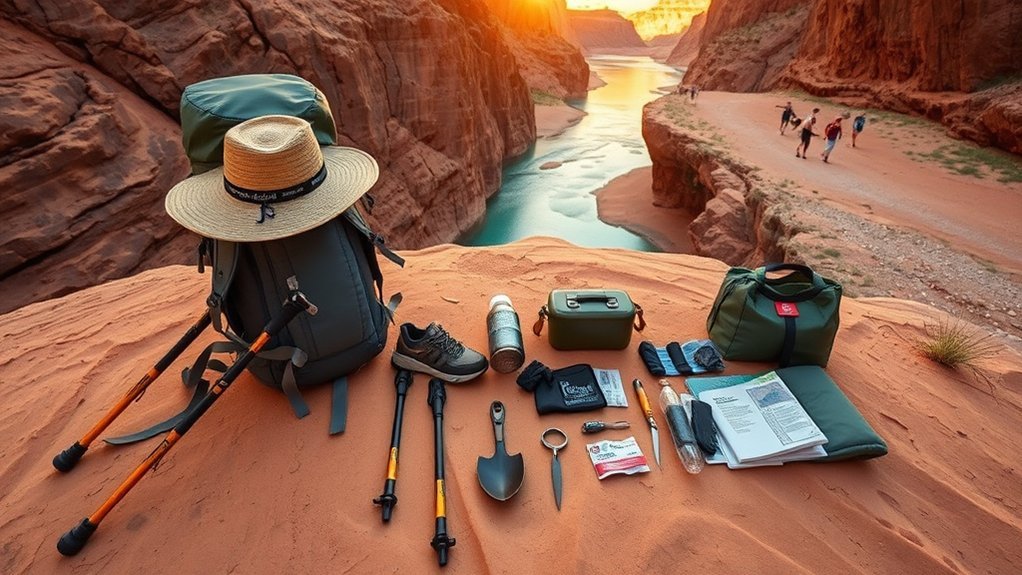
Pack light enough to manage the climb out, but do not cut safety essentials. There is no water on the Hilltop-to-Supai trail, so carry enough for that entire segment. In Supai and at the campground, use designated drinking sources and treat or filter water when appropriate.
- Required travel items: government-issued photo ID, booking information, and the license plate number for each Hilltop vehicle.
- Hydration: adequate water capacity for the approach plus a filter or treatment method for non-designated sources.
- Sun and heat: sun-protective clothing, hat, sunscreen, electrolytes or salty foods as appropriate, and enough calories for long hiking days.
- Footwear: supportive hiking shoes for the main trail and footwear that stays secure for creek crossings.
- Navigation and power: offline map, headlamp, phone battery bank, and emergency contact information stored offline.
- First aid: blister care, basic wound supplies, personal medications, and any condition-specific emergency medication you normally carry.
- Camp setup: lightweight tent or hammock where allowed, sleep system, food, and rodent-resistant or odor-resistant food and trash storage.
- Weather: layers and rain protection suitable for the season.
Pack in, pack out. The Tribe requires visitors to remove all trash and gear, including partially used items such as fuel canisters. Campfires are not allowed. Do not leave food scraps, equipment, or other waste in the campground or village.
Accessibility, Children, and Emergency Planning
The Havasupai Reservation is not a conventional developed park. The Tribe’s accessibility advisory says trails are steep, rocky, remote, and not wheelchair-accessible, and the lodge, campground, and other facilities are not equipped with standard accessibility features. Travelers with mobility, balance, cardiac, respiratory, or heat-related concerns should assess the route conservatively with their own clinician when appropriate.
The Tribe strongly discourages bringing young children because of distance, elevation change, heat, water hazards, remoteness, and lack of public medical facilities. Children age 6 and younger do not currently require a paid permit when accompanying a valid permit holder; children age 7 and older do.
Before leaving Hilltop, give a trusted person your dates, route, vehicle information, and expected return time. Because Wi-Fi and cellular reception are unreliable across most of the Reservation, do not assume you can call, message, or navigate online whenever you need to.
Frequently Asked Questions
Can dogs accompany me on Havasupai hikes and campsites?
No. As of March 2026, the Tribe’s official policy says pets, service animals, and privately owned horses are not allowed anywhere on the Havasupai Reservation, including the trail, campground, lodge, and village.
Are drones allowed for photos or videos on the Reservation?
No. Drones and other aerial photography or video are prohibited. Personal ground-level photos of yourself and surrounding nature are generally allowed, but do not record tribal members, community members, animals, homes, buildings, burial grounds, sacred sites, or sacred objects. Commercial photography and filming are prohibited.
Is there cell service or Wi-Fi at Havasu Campground or in Supai Village?
Do not count on it. The Tribe says most of the Reservation, including most trails and even the campground and lodge areas, does not have reliable Wi-Fi or cellular reception. Download maps and key documents before the trip and carry backup charging power.
Can I resell or transfer my Havasupai permit to someone else?
No. The Tribe prohibits resale and transfer of bookings. People who are already part of the same booking may reimburse the original purchaser up to the face-value cost of their permits, but public buying, selling, brokering, or transferring is prohibited.
Are there guided tours or shuttle services from nearby towns?
Do not assume there is a public shuttle. The Tribe currently states that there are no public transportation options to or from Hualapai Hilltop. Any third-party guide or transportation service must be verified independently and must comply with current Tribal rules. The Tribe is not responsible for outside arrangements.
Are day hikes to Havasu Falls allowed?
No. A Havasupai visit requires an advance overnight booking. The route from Hilltop to Supai and the waterfalls is not operated as a walk-in day hike.
Can tourists use the helicopter instead of hiking?
Sometimes, but never rely on it. Tourist flights are currently sold on the day of travel for $300 per person one way and cannot be reserved in advance. Schedules and availability can change, and other passengers may have priority. Arrive prepared to hike.
Is drinking water available on the trail?
There is no water along the trail between Hualapai Hilltop and Supai Village. Carry enough for the full approach. The Tribe lists drinking water in Supai Village and a freshwater spring at the campground, and advises treating or filtering other water.
Conclusion
A safe Havasupai trip starts with the current Tribal rules, not an old permit checklist. Book through the official system, complete check-in at Grand Canyon Caverns & Inn, fuel up before Indian Road 18, and arrive at Hilltop ready for a remote 8-mile hike to Supai plus another 2 miles to the campground. Treat Mooney, Beaver, and the confluence as condition-dependent side trips, not guaranteed itinerary items. Watch heat and weather, respect Tribal privacy and trail rules, pack out everything you bring in, and turn around early when water, weather, daylight, or your group’s condition says it is time.
Sources
- Havasupai Tribe Official Tourism Permits — current 2026 permit-holder information, check-in, trail distances, campground and lodge booking access.
- Havasupai Reservations FAQs — 2026 prices, weather, water, children, helicopter, parking, accessibility, photography, and communication guidance.
- Havasupai Tourism Terms and Conditions — booking validity, cancellation, check-in, campground, lodge, privacy, parking, and visitor obligations.
- Havasupai Entrance Permit Rules and Regulations — trail rules, water, prohibited activities, animal right-of-way, camping, and safety requirements.
- National Park Service: Havasupai Tribe Reservation — access route, Hilltop location, 8-mile hike to Supai, 2 additional miles to the campground, and no day hiking.
- National Park Service: Weather Dangers — flash-flood risk, storm awareness, and canyon weather safety.