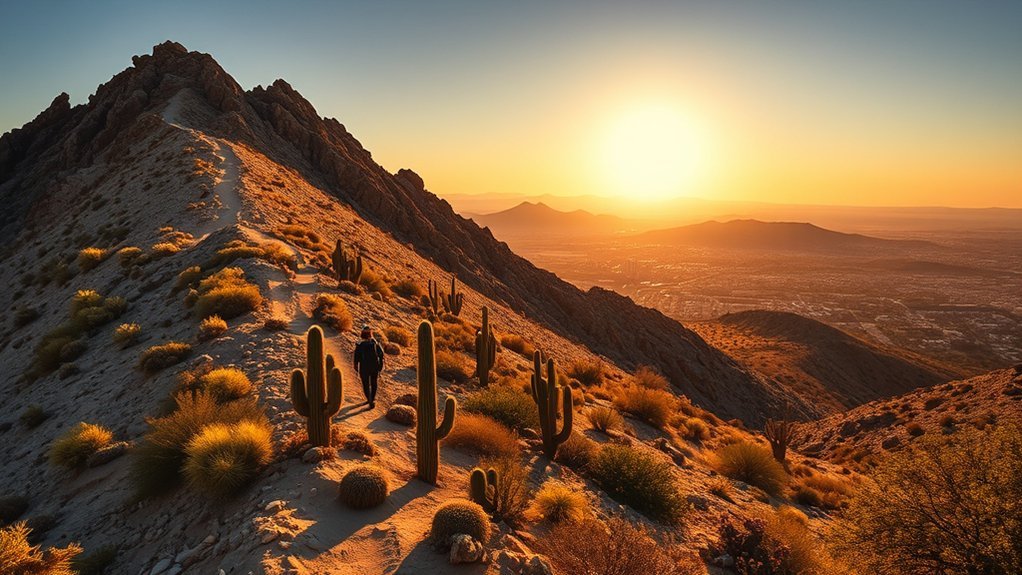
On Piestewa Peak, starting even a few minutes earlier can mean cooler temperatures, easier parking, and a more comfortable climb. This guide explains how to reach the main trailhead, choose the right route, prepare for steep desert terrain, follow current heat restrictions, and finish your hike safely and responsibly.
Quick Answer
Piestewa Peak’s Summit Trail is a steep, extremely difficult 1.2-mile climb each way with about 1,200 feet of elevation gain. Start at the 302 Trailhead, arrive early, check heat closures, carry ample water, and allow roughly two to three hours for a careful round trip.
Key Takeaways
- The main Summit Trail starts from the Mesquite/302 Trailhead at 2701 E. Piestewa Peak Dr.
- The Summit Trail is about 1.2 miles to the top, or approximately 2.4 miles out and back, with 1,200 feet of elevation change.
- The City of Phoenix rates the Summit Trail “Extremely Difficult” because of its steep, jagged steps, loose rock, and exposed terrain.
- During an NWS Extreme Heat Warning, the Summit Trail and associated Piestewa trails are restricted from 8 a.m. to 5 p.m.
- Dogs are prohibited year-round on the Summit Trail, and mountain biking is also prohibited.
At a Glance
| Time Required | About 2 to 3 hours for a cautious Summit Trail round trip; pace, fitness, heat, and crowds can change this estimate. |
| Difficulty | Extremely difficult for the Summit Trail; moderate to difficult alternatives are available nearby. |
| Tools Needed | Supportive trail shoes, ample water, sun protection, phone, small first-aid kit, snacks, and a headlamp when starting near darkness. |
| Cost | The City of Phoenix does not list a standard trail permit or entry fee for ordinary day hiking. Transportation and gear costs vary. |
Getting to the Trailhead and Parking
For the Summit Trail, navigate to the Mesquite Trailhead, also called the 302 Trailhead, at 2701 E. Piestewa Peak Dr., Phoenix, Arizona. From the trailhead, follow the Freedom Trail connection to the Piestewa Peak Summit Trail.
Standard parking and entrance hours are 5 a.m. to 7 p.m. The Piestewa Peak parking-lot entrance remains open until 9 p.m. from June 1 through September 30. Trail hours are 5 a.m. to 11 p.m. Parking-entry hours and trail hours are different, so do not assume you can drive into the lot simply because the trail remains open.
Note: Hours, closures, and access rules can change. Check the official Piestewa Peak and Dreamy Draw page on the day of your hike.
Parking is busiest around sunrise, on weekends, and during cooler months. Arrive early, park only in marked legal spaces, and obey every curb and gate sign. If the official parking areas are full, do not create a space or assume that a nearby residential street allows trail parking. Return later or choose another official Phoenix trailhead.
Water, parking, and restrooms are available near the base of the Summit Trail. However, fountains can be unavailable because of maintenance or other problems, so arrive with all the drinking water you expect to need.
Pro Tip: Save the official trail map before leaving home. Cell coverage may be available, but you should not depend on a live map loading when you need it.
Piestewa Peak Trail Options and Difficulty Levels
Piestewa Peak is not limited to one summit climb. The area includes steep routes for experienced hikers and lower-elevation options for visitors who want a shorter or less demanding outing.
| Trail | Official Distance | Elevation Change | City Rating | Best For |
|---|---|---|---|---|
| Summit Trail | 1.2 miles to the summit; about 2.4 miles out and back | 1,200 feet | Extremely difficult | Fit, prepared hikers seeking a steep summit climb |
| Freedom Trail | 3.7-mile loop | 720 feet | Difficult | A longer loop around the mountain without climbing to the summit |
| Nature Trail | 1.4-mile loop | 180 feet | Moderate | A shorter Sonoran Desert walk with less elevation gain |
The Nature Trail begins from the 304 Trailhead at 7200 N. Piestewa Peak Dr., not from the same starting point as every Summit Trail attempt. Check the official map before choosing an alternate route.
What to Expect on the Summit Trail
The Summit Trail climbs quickly. The City of Phoenix describes it as steep and jagged, with repeated switchbacks, modified stone steps, gravel, and exposed rock. Its short mileage can make the route look easier on a map than it feels underfoot.
The climb demands steady cardiovascular effort. Use a pace that lets you speak in short sentences without gasping. Step aside only where the trail is wide enough for others to pass, and do not block narrow stair sections while resting.
The upper trail becomes rockier and more exposed. No technical climbing equipment is required for the maintained route, but supportive footwear and careful foot placement matter. Avoid shortcuts because they damage desert soil and can place you above loose rock that may fall toward other hikers.
The descent deserves as much attention as the climb. Repeated high steps can tire your thighs and knees, while loose gravel can reduce traction. Keep your steps controlled, give uphill hikers room, and do not rush to make up time.
The City of Phoenix rates the Piestewa Peak Summit Trail “Extremely Difficult,” despite its relatively short distance.
Best Time to Hike Piestewa Peak
Cooler months usually provide the most comfortable conditions, but Phoenix can still have warm afternoons in fall, winter, and spring. Check the hourly forecast rather than relying only on the season.
During warm weather, an early start reduces sun exposure and may make parking easier. However, sunrise does not make a dangerous forecast safe. Phoenix rangers advise against hiking when temperatures reach triple digits, and official trail restrictions may apply during an Extreme Heat Warning.
Late-afternoon and evening hikes can be cooler, but you must account for parking-entry hours, darkness, and the rocky descent. Carry a headlamp even when you expect to finish before sunset.
Safety, Weather, and Desert Preparedness
Check Heat Warnings and Trail Closures
Review the National Weather Service Phoenix heat forecast and the city’s Trail Heat Safety Program before leaving home.
When the National Weather Service issues an Extreme Heat Warning, the Piestewa Peak Summit Trail and associated trails are restricted from 8 a.m. to 5 p.m. Do not enter a closed trail or plan to remain on it after the restriction begins.
Warning: Confusion, slurred speech, seizures, loss of consciousness, or an extremely high body temperature can indicate heat stroke. Call 911 immediately, move the person to a cooler area, and begin rapid cooling. Heat stroke is a medical emergency.
Recognize Heat Exhaustion
Headache, nausea, dizziness, weakness, intense thirst, irritability, heavy sweating, and reduced urination can indicate heat exhaustion. Stop hiking, move to shade, remove unnecessary clothing, cool the skin, and take frequent sips of water if the person is awake and able to swallow.
Do not send an affected hiker down alone. Seek medical help when symptoms are severe, worsen, or do not improve promptly.
Prepare for Storms and Lightning
Phoenix’s monsoon season can bring thunderstorms, strong wind, blowing dust, lightning, and rapidly flowing water in desert washes. Do not remain on an exposed summit when thunder is nearby. Turn around before a storm reaches the mountain, and never enter a flooded wash.
Give Wildlife Space
Stay on the marked trail and watch where you place your feet and hands. If you encounter a rattlesnake, stop, back away, give it a wide path, and allow it to leave. Never touch, corner, photograph at close range, or try to move a snake.
For a rattlesnake bite, call 911 and limit the person’s movement. Do not cut the wound, apply ice, use a tourniquet, or attempt to suck out venom. See the Arizona Game and Fish Department’s rattlesnake guidance for current advice.
Recommended Gear and Footwear
Pack for a steep desert hike rather than for the trail’s mileage alone. A practical Summit Trail kit includes:
- Water: Bring more than you expect to drink. Two liters per adult is a sensible starting point in cool conditions, but warm weather, slower pacing, and individual needs can require considerably more.
- Supportive footwear: Wear trail runners or hiking shoes with reliable grip. Avoid brand-new footwear and smooth casual shoes.
- Sun protection: Carry sunscreen, sunglasses, and a brimmed hat. Lightweight clothing should cover skin without trapping excessive heat.
- Navigation: Save the official trail map and carry a charged phone.
- Lighting: Bring a headlamp when starting before sunrise or finishing near darkness. A phone flashlight is not an ideal primary light.
- Emergency supplies: Pack a compact first-aid kit, identification, any essential medication, and an emergency contact.
- Food: Carry a small salty snack and an easy source of carbohydrates.
- Weather layer: Add a light layer when cool, windy, or changing conditions are forecast.
Hydrate before starting, drink regularly, and monitor your remaining supply. Follow the City of Phoenix’s Take a Hike. Do It Right guidance: carry more water than you think you need and turn back before you run out.
Pro Tip: Set a turnaround time before you start. Reaching the summit is optional; returning safely before heat, darkness, fatigue, or low water becomes a problem is the real goal.
Responsible Hiking and Leave No Trace
Piestewa Peak sits in a fragile desert environment. Stay on designated trails, avoid cutting switchbacks, and step on durable surfaces rather than vegetation or biological soil.
Pack out wrappers, fruit peels, tissues, hygiene products, and pet waste. Do not leave food scraps because they attract wildlife and do not disappear as quickly as many visitors assume.
Follow trail etiquette:
- Downhill hikers should yield to uphill hikers where it is safe to do so.
- Keep voices and electronic audio low. Do not play music through an external speaker.
- Do not move rocks, build unofficial steps, carve surfaces, or collect plants and artifacts.
- Keep a safe distance from wildlife and never feed animals.
- Follow every posted closure, activity restriction, and pet rule.
- Report emergencies to 911 and non-emergency damage or rule violations to park staff.
The Leave No Trace principles provide a useful framework: plan ahead, travel on durable surfaces, dispose of waste properly, leave what you find, respect wildlife, and consider other visitors.
Sources
- City of Phoenix: Piestewa Peak and Dreamy Draw – parking-entry hours, trail hours, summer access, and dog restrictions.
- City of Phoenix: Piestewa Peak Trail Descriptions – official trail distances, difficulty ratings, elevation changes, access points, and facilities.
- City of Phoenix Trail Heat Safety Program – Extreme Heat Warning restrictions and closure hours.
- CDC: Heat-Related Illnesses – symptoms and first-aid guidance for heat exhaustion and heat stroke.
- Arizona Game and Fish Department: Rattlesnake Safety – avoiding encounters and responding to bites.
- Leave No Trace: The Seven Principles – responsible outdoor recreation practices.
Frequently Asked Questions
Can dogs be brought on the trail?
Dogs are prohibited year-round on the Piestewa Peak Summit Trail. Phoenix also prohibits dogs on all city hiking trails when the temperature is 100°F or warmer. On cooler days and trails where dogs are allowed, follow leash rules and carry enough water and waste bags.
Are there restrooms and drinking water at the trailhead?
Yes. The City of Phoenix lists parking, water, and restrooms at the base of the Summit Trail. Bring your own full water supply because a fountain may be unavailable or insufficient for your needs.
Is the Summit Trail wheelchair- or stroller-accessible?
No. The Summit Trail has steep grades, large uneven steps, loose rock, and significant elevation gain. It is not suitable for wheelchairs or strollers. Phoenix publishes a separate list of designated barrier-free and wheelchair-accessible trails.
Are permits or fees required to hike Piestewa Peak?
The City of Phoenix does not list a standard hiking permit or trail-entry fee for ordinary day use. Special events and temporary restrictions may have separate rules, so review current city notices before visiting.
When is Piestewa Peak busiest?
Sunrise, weekends, and cooler-season mornings are typically the busiest periods. Arriving early on a weekday may improve your parking chances, but you should still follow all gate hours and heat restrictions.
How long does the Piestewa Peak Summit hike take?
Many first-time visitors should allow about two to three hours for the round trip, including brief rests. Strong local hikers may finish faster, while heat, crowds, photography, and careful descending can make the hike longer.
Can you hike Piestewa Peak after dark?
Trail hours are generally 5 a.m. to 11 p.m., but parking-lot entrance hours end earlier. Summer entrance hours extend to 9 p.m. from June 1 through September 30. Carry a headlamp, check current rules, and do not begin a night hike without enough time and water.
Are mountain bikes allowed on the Summit Trail?
No. The City of Phoenix prohibits mountain biking on the Piestewa Peak Summit Trail. Other trails in the Phoenix Mountains Preserve may have different permitted uses, so check the map and posted signs.
Conclusion
A safe Piestewa Peak hike starts before you reach the trail. Check the current forecast and closures, arrive within official parking hours, choose a route that matches your ability, and carry more water than you expect to need.
On the Summit Trail, use a steady pace and save energy for the rocky descent. Turn around when heat, fatigue, approaching storms, darkness, or low supplies make continuing unwise. Stay on the marked route, respect wildlife and other hikers, pack out every item you carry in, and treat reaching the trailhead safely as the most important part of the day.