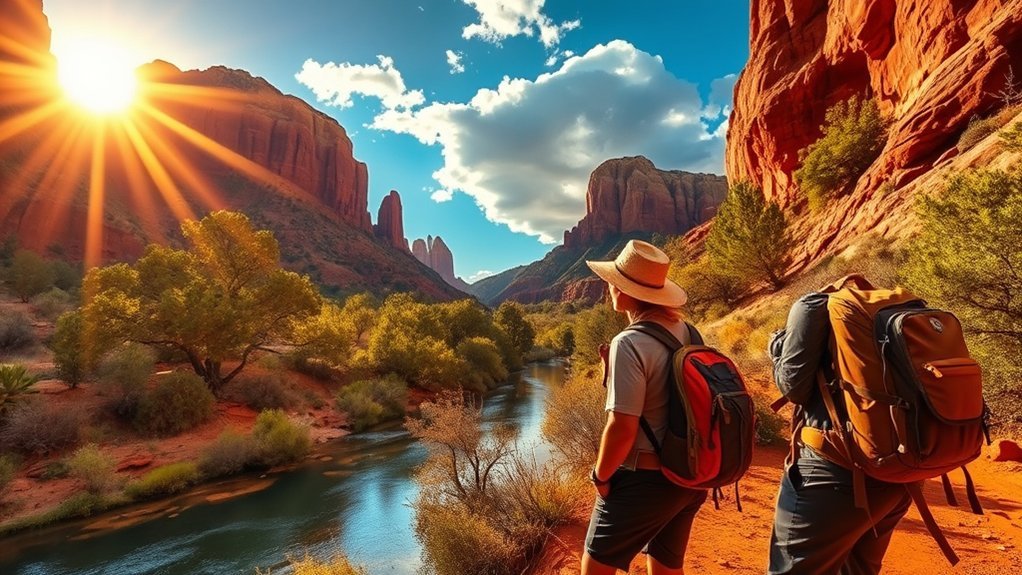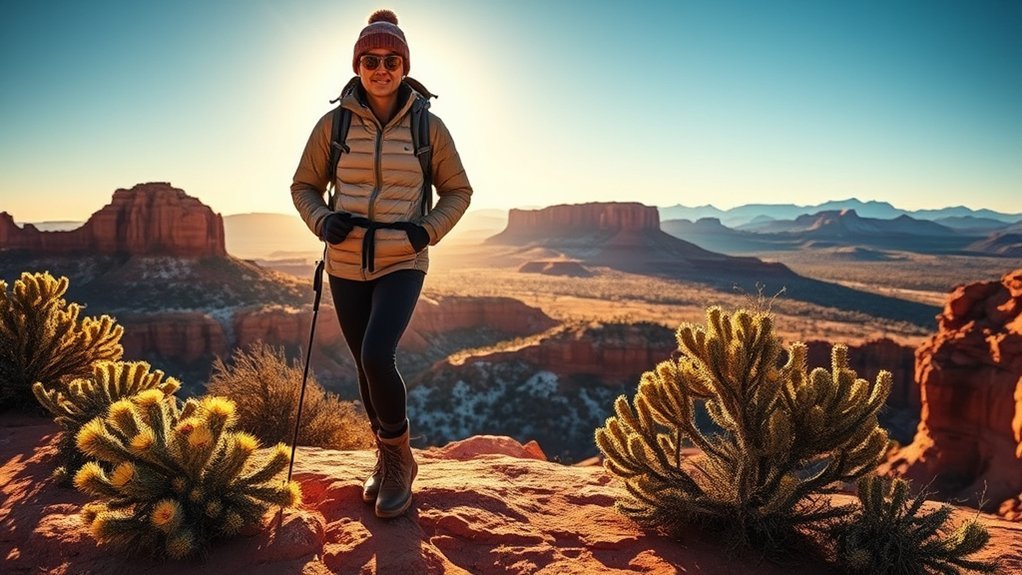
Arizona winter packing is less about bringing one heavy coat and more about preparing for major changes in elevation, sun, wind, and temperature. Phoenix and Tucson can feel mild during the day, while Flagstaff and the Grand Canyon may have freezing temperatures, snow, and icy trails. Pack adjustable layers, practical sun protection, and footwear that matches where you are actually going.
Quick Answer
For an Arizona winter trip, pack a moisture-managing base layer, a fleece or light insulated mid-layer, and a wind-resistant outer layer. Add a waterproof shell, warm hat, gloves, and winter footwear if you are visiting Flagstaff, the Grand Canyon, or other snowy high-elevation areas. Keep sun protection handy everywhere.
Key Takeaways
- Pack for your destinations, not for “Arizona” as one climate. Low deserts and high country can feel like different seasons.
- Use three adjustable layers: a moisture-managing base, an insulating mid-layer, and a protective outer layer.
- Bring UV-blocking sunglasses, sunscreen, and sun-protective clothing even in winter.
- For snowy or icy high-country trails, waterproof footwear and removable traction can matter more than carrying an extra sweater.
- Check the forecast for every major stop shortly before you leave and again before outdoor activities.
Arizona Winter Climate Overview: Desert Days to Mountain Snow
Arizona winter weather changes dramatically with elevation. Low-desert cities such as Phoenix and Tucson generally have mild winter afternoons but much cooler mornings and nights. The National Weather Service lists a normal Christmas Day high of about 65°F and a low of 44°F in Phoenix based on 1991–2020 normals. Tucson’s December normals are also around the mid-60s during the day and near 40°F at night.
A useful late-December reference point: Phoenix’s 1991–2020 normal Christmas Day temperature is about 65°F for the high and 44°F for the low, according to the National Weather Service.
Move into northern Arizona or higher terrain and the picture changes quickly. Flagstaff, the Grand Canyon rims, and other high-elevation destinations can experience freezing conditions, snow, wind, and icy walking surfaces. The National Park Service notes that significant winter snowfall occurs on the Grand Canyon rims.
That is why elevation should guide your clothing choices. A light jacket may be enough for a sunny Phoenix afternoon, while the same trip could require insulated clothing, gloves, waterproof footwear, and ice traction a few days later in northern Arizona.
Note: Check the forecast for each destination separately. A statewide forecast or a Phoenix forecast is not a useful substitute for conditions in Flagstaff, Sedona, or the Grand Canyon.
What to Wear in Arizona in Winter by Region
| Area | Typical Winter Challenge | Useful Clothing |
|---|---|---|
| Phoenix and Tucson | Cool mornings and nights with milder sunny afternoons | T-shirt or light base layer, long pants, sweater or fleece, light jacket |
| Sedona and middle elevations | Larger temperature swings, cold mornings, occasional winter weather | Long-sleeve base, fleece, light insulated jacket, hiking shoes or boots |
| Flagstaff and Grand Canyon high country | Freezing temperatures, wind, snow, and ice | Thermal layers, insulation, weatherproof shell, warm hat, gloves, waterproof footwear, traction when icy |
Choosing Base Layers for Temperature Regulation and Moisture Control
Start with a moisture-managing base layer when you expect to hike, spend hours outside, or visit cold high-elevation areas. Polyester and fine merino wool are common choices because they can move moisture away from the skin and dry more effectively than a heavy cotton layer during cold-weather activity.
Choose thermal weight according to your activity and destination. Lightweight pieces work well for active desert hikes and mild days. Midweight layers make more sense for cold mornings, northern Arizona sightseeing, and moderate winter activity. Heavy thermal layers are best reserved for genuinely cold conditions or long periods of low activity.
Moisture-Wicking Fabrics
A base layer should fit close enough to manage moisture without feeling restrictive. Smooth seams also help reduce rubbing during long hikes. Merino wool and synthetic technical fabrics are practical options, but the best material is the one that feels comfortable on your skin and matches your activity.
Follow the care label when washing technical clothing. Some manufacturers specifically recommend avoiding fabric softener because it can interfere with the performance of certain technical fabrics.
Thermal Weight Choices
- Lightweight: Best for active hiking, mild desert weather, and easy layering.
- Midweight: A versatile choice for colder mornings, Sedona, and many high-country sightseeing days.
- Heavyweight: Better for very cold conditions, long outdoor stops, or winter activities where you will not be moving continuously.
The goal is not to wear the warmest possible base layer. It is to wear enough insulation without becoming sweaty and then chilled when your activity level drops.
Mid-Layer Options: Insulation for Active Days and Rest Stops
Because temperatures can change quickly between sunny trails and shaded rest stops, choose a mid-layer that balances warmth, breathability, and packability. A fleece or breathable synthetic jacket works well during active periods. A packable insulated jacket adds more warmth when you stop moving.
Synthetic insulation can be useful when damp conditions are possible, while down is valued for its warmth-to-weight ratio and compressibility. Hybrid jackets combine breathable panels with insulation and can work well when your activity level changes throughout the day.
| Piece | Best Use | Packability |
|---|---|---|
| Synthetic jacket | Active days and potentially damp conditions | High |
| Down puffy | Cold stops and lightweight warmth | Very high |
| Hybrid jacket | Changing activity levels | High |
| Fleece | Active warmth and everyday layering | Moderate |
| Vest | Extra core warmth without bulky sleeves | Very high |
Outer Shells for Wind, Rain, and Unexpected Snow
You do not necessarily need a heavy waterproof jacket for every low-desert winter day, but a protective outer layer becomes much more important when your itinerary includes high elevations, exposed trails, rain, or snow.
For genuinely wet or snowy conditions, look for a waterproof shell with sealed or taped seams, an adjustable hood, and useful ventilation. For dry Phoenix or Tucson sightseeing, a lighter wind-resistant jacket may be more comfortable and easier to carry.
- Match the shell to the forecast rather than automatically packing the heaviest option.
- Prioritize wind protection in exposed locations.
- Use vents or pit zips during strenuous activity so sweat does not build up inside the jacket.
Warning: Snow and ice can make high-country trails much more serious than their distance suggests. The National Park Service recommends layered waterproof/warm clothing and over-the-shoe traction for winter hiking at the Grand Canyon. Check current weather and trail conditions before leaving the trailhead.
Sun Protection Essentials: Hats, Sunglasses, Sunscreen, and UPF Clothing
Winter does not eliminate Arizona’s sun exposure. The CDC Yellow Book recommends protective clothing, a broad-brimmed hat, and sunglasses that protect against both UVA and UVB radiation. Snow can also reflect UV radiation and increase exposure.
Use UPF-rated clothing when you want additional textile sun protection. For sunglasses, look for UVA and UVB protection first. Polarized lenses can reduce glare, but polarization by itself is not the same thing as UV protection.
| Item | Purpose |
|---|---|
| Wide-brim hat | Shade the face, ears, and neck |
| UVA/UVB-blocking sunglasses | Protect the eyes and surrounding skin |
| Polarized lenses | Reduce reflected glare; UV rating should still be checked separately |
| UPF-rated clothing | Provide consistent fabric coverage from UV exposure |
| Broad-spectrum sunscreen | Protect exposed skin not covered by clothing |
Footwear Choices: Trails, City Streets, and Snowy Slopes
Match your shoes to your actual itinerary instead of packing heavy boots automatically. Comfortable walking shoes or breathable sneakers are usually enough for city sightseeing. For rocky trails, use hiking shoes or boots with reliable tread. If snow or slush is expected, waterproof footwear becomes much more useful.
- Hiking shoes or boots: Choose dependable tread and a fit you have already tested on longer walks.
- City sneakers: Lightweight and comfortable for Phoenix, Tucson, restaurants, museums, and casual sightseeing.
- Winter boots: Useful for deeper snow, prolonged cold, and wet high-country conditions.
Do not overlook socks. Wool or synthetic hiking socks can help manage moisture, and carrying a dry spare pair is useful if you expect snow or wet trails.
On icy high-country trails, boots alone may not provide enough grip. Grand Canyon National Park recommends over-the-shoe traction devices and hiking poles for winter conditions.
Pro Tip: If your trip combines Phoenix with Flagstaff or the Grand Canyon, pack lightweight removable traction instead of assuming one pair of aggressive-tread boots will handle every icy surface.
Accessories and Extras: Gloves, Beanies, Neck Gaiters, and Hand Warmers
Small accessories can add substantial warmth without taking much luggage space. Thin liner gloves are useful when you need dexterity, while insulated gloves or mittens make more sense for snow and prolonged cold. A warm beanie can be particularly useful during early mornings and windy high-country stops.
Neck gaiters range from lightweight sun and wind protection to fleece models for colder weather. Choose one based on your itinerary rather than carrying the thickest option everywhere.
Disposable hand warmers are an optional comfort item for cold mornings. Rechargeable hand warmers and heated clothing can also be useful, but battery-powered products need extra attention when flying because lithium-battery rules may apply.
| Use | Warmth Needed | Useful Accessories |
|---|---|---|
| Desert hiking | Low to moderate | Light gloves if cold, sun hat, lightweight gaiter |
| City sightseeing | Low to moderate | Light gloves or scarf for evenings |
| Snow/high country | High | Beanie, insulated gloves, warm gaiter, optional hand warmers |
Do You Need Thermal Pants or Leggings?
For Phoenix and Tucson sightseeing, ordinary long pants are usually more practical than thermal bottoms unless the forecast turns unusually cold. Hiking pants are useful because they are comfortable, easy to layer, and often dry faster than heavy jeans.
Thermal leggings or base-layer bottoms become more useful in Flagstaff, at the Grand Canyon, during early-morning outdoor activities, or whenever you expect prolonged freezing temperatures. If you will be walking through snow, consider weather-resistant outer pants rather than relying on absorbent everyday pants.
Packing Strategy: Versatile Pieces and Efficient Layering
Pack adaptable pieces that work together instead of separate outfits for every temperature. A lightweight base layer, fleece or sweater, insulated jacket, and protective shell can cover a much wider range of conditions than one bulky coat.
- Choose tops and pants that mix easily so you can rewear outer layers.
- Bring one compressible insulated jacket for colder stops and evenings.
- Carry a shell only as heavy as your forecast and activities justify.
- Keep gloves, sunglasses, and a light hat in your daypack so you can adjust during the day.
- Wear or carry your bulkiest footwear and jacket during travel if luggage space is tight.
Arizona Winter Packing Checklist for a 3–5 Day Trip
This compact list works as a starting point for a mixed Arizona itinerary. Add heavier winter gear if you expect snow or prolonged time outdoors at elevation.
- 2–3 lightweight base-layer or everyday tops
- 1 warmer long-sleeve or midweight base top
- 1 fleece, sweater, or breathable synthetic mid-layer
- 1 packable insulated jacket
- 1 wind-resistant or waterproof shell based on the forecast
- 2 pairs of travel or hiking pants
- 1 thermal bottom if visiting cold high-country destinations
- 3–5 pairs of socks, including wool or synthetic hiking socks for trails
- Comfortable city/walking shoes
- Hiking shoes or boots if your itinerary includes trails
- Waterproof winter footwear if significant snow is expected
- Removable traction devices if icy trails are likely
- Warm beanie for high elevations
- Light or insulated gloves depending on destination
- Neck gaiter or scarf
- Wide-brim sun hat
- UVA/UVB-blocking sunglasses
- Broad-spectrum sunscreen
- Optional disposable or rechargeable hand warmers
Frequently Asked Questions
Can I wear shorts in Phoenix during December evenings?
You can if you personally tolerate cool weather, but long pants are the safer default for evenings. The National Weather Service lists a normal late-December low around 44°F in Phoenix, so temperatures after sunset can feel much cooler than the afternoon.
Will merino wool cause allergic reactions for sensitive skin?
Not necessarily. A published review of wool and skin reactions found that wool fiber itself is not supported as a cutaneous allergen and that coarse fibers are more likely to cause mechanical irritation. Fine or superfine merino may feel comfortable for many people. If a garment causes itching, rash, or another reaction, stop wearing it and choose a fabric your skin tolerates.
How do I care for a down jacket after a snowy trip?
First follow the care label on your specific jacket. If washing is allowed, use the cleaner and wash method recommended by the manufacturer, then dry the jacket completely. Some manufacturers recommend low or no heat and clean dryer or tennis balls to help break up wet down clumps and restore loft. Do not store a down jacket while it is damp or tightly compressed for long periods.
Are heated clothing items practical for Arizona winters?
They can be useful for cold-sensitive travelers, long outdoor stops, or high-country winter activities, but they are optional for most low-desert sightseeing. If your heated clothing or hand warmer uses lithium batteries, review current FAA and airline battery rules before flying.
Can I fly with wet gear or hand warmers in checked luggage?
Ordinary wet clothing is not subject to a general TSA prohibition simply because it is wet, but drying or sealing wet gear before packing helps prevent leaking, odor, and mildew. TSA lists hand warmers as allowed in both carry-on and checked bags. Rechargeable warmers and heated clothing may be subject to separate lithium-battery rules; spare lithium batteries generally belong in carry-on baggage.
Do I need a heavy winter coat in Phoenix?
Usually not for an ordinary Phoenix winter trip. A light insulated jacket, fleece, or sweater with a lighter outer layer is more versatile because you can remove layers during mild afternoons. Check the forecast before your trip because cold fronts can temporarily bring colder conditions.
Do I need snow boots for Flagstaff or the Grand Canyon in winter?
Bring waterproof winter footwear when snow, slush, or prolonged freezing conditions are expected. For icy trails, removable traction devices may be more important than simply choosing a larger boot tread. Check current conditions before deciding what footwear to pack.
Should I avoid cotton completely in Arizona during winter?
You do not need to ban cotton from a city wardrobe, but it is a poor choice as your main cold-weather layer when you may sweat, get wet, or spend long periods outside. Wool and synthetic technical layers are generally more practical for winter hiking, snow, and high-elevation activities because they manage moisture more effectively.
Conclusion
What you wear in Arizona in winter should depend on elevation and activity rather than the state’s desert reputation. For Phoenix and Tucson, light layers, long pants, sun protection, and a light jacket cover many days. Add warmer base layers, insulation, gloves, waterproof footwear, and weather protection as you move into Sedona and northern Arizona. For Flagstaff, the Grand Canyon, or snowy trails, prepare specifically for freezing temperatures and ice. A flexible layering system lets you adjust without overpacking.
Sources
- National Weather Service — Phoenix Christmas Climatology — Phoenix late-December temperature normals.
- National Park Service — Grand Canyon Winter Hiking — winter clothing, ice traction, and hiking safety.
- CDC Yellow Book — Sun Exposure in Travelers — protective clothing, hats, sunglasses, and reflected UV exposure.
- Transportation Security Administration — Hand Warmers — carry-on and checked-baggage guidance.
- Federal Aviation Administration — Battery-Powered Heat-Producing Devices — lithium-battery and heat-producing-device travel rules.
- PubMed — Debunking the Myth of Wool Allergy — evidence on wool fiber, irritation, and fine merino.