Most people don’t know Arizona’s deserts hide cool riparian pockets, shaded cottonwood washes, and high-elevation ponderosa pine forests that make horseback riding possible year-round. From the saguaro-studded Sonoran flats and red-rock amphitheaters of Sedona to the alpine meadows of the Mogollon Rim, the Grand Canyon State offers some of the most diverse equestrian terrain in North America. Planning a safe and memorable ride requires matching the season to the right elevation, choosing reputable outfitters, and preparing for sudden desert and mountain weather shifts.
Quick Answer
The best time for horseback riding in Arizona depends on elevation: explore desert trails in Phoenix, Tucson, and Sedona from October through April, and head to high-country destinations like Flagstaff and the White Mountains from May through September. Always ride with an ASTM/SEI-certified helmet, carry ample water, and book licensed outfitters permitted by public land agencies.
Key Takeaways
- Season by Elevation: Ride low-desert trails (Tucson, Phoenix) in late fall, winter, and spring; reserve high-elevation forests (Coconino, Apache-Sitgreaves) for summer.
- Outfitter Standards: Choose commercial guides permitted by the USDA Forest Service, Bureau of Land Management (BLM), or state parks.
- Trail Preparedness: Carry at least 1 quart of water per hour of riding in desert heat, wear boots with a definitive 1-inch heel, and use sun protection.
- Land & Cultural Stewardship: Respect tribal sovereignty, stay strictly on designated trails to protect biocrust, and pack out all waste.
Best Times of Year for Riding in Arizona
Because Arizona spans elevations from near sea level to over 12,000 feet, you can find pleasant trail conditions during every month of the year if you pick the right region.
- Spring (March through May): Ideal for the Sonoran Desert, foothill trails, and Sedona. Spring brings blooming wildflowers, fragrant creosote, and daytime temperatures ranging from 65°F to 85°F. Early morning departures avoid rising midday warmth.
- Summer (June through August): Low-desert valleys exceed 105°F, making daytime desert riding unsafe for horses and humans. Shift your riding to the high country—such as Flagstaff, Prescott, the White Mountains, or the North Rim of the Grand Canyon—where pine forests sit 20°F to 30°F cooler. Watch out for afternoon monsoon thunderstorms starting in July.
- Fall (September through November): Fall provides stable footing, crisp air, and thinning crowds across both northern forests and central canyon lands. It is widely considered the best season for multi-day pack trips.
- Winter (December through February): Prime season for southern and central Arizona, including Scottsdale, Cave Creek, Tucson, and Wickenburg. Daytime temperatures hover comfortably between 60°F and 75°F. High-country routes may experience significant snowpack and seasonal closures.
Pro Tip: During desert summer months, look for outfitters offering early “breakfast rides” at dawn or twilight sunset excursions to avoid dangerous heat indexes and equine thermal stress.
Top Desert Trail Rides and Outfitters
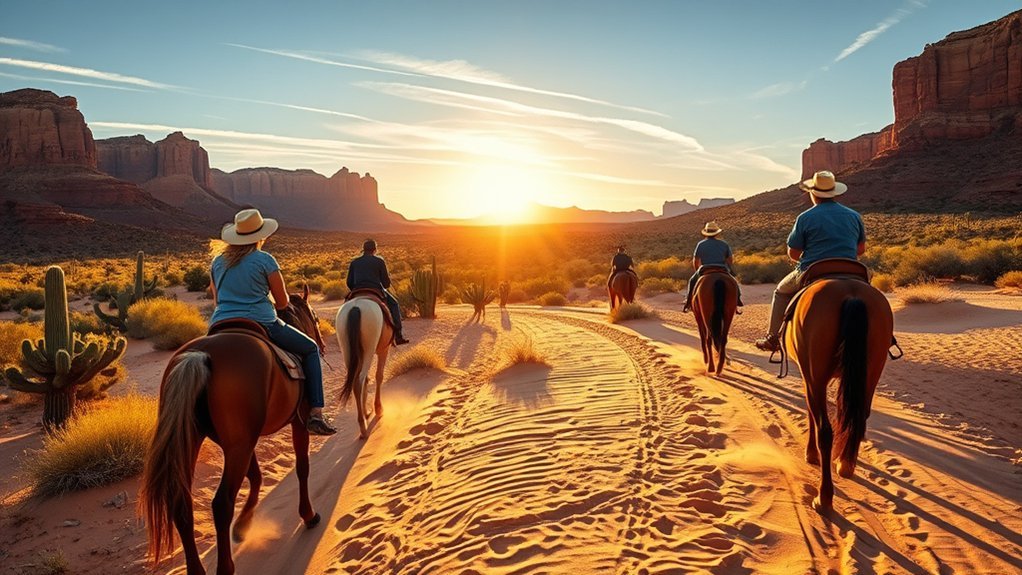
Guided desert trail rides showcase the Sonoran Desert’s iconic landscapes, including towering saguaro forests, red-rock canyons, and dry sandy washes (arroyos).
How to Select a Reputable Desert Outfitter
Whether you are a first-time rider or an experienced equestrian, picking a certified outfitter ensures horse welfare and guest safety. High-quality commercial operators carry commercial permits through local land agencies, such as Arizona State Parks & Trails, the BLM, or the National Park Service. Look for outfitters that:
- Assess rider experience, height, and weight to pair guests with compatible mounts.
- Maintain strict guide-to-rider ratios (ideally no more than 1:6).
- Conduct thorough ground safety briefings and tack checks before mounting.
- Demonstrate well-conditioned, sound horses with proper body condition scores and well-maintained leather tack.
Top Desert Trail Hubs
Arizona offers world-class desert riding hubs, each with distinct terrain:
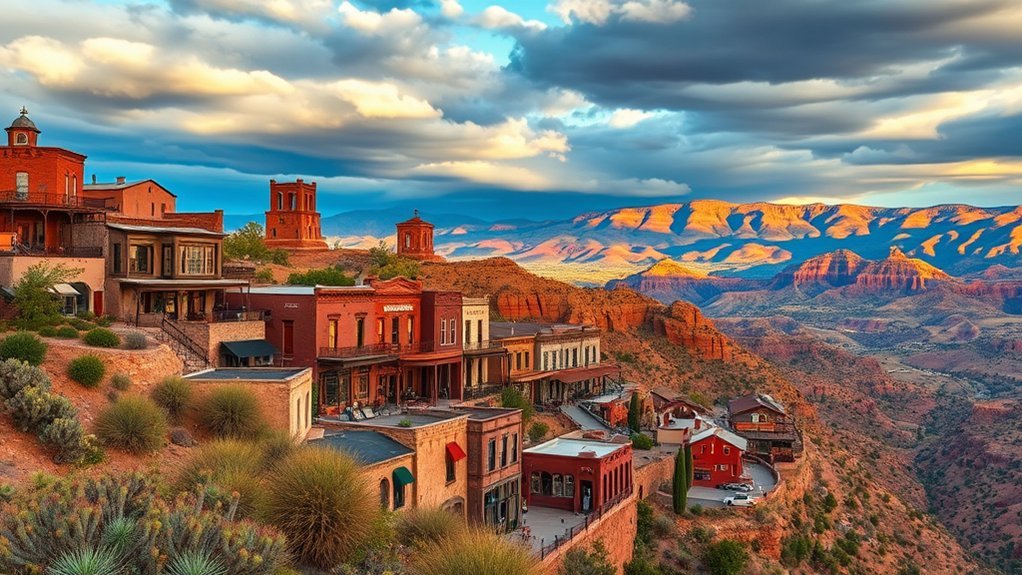
- Sedona & Red Rock Country: Trails weave through red sandstone canyons, piñon-juniper woodlands, and creek crossings near Oak Creek and Boynton Canyon.
- Superstition Mountains & Goldfield: Located east of Phoenix, this rugged volcanic mountain range offers dramatic ridgeline views, old mining history, and sprawling desert floor trails.
- Tucson Foothills & Saguaro National Park: Ride among some of the densest saguaro stands in the world, with sweeping backdrops of the Santa Catalina and Rincon mountains. Learn more about equestrian trail rules via the National Park Service Saguaro Guide.
- Cave Creek & McDowell Sonoran Preserve: Rolling granite hills, washes, and preserved Sonoran desert ecosystems located just north of Scottsdale.
Mountain and Forest Riding Destinations
When summer heats up the lower valleys, Arizona’s high-elevation pine belts and volcanic rims provide cooler trail alternatives.
Premier High-Country Trailheads
Starting at designated equestrian trailheads ensures adequate trailer turnaround space, hitching posts, and direct access to maintained trail systems. Top starting points include:
- Mogollon Rim (Coconino & Apache-Sitgreaves National Forests): Trailheads along Forest Road 300 offer panoramic views from 7,500+ feet, winding through dense ponderosa pine and mixed conifer forests.
- Schnebly Hill & Munds Mountain Wilderness: Transitions from Sedona’s red rock slickrock up into pine corridors on high sandstone benches.
- Mingus Mountain & Prescott National Forest: Offers cool mountain trails, shaded ravines, and high overlook views stretching across the Verde Valley.
Riding High Ridges and Alpine Meadows
Mountain and forest trails demand attentive riding and sure-footed horses. Navigating steep ascents and loose rock requires riders to maintain a centered, forward-leaning balance and soft reins. In high alpine meadows, stay centered on the established singletrack to avoid damaging fragile subalpine flora and moist meadow sod.
Mountain Safety and Etiquette
High-altitude riding involves unique environmental and behavioral considerations:
- Trail Etiquette: Hikers and mountain bikers should yield to equestrians, but always maintain verbal communication. Alert other trail users calmly of your horse’s approach, and announce passes well in advance.
- Monsoon Awareness: Mountain thunderstorms form rapidly between late June and August. Avoid exposed ridgelines and tall isolated trees if thunder is heard.
- Wildlife Encounters: Expect potential encounters with elk, mule deer, javelina, or free-range cattle. Give large wildlife space and let your mount look without panicking.
Warning: Under Arizona Revised Statutes (A.R.S. § 12-553), equine activities carry inherent risks of injury or death. Horses can react unpredictably to terrain, sounds, and sudden movements. Always listen carefully to your wrangler’s trail instructions.
What to Expect on a Guided Trail Ride
If you are booking a commercial guided ride, here is the standard workflow from arrival to dismount:
- Check-in & Liability Waiver: Review safety rules, disclose your riding experience level honestly, and sign the state equine liability release.
- Helmet & Tack Fitting: Guides fit you with a protective riding helmet and adjust your stirrup lengths so your knees have a comfortable, shock-absorbing bend.
- Mounting & Orientation: Mount from an approved mounting block or ground platform while wranglers steady the horse. You will receive a quick demonstration on basic western neck reining, stopping, and backing up.
- Trail Pace: Most commercial desert and mountain trail rides travel at a steady, controlled walk (nose-to-tail string) to maintain safety on rocky, uneven terrain.
- Photo & Water Breaks: Guides pause at scenic overlook points to offer photo opportunities and water breaks.
Safety Tips and Essential Gear for Riders
Proper attire and preparation protect you from desert sun, brush, and saddle chafing.
| Essential Item | Function & Specifics |
|---|---|
| Riding Boots | Sturdy leather boots with smooth soles and a definitive 1-inch heel to prevent foot slippage through stirrups. |
| Equestrian Helmet | ASTM/SEI-certified riding helmet for impact and fall protection (mandatory for minors at most stables). |
| Long Pants | Durable denim jeans or riding tights to prevent saddle pinching and protect legs from thorny catclaw and cactus. |
| Hydration Gear | Saddle horn water bottle holder or compact hydration pack with at least 1–2 liters of water. |
| Sun Protection | UPF 50+ lightweight long-sleeve shirt, broad-spectrum sunscreen, and polarized sunglasses with a retention cord. |
Note: Backpacks and large dangling shoulder bags are prohibited by most trail outfitters because shifting weight can spook horses and interfere with balance. Use secure saddle horn bags or waist packs.
Multi-Day Pack Trips and Ranch Stays
For an immersive western experience, Arizona offers multi-day wilderness horse-packing expeditions and historic dude ranch vacations.
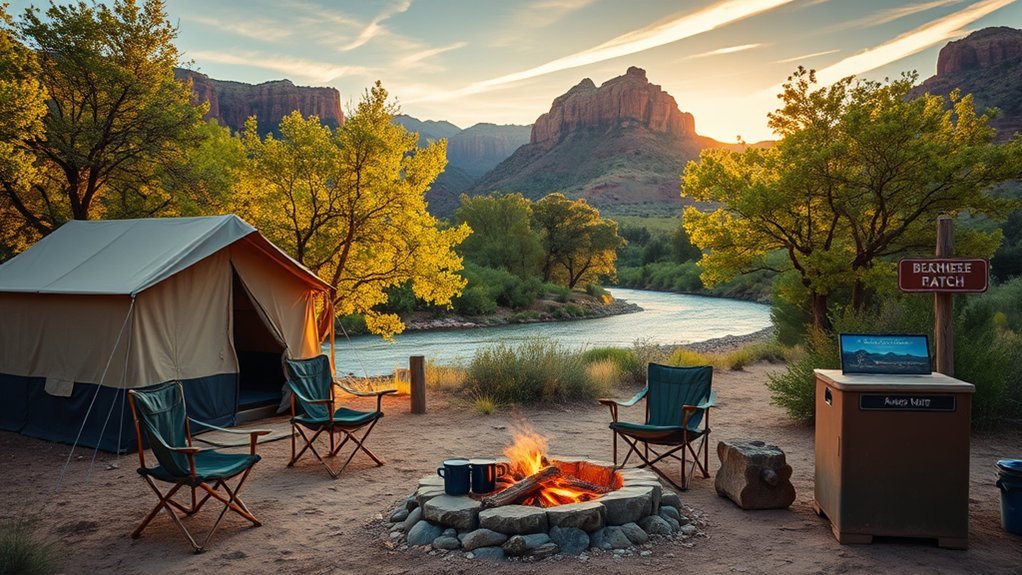
- Wilderness Pack Trips: Multi-day pack expeditions operate in remote regions such as the Tonto National Forest, Superstition Wilderness, and Blue Range Primitive Area. Guides transport backcountry gear on pack mules while you ride trail horses between established wilderness camps.
- Historic Guest & Dude Ranches: Historic cattle ranches in Wickenburg (the “Team Roping Capital of the World”), Tombstone, and Tucson offer all-inclusive lodging, daily trail rides, team sorting, arena lessons, and chuckwagon dinners.
Respecting the Land and Cultural Sensitivities
Arizona’s trails cross federal, state, private, and tribal lands. Practicing outdoor ethics preserves these corridors for future generations.
| Action | Why It Matters |
|---|---|
| Stay on Established Trails | Protects delicate biological soil crust (cryptobiotic soil) and prevents erosion. |
| Use Certified Weed-Free Forage | Prevents invasive weeds from spreading across public lands (mandated by USFS and BLM regulations). |
| Respect Cultural Sites & Rock Art | Never touch petroglyphs or remove artifacts; view sacred Native American sites from a respectful distance. |
| Pack Out All Trash | Follows Leave No Trace principles to keep wildlife safe and trails pristine. |
| Obtain Required Permits | Ensure you hold valid Arizona State Trust Land Recreation Permits or tribal permits when riding non-federal land. |
Frequently Asked Questions
Can I ride horseback in Arizona if I’m pregnant?
Most commercial trail outfitters and medical professionals strongly advise against horseback riding during pregnancy. Due to uneven desert terrain, sudden animal reactions, and the risk of blunt trauma or falls, outfitters typically prohibit pregnant guests from mounting for liability and safety reasons.
Are children under 8 allowed on guided trail rides?
Most Arizona trail riding stables enforce a minimum age requirement of 6 to 8 years old for open trail rides. For younger children, many ranches and stables offer supervised hand-led pony or horse rides inside a secure round pen or arena.
Do outfitters provide transportation to trailheads?
Many commercial outfitters operate directly out of private ranch facilities or permanent trail staging areas on public lands where guests park on-site. For remote backcountry or river rides, some outfitters provide shuttle transport from a central meeting point; always verify transportation details during booking.
Are service animals allowed on horseback rides?
Under ADA guidelines, service animals are welcomed at ranch facilities, visitor centers, and staging grounds. However, service animals are not permitted to ride on horses or run alongside a trail ride string. The presence of a dog near unfamiliar horses on narrow trails creates severe safety risks, including spooking, kicking, and trail disruption.
Can I bring my own horse to a guided trip or Arizona trails?
Commercial guided tours generally supply their own trained mounts and do not mix private horses into public tour strings. However, if you are bringing your own horse to ride on Arizona public lands, the Arizona Department of Agriculture requires a negative Coggins test (within 12 months), an official Certificate of Veterinary Inspection (CVI) issued within 30 days, and certified weed-free forage on USFS/BLM lands.
Conclusion
Horseback riding in Arizona provides an authentic connection to the American West, whether you are traversing saguaro-filled valleys, ascending red-rock rims, or relaxing at a historic guest ranch. By matching your travel season to the proper elevation, wearing certified safety gear, and partnering with licensed outfitters who practice land stewardship, you will ensure a safe, scenic, and unforgettable ride through the Southwest.
Sources
- USDA Forest Service — Public land trail regulations, wilderness ethics, and weed-free forage standards.
- National Park Service: Saguaro National Park — Desert trail guidelines, wildlife safety, and equestrian access rules.
- Arizona State Parks & Trails — Equestrian trail permits, staging areas, and facility guidelines.
- Arizona Department of Agriculture: Animal Services Division — Equine entry requirements, Coggins certification, and interstate livestock movement rules.
- Leave No Trace Center for Outdoor Ethics — Best practices for backcountry stock use and cryptobiotic soil preservation.