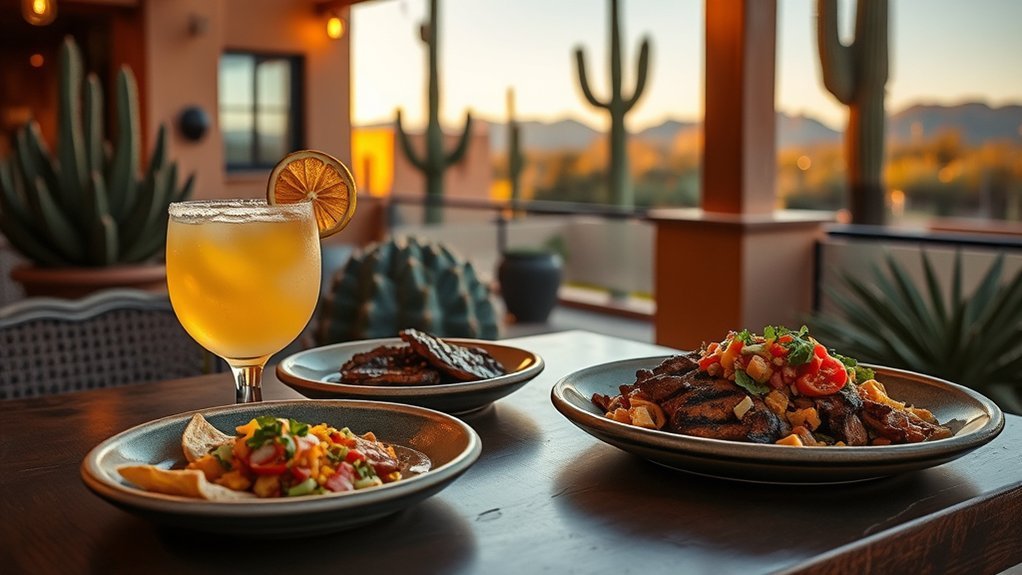
Tucson’s best restaurants are not defined by one cuisine. The city’s food culture connects Sonoran Mexican cooking, Indigenous agricultural traditions, mesquite fire, heritage grains, vegetable-driven menus, Arizona wine, and a growing group of chef-led restaurants. The strongest places give you something specific to remember, whether that is a Sonoran hot dog, handmade tortilla, red chile popover, mesquite-fired plate, or inventive plant-based taco.
Quick Answer
For a first taste of Tucson, start with El Güero Canelo or El Charro Café for Sonoran flavors, Tumerico for plant-forward Mexican cooking, Tito & Pep or BATA for chef-driven dining, Café Santa Rosa for Indigenous and regional influences, and Taqueria Pico de Gallo or Tacos Apson for casual tacos.
Key Takeaways
- Sonoran Mexican food should be at the top of a first-time Tucson dining list, especially flour tortillas, carne asada, carne seca, and Sonoran hot dogs.
- Tucson’s regional food identity also draws from Indigenous farming traditions and ingredients such as mesquite, tepary beans, cholla buds, chiltepín, and White Sonoran wheat.
- Tumerico, Tito & Pep, BATA, Café Santa Rosa, El Güero Canelo, and several long-running taco shops give you very different views of the city’s food culture.
- For wine and cocktails, Tucson has Arizona-focused tasting rooms as well as serious downtown cocktail bars.
- Hours, menus, reservation systems, patios, and dietary accommodations can change, so check the restaurant directly when a specific feature matters to you.
Note: Restaurant status and newcomer information in this guide was checked against current Tucson dining sources on August 16, 2026. Menus and operating hours can still change faster than destination guides are updated.
Best Tucson Restaurants for Sonoran-Style Mexican Food
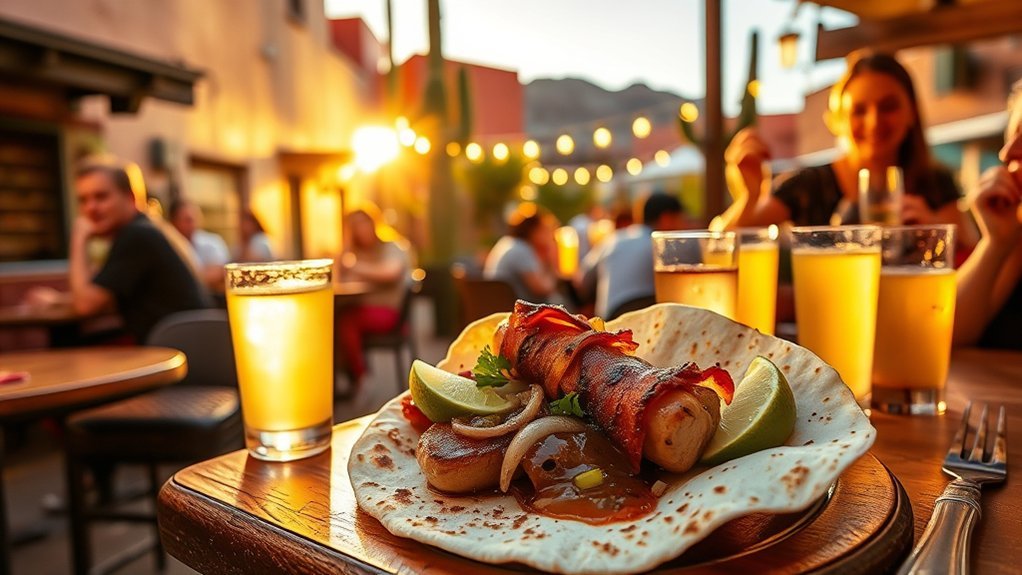
If you eat only one style of food in Tucson, make it Sonoran Mexican. Flour tortillas, carne asada, carne seca, beans, roasted chiles, and bacon-wrapped Sonoran hot dogs are more useful reference points than generic Southwestern food.
- El Güero Canelo: Go here for one of Tucson’s defining Sonoran hot dogs. Owner Daniel Contreras and El Güero Canelo received a James Beard Foundation America’s Classics award in 2018. The Sonoran dog combines a bacon-wrapped hot dog with beans and other toppings in a soft bun.
- El Charro Café: This long-running Tucson institution is a strong choice for carne seca, classic Mexican plates, and a sense of the city’s restaurant history.
- Mi Nidito: A longstanding South Tucson favorite for substantial Mexican and Sonoran-style plates.
- Seis Kitchen: A useful pick when your group wants regional Mexican flavors in a more casual setting, with breakfast and lunch options as well as tacos and burritos.
The key is not to judge Sonoran food by heat alone. Pay attention to the tortilla, the char on the meat, the balance of beans and salsa, and how simply the kitchen handles ingredients. Tucson’s strongest Sonoran meals often feel direct rather than elaborate.
Top Spots for Creative New American Cuisine
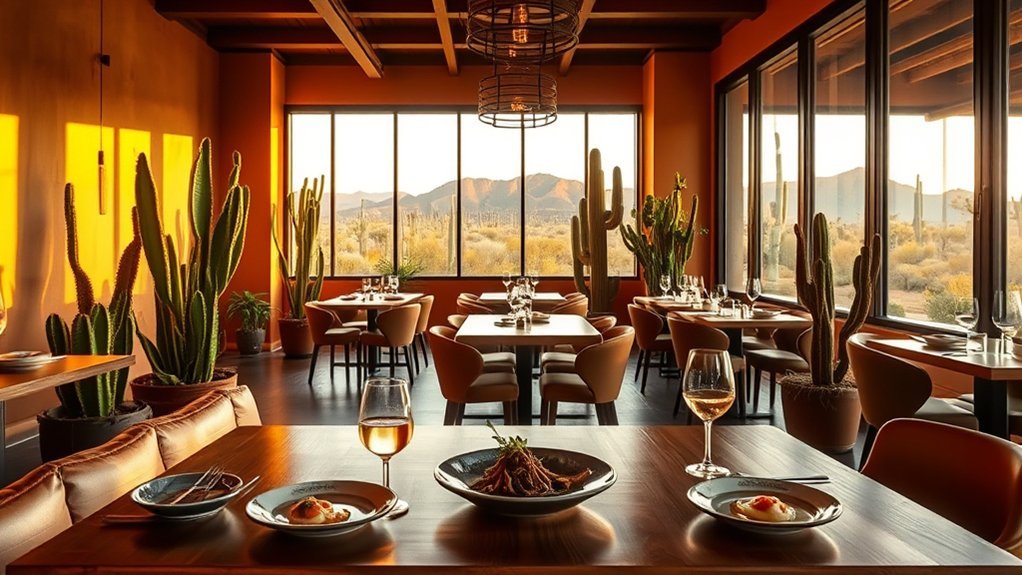
Tucson’s chef-driven restaurants are most interesting when they connect contemporary technique with the desert rather than copying a generic big-city tasting-menu format. Two strong starting points are Tito & Pep, known for contemporary Southwestern cooking built around mesquite fire, and BATA, a downtown restaurant associated with fire-driven small plates and regional sourcing.
Feast is another option when you like menus that change regularly and a dining room where food and wine receive equal attention. These restaurants work well when you want a more composed dinner without losing Tucson’s regional identity.
Seasonal and Rotating Menus
Do not assume every ambitious Tucson restaurant serves a formal tasting menu. The more useful pattern is that several chef-led kitchens rotate dishes as ingredients and ideas change. That can mean a different vegetable preparation, fish, mesquite-fired protein, or small plate from one visit to the next.
- Choose BATA when you want small plates and a fire-focused approach.
- Choose Tito & Pep when you want a neighborhood-bistro atmosphere with mesquite-driven Southwestern cooking.
- Choose Feast when a changing menu and thoughtful beverage program appeal to you.
- Check the current menu before booking if a specific dish or tasting format is important.
Locally Sourced Ingredients
Local sourcing matters in Tucson because the region has a documented food heritage built around desert-adapted crops and ingredients. Current Tucson gastronomy resources highlight foods such as chiltepín, cholla buds, prickly pear, mesquite flour, tepary beans, and White Sonoran wheat. Visit Tucson’s City of Gastronomy overview also connects contemporary restaurants with farmers, heritage ingredients, and the region’s long agricultural history.
That does not mean every restaurant using a cactus ingredient is automatically “local” or traditional. Look for menus that identify growers, regional ingredients, or specific preparation traditions rather than relying on desert imagery alone.
Must-Visit Tucson Restaurants for Indigenous and Regional Dishes
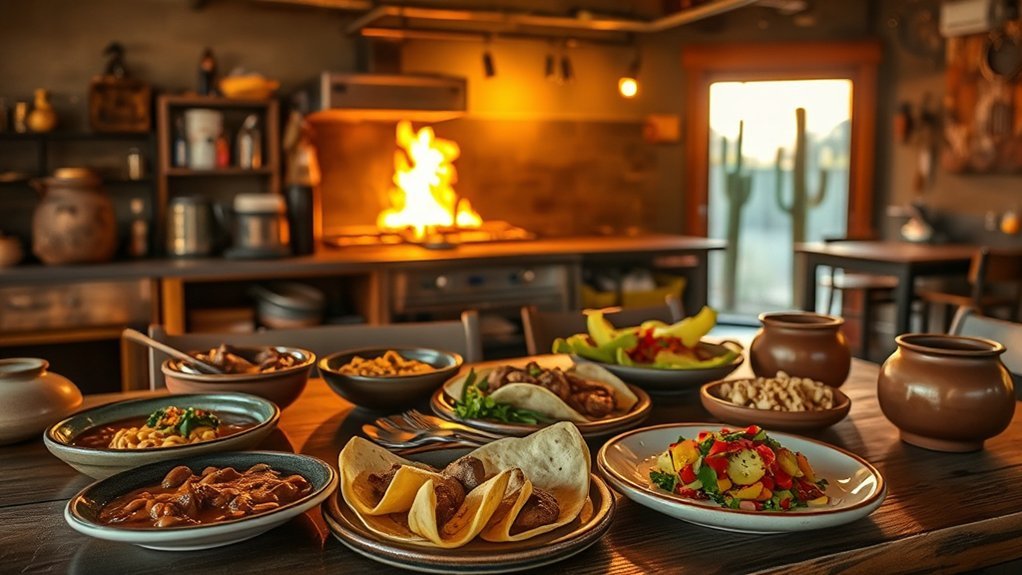
Indigenous food traditions are a living part of Tucson’s food story, not simply a collection of fashionable desert ingredients. Tohono O’odham farming traditions, including desert-adapted corn, beans, squash, and other crops, are part of the agricultural history behind Tucson’s international gastronomy recognition.
Tucson’s culinary identity makes more sense when you understand that Indigenous agriculture, Mexican food traditions, desert ingredients, and modern restaurant cooking overlap rather than exist as separate stories.
Café Santa Rosa is the clearest restaurant choice in this category. Visit Tucson describes the café as combining Indigenous and Mexican influences, with items such as popovers, Indigenous yeast-bread sandwiches, tacos, and burros.
La Indita is another Tucson restaurant where Indigenous and Mexican influences intersect. For deeper ingredient context rather than a sit-down restaurant meal, the San Xavier Co-op Farm is also worth knowing about because it supports traditional crops and regional food products from the Tohono O’odham community.
Pro Tip: If you are exploring Indigenous food traditions, look for restaurants and food producers that clearly identify the community, ingredient, or tradition involved. Specific attribution is more meaningful than vague terms such as “ancestral” or “desert inspired.”
Where to Find the Best Street Tacos and Casual Eats
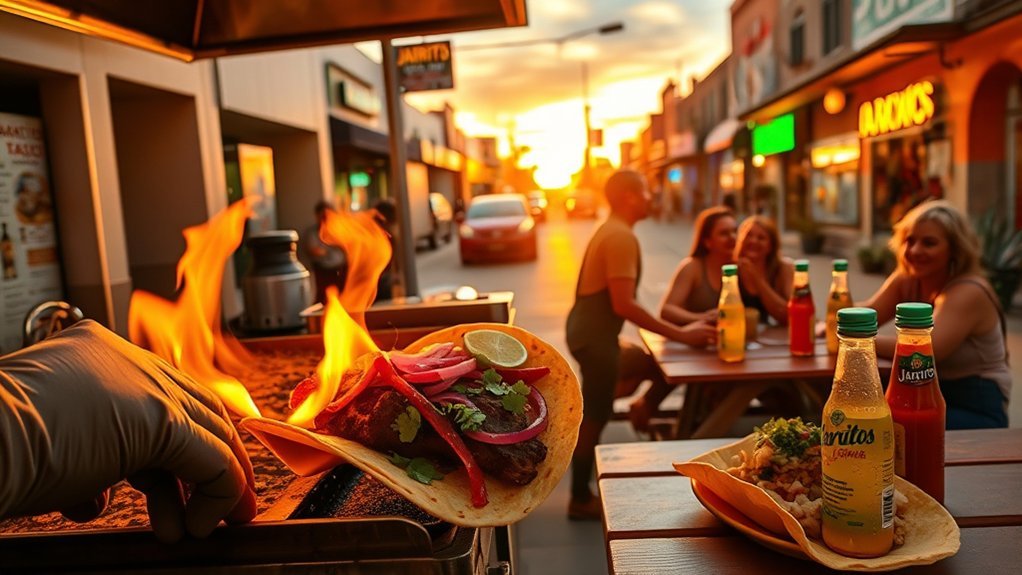
Tucson’s taco scene is broad enough that “best taco” depends on what you want. Some shops are strongest for handmade corn tortillas, some for carne asada and grilled meats, and others for creative salsas or birria. The useful approach is to compare styles rather than search for one universal winner.
| Spot | Why Go |
|---|---|
| Taqueria Pico de Gallo | Handmade corn tortillas and classic taco fillings, including seafood options |
| Tacos Apson | Carne asada, beef rib, and a broad range of traditional meat choices |
| Boca Tacos | Creative tacos and an unusually strong focus on house salsas |
| El Taco Rustico | Northern Mexican flavors, grilled meats, and substantial tacos |
| Rollies Mexican Patio | Birria-focused comfort food and other Tucson favorites |
For a first taco crawl, order fewer tacos at more places. Compare tortillas, meat texture, salsa, and char. That tells you more about each kitchen than ordering a large combination plate at your first stop.
Tucson’s Top Fine-Dining and Special-Occasion Experiences
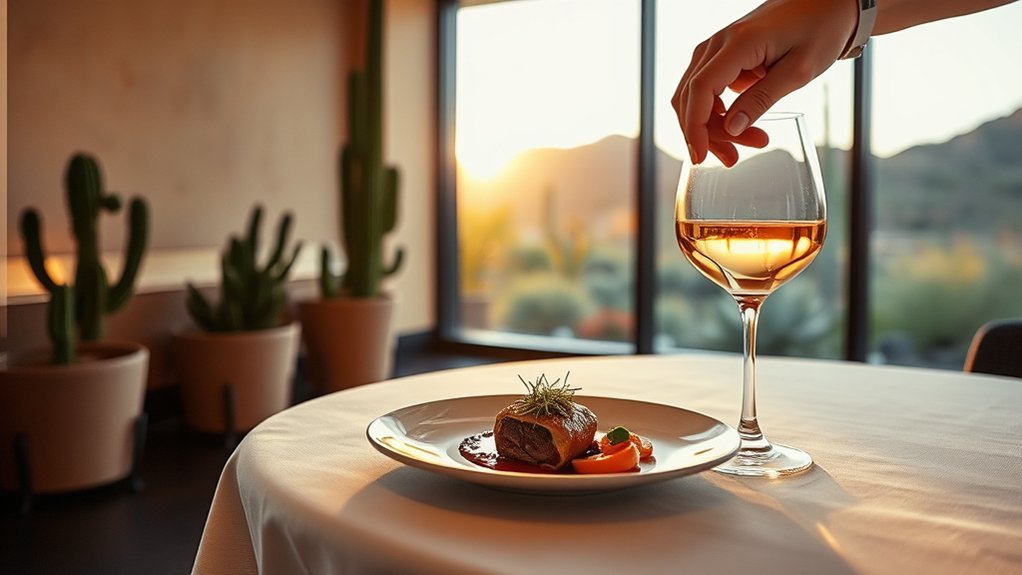
Tucson’s polished dining scene is better described as a mix of chef-driven restaurants, resort dining, wine-focused dinners, and changing small-plate menus than as a city dominated by tasting menus.
- BATA: Best suited to diners who like sharing several composed plates and seeing how a kitchen uses fire and seasonal ingredients.
- Tito & Pep: A strong date-night choice when you want sophisticated Southwestern cooking without a formal atmosphere.
- The Grill at Hacienda Del Sol: A useful special-occasion option when service, a resort setting, and mountain scenery matter as much as the meal.
- Feast: Worth considering if you enjoy changing menus and pairing food with an extensive wine selection.
For a special evening, book around the restaurant rather than around the label “fine dining.” Decide whether you care most about a chef-led menu, scenery, wine, service style, or a quiet dining room, then choose accordingly.
Best Places for Southwestern Comfort Food and BBQ
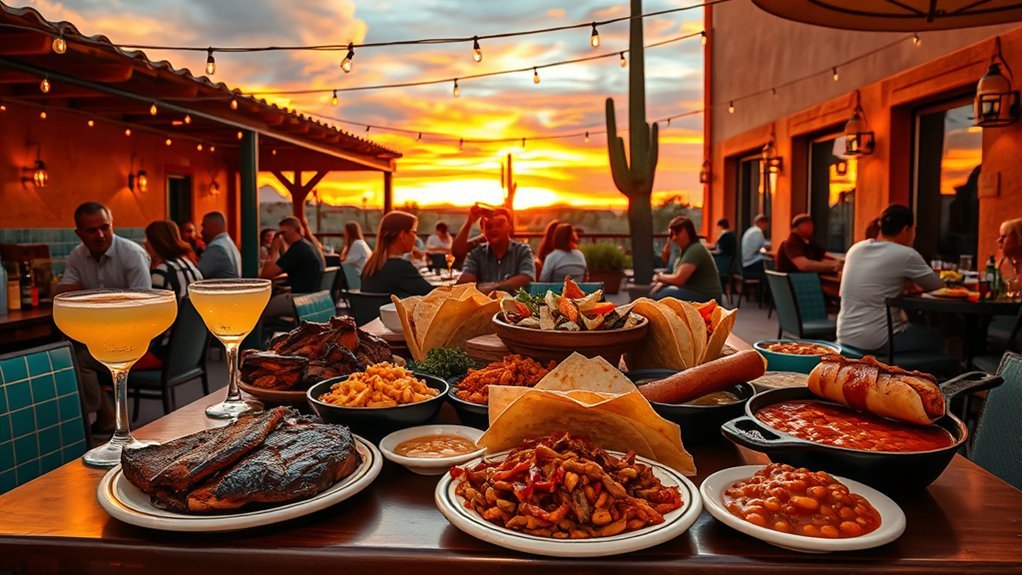
Barbecue is available in Tucson, but it is not as central to the city’s identity as Sonoran Mexican food. If smoked meat is what you want, Mr. K’s Original BBQ is a longstanding local option. For Southwestern comfort food, the better move may be to broaden your definition beyond a conventional barbecue plate.
| Style | Where to Try It | Why It Fits |
|---|---|---|
| Traditional barbecue | Mr. K’s Original BBQ | A dedicated local barbecue restaurant with smoked-meat focus |
| Sonoran comfort food | El Charro Café | Carne seca and hearty regional Mexican plates |
| Indigenous-regional comfort | Café Santa Rosa | Popovers and dishes connecting Indigenous and Mexican influences |
| Casual regional Mexican | Seis Kitchen | Burritos, tacos, chile, and approachable regional dishes |
Instead of judging every Tucson comfort-food restaurant by brisket bark or smoke rings, ask what regional tradition the restaurant actually represents. In this city, a red chile popover, carne seca plate, burrito, or bowl of beans can tell you more about place than a generic barbecue platter.
Standout Vegetarian and Plant-Forward Restaurants
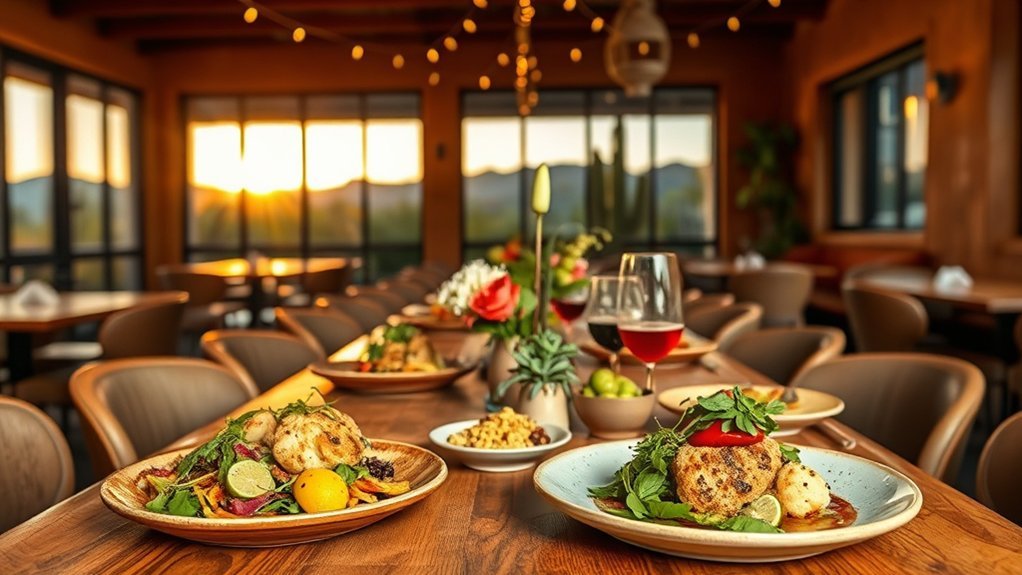
Tumerico should be near the top of your list if you want plant-forward food that still tastes connected to Tucson and Sonora. Its changing menu is known for vegan and vegetarian versions of Mexican comfort foods, including tacos and tamales, with local produce playing a central role rather than functioning as garnish.
Del Cielo Tamal is useful for mixed groups because it offers both vegan and non-vegan choices, including substantial breakfast options. Copal is another plant-forward Mexican option, with dishes that use vegetables, mushrooms, citrus, and chile in more contemporary preparations.
- Choose Tumerico for a fully plant-forward experience and a menu that changes frequently.
- Choose Del Cielo Tamal when vegans and omnivores are dining together.
- Choose Copal when you want modern plant-based Mexican dishes and cocktails.
- Ask about the current menu if a specific vegan, vegetarian, or gluten-free dish is essential to your visit.
Tucson’s strongest vegetarian restaurants do not treat vegetables as substitutes for meat. They build dishes around chile, smoke, masa, beans, squash, mushrooms, citrus, herbs, and desert ingredients in their own right.
Best Mexican/Sonoran Breakfast and Brunch Spots

Tucson is especially good for breakfast when you want something more substantial than pastries and coffee. Chilaquiles, huevos rancheros, breakfast burritos, chile, beans, and tortillas make it easy to turn breakfast into one of the most distinctly regional meals of your trip.
- Seis Kitchen: A natural choice for breakfast burritos, tacos, and regional Mexican flavors.
- 5 Points Market & Restaurant: A strong brunch pick with seasonal ingredients and a neighborhood-café feel.
- Cup Cafe: A downtown classic inside Hotel Congress with a broad breakfast and brunch menu.
- Del Cielo Tamal: Particularly useful if you want Mexican breakfast dishes with substantial vegan choices.
Visit Tucson’s brunch guide currently highlights Cup Cafe, 5 Points, and Seis Kitchen among the city’s brunch options.
Pro Tip: If you have only two mornings in Tucson, make one breakfast Mexican or Sonoran and use the other for a classic local brunch spot. That gives you more range than repeating the same café format twice.
Top Wine Bars and Cocktail-Centric Restaurants

Tucson’s beverage scene is strongest when you look beyond generic wine bars and seek places connected to Arizona wine or bars with a clear point of view. Southern Arizona’s wine regions give Tucson tasting rooms a local story to work with, while downtown cocktail bars range from agave-focused drinks to gin and classic cocktails.
Arizona Wine Flights and Tasting Rooms
Arizona Wine Collective is a straightforward choice when you want to compare wines from around the state. Flying Leap Vineyards Tasting Room provides another Arizona-focused option. A particularly current addition is Los Milics Tucson, a tasting room and restaurant that Visit Tucson reports opened in January 2026.
- Choose a flight if you want to compare Arizona regions or grape varieties.
- Ask for pours in an order that moves from lighter to fuller wines.
- Pairings are most useful when the food is chosen to support the wine rather than simply accompany it.
- Check whether the venue is a tasting room, full restaurant, or primarily a bar before planning your evening.
Craft Cocktail Focus
For cocktails, current Tucson tourism coverage highlights downtown venues including Tough Luck Club, Owl’s Club, Good Oak Bar, barbata, and Juniper. The appeal is variety: you can move from agave and whiskey to gin, citrus-forward drinks, or restrained interpretations of classics without treating every bar as the same experience.
When comparing cocktail bars, look at the actual menu rather than the décor. A smaller list with clear house specialties often tells you more than a long menu full of unrelated drinks.
Pairing-Forward Menus
Pairing works best when the beverage has a reason to be beside the dish. High acidity can refresh the palate after richer food, while smoke, bitterness, sweetness, or tannin can either echo or contrast with what is on the plate.
- Try Arizona wine alongside food built around local or Southwestern ingredients.
- Ask whether a restaurant offers a formal pairing or simply recommended glasses.
- For spicy dishes, do not automatically choose the biggest red wine on the list.
- If you are sharing several small plates, a flight can be more useful than committing to one bottle.
Notable Newcomers and Rising Culinary Stars in Tucson
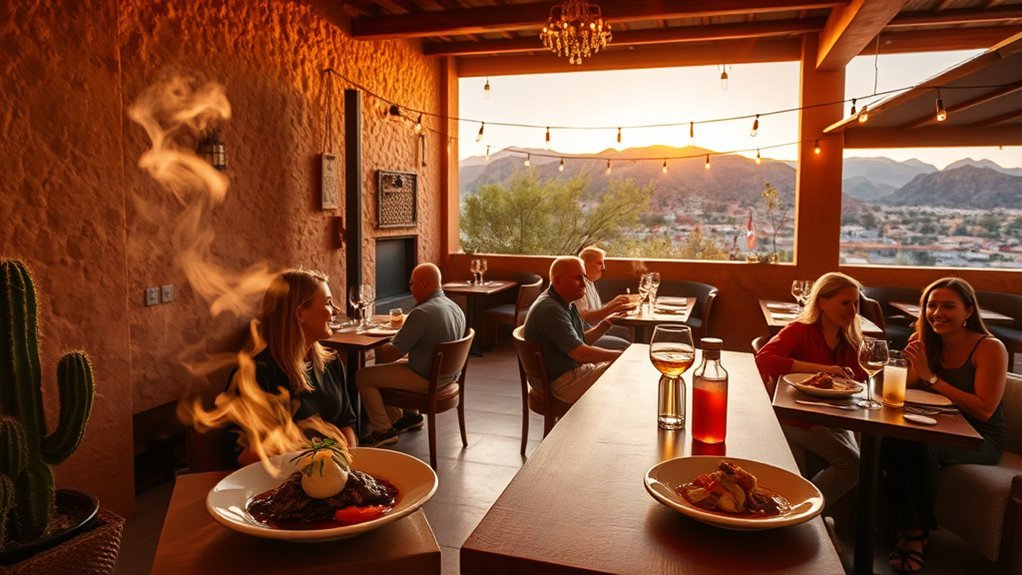
“New restaurant” is one of the fastest-aging labels in a dining guide, so this section needs dates rather than vague predictions. As of August 2026, Los Milics Tucson is one of the clearest recent additions: current Visit Tucson coverage says its Tucson tasting room and restaurant opened in January 2026, bringing Arizona wine together with locally focused food.
De Novo is also being highlighted as part of downtown Tucson’s evolving restaurant mix. Meanwhile, restaurants such as BATA, Tito & Pep, Tumerico, and Boca remain relevant not because they are necessarily new, but because they continue to influence how Tucson’s regional ingredients and culinary identity are presented.
The better way to identify a “rising star” is not to guess which chef will become famous. Watch which restaurants keep changing their menus intelligently, work with regional producers, build a loyal local audience, and still deliver a clear point of view after the opening buzz fades.
How to Choose Where to Eat in Tucson
If your list is getting too long, choose restaurants by the experience you would regret missing rather than by star ratings alone.
- First Sonoran meal: El Güero Canelo or El Charro Café.
- Casual taco crawl: Taqueria Pico de Gallo, Tacos Apson, Boca Tacos, or El Taco Rustico.
- Plant-forward meal: Tumerico.
- Indigenous and regional context: Café Santa Rosa.
- Chef-driven dinner: Tito & Pep or BATA.
- Brunch: Seis Kitchen, 5 Points, or Cup Cafe.
- Arizona wine: Arizona Wine Collective or Los Milics Tucson.
- Cocktails: Tough Luck Club, Owl’s Club, Juniper, Good Oak, or barbata.
That approach gives you several different versions of Tucson rather than ten restaurants that all occupy the same price point and style.
Frequently Asked Questions
Are Tucson restaurants wheelchair accessible?
Restaurants are among the public accommodations covered by ADA Title III, but the exact entrance, parking, restroom, table, and patio setup differs by property. The safest approach is to confirm the specific feature you need with the restaurant before visiting. See the U.S. Department of Justice ADA guidance for public accommodations.
Do these restaurants offer kid-friendly food?
It varies. Casual taquerias, breakfast restaurants, and counter-service spots are usually easier for families who want simple tacos, beans, eggs, rice, tortillas, or smaller portions. Chef-driven restaurants may have fewer obvious children’s choices, so check the current menu before booking.
Which Tucson restaurants require reservations?
Reservation policies vary. Counter-service taco shops generally work differently from chef-driven dinner restaurants, wine-focused venues, and resort dining rooms. For Tito & Pep, BATA, Feast, Los Milics, or a special-occasion restaurant, check the restaurant’s current booking system before making plans.
Are gluten-free or allergy-friendly choices available?
Some restaurants can modify dishes or offer naturally gluten-free, vegan, or allergen-conscious choices, but you should not assume that a dish is safe from cross-contact. If you have a serious food allergy, tell the restaurant clearly and ask about ingredients, shared equipment, and preparation. The FDA’s food-allergy guidance explains why allergen cross-contact matters.
Do most Tucson restaurants have patios?
Outdoor dining is common enough that you will find many patio choices, but there is no reliable citywide percentage that should be quoted. Patio availability can also change by season, weather, renovation, or private events, so confirm it directly if outdoor seating is important to you.
What should a first-time visitor eat in Tucson?
Start with something distinctly Sonoran: a Sonoran hot dog, carne asada, carne seca, or a meal built around fresh flour tortillas and salsa. Then add a taco stop and one restaurant that highlights Indigenous, heritage, or desert-grown ingredients.
What is the best Tucson restaurant for vegetarian visitors?
Tumerico is one of the strongest starting points because plant-forward cooking is central to the restaurant rather than a small side menu. Del Cielo Tamal is useful for mixed groups that need both vegan and non-vegan choices.
Conclusion
Tucson’s food scene is strongest when you stop treating it as a list of generic Southwestern restaurants and start following the traditions that actually shape the city. Eat a Sonoran hot dog, compare tortillas at a taco shop, try Indigenous and regional comfort food, sit down for a mesquite-driven chef’s dinner, and make room for plant-forward cooking or Arizona wine. The result is a much clearer taste of why Tucson has developed such a distinctive culinary identity.
Sources
- Visit Tucson: Tucson UNESCO City of Gastronomy — regional ingredients, current chefs and restaurants, Arizona wine, cocktails, and the January 2026 Los Milics Tucson opening.
- James Beard Foundation: 2018 America’s Classics — El Güero Canelo and Tucson’s Sonoran hot-dog tradition.
- Visit Tucson: Exploring Tucson’s Indigenous Heritage and Communities — Café Santa Rosa and Indigenous/regional food context.
- Visit Tucson: Best Brunch Spots in Tucson — current brunch context for Cup Cafe, 5 Points, and Seis Kitchen.
- U.S. Department of Justice: ADA Title III — accessibility requirements for restaurants and other public accommodations.
- U.S. Food and Drug Administration: Food Allergies — food-allergen and cross-contact guidance.