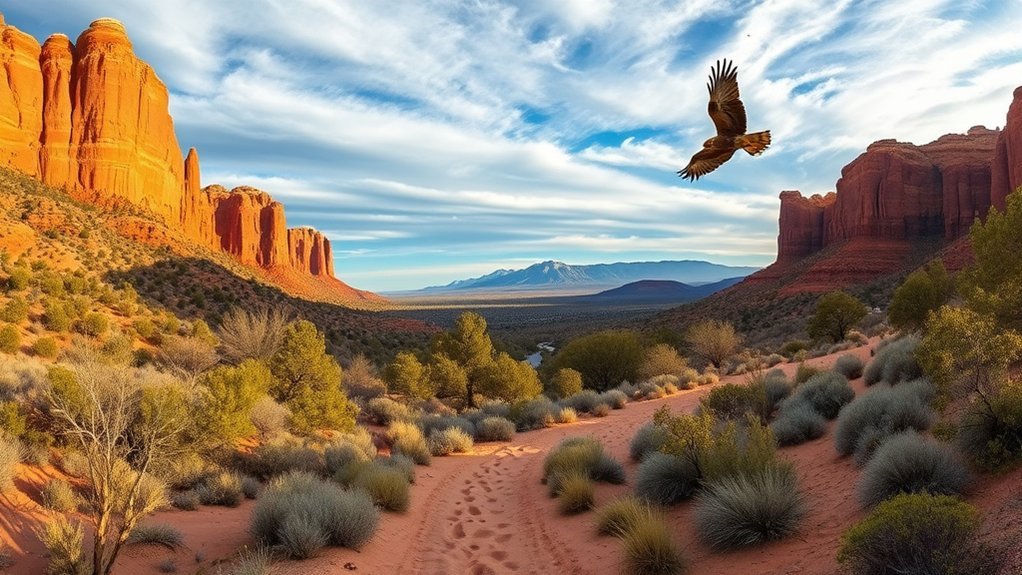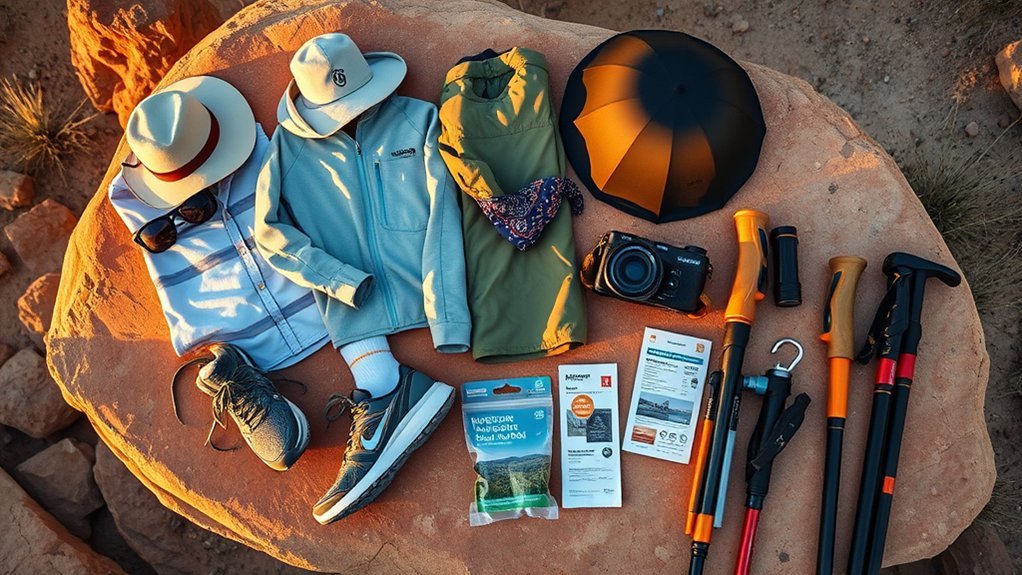
Arizona can shift from intense desert heat to cool mountain air in the same trip, so the best packing strategy is flexible rather than heavy. Start with sun protection, dependable water capacity, breathable layers, sturdy footwear, rain protection, navigation, and a compact first-aid kit. Then adjust your gear for your exact route, elevation, season, and overnight plans.
Quick Answer
For most Arizona trips, pack broad-spectrum sunscreen, a wide-brim hat, sunglasses, breathable clothing, warm layers, sturdy shoes, enough water for your exact route, food and electrolytes, a weather shell, navigation, a headlamp, and basic first aid. Add camping, winter, or monsoon gear according to your itinerary.
Key Takeaways
- Pack for both heat and temperature drops because elevation can change conditions quickly.
- Do not rely on a universal water amount. Verify the route, weather, water availability, distance, and your own needs.
- During prolonged sweating, balance water with food and appropriate electrolytes rather than forcing excessive fluids.
- During monsoon season, rain gear alone is not enough. Lightning, flash floods, strong winds, and washes can create serious hazards.
- Check current trail, fire, pet, drone, water, and weather rules shortly before each outdoor trip.
Warning: Arizona heat, flash floods, lightning, remote terrain, and limited water can become life-threatening. Conditions vary widely across the state. Check the forecast, current land-manager alerts, trail status, water availability, and your physical limits before starting any remote hike.
Arizona Packing Checklist: Start With the Core Essentials
For a typical Arizona trip, build your bag around a small group of items that work across cities, desert trails, canyon overlooks, and higher elevations. You may not need every item every day, but this gives you a dependable starting point.
- Broad-spectrum sunscreen and SPF lip balm
- Wide-brim hat and UV-blocking sunglasses
- Lightweight, breathable sun-protective clothing
- Moisture-wicking base layer
- Fleece, light synthetic jacket, or other insulating layer
- Packable rain and wind shell
- Comfortable walking or hiking shoes appropriate for the route
- Quick-dry hiking socks
- Water containers with enough total capacity for the specific outing
- Food, salty snacks, and electrolyte replacement for prolonged hot-weather activity
- Phone with offline maps plus a paper map and compass for remote routes
- Headlamp with spare batteries or backup power
- Compact first-aid and blister kit
- Power bank and charging cables
- Waterproof pouch or dry bag for electronics and documents
- Personal medications and copies of important prescriptions
Adjust the List by Trip Type
City sightseeing: focus on sun protection, comfortable breathable shoes, a refillable water bottle, a light layer for air-conditioned spaces or cool evenings, and a compact rain shell during storm season.
Desert day hike: add substantial water capacity, food, electrolytes, trail footwear, navigation, a headlamp, first aid, emergency signaling, and a clear turnaround plan.
High-country trip: add warmer insulation, gloves or a beanie when conditions warrant, rain protection, and footwear suitable for mud, snow, or ice if those conditions are forecast.
Overnight camping or backpacking: add shelter, sleep insulation, food storage, cooking equipment where legal, extra water capacity or a treatment method appropriate to the route, repair supplies, and current fire-restriction information.
Sun Protection and Heat Management
Arizona sun and heat can become serious hazards quickly, especially on exposed trails. Pack broad-spectrum sunscreen, a wide-brim hat, UV-blocking sunglasses, and lightweight clothing that covers exposed skin without trapping excessive heat. Sunscreen works best as one part of a larger sun-protection plan that also includes shade and protective clothing.
A compact sun umbrella can provide useful shade on appropriate open routes, but do not use it as shelter when thunderstorms or lightning threaten. Reapply sunscreen according to the product label, especially after heavy sweating, swimming, or toweling off.
For hot-weather outings, plan around the location rather than assuming every Arizona hike has the same risk. Current Grand Canyon National Park heat guidance, for example, recommends avoiding below-rim hiking during excessive heat warnings and emphasizes resting in shade, balancing food and water, and recognizing your limits.
Pro Tip: Decide your turnaround time before starting a hot hike. If the route is taking longer than expected, your water reserve is shrinking faster than planned, or anyone develops nausea, dizziness, unusual exhaustion, confusion, or worsening symptoms, stop and reassess rather than pushing for the destination.
Layering for Elevation and Nighttime Cool
When you move into higher elevations or stay outside after sunset, use layers so you can handle rapid temperature changes without carrying bulky clothing. Start with a lightweight moisture-wicking base, add insulation, then keep a wind- and rain-resistant shell accessible.
Lightweight Base Layers
Arizona days can be hot while nights and high elevations feel surprisingly cool. Lightweight synthetic or wool base layers help move moisture away from your skin and provide useful warmth under another layer. Quick-dry tops and leggings pack small and work well beneath hiking clothing, fleece, or a weather shell.
Choose pieces with comfortable seams that do not rub under backpack straps. Neutral colors are easy to mix with other clothing, but comfort, sun coverage, breathability, and drying speed matter more than color. Test new layers before a long trip so you know where they chafe and how warm they feel after sunset or in wind.
Midweight Insulating Pieces
A midweight fleece bridges the gap between a light base layer and a shell. A zippered design makes temperature control easier during climbs, while pockets can hold a map, gloves, or snacks. A light synthetic or down jacket can add more warmth during evenings, camp stops, or cold high-country conditions.
Choose insulation that compresses well, layers comfortably under your backpack, and matches the weather forecast. Synthetic insulation can be useful where damp conditions are likely, while either synthetic or down insulation can work well when protected from moisture.
Packable Weather Shell
Wind, elevation, and evening temperatures can change conditions quickly. Carry a lightweight shell that packs into a small space but provides meaningful protection from wind and rain. A compact poncho may work for casual use, while a fitted waterproof or water-resistant shell is usually easier to manage in exposed wind and on technical trails.
- Packable size that fits easily in a daypack
- Enough room underneath for your insulating layer
- Breathable, quick-drying material
- Adjustable hood, cuffs, and hem
- Accessible pockets for small essentials
Footwear for Trails, Canyons, and City Streets
Arizona terrain ranges from rough rock and loose scree to sand, paved overlooks, museums, restaurants, and city sidewalks. Match footwear to the activity rather than assuming one style is best everywhere.
For technical dirt trails, a supportive trail-running shoe with good traction and underfoot protection can work well. For long descents, loose rock, or heavier loads, some travelers prefer sturdier hiking shoes or boots. Ankle height alone does not guarantee support, so prioritize fit, traction, stability, and comfort.
For cities and developed attractions, breathable walking shoes or sneakers with dependable rubber soles are usually enough for sidewalks, museums, cafés, and short paved overlooks. Pack quick-dry socks and blister treatment, and break in important hiking footwear before the trip.
If you want to keep luggage light, choose the most versatile shoe that safely covers your hardest planned activity rather than automatically packing three separate pairs.
Hydration Systems and Electrolyte Solutions
A hands-free hydration pack can make drinking convenient on rocky trails, but reservoir size should never be confused with the total amount of water you need. Your required capacity depends on temperature, sun exposure, elevation, distance, difficulty, available shade, confirmed refill points, individual needs, and whether you must keep an emergency reserve.
For prolonged sweating, carry food and consider an electrolyte product that replaces sodium and other electrolytes. Do not force large amounts of plain water simply because a timer says to drink. Excessive fluid intake without adequate sodium can also be dangerous.
Lightweight Hydration Packs
A lightweight hydration pack keeps water accessible and leaves your hands free for trekking poles, scrambling, or navigation. Choose the pack based on the route, then add bottles or additional reservoirs when necessary to reach the total capacity your trip requires.
Inspect the reservoir, hose routing, ventilation, secure pockets, bite valve, and fit before your trip. Remove excess air from the bladder to reduce sloshing and rinse the system after use, especially after adding flavored drink mixes.
- A 1–2 L bladder can be a convenient reservoir for short outings, but it is not a universal Arizona day-hike water allowance
- Bite valve with a shutoff to reduce leaks and dust contamination
- Ventilated back panel for hot-weather comfort
- Zippered storage for ID, snacks, first aid, and keys
- Comfortable straps that do not chafe
- Backup bottle or collapsible container when the route requires more capacity
Electrolyte Mixes On-The-Go
Single-serve electrolyte packets or a compact container of powder can be convenient during long, sweaty outings. Choose a product you tolerate well and follow its mixing directions rather than making the drink excessively concentrated.
Electrolytes are only part of the equation. Food, especially snacks containing sodium and carbohydrates, can help replace what you lose during prolonged exertion. Start the day adequately hydrated, eat during long outings, and adjust drinking to your effort, conditions, and individual needs rather than following one rigid schedule.
Food and Salty Snacks
Heat can reduce appetite even when your body still needs energy. Pack foods you know you will eat, such as sandwiches, crackers, trail mix, nut butter, dried fruit, bars, or other portable snacks. For long hot-weather hikes, include salty food rather than relying only on plain water.
Carry more food than you expect to need on remote outings in case the hike takes longer than planned. Store food securely around wildlife and follow the food-storage rules for your campground or backcountry area.
Rain Gear and Monsoon-Season Prep
Arizona’s dry reputation can be misleading during the North American monsoon. The Southwest’s defined monsoon period runs from June 15 through September 30, although storm timing and intensity vary by region and year. Thunderstorms can bring heavy rain, flash floods, lightning, strong winds, dust, and rapid temperature changes.
Pack a lightweight waterproof shell, quick-drying layers, a pack cover or dry bags for electronics, and footwear with dependable traction. More importantly, use the National Weather Service monsoon-safety guidance to make decisions before and during the outing.
- Lightweight waterproof jacket with secure hood and seams appropriate to your use
- Pack rain cover or dry bags for electronics and critical clothing
- Sturdy quick-drying footwear with good grip
- Headlamp and backup power in a water-resistant pouch
- Emergency poncho that can also provide temporary rain protection at rest
- Waterproof matches only when they fit your camping plan and current fire rules permit their use
Warning: Never assume a wash is safe because rain is not falling directly on you. A thunderstorm miles upstream can send water into a dry channel. During threatening weather, avoid washes and low areas, identify routes to higher ground, and seek a substantial building or hard-topped vehicle when lightning threatens.
Check the forecast before leaving, continue watching the sky, and be willing to cancel or turn around. Rain gear keeps you drier, but it does not make a flash-flood channel or exposed lightning terrain safe.
Navigation, Safety, and Emergency Essentials
Navigation and communication become more important as you move away from developed areas. Bring a phone with offline maps already downloaded, but do not make the phone your only navigation tool on remote routes. Carry a paper map and compass where appropriate and know how to use them.
Pack a headlamp, spare batteries or backup power, a multi-tool suitable for your trip, whistle, and a personal first-aid kit tailored to blisters, minor wounds, heat exposure, and your own medical needs. Write important contact and medical information on waterproof paper or keep a protected copy with your identification.
Before a remote hike, tell a reliable person where you are going, the route you expect to take, where you parked, and when they should expect you back. Do not assume cell coverage will be available. On remote or high-consequence routes, a satellite messenger or personal locator beacon may provide an additional communication option, but it does not replace route planning or self-rescue skills.
Basic Self-Rescue Planning
Know how to signal for help, treat common blisters and minor wounds, stabilize a possible sprain, protect yourself from sun and cold, and recognize when continuing would make a problem worse. Carry enough essential gear to handle an unexpected delay.
Check current trail closures, water status, weather, and emergency notices before leaving. Search-and-rescue help may take time to reach remote terrain, so your plan should not depend on immediate outside assistance.
Overnight and Camping Equipment
Arizona camping conditions vary from hot desert basins to cool forests and high plateaus. Choose sleep and shelter gear for the actual forecast and elevation rather than the state’s desert stereotype. Your overnight kit should balance weight, warmth, ventilation, weather protection, and current land-management rules.
- Ultralight tent, tarp, or other shelter suitable for the site and weather
- Sleeping bag or quilt rated appropriately for expected overnight lows
- Sleeping pad with enough insulation and comfort for the conditions
- Cooking stove and fuel only where current regulations permit their use
- Headlamp, spare batteries, and lightweight repair supplies
- Secure food storage appropriate to local wildlife rules
- Extra water capacity or a suitable treatment method where natural water sources are part of the plan
Fire restrictions can change quickly. Before using a stove, campfire, charcoal, matches, or another ignition source, check the current rules for the exact park, forest, monument, state park, tribal land, or other area where you are camping.
Test your shelter, sleep system, stove, water equipment, and headlamp before leaving home. Multiuse equipment can reduce pack weight, but do not remove essential safety gear simply to achieve a lighter pack.
Leave No Trace and Camp Organization
Use established campsites where required, minimize damage to plants and soils, pack out trash, follow human-waste rules for the specific land manager, and store food so wildlife cannot access it. Keep your campsite organized enough that a sudden storm or nighttime emergency does not leave you searching for critical gear.
Personal Health, First Aid, and Insect Care
Carry a compact health kit for common travel and trail problems. Useful items can include blister pads, sterile gauze, adhesive tape, tweezers, antiseptic supplies, gloves, a small CPR barrier if you are trained to use one, sunscreen, SPF lip balm, and oral rehydration products. Add any personal medications you may need and protect them from heat and moisture according to their storage instructions.
For insects and ticks, use an EPA-registered skin repellent such as one containing DEET or picaridin when appropriate. Permethrin-treated clothing or gear can provide additional protection when used according to its label; permethrin products intended for clothing should not be applied directly to skin.
Snakebite Safety
Do not rely on a suction or venom-extractor snakebite kit. If a venomous snake bites you, move away from the snake, stay as calm and still as practical, remove rings or tight items before swelling develops, and seek emergency medical care promptly. Do not cut the wound, suck out venom, apply ice, or use a tourniquet. The CDC’s venomous-snake first-aid guidance provides current details.
Prevention matters too. Watch where you step and place your hands, give snakes plenty of space, and never attempt to catch or handle one.
Tech, Power, and Travel Organization
A compact, organized tech kit can support navigation, communication, photography, and travel logistics without filling your luggage with unnecessary gadgets. Keep critical electronics protected from dust, heat, and sudden rain.
- Power bank with enough capacity for your phone and other essential devices
- Multi-port wall charger and short labeled cables
- Water-resistant pouch for documents, adapters, and a SIM tool if needed
- Compact power strip for hotel use where appropriate
- Small organizer for batteries, adapters, and memory cards
- Portable battery or USB fan as an optional comfort item for lodging or supported camping
- Small USB humidifier as an optional hotel-room comfort item, not a hiking essential
Download maps, reservations, permits, important addresses, and emergency information before entering areas with unreliable service. Keep the most important information available offline.
Seasonal and Elevation Packing Adjustments
Arizona packing needs change sharply with season and elevation. A single statewide list cannot account for every location, so use the forecast for your actual destination and the highest elevation you plan to reach.
Summer Desert Trips
Prioritize sun coverage, substantial water capacity, food, electrolytes for prolonged sweating, early activity timing, cooling options such as a wet bandana, and an easy way to abandon the outing if conditions become unsafe. Avoid treating midday desert hiking as a routine sightseeing activity.
High-Country and Cool-Season Trips
Bring warmer insulation, a windproof shell, hat, and gloves when forecast conditions justify them. Snow, ice, mud, and freezing temperatures can affect Arizona’s higher elevations, so footwear and traction needs may differ completely from a low-desert trip.
Spring and Fall
These seasons often reward flexible layering. Warm afternoons can be followed by cold mornings or evenings, especially at elevation. Keep both sun protection and an insulating layer available rather than packing only for the daytime high temperature.
Frequently Asked Questions
Can I bring my dog to popular Arizona trails and parks?
Sometimes, but pet rules differ widely by park and trail. Some sites allow leashed dogs on selected trails or developed routes, while others prohibit pets from backcountry or sensitive areas. Check the official pet rules for every park you plan to visit, keep your dog leashed where required, carry water, protect paws from hot surfaces, clean up waste, and never leave a pet in a hot vehicle.
Are there restrictions on drones in canyons or national parks?
Yes. The National Park Service generally prohibits launching, landing, or operating recreational drones from NPS-administered lands, subject to limited exceptions and written approvals. Other public lands can have different rules. Check both the land manager and applicable FAA requirements before flying. See the National Park Service drone guidance before bringing a drone into a national park.
What vaccinations or travel paperwork are recommended for international visitors?
Keep routine vaccinations appropriate for your age and health status up to date and carry any personal medical records you may need. Entry documentation depends on nationality and immigration status. Some travelers use a U.S. visa, while eligible Visa Waiver Program travelers need an approved ESTA and must meet program requirements. Check current U.S. Department of State Visa Waiver Program guidance and applicable CBP requirements before travel. Travel insurance can be useful, but it should not be confused with a universal U.S. entry-document requirement.
Where can I find potable water refill stations in remote areas?
There is no dependable statewide rule that ranger stations, trailheads, campgrounds, or remote routes will have potable water. Check the current official conditions for your exact destination before leaving and note whether seasonal taps or pipelines are operating. Carry enough water to handle your planned route and a reasonable delay or outage. Where natural water sources are part of the route, use an appropriate treatment method and confirm that the source is expected to exist.
Is bear spray or another wildlife deterrent useful for Arizona animals?
Bear spray is not a general-purpose deterrent for every desert animal, but it should not be dismissed in Arizona black-bear country. The Arizona Game and Fish Department advises avoiding bears, securing food and attractants, backing away rather than running, and using EPA-registered bear pepper spray if an aggressive black bear continues to approach. Review current Arizona Game and Fish bear-safety guidance before recreating in bear habitat.
How much water should I pack for an Arizona hike?
There is no single amount that works for every Arizona hike. Distance, heat, direct sun, elevation, pace, body size, route difficulty, confirmed water sources, and emergency reserve all matter. A small reservoir may be enough for a short cool-weather walk but inadequate for a long exposed route. Check official trail guidance and current water status before setting out.
What should I do if a monsoon storm develops while I am hiking?
Move away from washes, low areas, exposed ridges, and other hazardous terrain. Be prepared to reach higher ground if flooding threatens. If you hear thunder, seek a substantial building or hard-topped vehicle when one is accessible. Do not assume you are safe because rain is falling somewhere else; runoff from distant storms can produce flash flooding downstream.
Do I need a jacket in Arizona?
Often, yes. Desert nights can be cooler than daytime temperatures suggest, while mountain towns, plateaus, canyon rims, and winter destinations can become genuinely cold. A light insulating layer plus a packable weather shell is a flexible combination for many trips, but always match the jacket to the actual forecast and elevation.
Conclusion
A dependable Arizona packing list starts with sun protection, breathable layers, sturdy footwear, route-specific water capacity, food, rain protection, navigation, emergency lighting, and first aid. From there, adapt the kit to your elevation, season, trail difficulty, camping plans, and current weather.
Treat every item as part of a system rather than packing by habit. Water is only useful if you carry enough for the route, rain gear cannot make a flash-flood channel safe, and a phone cannot replace planning where service disappears. Check current conditions shortly before departure and change the plan when heat, storms, closures, water outages, or your own physical limits call for it.
Sources
- Grand Canyon National Park: Emergency Services and Heat Safety – supports heat-risk, hiking-time, food, water, and self-rescue guidance.
- National Weather Service: Monsoon Safety – supports flash-flood, lightning, strong-wind, wash, and storm-planning guidance.
- CDC/NIOSH: Venomous Snakes – supports snakebite prevention and first-aid guidance.
- National Park Service: Uncrewed Aircraft in the National Parks – supports national-park drone restrictions.
- U.S. Department of State: Visa Waiver Program – supports international visitor documentation guidance.
- Arizona Game and Fish Department: Living With Bears – supports black-bear encounter and bear-spray guidance.