California onion planting dates vary sharply by region because bulb onions respond to day length as well as temperature. A date that works in the Imperial Valley may be wrong for the North Coast or a high-elevation Sierra garden. Use the regional calendar below, choose a compatible onion type, and then adjust for your local frost pattern and microclimate.
Last updated: July 23, 2026
Editorial review: Checked against current University of California Cooperative Extension and UC IPM gardening guidance.
Quick Answer
Plant bulb onions in California by region: January through March in the North and North Coast, February through March on the South Coast, November through March in interior valleys, and October through November in desert valleys. Match the onion’s day-length type to your location, then adjust for local frost, elevation, and microclimate.
Key Takeaways
- California does not have one statewide onion planting date. Follow the planting window for your region.
- Short-day onions usually suit Southern California and desert valleys, while intermediate-day onions work in many central and coastal locations.
- High-elevation gardeners can transplant seedlings when the soil is workable, often two to three weeks before the expected last frost.
- Seeds and transplants usually produce full-size bulbs more reliably than large onion sets.
- Give bulb onions full sun, loose soil, even moisture, and approximately 4 to 5 inches of space.
- Stop heavy watering as the tops fall, then cure storage onions in a dry, shaded, well-ventilated place.
At a Glance
| Time Required | About 20 to 30 minutes to prepare and plant a short row; approximately 120 days or longer to harvest bulb onions |
| Difficulty | Beginner to moderate; correct regional timing and day-length selection are the hardest parts |
| Tools Needed | Trowel, rake, watering can or drip line, compost, and plant labels |
| Cost | Usually low; the total depends on whether you buy seeds, transplants, soil amendments, or containers |
California Onion Planting Calendar by Region
The following windows come from the UC Statewide IPM Program’s California onion planting calendar. The dates are approximate because coastal exposure, elevation, heat, frost, and local wind patterns can change the best planting time.
| California Region | Bulb Onions | Green Onions | Day-Length Guidance |
|---|---|---|---|
| North and North Coast Generally Monterey County north |
January through March | April through July | Intermediate-day or locally recommended long-day cultivars |
| South Coast Generally San Luis Obispo County south |
February through March | Year-round in suitable mild locations | Short-day onions are usually the safest choice |
| Interior Valleys Sacramento, San Joaquin, and similar valleys |
November through March | August through December | Short-day or intermediate-day onions, depending on location |
| Desert Valleys Imperial and Coachella valleys |
October through November | September through January | Short-day onions |
Note: These are regional starting points, not fixed deadlines. Ask your local UC Master Gardener program about the best cultivars and planting weeks for your ZIP code, especially if you garden near the coast, in a mountain basin, or at the edge of two climate regions.
Why Onion Planting Dates Differ Across California
Onions grow roots and green leaves during cool weather, but bulb formation depends heavily on day length. Each cultivar begins bulbing after daylight reaches its critical threshold. Temperature then affects how quickly the bulb develops.
Planting at the right time is not enough. An onion also needs the right day-length type for its latitude and microclimate.
- Short-day onions: Usually begin bulbing at approximately 12 to 14 hours of daylight. They are commonly used in Southern California, desert valleys, and other mild-winter locations.
- Intermediate-day onions: Generally bulb at approximately 13 to 15 hours of daylight. They are useful in many central, coastal, and inland California gardens.
- Long-day onions: Usually require approximately 14 to 16 hours of daylight. They are more common in northern climates and should be grown in California only where local guidance supports them.
If an onion receives less than its critical day length, it may continue making leaves without forming a useful bulb. A poorly matched short-day onion can also begin bulbing while the plant is still small, producing a small finished onion.
Should You Plant Onions in Fall or Spring?
Fall planting is useful in interior valleys and desert areas where UC’s calendar begins in October or November. It gives plants time to establish during cool weather before spring bulb growth.
Spring is not merely a backup planting season. It is the main UC planting window for bulb onions in the North, North Coast, and South Coast regions. In those areas, planting according to the January-through-March regional schedule is usually more reliable than following a general fall recommendation.
For high-elevation areas such as Tahoe and Truckee, use frost and soil conditions rather than a broad month alone. Current UC Lake Tahoe Basin guidance says onion seedlings may be transplanted approximately two to three weeks before the expected last frost when the soil is workable. Intermediate-day onions may perform better than other types in some Central Sierra locations.
Choosing Onion Varieties for California
Check the seed packet or nursery label for the cultivar’s day-length classification before buying it. Do not rely only on color, sweetness, or the word “storage,” because those descriptions do not tell you when the plant will begin forming a bulb.
UC Master Gardener recommendations vary by county, but examples listed for parts of California include:
- Short-day examples: Texas Grano, Early Grano, Maui Granex, Red Granex, Yellow Bermuda, and White Bermuda.
- Intermediate-day examples: California Early Red, Yellow Globe, Stockton Red, Stockton White, Stockton Yellow, and Early Red Burger.
- Long-day examples for locally suitable areas: White Sweet Spanish, Yellow Sweet Spanish, and Fiesta.
These names are examples rather than universal recommendations. Cultivar availability changes, and the same onion may perform differently in a foggy coastal garden, a hot inland valley, and a high-elevation basin. Confirm local suitability before planting a large crop.
Pro Tip: When trying a new cultivar, plant a short test row and record the planting date, bulb size, bolting, and harvest date. Your own notes can identify the best onion for a California microclimate more reliably than a broad statewide label.
Preparing the Soil for Planting Onions
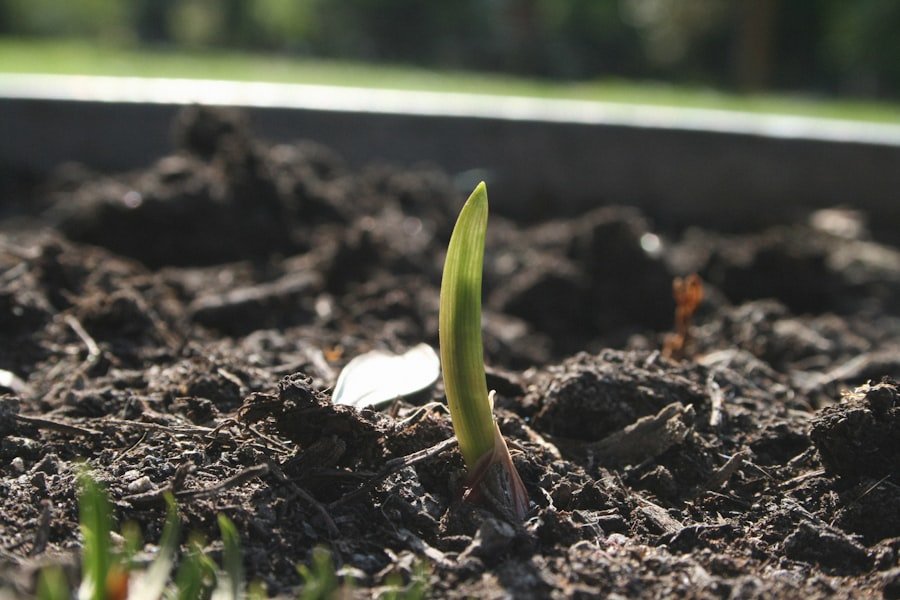
Choose a sunny bed where the onions receive at least 4 to 6 hours of direct light, with more sun preferred for strong bulb growth. Avoid areas shaded by walls, fences, trees, or taller vegetables.
Onions grow best in loose, fertile, well-drained soil. The UC IPM cultural guide recommends a soil pH of approximately 6.0 to 6.5. A soil test is the safest way to decide whether lime, sulfur, phosphorus, potassium, or another major amendment is needed.
Mix finished compost into sandy or heavy soil to improve moisture control, drainage, and aeration. Do not work clay soil while it is saturated because this can create compacted clods. If water remains in the bed long after irrigation, use a raised bed or container with drainage holes.
Rake the planting surface into a fine, firm seedbed. Onion seeds are small and germinate less reliably when they are surrounded by large clods or when a fluffy bed settles deeply after watering.
Should You Grow Onions From Seeds, Sets, or Transplants?
You can grow onions from seed, small bulbs called sets, or young transplants. The best choice depends on your planting window and whether you want green onions or large bulbs.
- Seeds: Offer the widest cultivar selection and are useful when you need a specific short-, intermediate-, or long-day onion. They require the most advance planning.
- Transplants: Are often the easiest option for full-size bulbs because they provide a head start without the higher bolting risk of large sets.
- Sets: Are simple to handle and useful for fast green onions. However, they are second-year bulbs and may send up flower stalks instead of producing large storage bulbs, especially after temperature stress.
UC IPM notes that onions generally produce better full-size bulbs from seeds or transplants than from sets. If you use sets, choose small, firm bulbs and plant them promptly.
Best Time to Start Onion Seeds Indoors
Most home gardeners should start seeds approximately 7 to 10 weeks before their intended transplant date. UC guidance for mild lower elevations describes seedlings becoming ready in roughly 50 to 60 days, while high-elevation guidance allows up to about 70 days.
| Planting Goal | Suggested Indoor Start | Typical Outdoor Window |
|---|---|---|
| Desert-valley fall crop | August through September | October through November |
| Interior-valley crop | Approximately 7 to 10 weeks before the selected planting date | November through March |
| North, North Coast, or South Coast crop | November through January, depending on region | January through March |
| High-elevation crop | Up to about 70 days before transplanting | When soil is workable, often two to three weeks before the last expected frost |
Sow onion seeds approximately 1/4 inch deep in a clean seed-starting mix. Keep the mix evenly moist and place seedlings under strong light as soon as they emerge. Thin crowded seedlings rather than allowing their roots and leaves to become tangled.
Seedlings are ready when they are sturdy, actively growing, and easy to separate without severe root damage. Do not delay until they are badly rootbound.
How to Plant Onion Seeds, Sets, or Transplants
- Prepare the bed: Remove weeds and loosen the top layer of soil without leaving large clods.
- Mark the rows: Leave approximately 12 to 18 inches between rows so you can weed and water without stepping on the plants.
- Plant seeds: Sow seeds about 1/4 inch deep. Keep the surface moist until germination, then thin bulb onions to approximately 4 to 5 inches apart.
- Plant transplants: Set plants 4 to 5 inches apart. Cover the roots and use only enough soil around the base to hold each plant upright. Do not bury the developing bulb deeply.
- Plant sets: Place each set upright with the pointed end facing up. Cover it lightly rather than burying it far below the soil surface.
- Water immediately: Apply water gently to settle soil around the seed or roots without creating a saturated bed.
- Label the row: Record the cultivar, day-length type, and planting date so you can compare results at harvest.
For green onions, plant more closely and harvest the thinnings while they are young. Green onions do not need the same final bulb spacing because they are removed before large bulbs develop.
Transplanting Onion Seedlings Outdoors
Harden seedlings for approximately one week before transplanting. Begin with a protected outdoor location for a few hours, then gradually increase their exposure to direct sun, wind, and cooler nighttime temperatures.
Transplant on a mild day when the soil is moist but not waterlogged. Separate the seedlings gently and keep the roots from drying in the sun. If the tops are very long and difficult to handle, a light trim may make planting easier, but do not remove most of the healthy leaf area.
Water immediately after transplanting. Keep the upper root zone evenly moist while the seedlings establish. A floppy transplant should be supported with firm soil around its base rather than planted several inches deeper.
Warning: Do not place onion transplants or sets in saturated soil. Cold, waterlogged beds slow root growth and raise the risk of bulb and root diseases.
Caring for Onions Throughout the Growing Season
Watering
Onions have shallow roots and need even moisture while leaves and bulbs are growing. Drip irrigation or a soaker hose helps deliver water to the root zone without keeping the leaves wet for long periods.
Check the soil instead of following a fixed watering schedule. Water when the upper root zone begins to dry, but do not leave the bed constantly soggy. Reduce and then stop irrigation as the tops naturally soften and fall near maturity.
Weeding
Keep the bed free of weeds, especially while the onions are small. Pull weeds by hand or cultivate only the surface because deep hoeing can cut shallow onion roots or injure bulbs near the soil line.
Fertilizing
Base major fertilizer applications on a soil test. If additional nitrogen is needed, UC IPM recommends beginning after plants reach approximately 3 to 4 inches tall and keeping fertilizer away from the stems. Water after applying it.
Stop routine nitrogen feeding when bulbs begin swelling. Late nitrogen can keep leaves growing, delay maturity, produce thick necks, and reduce storage quality.
Common Onion Problems in California
| Problem | Likely Cause | What to Do |
|---|---|---|
| Healthy leaves but no bulb | The day-length type does not match the location, or the crop was planted too late | Choose a locally suitable cultivar and follow the regional planting window next season |
| Small bulbs | Crowding, late planting, weak seedlings, water stress, weeds, or early bulbing | Space plants 4 to 5 inches apart and maintain steady early growth |
| Flower stalks or bolting | Large sets, plant age, or a prolonged cold period followed by warmer weather | Harvest and use the onion promptly; bolted bulbs usually do not store well |
| Split bulbs or thick necks | Heavy late watering, excess late nitrogen, or uneven growth | Stop feeding after bulbing begins and reduce water as the tops fall |
| Pale, yellowing, or silvery leaves | Possible thrips, disease, root damage, nutrient stress, or watering problems | Inspect both sides of the leaves and use the UC IPM diagnostic guidance before treating |
Downy Mildew
Downy mildew can produce pale, yellow, or collapsing leaves with grayish-white to purple growth during wet or humid conditions. UC IPM reports that symptoms are commonly seen during winter in California.
The UC IPM downy mildew guidelines recommend reducing leaf wetness, improving airflow, planting in well-drained soil, using clean seed or sets, and removing infected Allium debris. Where the disease has occurred, rotate away from onions, garlic, leeks, shallots, and related Allium crops for three years.
- Avoid overhead irrigation once the foliage becomes dense.
- Water early enough for leaves to dry quickly if sprinklers are unavoidable.
- Remove volunteer onions and diseased crop debris.
- Do not work among the plants while their leaves are wet.
Harvesting Onions in California
Bulb onions are usually ready when the necks soften and most tops yellow, dry, and fall over. UC guidance indicates that onions commonly need approximately 120 days or more, but the total calendar time varies by cultivar and planting season. A fall-planted crop may remain in the ground through late spring or early summer.
Reduce or stop irrigation as the tops fall so the outer bulb scales can begin drying. Choose a dry harvest day. Loosen the soil carefully with a garden fork and lift the bulbs without cutting, dropping, or bruising them.
Use damaged, bolted, soft, or thick-necked onions first. They are less likely to store successfully than firm, undamaged bulbs with tight necks.
Curing Onions Before Storage
Lay harvested onions in a single layer in a dry, shaded, well-ventilated place. Protect them from rain, heavy fog, and intense direct sun. Do not seal curing onions under plastic because trapped moisture encourages decay.
Curing commonly takes approximately two to three weeks. The onions are ready for storage when the outer skins feel papery, the roots are dry, and the necks are tight and fully dry. Cut the tops back to approximately 1 to 2 inches unless you plan to braid them.
Storing Onions for Long-Term Use
Store fully cured onions in a cool, dark, dry place with steady airflow. Mesh bags, slatted crates, shallow trays, or open baskets work better than sealed plastic bags.
Check the onions every couple of weeks. Remove any bulb that becomes soft, wet, moldy, strongly odorous, or heavily sprouted before it affects nearby onions.
Sweet and mild onions generally have a shorter storage life than pungent storage cultivars. Use sweet onions, damaged bulbs, bolted bulbs, and thick-necked onions first. Save the firmest, driest bulbs for longer storage.
Frequently Asked Questions
What is the best time to plant onions in California?
The best time depends on the region. Plant bulb onions January through March in the North and North Coast, February through March on the South Coast, November through March in interior valleys, and October through November in desert valleys.
Can onions be planted in California during spring?
Yes. Spring is the recommended bulb-onion season in several California regions, including January through March in the North and North Coast and February through March on the South Coast. Use the regional calendar rather than treating spring as only a backup season.
What onion varieties grow best in California?
Short-day onions usually suit Southern California and desert valleys. Intermediate-day onions work in many central, coastal, and inland gardens. Long-day onions should be used only where local guidance supports them. Always check the cultivar’s day-length label.
What soil do onions need?
Onions need loose, fertile, well-drained soil. UC IPM recommends a pH of approximately 6.0 to 6.5. Improve difficult soil with finished compost and use a raised bed or draining container where water collects.
How long do onions take to mature in California?
Many bulb onions need approximately 120 days or longer. Crops planted in fall may remain in the ground through winter and into late spring or early summer, so their total calendar time can exceed four months.
How do you know when onions are ready to harvest?
Harvest bulb onions when most necks soften and the green tops yellow, dry, and fall over. Reduce irrigation, lift the bulbs carefully on a dry day, and cure them before long-term storage.
Why are my onion plants not forming bulbs?
The cultivar may have the wrong day-length requirement for your location, or the onions may have been planted too late to grow enough leaves before bulbing began. Crowding, weeds, and water stress can also reduce bulb size.
Are onion sets or transplants better for large bulbs?
Transplants or seeds are generally more reliable for full-size bulbs. Sets are easy to plant and useful for green onions, but larger sets are more likely to bolt after temperature stress.
Can onion seedlings survive frost?
Established onion seedlings tolerate cool weather and light frost, but severe or prolonged cold can damage plants or encourage bolting. In high-elevation gardens, transplant when the soil is workable and follow local last-frost guidance.
Sources
- UC Statewide IPM Program: Cultural Tips for Growing Onions and Garlic — California planting dates, day-length requirements, soil, spacing, watering, and harvest guidance.
- UC Master Gardeners of Santa Clara County: Onion Handout — California day-length groups, seed-starting guidance, cultivar examples, and curing information.
- UC Master Gardeners of the Lake Tahoe Basin: Central Sierra Onion and Leek Growing Instructions — high-elevation timing and frost guidance.
- UC IPM: Downy Mildew in Onion and Garlic — symptoms, leaf-wetness risk, sanitation, airflow, and crop rotation.
- UC ANR: Harvesting and Storing Onions from the Garden — maturity, harvest handling, curing, and storage.