Disclosure: As an Amazon Associate, we earn from qualifying purchases. If you click a link on this page and make a purchase, we may receive a small commission at no extra cost to you.
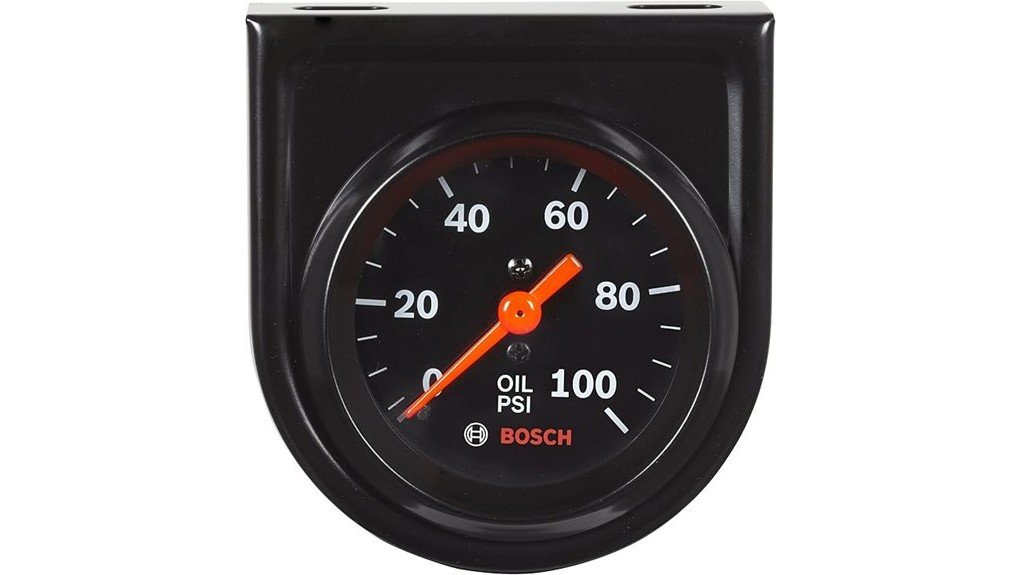
An oil warning light often reacts only after pressure has already dropped to a serious level. The Bosch SP0F000052 Style Line mechanical oil pressure gauge gives you a continuous 0 to 100 PSI reading, so you can watch pressure changes during startup, warm idle, and driving. Its wide 270-degree sweep and simple black dial are useful strengths, but installation requires routing a live oil-pressure tube into the cabin. This review explains its fit, included parts, setup demands, safety concerns, and the buyers who should choose an electrical gauge instead.
Quick Verdict
Rating: 8/10, recommended with caveats
Best For: DIY owners, project-car builders, and drivers who want a responsive analog oil-pressure display.
Bottom Line: The Bosch SP0F000052 combines a readable full-sweep dial with the main hardware needed for a typical mechanical installation. Its tradeoff is the nylon pressure line, which must be routed, protected, and checked carefully for leaks.
| Specification | Detail |
|---|---|
| Brand | Bosch |
| Model | SP0F000052, Style Line FST 8216 |
| Product type | Mechanical oil pressure gauge |
| Pressure range | 0 to 100 PSI |
| Dial sweep | 270 degrees |
| Dial and opening | 2-inch black dial for a 2-1/16-inch opening |
| Bezel and panel | Black bezel with removable black mounting panel |
| Lighting | 12-volt internal backlighting |
| Electrical compatibility | 12-volt negative-ground systems |
| Pressure tubing | 72-inch high-temperature nylon tube |
| Included hardware | Gauge, mounting hardware, tubing, and NPT fittings |
| Important fit note | Your engine port may require an additional adapter or T-fitting |
Before You Buy: Confirm your vehicle’s normal oil-pressure range, sender-port thread, available mounting depth, and firewall route. Bosch’s product page and the Amazon listing show different included fitting sizes, so check the current package contents before assuming the supplied adapters will fit your engine.
What Is the Bosch SP0F000052?
The Bosch SP0F000052 is a Style Line 2-inch mechanical oil pressure gauge. Instead of relying on an electrical sender, it carries engine oil pressure through a small nylon tube to the gauge mechanism. This direct design responds quickly to pressure changes and does not depend on a separate pressure sender.
The black dial covers 0 to 100 PSI across a 270-degree sweep. That wider arc spreads the markings across more of the face than a short-sweep gauge, making changes easier to notice at a glance. The gauge also includes internal lighting for use with a 12-volt negative-ground electrical system.
Who Should Buy It?
Best For
- Owners adding a dedicated oil-pressure display to a project, classic, or modified vehicle.
- DIY installers who can identify the correct oil-pressure port and route tubing safely.
- Drivers who prefer a responsive analog needle and a simple black gauge face.
Skip If
- You do not want pressurized oil tubing routed through the firewall and into the cabin.
- Your vehicle needs metric adapters or a special sender-retention setup you cannot confirm.
- You want a digital display, warning output, data logging, or a plug-and-play vehicle-specific kit.
Feature-by-Feature Review
Readable 0 to 100 PSI Full-Sweep Dial
The gauge uses a 0 to 100 PSI scale and a 270-degree sweep. The large arc gives the pointer more travel, which helps you see changes between cold startup, warm idle, and higher engine speed. Bosch does not publish a measurement-tolerance figure for this model, so the review should not promise laboratory-grade accuracy.
The black background, bright pointer, and simple markings keep the face easy to scan. The range is suitable for many automotive oil systems, but you should compare it with the pressure specifications in your owner’s or service manual before installation.
Mechanical Response
A mechanical gauge reacts directly to pressure in the line. Bosch’s instructions note that an electrical pressure gauge can be easier and more versatile to install, while a mechanical gauge responds faster to pressure changes. That makes the SP0F000052 useful when you want to observe how pressure moves rather than wait for a warning lamp.
The same direct connection creates its main limitation. A loose fitting, damaged ferrule, kinked tube, or poorly protected firewall passage can cause a leak or a false reading. Installation quality matters as much as the gauge itself.
Gauge Fit and Dashboard Design
The 2-inch dial is designed for a 2-1/16-inch opening, a common aftermarket gauge size. Bosch includes a black bezel, a removable black mounting panel, and mounting hardware, giving you options for a panel or a prepared dashboard opening.
Measure the opening and the space behind it before cutting. You also need room for the rear fitting, tubing bend, light socket, and mounting bracket. A face that fits the hole can still be too deep for a shallow dashboard area.
Backlighting and Electrical Requirements
The pressure reading is mechanical, but the internal light still needs a 12-volt connection. Bosch specifies this model for 12-volt negative-ground systems. The light improves nighttime visibility, but the kit may still require suitable wire, terminals, and a safe connection to the vehicle’s dash-light circuit.
Tubing and Fittings
The kit includes 72 inches of high-temperature nylon tubing. That length suits many engine-to-dashboard routes, but it is not universal. Bosch tells installers to confirm that the tube reaches the chosen location before starting and to avoid every kinked or crimped section.
The official Bosch page lists 1/8-inch and 1/4-inch NPT fittings, while the current Amazon description lists 1/2-inch and 1/4-inch NPT fittings. Because the sources conflict, verify the current package and your engine-port thread. Metric applications and vehicles that retain the factory warning-light sender may need extra adapters or a T-fitting.
Installation and Setup
This is a universal-style gauge, not a vehicle-specific kit. Read the Bosch instructions and your vehicle’s service information before removing any factory sender. Disconnect the battery ground cable before electrical work, allow the engine to cool, and place the gauge where you can read it without blocking your view or controls.
- Confirm the range and port: Check that your engine’s normal cold and warm oil pressure falls within 0 to 100 PSI. Identify the factory sender location and thread type.
- Plan the mounting location: Confirm a 2-1/16-inch opening, enough depth, and a safe tubing route from the engine bay to the gauge.
- Protect the factory system: Some vehicles depend on the original sender for a warning lamp or engine control. Use a suitable T-fitting when the sender must remain installed.
- Connect the engine fitting: Install the correct adapter when needed, then fit the nylon tube with its nut and ferrule according to the manual.
- Route the tube safely: Keep it away from exhaust heat, sharp edges, belts, fans, pedals, steering parts, and other moving components. Protect the firewall opening and leave a loop before the tube enters the cabin.
- Mount and light the gauge: Secure the gauge without overtightening the bracket. Connect the internal light only to a suitable 12-volt negative-ground circuit.
- Test for leaks: Restore the oil level if it was lowered, start the engine, and inspect every fitting while confirming that the pointer responds normally.
Pro Tip: Lay out the full tubing route before cutting or tightening anything. Leave a gentle service loop near the firewall, protect the tube with a grommet, and never use a kinked section.
Compatibility and Safety
The SP0F000052 is not compatible with every vehicle without extra parts. Bosch warns owners of computer-controlled vehicles and vehicles with electric cooling fans to consult the manufacturer or service manual before adding aftermarket gauges. Some systems rely on the original sending unit, so replacing it without a proper adapter can affect a warning light or another vehicle function.
A mechanical oil-pressure gauge places pressurized engine oil in the tube behind the dashboard. Follow the supplied instructions closely, secure the line, and inspect the connections after installation. A leak that goes unnoticed can lower the engine’s oil level and cause serious damage. Stop the engine if the reading behaves unexpectedly or you see oil around a fitting.
Do not treat a normal-looking gauge as proof that the engine is healthy. Compare readings with the vehicle manufacturer’s specifications, and use a qualified technician when the port, adapter, electrical connection, or pressure reading is unclear.
How It Performs in Real Use
Cold Starts and Warm Idle
The wide sweep makes it easier to compare the higher pressure often seen after a cold start with the lower reading at fully warmed idle. Your useful reference is the specification for your engine, not a universal PSI number. Watch for repeatable behavior rather than judging one reading in isolation.
Daily Street Driving
During normal driving, the analog pointer lets you notice pressure movement as engine speed and temperature change. The simple face is quick to read, and the internal light helps after dark. Because the gauge has no programmable alarm, you still need to look at it.
Project and Classic Vehicles
The universal 2-1/16-inch format and removable panel suit custom dashboards and add-on gauge pods. The black bezel also pairs well with simple analog interiors. Older vehicles may be easier to adapt, but you still need the correct engine-port fitting and a protected firewall route.
Long-Term Ownership
The gauge itself has a simple mechanical design, but the tubing and connections need periodic inspection. Check for rubbing, heat exposure, hardening, loose fittings, or oil residue. Recheck the route after other engine-bay work, since a moved hose or wire can contact the pressure tube.
Pros and Cons
Pros
- 0 to 100 PSI range with a readable 270-degree sweep.
- Direct mechanical response without a separate pressure sender.
- Standard 2-inch dial for a common 2-1/16-inch opening.
- Includes 72-inch nylon tubing, mounting hardware, and NPT fittings.
- Internal 12-volt backlighting supports nighttime reading.
Cons
- Routes a pressurized oil line into the cabin, which requires careful leak prevention.
- Universal fit may require metric adapters, a T-fitting, extra wire, or other hardware.
- No digital warning, data logging, or programmable alarm.
Is It Worth the Price?
The Bosch SP0F000052 offers strong value for the price when you want a recognizable brand, a full-sweep analog face, and a mostly complete mechanical-gauge kit. Its included tubing, mounting panel, fittings, backlight, and hardware reduce the number of basic pieces you need to source separately.
The best value goes to a buyer who already understands universal gauge installation and can confirm compatibility before ordering. It is not the best fit when paying more for an electrical or digital gauge would avoid an oil line in the cabin or provide warning features you need.
How It Compares to Alternatives
The Dorman 7-153 is another universal oil-pressure gauge kit worth comparing when your priority is a basic replacement-style package. AutoMeter also offers several 2-1/16-inch, 0 to 100 PSI mechanical gauges, including full-sweep black-face models, for buyers who want more face styles or a different gauge line.
Within Bosch’s own Style Line, an electrical oil-pressure gauge is the better direction when you would rather run wiring to a sender than route oil tubing into the cabin. The SP0F000052 makes the most sense when you specifically prefer direct mechanical response, the black Style Line appearance, and a 270-degree sweep.
Frequently Asked Questions
Is the Bosch SP0F000052 a mechanical or electrical gauge?
It is a mechanical oil-pressure gauge. Engine pressure travels through the supplied nylon tube to move the gauge mechanism, while the internal backlight uses the vehicle’s 12-volt electrical system.
Will it fit every car or truck?
No. The gauge uses a common 2-1/16-inch opening, but engine-port threads, sender layouts, dashboard depth, and tubing routes differ by vehicle. Confirm those details before buying.
Can I keep the factory oil-warning light?
In many applications, a suitable T-fitting lets you retain the factory warning-light sender while adding the mechanical gauge line. The exact adapter depends on your engine and sender thread, and metric fittings may need to be sourced separately.
What fittings come with the gauge?
The sources are inconsistent. Bosch’s official page lists 1/8-inch and 1/4-inch NPT fittings, while the Amazon description lists 1/2-inch and 1/4-inch NPT fittings. Check the package contents and your vehicle’s port before installation.
Does the backlight require a 12-volt system?
Yes. Bosch specifies the gauge for a 12-volt negative-ground system. The pressure reading is mechanical, but the lamp still needs a correct electrical connection.
Is nylon tubing safe for an oil-pressure gauge?
Bosch supplies high-temperature nylon tubing for this gauge, but safe use depends on correct routing and secure fittings. Keep the line away from heat, movement, and sharp edges, and inspect it for leaks after installation.
What is the warranty period?
The Amazon listing refers to a manufacturer warranty but does not state a verified duration. Check the current seller information, packaging, or Bosch support terms before purchase.
Can I use it for racing?
Bosch markets gauges for automotive and racing-related use, but the listing does not state a racing certification for this model. Confirm the rules, pressure range, line material, and installation requirements for your specific competition.
The Bottom Line
The Bosch SP0F000052 is a good choice for a hands-on owner who wants a readable 0 to 100 PSI mechanical gauge with quick analog response and a common 2-1/16-inch fit. Skip it when you want a no-fluid cabin installation, vehicle-specific adapters, or electronic warning features. Its strongest point is the clear 270-degree sweep, while its main limitation is the care required to route and maintain the pressure tube safely.
Ready to Buy?
Check the latest price, fitting details, and package contents before you decide.