Disclosure: As an Amazon Associate, we earn from qualifying purchases. If you click a link on this page and make a purchase, we may receive a small commission at no extra cost to you.
Leaks around deck hardware, portholes, and exterior fittings often start with the wrong sealant or poor surface preparation. 3M Marine Adhesive Sealant 4000 UV is designed for marine joints that need a waterproof, flexible seal without the near-permanent bond of a heavy structural adhesive. Its main strengths are UV resistance, color stability, and medium-strength adhesion, while its main limitation is that it is not the best choice for every structural or permanently bonded joint. This review uses 3M product data and application guidance to help you decide where it fits and how to use it correctly.
Quick Verdict
Rating: 8.6/10, Recommended with caveats
Best For: UV-exposed marine fittings, portlights, deck hardware, screw holes, and removable bedding applications
Bottom Line: The 3M 4000 UV gives you a flexible, waterproof, color-stable seal for many above-waterline and below-waterline marine jobs. Its medium-strength bond supports later disassembly, but you should choose a different adhesive when the joint needs a permanent structural bond.
| Specification | Detail |
|---|---|
| Brand | 3M |
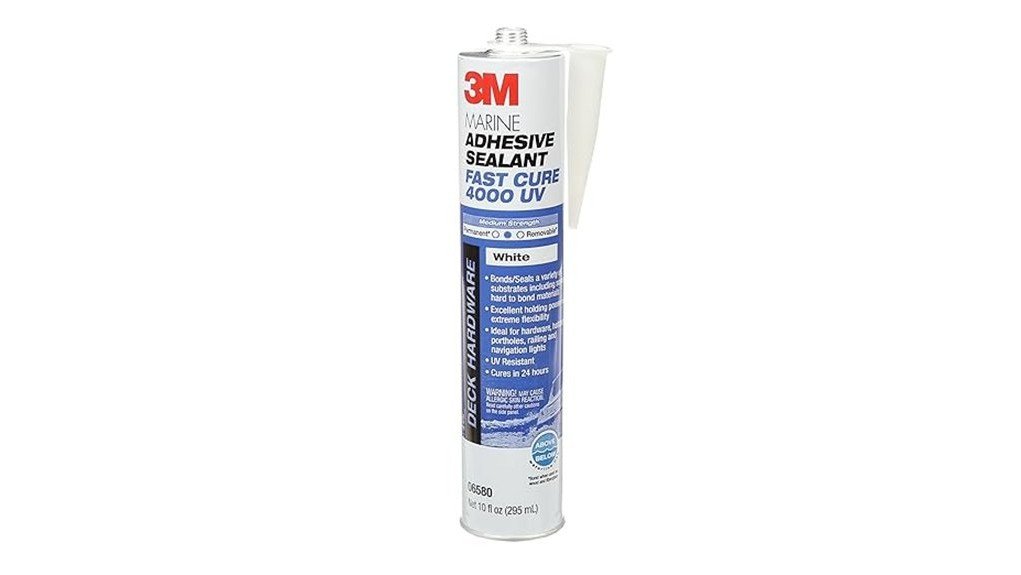
| Product | Marine Adhesive/Sealant Fast Cure 4000 UV |
| Linked variant | PN06580, white cartridge |
| Cartridge size | 10 fl oz (295 mL) |
| Product type | One-part, moisture-curing marine adhesive sealant |
| Adhesive strength | Medium strength, designed to allow later rework or disassembly |
| Finish | Firm, flexible, rubbery, waterproof seal after curing |
| Colors in product line | White and black, depending on package and seller |
| Tack-free time | About 22 minutes at 72°F (22°C) and 50% relative humidity |
| Full cure reference | About 24 hours for a 1/8-inch (3.2 mm) cure depth at 72°F (22°C) and 50% relative humidity |
| Application temperature | 40°F to 100°F (4°C to 38°C) |
| Common surfaces | Fiberglass, gelcoat, aluminum, wood, glass, painted surfaces, and compatible plastics |
| Typical uses | Portlights, porthole frames, hatches, rails, deck fittings, thru-hulls, moldings, metal hardware, and screw holes |
| Storage guidance | Keep in original packaging at 60°F to 80°F (16°C to 27°C), 40% to 60% relative humidity, away from direct sunlight |
| Stated shelf life | 15 months from manufacture when stored under recommended conditions |
What Is the 3M Marine Adhesive Sealant 4000 UV?
The 3M 4000 UV is a one-part marine bedding and sealing compound. It cures into a flexible, waterproof seal that can absorb movement from vibration, shock, swelling, and shrinking. The product is aimed at boat and watercraft fittings that need reliable sealing and some adhesive holding power without becoming as difficult to remove as a permanent structural adhesive.
The linked PN06580 variant is the white 10 fl oz (295 mL) cartridge. The wider 4000 UV line also includes black and other package formats. Its UV resistance and color stability make it especially useful for visible seams and hardware exposed to sunlight.
Key Takeaways
- It forms a flexible, waterproof seal for suitable marine applications above and below the waterline.
- Its medium-strength bond can allow disassembly when you need future repairs or hardware replacement.
- The white PN06580 cartridge contains 10 fl oz (295 mL), and the product line is also available in black.
- At 72°F and 50% relative humidity, 3M lists about 22 minutes to tack-free and about 24 hours for a 1/8-inch cure depth.
- Surface preparation matters. The joint must be clean, dry, and free of contaminants before application.
Who Should Buy It?
Best For
- Boat owners sealing UV-exposed deck hardware, rails, portlights, and porthole frames
- Installations that need a waterproof bond but may require later disassembly
- Marine and RV exterior joints that experience vibration and normal movement
Skip If
- You need a permanent, high-strength structural bond for a critical joint
- You plan to apply sealant directly to a wet, dirty, oily, or submerged surface
- You cannot confirm compatibility with the surface, coating, plastic, or paint system
Before You Buy: “Below the waterline” describes a suitable service location after correct application and curing. It does not mean you should apply the sealant underwater. 3M directs you to use it on a clean, dry, contaminant-free surface, and its current U.S. product page labels the product for industrial or occupational use. Confirm the current package directions and safety data before buying or applying it.
Essential Features of 3M Marine Adhesive Sealant 4000 UV
UV Resistance and Color Stability
Sun exposure can discolor or weaken the appearance of an exterior seal. The 4000 UV is built for better UV resistance than a basic general-purpose sealant, and 3M describes it as color stable above and below the waterline. That makes the white version a practical choice for visible seams around portlights, deck fittings, moldings, and exterior hardware.
UV resistance does not remove the need for inspection. You should still check exposed beads for gaps, cuts, loss of adhesion, or damage during routine boat maintenance.
Flexible, Medium-Strength Bond
The cured material stays flexible enough to handle movement from shock, vibration, swelling, and shrinking. This matters around hardware where a rigid material could crack or separate as the deck, hull, trim, or fastener moves.
The medium-strength bond is also a buying advantage when you may need to remove a porthole frame, rail, fitting, or piece of hardware later. It offers more holding power than a simple cosmetic caulk while remaining more serviceable than a permanent high-strength marine adhesive.
Fast Cure Reference
At 72°F (22°C) and 50% relative humidity, 3M lists about 22 minutes to tack-free and about 24 hours for a 1/8-inch (3.2 mm) cure depth. Those numbers are useful planning references, not guarantees for every bead. Temperature, humidity, bead thickness, joint depth, and airflow can change the cure rate.
Do not rush to launch, load, tighten, paint, or expose the joint to service conditions based only on the clock. Follow the current label and allow enough cure time for your exact application.
Paintability and Finish
3M lists the sealant as paintable and advises testing for suitability. The product page also notes compatibility with water-based paints immediately after application. Because coatings vary, test the paint and sealant combination on a small hidden area before finishing a visible seam.
Top Uses for 3M Marine Adhesive Sealant 4000 UV
- Portlights and porthole frames: Useful where UV exposure, appearance, flexibility, and future service all matter.
- Deck fittings and metal hardware: Helps bed fasteners and fittings while absorbing normal vibration and movement.
- Thru-hulls and below-waterline hardware: Suitable for supported bedding and sealing applications when the surface is correctly prepared and the product is fully cured before service.
- Rails, rub rails, and moldings: Provides a flexible seal around parts that may move or flex during use.
- Screw holes and stanchion supports: Helps block water paths around fasteners when the installation follows the hardware maker’s instructions.
- Selected RV exterior joints: The UV-resistant, flexible formula can suit compatible exterior fittings, but it should not replace an RV maker’s specified roof or lap sealant.
How It Performs in Real Use
For Deck Hardware
The combination of bedding ability, flexibility, and medium adhesion fits many cleats, rails, fittings, and metal hardware installations. You can tool the squeeze-out into a clean bead, then remove uncured excess before it skins. The main risk is poor preparation around old sealant, wax, oil, salt, or oxidation, which can weaken adhesion.
For Portlights and Visible Seams
This is one of the product’s strongest use cases. The UV-resistant, color-stable formula is designed for exposed cosmetic seals, while the flexible bond can cope with normal movement. The white cartridge suits light gelcoat and trim, but black is also available in the broader product line for darker surfaces.
For Below-Waterline Bedding
3M lists the product for suitable applications above and below the waterline, including thru-hulls and deck hardware. You still need a sound mechanical installation, clean and dry bonding surfaces, correct fastener torque, and enough cure time before immersion. The sealant should support the joint, not hide damaged hardware, rotten core, cracked laminate, or a poor thru-hull installation.
For RV and Trailer Exterior Sealing
The product’s UV resistance and flexibility can make it useful on compatible exterior trim and fittings. However, many RV roofs and membranes require a specific self-leveling or non-sag sealant. Check the RV and roofing manufacturer’s instructions before using 4000 UV on EPDM, TPO, PVC, painted aluminum, or another roof system.
Effective Application Tips for 3M Marine Adhesive Sealant 4000 UV
- Confirm the joint and materials. Check that a medium-strength, removable marine sealant is suitable. Test uncertain plastics, paints, coatings, and composites.
- Remove failed sealant. Scrape away loose or cured material without damaging the substrate. Old residue can prevent a uniform bond.
- Clean and dry the surface. 3M states that surfaces should be clean, dry, and free of contaminants. Follow the current technical sheet for approved cleaners and solvent precautions.
- Abrade aged surfaces when appropriate. The technical data sheet recommends fine abrasion on surfaces that are not new to improve bond strength. Protect gelcoat, paint, plastic, and thin finishes from excessive sanding.
- Apply a continuous bead. Use a compatible cartridge applicator and keep steady pressure so the bead fills the joint without gaps.
- Position and fasten the part. Bed the component while the sealant is workable. Tighten only as directed for the hardware so you do not squeeze out nearly all of the sealant.
- Tool and clean promptly. Shape the bead and remove uncured excess before it becomes tack-free. Cured material usually requires mechanical removal.
- Allow a full cure. Plan around temperature, humidity, bead depth, and exposure. A thick joint may take longer than the 24-hour reference.
Pro Tip: Mask both sides of a visible seam before applying the sealant. Tool the bead, remove the tape while the material is still workable, and follow the product instructions for cleanup. This can leave a cleaner edge with less solvent use.
Compatibility and Safety
The technical data lists fiberglass, gelcoat, aluminum, wood, and other common marine surfaces, but no sealant is automatically compatible with every plastic, coating, laminate, or painted finish. Test uncertain materials and follow the boat, hardware, window, and substrate manufacturer’s instructions.
Read the current product label and safety data sheet before use. Work with suitable ventilation and personal protective equipment. Keep cleaners and solvents away from ignition sources, and follow their manufacturers’ handling directions. Do not use the sealant to cover a damaged structural joint, active leak path, corroded fitting, or unsafe thru-hull installation.
Store unopened product in its original packaging between 60°F and 80°F (16°C to 27°C), at 40% to 60% relative humidity, and away from direct sunlight. Under those stated conditions, 3M lists a 15-month shelf life from the date of manufacture for cartridges and sausage packs. Check the date code and condition of the cartridge before starting a critical job.
Pros and Cons
Pros
- Strong UV resistance for exposed marine seams and hardware
- Color-stable finish available in white and black variants
- Flexible waterproof seal that tolerates vibration and joint movement
- Medium-strength adhesion supports future repair and disassembly
- Fast tack-free and cure references compared with slower permanent marine adhesives
Cons
- Not the right choice for every permanent or structural bond
- Needs careful cleaning, drying, and material compatibility checks
- Actual cure time can exceed 24 hours in thick joints or poor conditions
Is It Worth the Price?
The 3M 4000 UV sits in a premium-leaning part of the sealant market, but the value comes from its specific mix of UV stability, flexibility, waterproof sealing, and serviceable medium-strength adhesion. It makes the most sense when a visible or sun-exposed marine joint needs more than basic caulk and you still want a realistic chance of removing the hardware later.
It offers less value for hidden joints that need a permanent structural adhesive or for repairs where the surface cannot be cleaned and dried. You also need to account for preparation supplies, masking, cleanup materials, and enough cure time before returning the joint to service.
How It Compares to Alternatives
3M Marine Adhesive Sealant 4200 Fast Cure is another medium-strength option for marine hardware and joints, but 4000 UV places more emphasis on UV resistance and color stability for visible applications. 3M Marine Adhesive Sealant 5200 and Fast Cure 5200 are better suited to permanent, high-strength bonds, but they can make later disassembly much harder.
A marine-grade silicone may be easier to remove and can work for selected cosmetic seals, but it does not provide the same balance of adhesive holding power and bedding performance. The 4000 UV makes the most sense when you need a neat, flexible, UV-exposed marine seal with medium adhesion.
Frequently Asked Questions
Can 3M 4000 UV be used below the waterline?
Yes. 3M lists it for suitable bedding and sealing applications above and below the waterline, including thru-hulls and deck hardware. Apply it to clean, dry surfaces and allow it to cure before immersion or service.
Can you apply 3M 4000 UV underwater?
No. The technical instructions call for a clean, dry, contaminant-free surface. “Below the waterline” refers to the cured installation location, not underwater application to a wet surface.
How long does 3M 4000 UV take to cure?
3M lists about 22 minutes to tack-free and about 24 hours for a 1/8-inch cure depth at 72°F and 50% relative humidity. Cooler conditions, lower humidity, and thicker beads can extend the cure time.
Is 3M 4000 UV permanent?
It is a durable adhesive sealant, but 3M classifies it as medium strength and suitable where rework or repair may be necessary. It is more removable than a permanent high-strength product such as 3M 5200, although cured removal can still require cutting, scraping, wire, or sanding.
What materials can it bond or seal?
3M lists common marine surfaces such as fiberglass, gelcoat, aluminum, wood, glass, painted surfaces, and many plastics. Because formulations and coatings vary, test uncertain materials and follow the substrate manufacturer’s instructions.
Can 3M 4000 UV be painted?
3M lists the sealant as paintable and recommends testing for suitability. The product page notes compatibility with water-based paint immediately after application, but a small test area is wise because paint systems vary.
What colors and sizes are available?
The 4000 UV line is available in white and black, with package formats that include cartridges, small tubes, and flex packs. The linked PN06580 listing is the white 10 fl oz (295 mL) cartridge, so check the selected variation before ordering.
What is the shelf life?
The current 3M technical data sheet lists 15 months from the date of manufacture for cartridges and sausage packs when stored under recommended conditions. Keep the unopened package away from direct sunlight at 60°F to 80°F and check the date code before a critical repair.
The Bottom Line
The 3M Marine Adhesive Sealant 4000 UV is a strong choice for boat owners who need a flexible, waterproof, UV-resistant seal around compatible fittings, hardware, portlights, and below-waterline bedding points. Buy it when future serviceability matters, but skip it for permanent structural bonding, underwater application, or surfaces you cannot prepare and verify. Its main strength is the balance of UV stability and removable medium adhesion, while its main limitation is the preparation and cure discipline needed for a dependable result.
Ready to Buy?
Check the latest price, selected color, cartridge size, and product details before you decide.