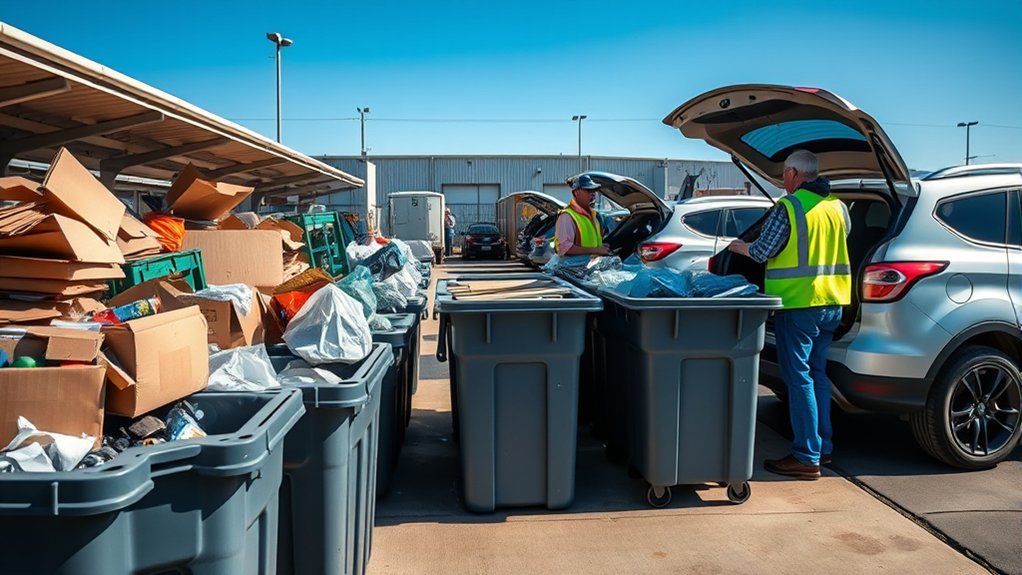
Oklahoma City has three official recycling drop-off centers for residents who are not eligible for curbside recycling. Before visiting, sort your materials carefully, empty and clean containers, flatten cardboard, and keep everything loose. Electronics, batteries, hazardous chemicals, regular trash, and bulky waste require different disposal options.
Quick Answer
Oklahoma City operates recycling drop-off sites at 5519 NW 4th St., 11028 NE 63rd St., and 9124 SE 74th St. Bring only clean, dry materials accepted by the City, and place them loose in the dumpsters. The NW 4th Street location does not accept glass.
Key Takeaways
- Oklahoma City lists three recycling drop-off centers for residents who are not eligible for curbside recycling.
- The centers accept clean paper, flattened cardboard, eligible plastic containers, cans, foil, cartons, and glass bottles or jars at two locations.
- Glass is not accepted at the 5519 NW 4th St. location.
- Do not bag recyclables. Plastic bags and film can wrap around sorting equipment and are not accepted in the City’s recycling program.
- Batteries, electronics, household chemicals, scrap metal, regular trash, and bulky waste need separate disposal methods.
What to Expect From Oklahoma City Recycling Centers
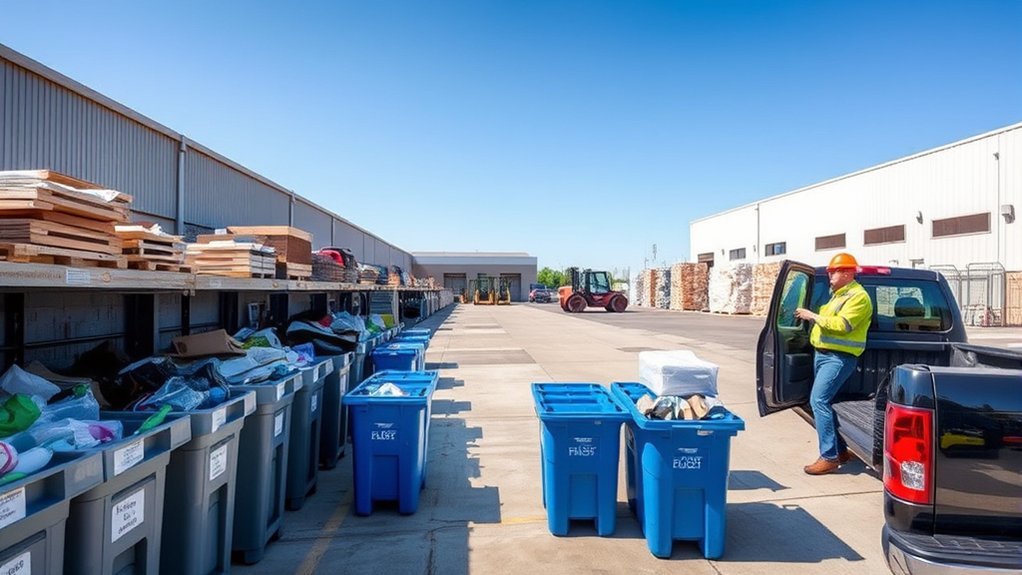
Oklahoma City’s drop-off centers provide an option for residents who are not eligible for the City’s curbside recycling program. They are intended for materials accepted in the municipal recycling stream. Do not use the dumpsters for household trash, furniture, construction debris, yard waste, or other bulky items.
The process is simple. Bring clean, dry recyclables, place them in the correct dumpster, and leave them loose rather than tying them inside a bag. Check the City’s official recycling drop-off page before your trip because access details and material rules can change.
Oklahoma City Recycling Center Locations
- 5519 NW 4th St., Oklahoma City, OK: Accepts eligible paper, cardboard, plastic containers, cartons, cans, and foil. This location does not accept glass.
- 11028 NE 63rd St., Oklahoma City, OK: Accepts the City’s approved recycling categories, including empty and clean glass bottles and jars.
- 9124 SE 74th St., Oklahoma City, OK: Accepts the City’s approved recycling categories, including empty and clean glass bottles and jars.
Note: The City’s drop-off page is the best source for current access information. Check it before driving to a site, especially around holidays, maintenance work, or severe weather.
Materials Accepted for Recycling
The City focuses on six broad material groups. An item is not automatically accepted just because it has a recycling symbol or a number printed on it. Shape, material type, and the City’s processing capabilities determine whether it belongs in the recycling stream.
Common Recyclable Materials
- Paper: Household and office paper, newspapers, magazines, mail, phone books, paperback books, and similar clean paper.
- Cardboard: Shipping boxes, cereal boxes, and other clean cardboard or paperboard. Flatten boxes and remove plastic liners.
- Plastic containers: Empty, clean, and dry household bottles, tubs, and containers, such as drink bottles, detergent bottles, shampoo bottles, and yogurt tubs.
- Aluminum and steel cans: Beverage cans, food cans, clean aluminum foil, and eligible aluminum bakeware.
- Paper cartons: Empty milk, juice, and similar paperboard cartons.
- Glass bottles and jars: Empty and clean container glass at the NE 63rd and SE 74th locations. Do not bring glass to the NW 4th Street site.
For a more detailed item list, review the City’s Recycling Dos and Don’ts.
Items Not Accepted Here
Keep the following materials out of Oklahoma City recycling dumpsters:
- Plastic grocery bags, bread bags, bubble wrap, flexible film, and bagged recyclables
- Styrofoam and other foam packaging
- Food, liquids, wet paper, paper towels, napkins, tissues, and heavily soiled paper
- Garden hoses, extension cords, ropes, string lights, and other items that can wrap around sorting equipment
- Clothing, blankets, carpet, and other textiles
- Batteries, electronics, light bulbs, and devices containing lithium-ion batteries
- Scrap metal, automotive parts, propane tanks, pots, pans, and metal hangers
- Window glass, mirrors, ceramics, drinking glasses, cookware glass, and automotive glass
- Yard waste, soil, rocks, construction debris, diapers, and regular household trash
- Paint, fuel, pesticides, automotive fluids, and other hazardous household products
Warning: Never place loose batteries, lithium-ion batteries, electronics, fuel, paint, pesticides, or unknown chemicals in a recycling dumpster. Batteries and hazardous products require approved collection services and may create serious safety risks when handled with ordinary recycling.
Preparing Your Items for Recycling
A few minutes of preparation can prevent contamination and make the materials easier to sort. You do not need to make every container spotless, but it should be empty and free of significant food or liquid.
- Empty containers: Pour out liquids and remove leftover food.
- Give containers a quick rinse: Rinse bottles, tubs, jars, cans, foil, and cartons when residue remains.
- Let wet items drain: Materials should be reasonably dry before you place them with paper and cardboard.
- Flatten cardboard: Break down boxes and remove packing material, plastic liners, and foam.
- Separate special items: Set aside batteries, electronics, chemicals, scrap metal, and plastic film for an appropriate specialty location.
- Keep recyclables loose: Transport them in a reusable container if needed, then empty them loose into the recycling dumpster.
Proper Item Cleaning Techniques
- Rinse plastic bottles and tubs until no significant food or liquid remains.
- Remove food scraps from cans, foil trays, and glass jars.
- Empty and drain milk and juice cartons.
- Remove greasy or food-covered sections of cardboard.
- Keep clean paper away from wet containers during transport.
Pizza boxes need special attention. Remove cheese and food scraps. If the bottom is heavily saturated with grease, discard that section and recycle only the clean portion.
Packaging Guidelines for Recyclables
Do not place recyclables inside plastic garbage bags. Bagged materials may be treated as contamination, and flexible plastic can become tangled in sorting machinery. Bring the items in a box, tote, or reusable bin, then empty them loose at the center.
Pro Tip: When you are unsure about an item, search Oklahoma City’s What Goes Where database instead of guessing. The tool covers hundreds of common household items and explains whether they belong in recycling, trash, bulky waste, or hazardous-waste collection.
Household Hazardous Waste Disposal
Paint, pesticides, gasoline, automotive fluids, pool chemicals, rechargeable batteries, and similar products do not belong in ordinary recycling dumpsters. Oklahoma City residents can use the Household Hazardous Waste Collection Center at:
1621 S Portland Ave.
Oklahoma City, OK 73108
Phone: (405) 682-7038
The City lists the following regular hours:
- Tuesday through Friday: 9:30 a.m. to 6 p.m.
- Saturday: 8:30 a.m. to 11:30 a.m.
- Sunday and Monday: Closed
The service is free to Oklahoma City residents. Bring a City water bill as proof of residency. Residents of some surrounding municipalities may also use the facility, but their municipality may charge a fee.
Accepted household materials include many types of batteries, automotive fluids, gasoline, paint-related products, pesticides, herbicides, aerosols, cleaners, and compact fluorescent light bulbs. Check the official Household Hazardous Waste Collection Center page before visiting because temporary closures and material restrictions can occur.
E-Waste Recycling Options
Computers, televisions, monitors, phones, printers, cables, and other electronics should not be placed in the City’s standard recycling dumpsters. Electronics may contain batteries, sensitive data, or components that require specialized handling.
Oklahoma City’s Reuse and Repurpose directory lists retailers, charities, and local recyclers that may accept specific devices. Participation and fees can change, so call the location before bringing an item.
MARRS, located at 12400 Road Runner Ln. in Oklahoma City, advertises residential drop-off, certified electronics recycling, secure data destruction, and business pickup. Its free business pickup generally requires at least 10 qualifying e-waste items. Review the provider’s current Oklahoma City service requirements before scheduling.
Prepare Electronics Before Recycling
- Back up photos, documents, contacts, and other files you want to keep.
- Sign out of cloud accounts, device-tracking services, and subscription accounts.
- Erase personal information and perform the manufacturer’s factory-reset process.
- Remove SIM cards, memory cards, and removable storage devices.
- Remove detachable batteries when the recycler instructs you to do so.
- Ask how hard drives and other data-storage media will be erased or destroyed.
- Request a certificate of data destruction when your business or legal obligations require documentation.
The U.S. Environmental Protection Agency recommends deleting personal information and checking whether batteries must be recycled separately before donating or recycling electronics.
Scrap Metal and Copper Recycling
Copper wire, tubing, brass, appliances, automotive parts, and other scrap metal do not belong in Oklahoma City’s household recycling dumpsters. Take these materials to a scrap-metal recycler that accepts the specific item.
Copper does not have one fixed local price. The amount a recycler pays can change based on the daily market, copper grade, insulation, corrosion, attached fittings, cleanliness, weight, and the recycler’s purchasing policy. Bare bright wire usually receives a different quote from insulated wire, plumbing tube, or mixed metal.
Oklahoma City’s Reuse and Repurpose directory lists several local businesses that handle copper and other metals. Contact more than one recycler for a same-day quote, ask how the metal will be graded, and confirm whether identification or minimum quantities are required.
How the Community Engages With Recycling Initiatives
Oklahoma City shares recycling instructions through its website, social channels, public education campaigns, and the What Goes Where search tool. The City introduced the online tool in November 2025 to help residents find disposal instructions for more than 500 household items.
You can support local recycling by checking the rules before throwing something away, sharing updated City guidance with neighbors, keeping contaminants out of recycling dumpsters, and reporting unclear or missing items through the What Goes Where tool.
Community participation works best when residents focus on material quality rather than putting every item with a recycling symbol into a bin. A smaller amount of clean, accepted material is more useful than a large load containing bags, food, batteries, cords, or other contaminants.
What Happens to Recyclables After Collection?
After collection, Oklahoma City’s recyclable materials go to a materials recovery facility. Workers and sorting equipment separate paper, cardboard, plastics, glass, cans, and cartons. The sorted materials are then baled and transported to manufacturers that can use them in new products.
Incorrect items must be removed from the sorting line and may be sent to a landfill. Plastic bags, cords, hoses, clothing, batteries, food, and liquids can reduce the value of otherwise recyclable material and create problems for workers and equipment.
Oklahoma City reports that nearly 30% of the material collected through its residential curbside recycling program returns to the landfill because it is not recyclable or is not accepted in the City’s program.
Frequently Asked Questions
Does Oklahoma City have recycling centers?
Yes. Oklahoma City lists three drop-off recycling centers at 5519 NW 4th St., 11028 NE 63rd St., and 9124 SE 74th St. They are intended for residents who are not eligible for the City’s curbside recycling service.
What materials can I take to an OKC recycling drop-off center?
You can bring approved clean and dry paper, flattened cardboard, household plastic bottles and tubs, aluminum and steel cans, clean foil, milk and juice cartons, and eligible glass bottles and jars. The NW 4th Street location does not accept glass.
Can I recycle glass at every Oklahoma City drop-off center?
No. The 5519 NW 4th St. location does not accept glass. The NE 63rd and SE 74th locations accept empty and clean glass bottles and jars, but not windows, mirrors, ceramics, drinking glasses, or heat-resistant cookware.
Can I put recyclables in plastic bags?
No. Place recyclables loose in the dumpsters. Plastic bags, flexible film, bubble wrap, and bagged recyclables are not accepted in Oklahoma City’s municipal recycling program. Some grocery and large retail stores have separate collection bins for eligible plastic film.
Do I need proof of residency to use a recycling center?
The City’s standard recycling drop-off page does not list a proof-of-residency procedure. The Household Hazardous Waste Collection Center is different and asks Oklahoma City residents to bring a City water bill as proof of residency.
What are three common household items that cannot go in OKC recycling?
Three common examples are plastic bags, Styrofoam, and batteries. Other frequent contaminants include cords, hoses, clothing, food-covered paper, scrap metal, and electronics.
How much is copper per pound near Oklahoma City?
There is no single reliable citywide price. Copper quotes change with market conditions and depend on whether the material is bare wire, insulated wire, tubing, or mixed scrap. Call local metal recyclers on the day you plan to sell it and compare their grading rules and prices.
Can I recycle computers and phones at the regular drop-off centers?
No. Use an electronics recycler, retailer take-back program, or donation program that accepts your device. Erase personal data, remove SIM and memory cards, and ask whether batteries need separate handling.
What city has the best recycling program?
There is no universally accepted “best” city because programs use different materials, collection systems, budgets, participation rates, and waste-diversion measurements. For Oklahoma City residents, following OKC’s current accepted-item rules is more useful than copying another city’s program.
Conclusion
Oklahoma City’s recycling drop-off centers make it easier to keep accepted paper, cardboard, containers, cans, cartons, and glass out of the trash. The most important steps are to use the correct location, keep materials empty and clean, flatten cardboard, and leave recyclables loose.
Do not place batteries, electronics, chemicals, scrap metal, plastic bags, or bulky waste in the recycling dumpsters. Use the City’s hazardous-waste facility, Reuse and Repurpose directory, or What Goes Where database to find the proper destination. Correct sorting protects workers, reduces contamination, and gives accepted materials a better chance of being recycled.
Sources
- City of Oklahoma City: Recycling Drop-Off Centers — official locations, accepted materials, loose-item rule, and NW 4th Street glass restriction.
- City of Oklahoma City: Recycling Dos and Don’ts — accepted material details, prohibited contaminants, and preparation guidance.
- City of Oklahoma City: What Goes Where — searchable disposal guidance for recycling, trash, bulky waste, and hazardous materials.
- City of Oklahoma City: Household Hazardous Waste Collection Center — address, hours, residency requirements, and accepted hazardous products.
- City of Oklahoma City: Reuse and Repurpose — specialty options for electronics, batteries, copper, scrap metal, plastic bags, and other materials.
- U.S. Environmental Protection Agency: Electronics Donation and Recycling — personal-data removal, battery separation, and responsible electronics-disposal guidance.