If you’re looking for ghost towns near Broken Arrow, Oklahoma, the most important thing to know is that several places commonly described online as ghost towns are actually living communities. The best-documented abandoned destinations are farther northeast in the historic Tar Creek mining district, especially Picher and Cardin. These places offer remarkable Oklahoma history, but they also require more caution than an ordinary sightseeing stop because mining contamination and physical hazards remain part of the landscape.
Quick Answer
The clearest ghost towns to consider on a day trip from Broken Arrow are Picher and Cardin in northeastern Oklahoma’s former lead-and-zinc mining district. Nearby historic communities such as Red Bird and Krebs are worth visiting for their history, but they are still inhabited and should not be described as ghost towns.
Key Takeaways
- Picher is one of Oklahoma’s best-known modern ghost towns and lies within the Tar Creek Superfund Site.
- Cardin, another former mining community nearby, was officially closed after a federal relocation program and is abandoned.
- Douthat is another former mining community associated with the abandoned Tar Creek landscape.
- Red Bird, Krebs, Grove, Davenport, Weleetka, Catoosa, Red Oak, Chelsea, and Porter are not true ghost towns; they remain living communities.
- Do not enter abandoned buildings, climb mine-waste piles, cross barriers, or assume vacant-looking land is public property.
Discovering the Allure of Ghost Towns Near Broken Arrow
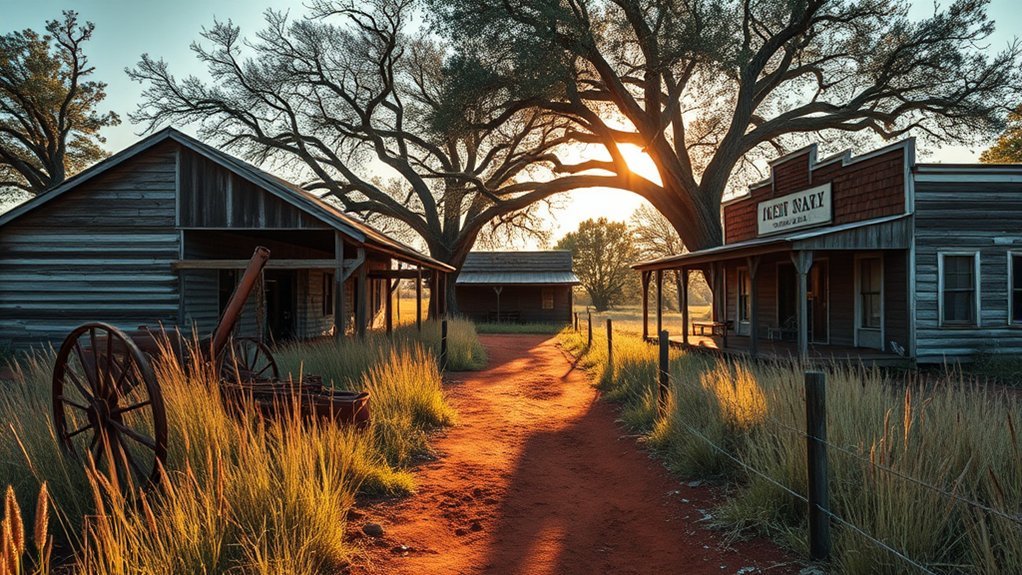
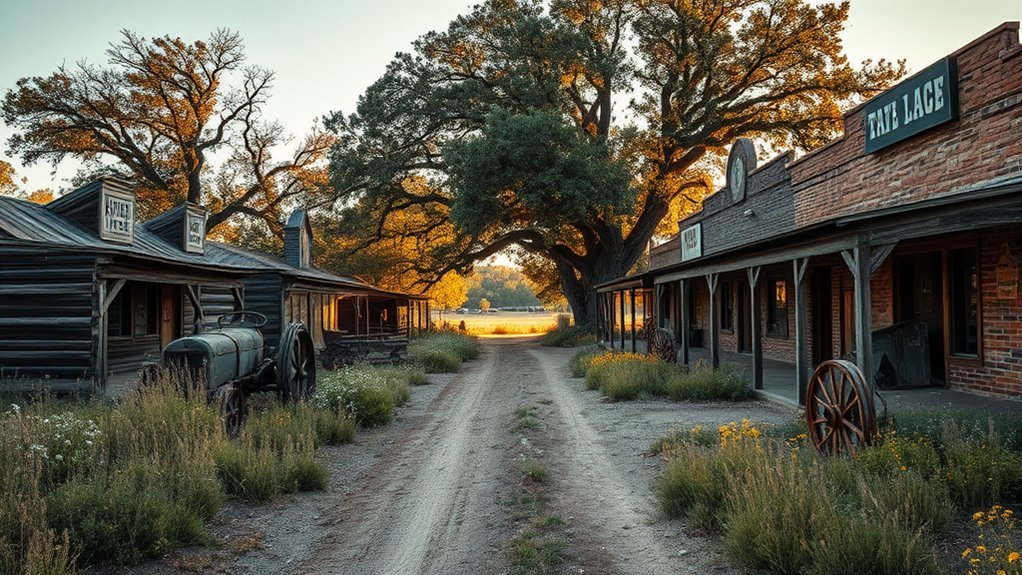
Broken Arrow itself is surrounded mostly by active towns and suburbs, so finding a genuine abandoned community requires a longer drive. The strongest historical concentration lies in northeastern Oklahoma’s former Tri-State lead-and-zinc mining district.
The most notable destination is Picher. According to the Oklahoma Historical Society, Picher developed after a major lead-and-zinc discovery, incorporated in March 1918, and reached a population peak of 14,252 in 1926. Mining later declined, severe environmental problems emerged, and the community ultimately disappeared.
Picher should not be approached like an abandoned amusement attraction. It forms part of the Tar Creek Superfund Site, where environmental remediation continues.
Warning: Never enter abandoned buildings, mine openings, fenced areas, work zones, or private property around Picher or other Tar Creek communities. Do not climb chat piles or collect soil, rocks, or debris as souvenirs. Obey all signs, barriers, and instructions from landowners or authorities.
Must-Visit Historical Ghost Towns Near Broken Arrow
There are fewer genuine ghost towns near Broken Arrow than the original list suggested. A useful itinerary begins by separating abandoned communities from historic towns that still have residents.
Notable Ghost Towns and Historic Communities
| Place | Current Classification | Why It Matters |
|---|---|---|
| Picher | Abandoned former mining community | Major lead-and-zinc center whose decline became closely tied to the Tar Creek environmental disaster. |
| Cardin | Abandoned former mining town | Formerly called Tar River; officially closed after residents were relocated from the Superfund area. |
| Douthat | Abandoned former mining community | Part of the broader Tar Creek mining landscape that EPA describes as all but abandoned by 2010. |
| Red Bird | Living historic town | One of Oklahoma’s surviving historic All-Black towns; valuable for history, but not a ghost town. |
| Krebs | Living historic town | Historic coal-mining community noted for its immigrant, particularly Italian, heritage. |
| Grove | Living city | A Grand Lake community with thousands of residents, not an abandoned resort ghost town. |
| Davenport | Living town | Historic buildings may create an old-town atmosphere, but residents still live there. |
| Weleetka | Living town | Contains historic properties but is not deserted. |
| Catoosa | Living city | A populated northeastern Oklahoma community rather than a ghost town. |
| Red Oak | Living town | A small southeastern Oklahoma community with residents, not an abandoned Route 66 settlement. |
| Chelsea | Living Route 66 town | Historic Route 66 character makes it an interesting road-trip stop, but it is not deserted. |
| Porter | Living town | A historic Wagoner County community rather than an abandoned townsite. |
Note: A town can have vacant storefronts, old houses, a tiny population, or a faded business district without being a ghost town. For trip planning, it is more accurate to reserve that label for places that are effectively abandoned.
Route 66 Exploration
Historic Route 66 can still add value to a ghost-town trip, but it should be treated as a separate layer of Oklahoma history rather than a continuous chain of abandoned settlements. Many Route 66 communities remain very much alive.
Picher itself was located on U.S. Highway 69, eight miles north of Miami, according to the Oklahoma Historical Society. That means a Route 66 drive can complement the journey through northeastern Oklahoma, but visiting the former Picher area requires leaving the historic highway corridor and continuing north.
Pro Tip: Build the drive around documented history rather than trying to collect as many “abandoned” stops as possible. Historic Route 66 communities, Picher-area mining history, and a museum stop can make a fuller day without entering unsafe ruins.
Historical Significance of Picher
Picher grew rapidly after lead and zinc ore was discovered in the area in 1913. The community incorporated in March 1918, had 9,726 residents in 1920, and reached a documented peak population of 14,252 in 1926.
The Picher Field became an important part of the Tri-State Lead and Zinc District. Mining created jobs and wealth, but it also left enormous quantities of mine and mill waste, underground workings, shafts, contaminated water, and unstable ground.
Mining eventually ended, and environmental conditions became central to Picher’s decline. EPA placed Tar Creek on the National Priorities List in 1983. A federal relocation program later helped residents leave affected communities. A destructive 2008 tornado accelerated Picher’s final decline, and municipal operations ended in 2009.
Picher’s importance is not simply that it became empty. Its story connects industrial growth, mining history, environmental damage, community displacement, and one of America’s largest continuing Superfund cleanups.
Picher, Oklahoma: A Unique Look at a Forgotten Mining Town
Picher’s remaining landscape is very different from the lively mining city that existed at its peak. Many homes and businesses were removed after relocation, so visitors should not expect a complete abandoned downtown frozen in time.
Instead, the experience is largely about understanding what happened to the community and observing the altered mining landscape from lawful, safe locations.
Historically important features of the Picher story include:
- The former townsite: Vacant areas mark neighborhoods and commercial blocks that once supported thousands of residents.
- Mining remains: The surrounding district contains the physical legacy of decades of lead-and-zinc extraction.
- Chat and mine waste: Huge volumes of discarded mining material helped create the environmental problem that EPA and its partners continue to address.
- Relocation and demolition: The disappearance of much of the built community is part of the historical story itself.
Do not use surviving ruins as invitations to enter. An abandoned building can still be privately owned, structurally unstable, contaminated, or located inside an active remediation area.
Other Notable Ghost Towns Near Broken Arrow
For a more historically accurate ghost-town trip, pair Picher with other abandoned communities from the same mining district rather than labeling populated Oklahoma towns as deserted.
Cardin
Cardin developed in 1913 under the name Tar River and became another busy lead-and-zinc mining community. Its population reached 2,640 in 1920 but declined sharply as mining changed.
The Oklahoma Historical Society’s history of Cardin states that the community was officially closed in 2009 and that federal relocation efforts removed its remaining residents. It is one of the clearest genuine ghost-town examples in the Picher area.
Douthat
Douthat was another mining community affected by the collapse of the area’s extractive economy and the Tar Creek environmental crisis. EPA’s history of the Superfund site identifies Picher, Cardin, Douthat, and Treece, Kansas, as communities that had all but been abandoned by 2010.
As with Picher and Cardin, the value of the area is historical rather than recreational ruin exploration. Stay on lawful routes and away from mine workings, contaminated waste, private land, and remediation activity.
Red Bird
Red Bird is historically significant but should not be called a ghost town. The Oklahoma Historical Society identifies it as one of Oklahoma’s surviving historic All-Black towns. Its population declined dramatically over time, but the community still existed at the 2020 census.
Krebs
Krebs also belongs in a historical road-trip discussion rather than a list of abandoned towns. It began as a coal-mining settlement and became strongly associated with immigrant communities, including a substantial Italian population. The Oklahoma Historical Society recorded 2,067 residents in the 2020 census.
Scenic Drives to Discover Oklahoma’s Ghost Towns
The best driving experience from Broken Arrow combines several different kinds of Oklahoma history instead of expecting an abandoned settlement every few miles.
- Northeastern Oklahoma mining history: Head toward the Miami-Picher area for the strongest concentration of documented abandoned mining communities.
- Historic highway scenery: Incorporate portions of the Route 66 corridor where convenient, remembering that most of its communities are active towns.
- Local-history stops: Museums, historical markers, surviving downtowns, and public heritage sites provide context that abandoned structures cannot.
Allow enough daylight for the return drive and avoid making unfamiliar rural or former mining roads the final stop after dark.
How to Explore Ghost Towns Safely?
A safe ghost-town visit begins with recognizing that “abandoned” does not mean public, structurally sound, or environmentally safe.
- Stay on public roads and clearly authorized public areas.
- Never enter buildings without the owner’s explicit permission.
- Obey fences, warning signs, road closures, and cleanup-zone restrictions.
- Do not enter mine shafts, depressions, sinkholes, or excavated areas.
- Do not climb or play on chat piles or mine waste.
- Do not collect soil, tailings, building debris, or other material as souvenirs.
- Visit during daylight. Broken pavement, debris, holes, and uneven ground are easier to see.
- Carry water, a charged phone, basic first-aid supplies, and an offline map.
- Tell someone your general route if you are traveling through isolated areas.
EPA’s Tar Creek information describes a mining landscape with extensive historical contamination and abandoned underground workings. Treat the site as an environmental-remediation area first and a historical destination second.
Ghost Town Legends and Folklore From Oklahoma
Ghost towns naturally attract paranormal stories, but folklore should be separated from documented history. Claims about “phantom miners,” spectral oil barons, voices, footsteps, or unexplained cold spots may circulate informally, but they should not be presented as established historical facts unless a credible local-history source documents the tradition.
Picher does not need invented supernatural stories to be compelling. Its verified history already includes an extraordinary mining boom, underground workings, environmental contamination, relocation, demolition, a devastating tornado, and the disappearance of a community that once had more than 14,000 residents.
If you enjoy paranormal folklore, treat it as storytelling rather than evidence and never use a ghost story as a reason to enter restricted property at night.
Enhancing Your Ghost Town Visits With Outdoor Activities
A long historical drive is more enjoyable when you balance roadside exploration with safe, maintained public spaces. Rather than hiking around contaminated former mine sites, plan walking, picnicking, or photography at established parks and public recreation areas before or after the ghost-town portion of the trip.
You can also add a local-history stop in Broken Arrow. Museums and documented historical sites provide valuable context for how northeastern Oklahoma communities developed, changed, and sometimes disappeared.
For photography, a longer lens can help capture distant ruins and landscapes without crossing property boundaries. Wide landscape photographs can also tell the story of Picher more effectively than entering a deteriorating structure.
Day Trip Itinerary for Ghost Towns
For a full-day trip from Broken Arrow, focus on the northeastern Oklahoma mining district rather than trying to connect unrelated towns across the state. The goal should be historical understanding and lawful observation, not entering abandoned structures.
Must-See Ghost Towns
- Picher: Make the former mining community the main historical destination. Observe the landscape only from lawful, accessible areas and respect all restrictions.
- Cardin: Continue the Tar Creek story with this abandoned former mining town between Commerce and Picher.
- Douthat: Understand it as another component of the broader abandoned mining landscape rather than expecting a preserved commercial ghost town.
If you want additional stops, choose active historic towns, Route 66 landmarks, museums, or maintained parks rather than searching for unverified ruins.
Scenic Driving Routes
Approach the Picher area through northeastern Oklahoma and the Miami region. Picher itself was located on U.S. Highway 69 rather than directly on Route 66, so historic Route 66 works best as an optional companion to the trip instead of being described as the road connecting every ghost town.
Road conditions, construction, and access around remediation projects can change. Follow current navigation, road signs, closures, and posted access rules rather than relying on an old ghost-town map.
Historical Exploration Tips
- Read the history first: Knowing why Picher and Cardin disappeared makes an otherwise empty landscape much more meaningful.
- Photograph from lawful locations: You do not need to cross a fence or enter a building to document a ghost town.
- Look for evidence of change: Empty street grids, altered landscapes, mine waste, reclaimed land, and surviving infrastructure can be more historically revealing than ruins.
- End with local context: Back in Broken Arrow, a visit to a local museum or historic district can connect the road trip to the region’s broader settlement history.
Frequently Asked Questions
Is Broken Arrow safer than Tulsa?
A blanket yes-or-no comparison is not very useful because crime levels vary by year, neighborhood, offense category, and reporting agency. For trip planning, use current official law-enforcement data rather than an undated citywide claim. Normal travel precautions are appropriate in either city.
Are you allowed to go to Picher, Oklahoma?
Picher is a former town within the Tar Creek Superfund area, not a conventional tourist attraction. Never assume vacant land or a deserted building is open to visitors. Stay on lawful public routes, obey posted restrictions and barriers, avoid active remediation areas, and do not enter structures, mine areas, or private property.
What is the most famous ghost town in this part of Oklahoma?
Picher is one of the best-known modern Oklahoma ghost towns because its story combines a major mining boom, environmental contamination, relocation, demolition, and the continuing Tar Creek cleanup. Cardin is another well-documented abandoned mining community nearby.
What is a nice area to visit in Broken Arrow?
For visitors, the Rose District is Broken Arrow’s downtown shopping, dining, entertainment, and community-event area. It makes a convenient local stop before or after a historical road trip, although it should be described as a downtown district rather than simply as a residential neighborhood.
Are Red Bird and Krebs ghost towns?
No. Both are historic Oklahoma communities with important stories, but both remained populated in the 2020 census. Red Bird is especially significant as one of Oklahoma’s surviving historic All-Black towns, while Krebs is known for its mining and immigrant heritage.
Is Route 66 the best way to see Picher?
Route 66 can be an enjoyable part of a northeastern Oklahoma history trip, but Picher itself was located on U.S. Highway 69 north of Miami. Treat Route 66 as an additional historic-road experience rather than assuming Picher sits directly on the Mother Road.
Conclusion
Exploring ghost towns near Broken Arrow is most rewarding when the trip is grounded in verified history. Picher and Cardin provide the clearest examples of abandoned communities in northeastern Oklahoma, while the broader Tar Creek district shows how mining prosperity, environmental damage, and relocation reshaped an entire landscape.
Other places such as Red Bird and Krebs add valuable Oklahoma history, but they remain living communities and deserve to be described accurately. Wherever you go, observe abandoned sites from lawful locations, respect property boundaries, follow environmental warnings, and leave structures and mine waste untouched.
Sources
- U.S. Environmental Protection Agency: Tar Creek Superfund Site — current cleanup, environmental history, mining contamination, and abandonment of mining communities.
- Oklahoma Historical Society: Picher — incorporation, population, mining history, decline, and relocation history.
- Oklahoma Historical Society: Cardin — mining-town history, closure, relocation, and abandonment.
- Oklahoma Historical Society: Red Bird — All-Black town history and continuing community status.
- Oklahoma Historical Society: Krebs — coal-mining, immigrant heritage, and modern population history.
- City of Broken Arrow: Rose District — official visitor information for Broken Arrow’s downtown district.