Balat is one of Istanbul’s most photographed neighborhoods, with colorful houses, steep lanes, antique-shop fronts, cafés, and historic buildings overlooking the Golden Horn. It is also a living residential area with deep Jewish, Greek Orthodox, Armenian, and Ottoman-era connections. The best photos come from combining its famous colorful streets with nearby Fener’s landmarks while respecting the people who live and worship here.
Quick Answer
The best Instagram spots in Balat include Kiremit Caddesi, Merdivenli Yokuş, Vodina Caddesi, the colorful side streets around them, and the Golden Horn waterfront. Nearby Fener adds major photo stops such as the Bulgarian St. Stephen Church, Fener Greek High School, and the Ecumenical Patriarchate.
Key Takeaways
- Kiremit Caddesi and Merdivenli Yokuş are among the strongest choices for the classic colorful-house photos associated with Balat.
- Vodina Caddesi combines colorful shopfronts, cafés, antiques, and everyday neighborhood scenes.
- Many landmarks commonly included in a “Balat” visit are actually in neighboring Fener, so it makes sense to photograph both areas during one walk.
- Forno Balat remains a verifiable food stop, while older café recommendations should be checked before you plan your route.
- Ahrida Synagogue requires advance arrangements for visitors, and photography rules at religious sites should always be respected.
- Weekday mornings usually give you the easiest conditions for photographing narrow residential streets with fewer people.
Top Instagram-Worthy Streets and Alleys in Balat
If colorful houses are your priority, start with Kiremit Caddesi. Rows of painted facades climb the hillside, producing the layered pink, yellow, blue, and green compositions that many travelers associate with Balat. Instead of standing directly against a doorway, step back and use the slope to create depth through the frame.
Merdivenli Yokuş is another strong photo location. Its steep stepped layout, colorful buildings, and narrow perspective work especially well for vertical photographs. Try shooting from both the lower and upper ends because the view changes dramatically with your position.
Vodina Caddesi has a different character. Rather than being only a row of colorful houses, it mixes cafés, older shopfronts, antique displays, signs, local businesses, and street life. It is particularly useful for candid travel photography and detail shots.
Kireçhane Street and the small lanes branching from the better-known streets are also worth exploring. The original article described Kireçhane primarily as a street-art and mural destination, but that description is not well supported. Its value is better understood as part of Balat’s dense network of older streets, neighborhood businesses, and architectural details.
Note: Do not confuse Balat with Soğukçeşme Sokağı. Soğukçeşme Sokağı is in Istanbul’s Sultanahmet area, not Balat. For a Balat photo route, prioritize Kiremit Caddesi, Merdivenli Yokuş, Vodina Caddesi, and the surrounding lanes.
The Most Photogenic Cafes and Restaurants in Balat
Balat’s café culture is part of its visual appeal, but restaurant recommendations date more quickly than historic landmarks. A colorful storefront that appears in an older travel guide may have changed name, moved, or closed, so check current operating information before making a café the centerpiece of your route.
Forno Balat is one venue that can still be verified through its official website. It operates from Kireçhane Street and serves stone-oven dishes including lahmacun, pide, pizza, and breakfast. The combination of food, warm interior details, and the surrounding historic side street gives you opportunities for both meal photography and neighborhood shots. You can check current information on the official Forno Balat website.
Older Balat guides have also mentioned Neva Coffee, sometimes referred to as Café Neva, on Vodina Caddesi. However, its current operation cannot be verified as confidently as Forno’s, so do not build your itinerary around it without checking an up-to-date map or business listing on the day of your visit. The same caution applies to older online recommendations for venues such as Fidelio Cafe when a current Balat location cannot be confirmed.
Pro Tip: Treat cafés as part of the walk rather than fixed photo attractions. Balat changes quickly, so a beautiful doorway, terrace, antique shop, or new café you discover on the day may produce a better photo than a venue saved from an old social-media post.
Capturing the Colorful Balat Houses on Camera
The colorful houses are Balat’s signature photography subject. Many have projecting bay windows, shutters, balconies, decorative trim, plants, laundry, and other details that make each facade look different from the next.
For the classic street view, stand farther down a slope and use the street as a leading line. A normal phone lens or moderate wide-angle lens usually gives a more natural result than an extreme ultra-wide view, which can make buildings lean or stretch heavily at the edges.
For details, move closer and focus on shutters, doors, balconies, weathered textures, signs, window frames, flowers, and repeating shapes. Portrait-oriented framing works especially well on the narrow, tall streets because it emphasizes the slope and height of the buildings.
Early daylight is often easier for photographing the residential lanes because streets tend to be quieter and the light is softer than at midday. Late-afternoon light can also be attractive, although individual facades face different directions, so there is no single golden-hour position that works for every street.
Balat’s colorful houses are homes first and photo locations second. The strongest image is not worth blocking a resident’s doorway or invading someone’s privacy.
Warning: Do not sit on private steps, lean equipment against doors, photograph through windows, block entrances, or photograph residents at close range without permission. Keep tripods and bags out of narrow pedestrian routes.
Hidden Gems and Less-Crowded Photo Spots in Balat
Balat’s most rewarding photos are often found a street or two away from the famous rows of houses. Side lanes can contain faded doors, old shop signs, cats, balconies, small workshops, textured walls, and everyday neighborhood scenes that feel less staged than the busiest Instagram locations.
Ahrida Synagogue is an important part of Balat’s Jewish heritage and dates back centuries. However, it should not be treated like an unrestricted tourist photo set. Current Istanbul visitor information states that visitors need an advance appointment. If you arrange a visit, follow all identification, dress, security, and photography instructions given by the community. See the current Ahrida Synagogue visitor information before planning your stop.
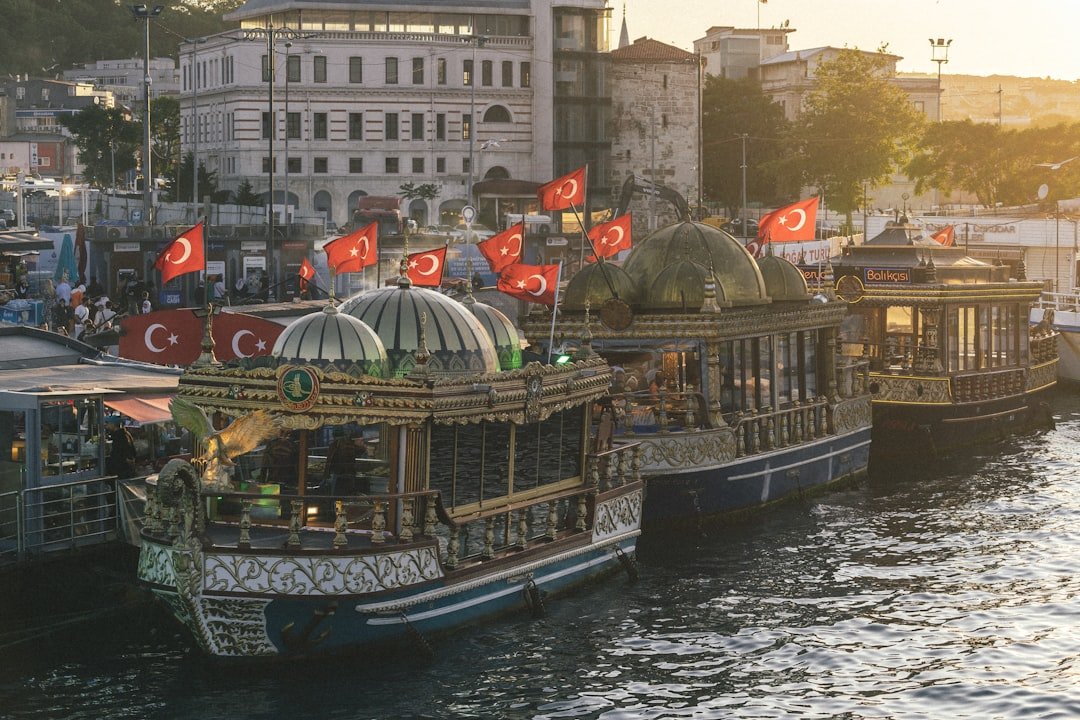
Another worthwhile alternative to the crowded house streets is the Golden Horn waterfront. The shoreline around Balat and neighboring Fener provides open views, water reflections, boats, historic buildings, and a completely different visual scale from the narrow streets uphill.
The original article referred to a “Fener Lighthouse” as a specific Balat attraction, but a reliable landmark matching that description could not be verified. For dependable waterfront photography, use the Balat and Fener shoreline, ferry area, and nearby historic buildings instead.
The Church of St. Mary of the Mongols, also called the Meryem Ana Greek Orthodox Church or Kanlı Kilise, is another historically important location in the wider Fener-Balat walking area. It dates to the Byzantine period, but interior visitor access is not something you should assume. Photograph the exterior respectfully from public areas unless you have permission to enter.
Tips for Taking the Best Instagram Photos in Balat
For cleaner street photographs, visit on a weekday morning when possible. Weekends can be much busier around the colorful houses, cafés, and stepped streets.
Use the hills to create depth
Balat’s steep streets naturally create leading lines. Position yourself at the bottom of a lane and let the road, steps, railings, or building edges guide the viewer’s eye through the photograph.
Keep buildings straight
If you tilt your phone sharply upward, vertical walls can appear to lean inward. Step farther back when possible, keep the phone more level, and crop afterward if necessary. Many phone editing apps also include perspective-correction tools.
Photograph details as well as full streets
Mix wide establishing shots with close-ups of door knockers, shutters, signs, architectural trim, café tables, food, flowers, and window details. This gives a photo carousel more variety than posting five nearly identical street views.
Watch the background
Before taking a portrait, look behind your subject for parked vehicles, trash bins, construction materials, signs, or other distractions. Moving only a few steps can dramatically improve a composition.
Expose for bright facades
Strong sunlight can wash out pastel walls. On a phone, tap the bright part of the building and lower the exposure slightly if highlights are losing detail. You can brighten shadows later more easily than recovering a completely white sky or facade.
Ask before photographing people
Street scenes can add life to an image, but avoid treating residents as background props. If one identifiable person becomes the main subject of your photograph, asking permission is the respectful choice.
Balat and Fener’s Iconic Landmarks for Photos
A practical photography route should include both Balat and neighboring Fener. Travel articles frequently discuss them together because they sit side by side along the Golden Horn, but several of the best-known religious and educational landmarks are technically associated with Fener rather than Balat proper.
Bulgarian St. Stephen Church
The Bulgarian St. Stephen Church, or Sveti Stefan, stands near the Golden Horn and is commonly called the Iron Church because of its iron construction. Istanbul cultural-heritage information dates the present church to 1898 and notes that its iron elements were cast in Vienna and assembled in Istanbul. Its pale exterior, towers, ornate details, and waterfront setting make it one of the area’s strongest architectural subjects. Learn more through Istanbul Governorship’s cultural-heritage guide.
Fener Greek High School
The large red-brick Fener Greek High School is one of the most recognizable buildings on the hill above the Golden Horn. Its scale and color make it visible from many surrounding streets. Treat it primarily as an exterior architectural photo stop rather than assuming that visitors can enter the functioning school.
Ecumenical Patriarchate and Church of St. George
The Ecumenical Patriarchate in Fener and its Church of St. George are major religious landmarks. Architectural details, the entrance, and the surrounding historic streets can be rewarding subjects, but remember that this is an active place of worship. Follow posted visitor rules, dress respectfully, and do not photograph worshippers or ceremonies without permission.
St. Mary of the Mongols
Higher in the neighborhood, St. Mary of the Mongols provides another layer of Byzantine and Greek Orthodox history. Its setting near Fener Greek High School also makes the surrounding streets interesting for architectural photography, even when the church itself is not open to casual visitors.
A Simple Balat Photo Route
If you want to photograph the neighborhood efficiently without repeatedly climbing the same hills, use this flexible order:
- Start near the Balat or Fener waterfront. Photograph the Golden Horn and Sveti Stefan Church.
- Move inland toward Vodina Caddesi. Capture shops, cafés, signs, and everyday street scenes.
- Continue to Kiremit Caddesi. Photograph the colorful house rows from several distances.
- Walk toward Merdivenli Yokuş. Use the steps and steep perspective for vertical compositions.
- Explore the quieter side streets. Look for doors, balconies, textures, and less-photographed facades.
- Continue into Fener. Photograph Fener Greek High School, St. Mary of the Mongols from public areas, and the Patriarchate where visitor rules allow.
- Return toward the Golden Horn. Finish with wider waterfront shots if the evening light is good.
Metro Istanbul’s T5 Eminönü–Alibeyköy tram currently includes both Fener and Balat stations, making it one of the simplest public-transport options for reaching this area from the Golden Horn side of central Istanbul. Check Metro Istanbul’s official T5 information before traveling in case service details change.
Note: The photogenic residential streets climb sharply away from the waterfront. Comfortable shoes with good grip are more useful than dress shoes, especially after rain. Travelers with limited mobility may find the steep lanes and steps difficult even though the waterfront transport corridor is comparatively flat.
Balat After Dark: Instagram-Worthy Nighttime Shots
After sunset, Balat’s streetlights, café windows, shop signs, and colored facades create a different atmosphere from the daytime streets. Vodina Caddesi and the busier café areas are better choices for evening street photography than very quiet residential lanes.
Instead of depending on flash, use available light from windows and streetlights where possible. Modern phones can often produce good handheld night photographs if you hold them steady for a moment. A wall, railing, or other stable public surface can help reduce camera shake.
Longer exposures can create light trails from passing traffic, but keep tripods away from narrow walkways and never set equipment where it blocks residents, businesses, or vehicles.
For evening portraits, look for a storefront or streetlight that illuminates your subject from the side rather than placing the person directly under a harsh overhead lamp. Watch the highlights around illuminated signs, since they can easily become overexposed.
Balat rewards photographers who look beyond one viral row of houses. Its strongest visual story comes from combining colorful residential architecture, local street life, cafés, religious heritage, neighboring Fener’s monumental buildings, and the open space of the Golden Horn waterfront. Give yourself time to wander, verify access before visiting specific interiors, and photograph the neighborhood as a living community rather than a staged backdrop.
Sources
- GoTürkiye — Fener and Balat Neighbourhoods — heritage, architecture, and key religious sites in the Fener-Balat area.
- Visit Istanbul — Ahrida Synagogue — synagogue history and advance-appointment visitor requirement.
- Dijital İstanbul — Sveti Stefan Church — construction date, iron structure, restoration, and heritage information.
- Metro Istanbul — T5 Eminönü-Alibeyköy Tram Line — current stations and public-transport connections serving Fener and Balat.
- UNESCO World Heritage Centre — Historic Areas of Istanbul technical support — conservation and rehabilitation work involving Fener and Balat.
Frequently Asked Questions
What are the best Instagram spots in Balat?
Start with Kiremit Caddesi, Merdivenli Yokuş, Vodina Caddesi, and the side streets around them. The Golden Horn waterfront is useful for wider views, while neighboring Fener adds Sveti Stefan Church, Fener Greek High School, St. Mary of the Mongols, and the Ecumenical Patriarchate.
Is Soğukçeşme Sokağı in Balat?
No. Soğukçeşme Sokağı is in the Sultanahmet area. For colorful-street photography in Balat, use locations such as Kiremit Caddesi, Merdivenli Yokuş, and Vodina Caddesi instead.
What is the best time of day for Balat photos?
Weekday mornings are usually the easiest time for quieter residential streets and softer light. Late afternoon can work well for warmer street scenes and Golden Horn views, but individual buildings face different directions, so lighting varies from street to street.
Can I visit Ahrida Synagogue while exploring Balat?
Potentially, but it is not a casual walk-in attraction. Current visitor guidance requires an advance appointment. Confirm entry requirements before visiting and follow all security, dress, and photography instructions.
Are the colorful Balat houses tourist attractions?
Many are private homes rather than formal attractions. Photograph them from public streets, keep doorways and steps clear, avoid looking or photographing through windows, and ask before making residents the main subject of a photo.
How do I get to Balat by public transport?
The T5 Eminönü-Alibeyköy tram has both Fener and Balat stations. Which stop is best depends on the order of your walking route. Check Metro Istanbul before traveling for current service information.
What else can I do in Balat besides taking photos?
Explore antique and local shops, stop for Turkish coffee or a meal, walk along the Golden Horn, learn about Balat’s Jewish heritage, and continue into Fener for historic Orthodox landmarks. The area is best experienced as a neighborhood walk rather than a sequence of isolated photo stops.