Ortaköy is one of Istanbul’s best-known Bosphorus neighborhoods, but its story reaches far beyond the cafés, food stalls, and postcard view seen today. Located in the Beşiktaş district on the European shore, Ortaköy developed through several historical layers, from settlement in antiquity to Ottoman waterfront life, 19th-century imperial architecture, 20th-century urban growth, and the opening of the first Bosphorus road bridge in 1973.
Quick Answer
Ortaköy’s history extends to antiquity, but the neighborhood took much of its recognizable form during the Ottoman period. Its multicultural communities, 19th-century Büyük Mecidiye Mosque, Bosphorus mansions, and later the 1973 Bosphorus bridge helped transform it from a waterside settlement into one of Istanbul’s most recognizable neighborhoods.
Key Takeaways
- Ortaköy stands on the European shore of the Bosphorus, and official Istanbul tourism material traces the area’s history back to antiquity.
- Under Ottoman rule, the neighborhood became known for a diverse population and religious heritage that included Muslim, Jewish, Armenian Christian, and other Christian communities.
- The present Ortaköy Mosque, officially the Büyük Mecidiye Mosque, is a 19th-century building commissioned by Sultan Abdülmecid; an earlier mosque had occupied the site since the 18th century.
- The bridge beside Ortaköy opened in 1973, linking Istanbul’s European and Asian sides by road. Its current official name is the 15 July Martyrs Bridge.
- Today, Ortaköy combines historic religious buildings and Ottoman-era architecture with cafés, artist markets, waterfront activity, and the neighborhood’s famous kumpir stalls.
Early History of Ortaköy
Ortaköy occupies a strategic position on the European bank of the Bosphorus. The Istanbul Provincial Directorate of Culture and Tourism states that the neighborhood’s history reaches back to antiquity. Claims about an exact first-settlement date should be treated carefully, however, because reliable official sources do not establish the specific “4th century AD” date sometimes repeated in general-interest articles.
Its waterside setting naturally shaped local life. Fishing, boating, small-scale commerce, and movement along the Bosphorus were important to settlements on this shore long before modern roads and bridges existed. During the Byzantine period, communities developed along the European side of the strait, while the Bosphorus remained an important corridor connecting different parts of Constantinople and its surroundings.
After the Ottoman conquest of Constantinople in 1453, the wider Bosphorus shoreline underwent new phases of settlement, construction, and population movement. Ortaköy gradually became part of the expanding Ottoman capital rather than remaining only a peripheral waterside village.
Note: Historical sources support an ancient past for Ortaköy, but an exact archaeological settlement date should not be stated unless it is tied to a specific excavation report or scholarly source.
Ortaköy During the Ottoman Empire
During the Ottoman centuries, Ortaköy developed into a socially and religiously diverse Bosphorus community. Its waterfront location connected everyday neighborhood life with fishing, transport, trade, imperial residences, and the movement of people along the strait.
The area’s multicultural character is visible in its surviving religious architecture. Beşiktaş Municipality highlights the close presence of Muslim, Jewish, and Christian places of worship in and around Ortaköy. This built heritage provides stronger evidence of the neighborhood’s diversity than broad claims about it simply being a “melting pot.”
Among these landmarks are the Ortaköy Mosque, the Etz Ahayim Synagogue, and historic Christian churches. The Armenian presence is also documented through the Surp Asdvadzadzin Armenian Church in Ortaköy, whose earlier chapel history reaches into the Ottoman period and whose later stone structure reflects the community’s long local presence.
The site of today’s famous mosque also has an older history. According to the TDV İslâm Ansiklopedisi, a small mosque was built there in 1721. The present monumental structure came later, under Sultan Abdülmecid in the 19th century.
The Transformation of Ortaköy in the 19th Century

The 19th century was one of the most important periods in Ortaköy’s physical transformation. Istanbul’s imperial waterfront increasingly featured palaces, mosques, mansions, institutional buildings, and residences influenced by both Ottoman traditions and European architectural styles.
The best-known result in Ortaköy is the Büyük Mecidiye Mosque, commonly called Ortaköy Mosque. Sultan Abdülmecid commissioned the present building in the mid-19th century. Historical sources differ slightly over the exact completion year: official tourism material commonly uses 1853, while the TDV İslâm Ansiklopedisi dates the inscription of the current structure to 1854. For that reason, describing it as a mid-19th-century mosque is more accurate than assigning an unsupported single date.
The mosque is associated with Garabet Amira Balyan and Nigoğayos Balyan, members of the prominent Balyan architectural family. Its highly ornamented design reflects the Western-influenced architectural language of the late Ottoman Empire while retaining the functions of an imperial mosque.
Waterfront mansions, known as yalıs, also became defining features of the wider Bosphorus landscape. Such residences were closely associated with wealthy families, officials, and elite life along the strait. Nearby Çırağan Palace further demonstrates the scale of 19th-century imperial development along this part of the European shoreline.
The image most associated with Ortaköy today—a richly decorated Ottoman mosque beside a modern suspension bridge—places two very different periods of Istanbul’s history in a single view.
A Short Ortaköy History Timeline
| Period | Development |
| Antiquity | The area has a documented history extending into antiquity, although a precise founding date is uncertain. |
| 15th century onward | Ortaköy develops within Ottoman Istanbul after the conquest of Constantinople. |
| 1721 | An earlier mosque is built on the site later occupied by the Büyük Mecidiye Mosque. |
| Mid-19th century | The present Ortaköy Mosque and other major waterfront architecture reshape the neighborhood. |
| 1973 | The Bosphorus Bridge opens, creating the first uninterrupted road connection between Europe and Asia across the strait. |
| Today | Ortaköy combines historic architecture, religious heritage, food, markets, cafés, galleries, and active Bosphorus transportation. |
Ortaköy and the Bosphorus Bridge
| Category | Ortaköy | 15 July Martyrs Bridge |
|---|---|---|
| Location | A neighborhood in Istanbul’s Beşiktaş district on the European shore of the Bosphorus | Crosses the Bosphorus between Istanbul’s European and Asian sides |
| Historical Significance | Historic Bosphorus neighborhood shaped by Ottoman architecture and diverse communities | Opened to traffic in 1973 as the first uninterrupted road connection across the Bosphorus |
| Well-known sights | Büyük Mecidiye Mosque, waterfront, historic religious buildings, markets and nearby Çırağan Palace | Bosphorus panorama and one of Istanbul’s best-known bridge-and-mosque views |
| Transportation | Served directly by buses and scheduled ferries; rail passengers generally transfer from nearby parts of Istanbul | Major road crossing between the European and Asian sides |
The bridge beside Ortaköy opened to traffic in 1973. Turkey’s General Directorate of Highways describes it as the first uninterrupted road connection between Europe and Asia across this part of Istanbul. The bridge was long widely known as the Bosphorus Bridge and is now officially named the 15 July Martyrs Bridge.
Its construction dramatically changed the visual and transportation landscape around Ortaköy. Instead of connecting Ortaköy to Istanbul’s European side—as the neighborhood was already on that side—the bridge connected the road systems of the European and Asian sides of the city.
The bridge also created one of Istanbul’s most recognizable urban compositions. From the Ortaköy waterfront, the ornate 19th-century mosque appears against the much larger 20th-century suspension bridge. That contrast has become a visual symbol of Istanbul’s layered history.
Ortaköy’s Role in the 20th Century
During the 20th century, Ortaköy moved from an older Bosphorus settlement toward the dense urban environment of modern Istanbul. Road traffic, changing population patterns, commercial development, and the expansion of the metropolitan area reshaped daily life throughout Beşiktaş and the Bosphorus corridor.
The mosque itself also required significant preservation work. Beşiktaş Municipality records major damage from the 1894 earthquake, structural reinforcement work in the 20th century, and restoration after a fire in 1984. These interventions help explain why the building seen today is both a historic monument and a structure that has undergone repeated conservation.
The 1973 bridge accelerated the importance of the area as a transport landmark. At the same time, Ortaköy’s waterfront, square, historic buildings, and cultural associations helped it retain a distinct neighborhood identity rather than becoming defined only by road infrastructure.
Ortaköy Today: A Cultural and Culinary Hub

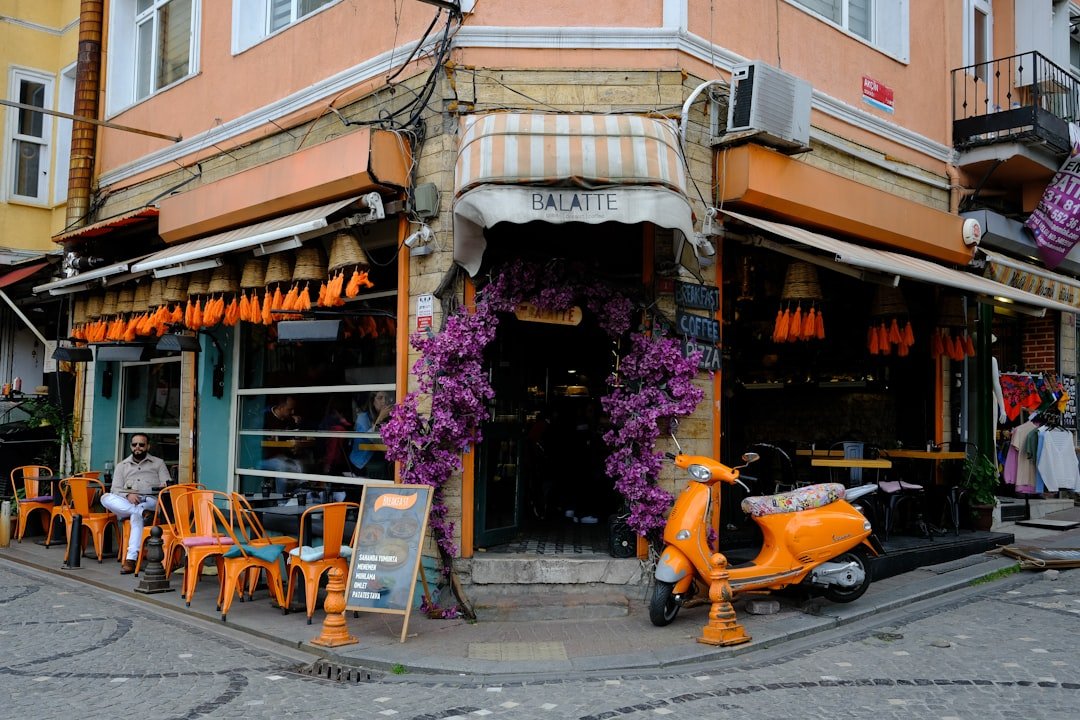
Today, Ortaköy is known for combining historic architecture with an active waterfront atmosphere. Contemporary galleries, cafés, boutiques, street-food stalls, and markets operate within a neighborhood whose religious and architectural landmarks span several centuries.
Kumpir, a baked potato mixed with ingredients such as butter and cheese and finished with a choice of toppings, is particularly associated with Ortaköy. Türkiye’s official tourism platform describes the neighborhood as one of Istanbul’s best-known places for this street food.
The waterfront remains one of the neighborhood’s main social spaces. Visitors gather around Ortaköy Square and the mosque for Bosphorus views, while scheduled ferry services continue the area’s long relationship with water transportation. Current Şehir Hatları ferry schedules include services linking Ortaköy with destinations on the Asian side.
Pro Tip: If you are approaching Ortaköy by public transport, check current IETT and Şehir Hatları schedules before traveling. Bus and ferry services can change, and the T1 tram itself does not continue from Kabataş into Ortaköy.
Ortaköy’s Iconic Landmarks and Architecture
Büyük Mecidiye Mosque
The Büyük Mecidiye Mosque, usually called Ortaköy Mosque, is the neighborhood’s defining landmark. It stands directly beside the Bosphorus at Ortaköy Pier Square. The present mosque was commissioned by Sultan Abdülmecid during the mid-19th century and is associated with the Balyan family of architects.
The building is notable for its highly decorative exterior, large windows, slender minarets, and imperial pavilion. Its design reflects the Western-influenced architectural tastes of the late Ottoman period. The dramatic waterfront location makes the mosque visually distinctive even among Istanbul’s many historic mosques.
Historic Religious Heritage
Ortaköy’s historical importance is not limited to one mosque. The neighborhood and surrounding Beşiktaş area preserve religious buildings connected with different communities. Beşiktaş Municipality specifically highlights the close presence of the Ortaköy Mosque, Etz Ahayim Synagogue, and Christian churches as evidence of the district’s diverse heritage.
The Surp Asdvadzadzin Armenian Church provides another documented example. Municipal historical information records an Armenian chapel in Ortaköy during the Ottoman period and a later stone church constructed in the 19th century.
Çırağan Palace and the Bosphorus Waterfront
Nearby Çırağan Palace is another major component of the area’s Ottoman architectural landscape. The palace stands along the Bosphorus shore between central Beşiktaş and Ortaköy and reflects the imperial transformation of this waterfront during the 19th century. Today, the historic palace complex is associated with a luxury hotel.
Historic mansions and other waterfront structures further show how the Bosphorus became a prestigious residential and ceremonial setting. Ortaköy’s streetscape therefore represents several layers at once: religious architecture, imperial development, residential history, and modern commercial life.
Ortaköy’s Cultural Festivals and Events
Ortaköy remains an active cultural area, but its event calendar changes from year to year. It is therefore more accurate to distinguish long-running neighborhood traditions from temporary festivals whose names, organizers, and schedules may change.
GoTürkiye’s official Ortaköy guide notes that artist markets are often held at weekends, giving local artists opportunities to exhibit and sell their work. Galleries, cafés, public spaces, and the waterfront also contribute to the neighborhood’s contemporary cultural life.
The Bosphorus hosts sailing races and other large events at different times, and sections of the shoreline near Beşiktaş and Ortaköy can provide viewing points. However, individual race names and festival schedules should be checked against the current organizer or official events calendar rather than assumed to be permanent annual Ortaköy traditions.
This mixture of historic buildings, religious heritage, food culture, markets, art, and Bosphorus activity explains how Ortaköy has remained recognizable despite major changes to Istanbul around it. The neighborhood is neither simply an Ottoman relic nor only a modern entertainment district; its identity comes from the way these different periods continue to overlap.
For additional authoritative background, Türkiye’s official tourism platform provides a current overview of Ortaköy’s historic landmarks, waterfront, markets, and architectural heritage.
Frequently Asked Questions
What is the history of Ortaköy?
Ortaköy is a historic Bosphorus neighborhood in Istanbul’s Beşiktaş district. Its history reaches back to antiquity, while much of its recognizable architectural and cultural identity developed during the Ottoman period. The 19th century brought major waterfront construction, and the opening of the Bosphorus bridge in 1973 transformed the area’s transportation setting.
When was Ortaköy Mosque built?
An earlier mosque stood on the site from 1721, but the present Büyük Mecidiye Mosque was commissioned by Sultan Abdülmecid in the mid-19th century. Authoritative sources vary slightly on the exact completion date, commonly giving dates around 1853–1854.
Why is Ortaköy historically important?
Ortaköy is important because it preserves evidence of Istanbul’s Bosphorus settlement history, Ottoman imperial architecture, religious diversity, waterfront culture, and modern urban development. Its mosque, churches, synagogue, nearby palace architecture, and bridge illustrate different periods of the city’s history within a compact area.
What is the bridge next to Ortaköy called?
The bridge beside Ortaköy was historically known as the Bosphorus Bridge. Its current official name is the 15 July Martyrs Bridge. It opened to traffic in 1973 and created the first uninterrupted road connection across the Bosphorus between Istanbul’s European and Asian sides.
What historical landmarks can you see in Ortaköy?
The best-known landmark is the Büyük Mecidiye Mosque. Ortaköy and its immediate surroundings also contain historic churches, the Etz Ahayim Synagogue, Ottoman waterfront buildings, and nearby Çırağan Palace. Together they reflect the area’s religious, residential, and imperial history.
What is Ortaköy known for today?
Modern Ortaköy is known for its Bosphorus waterfront, famous mosque-and-bridge view, cafés, artist markets, galleries, boutiques, ferry connections, and kumpir stalls. These modern attractions exist alongside the neighborhood’s much older architectural and religious heritage.
Can you reach Ortaköy by tram?
There is no direct T1 tram stop in Ortaköy. The T1 line reaches Kabataş, while Ortaköy itself is served by buses and scheduled ferries. Travelers using rail normally transfer to another form of transport for the final part of the journey.
Sources
- GoTürkiye — Ortaköy — supports the neighborhood’s current character, historic religious buildings, artist markets, Çırağan Palace, and the Büyük Mecidiye Mosque.
- TDV İslâm Ansiklopedisi — Ortaköy Camii — supports the history of the earlier mosque and the present Büyük Mecidiye Mosque.
- General Directorate of Highways — History — supports the 1973 opening of the bridge and its Europe–Asia road connection.
- Beşiktaş Municipality — Newcomers Guide — supports Ortaköy’s mosque, synagogue, churches, and multicultural architectural heritage.
- Şehir Hatları — Ortaköy Ferry Service — supports current scheduled ferry connections from Ortaköy.
- Istanbul Provincial Directorate of Culture and Tourism — Beşiktaş Ortaköy — supports Ortaköy’s antiquity, famous mosque, street markets, and kumpir tradition.