Mountain bike cranks in [2026] have become a careful balance of strength, weight, and drivetrain compatibility. From square taper left arms to triple-ring Shimano options and newer BUCKLOS setups, each model serves a different rider and terrain. Some favor durability for hard trail use, while others aim for lighter performance or broader gearing. The right choice is not always obvious, and a few details can change everything.
Key Takeaways
- Square taper cranks remain the easiest budget-friendly replacement for many mountain bikes, especially older models with JIS bottom brackets.
- BUCKLOS IXF cranksets are lightweight, affordable single-speed options with narrow-wide chain retention and broad Shimano, SRAM, and FSA compatibility.
- Shimano Tourney FC-TY501 is a reliable triple crankset for 6/7/8-speed trail bikes needing versatile gearing and durable everyday performance.
- 170mm crank arms suit riders wanting simple installation, durable alloy construction, and compatibility with many square-taper mountain bike setups.
- For 2026, choose lighter aluminum cranks for better climbing and acceleration, but balance weight savings against durability and drivetrain compatibility.
Mountain Bike Left Crank Arm 170mm Square Taper

The Mountain Bike Crank Arm 170mm Left Square Taper Replacement suits riders who need a durable, no-fuss fix for a worn or damaged left crank arm. Built from forged alloy and premium steel, it uses a standard JIS square taper design with a 170mm arm length. The component fits many mountain, road, folding, and fixed-gear bikes with matching bottom brackets. Installation is simple with basic tools, making repairs efficient. Its strong construction supports reliable power transfer, smooth operation, and consistent performance across daily rides and demanding trails, while serving as a practical maintenance spare.
Best For: Riders and home mechanics who need a durable, easy-to-install replacement left crank arm for mountain, road, folding, or fixed-gear bikes with a standard square taper bottom bracket.
Pros:
- Forged alloy and premium steel construction offers solid durability and reliable long-term use.
- Standard JIS square taper design makes it compatible with many common bike setups.
- Simple installation with basic tools makes repairs quick and convenient.
Cons:
- Only fits bikes with compatible square taper bottom brackets.
- Left-side replacement only, so it won’t solve issues with the right crank arm or full crankset.
- May not be the best choice for riders needing a more specialized or high-performance crank system.
BUCKLOS IXF Mountain Bike Crankset with Chainring
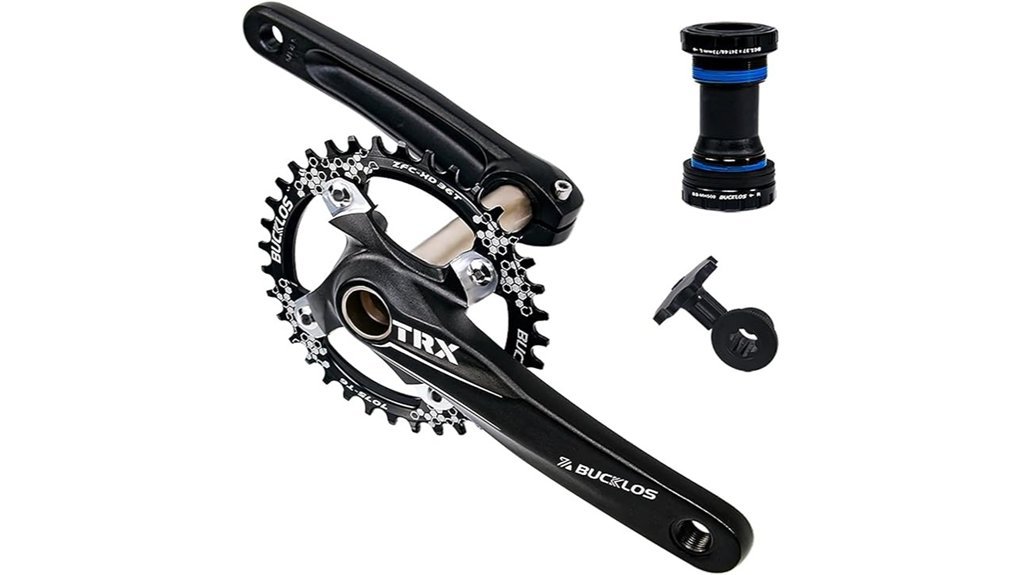
BUCKLOS IXF suits riders wanting a lightweight, budget-friendly single-speed crankset. The BUCKLOS IXF 104 BCD model uses a hollow integrated aluminum alloy design and weighs 550g, keeping weight low without adding complexity. Its snail-style narrow-wide chainring comes in 30T, 32T, 34T, 36T, and 38T options, with round or oval choices. The 170mm crank arms and 4mm chainring thickness support 7-12 speed chains. It fits 68-73mm bottom bracket widths, works with Shimano, SRAM, and FSA setups, and targets most mountain bikes.
Best For: Riders who want a lightweight, budget-friendly single-speed mountain bike crankset that’s compatible with a wide range of MTB setups.
Pros:
- Lightweight hollow integrated aluminum alloy design at just 550g
- Narrow-wide snail chainring helps improve chain retention
- Broad compatibility with 7-12 speed chains and common Shimano, SRAM, and FSA systems
Cons:
- Designed primarily for single-speed use, so it may not suit riders wanting a true multi-chainring setup
- Only fits bottom bracket widths of 68-73mm
- Limited to 104 BCD chainring compatibility and 170mm crank arm length
Shimano Tourney FC-TY501 Crankset, 175mm, 6/7/8-Speed, 48/38/28t
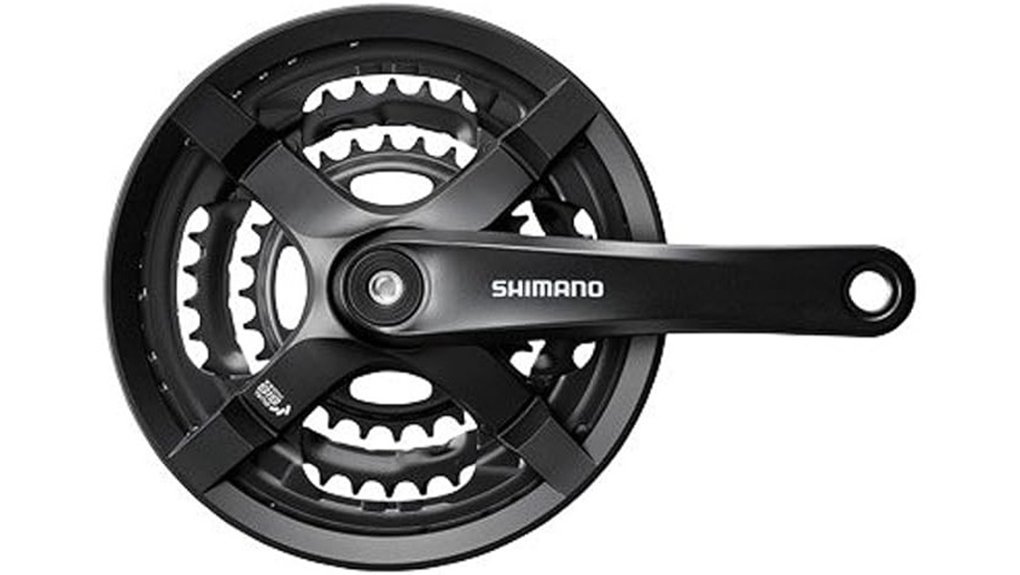
With a 175mm arm and triple 48/38/28T gearing, Shimano’s Tourney FC-TY501 suits riders needing broad mountain range coverage. It supports 6, 7, and 8-speed drivetrains through a Square Taper JIS interface, making it compatible with many entry-level trail builds. The riveted chainrings and durable construction are intended for rugged terrain, while the included plastic chainguard adds practical protection. Shimano’s Dual SIS system helps deliver clean, accurate shifts. At 2 pounds, it is not especially light, but its black finish, 185.5mm Q-factor, and limited warranty present a straightforward, dependable mountain bike option.
Best For: Mountain bikers and entry-level trail riders who want a durable, budget-friendly triple crankset with broad gearing and easy compatibility with 6/7/8-speed drivetrains.
Pros:
- Wide 48/38/28T gearing offers versatility for climbing and mixed terrain.
- Square Taper JIS compatibility makes it a fit for many entry-level builds.
- Durable construction with riveted chainrings and an included chainguard adds practicality.
Cons:
- At 2 pounds, it is relatively heavy compared with higher-end cranksets.
- Triple setup may be more than needed for riders who prefer simpler drivetrains.
- Basic touring/trail design lacks the premium performance features of more advanced models.
BUCKLOS IXF Mountain Bike Crankset 30-52T 170mm
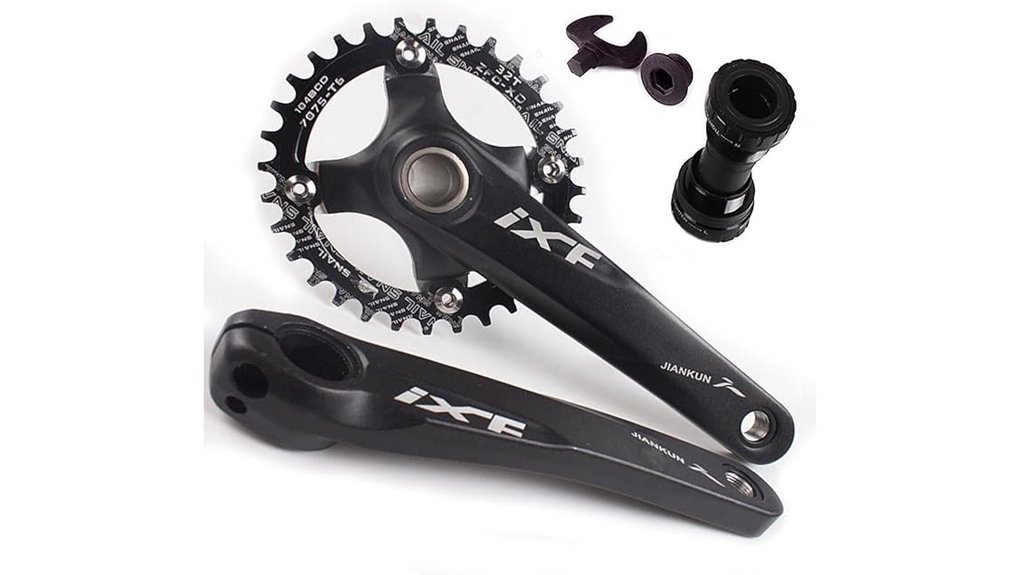
Ideal for riders seeking a lightweight, budget-friendly upgrade, the IXF crankset keeps performance simple. BUCKLOS’ 104 BCD hollow integrated design uses aluminum alloy construction to balance low weight and high axial strength, with a 170mm arm length and roughly 550g weight. It supports 7-12-speed chains and accepts 30T to 42T round or oval chainrings, though the crank and chainring are intended for single-speed use. Compatibility extends to Shimano and FSA setups, plus 68-73mm bottom brackets. Black and red finishes give it a clean, utilitarian look for many mountain bikes.
Best For: Riders looking for a lightweight, budget-friendly mountain bike crankset upgrade for simple single-speed use and broad Shimano/FSA compatibility.
Pros:
- Lightweight aluminum alloy hollow integrated design helps keep weight low while maintaining good strength.
- Compatible with 7-12-speed chains and 68-73mm bottom brackets, making it versatile for many MTB setups.
- Available with multiple chainring sizes and round/oval options for easier gearing customization.
Cons:
- Crank and chainring are intended only for single-speed use, despite broader chain compatibility.
- May not be ideal for riders needing a premium or high-performance drivetrain upgrade.
- Compatibility is limited to specific bottom bracket and crank standards, so fit must be checked carefully.
Mountain Bike Crankset 48/52T with 170mm 130BCD
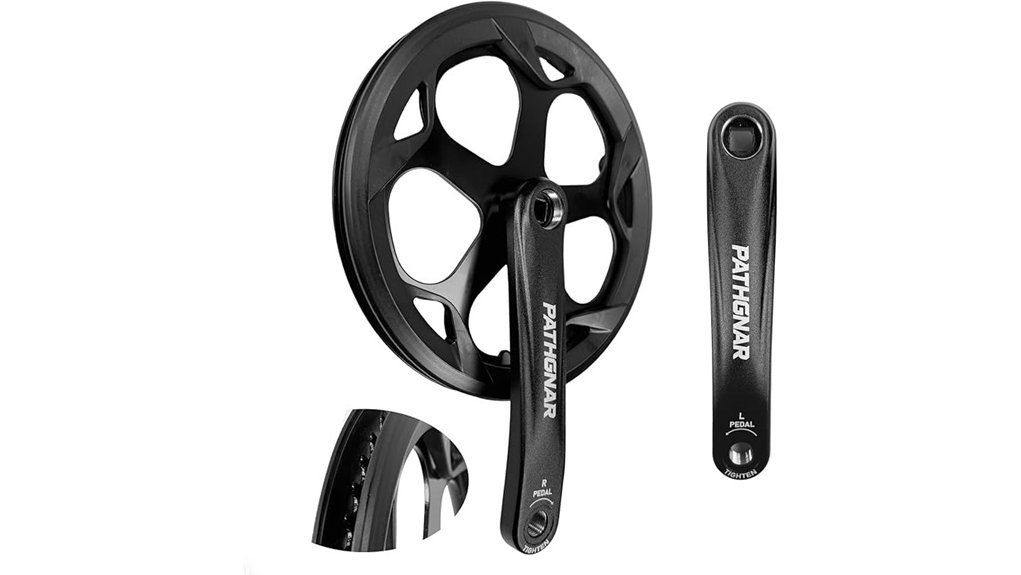
PATHGNAR’s 170mm, 130BCD crankset suits riders needing a lightweight single-speed setup. The Bike Crankset-F2048-48T uses 6061 aluminum alloy and a square-taper, 116mm axle for a durable yet simple build. Its 45mm chain line and optimized chain control help limit friction, chain inclination, and derailment risk. The 48T ring supports efficient pedaling on compatible electric bikes and most mountain bikes. At 170mm, it offers a familiar leverage point, while quick assembly makes installation accessible. Black finish, 1.07 kg package weight, and light, reliable shifting compatibility round out the design.
Best For: Riders looking for a lightweight, durable single-speed crankset for compatible electric bikes and most mountain bikes, especially those who want straightforward installation and reliable chain control.
Pros:
- Lightweight 6061 aluminum alloy construction helps improve performance without adding unnecessary bulk.
- 45mm chain line and optimized chain control can reduce friction and lower the chance of derailment.
- Quick assembly and square-taper 116mm axle design make installation simple for beginners.
Cons:
- Single-speed-focused design limits versatility for riders needing multi-speed compatibility.
- 130BCD and 48T chainring size may not suit all bike setups or riding styles.
- Only a 1-month warranty may feel short for some buyers.
Bike Crankset 42-34-24T Square Taper 170MM Crank Arm
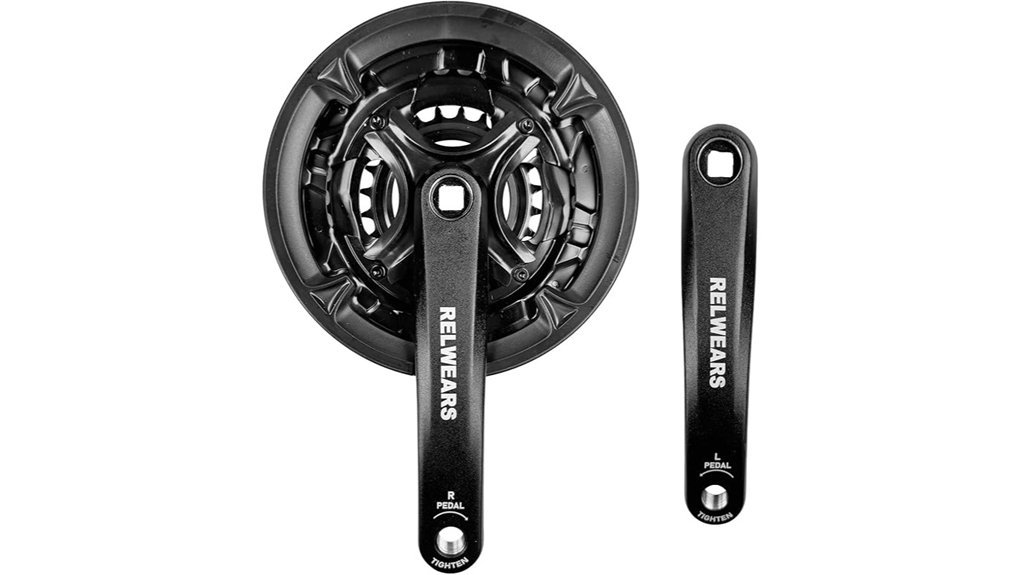
Relwears’ FC-TY301 suits riders seeking a dependable triple crankset for mixed terrain. It uses 24T, 34T, and 42T chainrings with 170mm arms and a square taper, 120mm axle, giving broad gearing for climbs and faster sections. The aluminum alloy construction adds rigidity while keeping weight at 1.03 kilograms. Its 48.5mm chain line helps reduce friction and derailment risk. Compatibility extends to 3x7S, 3x8S, and 3x9S drivetrains, while the below 1:1 climbing ratio supports off-road use. Shifting remains light, reliable, and adaptable with common rear derailleurs.
Best For: Riders who want a reliable triple crankset for mixed-terrain or off-road biking with broad gearing and compatibility across 7-9 speed drivetrains.
Pros:
- 24/34/42T gearing provides versatile climbing and faster-section performance.
- Aluminum alloy construction adds rigidity while keeping weight relatively low.
- 48.5mm chain line and square taper design help improve shifting reliability and reduce derailment risk.
Cons:
- Square taper and 120mm axle setup may not fit all modern bottom brackets.
- 1.03 kg weight is not especially light compared with some higher-end cranksets.
- Triple crankset design can be more complex to set up and tune than simpler drivetrain options.
Bike Crank Arm Set with Bottom Bracket
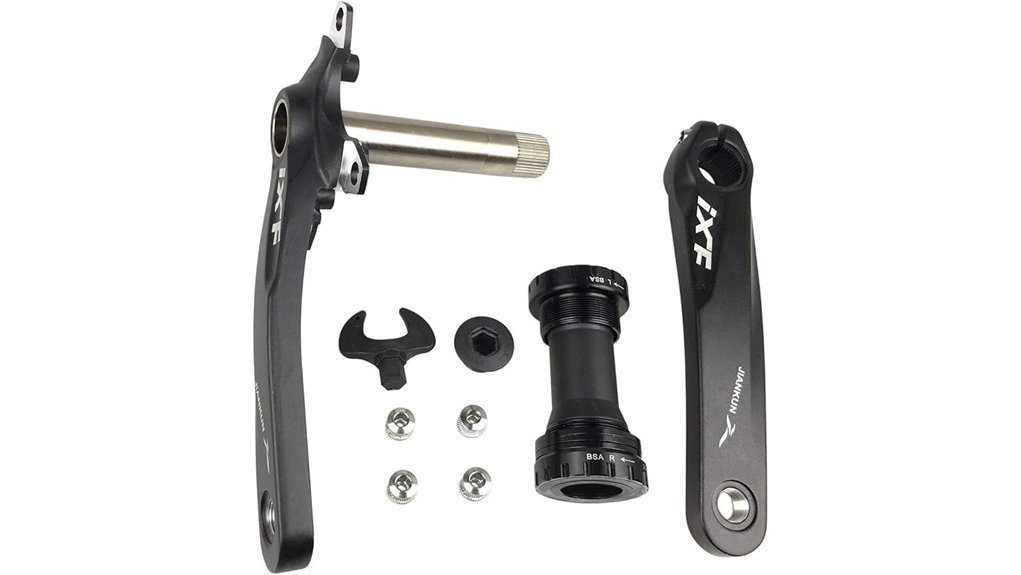
The BNVB 170mm crank set suits riders wanting a lightweight, durable MTB upgrade with a bottom bracket included. Built from high-strength aluminum alloy, it weighs about 675g while offering an ergonomic, non-slip design for better control. Its 170mm arms and 104mm BCD support MTB, BMX, and road use, with compatibility noted for Shimano, FSA, and Giant systems. The package includes a forged crank set, bottom bracket, four chainring bolts, a crank screw, and an Allen wrench. It fits 68-73mm bottom bracket widths and comes in black, red, or silver.
Best For: Riders looking for a lightweight, durable 170mm crankset upgrade for MTB, BMX, or road bikes that includes a bottom bracket and easy-install components.
Pros:
- Lightweight high-strength aluminum alloy construction
- Includes bottom bracket and installation hardware for convenience
- Compatible with MTB, BMX, road bikes, and several major systems
Cons:
- Limited to 170mm crank arm length and 104 BCD setup
- Best fit is restricted to 68–73mm bottom bracket widths
- Fewer size and configuration options than some crankset alternatives
Factors to Consider When Choosing a Crank for Mountain Bike
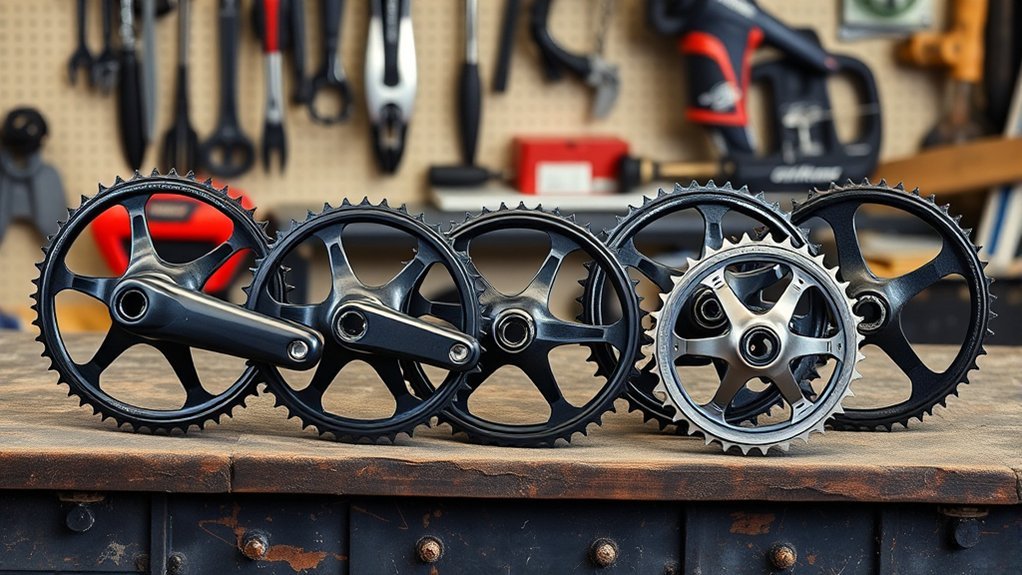
Choosing a mountain bike crank begins with crank length, bottom bracket type, chainring compatibility, drivetrain speed, and material strength. Each factor affects fit, shifting performance, and overall durability on rough terrain. A balanced choice helps guarantee efficient power transfer and reliable riding.
Crank Length
Crank length plays a key role in pedaling efficiency, power transfer, and overall ride feel on a mountain bike. Longer cranks increase leverage, which can help on steep climbs and support stronger force output, while shorter cranks often encourage a smoother cadence and can reduce knee strain. Mountain bike crank lengths usually fall between 165mm and 175mm, and 170mm remains a common middle ground for balanced comfort and performance. Riders with longer legs may benefit from longer arms, while shorter riders often gain from reduced length. Crank choice also affects handling and ground clearance, especially on technical trails. For that reason, terrain and riding style should guide the decision, whether the goal is cross-country efficiency or confident obstacle clearance.
Bottom Bracket Type
Bottom bracket type determines whether a crankset will fit a mountain bike frame and how easily it can be installed. Compatibility depends on the frame standard, with square taper remaining widely supported and external bearing systems favored for added stiffness and lower weight. Shell width also matters, because most mountain bike frames use 68mm to 73mm shells, and the crankset must match that spacing for proper fit. Different designs can alter Q-factor, changing pedal stance and influencing comfort and pedaling efficiency. Accurate alignment during installation is crucial, since poor setup can cause rough rotation, premature wear, and reduced performance. Choosing the correct bottom bracket type helps guarantee smooth operation, reliable durability, and a cleaner installation process for the crankset and frame.
Chainring Compatibility
Chainring compatibility depends on several precise details that affect how a crankset performs on a mountain bike. The first check is BCD, or Bolt Circle Diameter, because it determines whether the chainring fits the crankset; common sizes include 104mm and 130mm. Tooth count also matters, since rings from 24T to 52T change gearing and pedaling effort. The chainring shape should match the drivetrain: narrow-wide designs improve retention, while round and oval options serve different riding preferences. Thickness is another factor, with standard rings around 4mm and narrower teeth often chosen for single-speed setups. A proper match with the drivetrain’s speed helps the system work smoothly and supports reliable shifting across varied terrain without unnecessary chain drop or poor engagement.
Drivetrain Speed
Drivetrain speed is a key compatibility check when choosing a mountain bike crank, because cranksets are built for specific systems such as 6-, 7-, 8-, 9-, 10-, 11-, or 12-speed setups. Matching the crank to the bike’s speed count helps preserve chain alignment, shifting accuracy, and overall drivetrain efficiency. Higher-speed cranksets usually use narrower chainrings and tighter spacing to work with thinner chains, while single-speed models are often simpler and geared toward efficiency. Multi-speed systems require more precise configurations to function correctly. The bottom bracket must also match the crankset type and intended speed range. Chainring layout matters too, since single, double, and triple arrangements change gearing options and shift behavior.
Material Strength
Material strength plays a major role in crank performance, durability, and ride quality. Stronger materials help a crank withstand repeated impacts, hard climbs, and rough trail abuse with less wear over time. Forged alloy and aluminum alloy each provide dependable resilience, while premium steel offers exceptional strength and reliability for aggressive riding. High axial strength is especially valuable because it helps the crank resist deformation under heavy torque, keeping pedaling consistent and stable. Construction quality also affects how efficiently power moves from rider to drivetrain, since stiffer materials reduce flex and improve energy transfer. For mountain bikers, selecting a crank built from a well-made, durable material supports long-term performance and dependable control in demanding conditions.
Weight Considerations
Weight is one of the most important factors when choosing a mountain bike crank, since lighter components can improve acceleration, climbing efficiency, and overall responsiveness on the trail. Cranksets commonly weigh between 550g and 675g, and competitive riders often prefer the lighter end of that range for quicker speed changes and easier climbing. Material choice affects this balance, with aluminum alloy usually offering lower weight than steel or other heavier options. A lighter crank also reduces rotational mass, which can make pedaling feel more efficient and handling more agile on steep or technical terrain. Even so, weight should not be considered in isolation. Excessively light cranks may compromise durability, so the best choice usually balances reduced mass with the strength needed for demanding mountain biking conditions.
Bike Type Fit
Beyond weight, a mountain bike crank must fit the bike’s setup to perform properly. Drivetrain compatibility comes first, since cranks are built for specific speed systems such as 6-, 7-, 8-, or 12-speed drivetrains. The bottom bracket standard also matters; square taper and hollow integrated designs require matching crank interfaces for correct fit. Crank length should align with leg length and riding style, with 170mm to 175mm being common for balanced leverage and comfort. Chainring setup should suit the terrain: single rings favor simplicity, while double or triple configurations broaden gearing for climbs and faster sections. Material choice rounds out the fit. Aluminum alloy supports lighter performance, while forged steel adds durability for rough, demanding trails.
Installation Ease
Installation ease can make a crank a far more practical choice for many mountain bikers. Many crank arms can be installed with basic bicycle tools, which supports quick upgrades or repairs without specialized equipment. Crank sets that use straightforward designs often reduce replacement time, making them suitable for both cyclists and home mechanics. Compatibility with standard square taper bottom brackets further improves convenience, since these parts remain common across many bike models. Clear instructions or diagrams also help limit mistakes during assembly and can speed the process. Material choice matters as well, because lighter cranks are generally easier to handle while aligning and tightening components. For riders who value low-maintenance ownership, an easy installation can be a decisive advantage when selecting a mountain bike crank.
Frequently Asked Questions
How Do I Know if My Bike Needs a Square Taper or Hollow Crank?
Like checking whether a key fits a lock, the bottom bracket tells the story: a square taper crank has a square axle end hidden inside the crank arm, while a hollow crank usually uses an integrated spindle and external bearings. He or she can remove the crank or inspect the bike model specs. If the spindle is separate from the crank, it is likely square taper; if it is built in, it is hollow.
Can I Upgrade My Crank Without Changing the Bottom Bracket?
Yes, a crank can sometimes be upgraded without changing the bottom bracket, but only if the new crank matches the existing spindle standard, length, and interface. A square taper crank stays with a square taper bottom bracket, while Hollowtech, DUB, and other systems often require their own specific bottom bracket. Compatibility should be checked carefully before purchase to avoid fit issues, chainline problems, or premature wear.
Which Crank Length Works Best for Steep Mountain Climbs?
For steep mountain climbs, shorter cranks, around 165–170 mm, usually work best because they reduce pedal strikes and make high-cadence spinning easier. One study found riders on shorter cranks maintained efficiency with less hip flexion, which can matter on long grades. Longer cranks may add leverage, but they often feel less forgiving on technical climbs. Fit, terrain, and rider preference still determine the best final choice.
Are Lighter Cranks Always Better for Aggressive Trail Riding?
No, lighter cranks are not always better for aggressive trail riding. A very light crank can save weight, but durability, stiffness, and impact resistance often matter more on rough descents and frequent rock strikes. Heavier models may feel more robust and inspire confidence under hard pedaling and technical hits. The best choice usually balances weight with strength, Q-factor, and rider style rather than chasing the lowest possible number alone.
How Often Should a Mountain Bike Crankset Be Replaced?
Like a hinge on a storm door, a mountain bike crankset should be replaced when wear, damage, or play appears. Under normal use, many last several seasons, but hard riding, mud, and poor maintenance can shorten life. It should be checked regularly for bent arms, creaks, loose interfaces, and worn chainring teeth. Replacement is recommended immediately if cracks, excessive flex, or thread damage are found.