Cross-country e-mountain bikes for [2026] are shaping up to be more capable, efficient, and adaptable than ever. From lighter trail-ready frames to dual-motor setups and wider tires, the options now cover a broad range of riding needs. The real challenge is not finding a good bike, but sorting out which features matter most on climbs, descents, and mixed terrain. A closer look reveals where the best choices start to separate themselves.
Key Takeaways
- Look for lightweight cross-country e-mountain bikes with efficient geometry for climbing, fast handling, and reduced rider fatigue.
- Choose motors with enough support for your terrain, typically 500W to 1000W for XC use and stronger output for steep climbs.
- Prioritize battery range and removability, with 48V systems and 374Wh to 22.4Ah capacities offering practical all-day riding.
- Select bikes with 120mm to 140mm suspension travel, such as the Canyon Spectral 125 AL 5, for balanced control on technical trails.
- Use durable XC tires, strong hydraulic disc brakes, and wide gear ranges to improve traction, stopping power, and climbing efficiency.
Continental Cross King Tubeless Mountain Bike Tire
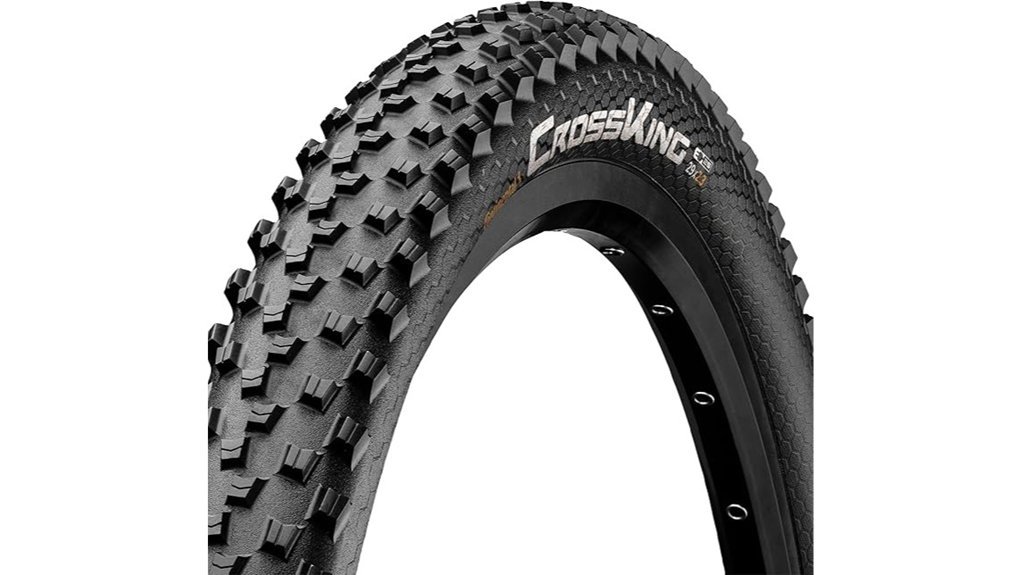
The Continental Cross King Tubeless Mountain Bike Tire stands out for riders who want a fast-rolling, versatile XC option with reliable puncture protection. Its 29×2.30 size suits cross-country and trail riding, while the Pure Grip Compound supports strong cornering and lasting mileage. A three-layer Tubeless Ready casing improves resistance to punctures without adding excessive bulk. The tread is tuned for smooth rolling and consistent grip across mixed terrain. Rated for E25 use, it fits e-bike applications as well. At 831 grams, it balances durability and efficiency for competitive or everyday mountain biking.
Best For: Cross-country and trail riders, including e-bike users, who want a fast-rolling 29×2.30 tubeless tire with solid grip, puncture protection, and long-lasting performance.
Pros:
- Fast-rolling tread and versatile design work well on mixed XC and trail terrain.
- Tubeless Ready, three-layer casing adds puncture protection without too much weight.
- Pure Grip Compound delivers strong cornering traction and good mileage.
Cons:
- Best suited for XC and light trail use, not aggressive downhill riding.
- Tubeless setup may require more initial installation effort than standard tires.
- At 831 grams, it may be heavier than some ultra-race-focused options.
AWD Electric Fat Tire Ebike with Dual Motors
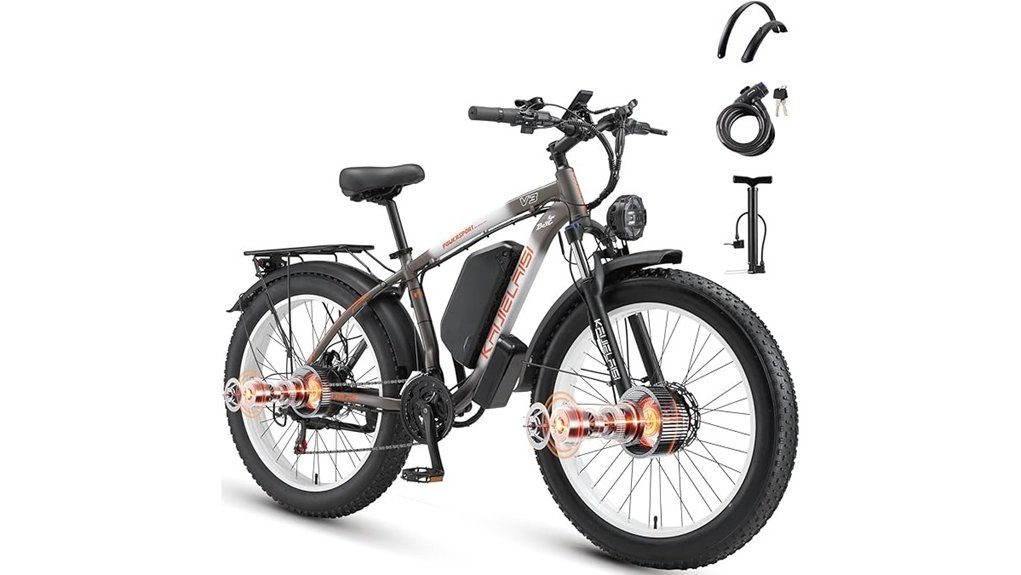
Built for riders who need serious traction, the AWD electric fat tire ebike shines on loose, steep, and uneven terrain. Its dual 2000W motors deliver 4000W peak power and 85N·M of torque, supporting climbs up to 40 degrees. A 48V 22.4Ah removable lithium-ion battery, certified to UL 2849, offers 50+ miles in PAS mode and 30+ miles in electric mode. Dual hydraulic disc brakes and front suspension improve control. Six riding modes, a 21-speed shifter, aluminum frame, and 85% pre-assembly round out the package.
Best For: Riders who want a powerful all-terrain electric fat tire bike for steep climbs, loose surfaces, and longer mixed-terrain rides.
Pros:
- Dual 2000W motors with 4000W peak power and strong torque for tough terrain and 40° climbs
- 48V 22.4Ah removable battery offers solid range, with UL 2849 certification and fast charging
- Dual hydraulic disc brakes, front suspension, and 21-speed gearing improve control and comfort
Cons:
- The bike may be heavy and harder to transport or lift because of the dual-motor fat-tire design
- Higher power and feature set likely mean a higher price than standard e-bikes
- Battery range can drop significantly in electric-only use, especially on steep or rough terrain
Canyon Spectral 125 AL 5
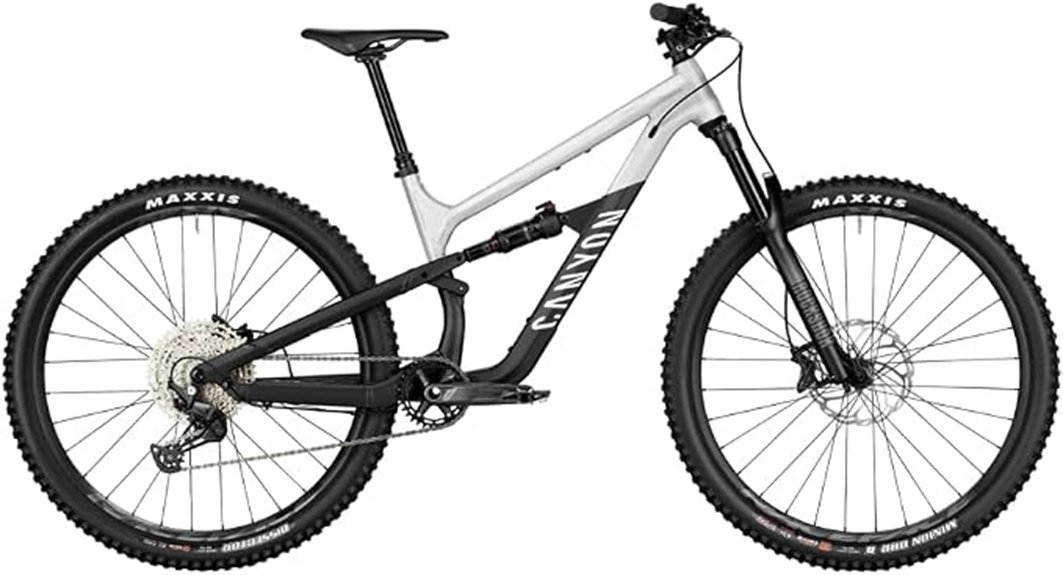
With 140mm front and 125mm rear travel, the Canyon Spectral 125 AL 5 suits intermediate riders tackling technical trails. Its lightweight aluminum chassis and progressive geometry aim to balance durability, agility, and stability on trail riding and jumps. A RockShox 35 Gold RL fork and Deluxe Select+ shock provide controlled suspension, while 29-inch wheels improve rollover speed. Shimano Deore M6100 12-speed drivetrain delivers a wide gear range for steep climbs and fast descents. Dual disc brakes, a dropper seatpost, and tubeless-ready wheels support confident handling. Pedal power remains the sole source.
Best For: Intermediate trail riders who want a capable 29-inch mountain bike for technical trails, jumps, and all-around pedal-powered performance.
Pros:
- Lightweight aluminum frame with progressive geometry for a strong balance of agility, stability, and durability
- RockShox suspension with 140mm front and 125mm rear travel helps handle rough descents and technical terrain
- Shimano Deore M6100 12-speed drivetrain, dropper seatpost, dual disc brakes, and tubeless-ready wheels add versatility and control
Cons:
- Best suited to intermediate riders, so beginners may find it less approachable
- Not ideal for riders seeking a pure cross-country or long-distance efficiency-focused bike
- Suspension travel and trail-focused design may be more than needed for casual rides or smoother terrain
Electric Mountain E-Bike for Adults, 20 MPH
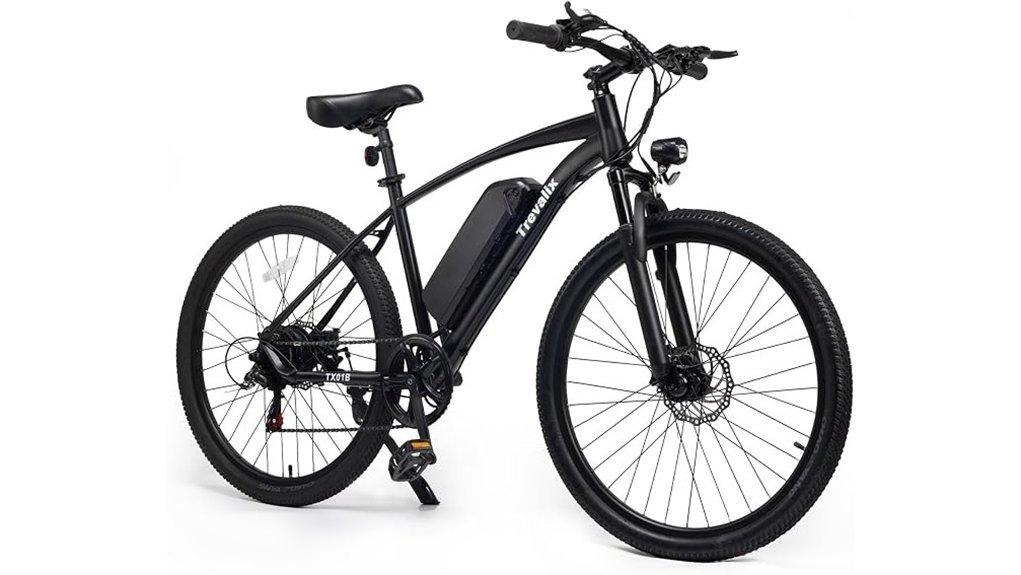
Suited for riders who want a reliable 20 MPH cross-country e-mountain bike, this model pairs a 500W peak motor with a cadence sensor for smooth, responsive assistance. The 41.8 Nm torque helps on climbs, while throttle and PAS modes balance speed and range, reaching up to 50 miles in lower assist. A removable 374.4Wh battery is rated for 400-plus cycles. Its 46.96-pound frame supports 264 pounds after extensive fatigue testing. Puncture-resistant 26-inch tires, Shimano 6-speed shifting, a 360-lumen headlight, IP65-protected components, and a two-year core warranty add practicality and confidence.
Best For: Riders looking for a reliable 20 MPH electric mountain bike for cross-country and all-terrain use, with smooth pedal assistance, solid climbing power, and practical everyday features.
Pros:
- 500W peak motor with 41.8 Nm torque and cadence sensor delivers smooth, responsive assistance and good hill-climbing support.
- Long-range battery options, with up to 50 miles in lower assist modes and a removable 374.4Wh battery for convenience.
- Durable and practical build, including a 264 lb weight capacity, puncture-resistant 26-inch tires, Shimano 6-speed shifting, and IP65-protected components.
Cons:
- Top speed is limited to 20 MPH, which may feel modest for riders wanting faster e-bike performance.
- Battery range drops significantly in higher assist modes, especially when using throttle-only riding.
- At 46.96 lbs, it may still feel somewhat heavy for frequent lifting or transport.
Jasion EB5 Electric Bike for Adults, 1000W Motor
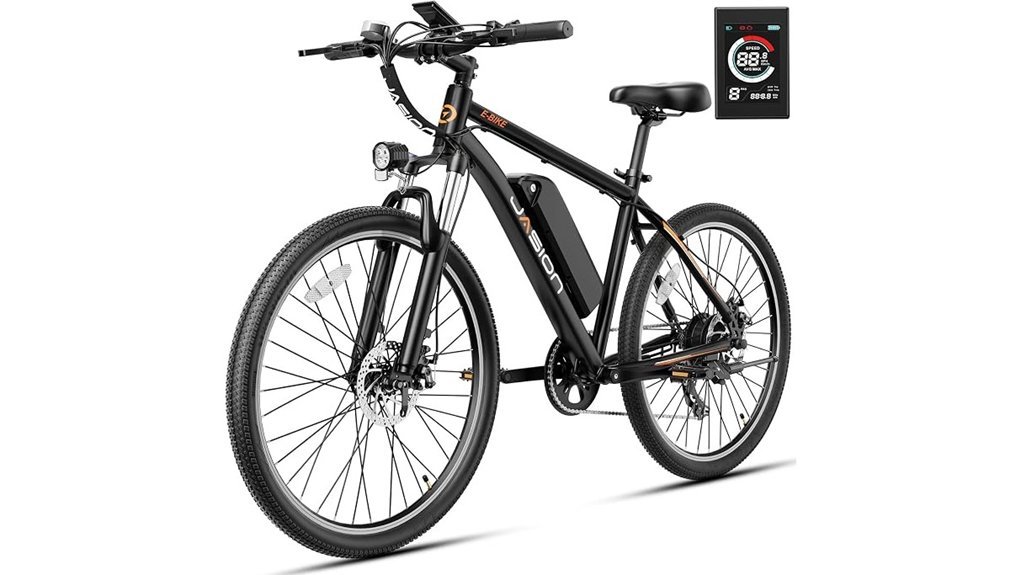
The Jasion EB5 suits riders wanting an affordable, lightweight e-bike with commuter-friendly versatility. Its 1000W peak brushless motor delivers up to 20 MPH, while four modes cover varied needs: PAS with three levels, throttle-driven pure electric riding, standard pedaling, and booster support for climbs. A 500Wh removable battery supplies 25 to 40 miles per charge and recharges in 5 to 6 hours. Comfort and control come from 26-inch puncture-resistant tires, front fork suspension, 7-speed gearing, dual lights, mechanical disc brakes, and an LCD display. Its 49.6-pound high-carbon steel frame keeps handling stable.
Best For: Commuters and casual riders who want an affordable, lightweight e-bike with solid range, simple controls, and versatile everyday performance.
Pros:
- 1000W peak motor provides up to 20 MPH and useful boost for hills.
- 500Wh removable battery offers a practical 25–40 mile range with 5–6 hour charging.
- Lightweight 49.6 lb frame with puncture-resistant tires, suspension, disc brakes, and 7-speed gearing.
Cons:
- Top speed is limited compared with higher-performance e-bikes.
- Battery range may vary significantly based on terrain, rider weight, and assist level.
- The steel frame adds durability, but the bike is still relatively heavy for carrying or lifting.
QnQ Electric Bike for Adults, 2000W 26″ Tires
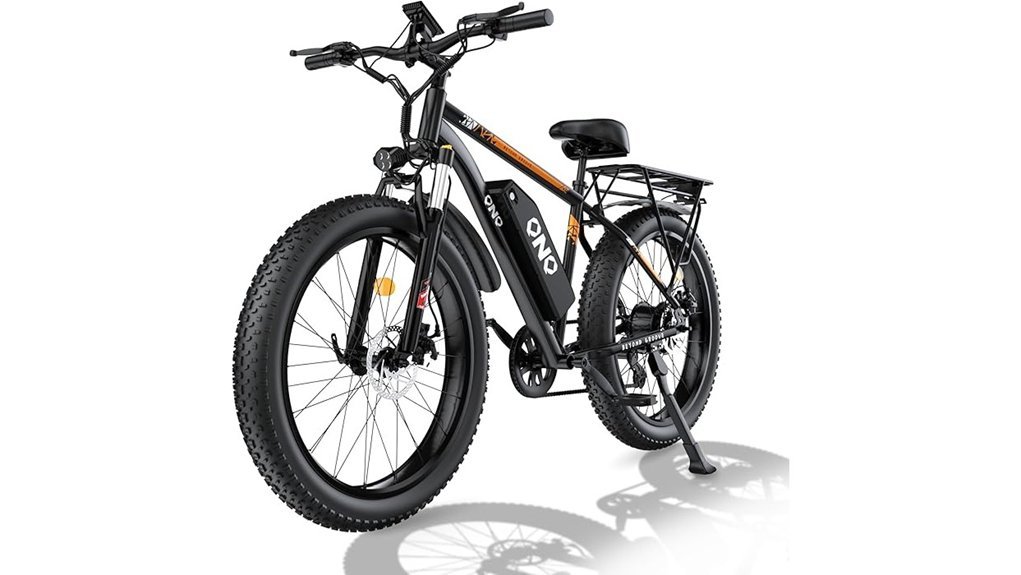
QnQ’s 2000W e-bike suits riders who want speed and all-terrain range. Its peak brushless motor reaches 34 mph and handles climbs up to 30 degrees, while the 48V 15Ah removable battery delivers about 36 miles per charge or up to 60 miles in PAS mode. The 26 x 4.0 fat tires, front fork suspension, dual mechanical disc brakes, and lockable rear shock support control on rough surfaces. A Shimano 7-speed drivetrain, LCD display, and USB charging add utility. Built on a high-carbon steel frame, it supports 330 lbs and arrives 90% assembled.
Best For: Riders who want a fast, high-power electric bike for all-terrain use, longer recreational rides, and commuting with heavy-duty stability.
Pros:
- 2000W peak motor delivers strong acceleration and a top speed of up to 34 mph.
- 26 x 4.0 fat tires, suspension, and dual disc brakes help it handle rough and varied terrain.
- Removable 48V 15Ah battery, LCD display, and Shimano 7-speed drivetrain add convenience and versatility.
Cons:
- At 77 lbs, it is relatively heavy and may be harder to carry or transport.
- Battery range drops to about 36 miles on a full charge, which may be limited for some riders.
- 90% assembly still requires some setup, which may be inconvenient for beginners.
Continental Cross King Tubeless Mountain Bike Tire
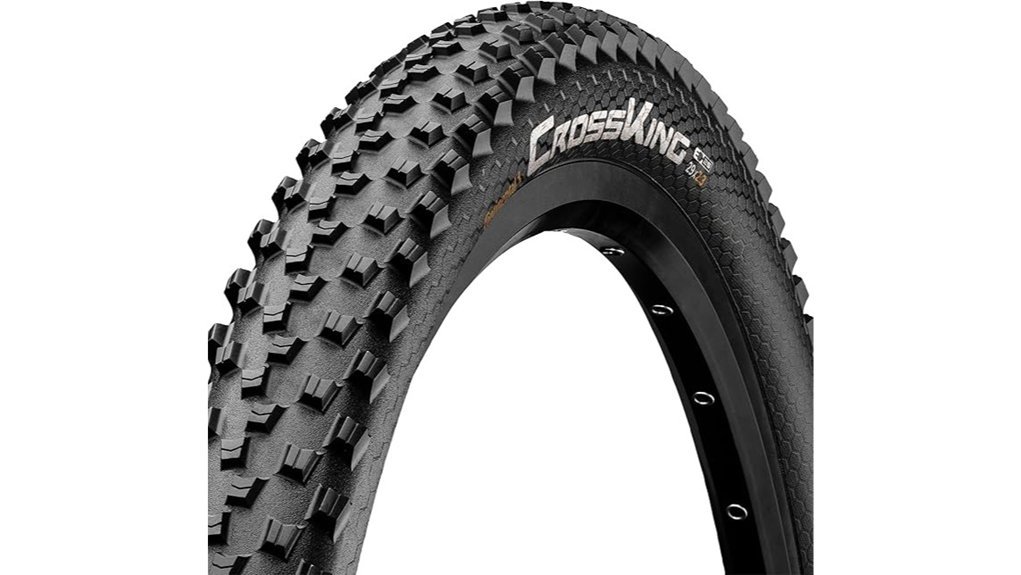
Continental’s Cross King tubeless tire suits riders who want versatile grip across trail and competition terrain. It is designed as an all-rounder for cross-country use, balancing traction, stability, and smooth rolling on mixed surfaces. The specialized tread supports confident cornering, while the PureGrip compound adds dependable grip and long-lasting durability. ShieldWall technology improves puncture protection without excessive weight, helping preserve low rolling resistance. With an E25 e-bike rating, it also handles added motor forces well, making it a practical choice for riders seeking reliability and adaptability on demanding routes.
Best For: Mountain bikers and e-bike riders who want a versatile, reliable tubeless tire for cross-country, trail, and mixed-terrain riding.
Pros:
- Offers strong all-around grip, stability, and confident cornering on varied terrain
- PureGrip compound balances durability with dependable traction
- ShieldWall technology adds puncture protection while helping keep rolling resistance low
Cons:
- Not the best choice if you need a highly specialized tire for mud, downhill, or pure speed
- Versatile tread can be a compromise compared with terrain-specific performance tires
- Tubeless setup may require more installation effort than standard tires
Factors to Consider When Choosing a Cross Country E Mountain Bike
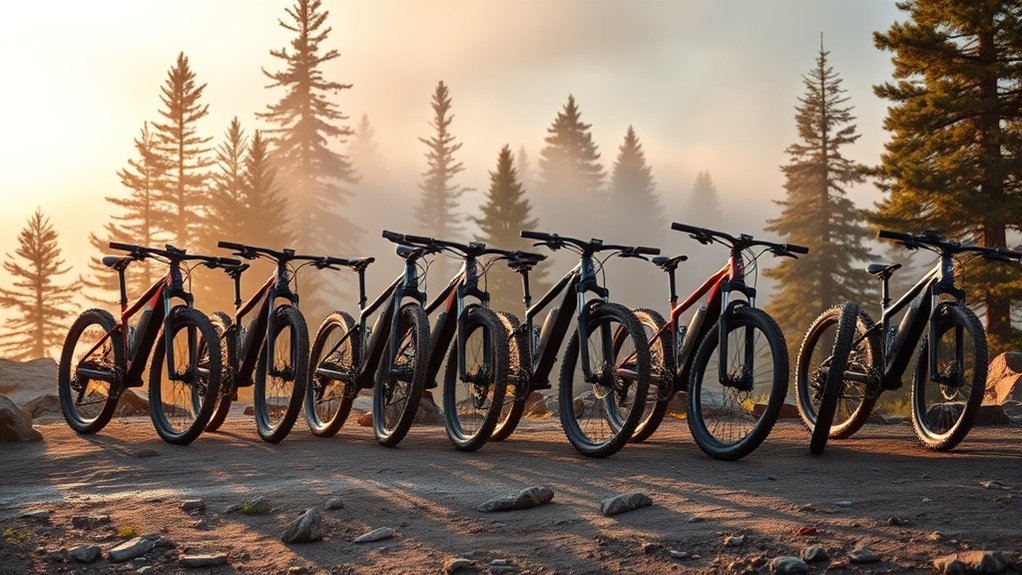
Selecting a cross country e mountain bike depends on how well its motor power and battery range match the intended rides. Frame geometry and suspension travel also shape efficiency, comfort, and control on varied terrain. Tire traction further influences climbing grip and cornering confidence, making it a key part of the decision.
Motor Power
Motor power is a key factor in cross-country e-mountain bike performance, with peak outputs typically ranging from 500W to 4000W depending on the intended ride style and terrain. Lower-output motors suit lighter assistance and efficient cruising, while 2000W and above deliver stronger torque, often reaching 85N·M, for steep climbs and rugged trails. Power also influences speed, with 1000W systems capable of about 20 MPH and higher-output models reaching 34 MPH. The motor’s delivery system matters as well: cadence sensors provide steady engagement, while torque sensors respond more naturally to pedaling force, improving control on variable terrain. Selection should balance acceleration, climbing ability, and the rider’s preference for smooth or aggressive assistance, since wattage shapes overall ride character.
Battery Range
Battery range is a critical consideration for cross-country e-mountain bikes, with typical real-world distances spanning roughly 25 to more than 50 miles depending on battery capacity, assist level, and terrain. Higher-voltage, higher-capacity packs, such as a 48V 22.4AH battery, can improve both endurance and power delivery on mixed routes. Pedal-assist modes usually extend riding time by moderating output, making them useful for longer cross-country outings. Range estimates should also account for terrain difficulty, rider weight, and riding intensity, since climbs and aggressive acceleration drain energy faster. Charging time matters as well, because a full recharge often takes 5 to 10 hours. For riders planning extended rides or back-to-back sessions, battery capacity and charging logistics can be as important as motor performance.
Frame Geometry
Frame geometry shapes how a cross country e-mountain bike handles on climbs, descents, and technical sections. Steeper angles usually improve climbing efficiency, while slacker angles increase control on descents. A head tube angle between 67° and 69° often offers a practical balance of agility and stability for cross country riding. A longer wheelbase can steady the bike at higher speeds and across mixed terrain, making it useful for varied routes. Top tube length also matters, since a shorter reach can improve maneuverability and comfort in tight sections. Lower bottom bracket heights may sharpen cornering stability, though they can raise the chance of pedal strikes on rough ground. Overall, geometry should match the rider’s terrain, speed, and handling preferences for consistent performance.
Suspension Travel
Suspension travel is another key factor in how a cross country e-mountain bike performs across different terrain, working alongside geometry to shape comfort and control. It describes how far the suspension can compress, directly influencing how well the bike manages rough ground. Cross-country models usually favor shorter travel, which improves pedaling efficiency and quick response on smoother trails. Typical front travel ranges from 80mm to 160mm, while rear travel may span 100mm to 170mm, depending on intended use. More travel helps absorb bigger bumps and maintains stability on descents, but it can add weight and reduce sharpness. Proper tuning is just as important, since the travel must suit rider weight and riding style to deliver balanced comfort and performance.
Tire Traction
Tire traction plays a major role in how a cross country e-mountain bike climbs, turns, and holds control on varied terrain. Tread design is central, since specialized patterns improve grip on dirt, gravel, and mixed trail surfaces, helping the bike stay composed during steep ascents and tight corners. Tire compound also matters; options such as PureGrip Compound can increase grip while preserving durability across changing conditions. Puncture protection, including ShieldWall technology, supports long-term tire integrity and helps traction remain consistent as wear builds. Tire width influences the contact patch too, with a 2.3-inch tire often offering a useful balance of grip and stability on uneven ground. Proper pressure completes the picture, as lower settings can enlarge the footprint and improve traction on soft or loose terrain.
Weight Balance
Weight balance is a key factor in cross country e-mountain bike performance, as a lower center of gravity can improve stability on uneven terrain. A bike with even weight distribution between the front and rear wheels tends to maintain better traction on climbs and descents, helping it stay composed when the surface changes. Lighter frames, often in the 30-40 lb range, usually respond more quickly, making tight turns and technical sections easier to manage. Centralizing the battery and motor can further improve agility by keeping mass closer to the frame’s core. Over long rides, a balanced setup also reduces fatigue, since less effort is needed to control the bike through obstacles and rough patches.
Braking System
Braking is a critical safety component on a cross country e-mountain bike, especially when descending steep terrain or handling technical trails where precise speed control matters. A reliable system should deliver strong stopping power and predictable modulation so speed can be managed with confidence in changing conditions. Hydraulic disc brakes are often favored because they typically provide better control and shorter stopping distances, particularly in wet weather, than mechanical alternatives. Weight also matters, since lighter brake components can support overall efficiency without sacrificing safety. Compatibility with the frame and wheel size should be verified to guarantee proper fit and straightforward maintenance. Routine checks of brake pads and fluid levels help preserve consistent performance, durability, and dependable control across varied terrain.
Gear Range
A broad gear range is essential on a cross country e-mountain bike, giving riders the flexibility to handle steep climbs, fast flats, and everything in between. A wide spread of gears helps maintain efficiency across changing terrain, letting riders choose lower ratios for steep ascents and higher ratios for quicker sections. Systems with 21 speeds or Shimano 12-speed setups offer useful versatility, allowing smooth shifts as trail conditions change. The right gear ratio can improve climbing performance while supporting speed on descents and open trails. It also helps preserve endurance by keeping cadence steady and reducing fatigue over long distances. When selecting a bike, riders should match gear range to fitness level and the routes they expect to ride most often.
Frequently Asked Questions
How Often Should a Cross Country E-Mountain Bike Battery Be Replaced?
A cross country e-mountain bike battery should typically be replaced after 3 to 7 years, or when it no longer holds enough charge for intended rides. Battery lifespan depends on usage, storage, temperature, and charging habits. With moderate care, many batteries last 500 to 1,000 full charge cycles. A noticeable drop in range, slow charging, or swelling usually signals replacement. Regular maintenance can extend useful battery life considerably.
Can Cross Country E-Mountain Bikes Handle Steep Technical Descents Safely?
Yes, cross country e-mountain bikes can handle steep technical descents safely, but only when ridden by skilled riders and set up correctly. Their lighter frames and efficient geometry help with control, yet limited suspension travel and faster speeds can make rough descents more demanding. Proper brakes, tire choice, suspension tuning, and cautious line selection are essential. On very aggressive terrain, a trail or enduro e-bike is often more appropriate.
What Maintenance Differs Between Mid-Drive and Hub-Drive E-Mtbs?
Mid-drive e-MTBs usually need more drivetrain attention because motor force passes through the chain, cassette, and chainring, increasing wear and requiring frequent cleaning, lubrication, and replacement. Hub-drive systems place less stress on those parts, but they often demand closer checks on wheel bearings, spokes, and motor wiring. Both types still need battery care, brake inspection, firmware updates, and regular bolt torque checks to stay reliable on rough terrain and steep climbs.
Are Cross Country E-Mountain Bikes Allowed on All Mountain Bike Trails?
Not all cross country e-mountain bikes are allowed on all mountain bike trails. Like a key that opens some doors but not others, access depends on local rules, land manager policies, and trail classifications. Some trails permit pedal-assist bikes, while others restrict them to non-motorized use only. Riders should check signage, park regulations, and trail maps before heading out, since legality can change by region, season, or bike type.
How Much Weight Can a Cross Country E-Mountain Bike Carry?
A cross country e-mountain bike typically carries about 120 to 150 kg total, including rider, gear, and any cargo, though exact limits vary by frame, motor system, and wheel design. Manufacturers usually specify a maximum gross weight, and exceeding it can reduce handling, battery efficiency, and component life. Heavier-duty models may support more, but the safest reference remains the bike’s published load rating and warranty terms.