Electric mountain bikes in [2026] are evolving quickly, with stronger motors, longer battery life, and better suspension shaping the newest models. From high-powered options like the EDIKANI and ASKGO to practical choices such as ANCHEER and Vivi, each bike serves a different rider need. The real question is which one balances power, comfort, and value best, and the answer is not as obvious as it first appears.
Key Takeaways
- Look for 500W–2000W motors; higher-power e-bikes climb better and can reach speeds up to 32 mph.
- Prioritize battery range and charging time, since real-world mileage often falls below manufacturer claims.
- Choose full suspension or lockable front forks for better comfort, control, and impact absorption on rough trails.
- Check for dual disc brakes, anti-slip tires, and UL certification to improve safety at higher speeds.
- Compare assembly, ride modes, and warranty support, especially on models like EDI KANI, ASKGO, ANCHEER, Hoverfly, and Vivi.
EDIKANI Electric Mountain Bike 2000W Peak 19.2Ah
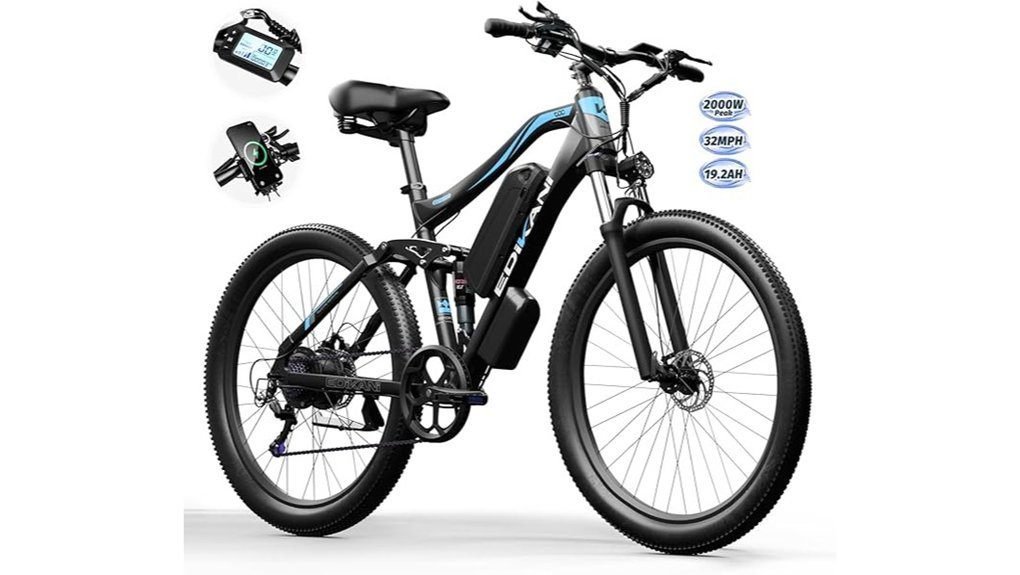
The EDIKANI Electric Mountain Bike 2000W Peak 19.2Ah is a strong choice for riders who want serious power and long-range versatility in one package. Its 2000W peak brushless motor reaches up to 32 mph and delivers 55NM of torque, while the 48V 19.2Ah battery supports an estimated 40 to 80 miles per charge. Five riding modes, including pedal assist, full throttle, cruise, and walking, add flexibility. An aluminum frame, full suspension, dual disc brakes, and anti-slip 27.5-inch tires improve control, comfort, and safety across commuting, trails, and rough terrain.
Best For: Riders who want a powerful, long-range electric mountain bike for commuting, trail riding, and rough-terrain adventures.
Pros:
- 2000W peak motor with up to 32 mph speed and strong 55NM torque
- 48V 19.2Ah battery offers an estimated 40–80 miles of range
- Full suspension, dual disc brakes, and anti-slip tires improve comfort and control
Cons:
- Heavier-duty performance may be more than casual riders need
- Range can vary significantly depending on terrain, mode, and rider weight
- Assembly is easier than average, but still requires some setup and adjustment
Vivi Electric Mountain Bike for Adults (750W)
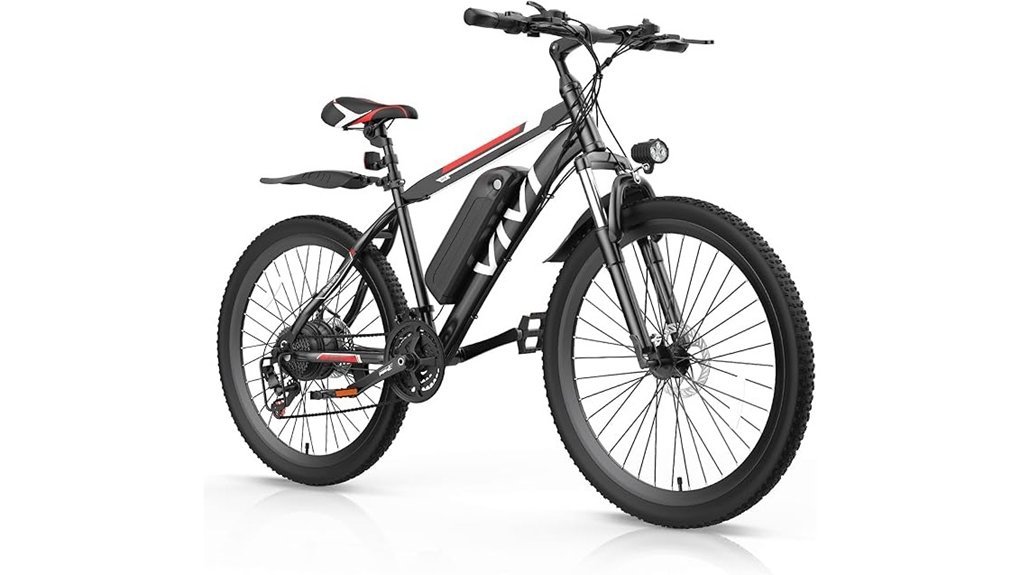
Built for budget-minded riders, the Vivi Electric Mountain Bike for Adults balances punchy power with everyday practicality. Its 500W motor, peaking at 749W, delivers quiet, efficient assistance and reaches 20 mph for quicker trips. The removable 48V battery supports 22 to 25 miles in throttle mode and 44 to 50 miles with pedal assist, then recharges in 4 to 6 hours. Five riding modes add flexibility, while the aluminum frame, 21-speed drivetrain, disc brakes, front suspension, and grippy tires improve control on hills, gravel, and city streets. Bright LED lighting supports safer night riding.
Best For: Budget-minded adults who want a versatile electric mountain bike for commuting, light trail riding, and everyday use.
Pros:
- Strong 500W motor with 749W peak power and up to 20 mph speed
- Removable battery with solid range and relatively quick 4 to 6 hour charging
- Useful features like five riding modes, 21-speed drivetrain, front suspension, and disc brakes
Cons:
- Pure electric range is fairly limited compared with higher-end e-bikes
- Top speed may feel modest for riders wanting more performance
- Best suited for casual riding rather than heavy off-road use
Hoverfly Electric Bike for Adults, 26″/16″ Models
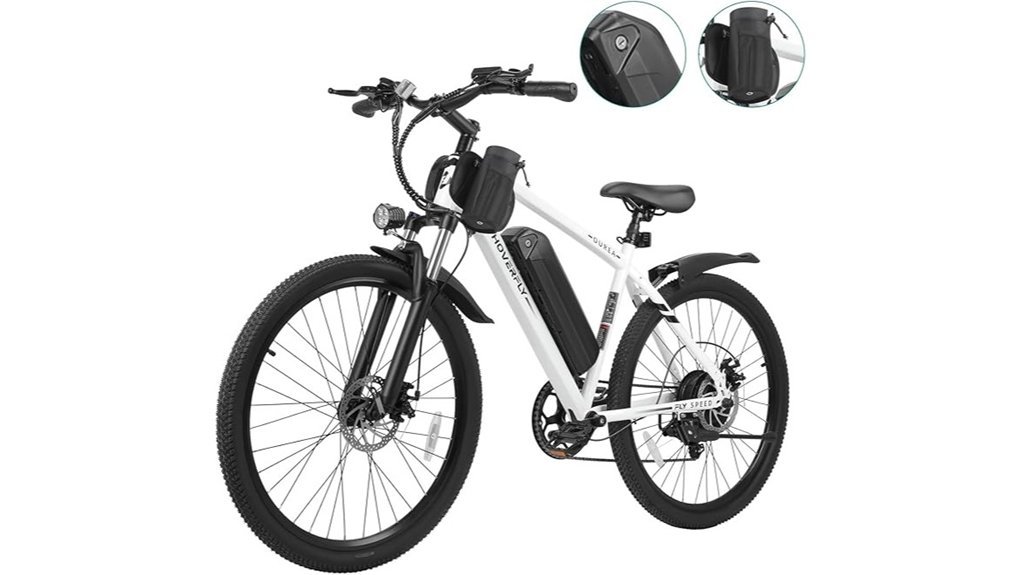
Hoverfly’s 26″/16″ electric bike suits riders wanting affordable trail-ready power. Available in 26-inch and 16-inch versions, it uses a 750W or 500W peak motor, reaching 20 MPH or 15.5 MPH. A removable 48V or 36V battery with 374.4Wh capacity delivers up to 40 miles on pedal-assist or 20 miles on throttle, then recharges in about five hours. Seven-speed gearing, throttle support, front suspension, and disc brakes help on mountains, trails, commutes, and snow. It also includes lights, a bell, mudguards, a frame bag, UL2849 certification, and a 365-day warranty.
Best For: Adults looking for an affordable, trail-ready electric bike for commuting, light off-road riding, and mixed terrain with solid range and safety features.
Pros:
- Offers strong performance with 750W/500W peak motor options, up to 20 MPH, and up to 40 miles of pedal-assist range.
- Includes practical features like 7-speed gearing, throttle support, front suspension, disc brakes, lights, mudguards, and a frame bag.
- UL2849 certified and backed by a 365-day warranty for added peace of mind.
Cons:
- At 53.5 pounds, it may feel heavy for carrying or transport.
- Full recharge takes about 5 hours, which may be inconvenient for frequent riders.
- The electric-only range is limited to about 20 miles, which may not suit longer all-electric trips.
ANCHEER Electric Mountain Bike 26″ Ebike UL2849 Compliant
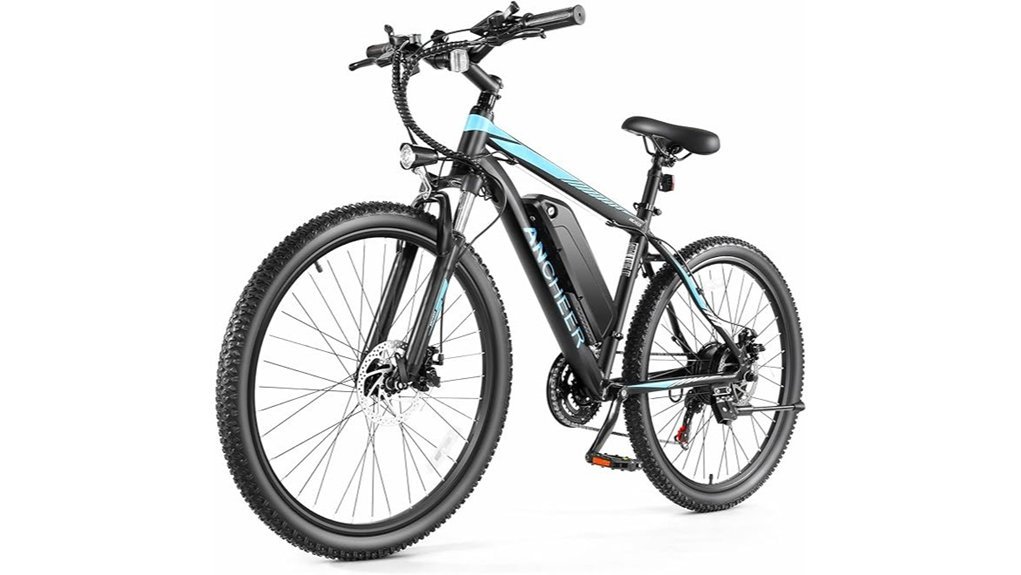
ANCHEER’s 26-inch e-mountain bike suits riders wanting a budget-friendly, UL2849-compliant trail-ready option. It pairs a 500W brushless geared motor with a 48V/374Wh battery, delivering up to 19.8 mph and as much as 55 miles of range in low pedal-assist mode. Riders can choose from five PAS levels, throttle riding, cruise mode, or standard pedaling, while the 21-speed drivetrain broadens terrain flexibility. An aluminum alloy frame, lockable suspension fork, disc brakes, and double-walled rims support durability. Assembly is mostly complete, and one-year service plus lifetime technical support adds reassurance.
Best For: Budget-conscious adults who want a UL2849-compliant 26-inch electric mountain bike for light trail riding, commuting, and versatile everyday use.
Pros:
- 500W brushless geared motor and 48V/374Wh battery provide up to 19.8 mph and an estimated 55-mile range in low PAS mode.
- Multiple riding options, including 5 PAS levels, throttle mode, cruise mode, and pure pedal mode, add flexibility.
- Durable build with an aluminum alloy frame, lockable suspension fork, disc brakes, and double-walled rims helps support safety and comfort.
Cons:
- 85% pre-assembled still requires some setup, which may be inconvenient for beginners.
- Range and speed can vary significantly based on terrain, rider weight, and assist level.
- The 26-inch design and basic feature set may not suit riders looking for a more advanced or premium e-bike.
ASKGO 1500W Electric Mountain Ebike for Adults
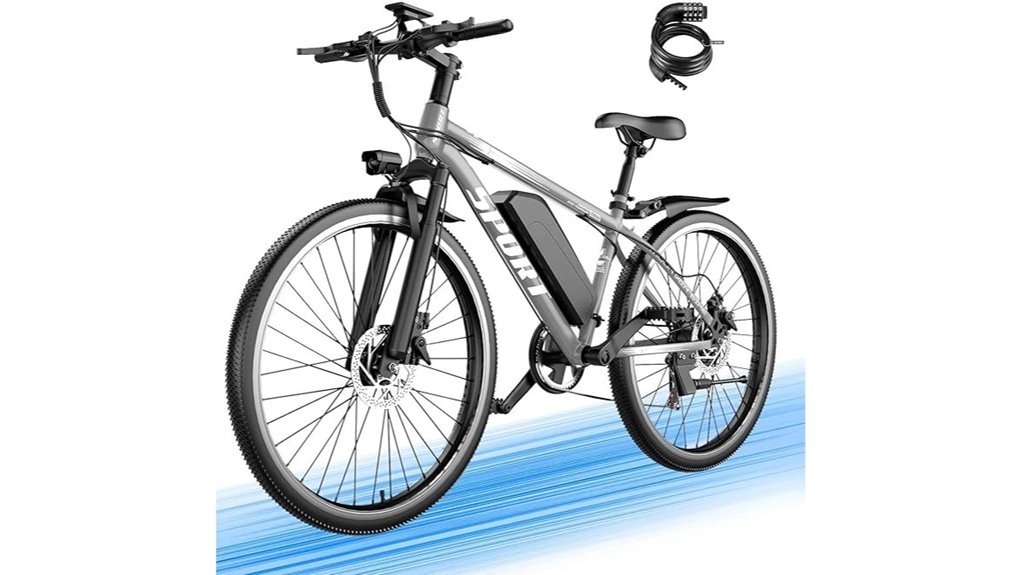
ASKGO’s 1500W electric mountain ebike suits riders seeking strong power without sacrificing comfort. Its 1500W peak motor, rated at 750W, reaches speeds up to 25 MPH, while the 48V 10.4Ah removable battery provides up to 65 miles per charge and recharges in 4–5 hours. Dual suspension from the front fork and seat post helps smooth rough terrain. Black and Blue models include 7 speeds; Grey uses single speed. A 400-lumen headlight, dual disc brakes, and anti-slip tires support safety. It arrives 95% assembled and includes a 36-month warranty.
Best For: Riders who want a powerful, comfortable electric mountain ebike for commuting, trail riding, and everyday travel.
Pros:
- Strong 1500W peak motor with speeds up to 25 MPH
- Long-lasting removable battery with up to 65 miles of range
- Dual suspension, disc brakes, and anti-slip tires improve comfort and safety
Cons:
- Grey model has only a single-speed setup
- 4–5 hour charging time may still be inconvenient for some users
- High-power ebike may be more than casual riders need
Electric Full Suspension E-Bike with 1500W Peak Motor
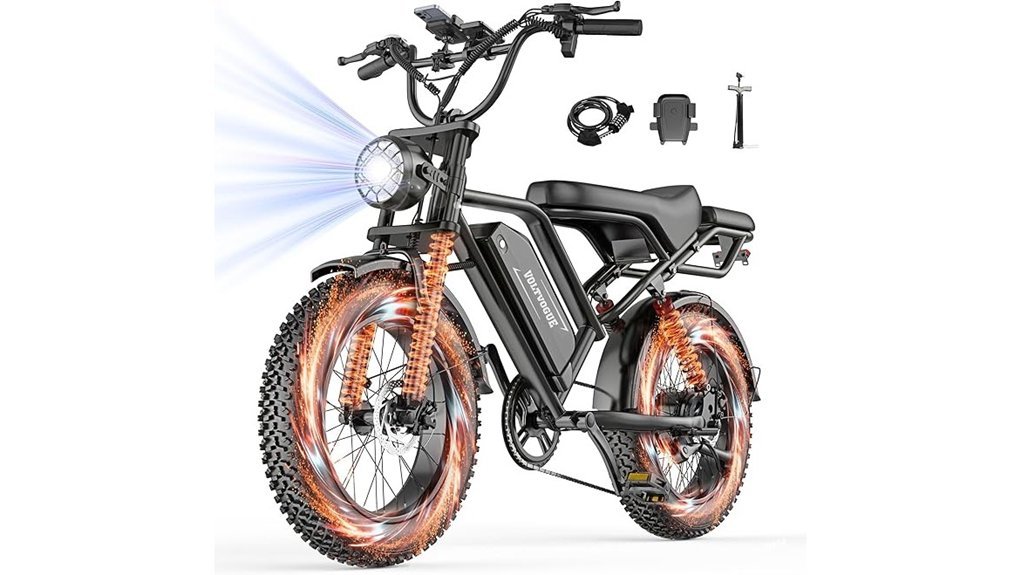
With a 1500W peak motor and 80 Nm of torque, this full-suspension e-bike suits riders who want serious climbing power. It reaches 31 mph, handles 30-degree slopes, and offers five speed levels from 6 to 31 mph through app customization. Smart cruise control engages after eight seconds of steady riding. A 48V 20Ah battery provides 40 to 70 miles per charge and recharges in about six hours. Four shock absorbers, fat tires, and a widened rear seat improve comfort and utility. A smart LCD, 90% preassembly, and a one-year warranty complete the package.
Best For: Riders who want a powerful, long-range full-suspension e-bike for commuting, hill climbing, and comfortable all-terrain riding.
Pros:
- 1500W peak motor with 80 Nm of torque delivers strong acceleration and climbing ability.
- 48V 20Ah battery offers a solid 40 to 70 miles of range per charge.
- Full suspension, fat tires, and a widened rear seat improve comfort and versatility.
Cons:
- Top speed and high power may be more than casual riders need.
- Charging takes about 6 hours, which may be inconvenient for frequent use.
- Heavier, feature-rich e-bikes can be less portable and harder to store.
Fat Tire Electric Bike for Adults, 750W/1000W 48V
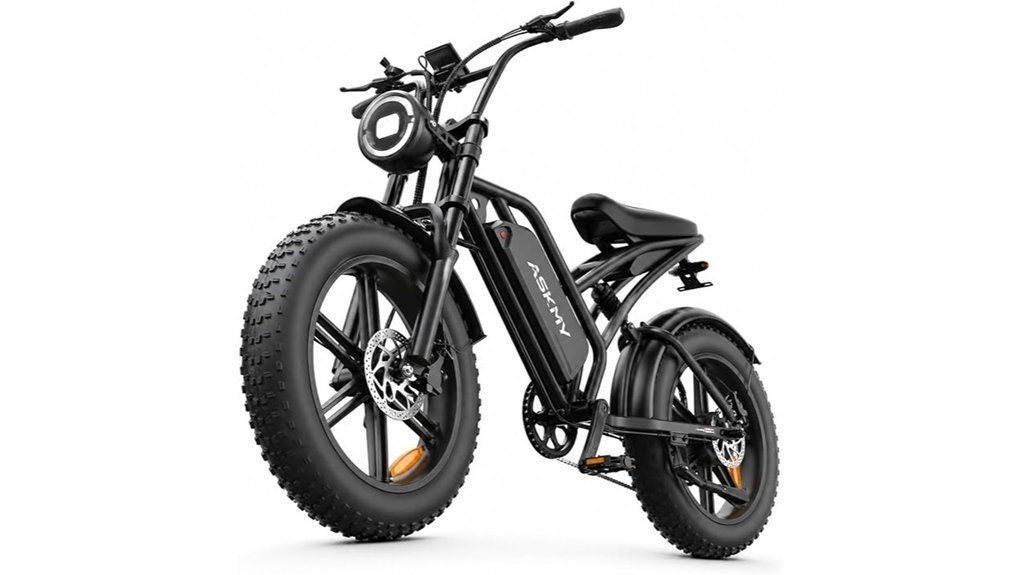
This fat-tire e-bike suits adults needing stable, all-terrain power in a compact package. Its 750W continuous motor and 1000W peak output provide confident acceleration, while the 48V 15Ah removable battery delivers up to 30 miles in electric mode and 60 miles with pedal assist. Charging takes about five to six hours. The 20-inch x 4.0-inch tires, reinforced frame, and 330-pound capacity support mixed terrain use. Triple suspension, an extra-wide saddle, UL 2849 certification, IPX4 resistance, seven-speed gearing, cruise control, reverse gear, and LCD diagnostics round out the package.
Best For: Adults who want a compact, stable fat-tire e-bike for commuting and all-terrain riding with strong power, good range, and comfort features.
Pros:
- Powerful 750W continuous motor with 1000W peak output for confident acceleration.
- 48V 15Ah removable battery offers up to 30 miles in electric mode and 60 miles with pedal assist.
- Triple suspension, wide saddle, and 4-inch fat tires improve comfort and stability on mixed terrain.
Cons:
- The 30-mile electric-only range may be limiting for longer rides.
- 20-inch wheels and compact frame may feel small for taller riders.
- Heavier all-terrain design can be less convenient for carrying or storing.
Electric Fat Tire Ebike for Adults, 1500W Motor
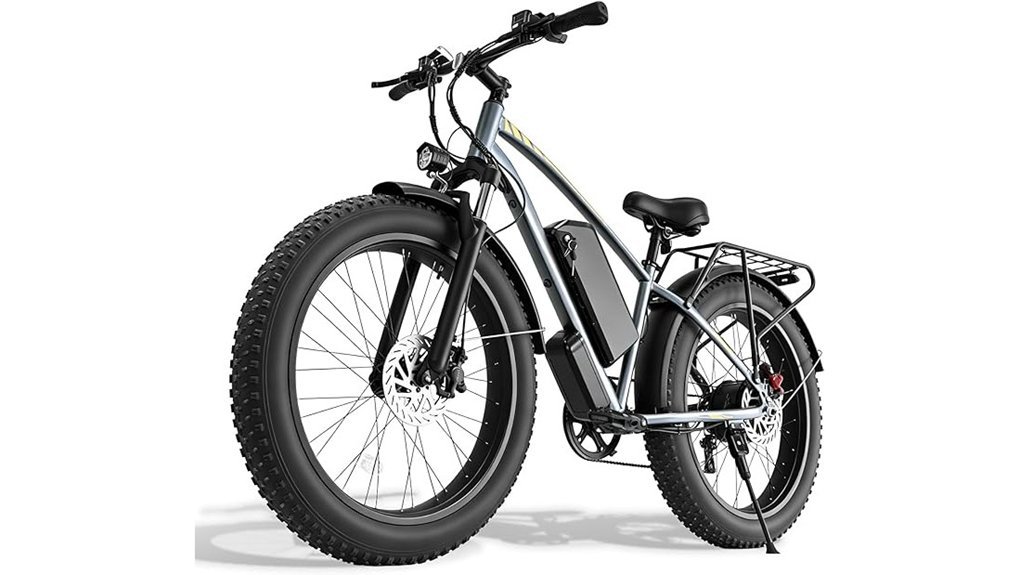
Built for riders who want serious power, this fat-tire e-bike delivers up to 32 mph. Its 1500W brushless motor produces 62 Nm of torque, helping it handle 30-degree climbs under a 200-pound test load. Three speed settings pair with 7-speed gearing for adaptable control. A 48V 18.2Ah removable battery offers up to 50 miles of electric range and 80 to 100 miles with pedal assist. The 26 x 4.0 tires, front suspension, and steel-alloy frame support sand, snow, and mountain use, while UL 2849 certification adds safety.
Best For: Riders who want a powerful all-terrain fat tire e-bike with strong hill-climbing ability, long battery range, and a comfortable setup for sand, snow, and mountain riding.
Pros:
- Up to 32 mph top speed with a 1500W brushless motor and 62 Nm of torque
- Long range with a 48V 18.2Ah removable battery, offering up to 50 miles electric and 80 to 100 miles pedal-assist
- Fat tires, front suspension, and UL 2849 certification make it well-suited for varied terrain and safer riding
Cons:
- At 81 lbs, it may be heavy and harder to carry or transport
- Full charging time of 9 to 10 hours is relatively long
- Large power and size may be more than casual riders need for simple commuting
Electric Bike for Adults, 1500W Peak Motor
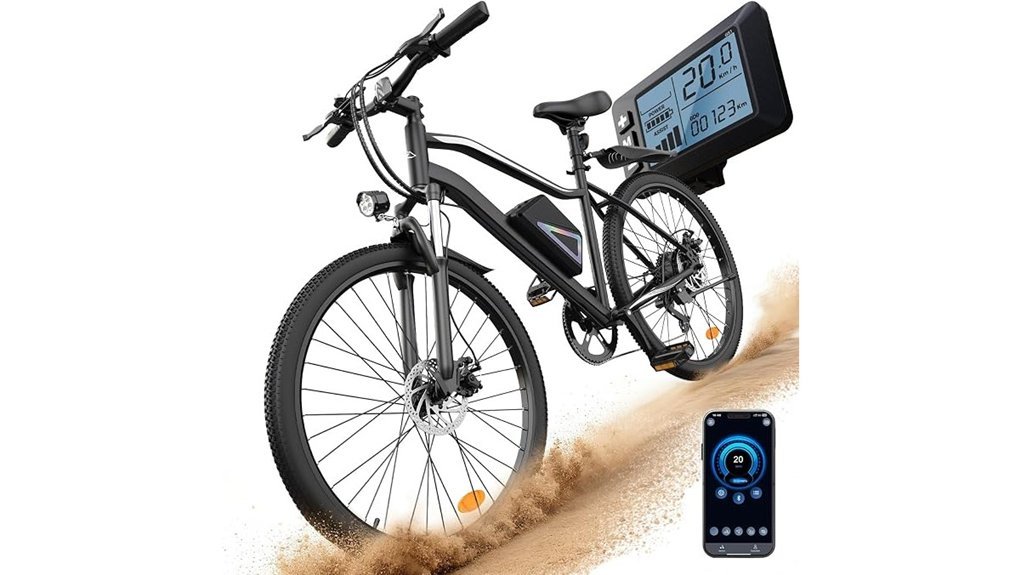
The 750W-rated motor with 1000W peak output suits adults needing strong daily commuting power. It delivers quick acceleration for hills, errands, and city routes, while five speed settings, from 10 to 20 MPH, add control. A pedal-assist range of up to 55 miles supports longer outings without frequent charging. The 26-inch wheels, seven-speed gearing, and 49.6-pound frame improve handling across mixed terrain. Smart app control, a digital display, adjustable seat, and dual disc brakes strengthen usability and safety. This black adult bike also handles dirt paths and light trails.
Best For: Adults who want a versatile electric bike for commuting, errands, and light off-road riding with strong power and long pedal-assist range.
Pros:
- Strong 750W-rated motor with 1000W peak output for quick acceleration and hill climbing
- Up to 55 miles of pedal-assist range, reducing the need for frequent charging
- Useful features like app control, digital display, adjustable seat, and dual disc brakes
Cons:
- 49.6-pound weight may be less convenient for carrying or lifting
- Top speed settings may be limiting for riders wanting higher-speed performance
- Best suited for light trails and dirt paths, not more rugged off-road terrain
Funhang Electric Mountain Bike for Adults (1000W Peak)
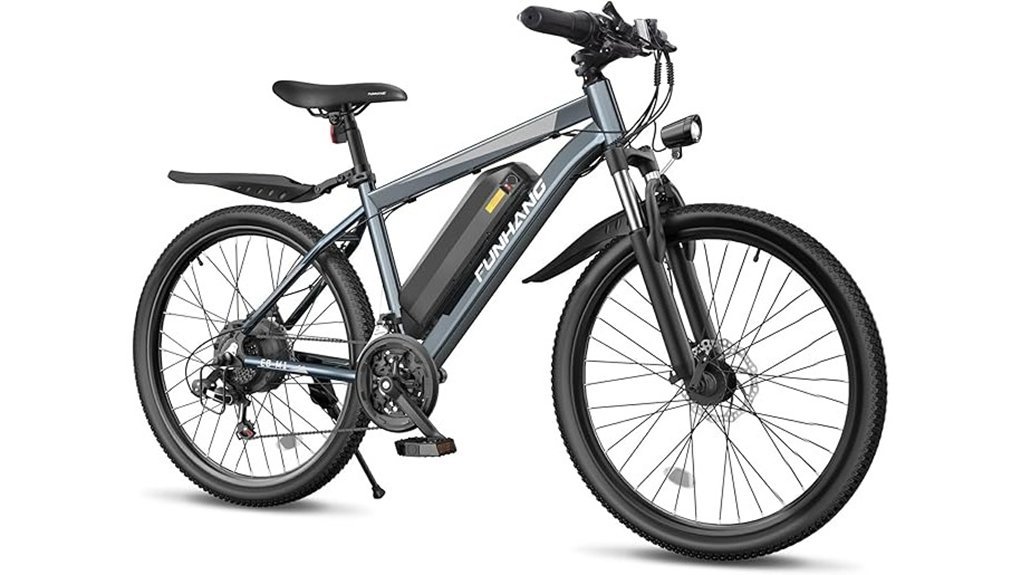
With a 500W motor peaking at 1000W, the Funhang EB-M1 suits adults and teens wanting stronger hill support. Its 26-inch frame fits riders from 5’3” to 6’1” and supports up to 300 lbs. A 48V removable battery delivers 25 to 30 miles in throttle mode or 40 to 50 miles with pedal assist, then recharges in 4 to 5 hours. UL 2849 and UL 2271 certifications, dual disc brakes, front suspension, and LED lighting add confidence. Five riding modes, seven speeds, and an LCD complete the package.
Best For: Adults and teens who want a powerful, versatile electric mountain bike for hill climbs, commuting, and casual off-road riding.
Pros:
- Strong 500W motor with 1000W peak for better hill support
- Good range with 25–30 miles in throttle mode and 40–50 miles with pedal assist
- UL 2849 and UL 2271 certified with dual disc brakes and front suspension for added safety
Cons:
- 26-inch size may not fit riders outside the 5’3” to 6’1” range well
- Range will drop noticeably if ridden mostly in full-throttle mode
- 85% pre-assembled still requires some setup and adjustment
Factors to Consider When Choosing an Electric Mountain Bike Review
When reviewing an electric mountain bike, attention typically centers on motor power and battery range, since these determine climbing ability and ride length. Suspension comfort and brake safety are also important because they affect control and confidence on rough terrain. Frame durability completes the evaluation, as a strong build supports long-term reliability under demanding use.
Motor Power
Motor power is one of the most important factors in an electric mountain bike review, typically ranging from 500W to 2000W and directly affecting acceleration and climbing ability on steep terrain. Higher-wattage systems, especially 1500W and above, can deliver speeds up to 32 mph, which suits aggressive riders and rough trails. Torque matters just as much, since ratings around 80 Nm improve control and traction on steep inclines. Adjustable speed modes add flexibility, allowing one bike to serve both relaxed rides and demanding climbs. Stronger motors also influence efficiency, and well-matched pedal-assist setups can support longer ranges while preserving performance. In practice, motor selection determines how confidently an electric mountain bike handles varied terrain and how much effort the rider must contribute.
Battery Range
Battery range is the next major factor after motor power, because even the strongest eMTB is limited by how far it can go before recharging. Range varies widely across models: some deliver 20 to 25 miles in pure electric mode, while pedal-assist settings can extend rides to 80 to 100 miles. Battery capacity, usually listed in watt-hours, gives a clearer sense of endurance, with higher Wh ratings supporting longer outings. Real-world range, however, often falls short of manufacturer claims because terrain, rider weight, and assist level all affect consumption. Charging typically takes 4 to 10 hours, so downtime matters. Removable batteries add convenience, letting riders charge indoors or carry a spare for extended trips.
Suspension Comfort
Suspension comfort is a key factor in an electric mountain bike because it directly affects control, stability, and rider fatigue on rough terrain. Full suspension systems can absorb 80 to 85 percent of impact forces, reducing vibrations and shocks that otherwise transfer to the rider. That improvement supports smoother handling and greater confidence on rocky trails, uneven streets, and mixed terrain. Bikes with advanced suspension, including multiple shock absorbers, often deliver better balance and versatility across urban, mountain, and snowy conditions. Lockable front forks add adaptability by letting riders match the setup to climbing, cruising, or rough descents. Adjustable suspension settings further refine comfort and support, while consistent tire contact with the ground improves traction, efficiency, and overall ride quality on demanding surfaces.
Brake Safety
Brake performance is another major factor in an electric mountain bike review, since strong stopping power helps preserve control when terrain becomes steep, loose, or unpredictable. Dual disc brake setups often deliver the dependable stopping force needed on mixed surfaces and at higher speeds. Mechanical disc brakes are frequently favored for their consistency in wet or muddy conditions, where dependable response matters most. Brake choice should also match the bike’s weight capacity, because heavier e-mountain bikes place greater demand on the system. Models built for faster riding or heavier loads benefit from more advanced braking technologies. Regular upkeep of pads and rotors remains essential, since worn components reduce control and raise accident risk. A well-matched brake system supports safer riding across varied environments and demands.
Frame Durability
Frame durability plays a major role in electric mountain bike performance, especially when rides involve rough trails, repeated impacts, and heavy loads. Frame material strongly influences longevity, with aluminum alloy offering a practical balance of low weight and strength, while steel provides extra sturdiness at the cost of added mass. A well-built frame should include reinforced joints and welds to improve stability across uneven terrain. Full suspension designs can further protect the structure by absorbing shock and reducing stress during rugged riding. Weight capacity also matters, since frames rated for 330 lbs or more usually rely on stronger construction methods. Regular inspections and maintenance help detect cracks, wear, or loose connections early, supporting long-term safety and reliability.
Ride Modes
Ride modes shape how an electric mountain bike handles different terrain and rider preferences, with most models offering Pedal Assist, Full Throttle, and traditional pedaling for flexible control. These options let riders balance effort and assistance across steep climbs, technical trails, and city streets. Many bikes add five adjustable speed levels, making it easier to switch from efficient commuting support to stronger off-road power. Cruise Control can maintain a steady pace on long stretches, reducing fatigue during extended rides. Walk Assist is useful when pushing the bike up inclines or through crowded areas, where low-speed maneuvering matters. Together, these modes increase versatility and help one bike suit varied conditions without sacrificing control, comfort, or responsiveness.
Frequently Asked Questions
How Do I Maintain an E-Mtb Battery for Maximum Lifespan?
For maximum lifespan, the battery should be kept between 20% and 80% charge, avoiding frequent full discharges or long periods at 100%. It should be stored in a cool, dry place, ideally around half charge if unused for weeks. Heat, cold, and fast charging should be minimized when possible. Regular use, gentle charging habits, and following the manufacturer’s guidelines help preserve capacity and delay battery aging over time.
What Motor Torque Is Best for Steep Mountain Trails?
For steep mountain trails, 85 to 90 Nm is often ideal, like a mountain goat with a stronger-than-expected engine, poised to climb without hesitation. This torque range helps when gradients bite hard, especially on technical ascents and loose surfaces. Lower torque can suffice for lighter riders, but steeper terrain rewards stronger pull and smoother cadence support. More torque also demands better traction control and battery management on long climbs.
Are Electric Mountain Bikes Allowed on All Trail Systems?
No, electric mountain bikes are not allowed on all trail systems. Access depends on local rules, land ownership, and the bike’s class or motor type. Some trails permit Class 1 eMTBs, while others restrict all motorized assistance. Managers may close routes to protect terrain, wildlife, or other users. Before riding, a person should check posted signs, agency maps, and current regulations to avoid fines or trail violations.
How Much Does an Average 2026 E-Mtb Weigh?
An average 2026 e-mtb typically weighs about 45 to 55 pounds, or roughly 20 to 25 kilograms. Lightweight models can come in closer to 38 pounds, while full-power trail and enduro bikes often reach 55 to 60 pounds. Weight depends mainly on motor size, battery capacity, frame material, and suspension travel. Heavier batteries and stronger components usually add mass, but improve range, durability, and downhill stability overall.
Can I Ride an Electric Mountain Bike in Heavy Rain?
Yes, an electric mountain bike can be ridden in heavy rain, but caution should rule like a steady compass in a storm. Most e-MTBs are weather-resistant, not waterproof, so deep puddles, submerged motors, and soaked batteries can invite damage. Reduced traction also lengthens braking distances and sharpens risk. Afterward, the bike should be dried, cleaned, and inspected. The rider’s judgment remains the safest suspension on wet trails.