Choosing the right electric mountain bike for hill climbing in [2026] depends on more than top speed. Motor power, torque, battery range, and suspension all shape how well a bike handles steep ground. Models from the Aipas M1 Pro to dual-motor all-terrain options suggest a wide spread of performance and price. The real question is which features matter most when the trail turns sharply upward.
Key Takeaways
- For steep hills, choose e-MTBs with 1000W to 3000W motors and 80Nm to 110Nm torque for strong climbing power.
- Long-range hill climbing works best with 48V to 52V batteries, especially 17.5Ah to 40Ah capacities.
- Fat tires, dual suspension, and front suspension improve traction, stability, and comfort on rough uphill terrain.
- Hydraulic disc brakes and multi-speed drivetrains make steep descents safer and help riders maintain cadence on climbs.
- Heavier, higher-power models suit aggressive riders, while step-thru and lighter options are better for commuting and easier handling.
Electric Bike for Adults, 1000W Peak 20MPH
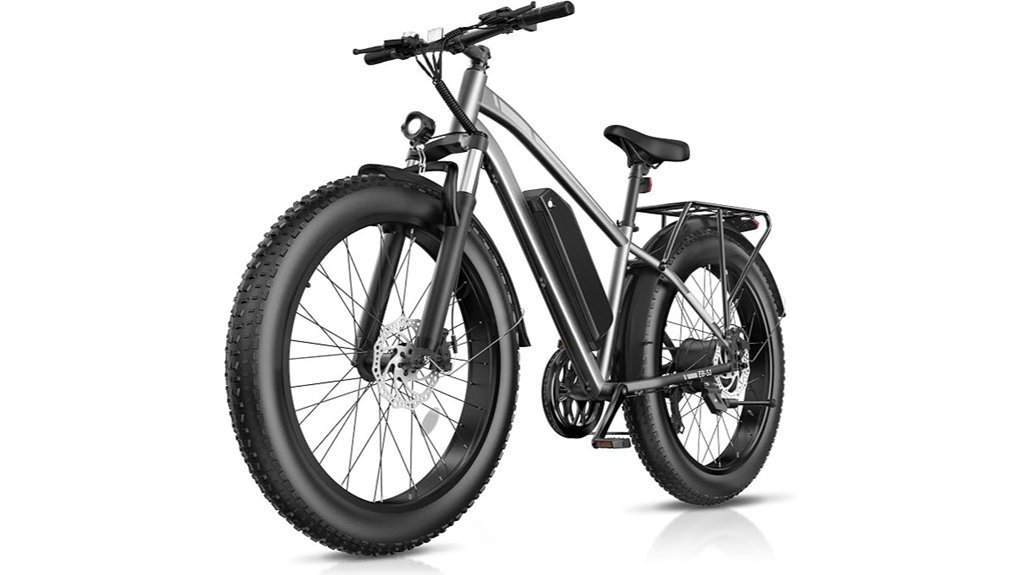
For adults seeking a capable hill-climbing e-bike, this model stands out with its 1000W peak brushless motor, 48V 13Ah removable battery, and 26 x 4.0 fat tires, giving it the torque, range, and traction needed for steep or uneven terrain. It reaches 20MPH, with pedal assist delivering 55 to 60 miles and full electric mode covering 28 to 30 miles. Front suspension, dual disc brakes, and an adjustable seat improve control and comfort. Five riding modes, a 7-speed drivetrain, lights, turn signals, and a 330-pound capacity add practical versatility.
Best For: Adults who want a powerful, comfortable fat-tire e-bike for hill climbing, mixed terrain, and longer rides with useful commuter features.
Pros:
- Strong 1000W peak motor with 20MPH top speed and good hill-climbing torque
- Long range from the 48V 13Ah removable battery, plus front suspension and fat tires for comfort and traction
- Practical features like dual disc brakes, lights, turn signals, 7-speed gearing, and a 330-lb capacity
Cons:
- At 68.3 lbs, it may be heavy to lift or transport
- 6.5-hour charging time is fairly long
- Top speed is limited to 20MPH, which may feel modest for some riders
Aipas M1 Pro Electric Fat Tire Ebike
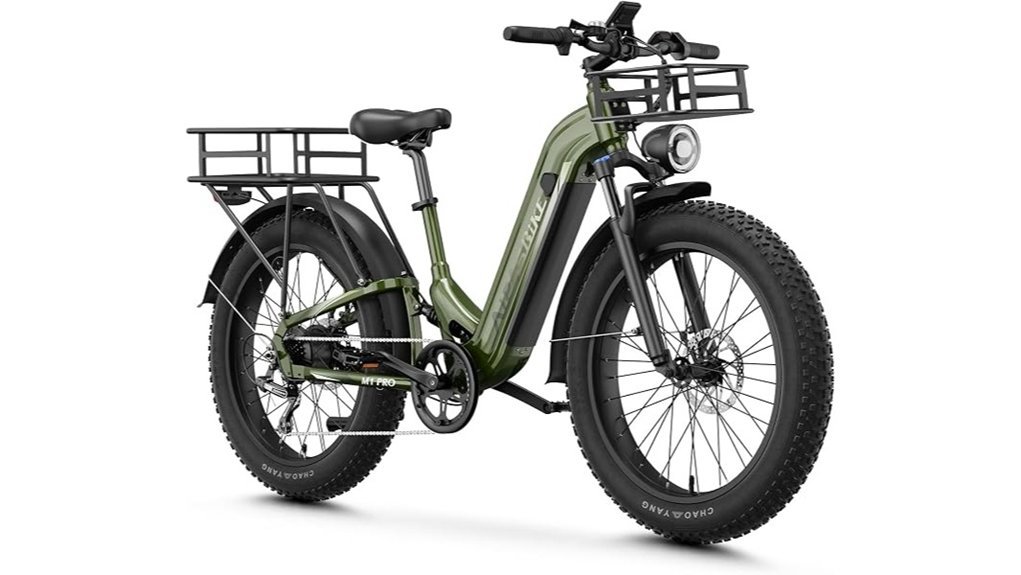
With 110Nm of torque, the Aipas M1 Pro powers up steep hills with confidence. Its 1800W peak brushless motor and 36MPH top speed give it strong uphill acceleration, while the ability to climb 23° grades supports demanding terrain. The 48V 17.5Ah removable battery offers 25 to 85 miles of range for longer rides. A step-thru frame suits riders 55 to 72 inches tall, and the wide adjustable saddle improves comfort. Dual suspension, 26 x 4.0 fat tires, and 180mm disc brakes add control. An LCD display, USB port, and five riding modes boost versatility.
Best For: Riders who want a powerful, comfortable fat-tire e-bike for commuting, hills, and varied terrain, especially those who prefer an easy step-thru frame.
Pros:
- Strong 1800W peak motor with 110Nm torque for confident hill climbing
- Long-range 48V 17.5Ah removable battery supports extended rides
- Dual suspension, wide saddle, and fat tires improve comfort and stability
Cons:
- Mechanical disc brakes may feel less advanced than hydraulic brakes
- 36MPH top speed may be more than some riders need for city commuting
- Heavier fat-tire design may be harder to maneuver or transport
PASELEC 3000W Dual Motor All-Terrain Electric Bike
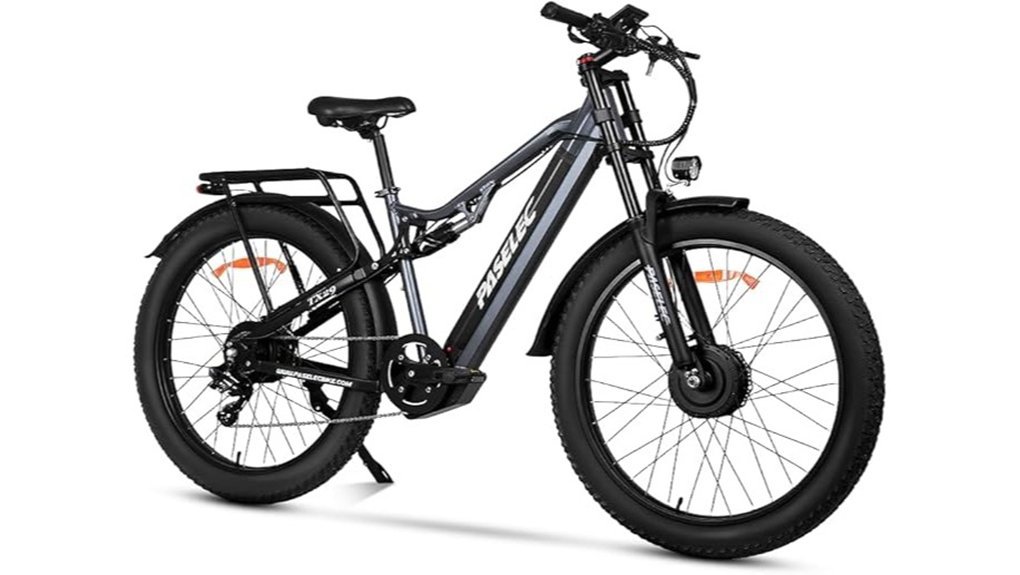
The PASELEC 3000W Dual Motor All-Terrain Electric Bike suits riders who prioritize serious hill-climbing power. Its 3000W peak dual brushless motors deliver strong acceleration for 30° climbs and rough trails, while speeds up to 35 mph broaden its usefulness beyond steep ascents. A 48V 19.2Ah removable battery charges in about 5 to 6 hours and reaches up to 65 miles in pedal-assist mode. For control, it combines 27.5 x 3.0 fat tires, full suspension, seven speeds, and five riding modes. It arrives 90% assembled and includes warranty support.
Best For: Riders who want a powerful all-terrain e-bike for steep hills, rough trails, and longer assisted rides.
Pros:
- 3000W peak dual motors deliver strong acceleration and excellent hill-climbing ability.
- 48V 19.2Ah removable battery offers up to 65 miles of range in pedal-assist mode.
- Full suspension, fat tires, and five riding modes improve comfort and versatility.
Cons:
- Heavier dual-motor setup may be less convenient for transport and storage.
- Dual-motor maximum power mode significantly reduces range compared with pedal-assist riding.
- Higher performance focus may be more bike than casual riders need.
FX20 Electric Bike for Adults, 37MPH, 20″ Fat Tire
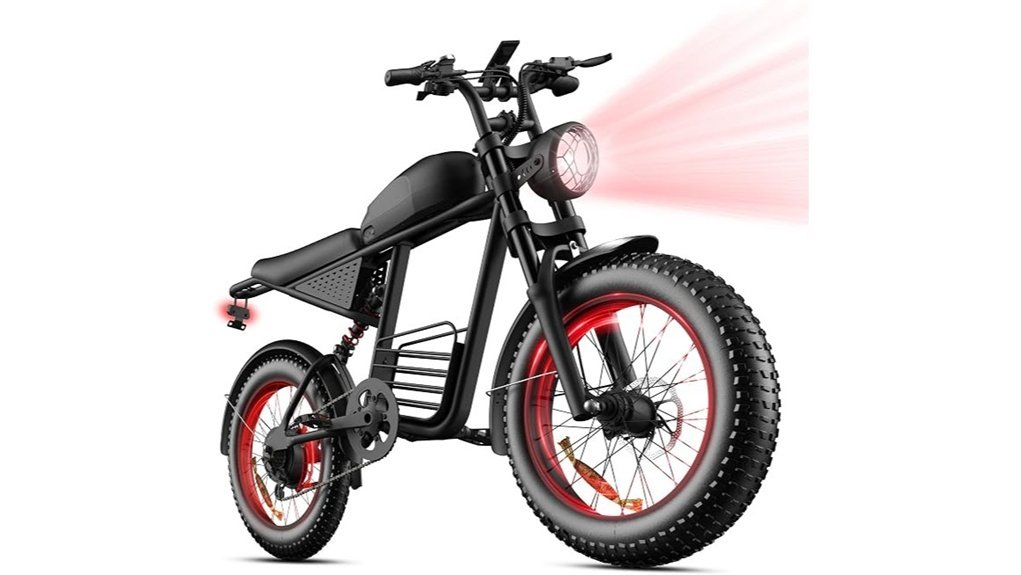
FX20 suits riders who want steep-hill power and fat-tire stability. Its high-output motor delivers up to 3000W peak power, supporting 35-37 MPH speeds and climbing grades from 30° to 45° with 85-95 N.m of torque. A 48V lithium-ion battery, available in 15Ah, 20Ah, or 35Ah capacities, provides 40-80 miles per charge and recharges in 5-6 hours. The 20 x 4-inch puncture-resistant tires, dual hydraulic disc brakes, and full suspension enhance control. A 6061 aluminum frame, LCD display, and 330-pound capacity round out its practical appeal.
Best For: Riders who want a powerful, long-range fat-tire e-bike for steep hills, commuting, and off-road adventures.
Pros:
- Up to 3000W peak power with 35–37 MPH speed and strong hill-climbing ability.
- 20 x 4-inch puncture-resistant fat tires, full suspension, and dual hydraulic disc brakes for stability and control.
- Multiple battery options with up to 80 miles of range and a 330-lb weight capacity.
Cons:
- High performance may be more than some casual riders need.
- 5–6 hour charging time may still feel lengthy for frequent heavy use.
- Large, powerful fat-tire design can be heavier and less convenient to store or carry.
Funhang 1000W Fat Tire Electric Mountain Bike
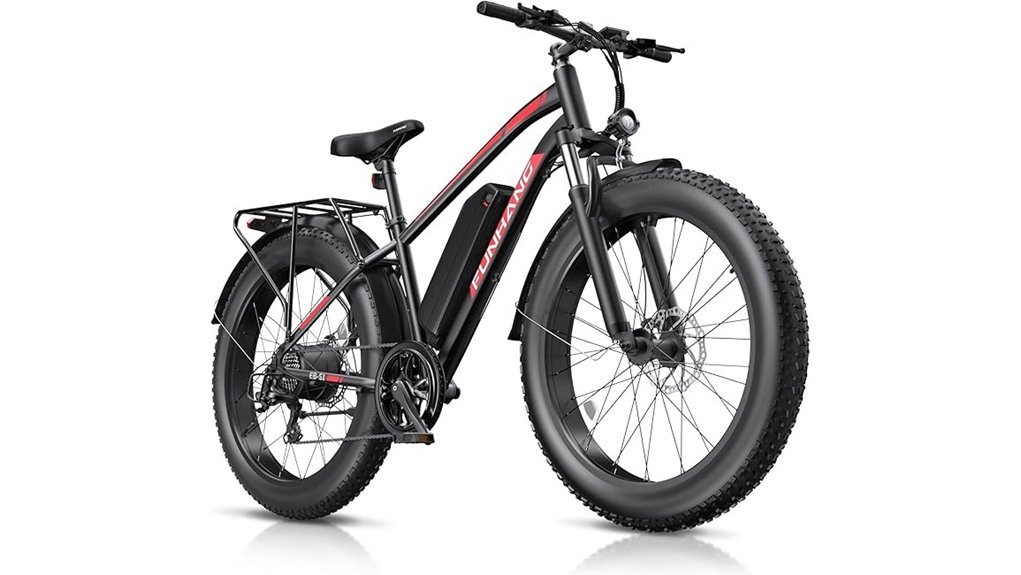
Funhang’s 1000W peak motor and 66.6 N·m torque make it a strong hill-climbing contender. Its 20 mph top speed is paired with a 48V 13Ah removable battery that delivers 30 to 35 miles in pure electric mode and up to 60 miles with pedal assist. The 26 x 4.0 fat tires and front suspension improve traction and comfort on steep or uneven terrain. Dual 180mm disc brakes, integrated lights, and turn signals support control and visibility. With 7-speed gearing, five riding modes, and a 330-pound capacity, it suits varied riders.
Best For: Riders who want a powerful, versatile fat-tire e-bike for commuting, hill climbing, and light cargo hauling across city streets, gravel, sand, or snow.
Pros:
- Strong 1000W peak motor with 66.6 N·m torque for solid hill performance
- Long-lasting removable battery with up to 60 miles of range in pedal-assist mode
- Fat tires, front suspension, disc brakes, and lights make it adaptable and safer in varied conditions
Cons:
- 20 mph top speed may feel limiting for riders wanting faster performance
- 85% pre-assembled still requires some setup and adjustment
- 330 lb max capacity is good, but the rear rack’s 60 lb limit may restrict heavier cargo use
YVY Dual Motor Electric Bike for Adults
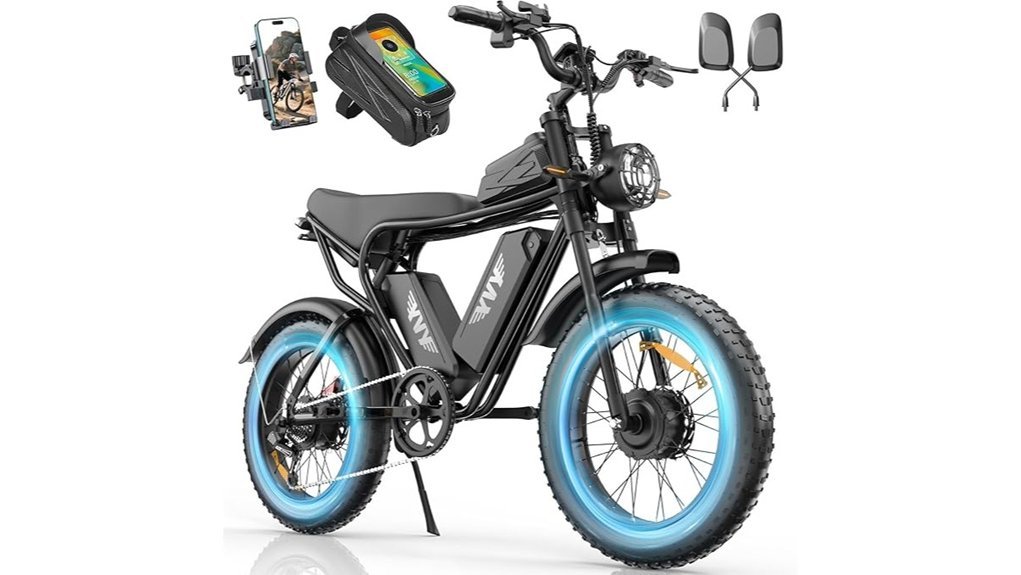
With 3000W of power and 80N.M of torque, the YVY Dual Motor Electric Bike suits riders tackling steep climbs. Its 38MPH top speed and three riding modes—pure electric, assist, and pedal-only—support varied terrain and effort levels. A detachable 52V 40Ah battery delivers 55 to 70 miles in electric mode and up to 120 miles with assistance, while recharging takes 6 to 7 hours. The 20-inch fat tires, dual suspension, and hydraulic disc brakes improve control. Seven-speed gearing, a 90% pre-assembled frame, and warranty support add practicality.
Best For: Riders who want a powerful, long-range electric bike for commuting, hill climbing, and all-terrain adventures.
Pros:
- 3000W motor and 80N.M of torque deliver strong acceleration and excellent climbing ability.
- Large 52V 40Ah detachable battery provides impressive range for both electric and assisted riding.
- Fat tires, dual suspension, and hydraulic disc brakes improve comfort, stability, and control.
Cons:
- Top speed and high power may be more than casual riders need.
- Recharge time of 6 to 7 hours is fairly long.
- Heavier-duty components may make the bike less convenient to transport or store.
Aipas M1 Pro & M2 Pro Electric Bike Combo
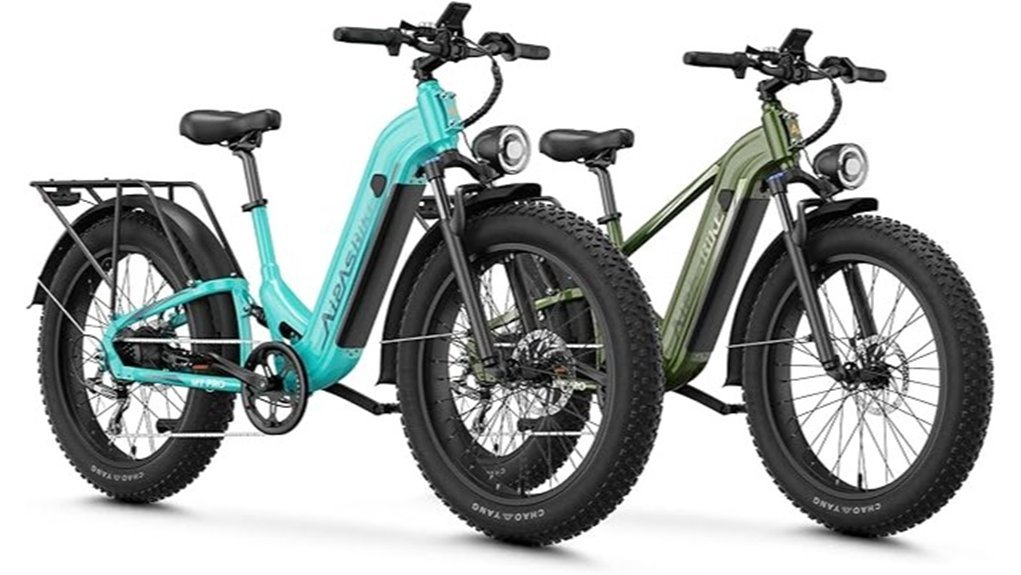
Built for steep climbs, the Aipas M1 Pro and M2 Pro suit riders needing serious torque and range. Their 1800W peak rear hub motor and 110Nm of torque help them tackle grades up to 30 degrees, while the 48V 17.5Ah removable battery delivers up to 85 miles of pedal-assisted travel. Wide 26 x 4.0 fat tires, a 7-speed drivetrain, and lockable front suspension support mixed terrain. Dual 180mm disc brakes, integrated lights, and a horn add control and safety. The 95% pre-assembled frame carries up to 500 pounds.
Best For: Riders who want a powerful fat-tire electric bike for steep climbs, long pedal-assisted rides, and mixed-terrain commuting or trail use.
Pros:
- Strong 1800W peak motor with 110Nm of torque handles steep grades well.
- Up to 85 miles of pedal-assisted range from the removable 48V 17.5Ah battery.
- Fat tires, front suspension, dual disc brakes, and lights improve comfort and control.
Cons:
- At 90 lbs, it is heavy and less convenient to lift or transport.
- 95% pre-assembled still requires some setup after delivery.
- Best performance features may be more than casual riders need, especially for simple city use.
Electric Bike for Adults, 1000/1300W Peak Power
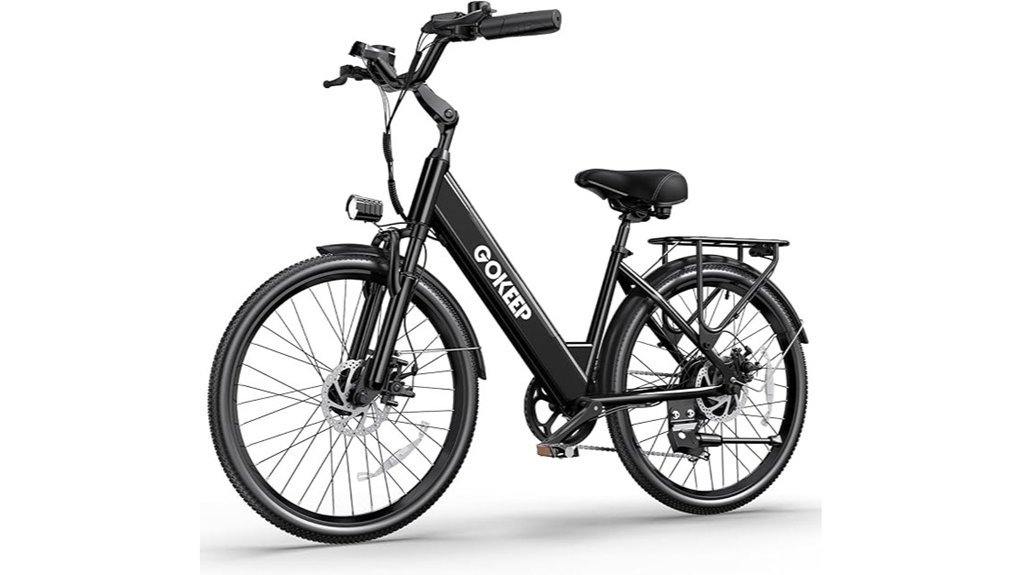
The electric bike suits adults who need strong hill-climbing support and versatile riding modes. Its 600W brushless motor reaches 1000W peak output, delivering up to 28MPH for demanding terrain. A 48V 499Wh removable battery charges in 4 to 5 hours and supports up to 75 miles with pedal assist, or 35 to 40 miles on throttle. Seven-speed gearing helps adapt to varied grades. Four modes, including push assistance, improve flexibility. A V-frame, front suspension, ergonomic seat, and UL2849 certification round out a practical hill-climbing package for adults.
Best For: Adults who want a powerful, versatile electric bike for hill climbing, longer rides, and flexible commuting or recreational use.
Pros:
- Strong 600W brushless motor with up to 1000W peak power and 28 MPH top speed
- Removable 48V battery offers up to 75 miles with pedal assist and fast 4–5 hour charging
- Four riding modes plus 7-speed gearing, front suspension, and an ergonomic design for comfort
Cons:
- Pure electric range is much shorter than pedal-assist range
- 85% pre-assembled still requires some setup
- Heavier, more powerful e-bikes may be less ideal for riders wanting a lightweight option
ASKGO 1500W Electric Bike for Adults, 26″ Mountain Ebike
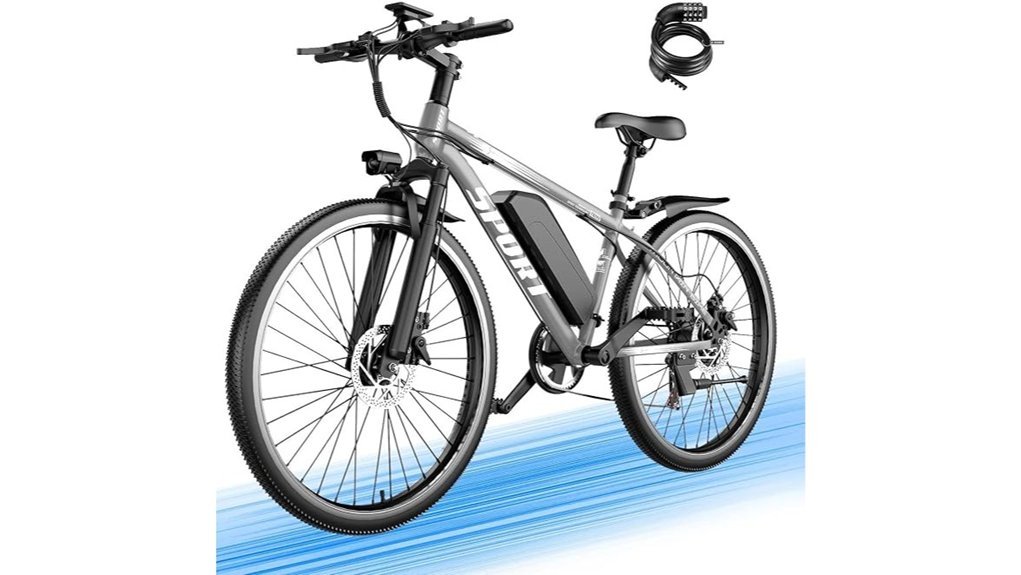
ASKGO’s 1500W peak motor makes this bike a strong pick for riders tackling steep hills. Its 750W rated output helps it reach speeds up to 25 MPH, while the 7-speed setup on Black and Blue models adds climbing control; the Grey version uses a single-speed drivetrain. A 48V 10.4Ah removable battery provides up to 65 miles of range and recharges in 4 to 5 hours. Dual suspension improves comfort on rough trails. Dual disc brakes, anti-slip tires, and a 400-lumen headlight support safer riding. It arrives 95% assembled and includes a 36-month warranty.
Best For: Adults who want a powerful 26″ electric mountain bike for commuting, hill climbing, and mixed-terrain riding with long range and added comfort.
Pros:
- 1500W peak motor with up to 25 MPH speed is strong for hills and quick rides.
- 48V 10.4Ah removable battery offers up to 65 miles of range and charges in 4–5 hours.
- Dual suspension, disc brakes, anti-slip tires, and a 400-lumen headlight improve comfort and safety.
Cons:
- The Grey model is single-speed, which offers less flexibility than the 7-speed versions.
- 65-mile range is likely dependent on terrain, rider weight, and assist level, so real-world results may vary.
- 95% assembly still leaves some setup required before riding.
TST 1500W Fat Tire Electric Bike for Adults
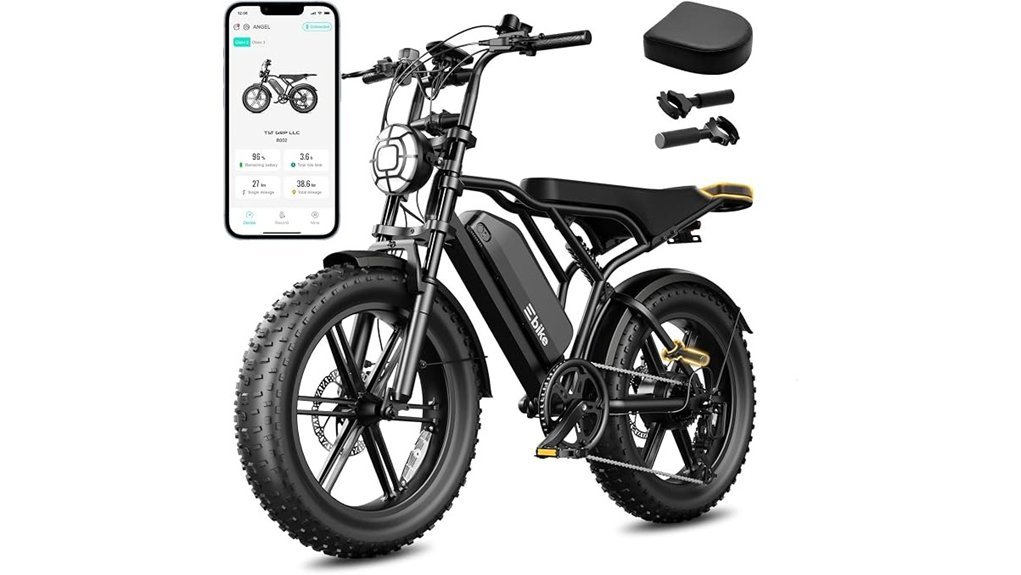
With 1500W peak power and a 48V battery, this TST bike suits riders tackling steep climbs. Its 750W motor, paired with 2 to 3 speed settings, supports commuting and off-road use. The removable 48V 15Ah battery charges in 6 to 7 hours and delivers up to 60 miles in PAS mode. Full suspension, 20×4 puncture-proof fat tires, and 7-speed gearing improve control on rough terrain. Mechanical disc brakes, bright lighting, and an LCD display add safety and practicality. It arrives 90% assembled, weighs 66 lbs, and supports up to 450 lbs.
Best For: Adult riders who want a powerful, all-terrain fat tire e-bike for commuting, off-road riding, and steep climbs, with strong range and comfort.
Pros:
- 750W motor with 1500W peak power handles hills and mixed terrain well.
- Full suspension, 20×4 puncture-proof fat tires, and 7-speed gearing improve comfort and control.
- Long-range removable battery and 90% pre-assembled design add convenience.
Cons:
- At 66 lbs, it may be heavy to lift or transport.
- Full charge time of 6 to 7 hours is somewhat long.
- Maximum speed settings and throttle range may not suit riders wanting more performance.
Electric Bike for Adults, 1500W Peak Motor
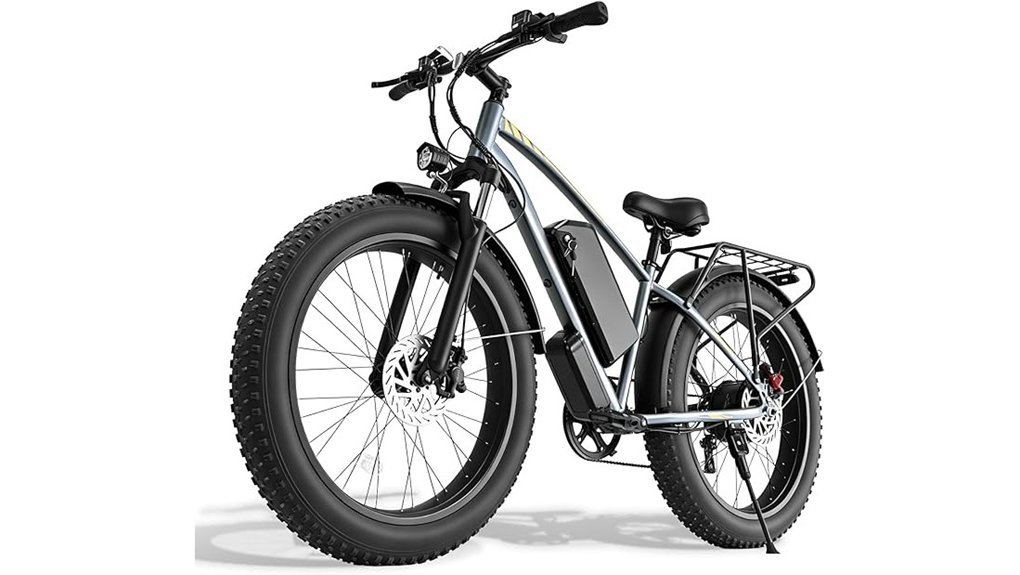
Built for steep climbs, this 1500W peak motor e-bike suits riders who want serious uphill power. Its brushless motor reaches 32 mph and delivers 62 Nm of torque, enough for 30° grades under a 200-pound test load. Three speed settings and 7-speed gears add control on varied terrain. The 48V 18.2Ah removable battery offers up to 50 miles in pure electric mode or 80 to 100 miles with assist. A 26 x 4.0 fat-tire setup, front suspension, and UL 2849 certification strengthen its case for mountain use, while the 81-pound frame supports substantial payloads.
Best For: Adults who want a powerful all-terrain electric bike for steep climbs, longer rides, and heavier-duty commuting or recreation.
Pros:
- 1500W peak motor with 62 Nm of torque delivers strong uphill performance and speeds up to 32 mph.
- Long-range 48V 18.2Ah removable battery offers up to 50 miles in electric mode and 80 to 100 miles with pedal assist.
- 26 x 4.0 fat tires, front suspension, and UL 2849 certification make it well-suited for varied and rugged terrain.
Cons:
- The 81-pound frame is heavy and may be harder to lift, transport, or store.
- Full battery charging takes 9 to 10 hours, which is relatively long.
- Its high power and size may be more bike than casual riders or city-only commuters need.
Electric Fat Tire E-Bike UL2849 by SGS
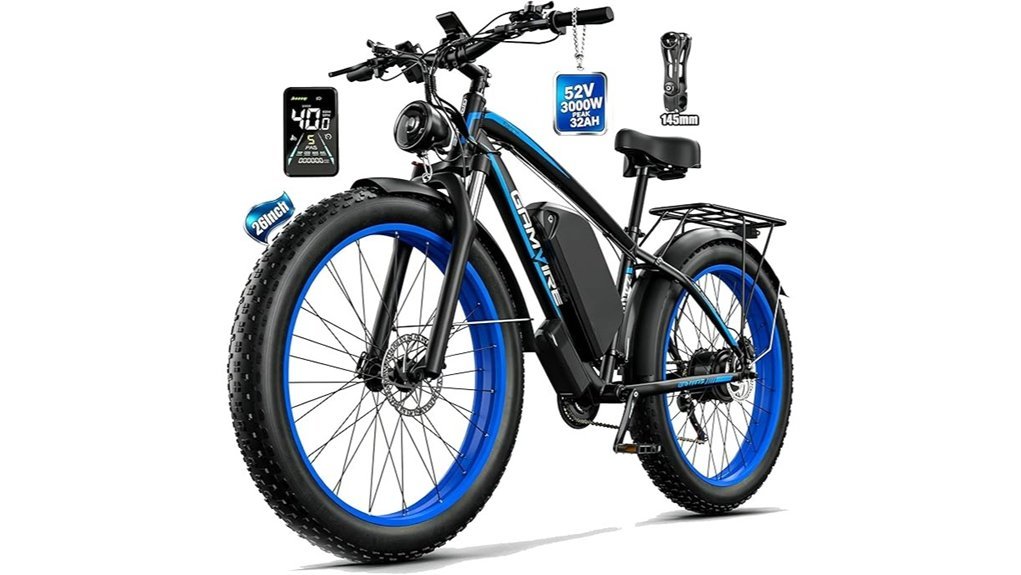
The Electric Fat Tire E-Bike UL2849 by SGS suits riders who need serious uphill power. Its 52V 3000W brushless motor drives speeds up to 40 MPH, while the 21-speed Shimano drivetrain supports steep and varied terrain. A 52V 32Ah battery delivers up to 100+ miles in PAS mode and 60+ in pure electric mode, with an eight-hour recharge. Front and rear hydraulic disc brakes improve control, and the lockable suspension fork smooths rough trails. 24 x 4.0 fat tires add grip, and five riding modes broaden adaptability.
Best For: Riders who want a powerful, long-range fat tire e-bike for steep hills, off-road terrain, and high-speed commuting.
Pros:
- 52V 3000W motor delivers strong uphill performance and speeds up to 40 MPH.
- 52V 32Ah battery offers excellent range, with up to 100+ miles in PAS mode.
- Hydraulic disc brakes, fat tires, and lockable suspension improve safety and comfort on rough trails.
Cons:
- High power and speed may feel excessive or intimidating for casual riders.
- 8-hour charging time is relatively long for a bike in this class.
- At this performance level, the bike may be heavier and less convenient for everyday portability.
EBike Peak 8000W Dual Motor Electric Bike
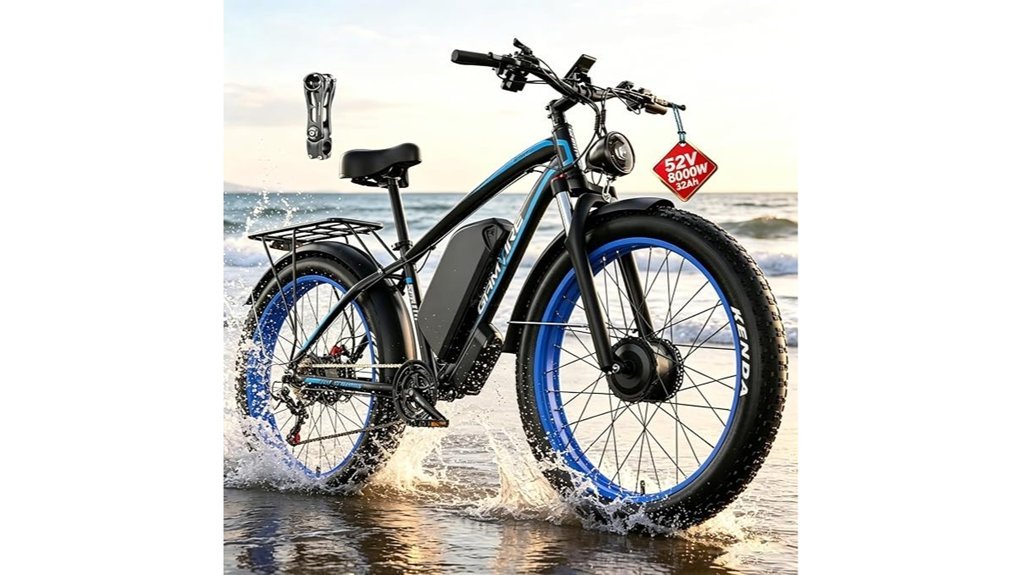
EBike Peak’s 8000W dual motor setup makes steep climbs feel manageable for serious riders. With enough output to tackle 45-degree hills and rough trails, it reaches up to 45 MPH while remaining adaptable through a 7-speed drivetrain. Its 52V 32AH battery supports up to 90 miles per charge, depending on motor mode and terrain. Hydraulic disc brakes improve control on descents, while front suspension and 4-inch fat tires add grip and comfort. Arriving 90% assembled, it suits commuting, trail use, and beach riding, backed by a 12-month warranty and 24/7 support.
Best For: Riders who want a powerful all-terrain electric bike for steep climbs, off-road adventures, commuting, and beach cruising.
Pros:
- 8000W dual motor delivers strong performance for hills and rugged trails.
- Long-range 52V 32AH battery supports extended rides.
- Hydraulic disc brakes, front suspension, and 4-inch fat tires improve safety and comfort.
Cons:
- High power and speed may be more than casual riders need.
- Likely heavy and less practical for carrying or storing than smaller e-bikes.
- Range can drop significantly in dual-motor mode or on difficult terrain.
EDIKANI Electric Bike for Adults 2000W Peak
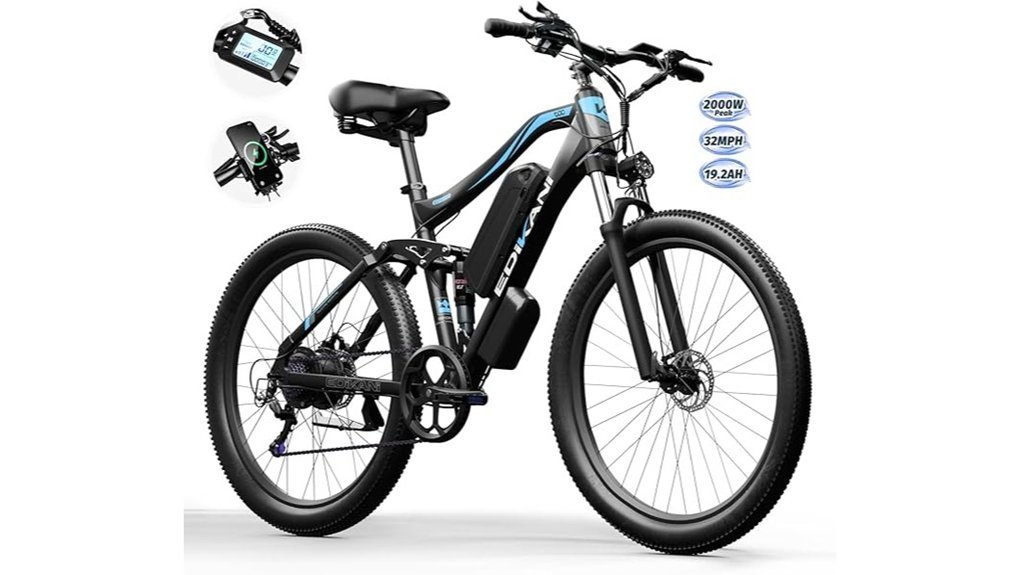
With 2000W peak power and 55Nm torque, the EDIKANI suits riders tackling steep climbs. Its 48V 19.2Ah battery provides an estimated 40 to 80 miles per charge, while five ride modes, including pedal assist and full throttle, add flexibility on varied routes. The aluminum frame, full suspension, lockable front fork, and 800lbs rear shock help smooth rough ground and absorb impacts. Anti-slip 27.5 x 2.1 tires improve traction. Dual mechanical disc brakes, a 330lb capacity, and a digital display round out a practical hill-climbing package for commuting or trail use.
Best For: Commuters, weekend adventurers, and riders who need a powerful hill-climbing electric bike with strong range and full suspension for rougher terrain.
Pros:
- 2000W peak motor with 55Nm torque for strong acceleration and hill performance
- 48V 19.2Ah battery offers an estimated 40 to 80 miles per charge
- Full suspension, lockable front fork, and dual disc brakes improve comfort and control
Cons:
- 330lb weight limit may not suit every rider or cargo setup
- Mechanical disc brakes are reliable, but not as advanced as hydraulic brakes
- Best suited for riders within the recommended height range of 58”-68”
Jasion EB5 MAX Electric Mountain Bike (2000W Peak)
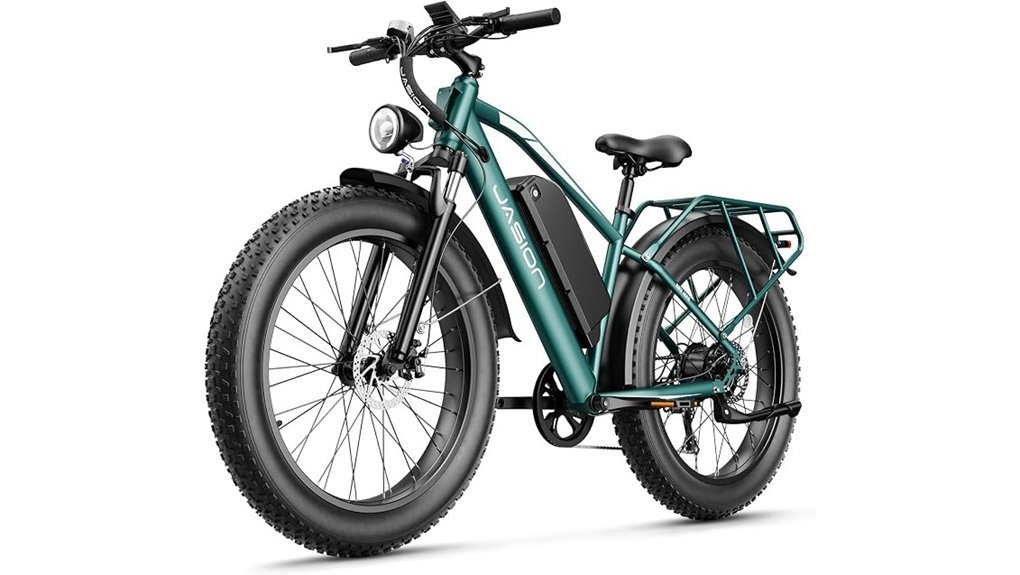
For riders tackling steep routes, the Jasion EB5 MAX delivers serious climbing power. Its 2000W peak motor pushes the bike past 28 MPH and handles sharp grades without hesitation. A 48V 15Ah, 720Wh battery supports up to 65 miles in assist mode or 35 miles on throttle, and it is removable and lockable for easier charging. Wide 26 x 4.0 puncture-resistant tires, a lockable suspension fork, and 180 mm dual disc brakes improve control. Bright lights, a color display, fenders, and a rear rack add practical value.
Best For: Riders who want a powerful fat-tire electric mountain bike for steep climbs, longer assist-range rides, and mixed-terrain commuting or recreation.
Pros:
- 2000W peak motor provides strong acceleration and helps handle steep inclines.
- 720Wh removable, lockable battery offers up to 65 miles in assist mode.
- Fat tires, suspension fork, dual disc brakes, lights, fenders, and rear rack add comfort and practicality.
Cons:
- The bike may be heavier and less convenient to transport than lighter e-bikes.
- 35-mile throttle range is much shorter than the assist-mode range.
- High power and fat-tire design may be more than some casual riders need.
Factors to Consider When Choosing an Electric Mountain Bike for Hill Climbing
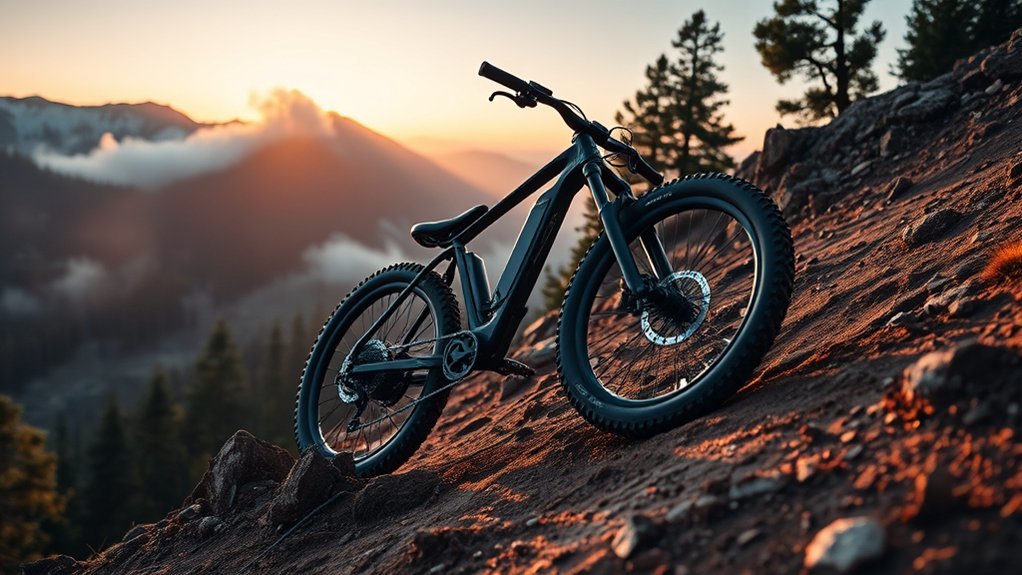
Several factors shape an electric mountain bike’s performance on steep terrain, including motor power, torque output, and battery capacity. Climbing ability is also influenced by how efficiently the bike translates power into uphill momentum. A capable suspension system further supports control and comfort when the trail becomes rough.
Motor Power
Motor power is a central measure of hill-climbing ability in an electric mountain bike. Higher wattage generally gives a bike greater climbing strength, especially on steep or prolonged grades. Models in the 1,000W to 8,000W range are often used for demanding terrain, while at least 1,500W is commonly recommended for slopes near 30 degrees or more. Brushless motors are often favored because they are efficient, durable, and capable of delivering smooth acceleration on difficult ascents. Dual-motor setups can also improve performance by spreading power across both wheels, which helps maintain traction and stability on steep ground. In practice, sufficient motor power supports more confident climbing and reduces strain when terrain becomes challenging.
Torque Output
Torque output is a major factor in hill climbing because it determines how effectively an electric mountain bike can turn power into forward motion on steep inclines. Higher torque improves the bike’s ability to maintain momentum on demanding terrain and reduces strain during repeated ascents. For steep routes, a motor delivering roughly 60 to 110 Nm is often considered suitable, with stronger figures offering smoother acceleration and more confident climbing. Dual-motor systems can raise torque further, giving a clear advantage over single-motor designs. Gear selection also matters: lower gears amplify torque and help the rider scale grades with less effort. Weight capacity should not be overlooked, since heavier loads can diminish climbing efficiency and make torque demands more pronounced.
Battery Capacity
Battery capacity is a key consideration for hill climbing because it directly affects how long an electric mountain bike can sustain strong assist on demanding grades. Measured often in amp-hours, it helps determine range and how consistently power can be delivered during long ascents. Higher-voltage packs, such as 48V or 52V, may also support stronger torque delivery, which is valuable when a climb extends beyond a short burst. Capacity shapes practical range as well, with real-world distances varying widely from about 25 to more than 100 miles depending on terrain and assist mode. Larger batteries usually take longer to recharge, so frequent riders should weigh charging time. A capable battery management system can further improve longevity and maintain output under sustained load.
Climbing Ability
When evaluating climbing ability in an electric mountain bike, power output and torque are among the most important factors, since higher-wattage motors can handle steep inclines and rough terrain more effectively while strong torque helps maintain momentum on grades that approach 30°. A 3000W motor, for example, offers stronger hill performance than lower-output units. Torque ratings around 110 Nm help deliver the force needed for sustained ascents. Gear selection also matters; a 7-speed transmission lets the rider match resistance to gradient and cadence to terrain. Climbing range depends on battery capacity, so a 48V pack with higher amp-hour ratings can support longer efforts without rapid depletion. Together, these specifications determine how confidently a bike can ascend varied hills and maintain efficiency.
Suspension System
Suspension plays a major role in how well an electric mountain bike handles steep climbs, especially after motor power and battery range are considered. A dual suspension setup, with front and rear shocks, can improve comfort and control by absorbing bumps, roots, and loose rock on rugged inclines. Suspension travel also matters; greater travel in millimeters generally offers better shock absorption on steep climbs and descents. Adjustable settings help riders tune stiffness and sensitivity for different trail conditions, improving traction and handling. Weight should not be overlooked, since lighter suspension can make climbing easier, while heavier systems may add durability. When properly tuned, suspension keeps tires in contact with the ground, supporting grip and stability on demanding uphill terrain.
Brake Strength
Braking power becomes a critical safety factor on steep climbs and descents, where control matters as much as speed. Dual hydraulic disc brakes are often favored because they deliver strong, consistent stopping force and precise control on demanding mountain routes. Larger rotors, such as 180mm units, improve braking efficiency and help shed heat during long climbs followed by abrupt descents. Heavier electric mountain bikes place greater demand on the system, making brake strength even more important for managing momentum safely. Equally important is modulation, since smooth brake control helps the rider reduce speed without abrupt lockup on steep grades. Regular maintenance, including pad inspections and rotor alignment, keeps performance reliable when terrain becomes punishing and repeated braking is required.
Tire Traction
Traction is a defining factor in hill climbing, since the tires determine how effectively an electric mountain bike can maintain grip on steep, uneven ground. Wider tires, often around 4.0 inches, create a larger contact patch that helps the bike stay planted on steep inclines. Softer rubber compounds can further improve grip by molding to loose or slippery terrain. Tread design matters as well: deeper, more aggressive patterns bite into mud, sand, and gravel to support climbing. Tire pressure also influences performance; lower pressure expands the footprint and boosts traction, though it must remain high enough to avoid pinch flats on rough trails. Fat tires with anti-skid features can add stability and confidence across changing weather and surface conditions.
Frame Durability
A sturdy frame is a critical foundation for hill climbing, because it must endure both the rider’s weight and the high forces created on steep ascents. Durability becomes especially important on electric mountain bikes, where motor assistance adds torque that can stress weak constructions. Aluminum and high-carbon steel frames offer strong strength-to-weight ratios, helping maintain stability without unnecessary mass. A low center of gravity improves balance on steep grades, making handling more predictable when the trail pitches upward. Reinforced joints and welds add resilience, lowering the chance of failure under repeated climbing loads. Geometry also matters: a slacker head angle can improve traction and steering response on technical inclines. Together, these features support reliable performance and long-term structural confidence.
Frequently Asked Questions
How Much Range Do Steep Hills Reduce on Electric Mountain Bikes?
Steep hills can cut an electric mountain bike’s range by roughly 30% to 60%, depending on rider weight, assist level, terrain, wind, and battery size. On very sustained climbs, range may drop even more, since motors draw far higher power uphill. Lower assistance, efficient gearing, and steady pedaling help preserve battery life. A larger battery usually offsets some loss, but elevation gain remains one of the biggest range reducers.
Which Suspension Type Is Best for Technical Hill Climbs?
Full-suspension is usually best for technical hill climbs, especially when traction and line control matter more than absolute efficiency. Roughly 80% of climbing mistakes on rough terrain come from wheel slip or lost momentum, making rear suspension valuable for keeping contact with the ground. Hardtails can still excel on smoother, cleaner ascents, but on rock steps, roots, and loose pitches, active suspension gives the rider a clearer advantage overall.
How Does Rider Weight Affect Uphill Ebike Performance?
Rider weight affects uphill ebike performance by increasing the load the motor must move, which usually reduces acceleration, climbing speed, and range. Heavier riders place greater demand on battery and drivetrain, especially on steep grades. Lighter riders generally benefit from easier starts and less energy use. However, motor power, gearing, tire choice, and suspension setup can partly offset the effect, making overall climbing ability a balance of system efficiency and mass.
Are Torque Sensors Better Than Cadence Sensors for Climbing?
Torque sensors are generally better for climbing because they deliver assistance in proportion to pedal pressure, creating smoother power delivery and better control on steep grades. Cadence sensors can work well, but they often feel more on or off, which may make technical climbs harder to manage. For hill climbing, torque sensing usually improves traction, efficiency, and rider confidence, especially when adjusting effort on loose or uneven terrain.
What Tire Pressure Improves Traction on Steep Climbs?
Steep climbs usually grip best at slightly lower tire pressures, around 18–25 psi for many mountain bikes, though rider weight, tire width, and terrain matter. Softer settings let the tire conform to rocks and roots, improving traction and control. Excessively low pressure risks rim strikes or squirm. The ideal pressure is found by testing small changes until climbing feels planted, predictable, and secure on steep, loose ascents.