Choosing the right amateur mountain bike in [2026] depends on more than looks or price. Riders must weigh frame material, suspension, gearing, and wheel size against where and how they plan to ride. Some models favor light handling, while others emphasize comfort or portability. A few stand out for beginners, but the better fit is not always obvious at first glance, which is why the comparison ahead matters.
Key Takeaways
- Mongoose Grafton is a strong beginner hardtail with 21 speeds, mechanical disc brakes, and a front suspension fork.
- EUROBIKE offers a lightweight aluminum frame, 21-speed Shimano gearing, and disc brakes for versatile amateur riding.
- Ktaxon adds a high-carbon steel frame, 21-speed drivetrain, and lock-out fork for mixed trails and budget-minded riders.
- Max4out provides a solid frame, dual disc brakes, and front suspension for short to mid-height riders on varied terrain.
- Outroad is a foldable dual-suspension option for riders 5.3 to 6.0 feet tall who want comfort and easy storage.
Mongoose Grafton Mountain Bike, 21 Speed, Aluminum Frame
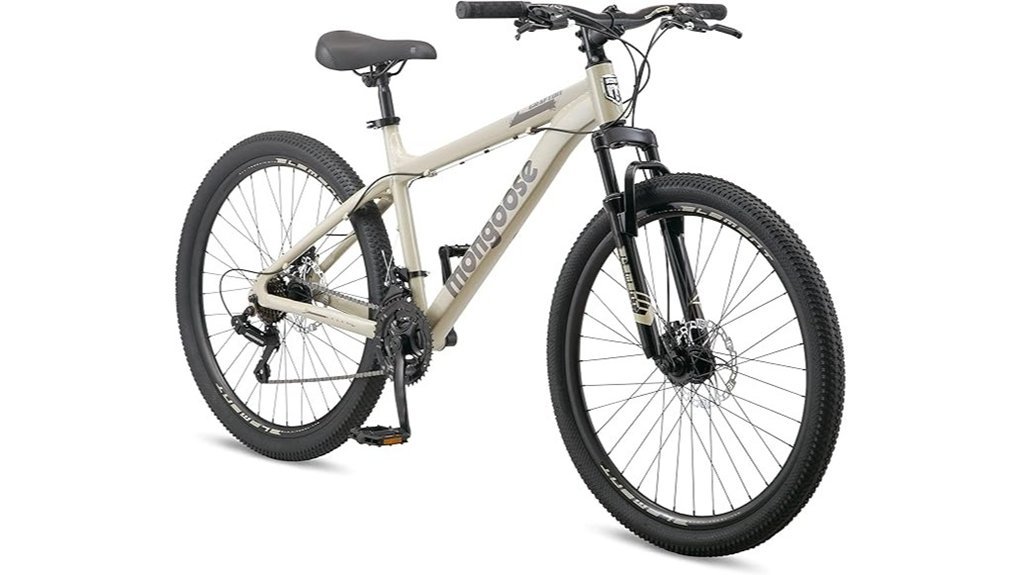
The Mongoose Grafton Mountain Bike is a strong fit for beginner and amateur riders who want a stable, easy-to-handle hardtail with dependable control on varied terrain. Its aluminum frame and modern geometry create a streamlined, durable build, while 26-inch wheels and 2.3-inch knobby tires improve grip and balance. A front suspension fork helps soften bumps, and mechanical disc brakes add dependable stopping in wet or dry conditions. With 21 speeds and trigger shifters, gear changes stay smooth. It suits riders 52 to 61 inches tall and assembles easily with common tools.
Best For: Beginner and amateur riders between 52 and 61 inches tall who want a stable, easy-to-handle hardtail mountain bike for varied terrain.
Pros:
- Aluminum frame with modern geometry offers a durable, streamlined design
- 26-inch wheels, knobby 2.3-inch tires, and front suspension improve grip and comfort
- 21 speeds with trigger shifters and mechanical disc brakes provide smooth, reliable control
Cons:
- Best suited for shorter riders, so it may not fit taller cyclists well
- Hardtail design means less rear suspension comfort on very rough trails
- As a beginner-focused bike, it may not satisfy more advanced riders seeking higher-end performance
EUROBIKE Mountain Bike with Aluminum Frame, 21-Speed
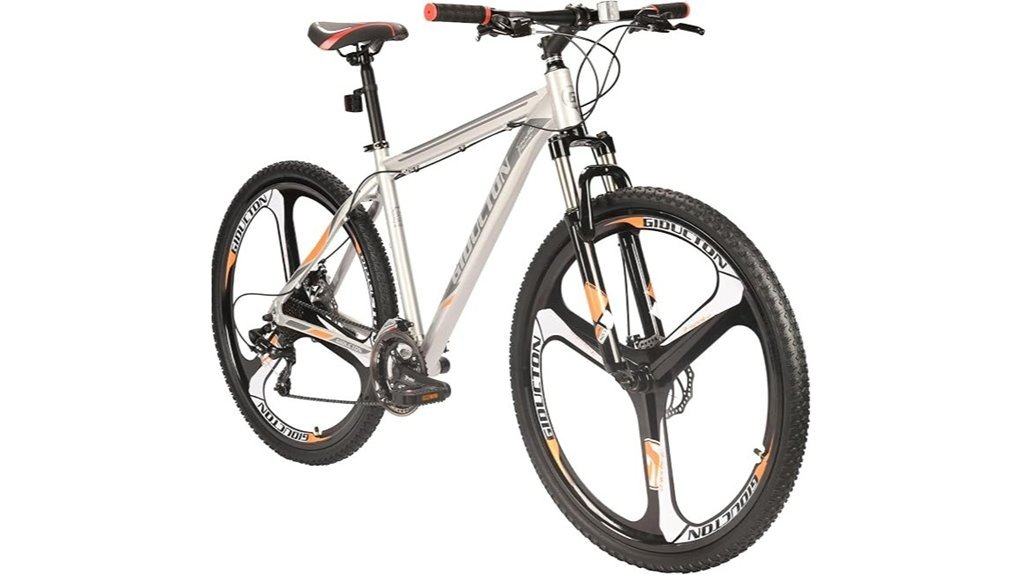
With a lightweight aluminum frame and 21-speed Shimano gearing, the EUROBIKE suits beginners seeking versatile value. Its 19-inch alloy frame offers sturdy construction and strong welds, while 29-inch wheels help it cover varied terrain efficiently. A quality suspension fork softens bumps for a more comfortable ride on trails or commutes. Mechanical disc brakes at both ends provide dependable stopping control on descents and rough ground. The bike arrives 85% assembled, with rack and kickstand mounts adding practicality. Overall, it balances durability, comfort, and straightforward performance for entry-level riders.
Best For: Beginner mountain bikers and commuters who want an affordable, versatile bike with solid durability and basic off-road performance.
Pros:
- Lightweight aluminum frame with sturdy welding for durability
- 21-speed Shimano gearing supports climbing, cruising, and varied terrain
- Mechanical disc brakes and suspension fork improve control and comfort
Cons:
- Requires some assembly before riding
- Entry-level components may not satisfy advanced riders
- Best suited for casual use rather than aggressive trail riding
Ktaxon Mountain Bike with 21-Speed and Suspension Fork
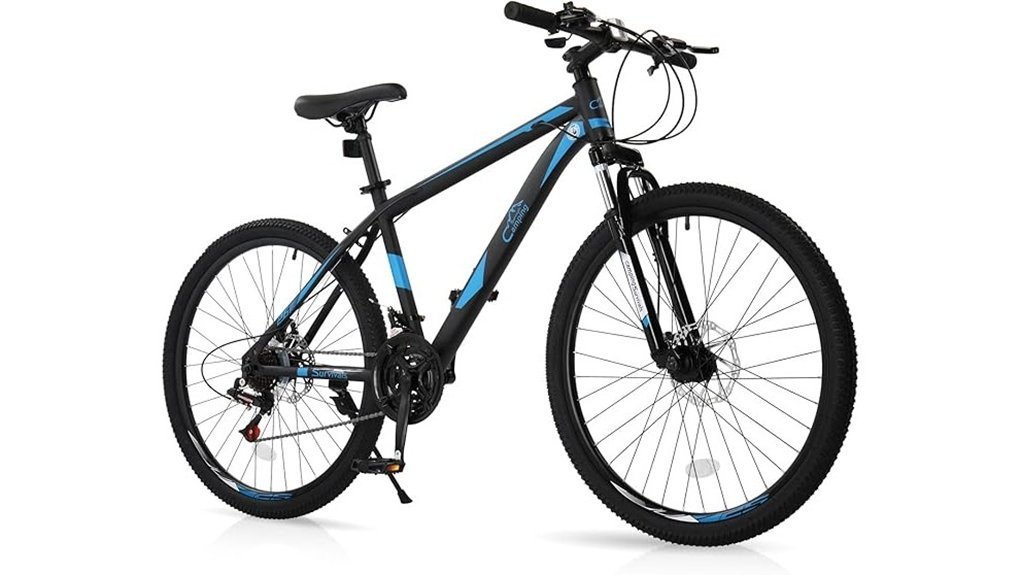
Ktaxon’s 21-speed drivetrain suits beginners who want flexible gearing on mixed trails. The bike comes in 24, 26, and 27.5 inch sizes, with a high-carbon steel frame built for durability and resistance to deformation. Mechanical dual disc brakes add strong, responsive stopping power, while the thickened front suspension fork helps absorb bumps on gravel, dirt, and rocky paths. Lightweight aluminum alloy wheels reduce rolling resistance. A lock-out fork and quick-adjust seat post improve comfort and fit. The 26-inch version arrives 85% assembled, and support is available by email for setup issues.
Best For: Beginners and casual riders who want a durable, budget-friendly mountain bike with flexible gearing for mixed trails and light off-road riding.
Pros:
- 21-speed drivetrain offers versatile gear options for different terrain and riding conditions.
- Mechanical dual disc brakes provide strong, responsive stopping power.
- Front suspension, lock-out fork, and quick-adjust seat post improve comfort and fit.
Cons:
- 26-inch version only arrives 85% assembled, so some setup is still required.
- High-carbon steel frame is durable but typically heavier than aluminum alternatives.
- May not be ideal for advanced riders seeking higher-performance components.
Max4out 26-Inch Mountain Bike 7/21 Speeds
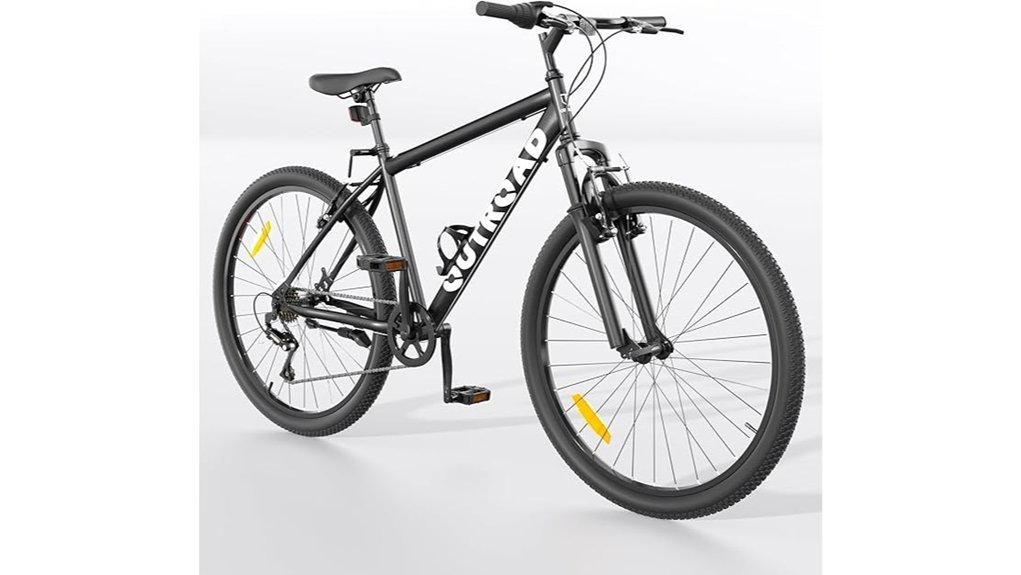
Max4out’s 26-inch frame suits riders 52 to 60 inches tall. The bike uses a solid iron frame with strong welding, a lightweight build, and a distinctive spray-paint finish. Its 7/21-speed setup and front suspension help it handle climbs and rougher ground with reasonable control. Front and rear double disc brakes improve stopping confidence, while quick-release wheels simplify upkeep. Rated for up to 330 lbs, it is built for varied use on trails, roads, beaches, and snow. It arrives 90% assembled and typically needs 15 to 20 minutes to finish.
Best For: Riders 52 to 60 inches tall who want a versatile, budget-friendly 26-inch mountain bike for casual trail, road, beach, or snow riding.
Pros:
- Front and rear double disc brakes provide strong stopping power and added confidence.
- 7/21-speed gearing and front suspension help with climbs and rough terrain.
- Arrives 90% assembled and is typically quick to finish setting up.
Cons:
- 26-inch wheel size and frame height may not suit taller riders.
- Solid iron frame may be less refined than lighter premium materials.
- Assembly is easy, but still requires installing several parts and inflating tires.
Outroad 26 Inch Folding Mountain Bike, 21 Speed
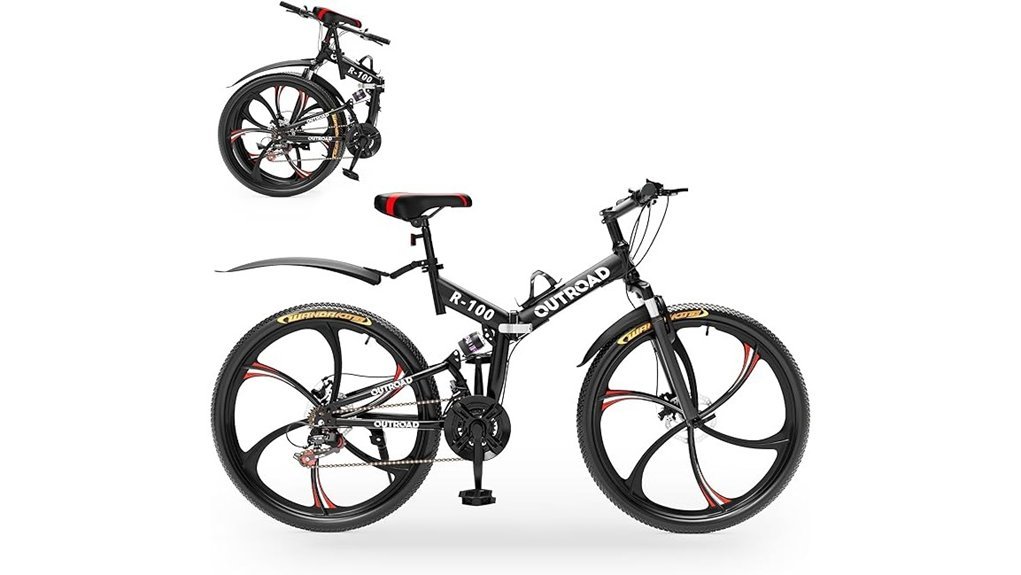
The Outroad 26-inch folding mountain bike suits amateur riders who want portability and control. Its high-carbon steel frame, dual suspension, and 26-inch wheels aim to improve comfort on trails while maintaining stability. The 21-speed drivetrain with a twist shifter supports varied terrain, and front and rear disc brakes add dependable stopping power on descents. It weighs 39 pounds, folds for easier storage, and fits riders about 5.3 to 6.0 feet tall, up to 300 pounds. Included pedals, kickstand, mudguard, and tool kit simplify setup.
Best For: Amateur riders who want a foldable mountain bike with trail-ready control, decent portability, and a 21-speed setup for varied terrain.
Pros:
- Folding design makes it easier to store and transport.
- Dual suspension, 26-inch wheels, and disc brakes improve comfort and control on rough trails.
- Includes useful extras like pedals, kickstand, mudguard, and tool kit for setup.
Cons:
- At 39 lbs, it may feel heavy for some riders to carry or lift frequently.
- High-carbon steel frame is durable but not as lightweight as aluminum options.
- Fixed handlebar height limits fit adjustments compared with more customizable bikes.
Max4out 26-inch Dual Suspension Mountain Bike
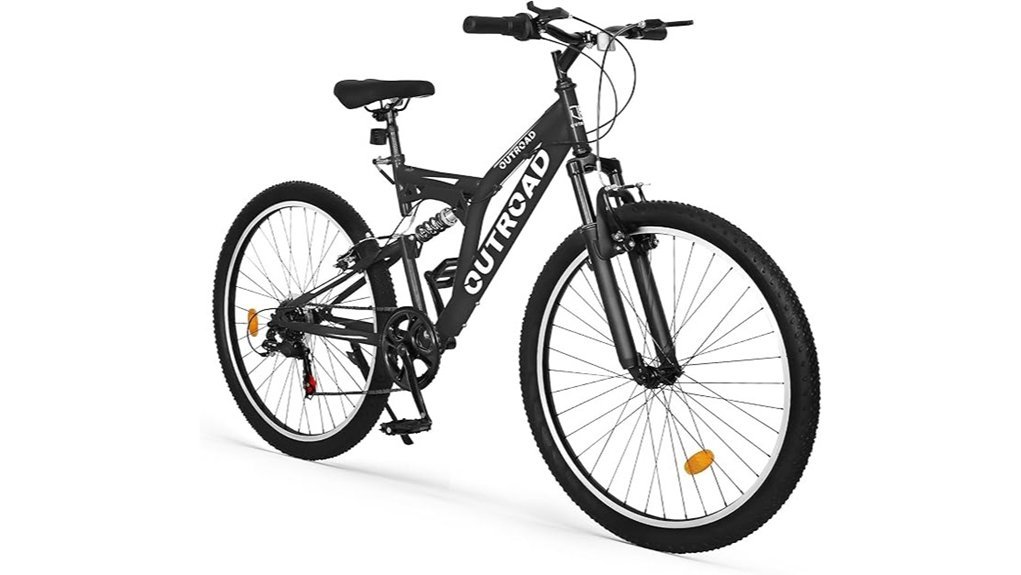
With dual suspension and a 330-pound capacity, the Max4out 26-inch suits heavier beginners needing extra comfort. Its high-carbon steel frame and rugged build support riders from 52 to 62 inches tall, while the 39-pound weight keeps it manageable. A responsive front fork and rear coil shock help smooth rough trails, and 26-inch all-terrain tires add traction. The 7-speed drivetrain uses twist shifters for simple control, and V-brakes deliver dependable stopping. Assembly is straightforward, with pre-assembled parts, tools, and a video guide. Available in several colors, it is ready to ride in about 20 minutes.
Best For: Riders 52 to 62 inches tall who want a budget-friendly, comfortable 26-inch mountain bike with dual suspension, easy shifting, and solid weight capacity for casual trails and commuting.
Pros:
- Dual suspension with front fork and rear coil shock helps smooth rough terrain.
- 330 lb weight capacity and high-carbon steel frame make it sturdy for heavier riders.
- 7-speed drivetrain with twist shifters and V-brakes offers simple, reliable control.
Cons:
- At 39 lbs, it may feel heavy for some riders to lift or transport.
- V-brakes are dependable but less powerful than disc brakes in wet or muddy conditions.
- Best suited to lighter trail use and beginners rather than aggressive mountain biking.
26″ 7-Speed Mountain Bike with Front Suspension
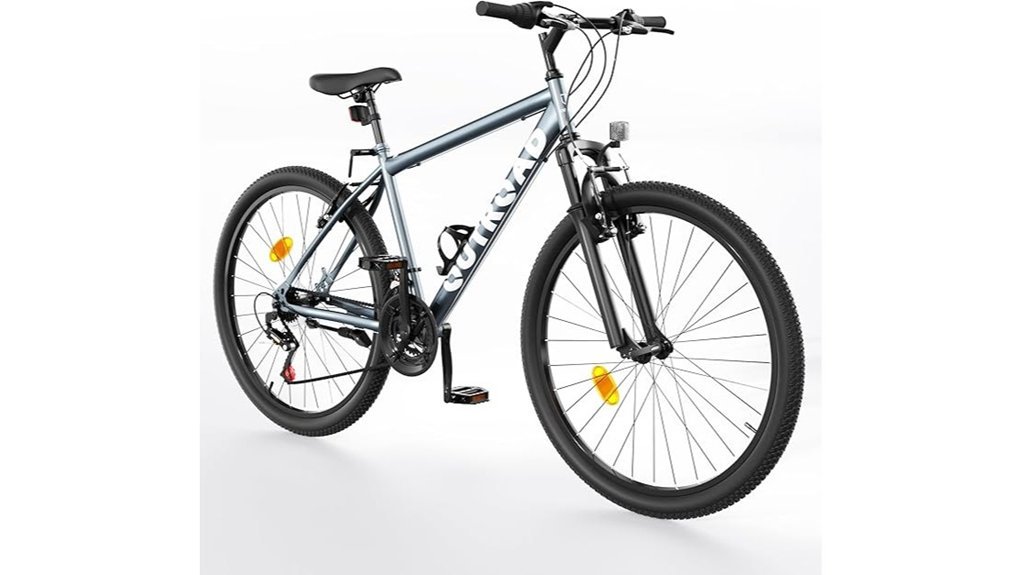
This 26-inch 7-speed mountain bike suits beginner trail riders needing comfort and control. Its high-carbon steel, aviation-grade frame supports up to 330 lbs while keeping a lightweight profile. A front suspension fork helps absorb bumps, and V-brakes deliver dependable stopping power. The quick-release ergonomic seat and ergonomic handlebars improve riding posture, while the adjustable fit suits riders 52 to 62 inches tall. Waterproof paint adds durability, and 90% pre-assembly simplifies setup in about 20 minutes. Step-by-step videos and 24/7 support further ease ownership for trail use.
Best For: Beginner trail riders who want a comfortable, easy-to-assemble 26-inch bike with reliable control and a sturdy frame.
Pros:
- 7-speed gearing and front suspension make it suitable for light trail riding and bumpy paths.
- High-carbon steel frame supports up to 330 lbs while maintaining a durable, lightweight feel.
- 90% pre-assembled with included tools, plus video guides and 24/7 support, makes setup and ownership easier.
Cons:
- V-brakes are dependable, but not as strong or low-maintenance as disc brakes in wet or steep conditions.
- Best suited to riders 52 to 62 inches tall, so fit may be limited for taller users.
- More of an entry-level trail bike, so it may not satisfy advanced riders or demanding terrain.
27.5 Inch Full Suspension Mountain Bike 21-Speed
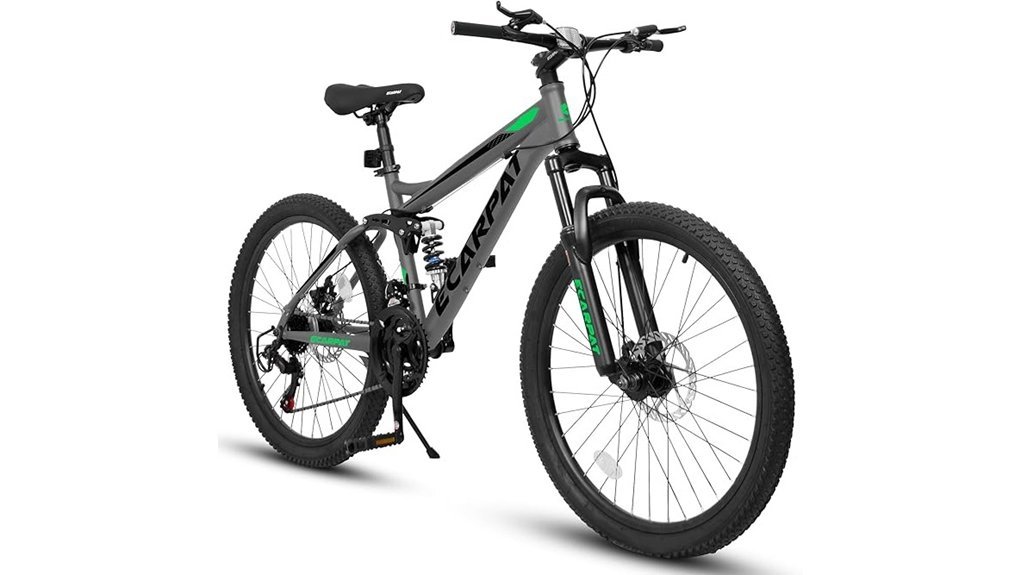
Built for riders who want comfort and control, the 27.5-inch full suspension mountain bike suits beginners and casual trail explorers. Its front and rear shock absorbers help soften bumps on rough roads, gravel, and mixed trails, creating a steadier ride. Mechanical disc brakes provide dependable stopping power in changing weather, supporting safer commuting and trail use. The 21-speed drivetrain offers useful range for climbs, flats, and gradual descents. A strong steel frame adds durability for everyday riding. It also includes a tool kit and partial assembly, allowing setup in about 20 minutes.
Best For: Beginners, casual trail riders, and everyday commuters who want a comfortable, stable, and easy-to-assemble full suspension mountain bike.
Pros:
- Full suspension with front and rear shock absorbers helps smooth out bumps for a more comfortable ride.
- Mechanical disc brakes offer reliable stopping power and better control in different weather conditions.
- 21-speed gearing and a durable steel frame make it versatile for varied terrain and regular use.
Cons:
- Steel frame may be heavier than aluminum alternatives.
- Mechanical disc brakes are effective, but not as advanced as hydraulic systems.
- Partial assembly still requires some setup, even though it’s relatively quick.
Schwinn High Timber Mountain Bike 24-29 Inch Wheels
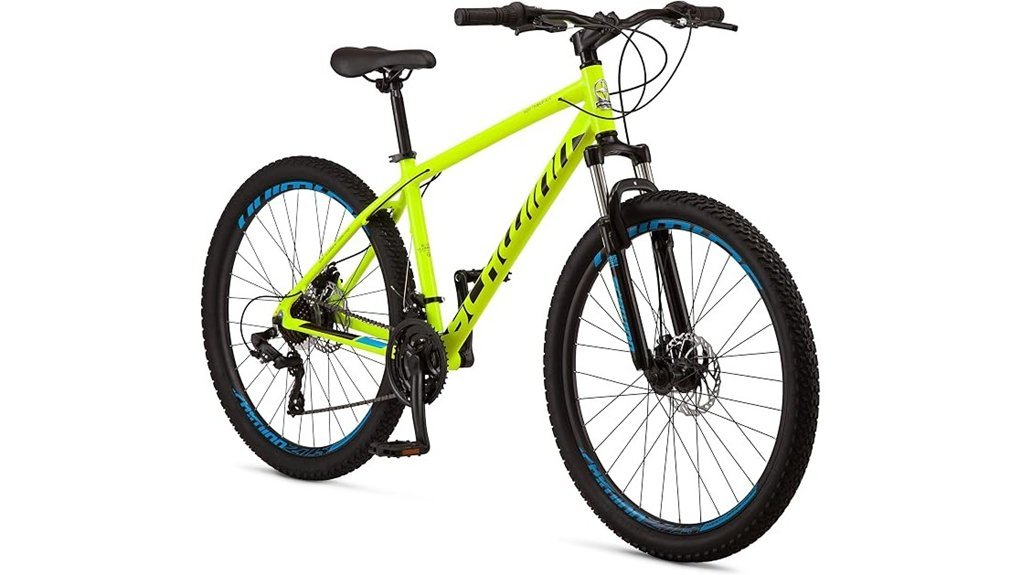
The Schwinn High Timber suits adult riders needing a versatile, affordable trail bike with easy handling. Schwinn’s 2020 model uses a lightweight 17-inch aluminum frame and 27.5-inch wheels to balance agility and stability. Wide knobby tires improve grip on mixed terrain, while front suspension and disc brakes support control on rougher trails. With 21 speeds, twist shifters, and a rear derailleur, gear changes stay straightforward. The quick-release seat post helps fit riders from 5’4” to 6’2”. Arriving 80% assembled, it requires basic tools and offers low-maintenance ownership.
Best For: Adult riders, including men and women, who want an affordable, easy-to-handle mountain bike for casual trail riding and mixed terrain.
Pros:
- Lightweight 17-inch aluminum frame with 27.5-inch wheels for a good balance of agility and stability
- Wide knobby tires, front suspension, and disc brakes improve control on rough or uneven terrain
- 21-speed drivetrain with twist shifters offers simple, quick gear changes
Cons:
- Arrives 80% assembled, so some setup is still required
- 14.7 kg weight may feel heavy to some riders compared with higher-end bikes
- Best suited for casual trail use rather than aggressive mountain biking
WEIZE Mountain Bike with Dual Full Suspension
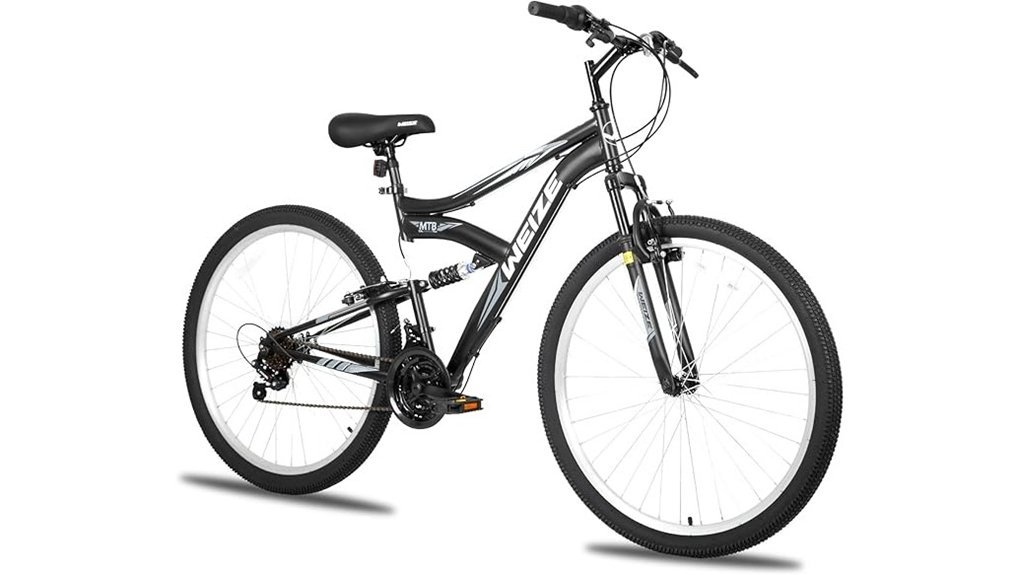
WEIZE’s dual suspension setup makes rough trails feel more manageable for beginner riders. Its high-carbon steel frame pairs with a front fork and rear coil shock to soften impacts on uneven ground. An 18-speed drivetrain with twist shifters and front and rear derailleurs helps riders maintain a comfortable cadence across hills and flats. Linear pull brakes add dependable stopping control. The 27.5-inch all-terrain tires suit varied surfaces, while the bike fits riders 13 and up, 54 inches and taller. Partial assembly, included tools, and a quick setup video simplify getting started.
Best For: Beginner and casual riders aged 13+ who want a budget-friendly mountain bike with dual suspension for smoother rides on varied terrain.
Pros:
- Dual suspension with a high-carbon steel frame helps soften bumps on rough trails.
- 18-speed twist shifters make gear changes simple and adaptable for hills and flats.
- Comes partially assembled with tools included, plus a setup video for easier assembly.
Cons:
- High-carbon steel frame can be heavier than aluminum alternatives.
- Linear pull brakes are reliable but less powerful than some higher-end braking systems.
- Best suited for basic riding and light trail use rather than advanced mountain biking.
Factors to Consider When Choosing an Amateur Mountain Bike
Selecting an amateur mountain bike begins with the frame material, wheel size, suspension type, braking system, and gear range, since each affects comfort, control, and durability. A lighter frame can improve handling, while the right wheel size and suspension help match the terrain. Reliable brakes and a suitable gear range also support safer, more efficient riding.
Frame Material
Frame material shapes how a beginner mountain bike feels, handles, and holds up over time. Aluminum is often favored for its light weight and strong strength-to-weight balance, making it easier to maneuver on trails and quicker to respond. Its clean, modern construction, including internal headset designs, can also give the bike a streamlined look. High-carbon steel brings greater durability and better resistance to bending, which helps on rough terrain, but it adds noticeable heft. Price also varies by material, with aluminum usually offering a more affordable entry point than premium carbon fiber. Riders should match the frame’s strength and capacity to their own weight so the bike supports them safely and performs reliably.
Wheel Size
Wheel size is one of the most important factors in how an amateur mountain bike handles on the trail. A 26-inch wheel favors agility, quick acceleration, and easy maneuvering through tight turns and technical features. By contrast, 27.5-inch and 29-inch wheels improve stability and rollover ability, helping the bike glide over roots, rocks, and uneven ground with less effort. Larger wheels also preserve momentum better on flat sections and downhill stretches, while smaller wheels feel livelier. Wheel size influences tire selection as well, since wider tires can increase grip on loose or uneven surfaces. Height and riding style should guide the choice, because the right size improves comfort, control, and confidence for different riders and trail conditions.
Suspension Type
Suspension type is another key decision when choosing an amateur mountain bike. The two main options are hardtail and full suspension. A hardtail uses front suspension only, which keeps the bike lighter, simpler, and often more efficient on climbs and cross-country routes. It also usually costs less to maintain because there are fewer moving parts. Full suspension adds rear shock absorption, helping the bike handle rougher trails with greater comfort and control. That added cushioning can be valuable for beginners or riders on uneven terrain. However, full suspension bikes are typically heavier and more complex, which can increase upkeep. The best choice depends on trail conditions, riding goals, and preference for speed, comfort, or simplicity.
Braking System
A bike’s braking system can make a major difference in safety and control, especially on steep descents or in wet, muddy conditions. For amateur mountain bikes, reliable stopping power is essential across rough terrain and changing weather. Mechanical disc brakes are often favored because they perform well when trails are slick, muddy, or uneven, where rim brakes may lose effectiveness. They can add slight weight, but the tradeoff is stronger control and quicker response. Modulation also matters, since it lets riders apply braking force gradually and maintain stability on technical sections. Regular maintenance should not be overlooked; checking brake pads and cables helps preserve performance and reduces the risk of unexpected issues during rides.
Gear Range
Gear range plays a key role in how well an amateur mountain bike handles different trails, with a 21-speed system often offering a practical balance for climbing steep sections and building speed on flatter ground. Lower gears help riders maintain control on steep inclines, while higher gears support efficient riding on flat or downhill stretches. A wide range of gears can improve comfort and performance on mixed terrain, especially during longer rides. Smooth shifting also matters, and trigger or twist shifters are often favored for quick, predictable changes. Reliable derailleurs and shifters further support responsive gear changes, reducing missed shifts and improving consistency. For amateur riders, matching gear range to terrain is essential for confident, adaptable riding.
Assembly Ease
Assembly ease can make a big difference for amateur riders, since many mountain bikes arrive 85% to 90% pre-assembled and require only a few final steps, such as attaching the front wheel, handlebars, pedals, and seat. In many cases, setup takes 15 to 30 minutes and can be completed with basic household tools like Allen wrenches and screwdrivers. Detailed instructions or video guides further simplify the process, especially for beginners with limited mechanical experience. A higher pre-assembly level reduces both effort and the chance of mistakes during initial setup. Customer support can also provide useful help if questions arise. For first-time buyers, a bike that is easy to assemble offers a smoother start and faster access to riding.
Frequently Asked Questions
What Frame Size Fits My Height Best?
Frame size generally depends on height, inseam, and riding style. A rider around 5’0″ to 5’3″ usually fits an extra-small frame, 5’4″ to 5’7″ a small, 5’8″ to 5’11” a medium, and 6’0″ to 6’2″ a large. Proportions can shift the ideal choice, so a stand over a bike and checking reach matters. A proper fit improves control, comfort, and confidence on trails.
How Much Should I Spend on My First Mountain Bike?
A first mountain bike should usually cost between $600 and $1,200. That range typically buys a reliable aluminum frame, decent suspension, and parts that handle beginner trails without constant repairs. Spending less often means heavier components and quicker wear. Spending more can improve comfort and performance, but it is not necessary at the start. A rider should budget extra for a helmet, pedals, and basic maintenance tools.
Do I Need Full Suspension for Beginner Trail Riding?
No, full suspension is not necessary for beginner trail riding. On mellow dirt paths and rolling singletrack, a hardtail often feels like a sturdy compass: simple, efficient, and easier to learn on. Full suspension can add comfort and control on rough terrain, but it also costs more and adds complexity. A beginner usually benefits first from fit, confidence, and good brakes before extra travel and rear shock plushness.
Which Tire Width Works Best on Mixed Terrain?
A 2.3 to 2.5 inch tire width usually works best on mixed terrain, balancing grip, comfort, and rolling speed. It gives enough volume for loose dirt, roots, and rocks, yet remains efficient on hardpack and pavement connectors. Narrower tires feel quicker but less forgiving; wider tires add traction and cushioning but can slow the bike. For most amateur riders, a mid-width tire offers the most versatile performance.
How Often Should I Service an Amateur Mountain Bike?
An amateur mountain bike should be serviced every 20 to 30 hours of riding, or about once a month for regular use. After muddy, wet, or dusty rides, a quick clean, chain lube, and brake check help prevent wear. Major servicing, including bearings, drivetrain, suspension, and brake inspection, is typically needed every 6 to 12 months. More frequent use, rough terrain, or neglect may require earlier attention and replacement.