Verona is one of the easiest bases in northern Italy for exploring without a car. Direct trains put Lake Garda, Vicenza, Padua, Brescia, Venice, Mantua, and Milan within realistic day-trip range, while places such as Soave, Valpolicella, and the Dolomites are possible with an extra bus, taxi, or other local connection.
The best choice depends on what you want from the day. Lake Garda combines scenery and waterfront walks, Vicenza and Mantua suit architecture and history, Padua is excellent for art, Venice delivers the biggest sightseeing day, and Brescia offers Roman and medieval heritage with fewer logistical complications.
Quick Answer
The easiest day trips from Verona by train are Peschiera del Garda, Desenzano del Garda, Vicenza, Brescia, Padua, Mantua, Venice, and Milan. Peschiera can be reached in as little as about 12 minutes on some high-speed services, while Venice takes about an hour on the fastest direct trains. Always check the live timetable before travelling.
Key Takeaways
- Best easy lake trip: take a direct train to Peschiera del Garda or Desenzano del Garda.
- Best art and architecture trips: Vicenza, Mantua, and Padua are practical without a car.
- Best major-city trip: Venice is roughly an hour away on the fastest direct trains; Milan is also realistic.
- Not all destinations are train-only: Sirmione, Bardolino, Valpolicella wineries, Soave, Riva del Garda, and the Dolomites normally require an onward connection.
- Ticket rules depend on ticket type: paper regional tickets generally require validation, while current Trenitalia Digital Regional Tickets activate automatically at the selected train’s scheduled departure.
Best Day Trips from Verona by Train: Quick Comparison
These times are useful planning benchmarks, not guarantees. They reflect fast published services where available, while regional trains may take longer. Timetables, engineering works, and individual train patterns can change, so confirm your exact outbound and return trains before leaving Verona.
| Destination | Practicality from Verona |
| Peschiera del Garda | About 12 minutes on the fastest published direct services. One of the simplest Lake Garda trips. |
| Desenzano del Garda | About 19 minutes on the fastest published direct services. Useful for Desenzano itself and onward travel toward Sirmione. |
| Vicenza | About 26 minutes on the fastest published direct services. Excellent for Palladian architecture. |
| Brescia | About 34 minutes on the fastest published direct services. Strong choice for Roman archaeology and museums. |
| Padua | About 43 minutes on the fastest published direct services. Excellent for Giotto, historic university sites, churches, and piazzas. |
| Mantua | Many direct regional journeys are around 45–55 minutes. Ideal for Renaissance palaces and an easy historic-center walk. |
| Venice | About 1 hour 1 minute on the fastest published direct services. Allow a full day because there is far more to see after arrival. |
| Milan | About 1 hour 12 minutes on the fastest published direct services. A long sightseeing day but realistic by high-speed train. |
| Soave / Valpolicella | Train plus local bus, taxi, or pre-arranged winery transfer. More planning is required than for a city day trip. |
| Dolomites | Train plus substantial onward transport. Possible with an early start, but generally less efficient than the direct-train destinations above. |
How to Travel by Train in Verona
Start at Verona Porta Nuova
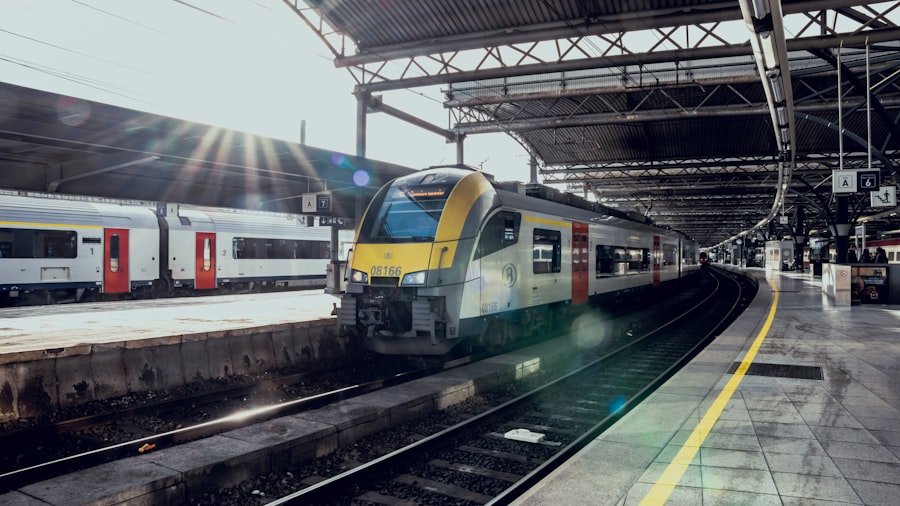
Verona Porta Nuova is the city’s principal railway station and the most useful departure point for these day trips. It sits on the main east-west rail corridor linking Milan, Brescia, Lake Garda, Vicenza, Padua, and Venice, while regional routes also connect Verona with destinations such as Mantua and Trento.
Choose Between Regional and High-Speed Trains
Regional trains are often the simplest option for shorter journeys because fares are generally flexible and you do not need to pay high-speed prices for every trip. High-speed services operated by Trenitalia and Italo can reduce journey times to destinations such as Peschiera, Desenzano, Vicenza, Padua, Brescia, Venice, and Milan.
High-speed tickets are tied to a specific train and normally include a reserved seat. Regional ticket conditions work differently, so read the conditions attached to the ticket you actually buy rather than assuming one rule applies to every train.
Current Ticket Validation Rules
Do not rely on the old rule that every Italian train ticket must be stamped before boarding. For Trenitalia regional travel, a paper regional ticket normally needs to be validated at the station before departure. Trenitalia’s current Digital Regional Ticket activates automatically at the scheduled departure time of the selected train, while qualifying electronic regional tickets do not require physical validation.
Check the current rules shown during purchase if you use another operator or a locally integrated ticket. Keep your ticket available until you have completed the journey.
Pro Tip: Search both regional and high-speed options before buying. On a short route, a regional train may save money with only a modest increase in travel time; for Venice or Milan, paying for a faster service can give you more sightseeing time.
Check the Return Journey Before You Leave
Train frequencies are generally good on the main Milan–Verona–Venice corridor, but schedules can change because of engineering work, strikes, seasonal adjustments, or individual service patterns. Before leaving Verona, identify at least two realistic return options and check the live timetable again later in the day.
Lake Garda: A Day Trip from Verona
Lake Garda, Italy’s largest lake, is one of the easiest scenic escapes from Verona. The key detail is that the railway does not run around the entire shoreline. For a simple train-based day trip, focus first on Peschiera del Garda or Desenzano del Garda, the two main rail stations on the southern shore.
Peschiera del Garda
Peschiera is the quickest and simplest choice for many travelers. Some direct high-speed services from Verona take about 12 minutes. Once there, you can walk around the historic fortified center, follow the waterfront, relax beside the lake, or connect onward to other eastern-shore towns.
Desenzano del Garda
Desenzano is another excellent direct option, with the fastest published services taking about 19 minutes from Verona. It has an attractive old harbor, lakeside walks, shops, restaurants, and Roman archaeological remains.
What About Sirmione, Bardolino, and Riva del Garda?
Sirmione is famous for its long peninsula, thermal waters, Scaligero Castle, and the Grotte di Catullo archaeological site, but it does not have its own railway station. A practical plan is to take the train to Desenzano or Peschiera and continue by local bus or another suitable transfer.
Bardolino is known for its lakeside setting and the surrounding Bardolino wine area. It also requires onward transport from a rail station. Riva del Garda lies much farther north; reaching it normally involves a train to a gateway such as Rovereto plus a bus, making it a considerably longer day than Peschiera or Desenzano.
Boat services can also connect lake towns, but routes and frequency vary by season. If boating is central to your day, check the current navigation timetable before committing to a tight return train.
Note: For the easiest Lake Garda day from Verona, stay in Peschiera or Desenzano. Add Sirmione or another lakeside town only when you have confirmed the onward and return connection.
The Charming Town of Vicenza
| Category | Data/Metric |
|---|---|
| Population | About 111,000; the municipality reported 110,797 residents at the end of 2025 |
| Area | 80.54 km² |
| Main Attractions | Palazzo Chiericati, Basilica Palladiana, Teatro Olimpico |
| UNESCO World Heritage Site | City of Vicenza and the Palladian Villas of the Veneto |
| Local Cuisine | Baccalà alla Vicentina, local risotto dishes, and cheeses from the wider Vicenza area |
| Fastest Published Direct Train | About 26 minutes from Verona on selected high-speed services |
Vicenza is one of the strongest day-trip choices when you want maximum sightseeing with minimum transport hassle. Direct trains connect it with Verona, and the historic center is compact enough to explore largely on foot.
The city is inseparable from Renaissance architect Andrea Palladio. The UNESCO-listed property combines Vicenza with Palladian villas across the Veneto, while central Vicenza contains several of his best-known works.
Begin around the Basilica Palladiana and Piazza dei Signori, then continue toward the Teatro Olimpico and Palazzo Chiericati. If you have more time, Villa Almerico Capra, better known as La Rotonda, lies outside the immediate historic core and requires extra local travel.
Vicenza works particularly well for architecture lovers because you can experience major Renaissance landmarks without spending half the day getting there.
Exploring the Beauty of Mantua
Mantua is a rewarding day trip for travelers who prefer Renaissance history, palaces, quieter streets, and regional food. Direct regional services often make the journey from Verona in roughly 45–55 minutes, although the exact timetable varies.
The city is bordered by the Lago Superiore, Lago di Mezzo, and Lago Inferiore. Contrary to the common claim that these lakes were created during the Renaissance, Mantua’s hydraulic arrangement dates to the medieval period. The system associated with engineer Alberto Pitentino was established around 1190 to regulate the Mincio around the city.
Mantua later became one of the great courts of Renaissance Italy under the Gonzaga family. The Palazzo Ducale is the major central attraction and includes the celebrated Camera degli Sposi associated with Andrea Mantegna. Palazzo Te, designed by Giulio Romano, lies farther from the historic core but is also one of the city’s essential Renaissance sights.
Between museums, explore Piazza Sordello, Piazza delle Erbe, and the streets linking the city’s historic squares. Local specialties include tortelli di zucca, pasta filled with pumpkin and traditionally balanced with sweet and savory flavors.
Visiting the Historic City of Padua
Padua is one of the best combinations of easy rail access and major cultural attractions. The fastest published direct services from Verona take about 43 minutes, giving you enough time for a full sightseeing day without an extremely early departure.
Academic Heritage and Artistic Treasures
The city’s University of Padua dates to 1222 and remains one of Europe’s historic universities. Palazzo Bo, its historic seat, can be visited on designated tours.
Padua’s greatest artistic draw is the Scrovegni Chapel, where Giotto’s fresco cycle forms part of the UNESCO-listed fourteenth-century fresco cycles of Padua. Because admission is controlled, reserve ahead when the chapel is a priority rather than assuming you can buy a convenient same-day slot.
Natural Beauty and Lively Atmosphere
The Orto Botanico di Padova, founded in 1545, is a UNESCO-listed botanical garden and an important landmark in the history of botanical science. It sits near the Basilica of Saint Anthony and is easy to combine with the southern part of the historic center.
Padua also rewards travelers who do not want a museum-heavy day. Its arcaded streets, markets, cafés, and piazzas create an active local atmosphere between the major monuments.
Iconic Landmarks and Leisurely Delights
Prato della Valle is one of the city’s signature public spaces, a vast elliptical square framed by statues and canals. The Basilica of Saint Anthony, Palazzo della Ragione, Piazza delle Erbe, and Piazza della Frutta can all fit comfortably into a well-planned walking itinerary.
Discovering the Vineyards of Valpolicella
Valpolicella begins close to Verona, but it should not be treated like a single town with one convenient station. It is a wine-producing area spread across hills and communities in the province of Verona. That makes it better suited to travelers willing to combine rail with local buses, taxis, or a pre-arranged winery transfer.
The region is especially associated with Amarone della Valpolicella DOCG, which is made using grapes that undergo a drying process before vinification. Winery visits commonly explain the appassimento process, cellar aging, and differences among Valpolicella styles.
Villages such as San Pietro in Cariano, Fumane, and San Giorgio di Valpolicella provide attractive bases for exploring the landscape. Some rail journeys can get you closer to the western Valpolicella area, but individual wineries may still be several kilometers from a station.
Planning Caution: Do not build a Valpolicella wine day around spontaneous station-to-station travel. Reserve winery visits first and then confirm how you will travel between the station, winery, and your return train to Verona.
Day Trip to the Romantic City of Venice
Venice is one of the most ambitious but most rewarding direct day trips from Verona. Current published high-speed schedules can cover Verona to Venezia Santa Lucia in about 1 hour 1 minute, while slower trains take longer.
Arriving at Venezia Santa Lucia places you directly on the edge of the historic city, so there is no need for another train into the center. From there, you can walk or use the vaporetto water-bus network.
For a first visit, a practical route leads from the station toward the Rialto area and then to St. Mark’s Square, where St. Mark’s Basilica and the Doge’s Palace dominate the waterfront. A vaporetto ride along the Grand Canal can double as transportation and sightseeing.
A gondola ride is optional rather than essential. Travelers with limited time may get more value from exploring on foot, seeing the Grand Canal from the vaporetto, crossing smaller canals away from the busiest streets, and leaving enough time for the walk or boat ride back to Santa Lucia.
The Rialto Market area also adds a glimpse of everyday commercial Venice alongside the monumental sights.
Pro Tip: For Venice, choose your return train before sightseeing. The walk back to Venezia Santa Lucia can take much longer than expected when streets are crowded or when you stop repeatedly along the way.
The Scenic Beauty of the Dolomites
The Dolomites are spectacular, but they are the least straightforward destination in this guide if your goal is a simple day trip from Verona by train. The UNESCO World Heritage property covers a vast mountain area rather than one compact town, and many famous viewpoints and trailheads require buses, cable cars, or road transport after the rail journey.
In summer, the region offers hiking routes ranging from gentle alpine walks to demanding mountain trails. In winter, resorts across the Dolomites attract skiers, snowboarders, and snowshoe hikers. Tre Cime di Lavaredo and Cortina d’Ampezzo are famous names, but they should not be treated as direct rail destinations from Verona.
If the Dolomites are a high priority, choose one specific mountain area first, then work backward through its train and bus connections. A very early departure may make a day trip possible, but an overnight stay generally gives you much more time in the mountains and reduces the risk of spending most of the day in transit.
Exploring the Medieval Town of Soave
Soave lies east of Verona and is an appealing option for medieval scenery and wine culture. The town itself is not served by a central railway station, so the most practical rail-based approach normally involves traveling from Verona toward San Bonifacio and arranging the remaining local connection.
The skyline is dominated by Castello di Soave and the defensive walls that climb the hill above the town. Although the fortified site’s history reaches deep into the Middle Ages, much of the distinctive Scaliger appearance visible today developed during the 13th and 14th centuries.
Inside the walls, cobbled streets lead past shops, cafés, historic buildings, and places connected with Soave’s white-wine tradition. The town can make a pleasant slower-paced alternative to the larger city day trips, especially if you have already visited Venice or Padua.
Because the last part of the journey is not train-only, check the local bus or taxi connection in both directions before leaving Verona.
The Historical Importance of Brescia
Brescia is sometimes overlooked beside Milan, Verona, and Venice, yet it is one of the easiest history-focused train trips from Verona. The fastest published direct services take about 34 minutes.
The city preserves important evidence from Roman Brixia as well as medieval and later periods. A major cultural stop is the Santa Giulia Museum, part of the monastic complex of San Salvatore–Santa Giulia. The complex forms the Brescia component of UNESCO’s serial property Longobards in Italy: Places of the Power (568–774 A.D.).
Nearby archaeological remains include the Capitolium area and Roman theatre. Higher above the center, Brescia Castle provides another layer of the city’s military history along with broad views.
Brescia works particularly well if you want a substantial museum and archaeology day without the longer travel time or crowds associated with Venice and Milan.
Day Trip to Milan by Train
Milan deserves a full section because it is a realistic direct day trip rather than merely an FAQ option. Current published high-speed schedules can take about 1 hour 12 minutes from Verona to Milano Centrale.
For a first visit, prioritize a compact group of sights rather than attempting to cover the whole city. The Duomo and Galleria Vittorio Emanuele II sit beside each other in the historic center. From there, you can continue toward the Brera district, Castello Sforzesco, or another attraction that matches your interests.
If you want to see Leonardo da Vinci’s The Last Supper, advance reservations are essential because access is limited. Without a reservation, Milan still offers enough architecture, museums, shopping streets, cafés, and public spaces for a complete day.
For travelers seeking the simplest possible day, Vicenza, Padua, Brescia, Mantua, Peschiera, and Desenzano involve less total travel. Venice and Milan are better when the destination itself is your main priority.
If you’re looking to escape Verona and explore the surrounding region, start by deciding whether you want a truly direct train trip or are comfortable adding local transportation. Lake Garda is especially easy when you choose Peschiera or Desenzano as your rail destination; adding Sirmione, Bardolino, or another lakeside town requires a little more planning.
Frequently Asked Questions
What are the best day trips from Verona by train?
The easiest choices include Peschiera del Garda, Desenzano del Garda, Vicenza, Brescia, Padua, Mantua, Venice, and Milan. Peschiera and Desenzano are best for Lake Garda, while Vicenza, Padua, Mantua, and Brescia offer especially easy cultural trips.
How long does it take to reach Venice from Verona by train?
The fastest published direct high-speed journeys take about 1 hour 1 minute from Verona to Venice. Regional services can take longer, so check your specific train before departure.
What is the travel time from Verona to Milan by train?
The fastest published direct high-speed services take about 1 hour 12 minutes from Verona to Milan. Other services may take longer.
Can I visit Lake Garda on a day trip from Verona by train?
Yes. Peschiera del Garda and Desenzano del Garda are the easiest rail destinations on the southern shore. The fastest published services take about 12 minutes to Peschiera and 19 minutes to Desenzano. Other lake towns may require a bus or boat connection.
Are there direct trains from Verona to Padua?
Yes. Direct trains run between Verona Porta Nuova and Padua, and the fastest published high-speed journeys take about 43 minutes. Regional trains can take longer.
Do I need to validate my train ticket in Verona?
It depends on the ticket. Trenitalia paper regional tickets normally need validation before departure. Current Digital Regional Tickets activate automatically at the scheduled departure time of the selected train, and qualifying electronic regional tickets do not require physical validation. High-speed tickets are tied to the booked train, so always follow the conditions shown on your ticket.
Can I take the train directly from Verona to Sirmione?
No. Sirmione does not have its own railway station. Take a train to Desenzano del Garda or Peschiera del Garda, then continue using an appropriate local bus, taxi, or seasonal connection.
Are the Dolomites a good train day trip from Verona?
They are possible but not as simple as Vicenza, Padua, Venice, Brescia, or Lake Garda. The Dolomites cover a large mountain area, and most famous hiking areas require buses or other onward transportation after the train. An overnight stay is often more practical.
Sources
- Trenitalia — Travelling on Regional Trains — current regional ticket types, validation rules, and travel conditions.
- Italo — Destinations and Timetables — current high-speed connections and published journey times from Verona.
- VisitGarda — Getting to Lake Garda by Train — rail stations and onward connections around Lake Garda.
- Comune di Vicenza — 2025 Population Statistics — updated Vicenza resident population.
- UNESCO World Heritage Centre — Italy — World Heritage status for Vicenza, Mantua, Padua, Brescia’s Longobard property, Venice, and the Dolomites.
- Turismo Mantova — The Lakes of Mantua — the 1190 hydraulic system associated with Alberto Pitentino.