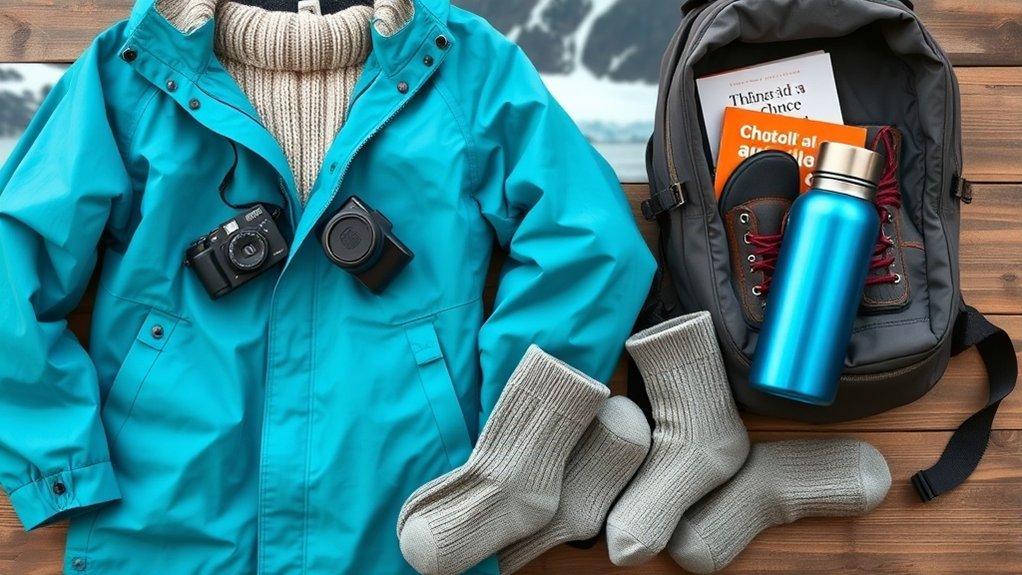
Packing for an Alaska cruise is less about bringing a huge winter wardrobe and more about choosing versatile gear you can use in changing conditions. A typical day can include a warm ship interior, a breezy glacier-viewing deck, light rain in port, and an active shore excursion. The best approach is to pack layers, reliable rain protection, comfortable footwear, and a small set of cruise-specific essentials.
Quick Answer
For an Alaska cruise, pack moisture-managing base layers, a fleece or light insulated mid-layer, a waterproof hooded shell, comfortable water-resistant walking shoes, warm accessories, sunscreen, binoculars, a small daypack, medications, travel documents, chargers, and a few ship-appropriate outfits. Keep essential documents, medicines, valuables, and one weather layer in your embarkation-day carry-on.
Key Takeaways
- Build your wardrobe around three flexible layers instead of one bulky winter coat.
- Bring a waterproof outer shell and comfortable walking shoes because Alaska cruise weather and shore conditions can change quickly.
- Keep your travel documents, medications, electronics, valuables, and a warm layer with you on embarkation day.
- Pack for your actual excursions. Hiking, kayaking, glacier trips, and casual port walks do not require the same gear.
- Check your cruise line, ship, airline, and itinerary rules before leaving home because luggage limits, dress codes, electrical restrictions, and document requirements vary.
Clothing for Varying Weather Conditions
When you take an Alaska cruise, flexible clothing matters more than predicting one perfect outfit. Travel Alaska recommends packing in layers because temperatures and weather can vary significantly by region and season.
Start with a simple three-layer system:
- Base layer: A lightweight synthetic or merino shirt that manages moisture. Bring a long-sleeve option for cooler mornings and glacier-viewing days.
- Mid-layer: A fleece, sweater, light puffer, or insulated vest that traps warmth without taking up too much suitcase space.
- Outer layer: A waterproof, wind-resistant shell with a hood. You should be able to wear it comfortably over the other two layers.
Add comfortable everyday pants, quick-drying trousers if you expect wet excursions, short-sleeve shirts for warmer afternoons, and sleepwear. Jeans are fine for many casual cruise days, but they can take a long time to dry after heavy rain.
Pro Tip: Choose pieces that can be worn in several combinations. Two useful mid-layers and a waterproof shell are usually more versatile than packing several heavy coats.
Packing for the Alaska Cruise Season
Most Alaska cruising takes place during the warmer part of the year, but conditions still vary. Travel Alaska notes that May is often relatively dry across the state, while temperatures generally cool again during August and September. Coastal conditions can remain cool even when inland areas are warmer.
| Period | Packing Emphasis |
|---|---|
| May | Warm layers, gloves or a beanie for cold mornings, waterproof shell, and sunglasses. |
| June–July | Flexible layers, sun protection, rain gear, and lighter clothing for mild afternoons. |
| August–September | Extra emphasis on rain protection and warm layers as temperatures trend cooler. |
Always check the forecast for your specific ports shortly before departure. Conditions in Juneau, Ketchikan, Skagway, Anchorage, Denali, and other destinations can differ substantially.
Footwear: Comfort and Versatility
Packing the right footwear can make a major difference on an Alaska cruise because you may walk on wet docks, paved streets, gravel paths, trails, observation decks, and excursion sites during the same trip.
A comfortable pair of water-resistant or waterproof walking shoes works well for many travelers. Choose shoes with good traction and break them in before the trip.
If your itinerary includes real hiking, consider lightweight hiking shoes or boots suited to the trail. You do not automatically need heavy hiking boots for ordinary sightseeing.
Slip-on shoes, sneakers, or sandals can be useful for relaxing on the ship. Pack comfortable socks, including a few wool or synthetic pairs that stay more comfortable when conditions are cool or damp.
For dining rooms or dressier evenings, bring one pair of clean, comfortable shoes that works with your evening clothing. There is usually no reason to pack multiple pairs of formal shoes unless your cruise line’s dress code or your personal plans call for them.
Outerwear and Layering Essentials
Your outerwear should let you stay outside when the wind picks up or a rain shower moves through. A waterproof shell, insulating layer, and compact warm accessories cover far more situations than one oversized coat.
Waterproof Jacket Necessity
A waterproof jacket with a hood is one of the most useful pieces on an Alaska cruise. It can protect you during rainy port days, windy scenic cruising, and damp excursions without forcing you to carry a heavy winter coat.
Look for a jacket that fits comfortably over your mid-layer. Adjustable cuffs and a secure hood are useful when the wind rises on an exposed deck or near the water.
Insulating Layer Importance
An insulating layer traps warmth between your base layer and rain shell. Fleece, a light insulated jacket, or a packable vest can work well.
The goal is versatility. You should be able to remove the insulating layer when you enter a warm restaurant or cabin and add it again when you step outside for wildlife viewing.
Thermal Accessories Must-Haves
Small accessories provide significant warmth without using much luggage space. Consider packing:
- a lightweight beanie or warm hat
- thin gloves that still let you operate your phone or camera
- a neck gaiter or scarf
- wool or synthetic socks
These items can be especially useful while watching glaciers or spending a long time on an exposed deck.
Onboard Dining and Evening Clothes
Alaska cruises are generally practical during the day, but onboard dinner rules vary by cruise line and venue. Some dining rooms accept smart-casual clothing, while particular evenings or restaurants may encourage dressier outfits.
Pack one or two simple evening combinations that fit your cruise line’s published dress guidance. A dress, skirt, slacks, collared shirt, blouse, sweater, or similar outfit can usually be mixed with clothing you already packed.
You may also want a swimsuit and cover-up for an indoor or heated pool, spa area, or hot tub. Alaska may be cool outside, but many ships still offer pool facilities.
Note: Dress codes are cruise-line and venue specific. Check your line’s current guidance rather than packing formal clothing based on another company’s rules.
Accessories for Sun and Rain
Alaska cruise packing requires preparation for both rain and bright sun. Useful accessories include:
- Waterproof hooded jacket: Your primary rain protection.
- Brimmed hat: Useful for light rain and sunny shore days.
- Polarized sunglasses: Helpful around water, snow, and bright outdoor scenery.
- Sunscreen: The CDC notes that sunburn can occur even when the weather is cool or cloudy.
- Compact umbrella: Optional for port walking if your cruise line permits it and conditions are not too windy.
- Waterproof pouch or pack cover: Useful for protecting electronics and documents during shore excursions.
Waterproof slip-on shoes can be convenient around the ship, but sturdy walking shoes are usually the better choice for long port days or uneven surfaces.
Toiletries and Personal Care Items
Pack the toiletries you use every day, but first check what your ship provides in the cabin. Many cruise ships already supply basics such as soap, shampoo, conditioner, and a hairdryer, which may save suitcase space.
Essential Toiletries Checklist
A small toiletry bag can hold:
- toothbrush, toothpaste, and floss
- deodorant
- razor and shaving supplies
- moisturizer
- lip balm
- sunscreen
- personal skincare products
- contact-lens supplies or spare glasses
- insect repellent for shore activities
- personal hygiene items
A compact first-aid pouch with adhesive bandages and the basic items you normally use can also be helpful. Avoid packing medicines or medical supplies that violate the rules of any country on your itinerary.
Travel-Sized Product Recommendations
Travel-sized products can reduce bulk if you prefer your own brands instead of the toiletries supplied on the ship.
- Shampoo and conditioner: Bring small containers if you prefer products other than the cabin amenities.
- Sunscreen: Choose a broad-spectrum sunscreen you will actually reapply during long outdoor days.
- Moisturizer: A small lotion can be useful after cool, windy days on deck.
You probably do not need to pack a travel hairdryer unless your cruise line confirms that your cabin lacks one and that your device is permitted.
Personal Care Must-Haves
Bring the personal-care items that would be difficult to replace during your trip. That includes prescription items, spare eyeglasses or contacts, dental appliances, and any specialty skincare products you depend on.
A reusable water bottle is also useful for staying hydrated, although you should follow your ship’s rules about carrying beverages through embarkation and filling bottles onboard.
Medications and Motion Sickness
Keep necessary medications in your carry-on luggage, not a checked suitcase that may be delayed. The U.S. Department of State recommends bringing enough prescription medication for your trip plus extra for possible delays and checking whether any medication is restricted in countries on your itinerary.
Carry prescriptions in properly labeled containers when required and keep a written medication list available.
If you are prone to seasickness, prepare before sailing. The CDC Yellow Book explains that motion sickness can occur on ships and describes both behavioral and medication-based approaches. Ask a healthcare professional which option is appropriate for you, especially if you take other medicines or have medical conditions.
Warning: Do not assume a prescription or over-the-counter medication that is legal at home is automatically permitted in every country you visit. Check your itinerary’s entry rules and keep important medicines with you.
Gadgets and Tech Gear
The right electronics can help you capture wildlife, stay organized, and enjoy downtime without filling your suitcase with unnecessary equipment.
- Phone and charging cable: Useful for cruise apps, tickets, photos, and communication.
- Portable battery: Helpful on long excursion days when you use your camera, maps, or cruise app heavily.
- Camera: Optional if you want better zoom or image quality than your phone provides.
- Water-resistant camera protection: A waterproof pouch or dry bag can protect electronics during wet excursions.
- Noise-canceling headphones: Useful during travel days or quiet cabin time.
- Downloaded entertainment: Save books, podcasts, music, or shows before sailing if you do not want to depend on onboard internet.
The best Alaska cruise tech is gear that stays charged, survives damp weather, and helps you capture wildlife without distracting you from the view.
Download your cruise-line app, itinerary details, important confirmations, and any maps you may need before departure.
Charging Devices Safely
Do not automatically pack the same power strip you use at home. Cruise lines maintain their own electrical-safety rules, and some prohibit surge-protected power strips or particular extension devices.
Check your exact cruise line’s prohibited-item list and cabin outlet information. A simple cruise-approved USB charger or adapter may be sufficient for your devices.
What Not to Pack
Cruise ships have safety rules that differ from ordinary hotels, so review your cruise line’s prohibited-item page shortly before departure.
Depending on the line, prohibited or restricted items may include:
- weapons and ammunition
- pepper spray, mace, or similar incapacitating sprays
- bear spray
- candles and some heating appliances
- certain irons and hot plates
- some power strips, surge protectors, or extension cords
- hazardous chemicals and fuels
- some drones or large sporting equipment
For example, Holland America publishes a detailed prohibited-item list. Your cruise line’s rules may differ, so use its current list rather than assuming another company’s policy applies.
If an excursion requires specialized safety equipment, check what the operator provides before packing your own. Alaska tour operators often supply activity-specific equipment for excursions such as kayaking or glacier activities.
Travel Documents and Essentials
Travel documents deserve special attention because an Alaska itinerary may include Canada or another international component even when much of the trip takes place in the United States.
Keep all required identification, cruise documents, insurance information, and reservations together in an accessible travel wallet or secure digital folder.
Passport and Identification
Do not assume every Alaska cruise has identical passport rules.
The U.S. Customs and Border Protection guidance for closed-loop cruises explains that qualifying U.S. citizens on certain cruises that begin and end at the same U.S. port may be able to use approved citizenship and identification documents instead of a passport.
However, the U.S. Department of State strongly recommends that cruise travelers carry a valid passport book, partly because a passport can be important if an emergency requires you to leave the ship abroad or return home by air.
Your cruise line may also require a passport even when government rules provide another option.
Before leaving home, confirm:
- the exact document requirements for your citizenship
- the cruise line’s requirements
- requirements for every country on the itinerary
- passport validity requirements, if applicable
- documents required for children traveling with you
Travel Insurance Information
Travel insurance can provide protection for certain covered events such as trip cancellation, interruption, medical situations, or baggage problems, depending on the policy.
Read the actual policy before purchasing it. Pay attention to exclusions, pre-existing-condition rules, medical evacuation coverage, coverage limits, and whether the excursions you plan to take are covered.
Keep the insurer’s contact information and policy details accessible during the cruise.
Itinerary and Reservations
Save or print the important confirmations you may need during the trip:
- Cruise boarding documents: Keep boarding information readily available.
- Passport or other required identification: Do not place it in checked cruise luggage.
- Hotel reservations: Save pre- and post-cruise confirmations offline.
- Shore-excursion confirmations: Keep meeting locations and contact information available.
- Airline details: Save flight information and baggage rules separately from cruise-line rules.
Embarkation-Day Carry-On
Your checked luggage may not reach your stateroom immediately after boarding, so prepare a small carry-on with anything you would not want to be without for several hours.
- passport or other required travel documents
- cruise boarding documents
- prescription medications
- wallet and valuables
- phone and charger
- one warm or waterproof layer
- essential toiletries
- eyeglasses or contact supplies
- swimsuit if you want to use the pool or hot tub shortly after boarding
- any medical or accessibility items you need immediately
Pro Tip: Treat your embarkation bag like an airline carry-on you cannot afford to lose. Documents, medications, valuables, and essential electronics should stay with you rather than entering the checked-luggage system.
Snacks and Hydration Gear
Long shore-excursion days can make a small snack useful, but food rules differ by cruise line and destination. Check your ship’s policy before bringing food onboard or carrying it ashore.
| Item | Examples | Why It Helps |
|---|---|---|
| Dry packaged snacks | Protein bars such as Clif or RXBAR, if permitted | Compact option for long excursion days |
| Trail mix | Nuts and dried fruit, where permitted | Portable and easy to pack |
| Hydration gear | Reusable water bottle | Convenient during sightseeing and excursions |
Do not assume that food purchased or packed onboard can be carried into every port. Agricultural and customs rules can restrict food entering another country or region.
Outdoor and Adventure Equipment
Your outdoor gear should match your booked excursions. Someone taking a city walking tour has different needs from someone hiking, kayaking, fishing, or visiting a glacier.
For many shore days, three items are particularly useful:
- Waterproof jacket: Protects against rain and wind.
- Comfortable walking or hiking shoes: Choose the level of support required by your excursion.
- Binoculars: Excellent for wildlife, mountains, glaciers, and viewing from the ship.
A small daypack is also valuable for carrying your water bottle, rain shell, gloves, camera, sunscreen, and other items after you leave the ship.
Daypack for Shore Excursions
Choose a lightweight backpack or crossbody bag that is comfortable enough to carry for several hours. A water-resistant bag, rain cover, or waterproof inner pouch adds useful protection in wet weather.
A practical excursion-day bag may include:
- rain jacket
- warm hat and gloves
- water bottle
- sunscreen and sunglasses
- insect repellent
- phone or camera
- portable battery
- binoculars
- permitted packaged snack
- necessary medications
- excursion ticket or confirmation
Avoid carrying unnecessary valuables ashore.
Luggage, Packing Cubes, and Laundry Planning
There is no universal “two 50-pound bags” rule for Alaska cruises. Cruise-line allowances vary, and your airline may impose a much lower limit than the ship.
Before packing, check:
- your cruise line’s luggage guidance
- your airline’s checked- and carry-on limits
- any land-tour or cruisetour bag restrictions
- the size of bags allowed on motorcoaches or trains if your trip includes a land portion
Compression or packing cubes can make it easier to separate base layers, evening clothing, socks, and excursion gear. They also help you repeat a small wardrobe rather than overpacking.
Laundry availability varies by ship. Some cruise lines offer paid laundry, pressing, or dry-cleaning services; self-service laundry rooms are not universal. Check your exact ship before deciding how many days of clothing to bring.
If you are taking an Alaska cruisetour, luggage logistics may be different from the cruise itself. For example, some land programs transport larger bags separately while passengers keep a smaller day bag with documents, medication, valuables, and extra clothing.
Entertainment and Relaxation Items
Alaska scenery provides plenty of entertainment, but a few compact items can make quiet periods more comfortable.
Consider bringing a lightweight e-reader or book for relaxing on deck or in your cabin. A journal can be useful for recording wildlife sightings, excursions, and memorable ports.
Headphones are useful for music, podcasts, movies, or quiet travel days. If you enjoy knitting or crochet, a small project may also be enjoyable, but check the cruise line’s rules for needles or tools before packing them.
An eye mask and earplugs can make sleeping easier, especially if your cabin receives significant light or you are traveling during Alaska’s long summer days.
Cell Phone and Internet Planning
Do not assume that ordinary U.S. cellular coverage will work everywhere on an Alaska itinerary. Service can vary by carrier, port, terrain, and distance from populated areas.
At sea, your phone may also encounter shipboard or maritime cellular service that is priced differently from your normal domestic plan. Before sailing:
- check your carrier’s Alaska and cruise-ship coverage information
- check whether your cruise fare includes or offers ship Wi-Fi
- download important maps and travel documents for offline use
- understand how to prevent unintended cellular roaming charges
- use the cruise line’s app offline when supported
If avoiding unexpected mobile charges is important, ask your carrier how airplane mode, Wi-Fi calling, and maritime roaming work with your specific plan.
Frequently Asked Questions
What is the best way to pack efficiently for an Alaska cruise?
Build a small three-layer wardrobe, choose clothing that works in several combinations, and use packing cubes to organize it. Pack only the footwear required by your activities. Keep documents, medicines, valuables, electronics, and one weather layer in your embarkation-day carry-on rather than checked luggage.
Are there any specific dietary restrictions to consider on an Alaska cruise?
Cruise lines commonly accommodate a range of dietary needs, but procedures and notice periods vary. Add allergies or special dietary requests to your reservation as early as possible and confirm them with dining staff after boarding. Do not assume another cruise line’s deadline applies to your sailing.
How much luggage can I bring on an Alaska cruise?
There is no universal Alaska-cruise luggage allowance. Check your cruise line’s current baggage policy and your airline’s limits separately. If your trip includes a rail, motorcoach, Denali, Yukon, or other land-tour segment, that portion may also have separate luggage-handling rules.
Can I do laundry during the cruise, and how does that work?
Laundry options depend on the cruise line and ship. Some offer paid laundry, pressing, or dry-cleaning service, while self-service laundry rooms are not available on every ship. Check your ship’s current amenities and pricing before deciding how much clothing to pack.
What should I know about cell phone coverage in Alaska?
Coverage depends on your carrier and location, and remote areas may have limited or no service. At sea, shipboard cellular service can operate differently from normal land-based coverage and may result in separate charges. Check your mobile plan before sailing and download important information for offline use.
Do I need a heavy winter coat for an Alaska cruise?
Usually, a flexible layering system is more useful than one bulky winter coat during the normal Alaska cruise season. A base layer, warm fleece or light insulated jacket, waterproof shell, hat, and gloves can be combined as conditions change. Travelers going farther north or outside the main season should prepare for colder conditions.
Do I need formal clothes on an Alaska cruise?
That depends on your cruise line and dining plans. Daytime clothing is usually practical and casual, while some ships or restaurants recommend smart-casual or dressier evening clothing. Check your cruise line’s current dress guidance and pack one or two versatile evening outfits rather than assuming formal wear is mandatory.
Conclusion
A good Alaska cruise packing list prepares you for changing conditions without forcing you to haul an oversized suitcase. Build your wardrobe around a base layer, warm mid-layer, waterproof outer shell, and reliable walking shoes. Add a small daypack, binoculars, sun and rain protection, medications, electronics, and a few versatile onboard outfits.
Most importantly, check your exact cruise line, airline, itinerary, and excursions before you finish packing. Document requirements, luggage limits, dress codes, laundry options, prohibited items, and activity-specific equipment can vary. With those details confirmed, you can spend less time worrying about your suitcase and more time enjoying Alaska’s ports, wildlife, glaciers, and scenery.
Sources
- Travel Alaska — Alaska Travel Tips — supports seasonal weather and layering guidance.
- U.S. Department of State — Cruise Ships — supports passport, medication, and international cruise-travel guidance.
- U.S. Customs and Border Protection — Cruise Document Requirements — supports closed-loop cruise documentation guidance.
- Centers for Disease Control and Prevention — Cruise Ship Travel — supports sun, health, and seasickness preparation guidance.
- Holland America Line — How to Pack for Alaska — supports Alaska clothing, footwear, binocular, cabin, and laundry considerations.
- Princess Cruises — Alaska Cruisetour FAQs — supports carry-on, airline baggage, and land-tour luggage guidance.