Disclosure: As an Amazon Associate, we earn from qualifying purchases. If you click a link on this page and make a purchase, we may receive a small commission at no extra cost to you.
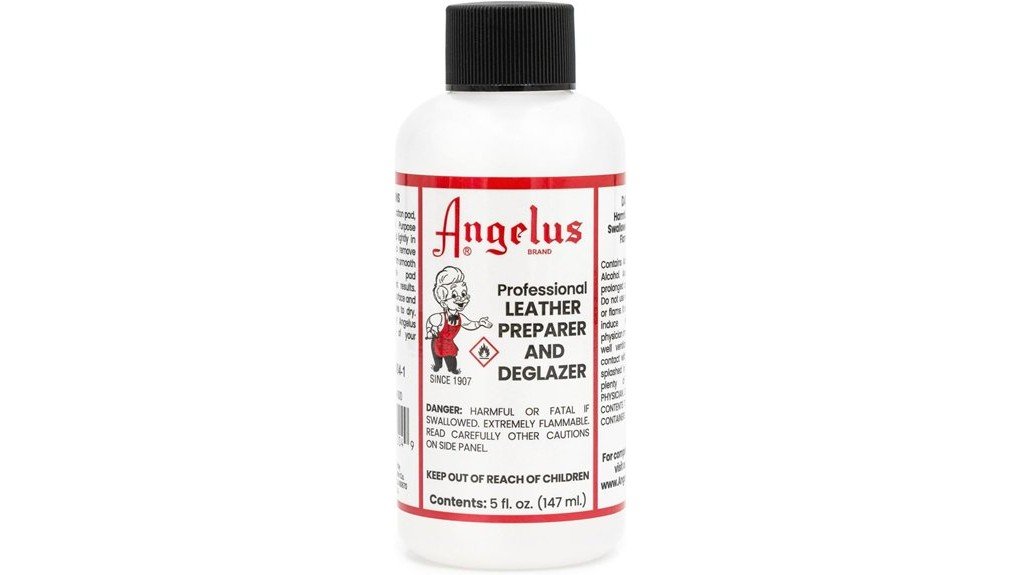
Fresh leather paint can peel or look uneven when a factory coating is still blocking the surface. Angelus Leather Preparer & Deglazer is a 5 fl oz liquid prep solution made to remove that finish before you paint or dye suitable leather. This review helps you decide where it works well, how to apply it with control, and which materials you should avoid. It is a practical choice for sneaker and leather customization, but its solvent odor and stripping action require careful handling.
Quick Verdict
Rating: Recommended with caveats, 8.2/10
Best For: Sneaker customizers, leather crafters, and restorers preparing smooth leather for paint or dye.
Bottom Line: Angelus Leather Preparer & Deglazer is a focused prep product that removes factory finish, dirt, and oils so color can bond to leather more reliably. Its main tradeoffs are solvent odor, limited material compatibility, and the risk of lifting more color than intended if you overwork one spot.
Key Takeaways
- The 5 fl oz Angelus formula is made to remove factory finish, dirt, and oils before leather paint or dye.
- Angelus recommends applying it with a rag, sponge, cotton ball, cotton swab, or applicator pad, then allowing the leather to dry fully.
- The product description and safety information say it is not recommended for plastic or vinyl.
- Suede, nubuck, coated synthetics, and mixed-material items need extra caution because this product is intended mainly for leather prep.
- It is a stripping and preparation liquid, not a conditioner, protective finisher, crack repair, or everyday cleaner.
| Specification | Detail |
|---|---|
| Brand | Angelus |
| Product name | Leather Preparer & Deglazer |
| ASIN | B00EU322DQ |
| Manufacturer part number | 820-04-000 |
| Product form | Liquid deglazer and leather preparation solution |
| Size and count | 5 fl oz, pack of 1 |
| Main purpose | Remove factory finish, dirt, and oils before leather paint or dye |
| Surface recommendation | Leather |
| Not recommended for | Plastic or vinyl, according to the product description and safety information |
| Application tools | Rag, sponge, cotton ball, cotton swab, or applicator pad |
| Safety note | Has a solvent odor. Use airflow, limit skin contact, and follow the bottle label. |
What Is Angelus Leather Preparer & Deglazer?
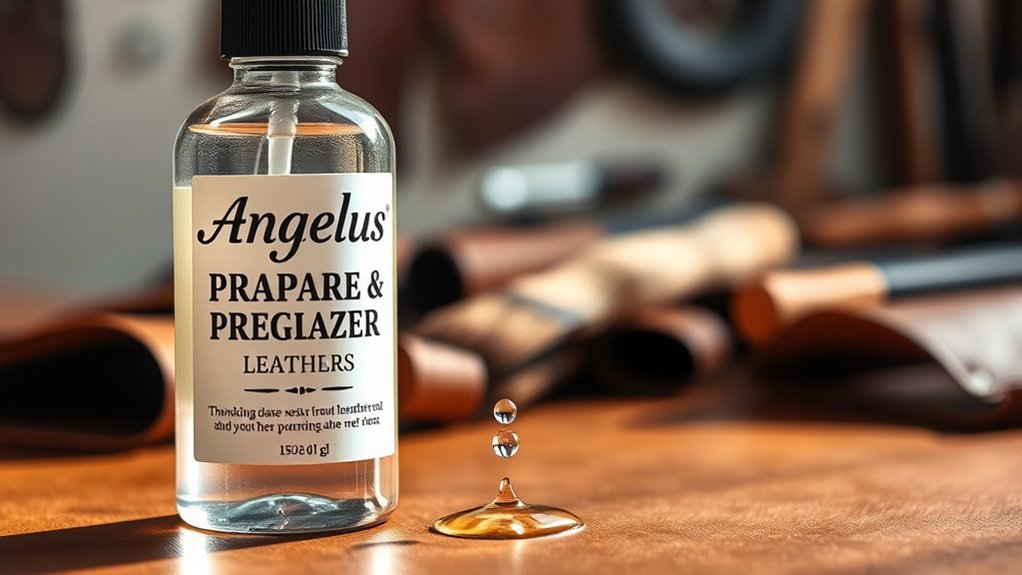
Angelus Leather Preparer & Deglazer is a liquid surface-preparation product for leather. It removes factory coatings, dirt, and oils that can prevent paint or dye from gripping the surface.
The Amazon listing identifies this version as a 5 fl oz bottle, pack of one, with ASIN B00EU322DQ and manufacturer part number 820-04-000. The size is well suited to sneakers, bags, belts, wallets, boots, and other projects where you are treating selected panels instead of a large room of furniture.
This product belongs at the start of a repainting or recoloring job. It does not condition dry leather, seal fresh paint, fill cracks, or repair tears. After the surface is prepared and fully dry, you still need the correct leather paint or dye and, when your project calls for it, a compatible finisher.
Who Should Buy It?
Best For
- Sneaker customizers removing a factory finish from smooth leather panels.
- Leather crafters preparing bags, belts, wallets, boots, holsters, or similar goods for color work.
- Restorers who need a dedicated prep step before applying compatible leather paint or dye.
Skip If
- Your project is plastic, vinyl, suede, nubuck, fabric, or an unknown synthetic material.
- You only need routine cleaning, conditioning, stain care, or crack repair.
- You cannot work with fresh airflow or follow the bottle’s handling directions.
Before You Buy: Check every panel on the item, not just the main material. Many sneakers and bags combine leather with plastic, vinyl, rubber, fabric, or synthetic overlays. Mask or avoid sections that are not confirmed as suitable, and test a hidden spot before treating a visible area.
How to Use Angelus Leather Preparer & Deglazer Effectively
1. Confirm the Material
Make sure the area is leather and inspect nearby panels, trim, logos, soles, zippers, and coatings. The product description says the deglazer is not recommended for plastic or vinyl, so mixed-material projects need masking and careful placement.
2. Clean and Dry the Surface
Remove loose dirt and dust first, then let the leather dry. Surface debris can drag across the finish or leave residue under the paint.
3. Apply a Small Amount
Put a small amount on a clean rag, sponge, cotton ball, cotton swab, or applicator pad. Angelus guidance for leather prep calls for controlled passes rather than pouring the liquid directly onto the item.
Use light, even passes and watch the surface change from glossy to dull or matte. That visual change is a practical sign that the finish has been reduced.
4. Work in Sections
Move across one panel at a time. Angelus project guidance commonly uses three to five passes, but the exact amount depends on the finish and the leather. Stop if color is lifting faster than expected or the surface begins to look uneven.
5. Let the Leather Dry
Allow the surface to dry completely before painting or dyeing. Angelus guidance says this may take a few minutes under normal conditions. Once dry, wipe away remaining dust with a clean microfiber cloth, then follow the directions for your color product.
Pro Tip: Use cotton swabs around seams, eyelets, embossed logos, and narrow edges. They give you more control than a large cloth and reduce the chance of touching nearby synthetic or painted parts.
Benefits of Angelus Leather Preparer & Deglazer for Leather Projects
The main benefit is more reliable adhesion. By removing factory coating, dirt, and oils, the product gives leather paint or dye a cleaner base than a gentle maintenance cleaner can provide.
The 5 fl oz bottle is convenient for targeted work on shoes and small leather goods. It is easy to load onto a small applicator and store between projects when tightly closed.
Feature-by-Feature Review
Finish Removal and Surface Prep
Angelus describes the product as a leather preparer and deglazer that breaks down original finish. This is the feature that matters most because glossy factory coatings are a common reason custom paint fails to grip evenly.
The stripping action is also the main risk. The product can lift some original color, especially when you apply heavy pressure or repeat passes in one place. A hidden test spot is essential on valuable or lightly finished leather.
Dirt and Oil Removal
The Amazon listing says the formula removes dirt and oils as part of prep. That helps reduce contamination before color work, but it does not turn the product into a routine cleaner. Use it when you intend to repaint or dye the item, not for regular maintenance.
Application Control
You can apply the liquid with common workshop tools, including a rag, sponge, cotton ball, cotton swab, or applicator pad. Small tools make it easier to stay within a leather panel and avoid rubber, fabric, plastic, vinyl, or hardware.
The process is simple, but technique still matters. Thin, even passes are safer than soaking the leather, and a dull matte appearance is a better stopping cue than trying to remove every trace of original color.
Size and Project Coverage
The 5 fl oz, single-bottle format is a practical hobby size. It should suit several small jobs when used sparingly, but actual coverage changes with leather texture, finish thickness, project size, and the number of passes.
Large furniture pieces, full saddles, or repeated commercial work may require more than one bottle. The listing does not provide a square-foot coverage figure, so avoid planning a large project around an assumed yield.
Material Compatibility
The product’s stated surface recommendation is leather. Its detailed product description and safety information say it is not recommended for plastic or vinyl, even though another marketing bullet on the listing is broader. The safer buying decision is to follow the specific restriction.
Suede and nubuck also need dedicated products because their raised nap reacts differently from smooth leather. For coated or artificial leather, check the manufacturer’s material guidance instead of assuming that a leather-look surface is compatible.
Odor and Handling
The listing identifies a solvent odor. Work with fresh airflow, keep the bottle closed between applications, and avoid prolonged breathing of concentrated vapors.
Limit skin contact and follow the label for protective equipment, storage, first aid, and disposal. Keep the product away from children, pets, heat, sparks, and open flame as directed on the container.
Limitations of Angelus Leather Preparer & Deglazer
This is a specialized stripping product, so its strengths come with real tradeoffs. Material identification, application pressure, and drying time all affect the result.
| Limitation | What It Means for You |
|---|---|
| Limited compatibility | The product description says not to use it on plastic or vinyl. Unknown synthetics and nap leathers also need separate guidance. |
| Can lift color | The deglazer may remove original color along with the finish, so test first and stop when the surface is evenly matte. |
| Solvent odor | You need fresh airflow and careful storage rather than a small closed workspace. |
| No coverage estimate | The 5 fl oz bottle is convenient for small projects, but you cannot predict large-project coverage from the listing. |
| Not a complete repair system | It prepares the surface but does not fill cracks, repair tears, condition leather, add color, or protect the finished paint. |
How It Performs in Real Use
For Smooth Leather Sneakers
This is the clearest use case. Apply it only to leather panels you plan to paint, and mask mesh, rubber midsoles, plastic details, and vinyl trim. The duller finish gives you a visible cue that the panel is ready for the next step.
For Bags, Belts, and Wallets
The small bottle and applicator-based method work well for narrow sections and hardware-heavy items. Use cotton swabs near stitching, logos, snaps, zippers, and edges so the liquid does not spread into areas you want to preserve.
For Recoloring and Restoration Prep
The deglazer can remove surface finish and residue before recoloring, but it cannot correct structural damage. Repair cracks, loose layers, tears, or failing bonded material before you begin cosmetic color work.
For Practice and Color Testing
Scrap leather is the safest place to learn how quickly the finish changes. It also lets you test the complete sequence, including deglazer, paint or dye, and finisher, before you touch an expensive item.
Compatibility and Safety
Use the product only after confirming the material. The product description and safety information say it is not recommended for plastic or vinyl. Suede, nubuck, fabric, rubber, and artificial leather need products made for those surfaces.
Work with fresh airflow, close the cap when you pause, and follow the bottle label for protective equipment, storage, first aid, and disposal. For valuable or unknown leather, test a hidden area or ask a leather-care professional before applying a stripping product.
Common Mistakes to Avoid
- Pouring it directly onto leather: Load an applicator instead so you can control the amount and location.
- Assuming every panel is leather: Shoes and bags often include synthetic overlays, coated trim, rubber, and fabric.
- Scrubbing until all color disappears: The goal is an evenly prepared, dull surface, not complete color removal.
- Skipping the hidden test: Leather finishes vary, and similar-looking items can react differently.
- Painting while the surface is damp: Let it dry fully, wipe away dust, and then follow the paint or dye instructions.
Pros and Cons
Pros
- Removes factory finish, dirt, and oils before leather paint or dye.
- Supports better adhesion on properly prepared leather surfaces.
- Works with several precise applicators, including pads, cotton balls, and swabs.
- 5 fl oz bottle is easy to handle for sneakers and small leather goods.
- Clear place in the workflow: prep first, then color, then finish when needed.
Cons
- Product description says it is not recommended for plastic or vinyl.
- Solvent odor and stripping action require ventilation and careful handling.
- Too much pressure or too many passes can lift color or create uneven prep.
What Do Customers Think About Angelus Leather Preparer & Deglazer?
Buyer feedback often highlights quick finish removal before repainting sneakers, bags, and other leather goods. The most useful cautions involve solvent odor, color transfer, and overworking one area.
Those comments reinforce the core application advice: use fresh airflow, test first, and make controlled passes. Buyer experience does not prove compatibility with every material, finish, or construction.
Is It Worth the Price?
Angelus Leather Preparer & Deglazer is worth considering when you customize or recolor small leather items. It is a purpose-built prep liquid, while a mild cleaner may leave the factory coating in place.
Sneaker artists, leather crafters, and restorers get the best value from the 5 fl oz bottle. It is less suitable for large furniture, commercial-volume work, or routine cleaning, and poor technique can lift more finish or color than intended.
How It Compares to Alternatives
Angelus positions Leather Preparer & Deglazer as a stronger prep option than its 802 Spot Remover. Choose the deglazer when your goal is to break down a factory finish before customization, not when you only need a lighter spot-cleaning step.
Acetone is another common prep alternative, but Angelus warns that it can be harsher on leather and may cause burning, cracking, or other damage when misused. A routine leather cleaner is gentler but may leave the finish in place. This product makes the most sense when you want a brand-specific leather prep step before paint or dye.
Frequently Asked Questions
What does Angelus Leather Preparer & Deglazer remove?
It is made to remove factory finish, dirt, and oils from leather before paint or dye. It may also lift some original color, so test a hidden area and use controlled passes.
Can I use it on plastic or vinyl?
The detailed product description and safety information say it is not recommended for plastic or vinyl. Avoid those areas even though one broader marketing bullet on the listing mentions multiple materials.
Can it be used on suede or nubuck?
Do not treat suede or nubuck like smooth leather. Their raised nap needs dedicated cleaning and dye products, and a stripping liquid can change the texture or appearance.
How many passes should I make?
Angelus project guidance commonly calls for three to five passes on leather. Use that as a working range, not a fixed rule, and stop sooner if the surface becomes evenly matte or color begins lifting too quickly.
How long should the leather dry before painting?
Wait until the surface is fully dry and has a dull, matte look. Angelus guidance says drying may take a few minutes under normal conditions, but airflow, humidity, temperature, and the amount applied can change the timing.
Do I need to sand the leather first?
Amazon directions say sanding is not required for most surfaces when using the product as directed. Some specialty materials or damaged finishes may need a different process, so follow the project and material guidance rather than sanding automatically.
Is it a leather cleaner or conditioner?
It removes dirt and oils as part of surface preparation, but it is not a gentle maintenance cleaner or conditioner. Use it when you intend to paint or dye the leather, not for routine care.
Who should skip this product?
Skip it when the material is plastic, vinyl, suede, nubuck, fabric, unknown synthetic leather, or a delicate piece you cannot test. It is also the wrong product when you need conditioning, crack repair, structural repair, or a protective topcoat.
The Bottom Line
Angelus Leather Preparer & Deglazer is a recommended-with-caveats choice for preparing smooth leather before paint or dye. Its main strength is focused finish, dirt, and oil removal, while its main limitation is that solvent-based stripping can damage the wrong material or lift too much color when applied aggressively.
Buy it for controlled leather customization on sneakers, bags, belts, wallets, boots, and similar items. Skip it for plastic, vinyl, suede, nubuck, unknown synthetics, routine cleaning, conditioning, or structural repair.
Ready to Buy?
Check the latest price, seller details, and product instructions before you decide.