Disclosure: As an Amazon Associate, we earn from qualifying purchases. If you click a link on this page and make a purchase, we may receive a small commission at no extra cost to you.
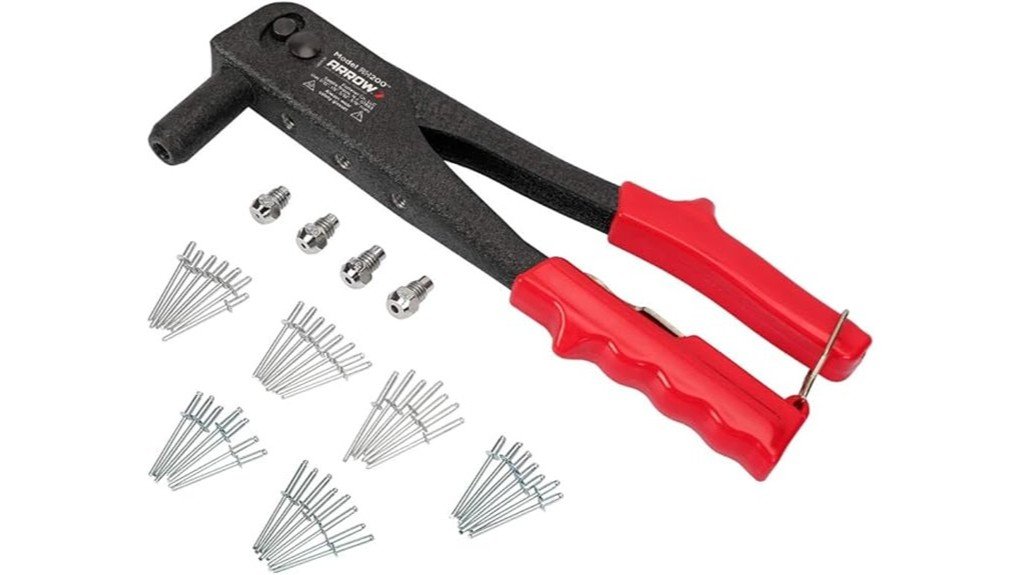
A loose metal bracket, gutter joint, or trim panel often needs a fastener that will not back out like a screw. The Arrow Heavy Duty Riveter Kit RH200SKITAM gives you a manual RH200S rivet gun, four nosepieces, a wrench, and 120 starter rivets in one package. Its steel construction, extended nose, and portable design make it useful for home and garage repairs. The main limits are hand effort, the included rivets being only 1/8 in. in diameter, and no support for stainless steel or 3/16 in. all-steel rivets.
Quick Verdict
Rating: Recommended with caveats, 8/10
Best For: DIY repairs, gutters, thin sheet metal, furniture hardware, canvas work, and non-structural automotive fastening.
Bottom Line: This Arrow kit is a practical starter choice because it combines a durable manual riveter with four nosepieces and 120 rivets. Choose another tool if you need powered operation, stainless steel rivets, or repeated 3/16 in. all-steel fastening.
| Specification | Detail |
|---|---|
| Brand | Arrow |
| Tool model | RH200S |
| Kit part number | RH200SKITAM |
| Product type | Manual blind-rivet gun kit |
| Tool construction | Steel construction with soft vinyl grips |
| Nosepiece sizes | 3/32 in., 1/8 in., 5/32 in., and 3/16 in. |
| Included rivets | 120 total: 60 aluminum and 60 steel |
| Included rivet diameter | 1/8 in., with 1/8 in., 1/4 in., and 1/2 in. grip lengths |
| Aluminum rivet fit | 3/32 in., 1/8 in., 5/32 in., and 3/16 in. |
| Steel rivet fit | 3/32 in., 1/8 in., and 5/32 in. |
| Included accessories | Four nosepieces and a nosepiece wrench |
| Design features | Extended nose, spring-loaded handles, and handle lock |
| Item weight | 1.96 lb |
| Package dimensions | 13.07 x 6.34 x 2.83 in. |
| Important limit | Not for stainless steel rivets or 3/16 in. all-steel rivets |
Key Takeaways
- The RH200SKITAM kit includes the RH200S manual riveter, four nosepieces, a wrench, and 120 assorted 1/8 in. rivets.
- The four nosepieces cover 3/32 in., 1/8 in., 5/32 in., and 3/16 in. rivet stems.
- You can use aluminum rivets through 3/16 in. and steel rivets through 5/32 in., but not stainless steel rivets.
- The extended nose helps near edges and shallow recesses, while spring-loaded handles and a handle lock simplify loading and storage.
- This is an occasional-use hand tool, not the easiest option for high-volume or heavy-gauge production work.
What Is the Arrow Heavy Duty Riveter Kit?
The Arrow Heavy Duty Riveter Kit is a manual tool for setting blind rivets when you can reach only one side of the workpiece. The tool grips the rivet mandrel and pulls it until the rivet body expands behind the material and the mandrel snaps.
The kit centers on Arrow’s RH200S rivet gun. Its steel body, extended nose, spring-loaded handles, vinyl grips, and storage lock suit occasional repair work where a compressor or battery tool would add unnecessary setup.
What’s Inside the Arrow Heavy Duty Riveter Kit?
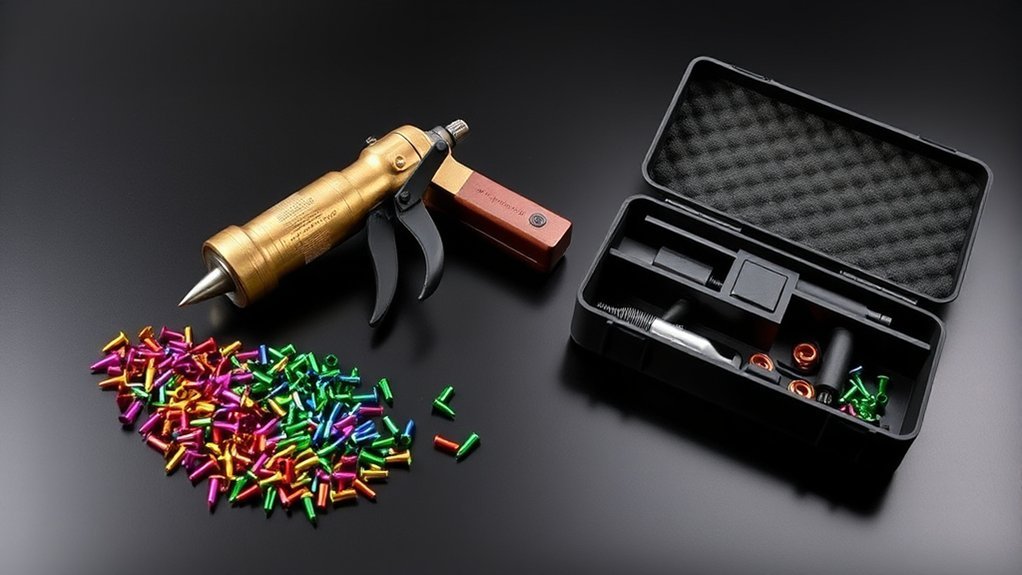
You get one RH200S riveter, four screw-in nosepieces, a small wrench for changing them, and 120 rivets. The nosepieces are sized for 3/32 in., 1/8 in., 5/32 in., and 3/16 in. rivets.
The starter fasteners are more limited than the nosepiece range. All 120 included rivets are 1/8 in. in diameter, split between 60 aluminum and 60 steel rivets. Each material group includes 1/8 in., 1/4 in., and 1/2 in. grip lengths, so you can practice on several material thicknesses without buying rivets immediately.
Before You Buy: The kit has a 3/16 in. nosepiece, but Arrow does not recommend 3/16 in. all-steel rivets. Stainless steel rivets are also unsuitable for this manual tool. The included rivets are all 1/8 in., so other diameters require a separate purchase.
Feature Breakdown
Steel Construction and Hand Grips
The riveter uses steel construction rather than a lightweight plastic frame. That gives the tool the stiffness needed to pull blind-rivet mandrels while keeping the package at a portable 1.96 lb.
Soft vinyl grips make short jobs easier on your hands, but they do not remove the force required for larger or harder rivets. You may still need several pulls before the mandrel breaks.
Extended Nose for Narrow Work Areas
The extended nose creates extra clearance between the tool body and the work surface. It can help when a hole sits near a gutter lip, panel edge, bracket, furniture frame, or automotive trim piece.
It is not a swivel head. You still need enough room to hold the riveter close to square with the surface, so very tight corners or awkward angles may call for a swivel or right-angle tool.
Four Interchangeable Nosepieces
The 3/32 in., 1/8 in., 5/32 in., and 3/16 in. nosepieces let one tool accept several common rivet stems. The included wrench helps you tighten the selected nosepiece and prevents you from relying on pliers that could mark the part.
Match the nosepiece to the mandrel diameter before every job. A loose fit can cause slipping or poor pulling, while an undersized opening may not accept the stem.
Spring-Loaded Handles and Storage Lock
The spring-loaded handles reopen after each squeeze, which helps you reset the jaws for the next pull. The handle lock keeps the tool closed in your toolbox and reduces the space it occupies.
Materials, Compatibility, and Safety
The tool accepts aluminum rivets in 3/32 in., 1/8 in., 5/32 in., and 3/16 in. sizes. For steel rivets, stay within 3/32 in., 1/8 in., and 5/32 in. The product guidance excludes stainless steel rivets and warns against 3/16 in. all-steel rivets because they demand more pulling force.
Blind rivets are permanent fasteners, so confirm the material thickness, hole diameter, rivet diameter, and grip range before setting one. For load-bearing, structural, brake, suspension, seat, or other safety-critical repairs, follow the manufacturer’s repair procedure or consult a qualified professional.
Wear eye protection, secure the workpiece, and keep your fingers clear of the handles and nose. Broken mandrels can eject or fall from the tool, so clear them from the work area before continuing.
Who Should Buy It?
Best For
- DIY users who want a complete starter kit for small metal repairs.
- Homeowners fastening gutters, ducts, brackets, furniture hardware, or canvas fittings.
- Garage users handling non-structural panels, trim, or light automotive pieces.
Skip If
- You need stainless steel rivets or repeated 3/16 in. all-steel fastening.
- You set dozens of rivets at a time and want powered or long-handle leverage.
- Your repair is structural or requires a specified factory fastening method.
Top Use Cases for the Arrow Heavy Duty Riveter
This kit makes sense for joining thin materials when you cannot place a nut behind the work. Common examples include metal gutters, HVAC duct sections, sheet-metal patches, lightweight brackets, canvas hardware, and furniture frames.
For automotive work, keep the job non-structural unless a service manual specifies the rivet material, diameter, grip range, and installation method. Trim retainers, light panels, and small brackets may fit the tool’s role, while body structure and safety systems need approved repair procedures.
How It Performs in Real Use
For Quick Home Repairs
The kit is ready for common 1/8 in. jobs because it includes both aluminum and steel rivets in three grip lengths. That helps when repairing a loose bracket or thin metal joint without first building a separate fastener assortment.
For Gutter and Duct Work
The extended nose helps clear shallow lips and seams, while the manual design works outdoors without a cord, battery, or hose. Aluminum rivets are often easier to pull by hand than steel, which can reduce fatigue on longer runs.
For Automotive Touch-Up Jobs
The compact design can reach around trim and narrow panel edges. The limitation is leverage: larger steel rivets and repeated pulls take more hand force, and the tool should not replace a specified collision or structural repair system.
For Repeated Workshop Use
The spring-loaded handles speed up short batches, but this remains a conventional hand riveter. A one-handed ratchet, long-handle, cordless, or pneumatic tool will usually be more comfortable when production speed matters.
How to Use It Correctly
Choose a rivet diameter that matches the hole and a grip range that covers the combined material thickness. Clamp the pieces tightly so the holes stay aligned and the joint closes without a gap.
Install the matching nosepiece with the supplied wrench. Insert the rivet body through the work, slide the mandrel into the nosepiece, and hold the tool square to the surface. Squeeze and reopen the handles until the mandrel snaps.
Inspect the finished joint. The manufactured head should sit flat, the materials should remain tight, and the rivet should not spin. A loose or crooked result usually points to an oversized hole, incorrect grip length, poor alignment, or the wrong nosepiece.
Pro Tip: Test the exact rivet and nosepiece on scrap material first. This confirms the hole size, grip range, pulling effort, and final clamp before you make a permanent hole in the finished part.
Common Mistakes to Avoid
- Do not assume the included rivets cover all four nosepiece diameters. They are all 1/8 in.
- Do not use a rivet with a grip range shorter than the joined material thickness.
- Do not angle the tool sharply while pulling, because that can seat the rivet crooked.
- Do not force stainless steel or 3/16 in. all-steel rivets through the tool.
Cleaning and Maintenance
Wipe the riveter after each job and remove loose mandrel pieces, drilling chips, and dirt from the nose area. Check that each nosepiece threads in smoothly and that the jaws release the stem between pulls.
Apply a small amount of light machine oil to the pivot points when the mechanism feels dry, following the product instructions. Lock the handles closed and store the tool in a dry place to reduce rust and protect the jaws.
What Are Users Saying About the Arrow Riveter?
Buyer feedback generally favors the kit’s value, sturdy feel, and included fastener assortment. The most useful positive comments focus on successful home, gutter, boat, and light metal projects rather than professional production work.
Common limitations match the tool’s design: harder rivets need more hand pressure, correct sizing matters, and the starter rivets do not cover every supported nosepiece diameter.
Pros and Cons
Pros
- Steel construction provides a solid frame for occasional manual riveting.
- Four nosepieces cover common diameters from 3/32 in. through 3/16 in.
- Includes 120 aluminum and steel rivets in three useful grip lengths.
- Extended nose helps near shallow recesses, edges, and brackets.
- Spring-loaded handles, vinyl grips, wrench, and handle lock improve everyday usability.
Cons
- All included rivets are 1/8 in., despite the four-size nosepiece set.
- Not suitable for stainless steel or 3/16 in. all-steel rivets.
- Manual pulling can tire your hands during large or repeated jobs.
Is It Worth the Price?
The Arrow Heavy Duty Riveter Kit offers strong value for the price when you need a basic manual tool and a ready supply of 1/8 in. rivets. Buying the riveter, four nosepieces, wrench, and 120 fasteners together can be more convenient than assembling a starter setup piece by piece.
You get the most value from it when your projects are occasional and within the supported rivet limits. It is not the best fit if you already own rivets, need a storage case, or expect the speed and leverage of a powered or ratcheting tool.
How It Compares to Alternatives
The Arrow RT189K one-handed ratchet riveter is worth comparing when easier one-hand operation matters. A WETOLS 200-rivet kit may appeal if you want a molded case, drill bits, and a larger starter assortment.
The RH200SKITAM remains the simpler choice when you prefer a conventional steel hand riveter, common nosepiece sizes, and a low-complexity kit. For frequent shop work, a cordless or pneumatic riveter will reduce hand effort but costs more and requires power or air.
Frequently Asked Questions
What rivet sizes does the Arrow Heavy Duty Riveter Kit accept?
The four nosepieces fit 3/32 in., 1/8 in., 5/32 in., and 3/16 in. rivet stems. Material limits still apply, especially at the 3/16 in. size.
Can it set 3/16 in. rivets?
It includes a 3/16 in. nosepiece and supports 3/16 in. aluminum rivets. Arrow does not recommend 3/16 in. all-steel rivets with this tool.
Can I use stainless steel rivets?
No. The product guidance states that stainless steel rivets are not for use with this manually operated rivet tool.
What sizes are the 120 included rivets?
All included rivets are 1/8 in. in diameter. The assortment contains aluminum and steel rivets with 1/8 in., 1/4 in., and 1/2 in. grip lengths.
Does the kit include a wrench?
Yes. A nosepiece wrench is included so you can remove and tighten the four interchangeable nosepieces.
Is it suitable for automotive repairs?
It can handle compatible non-structural panels, trim, and light brackets. Do not use it for safety-critical or structural repairs unless the vehicle repair procedure specifies the rivet and method.
Why does a rivet spin or stay loose after installation?
The hole may be oversized, the grip range may be wrong, or the materials may not have been clamped together. Check the rivet chart and test the setup on scrap material.
Who should skip this riveter kit?
Skip it if you need stainless steel fasteners, frequent 3/16 in. steel riveting, or high-volume production speed. A longer-handle, ratcheting, cordless, or pneumatic tool will better suit those jobs.
The Bottom Line
The Arrow Heavy Duty Riveter Kit RH200SKITAM is a well-rounded starter kit for DIY users who need a sturdy manual riveter, four nosepiece sizes, and 120 useful 1/8 in. rivets. Its main strengths are portability, steel construction, and a complete basic setup. Skip it for stainless steel, 3/16 in. all-steel rivets, structural repairs, or long production runs.