The best 10-foot kayaks for [2026] offer a practical mix of stability, comfort, and purpose-built design. Some suit anglers who need storage and support, while others favor simple recreational paddling. Models like the Pelican Argo series, Catch HDII, and Lifetime Manta 100 show how much variety fits into a compact frame. The real question is which features matter most, and that becomes clearer with a closer look.
Key Takeaways
- Best overall 10-foot fishing options include the Pelican Catch Mode 110 and Pelican Catch HDII for stability and customization.
- Best lightweight choices are the Pelican Argo 100X models, offering easy transport, comfortable seating, and beginner-friendly performance.
- Best sit-on-top value picks include the Pelican 10-Foot Sit-on-Top Fishing Kayak for stability, storage, and a higher weight capacity.
- Best for tandem paddling is the Lifetime Manta 100, which supports two people and carries up to 500 pounds.
- Choose by use case, since sit-in kayaks suit calm recreation and sit-on-top designs are better for fishing and gear access.
Pelican Argo 100X Angler Fishing Kayak, Vapor Black Lime
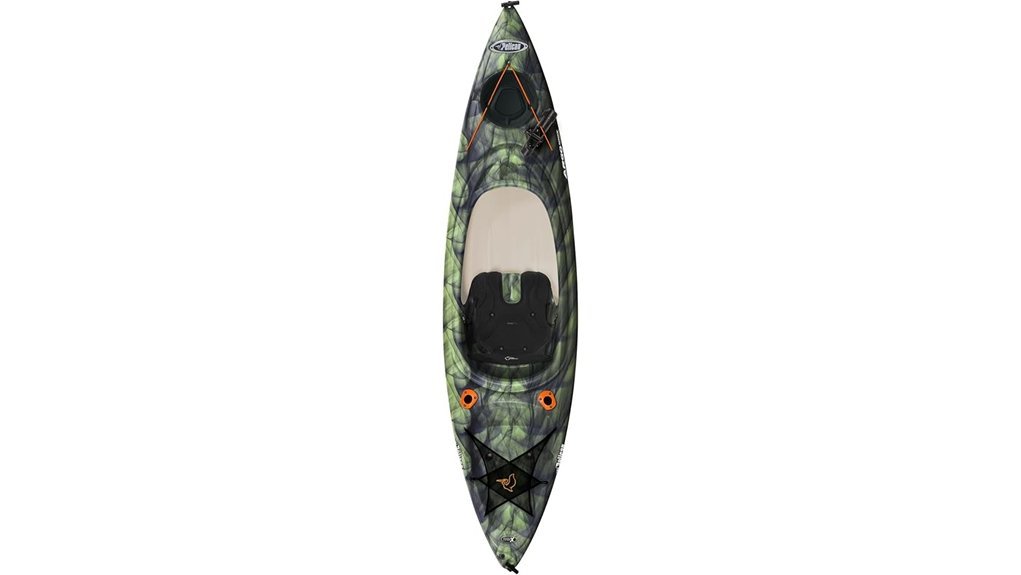
The Pelican Argo 100X Angler Fishing Kayak is a strong pick for anglers who want a lightweight, stable 10-foot sit-in kayak with practical fishing features. At 36 pounds, it is easy to carry and launch, while the Ram-X™ hull adds impact resistance. The Ergoform™ seat and padded backrest improve comfort, and adjustable footrests help paddlers find a secure position. Storage includes a front hatch with bungees and a rear tank well. Fishing setup is solid, with a swivel rod holder, two flush mounts, and a cockpit table. It supports up to 275 pounds.
Best For: Anglers and casual paddlers who want a lightweight, stable 10-foot sit-in kayak with comfortable seating and useful built-in fishing features.
Pros:
- Very lightweight at 36 lb, making it easy to carry and launch
- Comfortable Ergoform™ seat with padded backrest and adjustable footrests
- Good fishing-ready setup with a swivel rod holder, two flush-mount rod holders, and storage options
Cons:
- 275 lb maximum capacity may be limiting for larger paddlers or heavier gear loads
- Sit-in design can feel less open and accessible than a sit-on-top kayak
- Limited to basic fishing features compared with higher-end angler kayaks
Pelican Argo 100X Recreational Sit-In Kayak
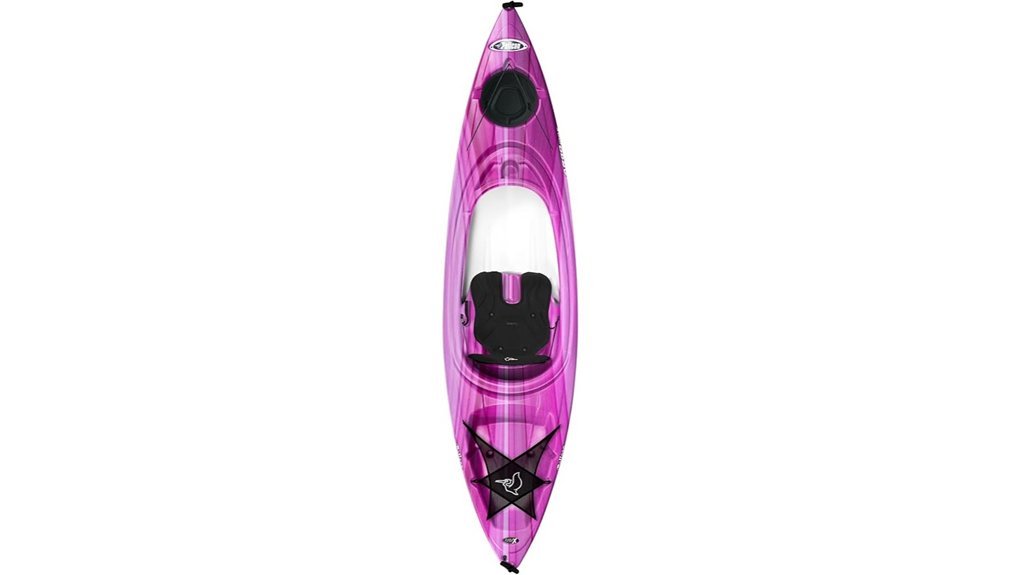
Pelican’s Argo 100X suits beginners and casual paddlers seeking easy stability and comfort. This recreational sit-in kayak uses lightweight patented Ram-X™ material, giving it a strong yet feather-light build that works well across experience levels. The Ergoform™ seating system adds comfort with an adjustable backrest and roomy seat cushion. A twin-arched multi-chine hull improves stability by expanding contact with the water, helping paddlers feel secure. Molded footrests provide supportive positioning for different body sizes. Overall, the Argo 100X offers a balanced, confidence-building design for relaxed outings and steady tracking on calm waters.
Best For: Beginners and casual paddlers who want a lightweight, stable, and comfortable recreational sit-in kayak for relaxed outings on calm waters.
Pros:
- Lightweight Ram-X™ construction makes it easy to handle while remaining durable.
- Ergoform™ seating with an adjustable backrest and roomy cushion adds comfort.
- Twin-arched multi-chine hull and molded footrests boost stability and support.
Cons:
- Designed mainly for calm-water recreation, not more advanced paddling conditions.
- Sit-in design may feel less open and accessible than a sit-on-top kayak.
- Best suited to leisure paddling rather than high-performance speed or touring.
Pelican 10-Foot Sit-on-Top Fishing Kayak
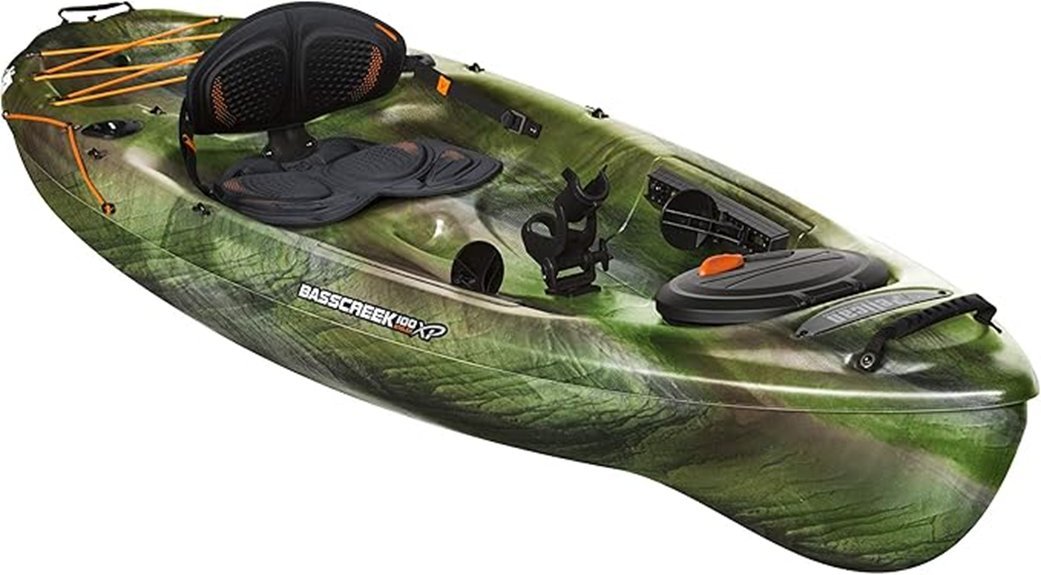
Built for anglers, this sit-on-top model pairs stability with a full fishing-ready layout. The Pelican BASSCREEK 100XP measures 10 feet long, weighs 50 pounds, and supports up to 325 pounds for one paddler. Its multi-chine flat bottom hull promotes steadiness, while internal flotation exceeds ABYC safety standards. Scupper holes help shed water efficiently. The ERGOFIT G2 seat adds adjustable padding and airflow, and footrests refine fit. Storage includes a front hatch, day hatch, and tank well, plus swivel and flush-mount rod holders. Pelican backs it with a lifetime limited warranty.
Best For: Anglers who want a stable, lightweight 1-person fishing kayak with plenty of storage and built-in rod holders for calm to moderate waters.
Pros:
- Excellent stability from the multi-chine flat bottom hull
- Fishing-ready storage and rod holder setup
- Comfortable ERGOFIT G2 seating with adjustable footrests
Cons:
- Limited to one paddler
- 10-foot length may be less efficient for long-distance tracking
- 325 lb capacity may feel restrictive for heavier gear loads
Pelican Catch Mode 110 Kayak
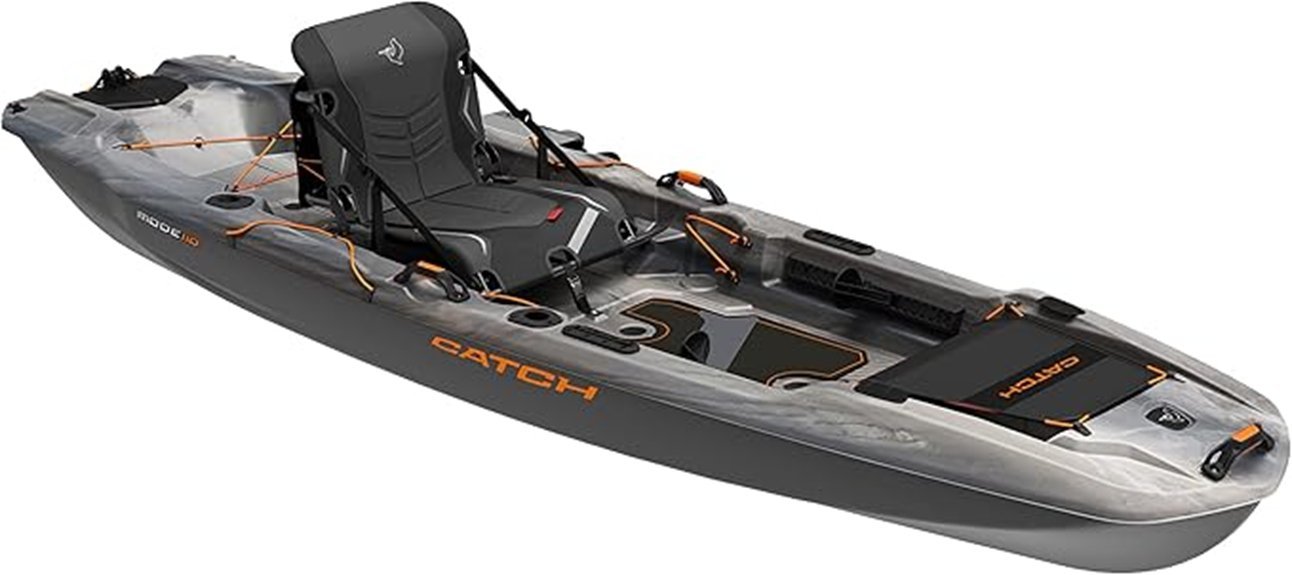
With its tunnel hull and wide standing deck, the Pelican Catch Mode 110 suits anglers seeking rock-solid stability. Its anti-slip deck carpet supports confident movement, while the ERGOBOOST seat raises the paddler for better visibility and the EVA pad adds comfort on long outings. Two rigging tracks, three flush mount rod holders, paddle and rod tie-downs, and multiple tank wells help organize gear efficiently. At 63 pounds, it remains portable, and its 375-pound capacity, added flotation, and HDPE construction reinforce safety and durability.
Best For: Anglers who want a highly stable, easy-to-cast fishing kayak with comfortable seating, ample gear storage, and portable handling for short to medium outings.
Pros:
- Tunnel hull and wide standing deck provide excellent stability for standing and fishing.
- ERGOBOOST seat and EVA pad improve comfort and visibility on longer trips.
- Multiple fishing features, including rigging tracks, rod holders, tie-downs, and tank wells, support organized gear storage.
Cons:
- At 63 lb, it may still be a bit heavy for some users to carry alone.
- 10 ft 8 in length offers portability, but less tracking speed than longer kayaks.
- Limited to 375 lb capacity, which may not suit larger paddlers with lots of gear.
Pelican Sentinel 100X Recreational Kayak
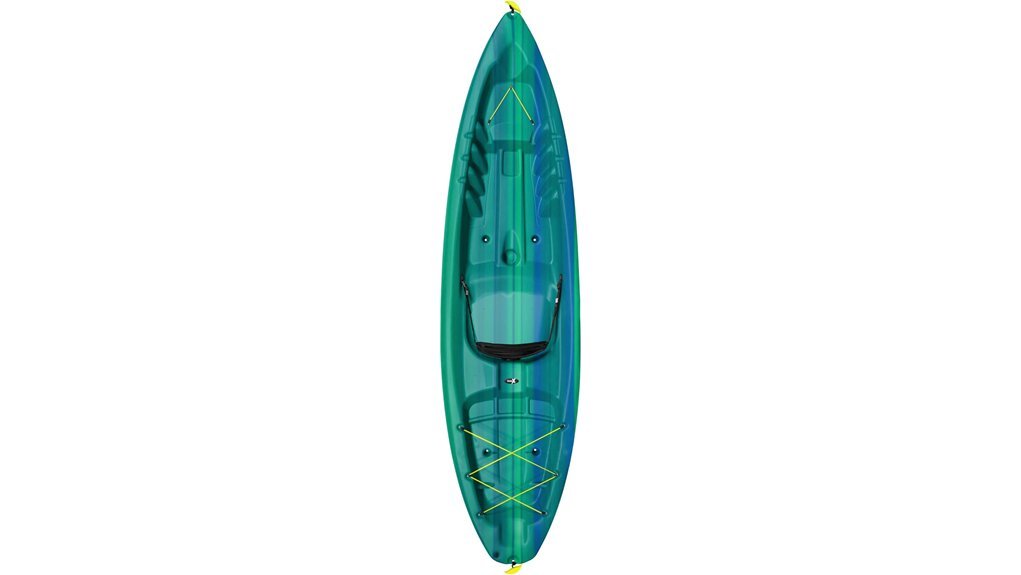
The Pelican Sentinel 100X suits recreational paddlers who want stability and easy comfort. Its Ergoform backrest adjusts for a better fit, while molded footrests offer steady support without extra setup. The twin-arched, multi-chine hull expands water contact, helping the kayak feel secure and balanced on calm water. Built with patented Ram-X material, it combines durability with a lightweight feel. Designed for all skill levels, it delivers a reliable mix of comfort, stability, and quality that makes relaxed paddling more accessible and enjoyable for beginners and casual users alike.
Best For: Recreational paddlers of all skill levels, especially beginners and casual users looking for a stable, comfortable kayak for relaxed paddling on calm water.
Pros:
- Adjustable Ergoform backrest adds comfort and support.
- Molded footrests provide steady, no-fuss foot support for different paddler sizes.
- Twin-arched multi-chine hull and Ram-X material offer strong stability, durability, and a lightweight feel.
Cons:
- Best suited for calm water, so it may not be ideal for rough or fast-moving conditions.
- As a recreational kayak, it may lack advanced performance features desired by experienced paddlers.
- Fixed molded footrests do not offer the adjustability some users may prefer.
Pelican Catch HDII Angler Sit-On-Top Fishing Kayak
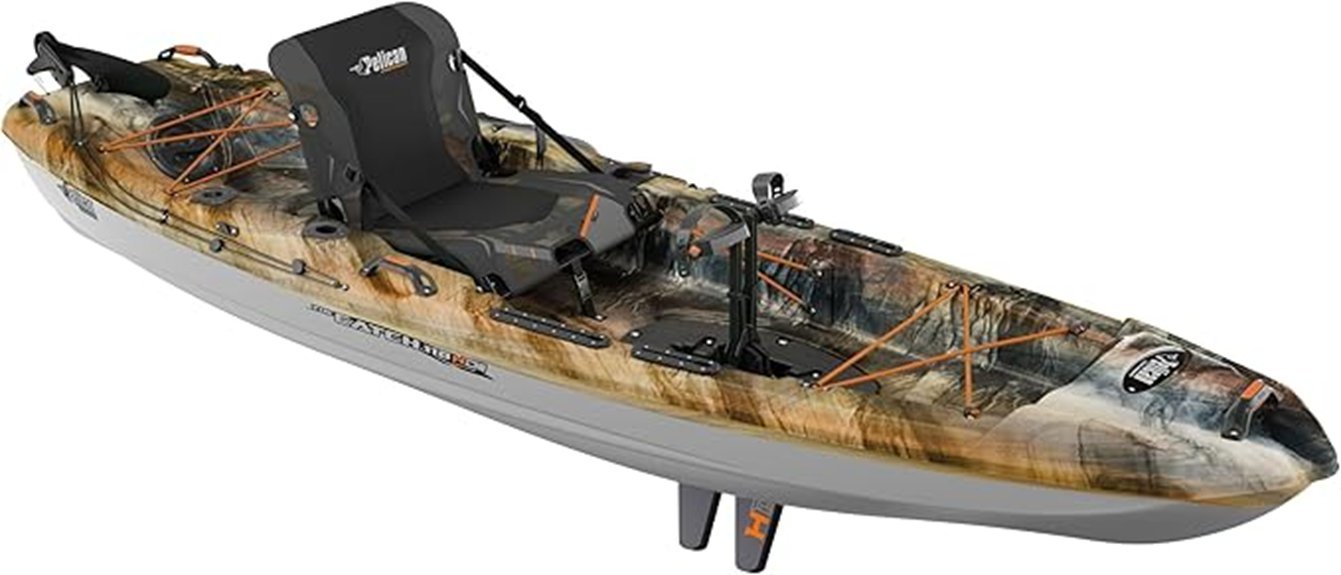
Pelican’s Catch HDII suits anglers who want hands-free maneuverability in tight waters. Its HyDryve II pedal system helps it move through shallow water and around weeds with minimal effort. The Ergocast G2 seat adds comfort for longer outings, while four accessory rails allow for fishing gear, cameras, or other add-ons. Three flush-mount rod holders keep rods secure and easy to reach. A rudder with hand controls improves steering and can also function as a skeg for better tracking, making the kayak adaptable for varied fishing conditions.
Best For: Anglers who want a hands-free, feature-rich fishing kayak for maneuvering in shallow water, fishing in tight spots, and customizing for long outings.
Pros:
- HyDryve II pedal system makes it easy to move through shallow water and around weeds.
- Ergocast G2 seat adds comfort for extended fishing trips.
- Four accessory rails and three rod holders provide plenty of setup and storage options.
Cons:
- Pedal-drive systems can add complexity compared with simpler kayak setups.
- The extra features may make it less ideal for anglers seeking a very lightweight, minimal kayak.
- Hand-controlled rudder and multiple accessories may require a learning curve for new users.
Pelican Sentinel 100X Angler Fishing Kayak
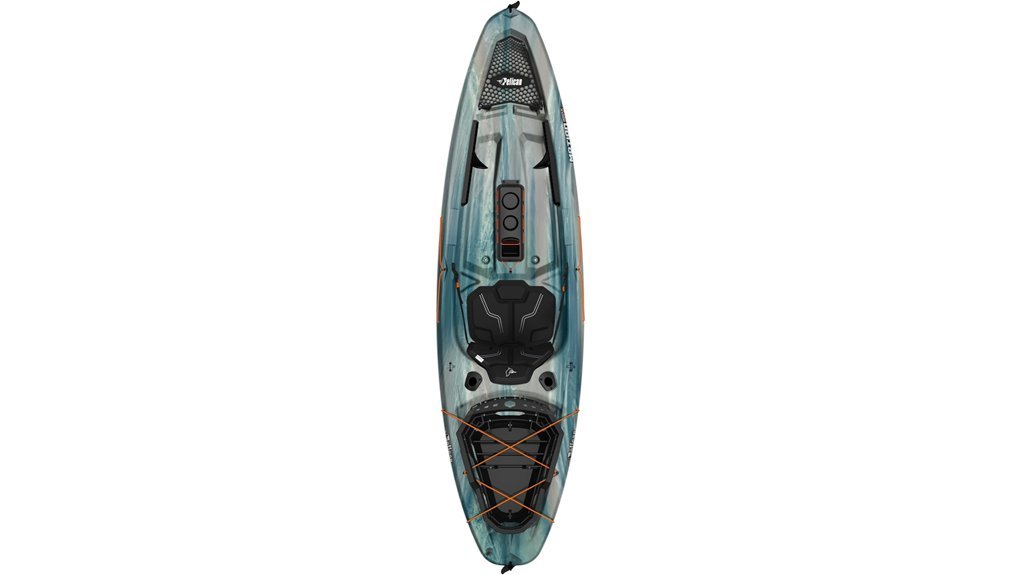
Compact, well-equipped, and easy to transport, the Sentinel 100X suits anglers with limited storage. Pelican’s sit-on-top fishing kayak measures 114 inches long, 30 inches wide, and 13.25 inches high, while weighing only 44 pounds. Its polyethylene build supports up to 275 pounds. The Ergolounge seating system adds extra-thick cushioning and a high, wide padded backrest for comfort on longer outings. Storage is handled by the removable ExoPak, and four rod holders provide solid fishing utility. Molded-in side handles improve carrying, and the lifetime limited warranty adds reassurance.
Best For: Anglers who want a compact, lightweight sit-on-top fishing kayak that’s easy to store, carry, and load with gear for casual to moderate fishing trips.
Pros:
- Lightweight 44 lb design makes it easy to transport and handle.
- Comfortable Ergolounge seating with extra-thick cushioning and supportive backrest.
- Useful fishing features including a removable ExoPak and four rod holders.
Cons:
- 275 lb maximum capacity may be limiting for heavier paddlers or lots of gear.
- At 114 inches long, it’s compact but may sacrifice some tracking and speed versus longer kayaks.
- Included accessories are minimal beyond the kayak itself.
Lifetime Manta 100 Tandem Kayak with Paddles
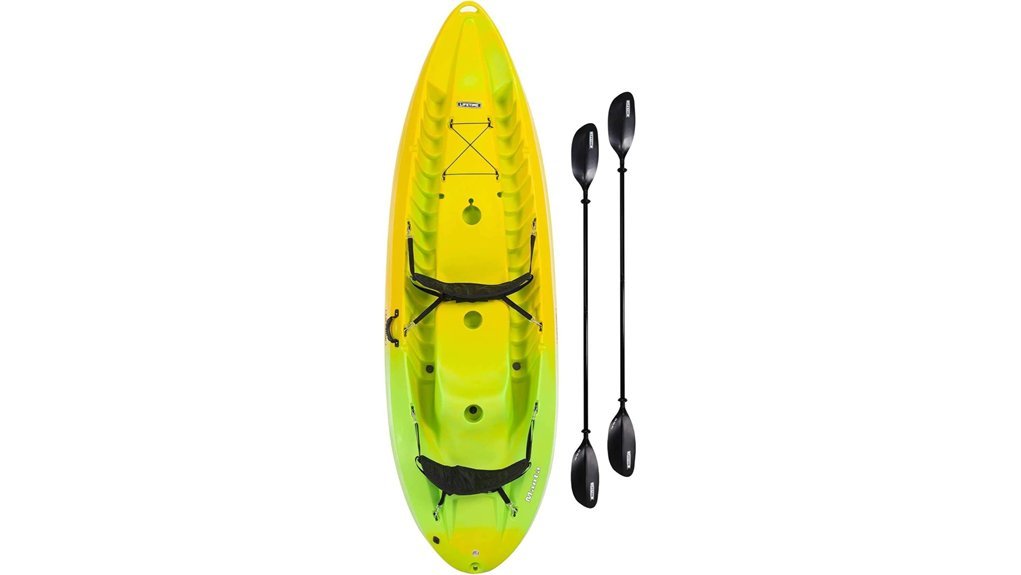
Built for two, the Lifetime Manta 100 suits families and beginners seeking a stable 10-foot kayak. The Lifetime 91071 Manta 100 Tandem Kayak is a 73-pound, yellow-lime recreational model with a 500-pound capacity and two seats. Its rotational-molded, UV-protected LLDPE build supports durability, while the ultra-stable hull tracks well on calm bays, lakes, and slow rivers. Self-bailing scupper holes help keep the cockpit dry, and high-and-dry seating improves comfort. Two paddles, ditty trays, and shock cord straps come included. Adjustable backrests, multiple footrest positions, and a front carry handle add convenience.
Best For: Families and beginners looking for a stable, easy-to-transport tandem kayak for calm water adventures.
Pros:
- Stable 10-foot hull is great for beginners and casual paddling
- Includes two paddles and handy extras like ditty trays and shock cord straps
- Adjustable backrests and footrests improve comfort for two riders
Cons:
- Best suited for calm water, not rough conditions or fast-moving currents
- At 73 pounds, it may be a bit heavy for some users to carry alone
- Limited to two seats, so it won’t work for larger groups
Factors to Consider When Choosing a 10 Foot Kayak

When selecting a 10 foot kayak, attention usually starts with the kayak type, since sit-in, sit-on-top, and tandem designs serve different needs. Stability and hull shape also matter, along with weight for easier transport and seating comfort for longer outings. Storage options can further influence how well the kayak fits fishing trips, day paddling, or casual recreation.
Kayak Type
Kayak type plays a major role in how a 10-foot model performs on the water. Sit-in kayaks, such as the Pelican Argo 100X, provide shelter from wind and spray, while their streamlined shape often supports more efficient paddling during longer outings. Sit-on-top kayaks appeal to beginners and anglers because they allow easier entry and exit, along with fast access to tackle or other gear. Tandem models suit two paddlers and encourage shared trips, though they usually give up some maneuverability compared with solo designs. The intended activity should guide the choice, whether the goal is relaxed recreation, fishing, or touring. Each kayak type emphasizes different strengths, so matching the design to the paddler’s plans remains essential.
Stability And Hull
Stability often begins with the hull itself, since its shape determines how securely a 10-foot kayak sits on the water. Multi-chine hulls add more contact points, which can increase confidence and steadiness for casual paddlers. Wider hulls generally feel more stable, making them well suited to fishing, recreation, beginners, and families. Flat-bottom hulls usually provide the most assurance in calm water, while V-shaped and rounded designs often improve tracking and speed when conditions become more active. Some hulls also include added flotation, which supports buoyancy and helps the kayak remain steady if partially submerged. Weight distribution inside the hull matters as well, since balanced loading contributes to smoother handling, better control, and more predictable performance on the water.
Weight And Portability
Beyond hull performance, weight and portability strongly influence how practical a 10-foot kayak is to own and use. A lighter kayak, often in the 36 to 50 pound range, is generally easier to lift, load, and carry, especially for solo paddlers. Built-in carrying handles can further simplify moving the kayak between storage, vehicle, and launch site. Portability also depends on whether the kayak fits securely in a car bed, roof rack, or storage area when not in use. Weight capacity should not be overlooked; many 10-foot models support about 275 to 500 pounds, allowing room for the paddler and essential gear. Materials such as polyethylene and impact-resistant composites can improve durability while keeping transport manageable and uncomplicated for everyday use.
Seating Comfort
Comfort can make or break a 10-foot kayak, especially during longer outings. A well-designed seat with adjustable backrest support and ample cushioning helps reduce fatigue and keeps a paddler stable over time. Seat material also matters, since breathable fabrics can improve airflow and help regulate temperature in warm conditions. Molded footrests add another layer of support, allowing different body sizes to find a secure position without repeated changes. The seat’s height, width, and overall shape influence visibility and paddling efficiency, so a balanced design serves both comfort and control. A cockpit that feels organized and uncluttered further supports a relaxed posture, letting attention stay on the water rather than on discomfort.
Storage Options
Storage can be a deciding factor in a 10-foot kayak, especially when gear needs to stay organized and accessible on the water. Front storage hatches with bungee cords help secure essentials while keeping them within easy reach during a trip. Rear tank wells add room for bulkier items, making them useful for carrying coolers, dry bags, or other equipment. Smaller storage areas, such as cockpit tables or extra compartments, can keep water bottles, tools, and similar items neatly arranged. Removable storage systems, including ExoPaks, offer added flexibility for packing and transporting gear before launch. It is also important to check for scupper holes or other drainage features, since they help prevent water from collecting in storage spaces and improve overall usability in varied conditions.
Fishing Features
For anglers, a 10-foot kayak should offer more than basic storage; it also needs practical fishing features that support organization and stability on the water. Multiple rod holders, including flush-mount and swivel styles, help keep tackle accessible without cluttering the deck. A cockpit table with compartments and bottle holders adds convenience for small essentials during a trip. Front hatches and rear tank wells provide secure places for bait, gear, and personal items. Stability should also be a priority, so multi-chine or tunnel hull designs are preferable because they improve balance while casting or landing fish. Adjustable seating and footrests further support comfort, allowing longer sessions with better posture and control for different paddler sizes.
Weight Capacity
Weight capacity is a key consideration when choosing a 10-foot kayak, with most models falling between 250 and 500 pounds depending on their design and materials. That limit should include the paddler, clothing, and all gear carried on board. Estimating total load helps guarantee the kayak sits properly in the water and paddles efficiently. If the limit is exceeded, stability and handling may decline, increasing the risk of unsafe conditions. Weight ratings are usually set by hull shape, material strength, and overall construction. For that reason, buyers should review the manufacturer’s specifications before making a choice. A kayak with enough margin for both body weight and equipment will better support comfort, balance, and a safer experience on the water.
Durability And Warranty
Durability and warranty are important next considerations after capacity, since both affect how well a 10-foot kayak holds up over time. Construction materials play a major role; high molecular weight polyethylene and other impact-resistant polymers can better resist abrasion, bumps, and general wear. Design also matters, because a stable hull and other reinforcement features can improve both performance and longevity on the water. A strong warranty often signals manufacturer confidence. Many kayaks include lifetime limited coverage for defects, while parts and accessories may be covered for only one year. Buyers should read the fine print carefully, since improper use, neglected maintenance, or unauthorized alterations can void protection. Comparing material quality, design, and warranty terms helps identify a kayak that offers dependable long-term value.
Frequently Asked Questions
What’s the Best 10-Foot Kayak for Beginners?
A stable sit-on-top kayak with a wide hull and padded seat is often the best choice for beginners. A 10-foot model like the Pelican Sentinel 100X or Lifetime Tamarack offers easy handling, good stability, and simple entry and exit. It should feel forgiving in calm water, be lightweight enough to carry, and include basic storage. Beginners usually benefit most from comfort, stability, and predictable tracking over speed.
Are 10-Foot Kayaks Easy to Transport Alone?
Yes, 10-foot kayaks are usually easy to transport alone because they are shorter and lighter than longer touring models. One person can often lift, load, and carry them without help, especially if the kayak has grab handles or a manageable weight. Roof racks, carts, or kayak trailers can make the process easier. Still, transport difficulty depends on the kayak’s material, shape, and the carrier’s strength and vehicle setup.
Can a 10-Foot Kayak Handle Rough Water?
A 10-foot kayak can handle rough water, but only to a limited extent. Its shorter length usually means less tracking and stability in chop, waves, or strong current than longer touring kayaks. It may manage mild rough conditions and sheltered coastal waters if skillfully paddled, but open water, steep waves, and heavy wind can quickly overwhelm it. Safety gear, experience, and weather awareness remain essential for any outing.
How Much Weight Can a 10-Foot Kayak Support?
A 10-foot kayak typically supports about 250 to 400 pounds, though some models exceed 500 pounds. The exact limit depends on hull design, materials, and intended use. A useful statistic is that many recreational 10-foot kayaks carry roughly two adults’ worth of combined gear if one person stays light. Staying below the manufacturer’s maximum capacity improves stability, speed, and safety, especially when water conditions become unpredictable.
Do 10-Foot Kayaks Fit in Most Car Trunks?
10-foot kayaks usually do not fit fully inside most car trunks, though shorter hatchbacks and SUVs with seats folded may accommodate them. They are typically too long for a standard trunk opening, so roof racks, trailers, or interior cargo space are common solutions. Fit depends on kayak width, trunk dimensions, and vehicle type. Measuring the boat and cargo area beforehand helps avoid forcing an awkward or unsafe transport.