Eleven-foot kayaks remain a practical middle ground for many paddlers in [2026]. They balance maneuverability, stability, and storage in a way that suits fishing, recreation, and casual touring. From rigid sit-on-tops to inflatable two-person setups, the range is wider than it first appears. Some models lean toward comfort, others toward utility, and a few try to do both. The differences become clearer with a closer look.
Key Takeaways
- Best overall 11-foot kayak options for 2026 include the Lifetime Stealth Angler, Pelican Catch Mode 110, and Perception Tribe 11.5.
- For solo anglers, the Lifetime Stealth Angler offers strong stability, a comfortable seat, and easy transport.
- For calm-water fishing, the Pelican Catch Mode 110 provides excellent standing stability and organized storage.
- Inflatable choices like the UPWELL 2-Person and Wilderness Systems iATAK 110 offer portability and high weight capacity.
- Beginners and casual paddlers may prefer the Old Town Heron 11XT, Perception Hi Life, or Perception Hangtime 11 for comfort.
Lifetime Stealth Angler Kayak, Sit-On-Top Fishing Kayak, 11’
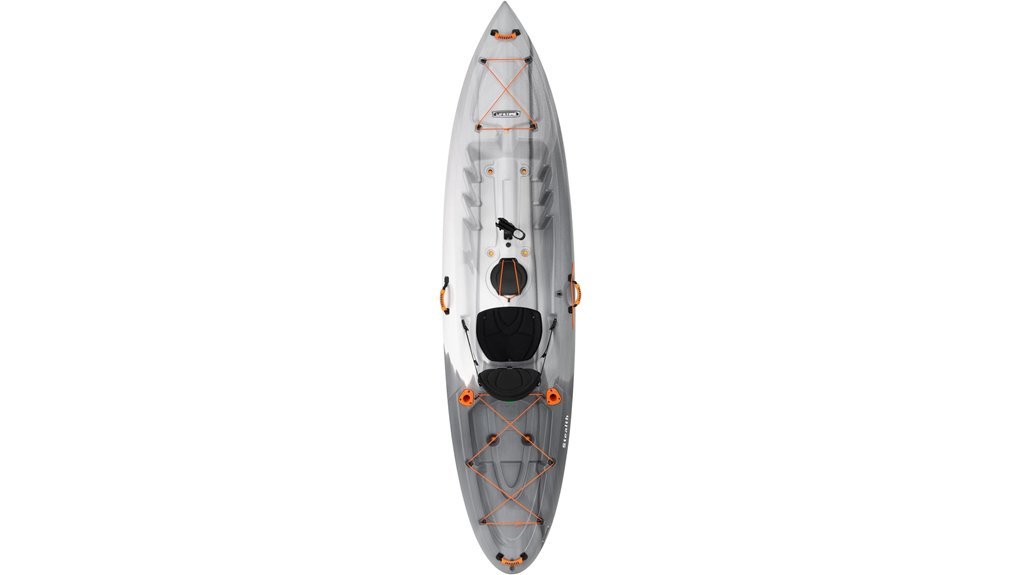
The Lifetime Stealth Angler Kayak is a strong choice for solo anglers who want a stable, easy-to-manage 11-foot sit-on-top kayak built for fishing. Its UV-protected high-density polyethylene hull is designed for ultra stability and solid tracking, while the SmartFlow Scupper System helps keep the deck clear of water. The adjustable padded seat, seat pad, and multiple footrest positions improve comfort during long outings. Storage includes a rear tankwell with bungee lacing and a below-deck hatch. Four carry handles and a skeg wheel simplify transport. Two flush mounts and one deck mount rod holder complete the fishing setup.
Best For: Solo anglers looking for a stable, easy-to-transport 11-foot sit-on-top fishing kayak with helpful storage and rod-holder options.
Pros:
- Ultra-stable hull design with solid tracking for fishing and casual paddling
- Comfortable adjustable seat, seat pad, and multiple footrest positions
- Handy fishing-focused setup with three rod holders plus rear and below-deck storage
Cons:
- Single-seat design limits use to one person
- 300-pound maximum capacity may be restrictive for some users and gear loads
- Best suited for calm to moderate water rather than performance-oriented paddling
Pelican Catch Mode 110 Kayak
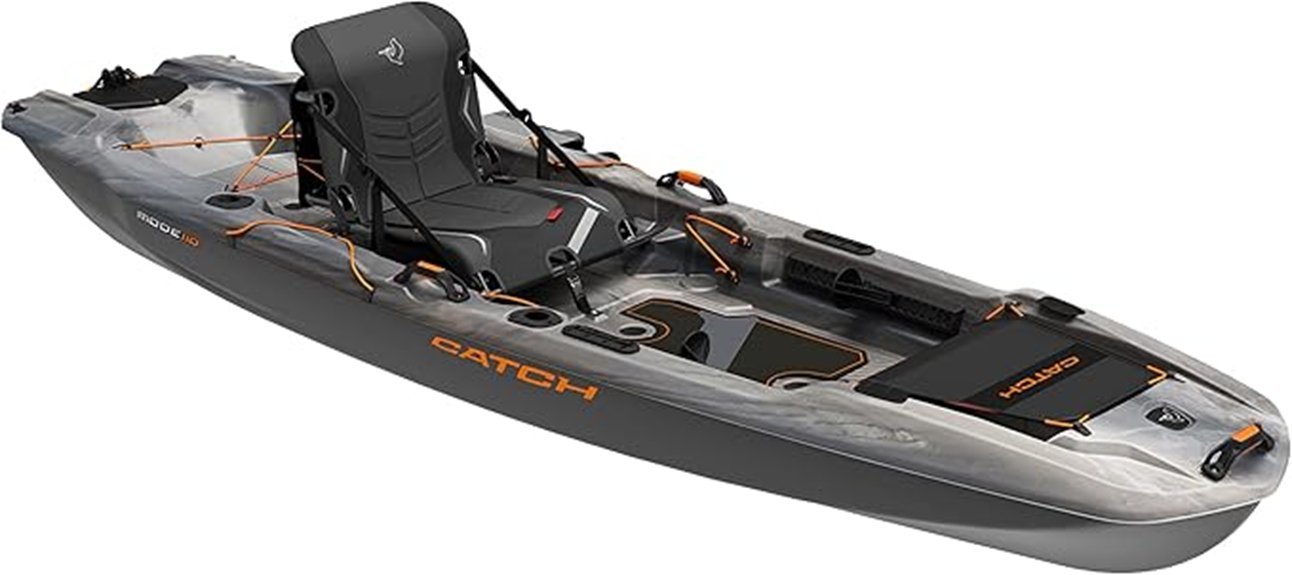
Ideal for anglers who want stability, the Pelican Catch Mode 110 Kayak suits confident fishing on calm water. Its tunnel hull and wide, flat deck create a secure standing platform, while anti-slip carpet adds footing confidence. The ERGOBOOST seat raises visibility and the EVA pad improves comfort on long outings. With two rigging tracks, three flush mount rod holders, tie-downs, tank wells, and bottle holders, it supports organized angling. Built from durable polyethylene, it includes extra flotation, meets ABYC standards, weighs 63 lb, and carries 375 lb.
Best For: Anglers seeking a highly stable, easy-to-stand-on fishing kayak for calm-water trips with solid storage and accessory options.
Pros:
- Tunnel hull and wide, flat deck provide excellent stability and confident standing.
- ERGOBOOST seat with EVA pad improves visibility and comfort during long outings.
- Good fishing setup with rigging tracks, rod holders, tie-downs, tank wells, and bottle holders.
Cons:
- Best suited for calm water rather than rough or fast-moving conditions.
- At 63 lb, it may still be somewhat heavy for some users to transport alone.
- Limited to a 375 lb capacity, which may constrain heavier anglers or lots of gear.
UPWELL 2-Person Inflatable Kayak with Accessories
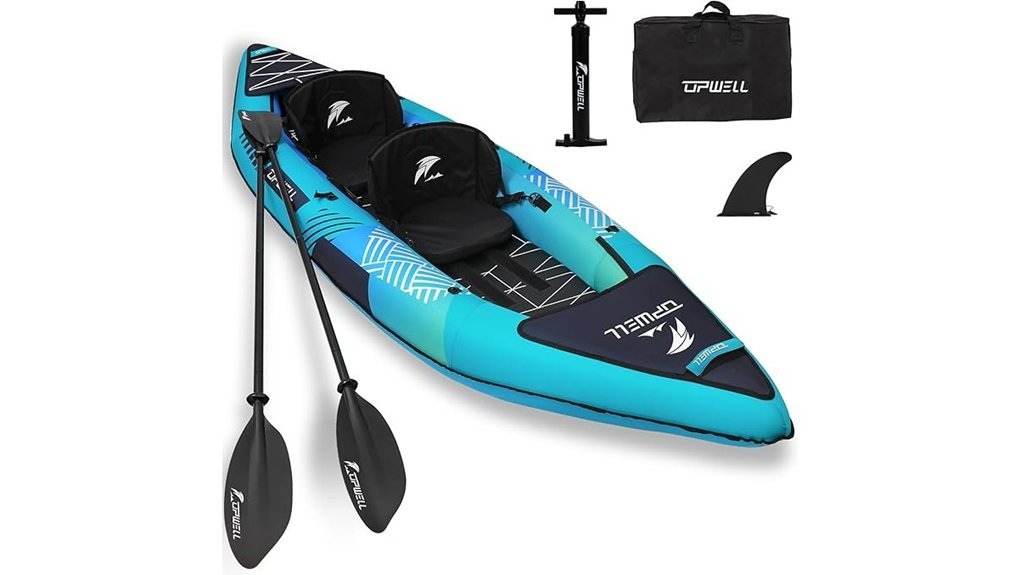
Built for tandem paddling, the UPWELL inflatable kayak suits pairs, parent-child outings, or pet-friendly adventures. This 11-foot, 37-inch-wide K2 model weighs 25 pounds yet supports up to 550 pounds, making it versatile for solo or shared use. Its 0.5mm PVC inner hull and 1000-denier ripstop nylon cover, reinforced by seam welding, improve puncture resistance and UV protection. The package includes aluminum paddles, a hand pump, carry bag, tracking fin, repair kit, and supportive seat. It rolls compactly for storage and cleans easily through the cockpit drain.
Best For: Pairs, parent-child outings, or pet-friendly adventurers who want a lightweight, easy-to-store inflatable kayak for tandem or solo use.
Pros:
- Lightweight at 25 lbs and easy to transport or store in a trunk, closet, or garage.
- Supports up to 550 lbs with a stable 11′ x 37″ K2 design for tandem or solo paddling.
- Comes as a full accessory package with paddles, pump, carry bag, fin, repair kit, and supportive seat.
Cons:
- Inflatable construction may not feel as rigid or high-performance as a hard-shell kayak.
- Best suited for recreational use rather than fast water or advanced paddling conditions.
- Requires inflation, setup, and maintenance before each outing.
Wilderness Systems iATAK 110 Inflatable Fishing Kayak
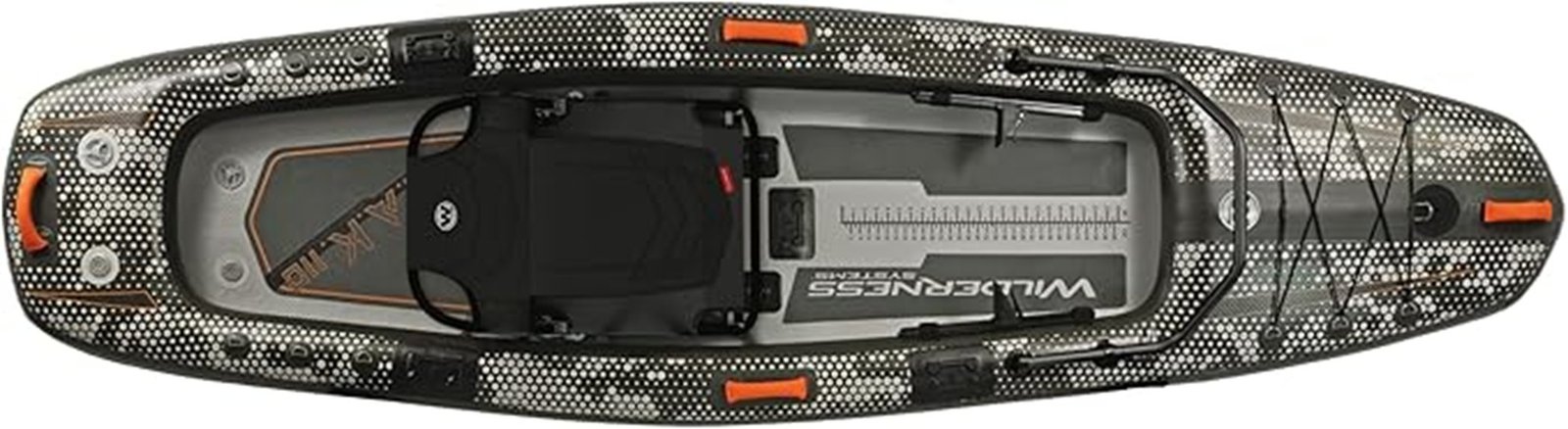
Wilderness Systems’ iA.T.A.K. 110 suits anglers who want inflatable portability without sacrificing tracking or stability. This 11-foot sit-on-top uses drop-stitch construction to approach hard-shell speed, while Fishbone technology and an injection-molded nose cap help it hold course with less effort. The Ergoboost seat raises the paddler for better visibility and casting, and it can convert to a booster seat. Four accessory mounts, D-rings, bungee lacing, and an action camera mount expand rigging options. It includes a pump, bag, fin, and repair kit. Maximum capacity reaches 650 pounds.
Best For: Anglers who want a portable inflatable fishing kayak with strong tracking, stable casting, and a higher seating position for better visibility on the water.
Pros:
- Drop-stitch construction delivers a firmer feel and speed closer to a hard-shell kayak.
- Ergoboost seating improves sightlines and can convert to a booster seat for casting comfort.
- Well-equipped for customization with accessory mounts, D-rings, bungee lacing, and an action camera mount.
Cons:
- At 50 pounds, it may be less convenient to carry than some lighter inflatables.
- Inflatable construction may not appeal to paddlers who prefer the rigidity and feel of a hard-shell kayak.
- Included accessories are useful, but batteries for the electric pump are not included.
Perception Hi Life Sit-On-Top Kayak Hybrid SUP
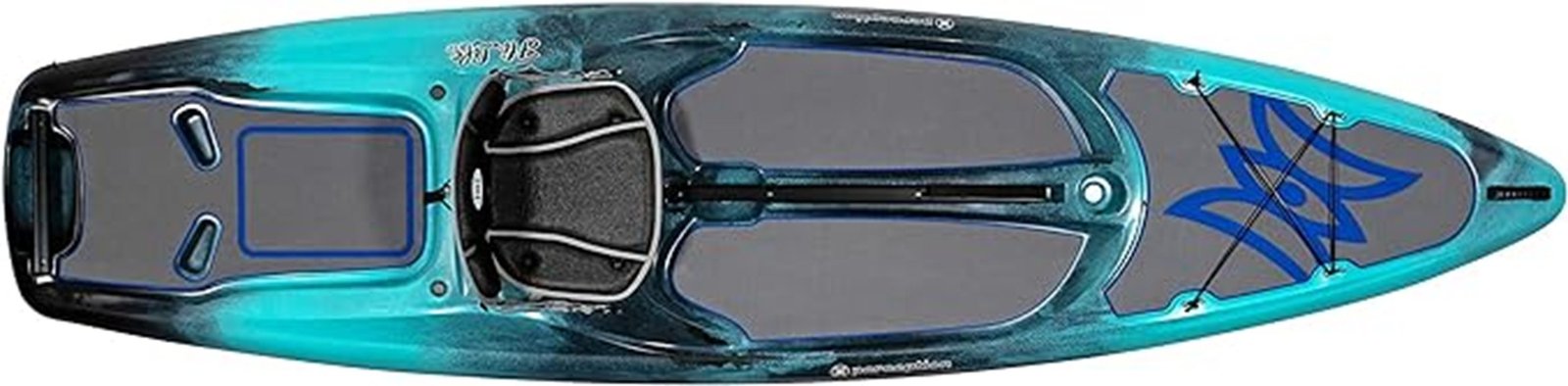
The Perception Hi Life blends kayak stability with SUP-style versatility for active, casual paddlers. This 11-foot sit-on-top hybrid measures 34 inches wide, weighs 55 pounds, and supports up to 280 pounds. Its elevated seat includes a fold-down backrest and thick padding for comfort, while front and rear swim decks with low sides simplify entry and exit. A built-in cooler under the seat and drink holder add convenience. Made in the USA from polyethylene, it also earned a bronze 2018 IDEA award. Perception backs it with a five-year hull warranty.
Best For: Casual paddlers who want a stable, easy-to-enter hybrid kayak/SUP for relaxed lake, calm-water, and recreational outings.
Pros:
- Stable 34-inch-wide design with kayak and stand-up paddle board versatility
- Comfortable elevated seat with thick padding and fold-down backrest
- Handy built-in cooler, drink holder, and easy-access swim decks for entry and exit
Cons:
- At 55 lbs, it may be cumbersome to carry solo
- 280-lb capacity may limit gear and heavier paddlers
- Convertible paddle is sold separately, adding extra cost
Pelican Catch Kicker 110 HDII Pedal Kayak
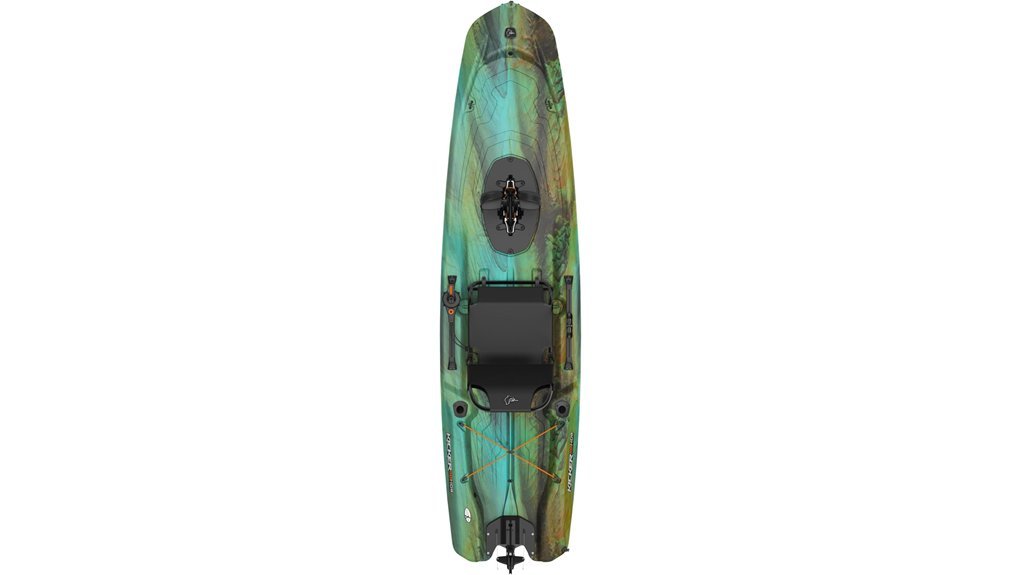
At 11 feet, the Pelican Catch Kicker 110 HDII suits anglers wanting a compact pedal kayak with steady fishing features. This sit-on-top fishing model weighs 59 pounds, supports up to 300 pounds, and uses durable polyethylene construction in Amazonia. Its HyDryve II pedal system enables efficient leg-powered travel, helping reduce fatigue while improving movement through shallow water and vegetation. The adjustable pedals improve fit, while the ergonomic seat raises visibility and can be removed for beach use. A rudder, rear bungeed storage, front deck eyelets, and accessory tracks add control, organization, and customization.
Best For: Anglers who want a compact, pedal-powered sit-on-top fishing kayak with good stability, comfortable seating, and useful fishing accessories for lakes, rivers, and shallow water.
Pros:
- Efficient HyDryve II pedal system helps reduce fatigue and keeps hands free for fishing.
- Ergoboost seat improves comfort and visibility, and can be removed for use as a beach chair.
- Handy fishing features like a rudder, rear bungee storage, front deck eyelets, and accessory tracks.
Cons:
- At 59 lbs, it may still be somewhat heavy for solo transport and loading.
- 300 lb maximum capacity may feel limiting for heavier anglers or lots of gear.
- Best suited to calm or shallow waters rather than fast-moving or rough conditions.
Old Town Heron 11XT Solo Sit-Inside Recreational Paddle Kayak, 11 ft
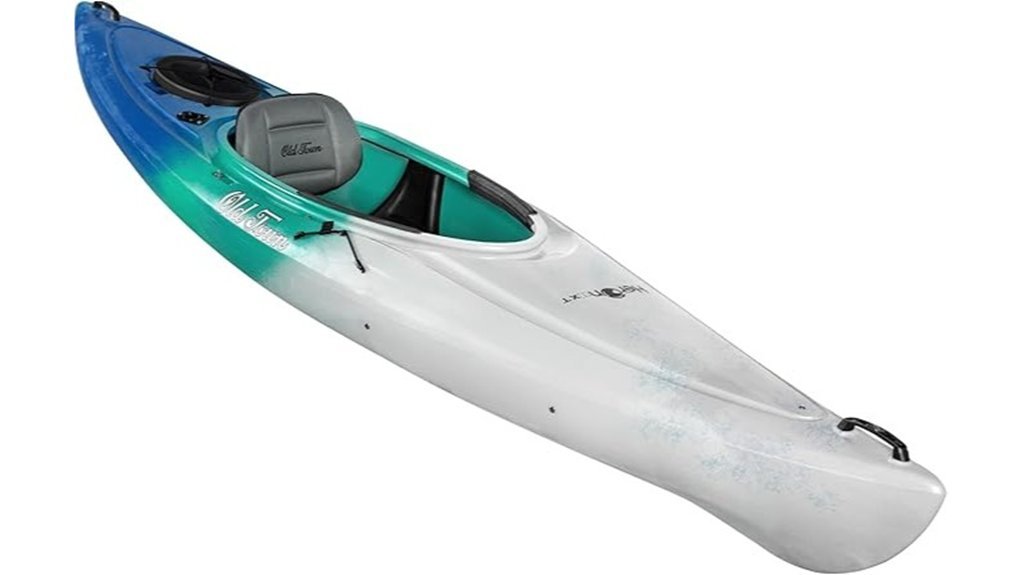
Old Town’s Heron 11XT suits beginners who want a stable, easy-to-manage 11-foot kayak. Its sit-inside design supports recreational paddling, while the adjustable Comfort Flex seat and easy-grip thigh pads help maintain comfort over longer outings. With a 282-pound usable weight capacity, it provides practical space for day trips. The Click Seal hatch secures essentials, and built-in rod holders add fishing convenience. A paddle keeper, cup holder, and Support Track foot brace system improve usability and control. It is backed by a limited lifetime warranty, though the paddle is sold separately.
Best For: Beginners and recreational paddlers who want a stable, comfortable 11-foot sit-inside kayak for day trips and light fishing.
Pros:
- Adjustable Comfort Flex seat and easy-grip thigh pads add comfort for longer paddling sessions.
- Click Seal hatch, rod holders, paddle keeper, and cup holder improve storage and convenience.
- Support Track foot brace system helps provide better leverage and control.
Cons:
- Paddle is sold separately, so it requires an additional purchase.
- Usable weight capacity of 282 pounds may be limiting for some users or heavier gear loads.
- Best suited for recreational use rather than advanced performance paddling.
Intex Explorer K2 Inflatable Kayak Set (68307EP)
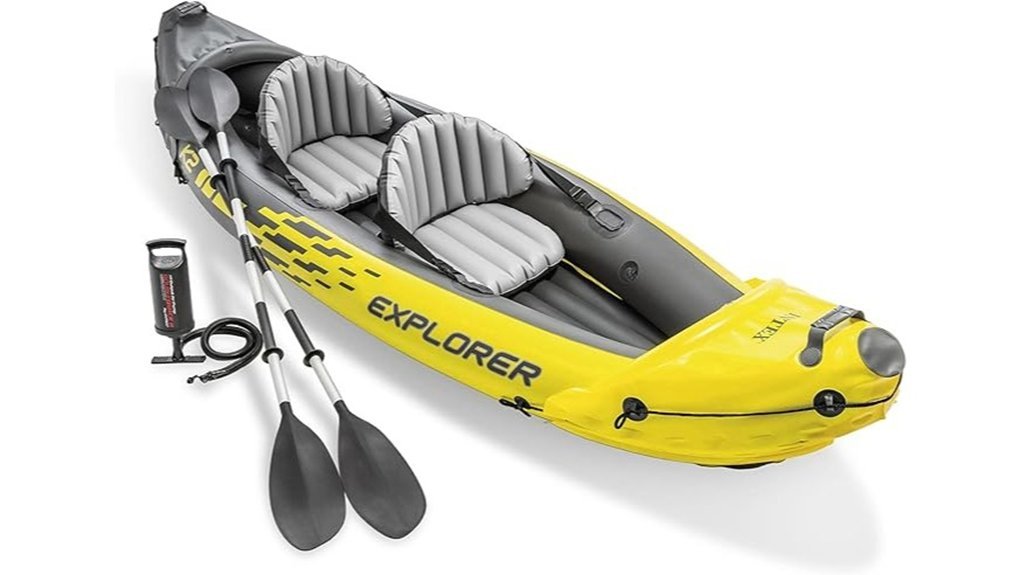
With a 400-pound capacity, the Intex Explorer K2 suits two paddlers seeking a stable, budget-friendly inflatable. The 10.3-foot kayak uses SuperStrong PVC, rugged vinyl, and an inflatable I-beam floor to support steady tracking on lakes and mild rivers. High-buoyancy side chambers and a low-profile deck add confidence, while the bright yellow finish improves visibility. Two 86-inch aluminum oars, inflatable seats with backrests, a pump, grab handles, and a repair patch come included. At 35 pounds, it remains easy to carry, inflate, deflate, and store.
Best For: Two paddlers looking for a lightweight, budget-friendly inflatable kayak that’s easy to transport and stable on lakes and mild rivers.
Pros:
- 400-pound capacity comfortably supports two people.
- Lightweight design and included carrying bag make transport and storage easy.
- Comes with two paddles, inflatable seats, a pump, and a repair patch.
Cons:
- Best suited for calm water, not rough conditions or open sea use.
- Inflatable construction is less rigid than hard-shell kayaks.
- Setup and inflation still take some time compared with a ready-to-launch kayak.
Perception Tribe 11.5 Sit-On-Top Kayak with Rear Storage
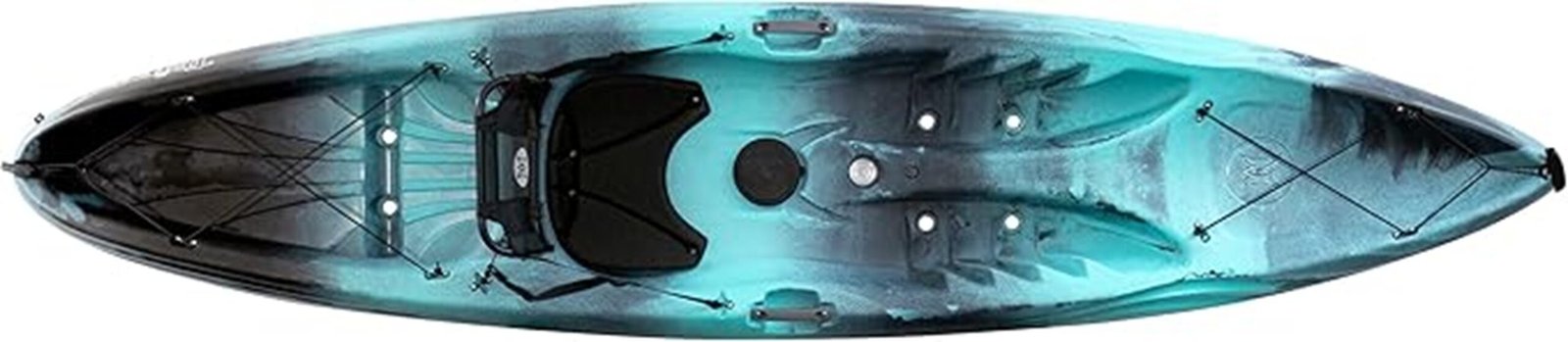
Perception’s Tribe 11.5 suits paddlers seeking comfort, stability, and generous rear storage. This made-in-USA recreational sit-on-top kayak is aimed at beginner to intermediate users and measures 115 inches long and 30.25 inches wide. Its adjustable framed seatback and padded seat pan improve all-day comfort, while integrated footrests and molded knee and thigh areas help it fit a range of body sizes. Weighing 52 pounds, it supports up to 350 pounds. Large rear storage with bungee tie-downs, front and rear tank wells, a center hatch, and a drink holder add convenience for calm lakes, ponds, and slow rivers.
Best For: Beginner to intermediate paddlers who want a comfortable, stable sit-on-top kayak with plenty of storage for relaxed trips on calm water.
Pros:
- Adjustable framed seatback and padded seat pan provide strong all-day comfort.
- Stable, beginner-friendly design with integrated footrests and molded knee/thigh areas.
- Generous storage, including rear bungee storage, tank wells, a center hatch, and a drink holder.
Cons:
- At 52 lbs, it may be a bit heavy for some users to carry alone.
- Best suited for calm lakes, ponds, and slow-moving rivers rather than rougher water.
- Sit-on-top design offers less protection from spray and cold than enclosed kayaks.
Perception Hangtime 11 Recreational Kayak with Reclining Seat
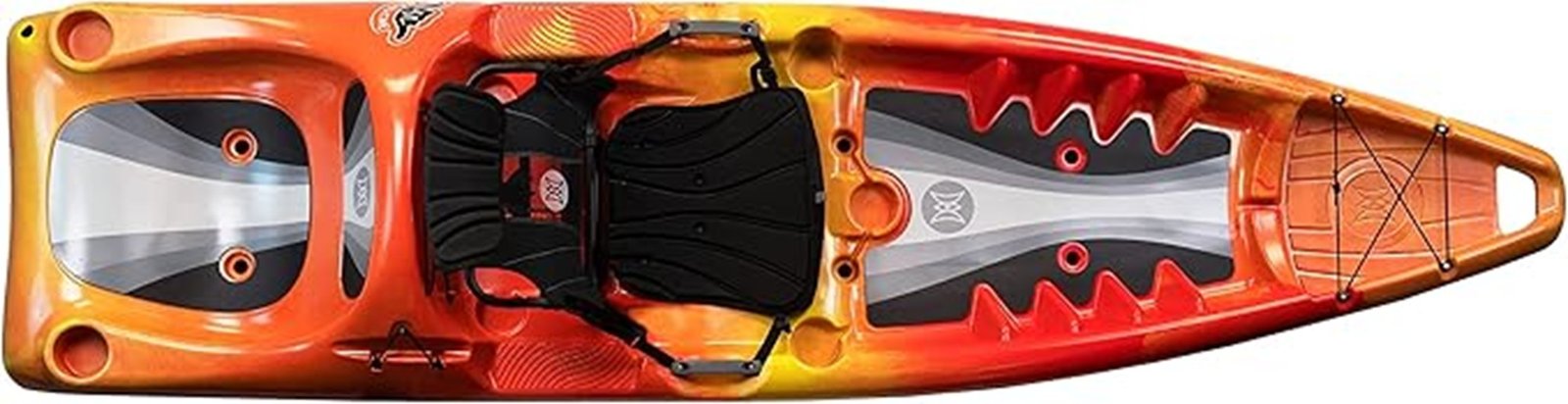
The Perception Hangtime 11 suits paddlers who prioritize comfort on relaxed water. This 11-foot recreational kayak, made in the USA, is built for lakes and gentle rivers, where its balanced length supports steady tracking and easy handling. Its innovative layout emphasizes leisure, with a reclining seat, adjustable headrest, and lounging rear section that create a floating rest area. Beginners and experienced paddlers can use it with confidence, thanks to its approachable design and stable feel. For those seeking an adventure-ready craft that favors enjoyment over strain, the Hangtime 11 offers a practical blend of relaxation and performance.
Best For: Paddlers who want a comfortable, stable recreational kayak for relaxed outings on lakes and gentle rivers, especially beginners or anyone prioritizing leisure.
Pros:
- Reclining seat with adjustable headrest for excellent comfort
- Stable 11-foot design that is easy to handle and track
- Made in the USA with a relaxed, adventure-ready layout
Cons:
- Best suited to calm water rather than challenging conditions
- Comfort-focused design may sacrifice some speed or agility
- Lounging features may not appeal to paddlers seeking a performance-oriented kayak
Factors to Consider When Choosing an 11 Foot Kayak
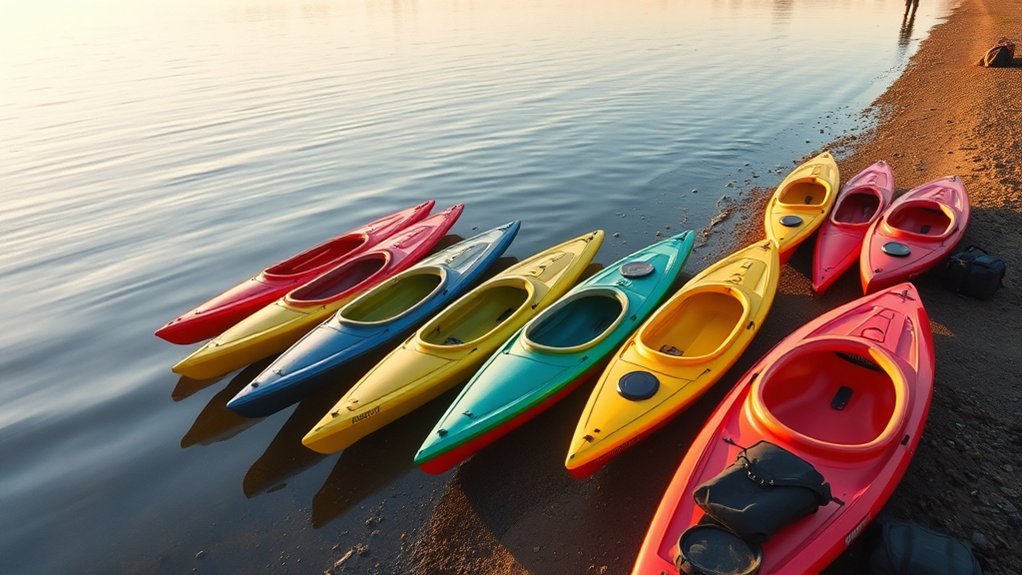
When choosing an 11 foot kayak, hull stability, weight capacity, seating comfort, storage options, and portability features all deserve close attention. A stable hull can improve confidence on the water, while adequate capacity guarantees the kayak can handle the paddler and gear. Comfort, storage, and ease of transport also play important roles in making the kayak practical for regular use.
Hull Stability
Hull stability is one of the most important factors in an 11-foot kayak, especially for paddling in changing conditions or for activities like fishing. A wider hull usually provides a steadier feel, helping paddlers stay balanced while casting, turning, or shifting position. Hull shape also matters: flat-bottom designs often deliver strong primary stability, while rounded hulls can improve secondary stability when waves or chop increase. Construction influences handling too, since inflatable and rigid kayaks may respond differently on the water. Features that lower the center of gravity can further improve steadiness, and scupper holes help drain excess water so the deck stays drier and the kayak remains more composed. In practice, stability supports confidence and control.
Weight Capacity
Weight capacity is a key factor in choosing an 11-foot kayak, with most models supporting roughly 280 to 650 pounds depending on design and materials. This range affects how much a kayak can safely carry, including the paddler, gear, and any additional equipment. Selecting a model with adequate capacity helps guarantee stable handling and dependable performance on the water. A higher limit can also provide extra room for storage, which is useful for longer outings or fishing trips. Manufacturers usually list exact weight ratings, and those figures should be checked carefully before purchase. Staying within the specified limit is essential, since overloading can reduce maneuverability, weaken stability, and increase safety risks during use.
Seating Comfort
Seating comfort can make a noticeable difference on longer paddles, especially in an 11-foot kayak where space and support need to work together. Adjustable seats help the paddler fine-tune height and position, improving posture and visibility on the water. Adequate padding, including EVA seat pads, can reduce pressure points during extended outings. Ergonomic seating is also important; lumbar support and reclining features may lessen fatigue by supporting the lower back more effectively. Footrest adjustability matters as well, since integrated rests that match different leg lengths help maintain a relaxed, efficient paddling position. Durable, high-quality seat materials add another advantage, preserving comfort and structure over time. Together, these features create a seat setup that supports endurance, control, and overall enjoyment on the water.
Storage Options
Storage capacity is a key consideration in an 11-foot kayak, especially for paddlers who plan to carry gear, snacks, or fishing equipment. Rear tank wells with bungee lacing are useful for securing items that need to stay accessible while on the water. Below-deck storage hatches add protected space for personal belongings and smaller tackle, helping keep essentials out of the way yet within reach. Front and rear tank wells can further improve overall capacity, especially on outings that require extra supplies. Integrated drink holders and storage compartments also contribute to convenience during longer trips. Adequate scupper holes or drainage systems are important as well, since they help prevent water from collecting in storage areas and support dependable use in changing conditions.
Portability Features
Portability matters when choosing an 11-foot kayak, especially for paddlers who need to move it frequently between home, vehicle, and water. Lightweight models, ideally under 60 pounds, are easier to lift, carry, and load without strain. Built-in carry handles improve grip and control, while integrated wheels can reduce effort across parking lots or ramps. For those with limited storage space, kayaks that fold or deflate offer a compact solution for garages, apartments, or vehicle trunks. Setup also affects convenience; quick inflation systems and straightforward assembly reduce prep time before launch. Included carry bags add another layer of practicality by keeping the kayak organized during transport and storage. Together, these features make regular outings more manageable and less physically demanding for the paddler.
Fishing Setup
For anglers, a well-designed fishing setup can make an 11-foot kayak far more effective on the water. Multiple rod holders, including flush mount and deck mount styles, help keep rods organized and ready for quick access. A stable hull is equally important, since it supports standing or shifting positions without sacrificing balance. Drainage features such as a SmartFlow scupper system can remove excess water from the deck, helping maintain a drier, more comfortable ride during active fishing sessions. Storage also matters, with rear tankwells and below-deck hatches providing secure spaces for tackle and other gear. Adjustable seating and footrests further improve comfort, reducing fatigue during long outings and allowing anglers to stay focused on the water.
Material Durability
Material durability is a key consideration when choosing an 11-foot kayak, as it directly affects how well the boat holds up to regular use and outdoor exposure. Polyethylene models are common because they resist UV damage and handle years of use well. High-density polyethylene, or HDPE, is especially valued for impact resistance and long service life when cared for properly. Inflatable kayaks usually rely on puncture-resistant PVC or nylon, offering durability in a lighter package through advanced seam welding. Material thickness also matters, since thicker PVC generally resists abrasions and punctures better than thinner versions. Regular cleaning and proper storage help preserve performance by limiting damage from sunlight, moisture, and general environmental wear over time.
Tracking Performance
Tracking performance is a major factor in how an 11-foot kayak handles on the water, especially when covering longer stretches or dealing with shifting conditions. Hull shape plays a central role, with narrower designs often tracking better, though they may reduce stability. The length-to-width ratio also matters; a longer, more streamlined kayak generally holds a straighter line than a shorter, wider one. Features such as a skeg or rudder can improve directional control and limit unwanted side-to-side drift. Wind and current can challenge course keeping, so models with built-in stability aids often perform better in exposed water. Regularly checking footrests and seat alignment can also help maintain proper posture and support more consistent tracking throughout a trip.
Frequently Asked Questions
How Do I Transport an 11-Foot Kayak on a Small Car?
An 11-foot kayak can be transported on a small car with a roof rack, foam blocks, and strong cam straps. It should be centered on the roof, secured at the bow and stern, and checked for overhang. If no rack exists, a temporary pad-and-strap setup may work for short trips. The kayak should not block mirrors or lights, and all straps should be tightened before driving.
What Safety Gear Should I Always Bring on an 11-Foot Kayak Trip?
A small kayak trip should always carry a life jacket, whistle, paddle leash, bilge pump or sponge, and a waterproof phone or radio. Sun protection, such as sunscreen, hat, and sunglasses, also matters. In colder water, a dry bag with extra layers can be essential. Like a lifeline cast into shifting water, these items help keep a paddler visible, prepared, and protected when conditions turn suddenly rough.
How Much Weight Can an 11-Foot Kayak Typically Handle?
An 11-foot kayak typically handles about 250 to 350 pounds, though some models are rated lower or higher. The usable load includes the paddler, gear, water, and any safety equipment, so the total matters more than body weight alone. Heavier loads can reduce stability and speed. Checking the manufacturer’s capacity rating is essential, since each kayak’s design, width, and intended use affect how much it can safely carry.
Can I Use an 11-Foot Kayak in Ocean Surf?
Yes, but only with caution, and the real challenge appears where the waves begin to break. An 11-foot kayak can handle light surf, yet it is generally less stable and less forgiving than a shorter surf kayak or a longer touring model. Skill, timing, and conditions matter greatly. Calm, small surf may be manageable, but powerful breakers, currents, and shore dumpers can quickly overwhelm it and its paddler.
How Should I Store an 11-Foot Kayak to Prevent Damage?
An 11-foot kayak should be stored out of direct sunlight, on padded supports, and kept level to avoid warping or hull stress. It is best to hang it from wide straps or place it on a rack that supports the hull evenly, not on its ends. Cleaning and drying it first helps prevent mildew and corrosion. If indoors is impossible, a breathable cover should shield it from UV, rain, and debris.