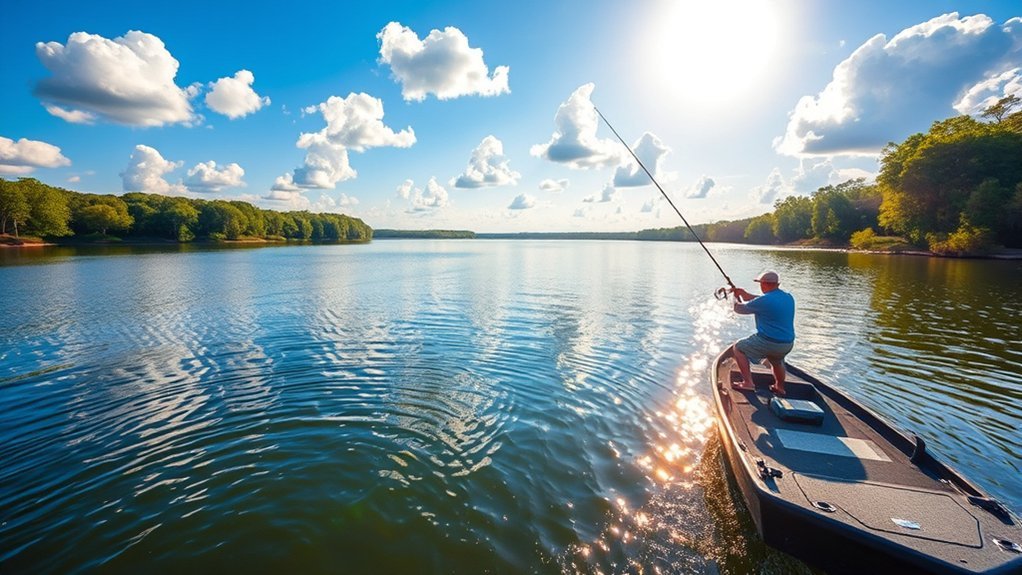
Alabama gives bass anglers everything from grass-filled Tennessee River reservoirs to clear, deep highland lakes and current-driven river systems. The best lake for you depends on the bass species you want to catch, the season, your preferred techniques, and whether you need easy bank or boat access.
Last reviewed: July 23, 2026
Quick Answer
For most anglers, Lake Guntersville is Alabama’s best all-around bass destination because its grass, flats, creek channels, and proven largemouth fishery support many techniques. Pickwick is the better choice for smallmouth, while Lay, Logan Martin, and Neely Henry stand out for Coosa River Alabama bass. Your best lake depends on season, species, and access.
Key Takeaways
- Best overall: Lake Guntersville for largemouth bass, grass fishing, and varied habitat.
- Best for smallmouth: Pickwick Reservoir, especially where current shapes the bite.
- Best for Alabama bass: Lay Lake, Logan Martin Lake, and Neely Henry Reservoir.
- Best clear-water challenge: Lewis Smith Lake for finesse tactics and steep structure.
- Before you go: Check the current license rules, special size limits, lake level, generation schedule, weather, and ramp status.
Note: Alabama’s current regulations use “black bass” for largemouth, smallmouth, spotted, Alabama, shoal, and several drainage-specific bass species. Striped bass and hybrid striped bass are managed separately, even though their common names also include the word “bass.”
Quick Picks: Best Alabama Bass Lakes by Angler Type
- Best overall largemouth destination: Lake Guntersville
- Best smallmouth destination: Pickwick Reservoir
- Best Coosa River Alabama bass options: Lay Lake, Neely Henry Reservoir, and Logan Martin Lake
- Best clear-water finesse lake: Lewis Smith Lake
- Best border-lake grass and ledge fishery: Lake Eufaula
- Best scenic fishing-and-recreation mix: Lake Martin
- Best Tennessee River variety: Wheeler Reservoir
- Best river-reservoir largemouth option in west-central Alabama: Demopolis Reservoir
Alabama Bass Fishing Lake Comparison
| Lake | Best For | Main Bass Appeal | Strong Seasonal Pattern | Important Note |
|---|---|---|---|---|
| Lake Guntersville | Largemouth and grass fishing | Milfoil, hydrilla, flats, creeks, bridges, and offshore structure | Spring shallows, summer grass and ledges, fall baitfish | Largemouth and smallmouth must be at least 15 inches to possess. |
| Pickwick Reservoir | Smallmouth bass | Current, river ledges, humps, tailwater habitat, and aquatic vegetation | Cool-season current and summer offshore structure | Reciprocal-water rules apply; largemouth and smallmouth must be at least 15 inches to possess. |
| Lay Lake | Coosa River pattern fishing | Alabama bass, largemouth, current, docks, timber, and weed beds | Spring, fall, and current-driven feeding windows | Generation and current can change the productive depth quickly. |
| Neely Henry Reservoir | Large Alabama bass | Riverine cover, current, creeks, and a strong Alabama bass population | Early spring and fall | The lake changes from narrow river water upstream to more open water near the dam. |
| Weiss Lake | Bass plus multi-species fishing | Largemouth, Alabama bass, creeks, docks, shallow cover, and river channels | Spring and fall | The lake is also heavily associated with crappie fishing, so confirm species-specific limits. |
| Lewis Smith Lake | Clear-water finesse fishing | Deep water, steep banks, rock, docks, shade, and long points | Late winter through spring, plus low-light summer periods | A protected 13- to 15-inch slot applies to largemouth, Alabama, and spotted bass. |
| Lake Eufaula | Largemouth, grass, and ledges | Chattahoochee River ledges, vegetation, flats, creeks, and backwaters | Spring shallows and summer offshore structure | Alabama or Georgia licenses may apply under reciprocal rules; largemouth must be at least 14 inches to possess. |
| Lake Martin | Scenery and abundant Alabama bass | Clear water, points, islands, docks, coves, and offshore bait | Winter Alabama bass, spring shallows, and fall baitfish | It is a low-fertility lake; largemouth are less numerous and often require patient patterning. |
| Logan Martin Lake | Consistent Coosa River action | Abundant largemouth and Alabama bass around docks, points, current, and laydowns | Spring through fall | Seasonal drawdown and generation can affect access and positioning. |
| Wheeler Reservoir | Tennessee River variety | Largemouth, smallmouth, spotted bass, ledges, creek channels, flats, and weed beds | Spring, summer ledges, and fall | Smallmouth must be at least 15 inches to possess. |
| Demopolis Reservoir | River-reservoir largemouth fishing | Woody cover, backwaters, weed beds, river points, and current seams | Spring and early summer | Water level, current, and clarity can shift quickly in the river arms. |
How These Lakes Were Selected
The list balances official fishery information, habitat variety, bass species, access, regulation needs, and usefulness for different fishing styles. It does not claim that one lake will fish best every week. Weather, water level, current, forage movement, fishing pressure, and your ability to match the pattern can matter more than a lake’s reputation on any single day.
Alabama fisheries managers monitor 42 reservoirs covering more than half a million acres, giving anglers an unusually wide range of black-bass habitats.
Lake Guntersville
Lake Guntersville is Alabama’s largest reservoir and the state’s most recognizable largemouth destination. Milfoil and hydrilla beds, shallow flats, creek channels, bridges, riprap, and offshore structure let you fish moving baits, topwater lures, flipping presentations, or deeper techniques as conditions change.
Start with grass edges and shallow cover during spring. In summer, follow healthy vegetation, shade, current, and offshore structure. Fall often improves when baitfish move into creeks and bass feed along grass lines, points, and channel transitions.
Best for: Anglers who want a famous largemouth fishery with many pattern options.
Good starting lures: Chatterbaits, swim jigs, frogs, lipless crankbaits, Texas rigs, jigs, and ledge crankbaits.
Watch for: Heavy tournament and weekend pressure, changing grass conditions, and the 15-inch minimum length for largemouth and smallmouth bass.
Pickwick Reservoir
Pickwick Reservoir is Alabama’s leading smallmouth choice and also supports largemouth and spotted bass. Current is a major factor, especially around the Shoals below Wilson Dam, river ledges, humps, points, and vegetation in the lower reservoir.
Smallmouth often position where current carries food past rock, breaks, or seams. When generation slows, you may need to fish deeper, downsize, or move to places that still have wind or natural current.
Best for: Anglers targeting smallmouth or trying to catch largemouth, smallmouth, and spotted bass on one trip.
Good starting lures: Swimbaits, jerkbaits, grubs, hair jigs, shaky heads, topwater lures, and deep-diving crankbaits.
Watch for: Strong current, dam safety zones, reciprocal-water regulations, and the 15-inch minimum length for largemouth and smallmouth bass.
Lay Lake
Lay Lake combines Alabama bass and largemouth opportunities with docks, timber, weed beds, bridge areas, channel swings, and current. The riverine portions are especially important for anglers targeting Alabama bass, which many anglers still casually call spotted bass.
Current can activate fish near pinch points, bridge areas, bluff transitions, and the Logan Martin tailwater. When water movement drops, slow down around docks, shade, brush, and deeper structure.
Best for: Anglers who enjoy tournament-style pattern fishing and switching between shoreline cover and offshore structure.
Good starting lures: Shaky heads, spinnerbaits, crankbaits, jigs, soft-plastic worms, and topwater walking baits.
Watch for: Generation changes that alter current strength, water color, and productive depth.
Neely Henry Reservoir
Neely Henry Reservoir is a strong Coosa River option that deserves more attention. It supports largemouth and a notable Alabama bass population, with the lake changing from narrow river habitat upstream to wider, more open water near the dam.
Fish current breaks, docks, laydowns, rock, creek mouths, and channel swings. The upper lake can reward moving baits when current is present, while the lower lake often calls for more deliberate structure fishing.
Best for: Anglers who want quality Alabama bass without limiting themselves to one habitat type.
Good starting lures: Crankbaits, spinnerbaits, jigs, shaky heads, swimbaits, and topwater lures.
Watch for: Fast changes in current and water clarity after rain or generation.
Weiss Lake
Weiss Lake is widely known for crappie, but its black-bass fishery also offers worthwhile largemouth and Alabama bass opportunities. Creeks, coves, docks, channel edges, shoreline cover, and river-influenced water give you several ways to build a pattern.
Spring often brings fish toward shallow spawning areas. In fall, bait movement can improve points, creek mouths, pockets, and wind-blown banks. Quiet coves can be useful when boat traffic or main-lake pressure rises.
Best for: Anglers who want bass fishing with strong crappie and striped-bass options on the same trip.
Good starting lures: Spinnerbaits, squarebill crankbaits, jigs, Texas rigs, lipless crankbaits, and topwater lures.
Watch for: Shallow hazards, changing water levels, and separate size or creel rules for other species.
Lewis Smith Lake
Lewis Smith Lake is deep, clear, and steep-sided. Its rocky points, standing timber, docks, shade lines, and sharp depth changes create a different challenge from Alabama’s shallow grass lakes.
Use lighter line, natural colors, longer casts, and careful boat positioning when visibility is high. A light wind can help by breaking up the surface and pushing bait toward points or banks.
Best Fishing Techniques for Smith Lake
Begin with seasonal depth. Bass may feed shallow in low light, then pull toward docks, points, bluff ends, or deeper breaks as the sun rises. Topwater lures can work early, while shaky heads, drop shots, Ned rigs, jigs, and soft-plastic worms are dependable when fish become less active.
Seasonal Opportunities at Smith Lake
- Spring: Target pockets, secondary points, rocky banks, and spawning areas.
- Summer: Fish shade, docks, deeper structure, and early-morning surface activity.
- Fall: Follow baitfish to points, pockets, and wind-blown banks.
- Winter: Slow down around steep rock, timber, and deep structure.
Best for: Anglers who enjoy finesse fishing, electronics, and precise depth control.
Watch for: Clear-water visibility, heavy recreational traffic, deep water close to shore, and the protected 13- to 15-inch slot for largemouth, Alabama, and spotted bass.
Lake Eufaula
Lake Eufaula, also called Walter F. George Reservoir, is a major Chattahoochee River fishery on the Alabama-Georgia border. It gives largemouth anglers vegetation, flats, creek arms, river ledges, backwaters, docks, and offshore structure.
Spring favors shallow cover, warming pockets, and spawning areas. During summer, ledges, channel drops, brush, and current-related offshore structure become more important. Because the reservoir crosses a state line, review the reciprocal license and regulation rules before fishing.
Best for: Anglers who like combining grass fishing with offshore ledge patterns.
Good starting lures: Frogs, swim jigs, spinnerbaits, Texas rigs, jigs, deep crankbaits, and Carolina rigs.
Watch for: Border-water rules, large open-water runs, and the 14-inch minimum length for largemouth bass.
Lake Martin
Lake Martin is a clear, scenic Tallapoosa River reservoir with abundant Alabama bass, plus a less numerous largemouth population. Points, islands, docks, coves, rocky banks, and offshore bait provide many patterns, but the lake’s low fertility means it should not be described as an easy trophy-largemouth fishery.
Long casts, natural colors, and baitfish-focused presentations often help in clear water. Winter can produce strong Alabama bass fishing, while spring and fall make shallow points, pockets, docks, and creek arms easier to pattern.
Best for: Anglers who value scenery, clear-water fishing, and frequent Alabama bass action.
Good starting lures: Shaky heads, small swimbaits, jerkbaits, topwater lures, jigs, and finesse worms.
Watch for: Recreational boat traffic, clear-water visibility, and special striped-bass rules that are separate from black-bass regulations.
Logan Martin Lake
Logan Martin Lake offers abundant largemouth and Alabama bass around docks, points, bridges, laydowns, current seams, and shallow-to-deep transitions. Its east-central location also makes it practical for anglers traveling from the Birmingham area.
You can pitch docks, work crankbaits along points, throw moving baits near cover, or slow down with soft plastics. Current and seasonal drawdown can change which areas are accessible and how fish position.
Best for: Anglers who want versatile Coosa River fishing with both shallow and deep options.
Good starting lures: Jigs, shaky heads, crankbaits, spinnerbaits, soft-plastic worms, and topwater lures.
Watch for: Weekend traffic, seasonal water-level changes, and generation-driven current.
Wheeler Reservoir
Wheeler Reservoir is Alabama’s second-largest reservoir and supports largemouth, smallmouth, and spotted bass. The upper end is more river-like, the middle includes stump flats, weed beds, and creek channels, and the lower lake has steeper banks and long points.
Spring can move bass shallow. Summer often rewards anglers who understand ledges, current, and offshore structure. In fall, baitfish can pull fish toward creek mouths, flats, grass, and shallow cover.
Best for: Anglers who enjoy changing patterns as they move through different sections of a Tennessee River reservoir.
Good starting lures: Crankbaits, swimbaits, jigs, spinnerbaits, topwater lures, and soft plastics.
Watch for: River navigation, commercial traffic, current, and the 15-inch minimum length for smallmouth bass.
Demopolis Reservoir
Demopolis Reservoir is a Black Warrior-Tombigbee system lake known for largemouth bass. Woody cover, weed beds, river points, backwaters, and current seams make it a practical destination for anglers who enjoy river-reservoir fishing.
Spring and early summer often create productive shallow-water opportunities. When conditions change, follow clearer water, stable backwaters, current edges, and shade rather than assuming one arm of the reservoir will fish like another.
Best for: Anglers who want largemouth fishing in a broad river-and-backwater system.
Good starting lures: Spinnerbaits, squarebill crankbaits, jigs, Texas rigs, buzzbaits, and frogs.
Watch for: Floating debris, changing water level, current, and variable water clarity.
Seasonal Bass Fishing Guide for Alabama
- Late winter: Clear lakes such as Smith and Martin can reward slow presentations around rock, steep banks, and bait. Pickwick smallmouth may respond when current and temperature line up.
- Spring: Bass move toward protected pockets, flats, shallow cover, and spawning areas. Weather fronts can quickly move fish deeper or make them less active.
- Summer: Fish early and late around shade, grass, and surface activity. During the day, focus on current, ledges, deep points, docks, brush, or healthy vegetation.
- Fall: Follow shad into creeks, pockets, flats, and wind-blown banks. Moving baits often become more useful as bass feed before winter.
- Winter: Slow down, use smaller presentations, and target stable water near rock, timber, channel swings, and deeper structure.
Pro Tip: Check the lake level, dam-generation information, weather, and public-access map the night before your trip and again before launch. Current and ramp conditions can change faster than an evergreen fishing guide can be updated.
How to Choose the Right Alabama Bass Lake
- Choose Lake Guntersville for largemouth, grass, and the widest mix of shallow and offshore patterns.
- Choose Pickwick when smallmouth and current-driven fishing are your priorities.
- Choose Lay, Neely Henry, or Logan Martin for Coosa River Alabama bass and varied structure.
- Choose Smith Lake for clear-water finesse fishing and steep depth changes.
- Choose Lake Eufaula for a large border reservoir with grass, flats, and ledges.
- Choose Lake Martin for scenery, recreation, and abundant Alabama bass.
- Choose Wheeler for a large Tennessee River reservoir with three black-bass species.
- Choose Weiss for bass fishing mixed with major crappie and striped-bass opportunities.
- Choose Demopolis for river points, woody cover, backwaters, and largemouth.
Bank Fishing, Boat Access, and Trip Planning
Bank fishing can be productive at designated piers, parks, riprap banks, tailrace areas, and public access sites. A boat or kayak opens more water, but you should not assume every shoreline, marina, or ramp allows fishing. Use the official freshwater bank-access map and boating-access map before traveling.
Boat rentals are offered by some private marinas and local businesses, but availability, horsepower limits, deposits, and operating hours vary. Contact the provider directly instead of relying on an old directory or article.
License, Size Limits, and Safety Before You Go
Most anglers need a valid Alabama freshwater fishing license, but exemptions and reciprocal-water rules matter. Alabama residents age 65 and older are generally exempt from purchasing recreational freshwater licenses, residents may fish from the bank with hook and line in their county of residence without buying a license, and nonresidents age 16 and older generally need an appropriate license. Confirm your exact situation through the current Outdoor Alabama license FAQs.
The statewide daily creel limit for black bass is 10 in combination, with no more than five smallmouth. Important lake-specific size rules include:
- Guntersville Reservoir: Largemouth and smallmouth bass must be at least 15 inches.
- Pickwick Reservoir: Largemouth and smallmouth bass must be at least 15 inches.
- Lewis Smith Reservoir: You may not possess largemouth, Alabama, or spotted bass from 13 through 15 inches.
- Lake Eufaula and its tributaries: Largemouth bass must be at least 14 inches.
- Wheeler Reservoir: Smallmouth bass must be at least 15 inches.
Regulations can change, and border waters can have reciprocal agreements or special rules. Read the current freshwater creel and size limits before keeping fish.
Warning: Dam releases can create sudden current, turbulence, and changing water levels. Stay outside restricted areas, follow posted warnings, and carry a properly fitted life jacket for every person. In Alabama, children under age 8 must wear a life jacket while on a boat unless they are below deck or inside an enclosed cabin.
Before launching, also check weather, navigation lights, required safety equipment, and operator-certification rules. After leaving the water, clean, drain, and dry your boat, trailer, livewell, and gear to reduce the spread of aquatic nuisance species.
Frequently Asked Questions
What are the best times of year for bass fishing in Alabama?
Spring and fall are the easiest seasons for many anglers because bass often move shallower and feed actively. Summer can still be excellent around grass, current, ledges, deep points, and docks. Winter can be productive on clear lakes and current-driven smallmouth water when you slow down.
Do I need an Alabama freshwater fishing license?
Most anglers do, but age, residency, bank-fishing exemptions, and reciprocal-water agreements can change the answer. Check Outdoor Alabama’s current license guidance before fishing, especially on Lake Eufaula or Pickwick.
What types of black bass are found in Alabama?
Alabama waters include largemouth, smallmouth, spotted, Alabama, shoal, and several drainage-specific bass species. The species mix changes by river basin and reservoir. Striped bass and hybrid striped bass are popular sport fish but are not black bass.
Why do some anglers call Alabama bass spotted bass?
Older fishing reports and casual conversations may use “spotted bass” for fish now classified as Alabama bass in the Mobile River drainage, including much of the Coosa and Tallapoosa systems. Current Alabama regulations list Alabama bass separately.
Which Alabama lake is best for trophy largemouth bass?
Lake Guntersville is the strongest all-around choice because of its size, vegetation, habitat, and long reputation for large largemouth bass. Lake Eufaula and several other reservoirs can also produce trophy fish when conditions and timing align.
Which Alabama lake is best for smallmouth bass?
Pickwick Reservoir is Alabama’s leading smallmouth destination. Wheeler also supports smallmouth, especially in its western and lower sections, but Pickwick has the stronger statewide smallmouth reputation.
What lures work best for Alabama bass fishing?
Useful choices include topwater lures, spinnerbaits, chatterbaits, crankbaits, jerkbaits, jigs, swimbaits, Texas rigs, Carolina rigs, shaky heads, drop shots, and finesse worms. Match the lure to depth, water clarity, current, forage, and cover instead of relying on one statewide favorite.
Is bank fishing good at these Alabama lakes?
It can be good at public piers, parks, riprap, tailraces, and designated shoreline sites. Check the official bank-access map because shoreline ownership, parking, hours, and fishing rules vary by location.
Can I rent a boat at Alabama bass lakes?
Some private marinas and nearby businesses rent boats, but options vary by lake, season, and operator. Confirm the boat type, required deposit, safety rules, fuel policy, and reservation terms directly with the provider.
Are bass tournaments held on these lakes?
Yes. Guntersville, Pickwick, Lay, Neely Henry, Logan Martin, Smith, Martin, Wheeler, Eufaula, Weiss, and other Alabama reservoirs host local or larger events. Check current tournament schedules and ramp notices before planning a trip around an event weekend.
Sources
- Outdoor Alabama: Reservoir Fishing and Management — reservoir sizes, management context, and official lake directory.
- Outdoor Alabama: Freshwater Fishing Creel and Size Limits — statewide black-bass limits and lake-specific size rules.
- Outdoor Alabama: License FAQs — resident, nonresident, age, and exemption guidance.
- Outdoor Alabama: Freshwater Boating Access — current public ramp locations and access information.
- Outdoor Alabama: Bass Anglers Information Team — official tournament-based bass fishery data.
- Alabama Law Enforcement Agency: Safe Boating — life-jacket and boating-safety requirements.
Conclusion
Lake Guntersville remains the best all-around starting point for Alabama largemouth fishing, but it is not the right answer for every angler. Pickwick is the stronger smallmouth choice. Lay, Neely Henry, and Logan Martin excel for Coosa River Alabama bass. Smith rewards clear-water finesse, Eufaula combines vegetation with ledges, and Martin, Wheeler, Weiss, and Demopolis each offer a different style of trip.
Choose the lake that matches your target species and preferred technique. Then verify the license, special size limits, water level, current, weather, and access conditions before you leave. A well-matched plan will help more than simply choosing the most famous name on the map.