Choosing a first trail mountain bike in [2026] means balancing control, comfort, and durability without overcomplicating the decision. Models like the WEIZE, Max4out, Dynacraft Magna Echo Ridge, and other 26/27.5-inch options each bring something different to the trail. Some favor smoother suspension, while others emphasize stable handling or easier gearing. The real question is which one fits a beginner’s needs best.
Key Takeaways
- WEIZE Mountain Bike with Dual Full Suspension is beginner-friendly, with a durable frame, smooth ride, and simple 18-speed twist shifting.
- Max4out 26-inch Mountain Bike offers 7/21 speeds, front suspension, and disc brakes for easy trail control and safety.
- The 26/27.5-inch Mountain Bike with Shimano Derailleur provides 21 speeds, mechanical disc brakes, and adjustable suspension for versatile beginner trail riding.
- Dynacraft Magna Echo Ridge is lightweight, has 18 speeds, front suspension, and an adjustable seat for comfortable entry-level trail use.
- WEIZE Kids Mountain Bike suits younger beginners with dual suspension, 6 speeds, and stable handling on unpaved paths.
WEIZE Mountain Bike with Dual Full Suspension
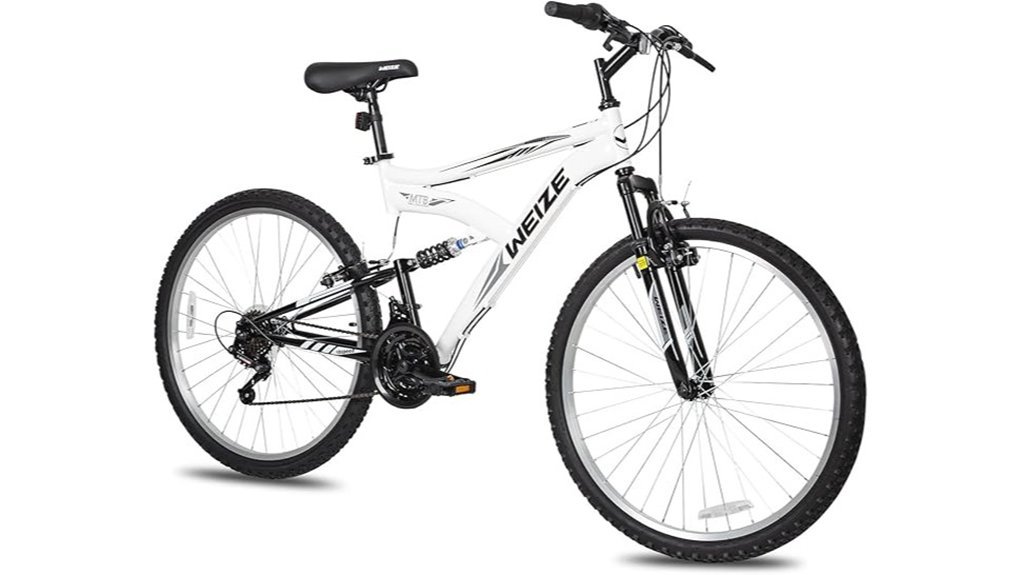
The WEIZE Mountain Bike with Dual Full Suspension stands out as a solid entry-level choice for riders who want comfort and control on varied terrain. Its high-carbon steel frame pairs with front suspension and a rear coil shock to reduce trail chatter and absorb bumps. Eighteen-speed twist shifters, supported by front and rear derailleurs, make gear changes straightforward, while linear pull brakes supply dependable stopping power. Twenty-six-inch all-terrain tires add versatility. Designed for riders 13 and older, from 52 to 62 inches tall, it arrives partially assembled and can be ready in about 20 minutes.
Best For: Riders aged 13 and up who want an affordable, comfortable entry-level mountain bike for casual riding on varied terrain.
Pros:
- Dual full suspension with a front fork and rear coil shock helps absorb bumps for a smoother ride.
- 18-speed twist shifters with front and rear derailleurs make gear changes easy and flexible.
- 26-inch all-terrain tires and linear pull brakes offer solid versatility and dependable stopping power.
Cons:
- High-carbon steel frame is typically heavier than aluminum alternatives.
- Entry-level components may not satisfy more advanced riders or aggressive trail use.
- Fits a limited rider height range, so sizing may not work for everyone.
Max4out 26-inch 7/21 Speed Mountain Bike
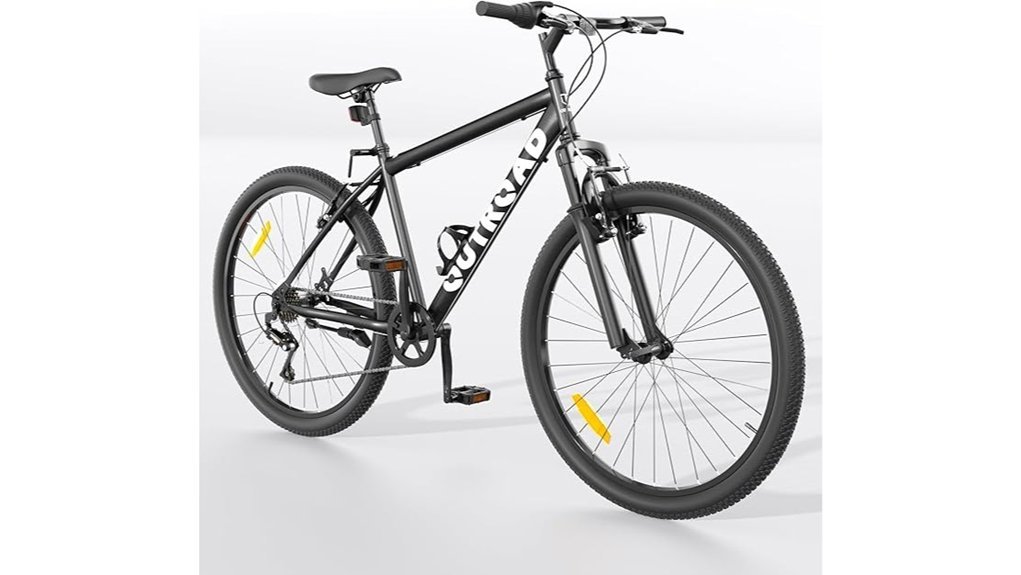
With 7/21 speeds, the Max4out 26-inch mountain bike suits beginner riders seeking flexibility and control. Its 26-inch wheels and lightweight solid iron frame support easy handling, while quality welding adds durability. Front suspension helps smooth rough hills, and double disc brakes improve stopping confidence on varied terrain. The bike fits riders 52 to 60 inches tall and supports up to 330 pounds. Its quick-release wheels simplify maintenance, and assembly is straightforward, taking about 15 to 20 minutes after delivery. The spray-paint finish gives it a distinctive look, and it handles trails, roads, beaches, and snow with ease.
Best For: Beginner to intermediate riders looking for a versatile 26-inch mountain bike with solid durability, easy handling, and reliable braking for trails, roads, and casual off-road use.
Pros:
- 7/21-speed gearing offers flexibility and control on different terrains.
- Front suspension and double disc brakes improve comfort and safety.
- Arrives mostly assembled and is easy to put together in about 15–20 minutes.
Cons:
- Recommended rider height range is limited to 52–60 inches.
- Iron frame may be less lightweight than aluminum alternatives for some riders.
- Best suited for casual and recreational use rather than high-performance mountain biking.
26/27.5″ Mountain Bike with Shimano Derailleur and Disc Brakes
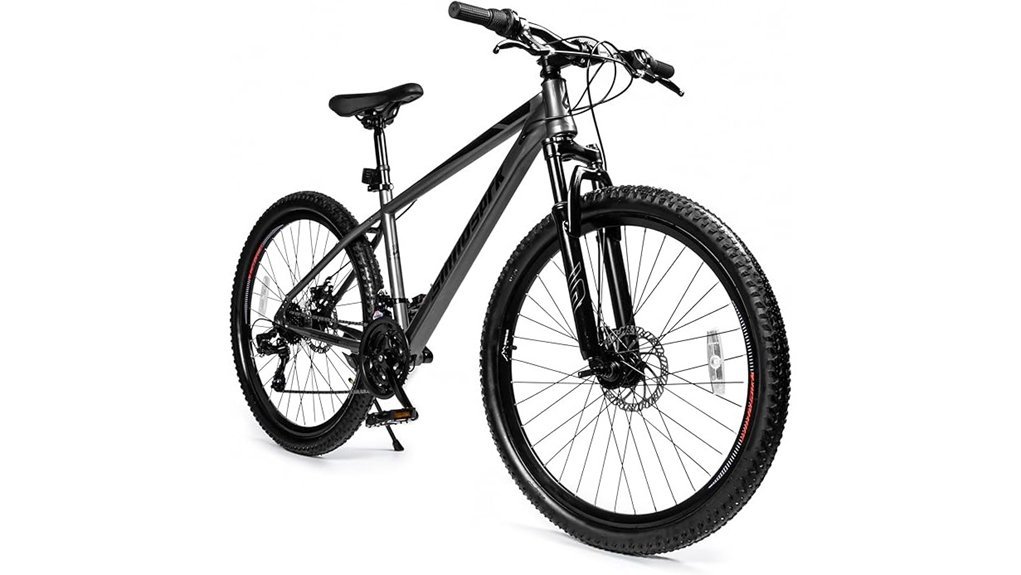
Ideal for new riders, this 26/27.5-inch mountain bike delivers easy handling and reliable control on varied terrain. Its high carbon steel frame supports durability, while 21 speeds and a Shimano rear derailleur with twist grip shifters provide smooth, precise gear changes. Front and rear mechanical disc brakes offer dependable stopping power, and the adjustable lockout suspension fork improves efficiency on pavement and comfort on rough trails. Wide 2.35-inch all-terrain tires add traction and stability. It arrives 85% pre-assembled with tools, video guidance, kickstand, reflectors, and a 1-year warranty.
Best For: New riders and casual mountain bikers who want a durable, easy-to-handle bike with reliable braking, simple gear shifting, and stable performance on mixed terrain.
Pros:
- Shimano rear derailleur with twist grip shifters provides smooth, precise gear changes.
- Front and rear mechanical disc brakes offer dependable stopping power.
- Wide 2.35-inch tires and lockout suspension improve traction, comfort, and efficiency.
Cons:
- High carbon steel frame is durable but heavier than aluminum.
- 21-speed setup may be limited for more advanced riders or steep climbs.
- 85% pre-assembled still requires some setup and adjustment.
Dynacraft Magna Echo Ridge Mountain Bike
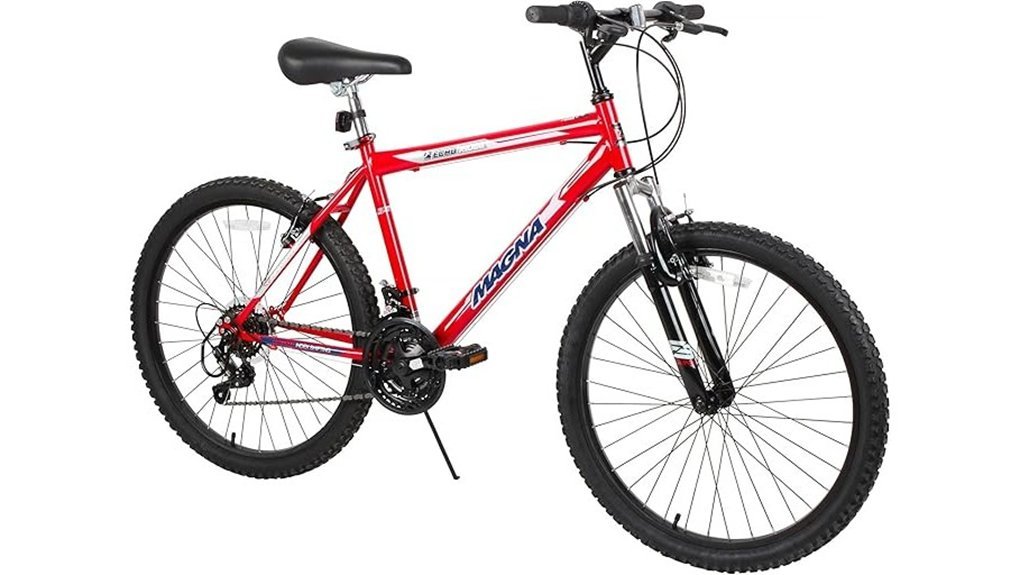
Designed for teens and adults, the Dynacraft Magna Echo Ridge offers a rugged, beginner-friendly ride. This 24-inch mountain bike uses a durable alloy steel frame and weighs 19 pounds, making it manageable for new riders. Its 18-speed drivetrain, rear derailleur, and twist grip shifter provide useful range for varied terrain, while front suspension and a front fork shock help soften bumps. Front and rear linear pull brakes add control. An adjustable seat, kickstand, and easy assembly improve practicality. It supports riders up to 275 pounds and includes a one-year limited warranty.
Best For: Teens and adults who want a rugged, beginner-friendly 24-inch mountain bike for learning on varied terrain.
Pros:
- 18-speed drivetrain with rear derailleur and twist grip shifter gives useful gearing range.
- Front suspension and fork shock help absorb bumps for a smoother ride.
- Adjustable seat, kickstand, and easy assembly add convenience for new riders.
Cons:
- 24-inch wheel size may be limiting for taller riders.
- Linear pull brakes are functional but not as advanced as disc brakes.
- Designed for beginner use, so it may not satisfy more experienced mountain bikers.
WEIZE Kids Mountain Bike with Dual Suspension, 6 Speeds
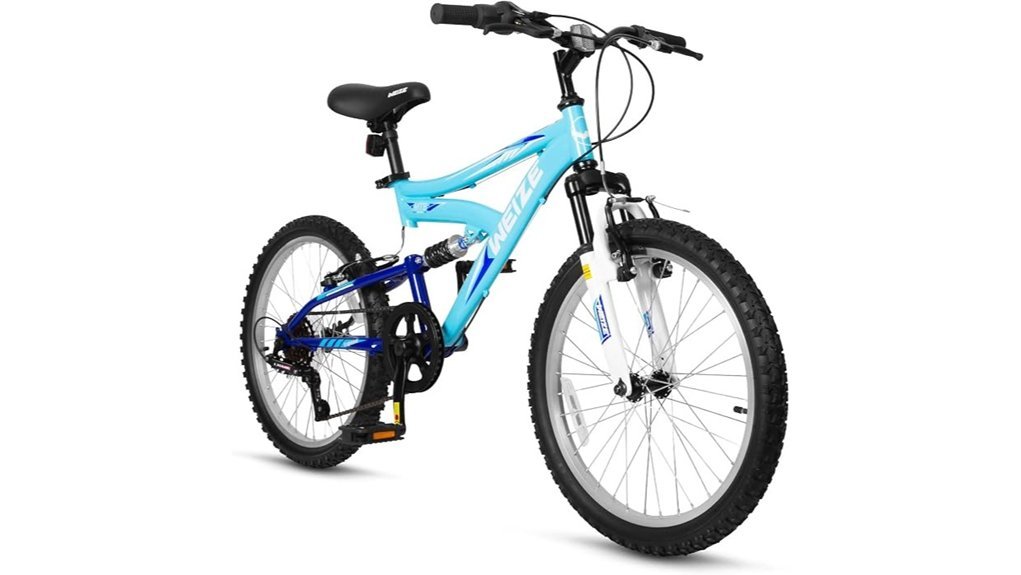
The WEIZE Kids Mountain Bike suits young riders ages 8 to 14. Offered in 20- and 24-inch sizes, it uses a high-carbon steel frame for durability and safety. Front and rear V-brakes provide controlled stopping, while the lower standover height helps children mount and dismount more easily. Its 6-speed rear derailleur supports climbing and descending on trails. The 20×2.125 tires add puncture and abrasion resistance, and the padded seat improves comfort. Designed for mountain terrain and unpaved paths, it arrives ready to ride with no assembly required, and fits riders at least 42 inches tall.
Best For: Young riders ages 8 to 14 who want a durable, easy-to-handle mountain bike for trails and unpaved paths.
Pros:
- High-carbon steel frame offers durability and safety.
- Dual V-brakes and a 6-speed drivetrain provide reliable control on climbs and descents.
- Padded seat, lower standover height, and no assembly required improve comfort and convenience.
Cons:
- Best suited for kids and shorter riders, with a minimum height requirement of 42 inches.
- Steel frame may be heavier than some alternative materials.
- Limited to 6 speeds, which may be less versatile for more advanced riding.
Factors to Consider When Choosing a Beginner Trail Mountain Bike
A beginner trail mountain bike should be judged by its frame and suspension, since these affect comfort and control on rough terrain. Gear range and brake performance are also important, as they influence climbing ability and stopping confidence. Wheel size and rider fit round out the selection, helping guarantee the bike feels stable and suits the rider’s body properly.
Frame And Suspension
When evaluating frame and suspension for a beginner trail mountain bike, material and design play a major role in ride quality and control. Frame material affects weight and durability, and high-carbon steel remains a strong, resilient option for rugged trails. Suspension choices also matter greatly. A front suspension fork helps absorb impacts from rocks and roots, while dual suspension, with front and rear shocks, adds comfort and keeps handling steadier on rough ground. A rear coil shock can further soften bumps, which benefits riders learning on varied terrain. Frame geometry should also be considered, since a lower center of gravity often improves balance and stability. Proper frame sizing is equally important, supporting comfort, efficient control, and reduced injury risk during longer rides.
Gear Range
Gear range is a key consideration for beginner trail mountain bikes because it helps riders handle everything from steep climbs to smooth, flat sections with less strain. A wider setup, such as 18 or 21 speeds, gives new riders more flexibility across changing terrain. Lower gear ratios are especially useful on hills, where they help maintain a steady cadence without excessive effort. Twist shifters are often a practical choice for beginners since they make gear changes simple and intuitive. Bikes with both front and rear derailleurs can also improve shifting quality, creating smoother shifts between gears. Quick, dependable shifting allows riders to adapt promptly to obstacles and trail changes, supporting confidence and control on varied routes.
Brake Performance
Brake performance is a critical factor in beginner trail mountain bikes because reliable stopping power helps riders stay in control on descents, loose surfaces, and obstacles. Beginners benefit from brakes that engage smoothly and respond predictably, since consistent modulation reduces panic braking and improves confidence on technical trails. Most entry-level bikes use either linear pull brakes or disc brakes, but disc brakes generally deliver stronger stopping power and better performance in wet or muddy conditions. That advantage can matter when trails turn rough or unpredictable. Maintenance should also be considered, as disc systems often need more specialized care than simpler alternatives. Bike weight can influence braking response as well, with lighter models often feeling quicker and easier to manage overall.
Wheel Size
Wheel size plays a major role in how a beginner trail mountain bike handles, feels, and rolls over obstacles. Common options include 26, 27.5, and 29 inches, and each changes the bike’s character. Smaller 26-inch wheels tend to be more maneuverable, making them useful on tight, technical trails. They are also lighter and quicker to accelerate. By contrast, 27.5-inch and 29-inch wheels roll more easily over roots, rocks, and other trail obstacles. Larger wheels usually add traction and stability, which can improve confidence on rough descents and mixed terrain. A 26-inch wheel is often recommended for riders between 52 and 60 inches tall. In general, the best choice balances agility, rollover ability, and speed.
Rider Fit
Rider fit matters just as much as wheel size when choosing a beginner trail mountain bike, because the right frame and geometry can make the bike easier and safer to control. Frame size should match the rider’s height, and many beginner models suit riders between 52 and 62 inches tall. A proper match improves stability, helps the rider manage uneven ground, and lowers injury risk. Adjustable seat height is another useful feature, since it allows a more comfortable riding position as needs change. Bike weight also affects handling; a lighter frame is easier for beginners to steer and lift. Geometry matters too, with a balanced stance supporting even weight distribution, stronger traction, and steadier control on trails.
Terrain Versatility
Terrain versatility is a key consideration because a beginner trail mountain bike should handle a range of surfaces with confidence. Wheel size shapes that adaptability: 26-inch tires often improve maneuverability on mixed terrain, while 27.5-inch wheels add stability and traction when trails turn rocky or loose. Dual suspension further broadens capability by softening impacts and helping the rider stay composed over roots, bumps, and uneven ground. Versatile gearing, such as 18-speed or 21-speed setups, makes climbs and descents more manageable across changing trail grades. Reliable braking matters as well; disc brakes or linear pull brakes give consistent stopping power on steep or slippery sections. Finally, a durable yet manageable frame, such as high-carbon steel, supports control without unnecessary weight.
Assembly Ease
Assembly ease can make a beginner trail mountain bike far less intimidating to set up and use right away. Many entry-level models arrive partially or mostly assembled, leaving only 15 to 20 minutes of work before the first ride. That quick turnaround appeals to new riders who may not want a complicated build. Included tools and video guidance can further simplify the process, especially for those with limited mechanical experience. Clear instructions and few parts to install reduce confusion and frustration. Bikes with quick-release wheels also streamline assembly, maintenance, and later adjustments. Ergonomic design features, such as easy seat-height changes, help beginners fine-tune fit without hassle. A bike that is simple to assemble often feels more approachable and usable from day one.
Frequently Asked Questions
How Do I Know if a Bike Fits My Height Correctly?
A bike fits correctly when the rider can stand over the frame with slight clearance, reach the handlebars without stretching, and pedal with a comfortable leg bend at the bottom of the stroke. Seat height, top tube reach, and handlebar position all matter. During a short ride, the rider should feel balanced, able to steer easily, and not cramped or overextended. If discomfort appears quickly, sizing is likely off.
What Maintenance Should I Do After My First Few Rides?
After the first few rides, the bike should be checked for loose bolts, especially on the stem, handlebars, wheels, and pedals. Tire pressure should be adjusted, and the chain cleaned and lightly lubricated. Brake pads and shifting should be inspected for proper function. Wheel true and spoke tension deserve a quick look. Any unusual noises, rubbing, or creaks should be addressed early to prevent bigger problems and guarantee safe riding.
How Often Should Beginner Trail Bike Tires Be Replaced?
Beginner trail bike tires are typically replaced every 1,000 to 3,000 miles, or sooner if tread is worn, sidewalls are cracked, or punctures become frequent. Off-road use, rider weight, terrain, and tire quality all affect lifespan. A rider should inspect tires regularly after rides and replace them when grip noticeably drops or damage appears. Proper pressure and storage can help extend service life.
Do I Need Special Shoes for Trail Mountain Biking?
Special shoes are not strictly required for trail mountain biking, but they can improve control and comfort. Flat pedals work with sturdy sneakers or trail shoes, while clipless pedals need compatible cycling shoes. For beginners, grippy shoes with stiff soles and toe protection are usually enough. The choice depends on pedal type, riding style, and budget. Proper footwear helps efficiency, but confidence and fit matter more than specialized branding.
Can I Upgrade Parts as My Riding Improves?
Yes, a bike can be upgraded gradually as riding skills improve. Many riders start with better tires, pedals, grips, and a dropper post, then later consider suspension, brakes, or drivetrain parts. This approach lets the bike match growing confidence without replacing the whole setup. It is wise to confirm compatibility before buying parts, since frame standards and component sizes vary. Careful upgrades can extend a beginner bike’s usefulness for years.