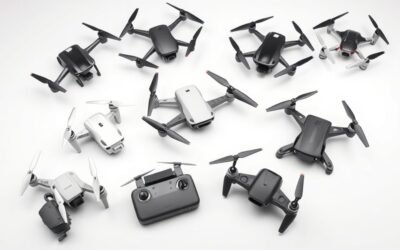
Budget pedal fishing kayaks continue to attract anglers who want hands-free movement without a premium price tag. The [2026] lineup includes tandem rigs, compact solo models, foldable options, and even an inflatable design, each aimed at different kinds of fishing trips. Some emphasize stability, while others focus on portability or extra deck space. The real question is which of these tradeoffs matters most for the way they fish.
Key Takeaways
- The RC 14′ Pro Tandem offers high capacity, durable construction, and budget-friendly pedal power for two anglers.
- Pelican Catch Mode 110 is a stable, standing-friendly fishing kayak with an adjustable seat and practical storage.
- Pelican Catch HDII adds efficient pedal propulsion, good comfort, and useful accessory rails for budget-conscious anglers.
- Brooklyn 8.0 is compact, foldable, and easy to transport, but it works best on calm waters.
- Spatium provides inflatable portability, comfortable seating, and fishing-ready mounts for anglers needing an affordable setup.
RC 14′ Pro Tandem Pedal Fishing Kayak
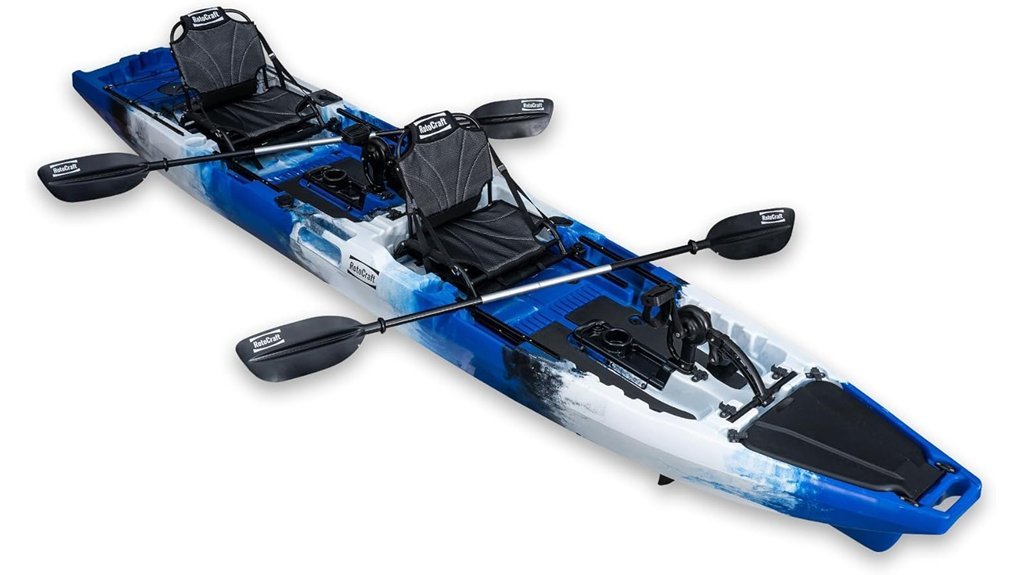
The RC 14′ Pro Tandem Pedal Fishing Kayak stands out as a smart budget pick for anglers who want a stable, high-capacity tandem setup without sacrificing performance. Measuring 14 feet 10 inches and supporting up to 662 pounds, it offers room for two anglers and gear. Its high-grade polyethylene hull is rotomolded in RotoCraft’s factory for durability. Dual propeller drive systems let both riders contribute to speed and efficiency in open water. Aluminum frame seats add support and comfort, while a precision rudder system improves control, especially on longer trips.
Best For: Anglers who want an affordable, stable tandem pedal kayak with high capacity, solid durability, and comfortable all-day seating for two people.
Pros:
- High 662 lb capacity with enough space for two anglers and gear
- Durable rotomolded polyethylene hull built for long-term use
- Dual propeller drive and precision rudder provide good speed and control
Cons:
- Large size may be harder to transport and store
- Tandem setup requires coordination between both riders
- Better suited for open water than tight, highly maneuverable fishing spots
Pelican Catch Mode 110 Kayak
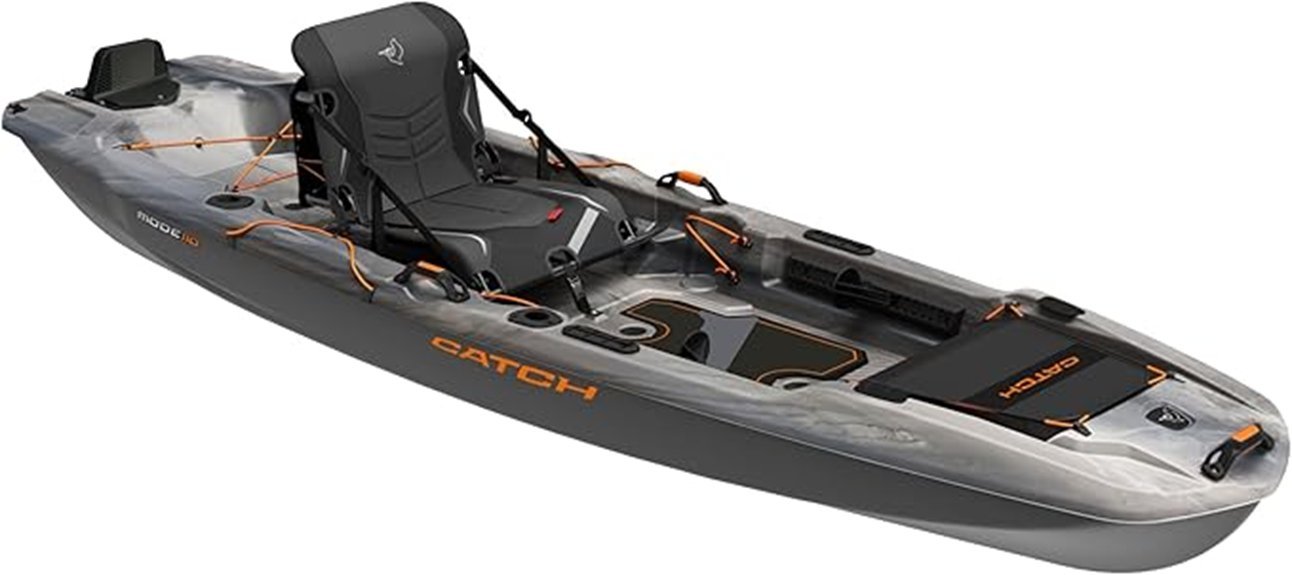
With its stable tunnel hull and standing-friendly deck, the Pelican Catch Mode 110 suits anglers who value balance over speed. At 10 feet 8 inches and 63 pounds, the RAM-X polyethylene kayak is manageable to transport and launch. Its wide, flat deck and carpeted anti-slip surface support confident casting, while the ERGOBOOST seat offers adjustable height, an EVA pad, and under-seat storage. Three flush-mount rod holders and bungee-secured cargo add utility. Additional hull flotation meets ABYC standards, and the 375-pound capacity and lifetime limited warranty strengthen its appeal for budget-minded anglers.
Best For: Anglers who want a highly stable fishing kayak with a standing-friendly platform, good storage, and easy-to-use features for casual to moderate fishing trips.
Pros:
- Tunnel hull and wide deck provide excellent stability for standing and casting.
- ERGOBOOST seat with adjustable height, EVA pad, and under-seat storage adds comfort.
- Three flush-mount rod holders, bungee storage, and strong 375 lb capacity improve fishing utility.
Cons:
- 63 lb weight can be cumbersome for solo transport and launching.
- 10 ft 8 in length may limit speed and tracking compared with longer kayaks.
- Best suited for stability-focused fishing, so it may feel less efficient for covering long distances.
Pelican Catch HDII Sit-On-Top Fishing Kayak with Pedal System
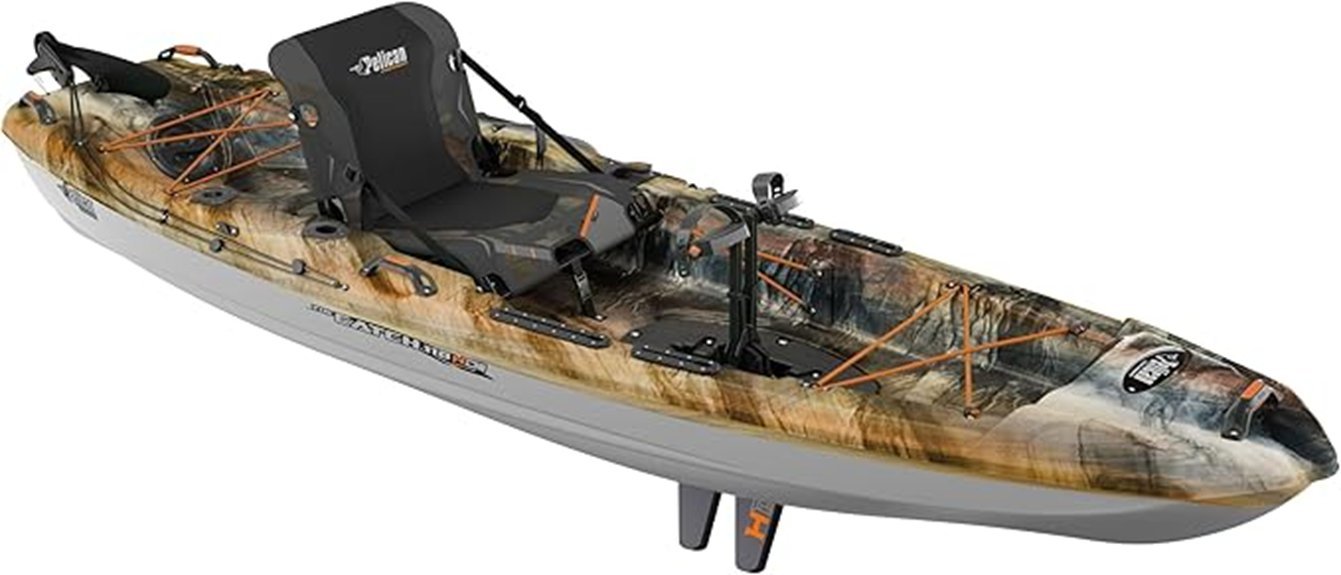
Pelican’s Catch HDII suits anglers who want pedal-powered control on a budget. Its HyDryve II pedal system helps the kayak move efficiently through shallow water and around vegetation, giving it practical reach in tight fishing spots. The Ergocast G2 seat adds comfort for longer outings. Four accessory rails allow customization for cameras, tools, or tackle. Three flush-mount rod holders keep gear organized and ready. A hand-controlled rudder improves steering and can act as a skeg for better tracking, making the HDII a versatile sit-on-top option for budget-minded anglers.
Best For: Budget-minded anglers who want a comfortable, pedal-powered sit-on-top kayak with useful fishing features and solid maneuverability in shallow water.
Pros:
- HyDryve II pedal system makes it easier to move through shallow areas and around vegetation.
- Ergocast G2 seat improves comfort for longer fishing trips.
- Four accessory rails and three rod holders support customization and gear organization.
Cons:
- Budget-focused design may lack some premium features found in higher-end fishing kayaks.
- Pedal systems can add complexity compared with simpler paddle kayaks.
- Rudder and pedal setup may require more maintenance and adjustment than basic models.
Brooklyn 8.0 Foldable Pedal Fishing Kayak by BKC
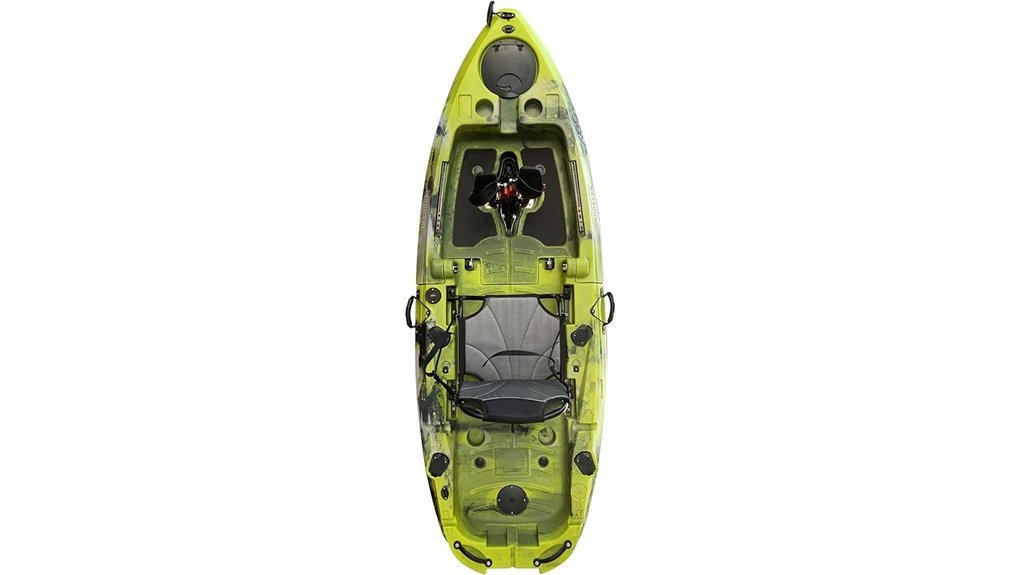
Brooklyn’s 8.0 Foldable Pedal Fishing Kayak suits anglers with limited storage and a tight budget. Its foldable frame fits into car trunks or closets, making it practical for apartment dwellers and small vehicles. The pedal drive with flipper fins delivers hands-free propulsion, while the hand-controlled rudder improves directional control. The 8-foot sit-on-top hull stays stable on lakes, rivers, and calm inshore water, supporting up to 380 pounds. Four rod holders, sealed and bungee storage, twin cup holders, and an aluminum-frame seat round out a ready-to-use fishing package.
Best For: Anglers who need a compact, budget-friendly fishing kayak that’s easy to store, transport, and use hands-free on calm waters.
Pros:
- Foldable design makes it easy to store in closets, trunks, or small spaces.
- Pedal drive and rudder provide efficient, hands-free propulsion and control.
- Good fishing setup with 4 rod holders, storage options, and a comfortable seat.
Cons:
- 8-foot length may limit speed and tracking compared with larger kayaks.
- Best suited for calm water, not rough conditions or serious offshore use.
- Folding design can be less rigid or performance-focused than a one-piece kayak.
Spatium Pedal Fishing Inflatable Kayak with Rotatable Seat
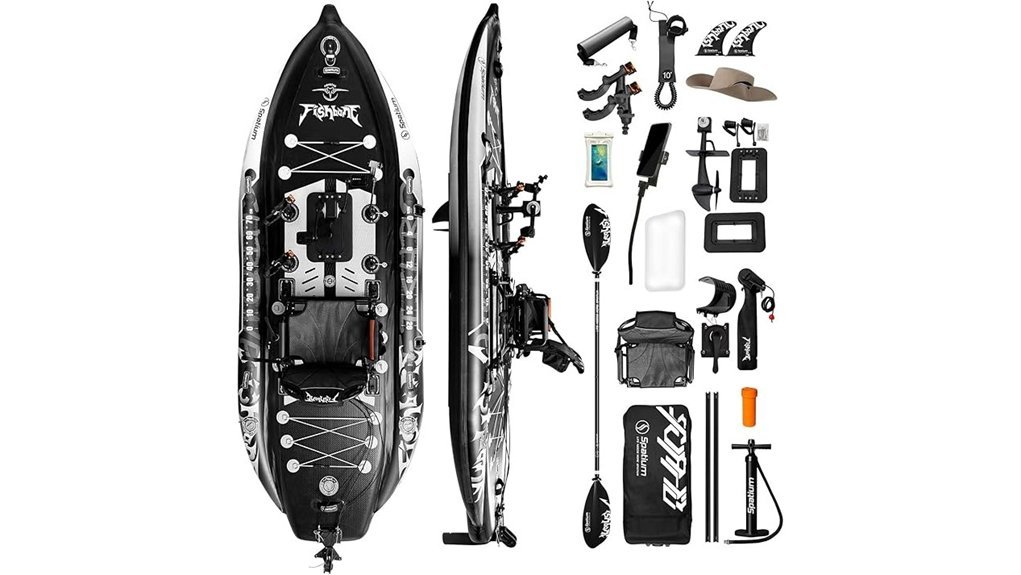
Spatium’s 360-degree rotatable seat makes this inflatable kayak a strong choice for anglers who fish for hours. The Fishbone model is a sit-on-top inflatable measuring 11 feet long and 48 inches wide, with an 84-pound frame and 330-pound capacity. Its double-layer PVC brushed construction aims at durability, while the pedal system, acrylic board, and optional motorized fin add versatility. Adjustable seating helps refine fishing angles. Built-in camera and light mounts, side measurement scales, and stabilizing fins support practical use. It includes a paddle, pump, backpack, and a one-year warranty.
Best For: Anglers who want a stable, feature-rich inflatable kayak for long fishing sessions, versatile propulsion options, and comfortable seated paddling.
Pros:
- 360° rotatable and adjustable seat improves comfort and fishing angles.
- Multiple fishing-friendly features, including camera mount, light mount, and measurement scales.
- Durable double-layer PVC construction with good stability features and included accessories.
Cons:
- At 84 lbs, it may be heavy and less convenient to transport than lighter kayaks.
- The 330 lb capacity may be limiting for larger users or extra gear.
- Motorized fin is optional, so full performance versatility may require extra purchases.
Brooklyn 12.0 Pro Single Pedal Kayak by BKC
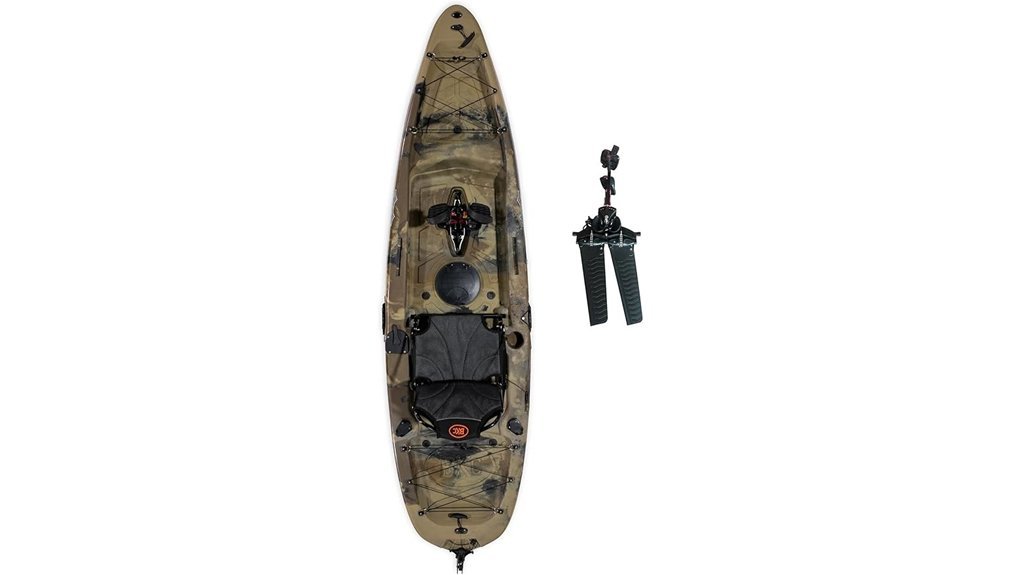
With a 440-pound capacity, this 12-foot pedal kayak suits larger anglers carrying extra gear. The Brooklyn 12.0 Pro Single Pedal Kayak by BKC uses a high-efficiency propeller pedal drive with bicycle-style pedals for hands-free movement, and the removable system also supports paddling or future motor upgrades. Its nearly 3-foot-wide HDPE hull improves balance, while the hand-operated rudder offers responsive steering. An ergonomic aluminum-frame seat supports long outings. Two flush-mounted rod holders, dual watertight hatches, rear bungee storage, scupper plugs, and front drainage add practical organization and easy cleanup.
Best For: Anglers who want a stable, hands-free pedal kayak with plenty of gear capacity for longer fishing trips and all-day comfort.
Pros:
- High-efficiency propeller pedal drive provides smooth, efficient hands-free propulsion.
- 440-pound capacity and nearly 3-foot-wide hull offer strong stability and room for extra gear.
- Ergonomic aluminum-frame seat, rod holders, and organized storage make it fishing-friendly.
Cons:
- At 75 pounds, it may be difficult to transport solo for some users.
- Single-seat design limits use to one person only.
- Pedal-drive and kayak setup may be more expensive and complex than a basic paddle kayak.
Brooklyn 13.5 Tandem Pedal Fishing Kayak by BKC
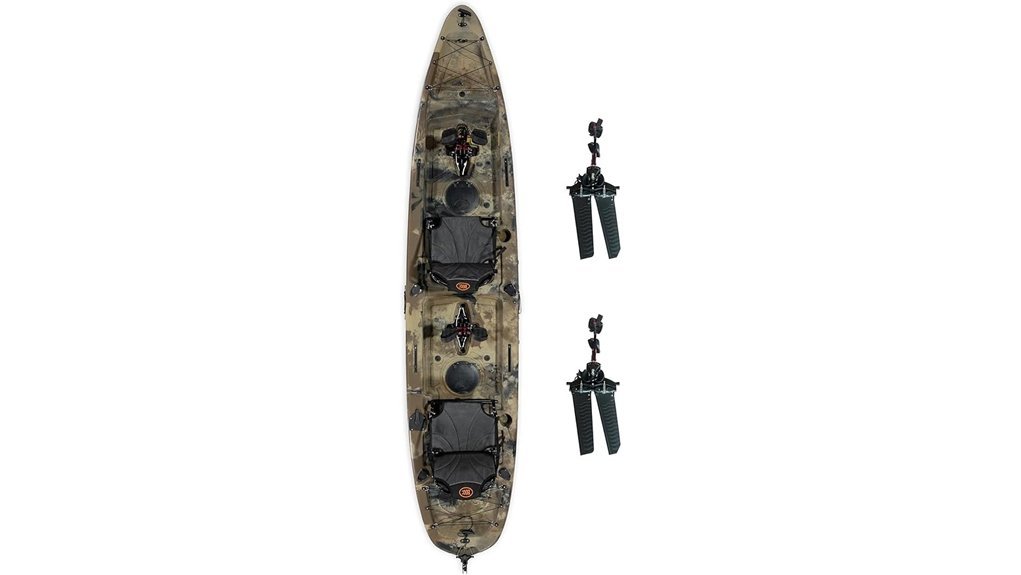
The BKC Brooklyn 13.5 Tandem Pedal Kayak suits anglers who want two-person fishing capability on a budget. At 13.5 feet and rated for 680 pounds, the sit-on-top hull provides a wide, stable platform with enough room for gear and standing use. Dual flipper pedals let both riders move hands-free, while the hand-operated rudder adds responsive control. Storage includes large bow and stern cargo areas, two watertight hatches, three flush-mounted rod holders, and accessory rails. Scupper holes aid drainage, and multiple carry handles ease transport. It also works well for exploring and relaxed outings.
Best For: Anglers or recreational paddlers seeking an affordable two-person pedal kayak with solid stability, hands-free propulsion, and ample fishing-friendly storage.
Pros:
- Dual flipper pedal drives let both riders propel the kayak hands-free.
- Wide, stable sit-on-top design supports fishing, gear, and even standing use.
- Good storage options with cargo areas, watertight hatches, rod holders, and accessory rails.
Cons:
- At 13.5 feet and tandem-capable, it may be bulky to transport and launch alone.
- Best performance depends on both riders coordinating pedal effort and steering.
- Budget-focused design may lack the refinement and premium features of higher-end fishing kayaks.
Factors to Consider When Choosing a Budget Pedal Fishing Kayak
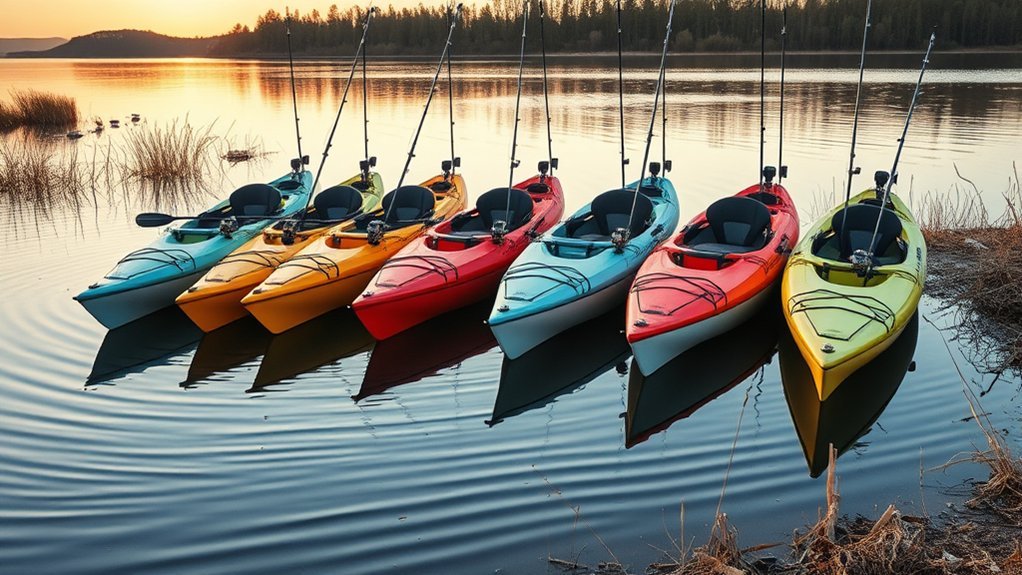
Choosing a budget pedal fishing kayak begins with the pedal drive type, since efficiency and maintenance can vary widely. Hull stability, weight capacity, and seat comfort also shape how safely and comfortably it performs on the water. Storage space matters as well, because organized gear access can make longer fishing trips more practical.
Pedal Drive Type
Pedal drive type plays a major role in how a budget fishing kayak performs on the water. Different systems affect speed, efficiency, and control in distinct ways. A high-efficiency propeller drive can support hands-free travel and reduce fatigue during longer outings, which benefits anglers covering distance. Dual propeller drives may suit tandem use, since both riders can contribute power for improved pace and efficiency. Steering response also matters, especially in narrow creeks or shallow areas where quick corrections are useful. Some drives include hand-controlled rudders that improve tracking and allow sharper turns across changing conditions. Because propulsion efficiency influences how easily a kayak moves and responds, the ideal pedal drive should match the user’s fishing routes, navigation needs, and comfort preferences.
Hull Stability
Stability is a top priority in a budget pedal fishing kayak because it affects balance, casting confidence, and overall control on the water. A stable hull helps an angler stand more securely while casting and reeling, even with gear aboard. Wider beams usually improve steadiness, reduce wobble, and support smoother tracking through chop. Many affordable models use a tunnel hull, which blends stability with maneuverability for tight turns and shallow routes. Scupper holes also matter because they drain incoming water, keeping the deck drier and the kayak’s handling more predictable. Hull shape should be judged by how firmly it holds position, how confidently it resists tipping, and how easily it moves through changing conditions.
Weight Capacity
After stability, the next factor that shapes real-world performance is weight capacity. This rating determines how much paddler weight, fishing gear, and optional passengers a pedal kayak can carry while still operating safely. Budget models commonly fall between about 330 and 680 pounds, giving buyers a wide range of choices for solo outings or heavier tackle loads. Staying within the listed limit matters because overloading can reduce maneuverability, raise the chance of capsizing, and strain the hull over time. A practical purchase should account for the combined weight of every person and all equipment expected on board. Higher-capacity kayaks often feature stronger construction, which can improve durability and confidence on rougher water.
Seat Comfort
Comfort often determines how long a day on the water stays enjoyable, making seat design a key factor in any budget pedal fishing kayak. An ergonomic seating system, especially one with an aluminum frame or adjustable height, can reduce fatigue during long fishing sessions. Padded surfaces such as EVA seat pads add cushioning and support, while breathable materials help limit heat and moisture buildup. Seat placement also matters; a well-positioned chair improves visibility and allows easier movement when casting, reeling, or changing stance. Forward and backward adjustment adds another layer of control, letting the angler fine-tune posture for both pedaling efficiency and relaxed sitting. In this category, comfort is not a luxury but a practical feature that directly affects performance.
Storage Space
Storage space is a major consideration when choosing a budget pedal fishing kayak, since capacity often ranges from about 330 to 680 pounds and directly affects how much tackle, safety gear, and catch can be carried. Buyers should compare load limits with expected gear weight to avoid overcrowding. The number of storage compartments also matters; watertight hatches and bungee tie-down areas improve organization and quick access to essentials. Wider and longer hulls usually provide more room, while compact models may trade storage for easier transport. Anti-slip decks and added flotation help keep anglers stable when reaching for stored items. Accessory rails and rod holders are useful additions because they expand mounting options without sacrificing internal storage.
Rudder Control
Rudder control can make a major difference in how well a budget pedal fishing kayak handles on the water. A precision rudder system improves maneuverability, making sharp turns and difficult routes easier to manage. Hand-operated rudders offer immediate course corrections, which helps maintain tracking and stability while pedaling. Some systems deploy as a skeg, adding straight-line performance that is especially useful in longer kayaks. Strong rudder performance also reduces fatigue, since less effort is needed to stay on course during long outings. For tandem models, a responsive rudder becomes even more important, helping both anglers coordinate movement while preserving directional control. In this category, dependable steering is not a luxury; it is a practical feature that directly supports efficiency, comfort, and fishing focus.
Portability Needs
Portability matters just as much as on-water performance when choosing a budget pedal fishing kayak. Weight is a primary concern, since lighter models, around 63 lb or less, are easier to lift, load, and unload without strain. Foldable designs can be especially useful because they reduce storage demands and suit apartments, garages, or small vehicles. Multiple carry handles also improve transport, allowing more secure movement between a vehicle and the launch site. Setup time deserves attention as well; quick assembly supports last-minute outings and reduces hassle before fishing. Dimensions should be checked carefully to confirm the kayak fits a trunk, roof system, or storage space. A portable kayak saves effort before and after each trip.
Fishing Features
Beyond easy transport, a budget pedal fishing kayak should be judged by how well it supports time on the water. Multiple flush-mounted rod holders help keep rods secure and within reach, reducing clutter during active fishing. A wide, flat deck platform improves confidence for standing, casting, and reeling, while also boosting visibility over the water. Comfort matters on long outings, so an adjustable, padded seat can reduce fatigue and maintain support. Storage should be practical, with bungee-secured areas and watertight hatches that organize tackle and protect gear from spray or unexpected splashes. Stability features deserve close attention as well; a tunnel hull design and anti-slip deck surfaces help maintain balance and safety in changing conditions, especially when movement is frequent.
Frequently Asked Questions
How Much Weight Can Budget Pedal Fishing Kayaks Safely Carry?
Budget pedal fishing kayaks typically safely carry about 250 to 400 pounds, though some models reach 450 pounds. The usable capacity includes the paddler, gear, tackle, and any accessories, so leaving a margin below the maximum rating is wise. Heavier loads can reduce stability, speed, and pedal efficiency. Manufacturers’ limits should be followed closely, since real-world performance often drops before the advertised maximum is reached.
Are Pedal Drive Systems Easy to Repair at Home?
Pedal drive systems are often manageable to repair at home, especially for minor issues such as loose cables, worn pins, bent fins, or debris in the drive unit. A mechanically inclined owner can usually handle basic maintenance with common tools and a parts kit. However, sealed gearboxes, cracked housings, or alignment problems may require dealer service. Regular rinsing, lubrication, and inspection usually reduce repair needs and extend reliability.
Can I Use These Kayaks in Saltwater?
Yes—these kayaks can be used in saltwater, provided they are rinsed thoroughly afterward. Saltwater accelerates corrosion, and studies show that untreated marine gear can deteriorate up to five times faster than freshwater equipment. A proper rinse, especially around the pedal drive, rudder, and fittings, helps extend service life. Regular lubrication and inspection of bolts, chains, and bearings also reduce long-term damage and keep performance reliable.
Do Budget Pedal Kayaks Work Well for Standing While Fishing?
Budget pedal kayaks usually work only moderately well for standing while fishing. Stability depends on hull width, deck design, and weight capacity, and cheaper models often feel less steady than premium options. A wide, flat platform helps, but rough water, wind, and shifting body weight can make standing risky. For frequent stand-up fishing, a test on calm water is advisable before relying on any budget pedal kayak.
How Long Do Budget Pedal Fishing Kayak Pedals Usually Last?
Generally, budget pedal fishing kayak pedals last about 2 to 5 years with regular use, though wear can arrive sooner if sand, salt, and hard pedaling are common. Like a wrench in a storm, neglected maintenance shortens their life quickly. Cheaper drive systems often need replacement parts sooner than premium models. Rinsing after trips, lubricating moving parts, and avoiding overload can stretch durability noticeably.