If you’re looking for the best cat food for sensitive skin and stomach concerns in 2026, focus on formulas specifically designed to support skin, coat, and digestive health rather than simply choosing any food labeled “premium” or “grain-free.” Strong options in this roundup include IAMS Proactive Health Sensitive Digestion & Skin, Purina Pro Plan Sensitive Skin & Stomach wet food, Purina ONE +Plus Sensitive Skin & Stomach, and Hill’s Science Diet Sensitive Stomach & Skin. The right choice depends on your cat’s preferred food form, ingredient history, digestive tolerance, and individual needs.
Affiliate disclosure: This article contains affiliate links. We may earn a commission from qualifying purchases at no additional cost to you.
Quick Verdict: For an everyday dry formula explicitly made for both digestive and skin support, IAMS Proactive Health Sensitive Digestion & Skin is a strong starting point. Purina Pro Plan Sensitive Skin & Stomach is a useful wet-food option, while Hill’s Science Diet provides both dry and wet choices designed around stomach and skin support.
Important: Persistent itching, sores, hair loss, vomiting, or diarrhea can have causes that ordinary sensitive-skin foods cannot diagnose or treat. If you suspect a true food allergy, ask your veterinarian about an appropriate elimination or hydrolyzed diet instead of repeatedly switching foods on your own.
| IAMS Proactive Health Sensitive Digestion & Skin Cat Food | 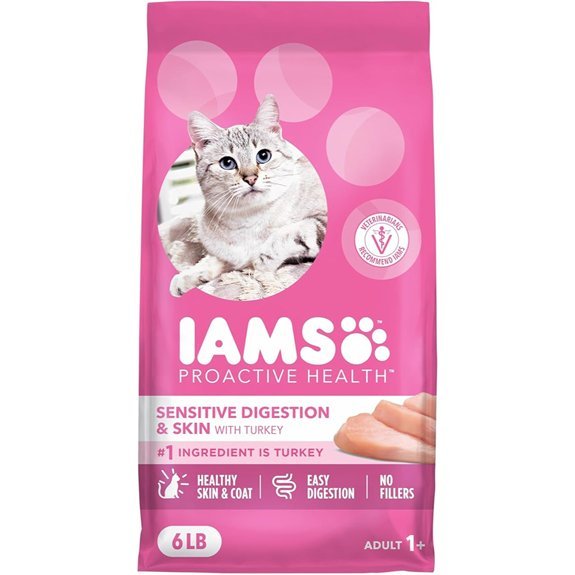 | Best Overall Balance | Primary Protein: Real turkey | Digestive Support: Prebiotics and beet pulp | Skin Support: Omega-6 and omega-3 fatty acids | CHECK AMAZON DETAILS | Read Our Analysis |
| Purina Pro Plan Sensitive Skin & Stomach Wet Cat Food Variety Pack | 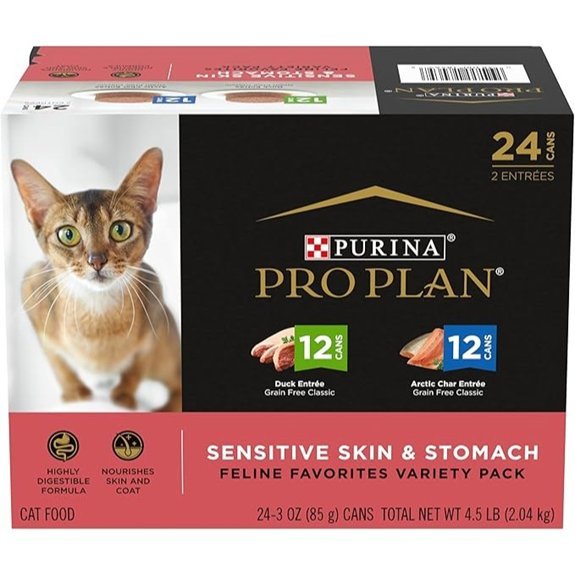 | Best Wet Variety | Primary Protein: Duck or Arctic char recipe | Digestive Support: Natural prebiotic fiber | Skin Support: Omega fatty acids | CHECK AMAZON DETAILS | Read Our Analysis |
| Purina ONE +Plus Sensitive Skin & Stomach Dry Cat Food (3.5 lb) | 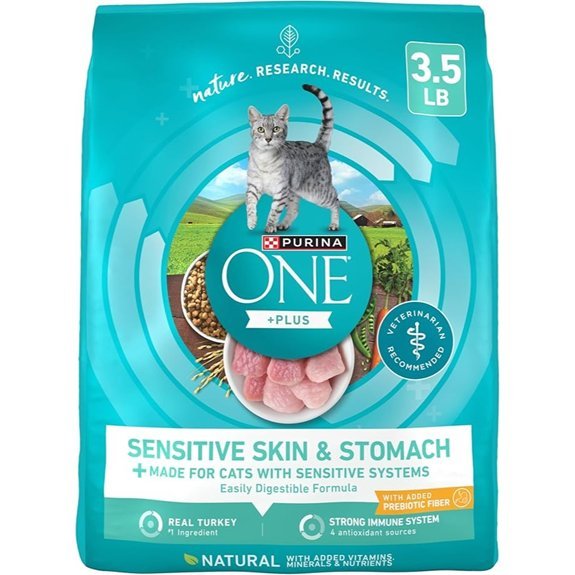 | Best Small-Bag Option | Primary Protein: Real turkey | Digestive Support: Added prebiotic fiber | Skin Support: Sensitive-systems formula | CHECK AMAZON DETAILS | Read Our Analysis |
| Purina Cat Chow Gentle Sensitive Stomach and Skin Dry Cat Food | 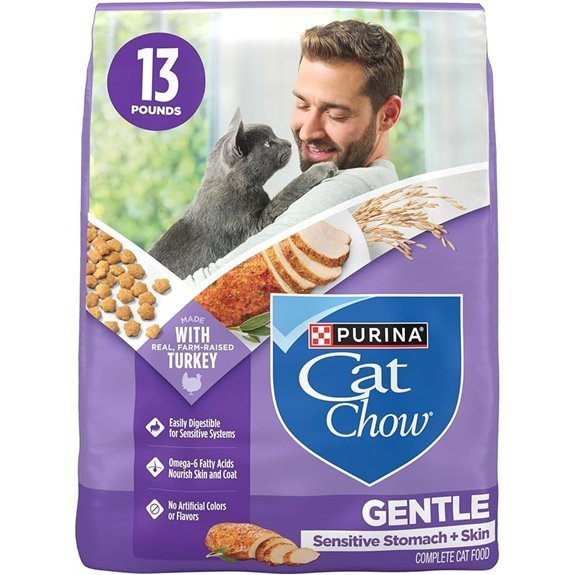 | Best Value Dry | Primary Protein: Real farm-raised turkey | Digestive Support: Sensitive-stomach formula | Skin Support: Omega-6 fatty acids | CHECK AMAZON DETAILS | Read Our Analysis |
| Hill’s Science Diet Sensitive Stomach & Skin Dry Cat Food | 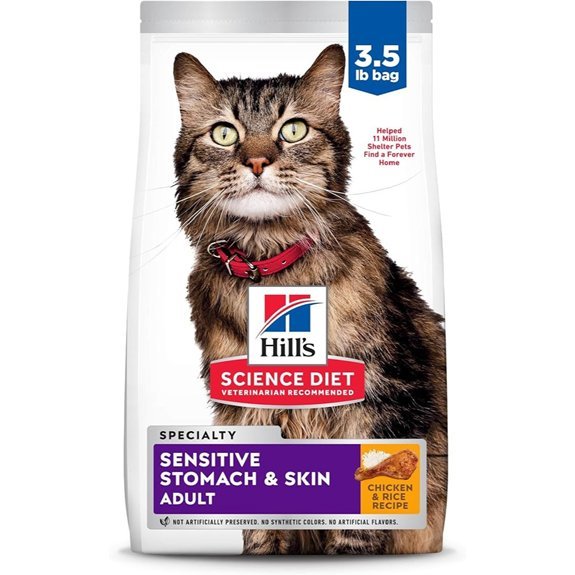 | Best Digestive & Skin Support | Primary Protein: Chicken | Digestive Support: Prebiotic fiber | Skin Support: Vitamin E and omega-6 fatty acids | CHECK AMAZON DETAILS | Read Our Analysis |
| Purina Pro Plan LiveClear Sensitive Skin & Stomach Cat Food | 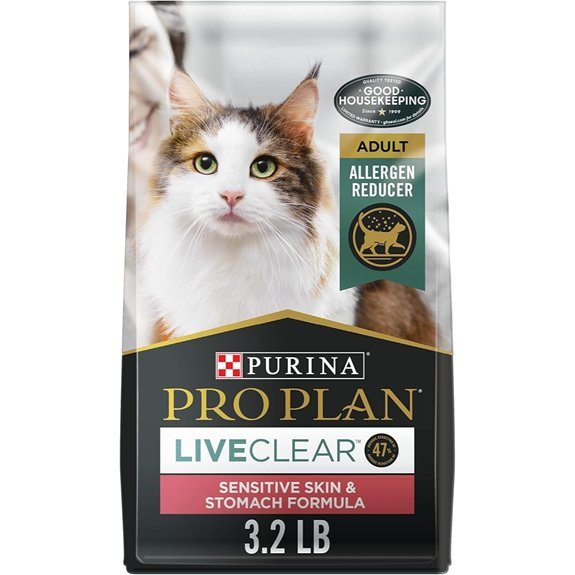 | Best for Human Cat-Allergen Concerns | Primary Protein: Turkey | Digestive Support: Natural prebiotic fiber | Extra Feature: Fel d 1 allergen reduction | CHECK AMAZON DETAILS | Read Our Analysis |
| IAMS Perfect Portions Sensitive Digestion & Skin Turkey Wet Cat Food | 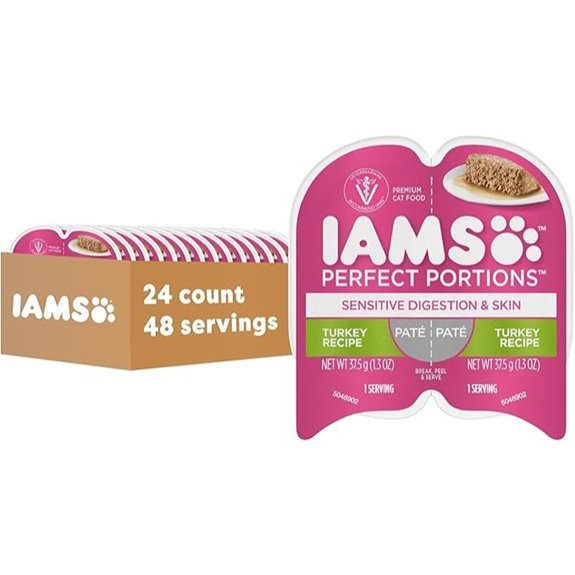 | Best Portion-Controlled Wet | Primary Protein: Turkey recipe | Digestive Support: Prebiotics and fiber blend | Skin Support: Omega-6 and omega-3 fatty acids | CHECK AMAZON DETAILS | Read Our Analysis |
| Hill’s Science Diet Sensitive Stomach & Skin Wet Cat Food | 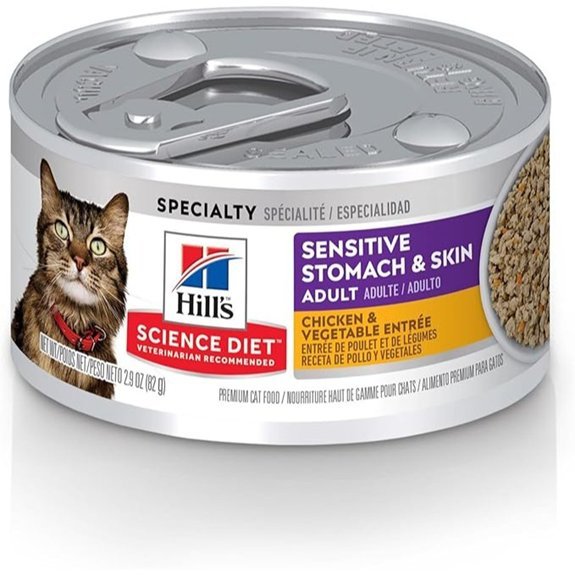 | Best Hill’s Wet Option | Primary Protein: Chicken-based recipe | Digestive Support: Prebiotic fiber | Skin Support: Omega fatty acids and vitamin E | CHECK AMAZON DETAILS | Read Our Analysis |
How we narrowed the list: We prioritized distinct formulas that are specifically positioned for sensitive skin, sensitive digestion, skin-and-coat nourishment, or a closely related need. Different bag sizes of the same formula are not counted as separate recommendations.
More Details on Our Top Picks
IAMS Proactive Health Sensitive Digestion & Skin Cat Food
IAMS Proactive Health Adult Sensitive Digestion & Skin is one of the most direct matches for this roundup because the formula addresses both digestive and skin support. Real turkey is the first ingredient, while a fiber blend containing prebiotics and beet pulp is designed to support digestion and nutrient absorption. The recipe also includes omega-6 and omega-3 fatty acids for skin and coat nourishment. It may suit adult cats whose owners want one dry formula that combines digestive support with a skin-focused nutrient profile. However, a sensitive-skin formula is not automatically a hypoallergenic diet, so cats with persistent itching or suspected food allergies should still be evaluated by a veterinarian.
- Primary Protein:Real turkey
- Digestive Support:Prebiotics and beet pulp
- Skin Support:Omega-6 and omega-3 fatty acids
- Food Form:Dry kibble
- Life Stage:Adult cats
- Formula Note:Formulated without soy or wheat
- Best For:Combined skin and digestion support
- Watch For:Not a veterinary elimination diet
- Buyer Tip:Transition gradually from the current food
Purina Pro Plan Sensitive Skin & Stomach Wet Cat Food Variety Pack
Purina Pro Plan Sensitive Skin & Stomach Wet Cat Food Variety Pack is worth considering when your cat prefers wet food but you still want a formula specifically positioned around digestive and skin support. The assortment includes duck and Arctic char recipes, giving cats more flavor variety than a single-recipe case. Natural prebiotic fiber supports digestive health, while omega fatty acids contribute to skin and coat nourishment. Wet food also adds moisture to the diet, which can be useful for cats that do not drink much on their own. The variety format is convenient, but it is not ideal for a strict food-allergy elimination trial because multiple recipes make ingredient exposure harder to control.
- Primary Protein:Duck or Arctic char recipe
- Digestive Support:Natural prebiotic fiber
- Skin Support:Omega fatty acids
- Food Form:Wet food
- Variety:Multiple recipes
- Best For:Cats that prefer wet-food variety
- Moisture Benefit:Adds dietary moisture
- Watch For:Multiple proteins may complicate allergy trials
- Buyer Tip:Check individual recipe ingredients before feeding
Purina ONE +Plus Sensitive Skin & Stomach Dry Cat Food (3.5 lb)
Purina ONE +Plus Sensitive Skin & Stomach is a dry adult-cat formula with real turkey as the first ingredient and added prebiotic fiber for digestive support. The 3.5 lb listing can be a practical choice for someone who wants a smaller bag before committing to one of the larger available sizes. Its main advantage in this roundup is convenience: you get a widely available dry-food format specifically made for cats with sensitive systems without needing to purchase a large bag immediately. Still, diet changes should be gradual, and tolerating a small bag does not prove that a cat is free of food allergies. Persistent skin problems warrant veterinary assessment.
- Primary Protein:Real turkey
- Digestive Support:Added prebiotic fiber
- Skin Focus:Sensitive skin and stomach formula
- Food Form:Dry kibble
- Bag Size:3.5 lb listing
- Best For:Trying a smaller bag before buying more
- Additional Support:Antioxidant sources
- Watch For:Not designed as a diagnostic allergy diet
- Buyer Tip:Monitor stool, appetite, and skin during transition
Purina Cat Chow Gentle Sensitive Stomach and Skin Dry Cat Food
Purina Cat Chow Gentle Sensitive Stomach and Skin provides a straightforward dry-food option for adults needing digestive and skin support. Its recipe uses real farm-raised turkey and includes omega-6 fatty acids to help nourish skin and coat. The formula is also positioned specifically for sensitive stomachs rather than being a general adult kibble placed into a sensitive-skin roundup. It can make sense for shoppers who want a simpler everyday dry option, but buyers should still inspect the full ingredient panel if their cat has reacted to particular proteins before. “Gentle” does not mean hypoallergenic, and a cat with recurring itch, lesions, or gastrointestinal problems may need a veterinarian-directed diet trial.
- Primary Protein:Real farm-raised turkey
- Digestive Focus:Sensitive-stomach formula
- Skin Support:Omega-6 fatty acids
- Food Form:Dry kibble
- Nutrient Profile:Includes essential vitamins and minerals
- Best For:Everyday sensitive-stomach and skin support
- Buyer Appeal:Straightforward dry-food format
- Watch For:Check prior protein sensitivities
- Buyer Tip:Introduce gradually rather than switching abruptly
Hill’s Science Diet Sensitive Stomach & Skin Dry Cat Food
Hill’s Science Diet Sensitive Stomach & Skin Chicken & Rice dry cat food is formulated specifically for adult cats that need digestive and skin support. It uses prebiotic fiber and highly digestible ingredients, while vitamin E and omega-6 fatty acids help nourish skin and fur. This makes it one of the clearest direct matches for shoppers searching for a food that addresses both stomach sensitivity and coat condition. The chicken-based recipe will not suit every cat, especially one with a confirmed or suspected reaction to chicken. If food allergy is a serious concern, ingredient history matters more than brand reputation, and your veterinarian may recommend a controlled novel-protein or hydrolyzed diet instead.
- Primary Protein:Chicken-based recipe
- Digestive Support:Prebiotic fiber
- Skin Support:Vitamin E and omega-6 fatty acids
- Food Form:Dry kibble
- Life Stage:Adult cats
- Best For:Combined stomach, skin, and coat support
- Key Advantage:Purpose-built sensitive-stomach and skin formula
- Watch For:Contains chicken
- Buyer Tip:Review prior food reactions before choosing
Purina Pro Plan LiveClear Sensitive Skin & Stomach Cat Food
Purina Pro Plan LiveClear Sensitive Skin & Stomach combines a turkey-and-oatmeal sensitive-systems formula with Purina’s LiveClear technology. The food includes natural prebiotic fiber for digestive support and nutrients intended to support skin and coat. Its unusual extra feature is reducing active Fel d 1 associated with cat hair and dander, which is aimed at households concerned about human exposure to cat allergens. That distinction matters: LiveClear’s allergen-reduction feature is not the same as diagnosing or treating a cat’s food allergy. Choose this product for its combination of feline skin/digestive support and household-allergen feature, not as a substitute for a veterinary elimination diet.
- Primary Protein:Turkey
- Digestive Support:Natural prebiotic fiber
- Skin Focus:Sensitive skin and stomach formula
- Food Form:Dry kibble
- Extra Feature:Targets active Fel d 1 in hair and dander
- Best For:Homes with human cat-allergen concerns
- Important Distinction:Not a feline food-allergy treatment
- Watch For:Review full ingredient history for the cat
- Buyer Tip:Choose it for the dual-purpose feature set
IAMS Perfect Portions Sensitive Digestion & Skin Turkey Wet Cat Food
IAMS Perfect Portions Sensitive Digestion & Skin Turkey Recipe offers a wet-food alternative for adult cats that need digestive and skin support. Its fiber blend includes prebiotics and beet pulp, while omega-6 and omega-3 fatty acids support skin and coat nourishment. The twin-tray format is especially convenient because each package can be opened as individual portions instead of leaving a larger can in the refrigerator. It may suit cats that prefer pâté-style wet meals or owners who value easy portioning. The grain-free formulation can be useful when it fits a particular cat’s diet, but grain-free status by itself should not be treated as evidence that the food is hypoallergenic.
- Primary Protein:Turkey recipe
- Digestive Support:Prebiotics and beet pulp
- Skin Support:Omega-6 and omega-3 fatty acids
- Food Form:Wet pâté
- Packaging:Individual twin-pack portions
- Recipe Note:Grain-free formulation
- Best For:Convenient portion-controlled wet feeding
- Watch For:Grain-free does not mean hypoallergenic
- Buyer Tip:Check daily feeding amounts on the package
Hill’s Science Diet Sensitive Stomach & Skin Wet Cat Food
Hill’s Science Diet Sensitive Stomach & Skin wet cat food provides a moisture-rich alternative to the brand’s dry sensitive formula. The chicken-and-vegetable recipe is designed around digestibility and includes prebiotic fiber for digestive support plus omega fatty acids and vitamin E for skin and coat nourishment. It can be attractive for adult cats that prefer wet textures or benefit from getting more moisture from meals. As with the dry Hill’s option, however, the presence of chicken matters if your veterinarian suspects a food reaction to that protein. This food is designed for sensitive stomach and skin support, but it should not be confused with a veterinary hydrolyzed or controlled elimination diet.
- Primary Protein:Chicken-based recipe
- Digestive Support:Prebiotic fiber
- Skin Support:Omega fatty acids and vitamin E
- Food Form:Wet food
- Moisture Benefit:Adds water through meals
- Best For:Cats preferring wet sensitive-stomach food
- Key Advantage:Purpose-built stomach and skin support
- Watch For:Contains chicken
- Buyer Tip:Follow package feeding and transition guidance
Before You Buy
- Check whether the formula is intended for both skin and digestive support rather than relying on vague “natural” marketing.
- Compare the protein sources with foods your cat has eaten before, especially if food allergy is suspected.
- Do not assume that grain-free automatically means allergy-friendly.
- Transition to a new food gradually unless your veterinarian gives different instructions.
- Seek veterinary advice for persistent itching, open sores, hair loss, recurrent ear problems, vomiting, diarrhea, or weight loss.
Factors to Consider When Choosing Cat Food for Sensitive Skin

When choosing cat food for sensitive skin, look beyond the front-of-bag claim. A useful formula should provide complete nutrition for the appropriate life stage while giving you clear information about its protein sources, digestive support, and skin-and-coat nutrients. Your cat’s previous diet and symptoms are also important because “sensitive skin” can describe many different problems.
Protein Sources and Ingredient History
Start by examining the protein sources rather than assuming that one ingredient is universally best. Turkey, chicken, fish, beef, and other proteins can all provide valuable nutrition, but individual cats can react differently. If your cat has previously eaten the same protein for years and a veterinarian suspects food allergy, simply moving to another food built around that same protein may not answer the question. For routine sensitive-skin support, choose a complete adult formula that clearly identifies its main proteins and provides nutrients intended to nourish the skin and coat.
Digestive Health Considerations
Skin and digestive concerns sometimes appear together, which is why many sensitive formulas include prebiotic fiber or other highly digestible ingredients. These components can support digestive health and nutrient absorption, but they are not a cure for unexplained vomiting, diarrhea, or chronic skin disease. If you change foods, transition gradually so your cat has time to adapt. A sudden switch can itself cause gastrointestinal upset and make it harder to determine whether the new formula is a good fit.
Omega Fatty Acids and Skin Support
Omega-6 and omega-3 fatty acids are commonly included in skin-and-coat formulas. They contribute to normal skin barrier function and coat condition, and some recipes pair them with vitamin E or other nutrients. When comparing products, consider the complete nutrient profile rather than choosing a food only because the package mentions fish oil or omegas. Supplements should not automatically be added on top of a complete diet without veterinary guidance because your cat may already be receiving appropriate amounts from its food.
Sensitive-Skin Food vs. Food-Allergy Diets
It is important to distinguish ordinary sensitive-skin cat food from diets used to investigate a true food allergy. A sensitive-systems formula may support digestion, skin, and coat, but it can still contain proteins your cat has eaten before. Veterinarians investigating food allergy may instead use a carefully controlled novel-protein or hydrolyzed diet followed by a food challenge. Similarly, a food such as Purina Pro Plan LiveClear can reduce active Fel d 1 associated with cat hair and dander for human allergen exposure while also supporting feline skin and digestion, but that household-allergen benefit is not the same as treating the cat’s own food allergy.
Nutritional Balance and Completeness
Whatever formula you choose, it should be appropriate for your cat’s life stage and provide complete, balanced nutrition when used as the primary diet. Protein, essential fatty acids, vitamins, minerals, and adequate calories all matter. Do not let a single marketing claim such as grain-free, high protein, or natural override the bigger nutritional picture. Wet food may offer useful dietary moisture, while dry food can be more convenient to store and portion, so the best format also depends on your cat’s eating habits and your routine.
When Veterinary Guidance Matters
A veterinarian should be involved when skin problems are persistent, severe, or recurrent. Excessive scratching, sores, hair loss, ear problems, vomiting, diarrhea, or weight changes can require investigation beyond switching brands. Fleas, environmental allergies, infections, parasites, and food reactions can produce overlapping symptoms. If food allergy is suspected, veterinary guidance also makes it easier to conduct a controlled diet trial without accidentally introducing other proteins through treats, flavored medications, or other foods.
Frequently Asked Questions
How Can I Tell if My Cat Has Sensitive Skin?
Watch for persistent itching, overgrooming, redness, scabs, hair loss, or recurring skin irritation. These signs do not identify the cause by themselves, so a veterinarian should assess ongoing or severe symptoms rather than assuming food is responsible.
Are Grain-Free Diets Better for Cats With Sensitive Skin?
Not automatically. Grain-free describes what the food leaves out, but it does not prove that the recipe is hypoallergenic or better for your individual cat. Food reactions in cats are often associated with particular proteins, so ingredient history and veterinary guidance matter more than a grain-free label alone.
Can I Mix Different Brands of Sensitive Skin Cat Food?
You can combine complete foods in some situations, but mixing several formulas makes it harder to identify which ingredients your cat tolerates well. If you are investigating a suspected food allergy or conducting a veterinarian-directed diet trial, do not mix foods unless your veterinarian specifically tells you to.
What Are Common Food Allergens for Cats?
Beef, fish, and chicken are among the commonly reported food allergens in cats, although an individual cat can potentially react to other dietary ingredients. A reaction cannot be confirmed reliably simply by guessing from the ingredient list.
How Often Should I Change My Cat’s Food for Sensitive Skin?
There is no benefit to changing foods on a fixed schedule if your cat is doing well. Frequent rotation can make reactions harder to track. If you do need to switch, transition gradually unless your veterinarian provides a specific feeding protocol.
Is Sensitive-Skin Cat Food the Same as Hypoallergenic Cat Food?
No. A sensitive-skin formula may contain omega fatty acids, prebiotic fiber, or easily digestible ingredients, but it can still include common proteins. Veterinary hydrolyzed or carefully selected elimination diets serve a different purpose when food allergy is being investigated.
When Should I See a Vet About My Cat’s Skin?
Arrange veterinary care if itching persists, your cat develops sores or significant hair loss, symptoms keep returning, or skin problems occur with vomiting, diarrhea, appetite changes, or weight loss. Earlier evaluation can help distinguish dietary problems from other causes of feline skin disease.
Conclusion
The best cat food for sensitive skin and stomach concerns depends on what your cat actually needs. IAMS Proactive Health Sensitive Digestion & Skin offers a balanced dry option, Purina Pro Plan gives wet-food and specialized LiveClear choices, Purina ONE and Cat Chow provide practical dry alternatives, and Hill’s Science Diet offers purpose-built dry and wet Sensitive Stomach & Skin formulas. Compare the protein source, food form, digestive support, skin-and-coat nutrients, and your cat’s previous diet before choosing. Most importantly, do not rely on repeated food changes to manage persistent itching or skin disease. When symptoms continue, veterinary guidance is the safest way to determine whether food, fleas, environmental allergies, infection, or another issue is responsible.