If your adult cat needs to lose excess weight in 2026, the most useful foods are formulas designed specifically for weight control, calorie reduction, and lean-mass support. Natural Balance Fat Cats is a dedicated low-calorie option, Hill’s Science Diet Perfect Weight has manufacturer-reported weight-management study results, Purina Pro Plan Weight Management emphasizes high protein, and IAMS Indoor Weight & Hairball Care combines weight control with hairball support. The food itself is only part of the plan: measured portions, regular weigh-ins, activity, and veterinary guidance are essential for safe progress.
Affiliate disclosure: As an Amazon Associate I earn from qualifying purchases.
Quick Verdict: For a dedicated low-calorie dry formula, start with Natural Balance Fat Cats. Hill’s Science Diet Perfect Weight stands out for its manufacturer-reported weight-management study, while Purina Pro Plan is a strong choice when maintaining lean muscle is a priority. IAMS is especially useful for indoor cats that need both weight and hairball support.
Safety Note: Do not crash-diet a cat or sharply cut food without veterinary guidance. Feline weight loss should be gradual, with body weight and body condition monitored so calories can be adjusted safely.
| Natural Balance Fat Cats Low-Calorie Dry Cat Food | 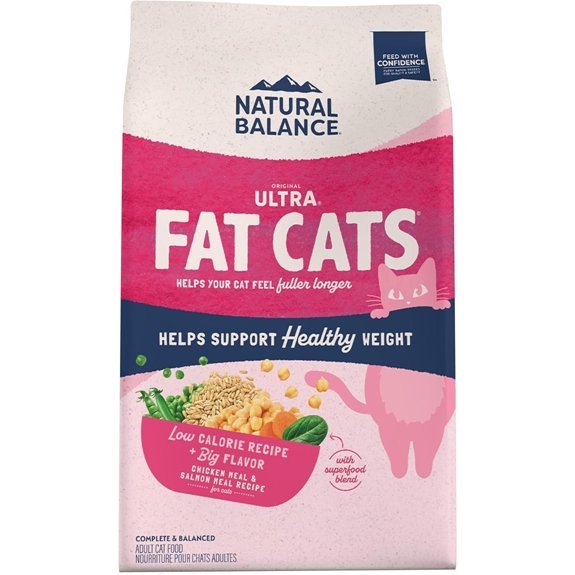 |
Best Low-Calorie Formula | Protein Source: Chicken meal & salmon meal | Bag Size: 15 lb | Nutritional Focus: Weight loss and satiety | CHECK PRICE ON AMAZON | Read Our Analysis |
| Hill’s Science Diet Perfect Weight Dry Cat Food | 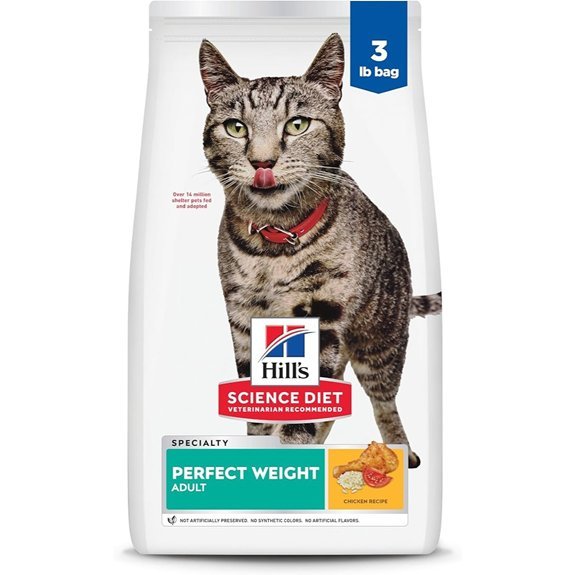 |
Best Clinically Studied Option | Recipe: Chicken | Amazon Listing Size: 3 lb | Nutritional Focus: Weight loss and maintenance | CHECK PRICE ON AMAZON | Read Our Analysis |
| Purina Pro Plan Weight Management Cat Food | 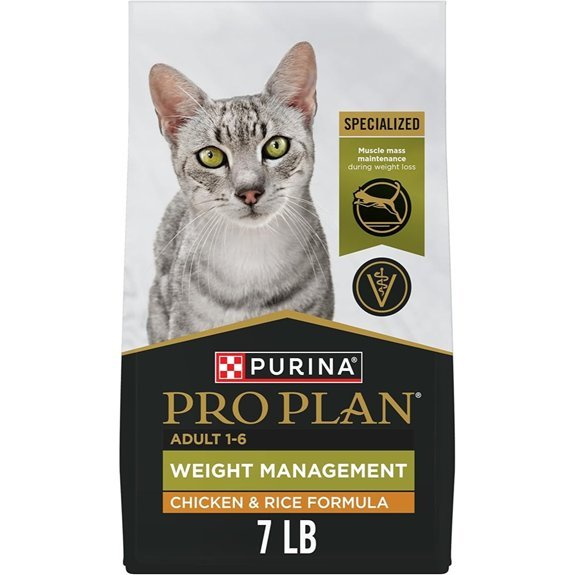 |
Best High-Protein Weight Formula | Primary Ingredient: Real chicken | Bag Size: 7 lb | Nutritional Focus: Lean-mass support | CHECK PRICE ON AMAZON | Read Our Analysis |
| IAMS Proactive Health Indoor Cat Food (7 lb) | 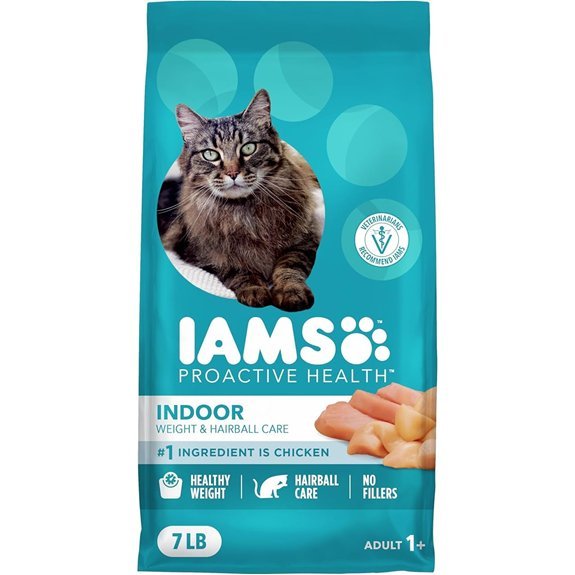 |
Best for Indoor Cats & Hairballs | Primary Ingredient: Chicken | Bag Size: 7 lb | Nutritional Focus: Weight & hairball care | CHECK PRICE ON AMAZON | Read Our Analysis |
More Details on Our Top Picks
-
Natural Balance Fat Cats Low-Calorie Dry Cat Food
If your veterinarian wants your overweight adult cat on a calorie-controlled dry food, Natural Balance Fat Cats is one of the most directly targeted options in this roundup. The current recipe combines chicken meal and salmon meal with 35% minimum crude protein, a special fiber blend, and L-carnitine. At approximately 320 kcal per cup, it is formulated specifically to provide complete adult nutrition while reducing calorie density.
Why you’ll like it: It tackles the two main challenges of feline dieting at once: controlling calories while using protein and fiber to help support muscle condition and fullness.
Who should buy this: Owners of overweight adult cats who want a dedicated low-calorie dry formula and are prepared to measure daily portions.
Who should avoid it: Kittens, pregnant or nursing cats, or cats whose veterinarian has prescribed a therapeutic diet for another medical condition should use a diet appropriate to those needs instead.
- Protein Sources:Chicken meal and salmon meal
- Bag Size:15 lb
- Nutritional Focus:Weight loss and healthy weight maintenance
- Crude Protein:35% minimum
- Crude Fiber:9% maximum
- Calorie Density:About 320 kcal per cup
- Weight Support:L-carnitine
- Satiety Support:Special fiber blend
- Life Stage:Adult cats
-
Hill’s Science Diet Perfect Weight Dry Cat Food
Hill’s Science Diet Perfect Weight Chicken Recipe is specifically formulated for adult-cat weight loss and long-term weight management. Hill’s reports that more than 70% of cats in a USA feeding study lost weight within 10 weeks when fed its Perfect Weight nutrition. That figure should be viewed as a study result, not a promise that every cat will lose the same amount or at the same speed.
Why you’ll like it: Hill’s provides separate feeding guidance for weight loss and weight maintenance, making it easier to build a measured feeding plan instead of estimating portions.
Who should buy this: Owners who prefer a purpose-formulated adult weight-management food with manufacturer feeding guidance and documented weight-management research.
Who should avoid it: It is not intended as kitten food or for pregnant or nursing cats. Cats with kidney disease, diabetes, gastrointestinal disease, or other significant medical conditions should have their diet selected with veterinary guidance.
- Recipe:Chicken
- Amazon Listing Size:3 lb
- Nutritional Focus:Weight loss and maintenance
- Target Audience:Adult cats
- Study Claim:Manufacturer reports weight-loss results within 10 weeks for more than 70% of cats in a USA study
- Feeding Approach:Separate weight-loss and maintenance guidance
- Muscle Support:Designed to support lean muscle
- Transition:Gradual food transition recommended
- Best For:Structured weight-management plans
-
Purina Pro Plan Weight Management Cat Food
Purina Pro Plan Weight Management Chicken & Rice Formula is built around 43% protein to help maintain muscle mass while an adult cat loses weight. Real chicken is the first ingredient, and Purina states that this formula contains 20% less fat than its Pro Plan Complete Essentials Adult Chicken & Rice formula.
It also contains natural prebiotic fiber for digestive support. The higher-protein approach makes this particularly appealing when maintaining lean tissue is an important part of the weight-management plan.
Who should buy this: Owners of overweight or less-active adult cats who want a dedicated weight-control formula with a strong emphasis on protein and muscle maintenance.
Who should avoid it: Kittens and cats with medical conditions requiring a specialized nutrient profile should be fed according to veterinary guidance.
- Primary Ingredient:Real chicken
- Bag Size:7 lb
- Nutritional Focus:Weight management
- Protein:43%
- Fat Comparison:20% less fat than Purina Pro Plan Complete Essentials Adult Chicken & Rice
- Digestive Support:Natural prebiotic fiber
- Target Audience:Less-active or overweight adult cats
- Main Benefit:Helps maintain muscle mass during weight loss
- Life Stage:Adult cats
-
IAMS Proactive Health Indoor Cat Food (7 lb)
IAMS Proactive Health Adult Indoor Weight & Hairball Care with Chicken & Turkey is designed for indoor adult cats that need help with weight control and hairballs. Real chicken is the first ingredient, while L-carnitine is included to support fat metabolism and healthy weight management.
The proprietary fiber blend, including beet pulp, gives this formula an additional advantage for cats that frequently deal with hairballs. That combination makes it more targeted than a standard indoor maintenance food when both body weight and hairball control matter.
Who should buy this: Indoor adult cats that are overweight or prone to gaining weight and also need regular hairball support.
Who should avoid it: Cats requiring a veterinary therapeutic diet or a different life-stage formula should use the diet recommended for their specific needs.
- Primary Ingredient:Real chicken
- Bag Size:7 lb
- Nutritional Focus:Weight and hairball care
- Weight Support:L-carnitine
- Hairball Support:Proprietary fiber blend with beet pulp
- Target Audience:Adult indoor cats
- Digestive Support:Tailored fiber blend
- Main Benefit:Combines healthy-weight and hairball support
- Life Stage:Adult cats
Factors to Consider When Choosing Cat Food for Weight Loss
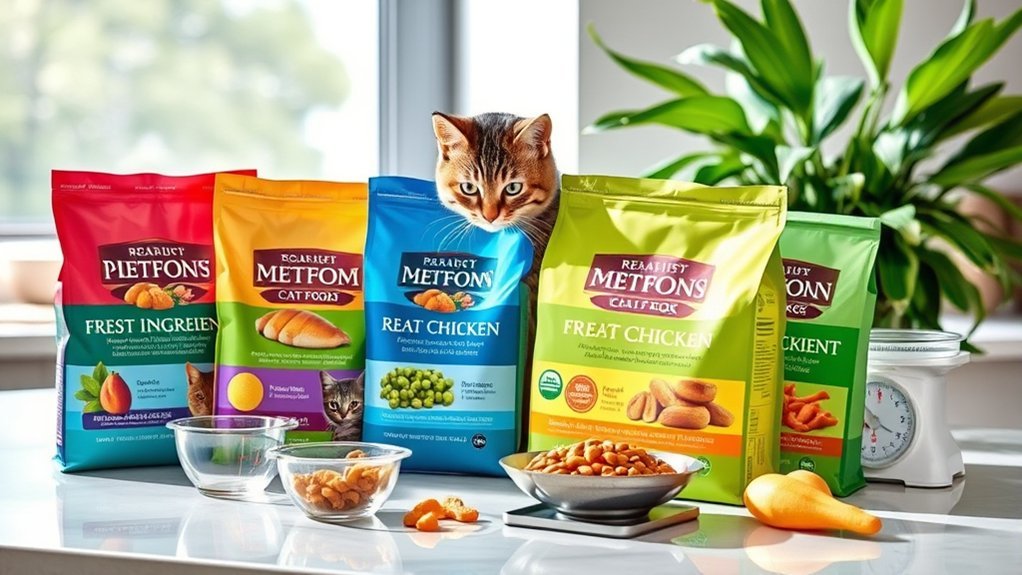
The best cat food for weight loss is not simply the bag with the biggest “healthy weight” label. You need to consider calorie density, complete nutrition, protein, fiber, portion size, your cat’s life stage, body condition, activity level, and medical history. A veterinarian can help determine an appropriate goal weight and daily calorie target before you substantially restrict food.
Calorie Density and Complete Nutrition Matter
Weight loss requires your cat to consume fewer calories than they use, but reducing calories too aggressively can create serious problems. A food formulated specifically for weight management can make portion control easier while still supplying the vitamins, minerals, amino acids, and other nutrients an adult cat requires.
Compare calories per cup or serving where the manufacturer provides them, and measure food rather than relying on a continuously filled bowl. The feeding chart on the package is a starting point, not a personalized prescription. Your cat’s progress should determine whether the daily amount needs adjustment.
Look Beyond the Ingredient List
A recognizable first ingredient can be useful information, but ingredient order alone does not tell you whether a food is appropriate for weight loss. Focus on the whole nutritional profile: calories, protein, fiber, nutritional adequacy, life stage, and whether the formula was specifically developed for weight control.
Also consider your cat’s individual health needs. Food that works well for an otherwise healthy overweight adult cat may not be appropriate for a cat with kidney disease, diabetes, urinary problems, food sensitivities, or gastrointestinal disease.
Fiber Can Help With Fullness
Fiber is commonly used in weight-management foods because it can reduce calorie density and help some cats feel satisfied after meals. Different formulas use different fiber sources and amounts, so more fiber is not automatically better.
The practical goal is a diet your cat will consistently eat in the measured amount required for safe weight reduction. If a new high-fiber diet causes digestive problems or your cat refuses to eat it, contact your veterinarian rather than simply continuing to cut the portion.
Protein Helps Protect Lean Mass
Adequate protein is important when calories are reduced because the goal is to lose excess body fat while preserving as much lean tissue as possible. However, there is no single label percentage that is automatically correct for every cat.
Compare protein together with calorie density, feeding amount, age, health status, and the rest of the formulation. A purpose-built weight-management food with somewhat lower label protein can still be a more appropriate choice than a higher-calorie food with a larger protein percentage.
Consider Your Cat’s Health and Life Stage
Weight-loss plans should be individualized. Kittens, pregnant or nursing cats, seniors with muscle loss, and cats with chronic medical conditions can have very different nutritional requirements from an otherwise healthy overweight adult cat.
Before making a major calorie reduction, ask your veterinarian to assess your cat’s body condition score, muscle condition, current diet, ideal weight, and medical history. This is especially important if weight gain appeared suddenly or your cat has symptoms such as increased thirst, mobility problems, vomiting, diarrhea, or appetite changes.
Measure Portions and Monitor Progress
Even an excellent weight-management food can cause weight gain if too much is fed. Measure the entire daily allowance, account for treats and food used with medications, and divide that allowance into meals if that works for your cat.
Weigh your cat regularly using the same scale when possible. Safe feline weight reduction is usually gradual, so the plan may need adjustment if weight is dropping too rapidly, not changing, or if your cat stops eating normally.
Before You Buy:
- Confirm the food is appropriate for your cat’s life stage.
- Check calories per cup or serving, not just marketing terms such as “light” or “indoor.”
- Compare protein and fiber in the context of the whole formula.
- Plan how you will measure daily portions and treats.
- Transition foods gradually unless your veterinarian instructs otherwise.
- Have a target weight and monitoring plan before making aggressive calorie cuts.
Frequently Asked Questions
How Can I Tell if My Cat Is Overweight?
Body condition is more useful than body weight alone because ideal weight varies by frame and breed. In a cat near ideal condition, you should generally be able to feel the ribs without pressing through a thick fat layer and see some waist behind the ribs when viewing the body from above. A veterinarian can assign a body condition score and help establish a realistic target weight.
Should I Consult a Vet Before Changing My Cat’s Diet?
Yes, especially if your cat is significantly overweight, has a chronic medical condition, is taking medication, is a senior, or needs a substantial calorie reduction. Your veterinarian can rule out medical concerns, estimate an appropriate target weight, and create a safer feeding plan.
Can Weight Loss Cat Food Be Fed to Kittens?
Usually not. Growing kittens have different calorie and nutrient requirements from adult cats. Feed a complete diet intended for growth unless your veterinarian gives a different recommendation for a specific medical reason.
How Long Does It Take to See Weight Loss Results?
There is no reliable fixed number of weeks for every cat. Safe feline weight loss is gradual, and veterinary guidance commonly targets roughly 0.5% to 2% of body weight per week depending on the cat. Regular weigh-ins are more useful than expecting a dramatic change by a particular date.
How Much Should I Feed My Overweight Cat?
Do not choose the portion solely from your cat’s current body weight or simply cut the current amount in half. The appropriate daily calories depend on ideal weight, body condition, activity, current intake, and medical status. Use the manufacturer’s weight-loss feeding guidance as a starting reference and have your veterinarian personalize it when significant weight reduction is needed.
Should I Free-Feed a Cat That Needs to Lose Weight?
Measured feeding usually makes calorie control easier because you know exactly how much food is available each day. If your cat prefers several small meals, divide the measured daily allowance into multiple servings or use a timed feeder instead of continuously topping up the bowl.
Are Homemade Diets Effective for Feline Weight Loss?
A homemade diet can create a calorie deficit, but that does not automatically make it nutritionally complete. Cats have specific requirements for amino acids, vitamins, minerals, fatty acids, and other nutrients. If you want to use a homemade diet for weight reduction, have the recipe formulated with qualified veterinary nutrition guidance rather than improvising a calorie-restricted recipe.
What if My Cat Stops Eating During a Weight-Loss Plan?
Do not treat a sudden loss of appetite as a successful diet. Cats can become seriously ill when they eat too little, particularly if they are overweight. Contact your veterinarian promptly if your cat stops eating normally, becomes lethargic, vomits repeatedly, or shows other signs of illness.
Conclusion
For an overweight adult cat, the strongest choices in this roundup are products specifically formulated around calorie control and weight management. Natural Balance Fat Cats is the most straightforward low-calorie pick, Hill’s Science Diet Perfect Weight is appealing if you value a formula with manufacturer-reported weight-management study data, Purina Pro Plan Weight Management emphasizes high protein and lean-mass support, and IAMS Indoor Weight & Hairball Care makes sense for indoor cats that also struggle with hairballs.
Whichever formula you choose, the deciding factor is the feeding plan. Measure portions, include treats in the calorie total, monitor body weight and body condition, encourage appropriate activity, and adjust the plan with your veterinarian. Slow, controlled progress is safer and more useful than trying to make your cat lose weight as quickly as possible.