Reader-supported: we may earn a commission on qualifying purchases made through links on this page, at no extra cost to you. Ingredient panels change without notice — always confirm the label on the bag you actually receive.
If your cat itches, vomits after meals, or you are working through a food-sensitivity puzzle with your vet, ruling out one ingredient at a time is slow work. Egg is a common addition to dry cat food, and if it is on your avoid list, you need formulas where it simply is not in the panel.
Every food below was checked against its published ingredient list and contains no egg, dried egg or egg product at the time of writing. This guide shows you what each one actually leads with, who it suits, and — just as importantly — who should skip it.
Top Picks At A Glance
| Category | Product | Best For | Price |
|---|---|---|---|
| 🏆 Best All-Rounder | Wellness Complete | Named chicken first, no meat by-products | Check Price |
| 🎯 Best High-Protein | ACANA Indoor | Animal-ingredient-rich diet for indoor cats | Check Price |
| 🩺 Best For Sensitive Stomachs | Purina Gentle | Easy-digesting kibble, feeding-trial tested | Check Price |
| 💰 Best Value For Indoor Cats | Nutrish Indoor | Large bag, small kibble, everyday feeding | Check Price |
What “Egg-Free” Does — And Doesn’t — Mean
This is the part most roundups skip, and it changes how you should read the list below.
Egg is a documented feline food allergen, but it is not among the most common ones. Veterinary sources consistently put beef, fish, chicken and dairy at the top of the list, with egg, lamb, rabbit, wheat and barley appearing less often. That has a practical consequence worth sitting with: every food on this page contains chicken or poultry, and three of the four contain fish. If your cat’s trigger turns out to be chicken rather than egg, an egg-free kibble will not help.
Egg-free is the right filter if you are avoiding egg specifically — because a vet identified it, because your cat reacted to an egg-containing food, or because you prefer to keep it out of the bowl. It is not a substitute for a diagnosis.
One more caution that applies to every over-the-counter food: an ingredient panel tells you what was deliberately added, not what a shared production line may have introduced. Retail foods are not made under the cross-contamination controls used for veterinary allergy diets. For a confirmed egg allergy, contact the manufacturer directly and ask whether the recipe is produced on lines that also run egg-containing formulas.
How We Selected These Foods
We started with one non-negotiable filter: no egg, dried egg, or egg product anywhere on the published ingredient panel. Each pick was then checked against its live Amazon listing to confirm the bag matches the food described.
From there we looked at what the first few ingredients actually are, whether the recipe is complete and balanced for adult cats, added fiber or prebiotics for digestion and hairballs, and omega fatty acids for skin and coat. We also aimed to cover different budgets, because an egg-free requirement should not force anyone into a single price bracket.
An honest caveat on that last point: our budget sensitive-stomach pick leads with poultry by-product meal rather than a named muscle meat. It is genuinely egg-free and genuinely formulated for sensitive systems, but it is not the right choice if you need every protein source individually identified. We have flagged that in its section rather than quietly leaving it out.
We describe customer sentiment from publicly posted reviews. We have not fed these foods ourselves, and nothing here is a substitute for veterinary advice.
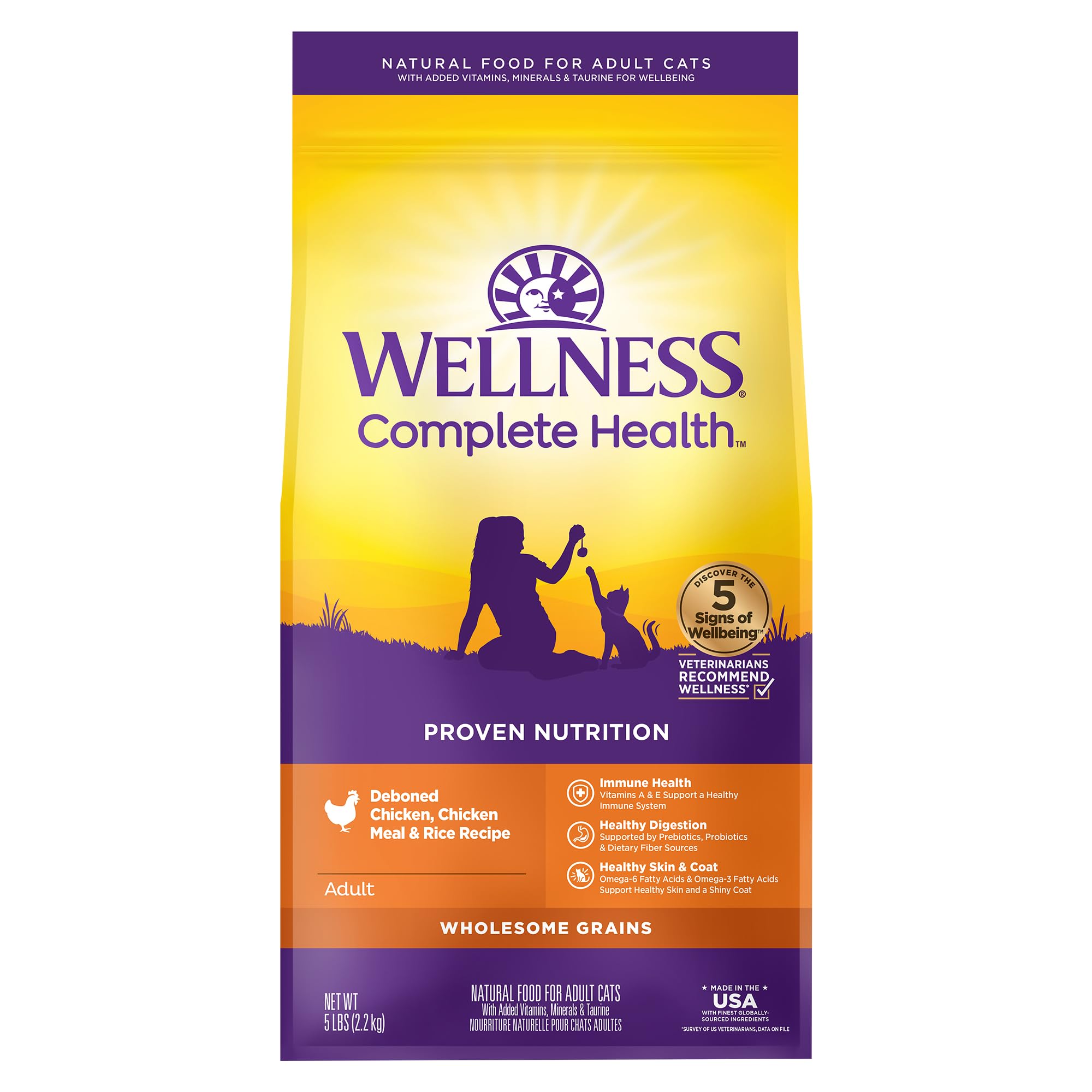
Wellness Complete Health Adult Chicken Recipe — Best All-Rounder
Best for: owners who want a recognisable, egg-free everyday diet without wading through an ingredient list they need to decode.
This is a balanced dry food built around deboned chicken and wholesome grains, so you get familiar ingredients with a clear nutrition focus. You can feed it as your cat’s main daily diet or mix a few kibbles into wet food for picky eaters.
The formula targets digestion, skin and coat health, and it is the pick we would reach for first if egg is the only thing you are ruling out. The 5 lb bag is a sensible size for a trial run before committing to a larger one.
Egg-Free Check & Key Ingredients
No egg, dried egg or egg product appears on the published panel. The recipe leads with deboned chicken and chicken meal, followed by rice, barley and oats, with chicken fat, flaxseed and chicory root extract further down. Wellness states the food contains no meat by-products, artificial colors, flavors or preservatives. The manufacturer notes it is made in a facility that also processes grains.
Why You’ll Like It
The panel reads the way you would want it to: a named meat first, identifiable grains second, and nothing you need to look up. For anyone tracking ingredients across a multi-cat household, that legibility is the real benefit.
Who Should Buy This — And Who Should Skip It
- Buy if: you want a straightforward egg-free daily diet, you prefer named meat first, or you are avoiding meat by-products.
- Skip if: your cat needs a grain-free diet, or chicken is a suspected trigger — this is a chicken-forward recipe.
What People Say
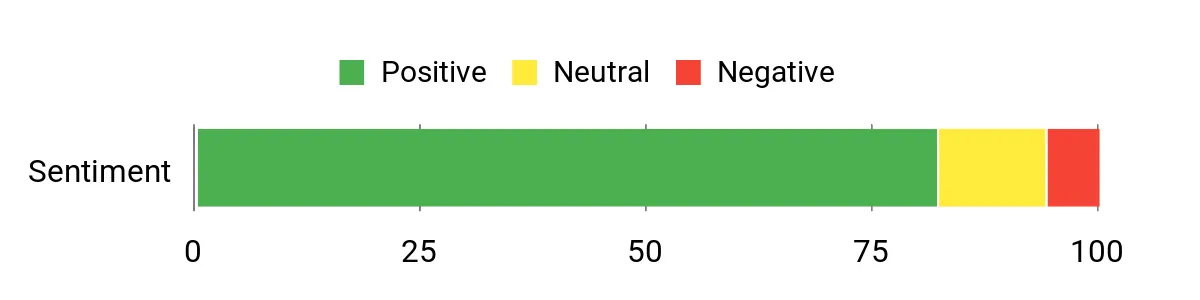
Across publicly posted customer reviews, most owners report that cats take to it readily and that the ingredient list is straightforward. Coat condition and steady digestion come up often, and several reviewers mention the convenience of the resealable bag.
Overall Sentiment: Positive (based on published customer reviews, not our own testing)
Cost & Value
This sits above budget supermarket kibble on price per pound. The 5 lb bag is the practical way in: buy small, confirm your cat eats it and tolerates it, then size up. Larger bags lower the cost per pound but only if your cat finishes them while the food is still fresh.
Health Benefits
| Benefit | Description |
|---|---|
| Digestive Support | Chicory root extract and fiber from the grain blend support gut health; individual results vary between cats. |
| Complete Nutrition | Formulated to be complete and balanced for adult cats, with added vitamins and minerals. |
| Skin & Coat | Flaxseed and chicken fat supply omega fatty acids that contribute to coat condition. |
| Kibble Texture | Crunchy kibble suits cats that prefer texture. Standard kibble offers limited dental cleaning on its own — ask your vet about dedicated dental care. |
Versatility
You can use this as a daily complete diet, a topper for variety, or a kibble for puzzle feeders to encourage activity. It suits adult cats across breeds and works well in multi-cat households as part of a rotation.
Storage & Shelf Life
Keep the bag sealed between uses or transfer the contents to an airtight container in a cool, dry place. Check the printed best-by date, and aim to finish an opened bag within about six to eight weeks so the fats stay fresh.
Key Benefits
- Egg-free panel — no egg, dried egg or egg product listed
- Deboned chicken as the first ingredient
- No artificial colors, flavors, or meat by-products
- Simple grain blend of rice, barley and oats
- Resealable 5 lb bag — a low-risk size for a first trial
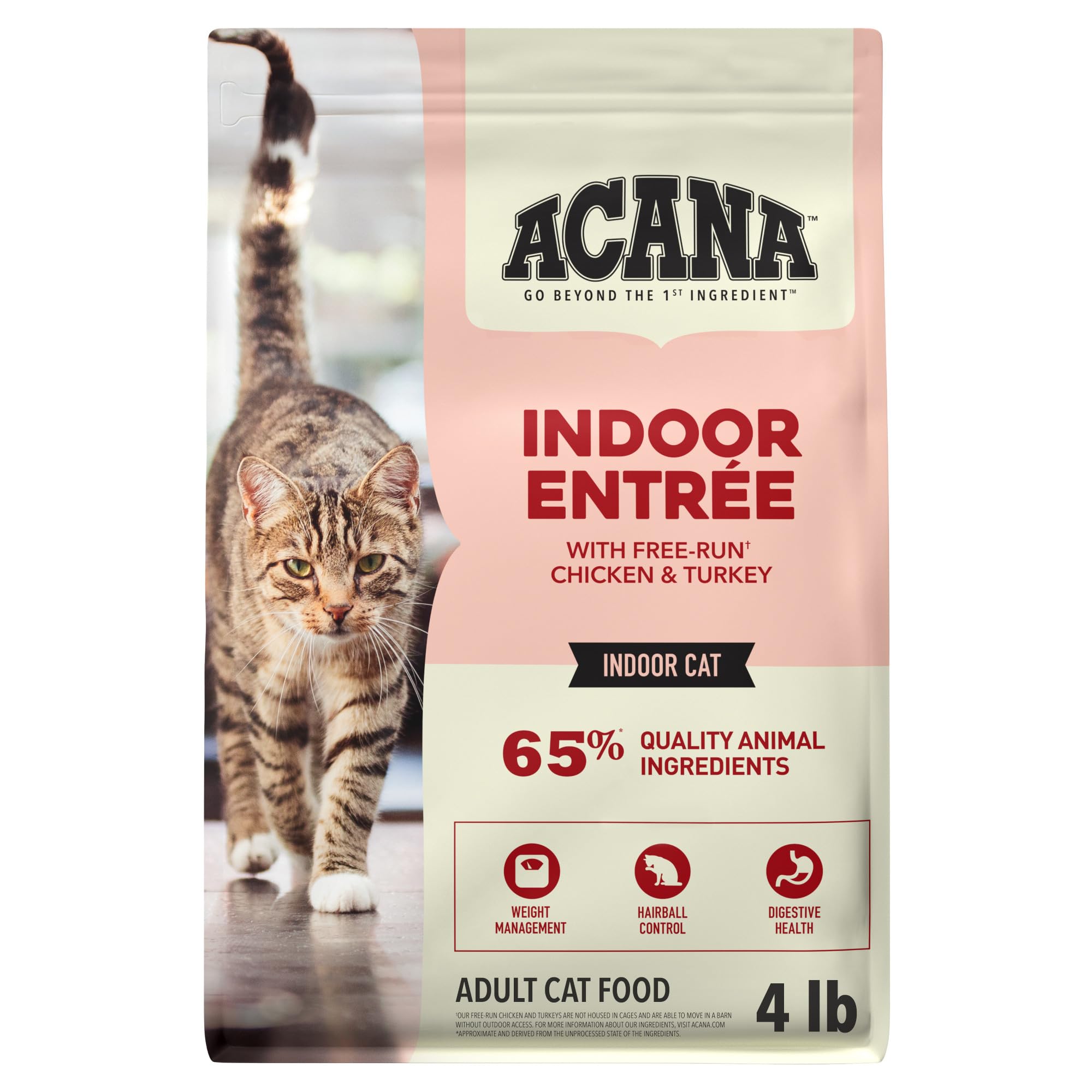
ACANA Indoor Entrée Chicken & Turkey — Best High-Protein Pick
Best for: indoor cats who need a protein-dense, egg-free diet with built-in hairball and weight support.
ACANA Indoor Entrée is a protein-forward dry food that leans into whole animal ingredients while addressing indoor cat needs. The recipe combines free-run chicken and turkey with herring, plus fiber sources and probiotics aimed at digestion and hairball control. Use it as an everyday meal, as a rotation option to boost protein variety, or in measured portions as part of a weight plan.
The manufacturer describes the recipe as made with 65% animal ingredients and 35% fruits, vegetables and botanicals. That figure refers to the proportion of animal-derived ingredients, not the crude protein percentage — a distinction worth knowing before you compare it against other bags.
Egg-Free Check & Key Ingredients
No egg appears on the published panel. The recipe leads with chicken and chicken meal, then herring meal, oat groats, whole peas and chicken fat, with turkey, lentils, chickpeas and rabbit further down. Note that older marketing described this food as grain-free; the current recipe includes oat groats, so treat it as a grained food. The manufacturer’s facility statement covers grains, soy, corn, tapioca and wheat — it does not address egg, so contact the brand directly if your cat has a confirmed egg allergy.
Why You’ll Like It
If you have been reading panels and feeling like the meat runs out after ingredient three, this is the antidote. The protein density is the point, and the fiber blend and probiotics mean it is not just a protein number with nothing behind it.
Who Should Buy This — And Who Should Skip It
- Buy if: you want maximum animal ingredients, your cat is indoor and prone to hairballs, or you are managing weight with measured portions.
- Skip if: you need a strictly grain-free food, your cat has a fish sensitivity (herring features prominently), or you want the lowest cost per pound.
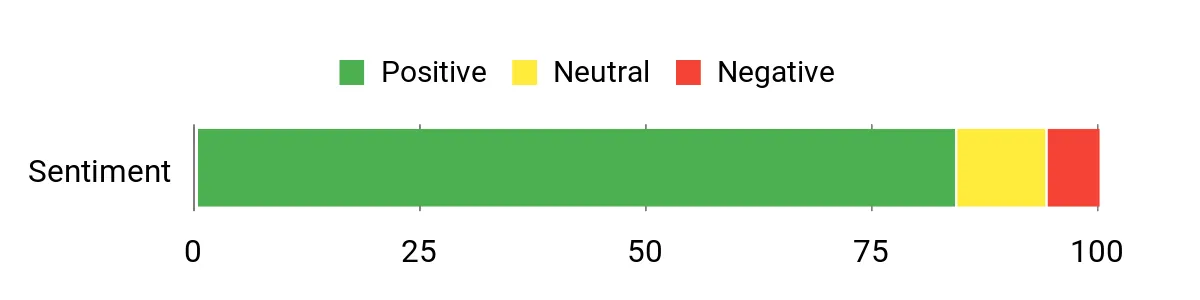
What People Say
Owners posting publicly often highlight coat condition and activity levels after switching, and many point to ingredient quality as the main draw. Palatability comes up frequently, including with picky eaters, though a slower transition is commonly recommended because the food is richer than most.
Overall Sentiment: Positive (based on published customer reviews, not our own testing)
Cost & Value
This is the premium option here on price per pound. The 4 lb bag keeps the initial outlay low, which matters with a rich food your cat may need time to adjust to. Because the food is nutrient-dense, daily portions are typically smaller than with a lower-protein kibble — check the feeding chart rather than assuming your usual scoop.
Health Benefits
| Benefit | Description |
|---|---|
| Digestive Health | Includes dried fermentation products (probiotics) and a mix of fiber sources intended to support digestion. |
| Weight Management | Balanced calories from protein and fat plus added L-carnitine, formulated to help maintain a healthy body weight. |
| Hairball Control | Fiber from oat groats, miscanthus grass, lentils and chickpeas is included to help control hairballs. |
| Skin & Coat | Herring and animal fats supply omega fatty acids associated with coat condition. |
Versatility
This kibble works as a full-time diet or as part of a rotation to add protein variety, and it fits well into portion-controlled feeding plans for indoor cats.
Storage & Shelf Life
Store in a cool, dry place and keep the bag sealed or transfer to an airtight container. Use within the printed best-by date, and aim to finish an opened bag within about six to eight weeks. Monitor portion sizes closely if you are managing weight.
Key Benefits
- Egg-free panel — no egg listed among the ingredients
- Made with 65% animal ingredients (manufacturer figure)
- Probiotics and multiple fiber sources for digestion and hairball control
- Includes L-carnitine to support healthy weight
- Formulated for the needs of indoor cats
Purina Cat Chow Gentle Sensitive Stomach & Skin — Best For Sensitive Systems On A Budget

Best for: multi-cat homes feeding a sensitive cat on a budget, where a large egg-free bag matters more than a premium panel.
This formula is built specifically for cats that need a gentler approach to feeding. It pairs prebiotic fiber for digestion with omega-6 fatty acids for skin and coat, and includes all 25 essential vitamins and minerals adult cats need.
It carries one trust signal none of the other picks here claim: the manufacturer states that nutritional adequacy is substantiated by animal feeding tests using AAFCO procedures, rather than by formulation alone. That is a meaningfully higher bar, and it is the reason this budget pick earns its place.
Egg-Free Check & Key Ingredients
No egg appears on the published panel. Read this part carefully, though: the recipe leads with poultry by-product meal, corn gluten meal and soybean meal, followed by rice, ground yellow corn and whole grain wheat, with turkey appearing further down the list. Turkey is on the bag and it is real, but it is not the primary ingredient. If you are running an elimination trial or need every protein source individually named, this is not the food for that job.
Why You’ll Like It
It solves a specific, practical problem: feeding a cat with a touchy stomach without a premium budget. The 13 lb bag is where the value sits, and broad retail availability means you are unlikely to be caught out by a stock gap on a food your cat tolerates.
Who Should Buy This — And Who Should Skip It
- Buy if: you need an affordable, widely stocked egg-free option for a cat with a sensitive stomach, and you value feeding-trial substantiation.
- Skip if: you need named single-source proteins, you are avoiding by-product meal, corn, wheat or soy, or your vet has you on a formal elimination trial.
What People Say
Owners posting publicly commonly report fewer digestive upsets after switching, and improvements in coat condition come up regularly. Reviewers also note that picky eaters generally accept the kibble, and several mention the value of the larger bag sizes in multi-cat homes.
Overall Sentiment: Positive (based on published customer reviews, not our own testing)

Cost & Value
This is the lowest cost per pound of the four, and the 13 lb bag is the reason. If you have one small cat, that bag may outlast its freshness window — smaller sizes are sold, and the price advantage still holds.
Health Benefits
| Benefit | Description |
|---|---|
| Digestive Support | Natural prebiotic fiber supports digestive health in a formula designed for easy digestion. |
| Skin & Coat | Omega-6 fatty acids are included to support healthy skin and a shiny coat. |
| Complete Nutrition | All 25 essential vitamins and minerals, with adequacy substantiated by AAFCO feeding tests. |
| No Artificial Colors or Flavors | Made without artificial colors or flavors, per the manufacturer. |
Versatility
Works as a primary daily diet, during diet transitions, or mixed with wet food for extra palatability; suitable for most adult cats with sensitive systems.
Storage & Shelf Life
Store in a cool, dry place and keep the bag sealed or use an airtight container. With a large bag, decanting a week’s worth into a smaller container keeps the bulk of it sealed and fresher for longer.
Key Benefits
- Egg-free panel — no egg listed among the ingredients
- Formulated for sensitive stomachs and sensitive skin
- Natural prebiotic fiber for digestion
- Omega-6 fatty acids for coat health
- Nutritional adequacy substantiated by AAFCO feeding tests
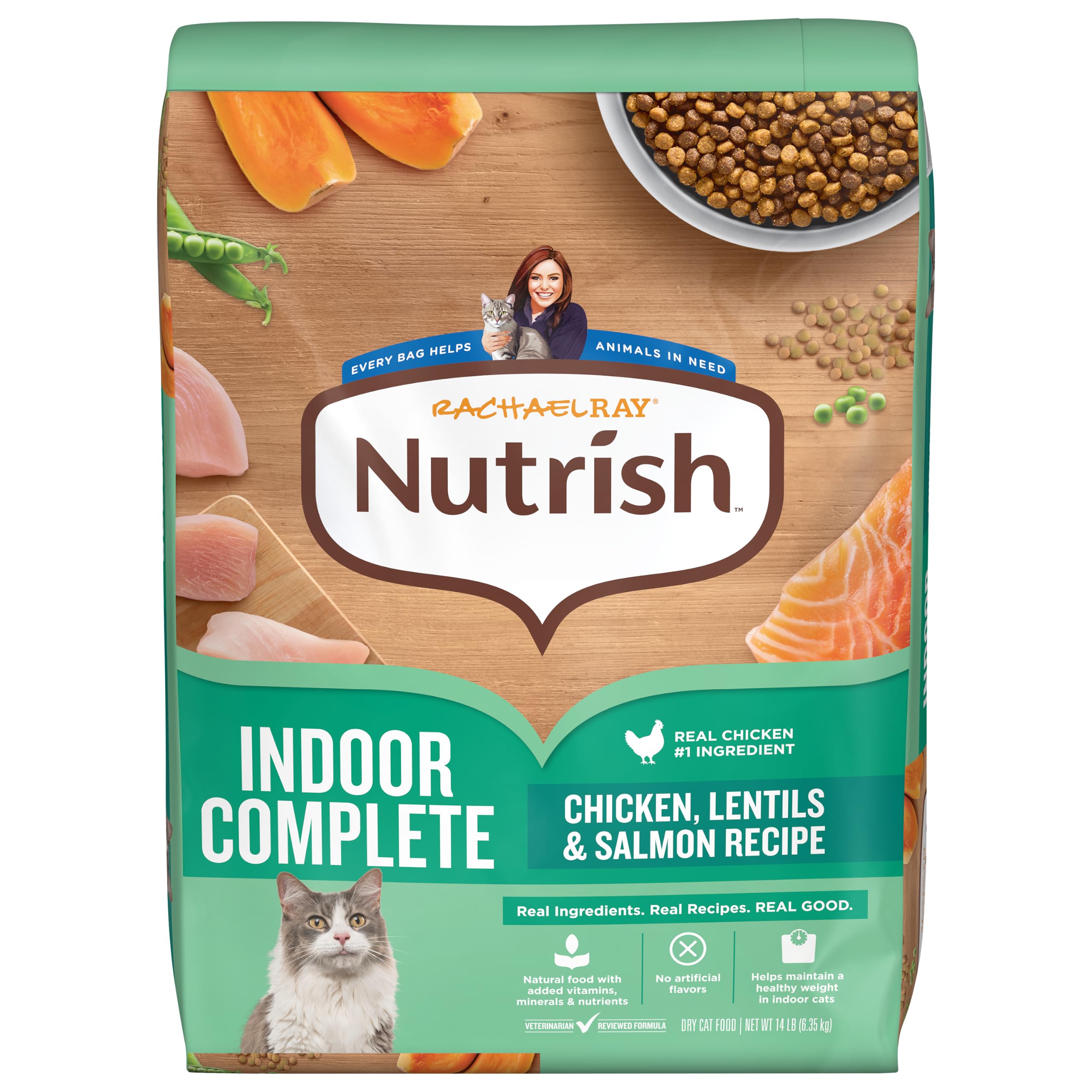
Nutrish Indoor Complete Chicken, Lentils & Salmon — Best Everyday Value For Indoor Cats
Best for: feeding an indoor cat every day from a large bag, especially cats that prefer smaller kibble pieces.
Nutrish Indoor Complete is built around chicken, lentils and salmon to cover daily needs for indoor cats. You can use it as your cat’s main meal, mix it with wet food for variety, or portion it into puzzle feeders to encourage activity.
The smaller morsels suit cats with smaller mouths or fussy chewing habits, and the fiber blend targets digestion and hairballs. At 14 lb it is the biggest bag here, which is what makes it the everyday value pick.
Egg-Free Check & Key Ingredients
No egg appears on the published panel. The recipe leads with chicken and chicken meal, then peas, brewers rice, a corn protein ingredient and lentils, with chicken fat, salmon, cranberries and pumpkin further down. One freshness caution: the manufacturer has reformulated this recipe as a “Whole Health Blend,” and packaging is noted as varying between production runs. Check the panel on the bag you receive rather than relying on any listing, including this one.
Why You’ll Like It
Chicken sits first, the kibble is small enough for cats that leave larger pieces in the bowl, and the bag size means fewer reorders. For a household feeding two or three indoor cats, that combination is hard to beat at this price.
Who Should Buy This — And Who Should Skip It
- Buy if: you want a large egg-free bag for daily feeding, or your cat prefers small kibble.
- Skip if: your cat has a fish or pea sensitivity, you are avoiding corn-derived ingredients, or you have a single small cat who would not finish 14 lb in good time.
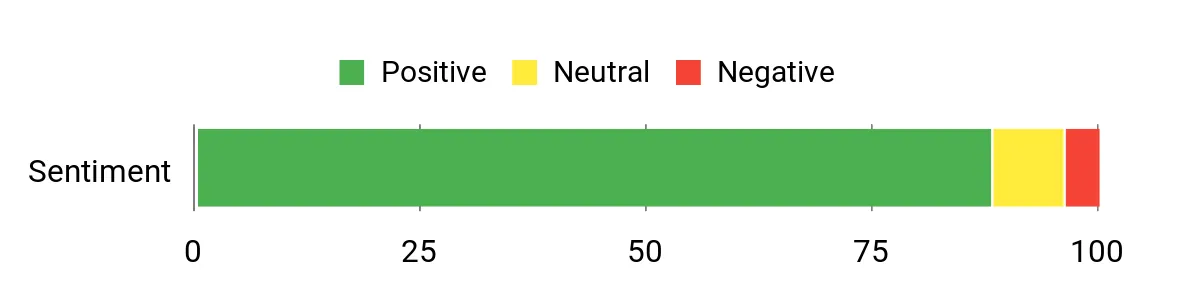
What People Say
Owners posting publicly often say their cats take to this food readily, and the small kibble size is mentioned frequently as a plus for picky or smaller-mouthed cats. Improved litter box consistency and fewer hairballs come up regularly, as does the recipe’s suitability for indoor lifestyles.
Overall Sentiment: Positive (based on published customer reviews, not our own testing)
Cost & Value
The 14 lb bag gives you the best cost per pound among the natural-positioned picks here. That only pays off if the food gets eaten while fresh — for one cat, a smaller bag is usually the better buy despite the higher unit price.
Health Benefits
| Benefit | Description |
|---|---|
| Digestive Support | Lentils, pumpkin and beet pulp provide fiber and natural prebiotics intended to support digestion. |
| Indoor Formulation | Formulated for the needs of less active indoor cats; feed to the chart to help maintain a healthy weight. |
| Skin & Coat | Salmon and flaxseed contribute omega fatty acids associated with coat condition. |
| Easy Chewing | Smaller morsels are easier to chew and swallow, which suits many adult cats and smaller mouths. |
Versatility
Suitable as an everyday diet, a rotation option for added protein variety, or mixed with wet food for extra palatability; works well in portion-controlled feeding plans and puzzle feeders.
Storage & Shelf Life
Keep the bag sealed or transfer to an airtight container and store in a cool, dry place. With a 14 lb bag, decant a smaller working supply and keep the rest sealed. Follow the printed best-by date and aim to use an opened bag within about six to eight weeks.
Key Benefits
- Egg-free panel — no egg listed among the ingredients
- Chicken as the first ingredient
- Fiber from lentils, pumpkin and beet pulp for digestion
- Salmon for omega-3 support
- Small kibble size and a large bag for everyday feeding
Before You Buy: A Six-Point Check
- Read the panel on the bag you receive. Look for “egg,” “dried egg,” “egg product” and “egg solids.” Formulas get reworked and listings lag behind.
- Check the protein, not just the egg. Chicken, fish and beef trigger more feline reactions than egg does. Know what you are actually avoiding.
- Match the bag to your household. Opened kibble is best used within roughly six to eight weeks; a bargain bag your cat cannot finish is not a bargain.
- Confirm the life stage. Every food here is formulated for adult cats, not kittens.
- Ask about cross-contact if the allergy is confirmed. Contact the brand about shared production lines — panels do not cover this.
- Plan the switch before you buy. A rushed transition causes the exact digestive upset you are trying to avoid.
FAQ
How Do I Know If A Cat Food Is Really Egg-Free?
Read the ingredient panel and any allergen statement carefully, since eggs can appear as “egg,” “dried egg,” “egg product,” “dried egg product” or “egg solids.” Check for cross-contact notes as well, and consult the product Q&A or the manufacturer’s website if anything is unclear. If you need certainty for a diagnosed allergy, contact the brand directly and ask specifically about shared production lines — an ingredient panel lists what was added on purpose, not what a shared line might introduce.
Is Egg-Free The Same As Hypoallergenic?
No, and the distinction matters. Egg-free means one ingredient has been left out. Hypoallergenic, in a veterinary sense, means a diet built on a novel or hydrolysed protein your cat has never encountered, produced under controls that limit cross-contamination. Egg-free retail kibble is the right tool for avoiding egg specifically. It is not a substitute for a veterinary allergy diet, and it will not help if your cat’s actual trigger is chicken, fish or beef.
How Should I Switch My Cat To An Egg-Free Food?
Transition gradually over about a week to 10 days by mixing increasing amounts of the new food into the old to reduce digestive upset; if your cat has a sensitive stomach, extend the transition to two or three weeks. Monitor stool, appetite and coat during the change, and stop the switch and consult your veterinarian if you see severe vomiting, diarrhea, or signs of an allergic reaction.
For suspected food allergies, work with your vet on a formal elimination trial rather than swapping foods repeatedly on your own — repeated switching makes a proper trial harder to run later.
My Cat Is Still Itching After Switching. Now What?
See your veterinarian. Persistent itching, hair loss, over-grooming, skin lesions or ongoing digestive upset need a diagnosis, not another bag of food. A vet-supervised elimination diet trial — typically eight to twelve weeks on a single novel or hydrolysed protein, with no other treats or flavoured medications — is the only reliable way to identify a food allergy. Commercial blood, saliva and hair allergy tests have not been shown to be reliable for this.
What Should I Consider When Choosing An Egg-Free Formula?
Look beyond the absence of eggs to the primary protein source, overall ingredient quality, and whether the recipe is complete and balanced for your cat’s life stage. Prioritise digestive support such as prebiotics or probiotics if your cat has a sensitive gut, plus omega fatty acids for skin and coat, an appropriate kibble size, and clear manufacturing information.
Foods substantiated by AAFCO feeding trials clear a higher bar than those substantiated by formulation alone — the label’s nutritional adequacy statement tells you which you are looking at. Consistent availability also matters more than people expect: once you find a food your cat tolerates, you want to be able to buy it reliably.
Customer Preferences
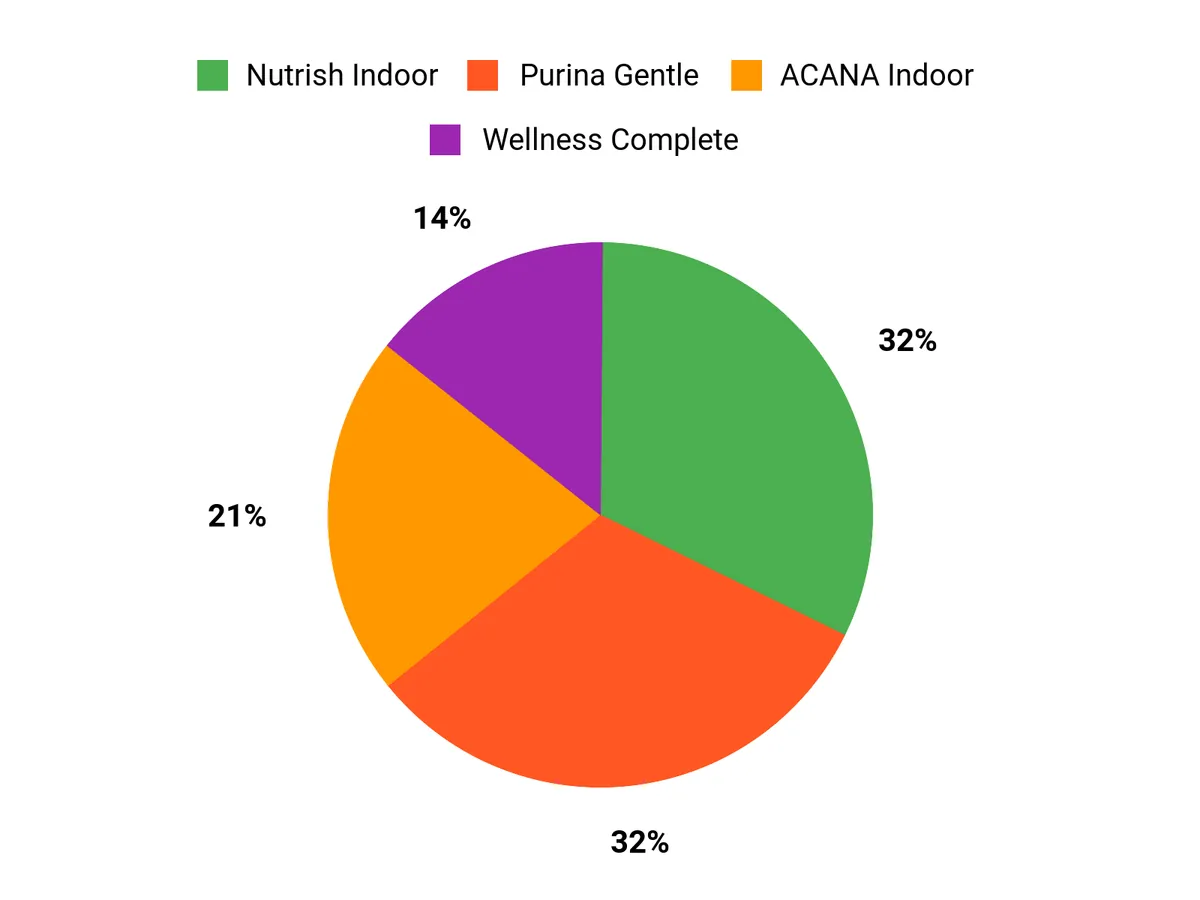
When choosing among these four, most owners weigh ingredient quality and primary protein source against their cat’s specific needs — Wellness for a legible, natural recipe, ACANA for animal-ingredient density and indoor-cat support, Purina Gentle for sensitive systems on a budget, and Nutrish for everyday value in a larger bag. Digestibility, palatability and clear manufacturing information tend to matter most, since those are the factors that determine whether a food is actually tolerated day after day.
Quick Comparison
| Product Name | Image | Best For | Bag Size | Leading Ingredients | Special Highlights | Price |
|---|---|---|---|---|---|---|
| Wellness Complete Health Adult Dry Cat Food, Chicken Recipe |
|
Best all-rounder | 5 lb (other sizes sold) |
|
|
Check Price |
| ACANA Dry Cat Food for Indoor Cats, Chicken & Turkey |
|
Best high-protein | 4 lb (other sizes sold) |
|
|
Check Price |
| Purina Cat Chow Gentle Sensitive Stomach & Skin Dry Cat Food |
|
Best for sensitive systems on a budget | 13 lb (other sizes sold) |
|
|
Check Price |
| Nutrish Indoor Complete Dry Cat Food, Chicken Recipe |
|
Best everyday value | 14 lb (other sizes sold) |
|
|
Check Price |
Wrapping Up
An egg-free diet makes ingredient tracking simpler, and if egg is on your cat’s avoid list it removes one variable from a picture that often has several. Match the formula to your actual priority: a balanced all-rounder for broad everyday benefits, a protein-dense recipe for indoor cats, a sensitive-systems formula if vomiting or loose stools are the problem, or a large-bag value option for multi-cat feeding.
Start with the smallest bag you can, transition slowly, and watch appetite, stool and coat over the first few weeks.
This Roundup is reader-supported. When you click through links we may earn a referral commission on qualifying purchases. This article is for general information and is not veterinary advice.