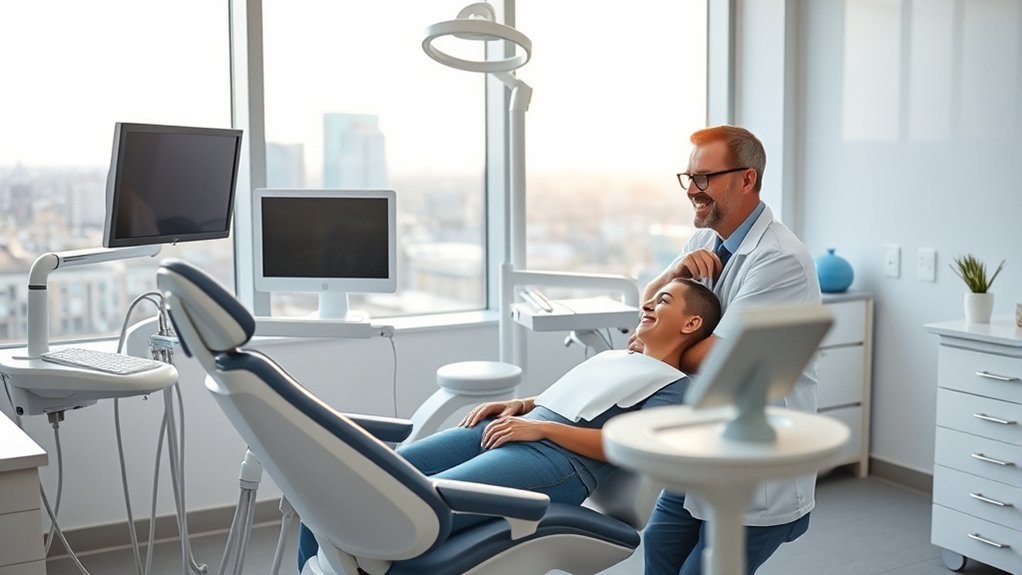
If you’re looking for the best dentists in Tulsa, focus on fit rather than star ratings alone. Check the dentist’s license and specialty, then compare insurance, location, appointment access, communication, and recent patient feedback. A strong choice is one whose training matches the care you need and whose office works well for your budget and schedule.
Quick Answer
Start with a licensed Tulsa dentist whose training matches your needs, then compare insurance, location, scheduling, and communication. In the original shortlist, Benjamin Gerkin has the largest Healthgrades review sample; Mariam Hanna and Brandi Thompson are also highly rated. Llon Clendenen is an orthodontist rather than a general dentist.
How to Find the Right Dentist in Tulsa

The right dentist should be qualified for the care you need and practical for you to visit regularly. The American Dental Association’s MouthHealthy guidance recommends considering location, office hours, insurance network status, communication needs, emergency arrangements, and how comfortable you feel asking questions.
- Verify the license. Use the Oklahoma Board of Dentistry license verification page to confirm an active license and review available disciplinary information.
- Match the dentist to the problem. A general dentist can handle routine exams, preventive care, fillings, crowns, and many common procedures. Orthodontists focus on tooth and jaw alignment, while periodontists, prosthodontists, endodontists, pediatric dentists, and oral surgeons have additional specialty training.
- Check insurance before booking. Ask both the dental office and your insurer whether the dentist is in network and whether the planned service needs a referral, waiting period, or preauthorization.
- Consider access. Compare travel time, office hours, new-patient availability, and how the practice handles urgent problems outside normal hours.
- Call with one or two questions. A short conversation can show whether the staff explains fees, records, treatment options, and next steps clearly.
How Patient Reviews Should Shape Your Choice of Dentist
Patient reviews are useful for spotting repeated patterns, but they should not be your only test of quality. Look at the number and recency of reviews, then read for themes such as communication, wait times, comfort, scheduling, and whether patients felt their questions were answered.
Healthgrades’ Tulsa dentistry directory currently lists 491 practitioners within 10 miles and reports an overall average rating of 4.3 stars. Its profiles also show review counts and recurring patient-experience attributes, which gives more context than a star score alone.
A 5.0 rating from a smaller review sample is not automatically more informative than a 4.9 rating from hundreds of ratings. Use the score as a screening tool, then confirm specialty, license status, insurance, and whether the dentist’s approach fits your needs.
Best Dentists in Tulsa: A Closer Look at the Original Shortlist
The four dentists in the original article all have strong Healthgrades ratings, but they are not identical choices. The most important difference is specialty: three are listed under general dentistry, while Dr. Llon Clendenen is listed in orthodontics and dentofacial orthopedics.
| Dentist | Healthgrades rating | Ratings | Listed specialty |
|---|---|---|---|
| Dr. Benjamin Gerkin, DDS | 4.9/5 | 743 | Dentistry |
| Dr. Mariam Hanna, DDS | 4.9/5 | 64 | Dentistry |
| Dr. Brandi Thompson, DDS | 5.0/5 | 40 | Dentistry |
| Dr. Llon Clendenen, DDS | 5.0/5 | 32 | Orthodontics & Dentofacial Orthopedics |
These figures are snapshots and can change as new reviews are posted. They are better used to build a shortlist than to declare one dentist universally “best.” If you need routine care, compare the general dentists first; if your main concern is braces, aligners, or bite correction, an orthodontist may be the more relevant starting point.
Common Dental Services Offered by Tulsa Dentists
Tulsa dental practices commonly provide preventive, restorative, cosmetic, orthodontic, and urgent care, but services vary by dentist. Confirm that the office routinely performs the procedure you need before booking, especially for surgery, implants, sedation, complex root-canal treatment, or specialty orthodontics.
- Preventive care: exams, cleanings, X-rays when indicated, fluoride treatment, sealants, and home-care guidance.
- Restorative care: fillings, crowns, bridges, dentures, and treatment planning for damaged or missing teeth.
- Cosmetic care: teeth whitening, veneers, bonding, and other appearance-focused treatment when clinically appropriate.
- Orthodontic care: braces, clear aligners, and bite correction, depending on the provider’s training and services.
- Urgent care: evaluation of severe tooth pain, broken teeth, swelling, dental trauma, or other problems that should not wait for a routine visit.
Dental implants deserve an extra credential check because treatment can include both surgical placement and restoration. The American College of Prosthodontists’ implant guidance notes that implant care can range from straightforward to complex and may involve a trained restorative dentist, prosthodontist, periodontist, or oral and maxillofacial surgeon.
Note: Online ratings cannot tell you whether a dentist is the right clinician for a specific diagnosis. If you have severe pain, facial swelling, uncontrolled bleeding, or dental trauma, seek prompt professional dental or medical care rather than waiting for routine comparison shopping.
How to Make Your Dental Appointment Easier
A smoother dental visit starts before you arrive. Gather the information the office needs, write down your main concerns, and tell the team about anxiety, medications, allergies, or health conditions that could affect treatment.
- Prepare your questions: List symptoms, how long they have been present, what makes them better or worse, and any treatment you are considering.
- Confirm coverage: Ask your insurer and the office about network status, deductibles, expected out-of-pocket costs, and whether preauthorization is needed.
- Bring useful records: Have your medication list, relevant medical history, insurance information, and recent dental records or X-rays if the office asks for them.
- Follow the office’s arrival instructions: New-patient forms or record transfers may require extra time before the appointment.
- Discuss dental anxiety early: Tell the office before treatment begins so the dentist can explain options and plan communication around your concerns.
After the visit, make sure you understand the diagnosis, alternatives, expected follow-up, and what symptoms should prompt an earlier call. If a treatment plan is complex or expensive, asking for a written plan can make it easier to compare options and insurance coverage.
Frequently Asked Questions
What Is the Best Way of Finding a Good Dentist in My Area?
Start with licensed dentists whose specialty matches your needs, then compare insurance, location, hours, and recent patient feedback. Verify the dentist through your state dental board, ask your insurer about network status, and call the office with questions about services, emergencies, and treatment costs before you book.
Can a Dentist Prescribe Ambien?
A dentist in Oklahoma may prescribe controlled medication only in good faith and in the course of professional practice under state controlled-substance law. Ambien, or zolpidem, is an FDA-approved insomnia medicine, so routine sleep problems unrelated to dental care should be discussed with an appropriate medical prescriber.
How Do You Find Out if a Dentist Is Good?
Check the dentist’s active license, training, relevant experience, and whether the office clearly explains treatment choices and costs. Reviews can reveal recurring patient-experience patterns, but compare review volume and recency as well as star ratings. A consultation can also help you judge communication, comfort, and fit.
What Kind of Dentist Is Best for Implants?
There is no single implant specialty for every case. A properly trained restorative dentist may place or restore implants, while complex surgery may involve a periodontist or oral and maxillofacial surgeon, and complex restoration may involve a prosthodontist. Ask about the clinician’s implant training, case experience, and referral plan.
Conclusion
Choose a Tulsa dentist by matching the provider’s training to your needs, then confirming license status, insurance, access, and communication. If dental anxiety affects your visits, tell the office early; a 2026 systematic review and meta-analysis estimated high dental anxiety in 18% of adults studied worldwide, though prevalence varied across studies.
A strong online rating can help you build a shortlist, but it cannot replace a conversation with the practice or a clinical evaluation. The best next step is to compare two or three appropriate dentists and choose the one whose services, communication, and practical details fit your care needs.
Sources
- American Dental Association MouthHealthy: Factors to consider when choosing a dentist.
- Oklahoma Board of Dentistry: Primary-source license verification and disciplinary-information access.
- Healthgrades Tulsa Dentistry Directory: Tulsa provider counts, average rating, specialties, and the ratings used in the comparison table.
- American College of Prosthodontists: Implant-provider training, complexity, and referral guidance.
- Oklahoma Statutes §63-2-312: Controlled-substance prescribing within professional practice.
- U.S. Food and Drug Administration: Zolpidem/Ambien use for insomnia and safety information.
- PubMed: 2026 systematic review and meta-analysis of high dental anxiety in adults.