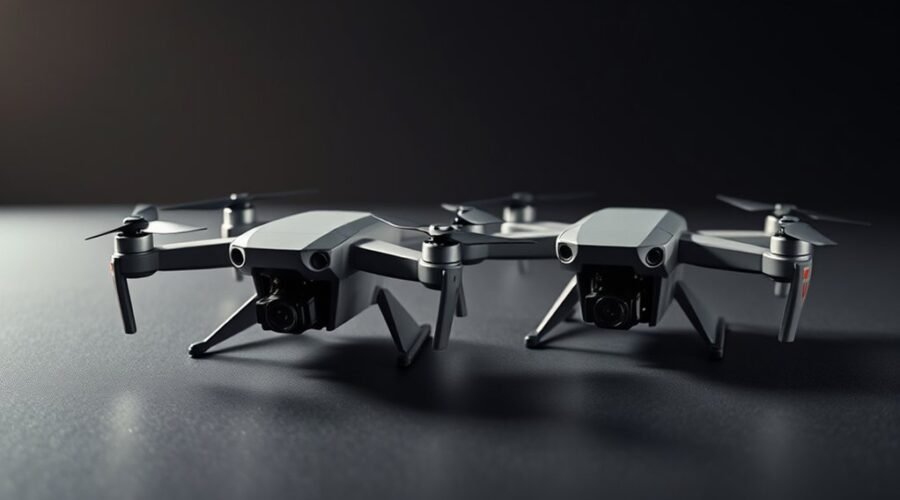
The DJI Avata vs DJI Avata 2 comparison comes down to more than camera quality. DJI changed the aircraft weight, battery endurance, video transmission system, positioning sensors, storage, controls, and shooting options. The original Avata still offers capable stabilized 4K FPV footage, while Avata 2 makes several meaningful improvements for pilots who want longer flights and a newer control ecosystem.
Quick Answer
DJI Avata 2 is the stronger upgrade on specifications, with a larger 1/1.3-inch sensor, up to 23 minutes of flight time, O4 transmission, 46GB storage, and newer control options. The original Avata remains useful if you already own compatible equipment and its 4K/60fps camera and 18-minute endurance meet your needs.
Last checked: September 30, 2026. Dates and figures were verified against official sources.
Key Takeaways
- Avata 2 is lighter at about 377 g versus 410 g for the original Avata, while increasing DJI’s rated maximum flight time from about 18 to 23 minutes.
- Avata 2 moves from a 1/1.7-inch sensor to a larger 1/1.3-inch sensor and supports 4K video at up to 100fps in 16:9.
- Both drones have integrated propeller guards and a 155° maximum field of view, but neither provides full obstacle avoidance.
- Avata 2 uses DJI O4 transmission with a published FCC maximum of 13 km; the original uses O3+ with a published FCC maximum of 10 km.
- Accessory compatibility matters when upgrading because the two aircraft support overlapping older gear but different newer goggles and controllers.
DJI Avata vs DJI Avata 2 Specs Compared
The biggest differences are battery life, camera hardware, transmission, storage, and positioning sensors. DJI’s official Avata 2 specifications and original Avata specifications and support information provide the figures below.
| Feature | DJI Avata | DJI Avata 2 |
|---|---|---|
| Takeoff weight | Approx. 410 g | Approx. 377 g |
| Camera sensor | 1/1.7-inch CMOS | 1/1.3-inch |
| Maximum 4K frame rate | 60fps | 100fps in 16:9; 60fps in 4:3 |
| Maximum field of view | 155° | 155° |
| Rated maximum flight time | Approx. 18 min | Approx. 23 min |
| Wind resistance | 10.7 m/s, Level 5 | 10.7 m/s, Level 5 |
| Video transmission | DJI O3+, up to 10 km FCC | DJI O4, up to 13 km FCC |
| Internal storage | 20 GB | 46 GB |
| Visual positioning | Downward | Downward and backward |
| Obstacle avoidance | No | No |
DJI Avata 2 FPV Drone with 4K Camera
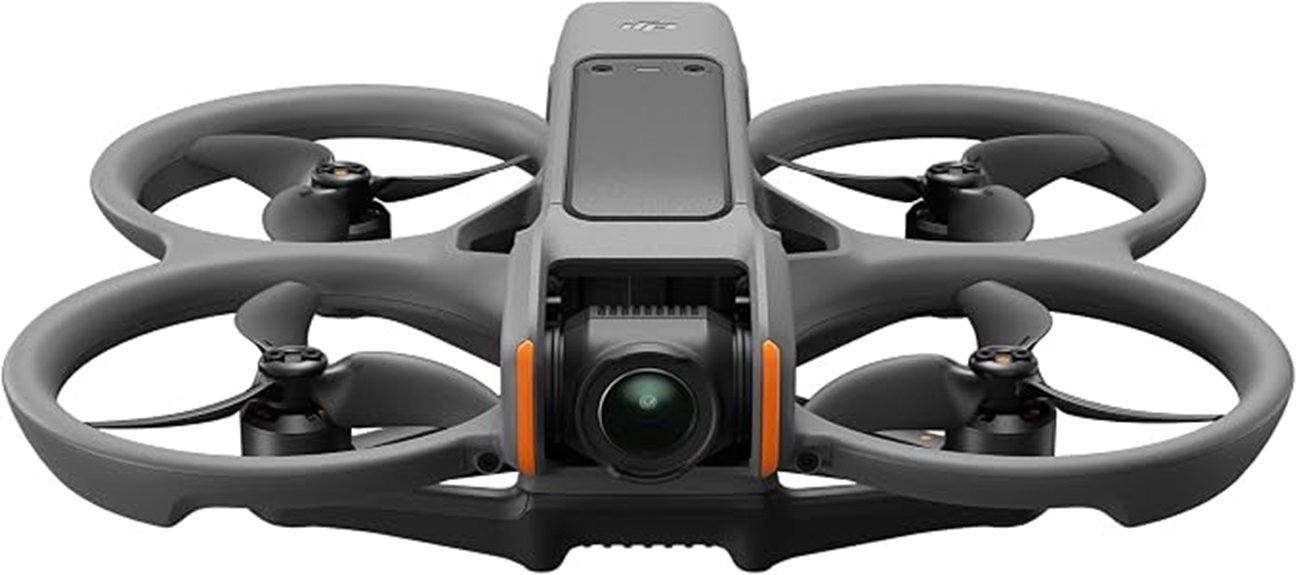
The DJI Avata 2 is built for immersive FPV flying while reducing some of the compromises of the first model. Its lighter 377 g body, integrated propeller guards, Easy ACRO features, and newer positioning system make it particularly attractive to pilots who want cinematic low-altitude or close-proximity footage.
The camera uses a 1/1.3-inch sensor with a maximum 155° field of view. It records 4K in 4:3 at up to 60fps and 4K in 16:9 at up to 100fps. RockSteady 3.0+ and HorizonSteady electronic stabilization are available, while D-Log M gives creators more flexibility when grading footage.
Avata 2 also increases internal storage to 46GB and uses DJI O4 video transmission. DJI rates the transmission system for up to 13 km under FCC conditions in an unobstructed, interference-free environment, although that laboratory-style maximum should not be treated as a practical or legal flying distance.
Best For: FPV pilots and content creators who value the larger sensor, longer rated flight time, Easy ACRO, newer goggles and controllers, and additional internal storage.
Pros:
- Larger 1/1.3-inch sensor with 4K recording at up to 100fps in 16:9
- About 23 minutes of rated maximum flight time and a lighter 377 g airframe
- O4 transmission, 46GB internal storage, Easy ACRO, and downward/backward positioning
Cons:
- It still lacks full obstacle avoidance despite having positioning sensors
- Using newer Goggles 3 or Goggles N3 requires the newer RC Motion 3 or FPV Remote Controller 3 ecosystem
- FPV flying still requires more awareness and practice than conventional camera-drone flying
DJI Avata FPV Drone with 4K Video
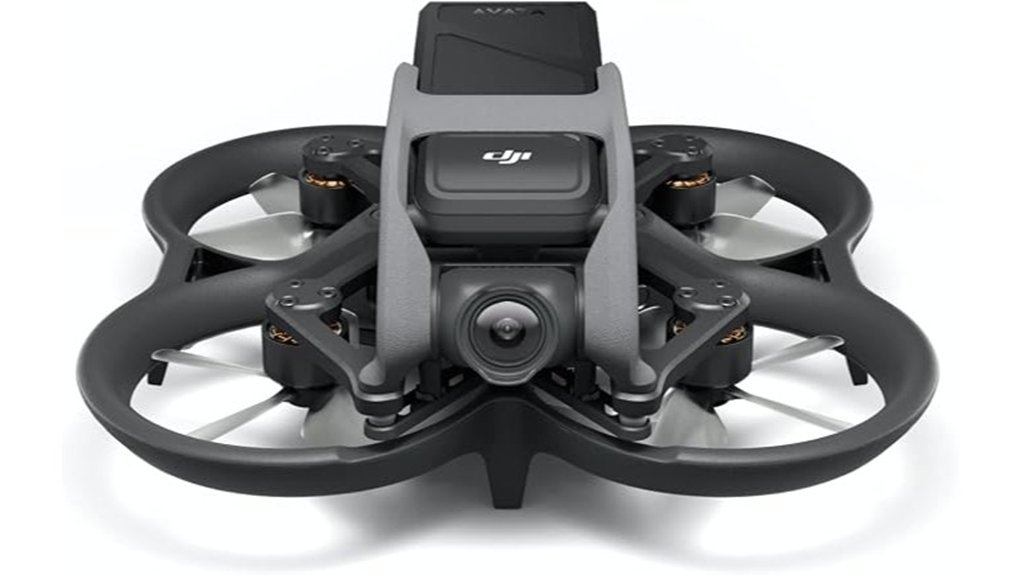
The original DJI Avata remains a capable FPV aircraft if its shorter endurance and older accessory ecosystem are acceptable. It weighs about 410 g and combines integrated propeller guards with a 1/1.7-inch camera sensor, 155° maximum field of view, and stabilized 4K recording.
Its camera records up to 4K/60fps. RockSteady and HorizonSteady provide electronic stabilization, while D-Cinelike gives creators a flatter color profile for editing. The aircraft also includes 20GB of internal storage and supports microSD cards up to 256GB.
DJI O3+ supplies the live video link. Under FCC test conditions, DJI lists a maximum transmission range of 10 km, along with a maximum transmission bitrate of 50 Mbps. Rated operating time is about 18 minutes, so carrying extra charged batteries is more useful with the original model.
Best For: Existing Avata owners, used-market buyers, and FPV pilots who are satisfied with 4K/60fps footage and do not need Avata 2’s longer flight time or newer control system.
Pros:
- Stabilized 4K/60fps video with a wide 155° field of view
- Integrated propeller guards and compact cinewhoop-style design for tight spaces
- DJI O3+ transmission and compatibility with several established DJI goggles and controllers
Cons:
- Approximate 18-minute rated operating time is shorter than Avata 2’s 23-minute rating
- Smaller 1/1.7-inch image sensor and only downward visual positioning
- Heavier 410 g airframe and less internal storage than Avata 2
Factors to Consider When Choosing DJI Avata Vs DJI Avata 2 Comparison (2026): Is Upgrading Truly Necessary?
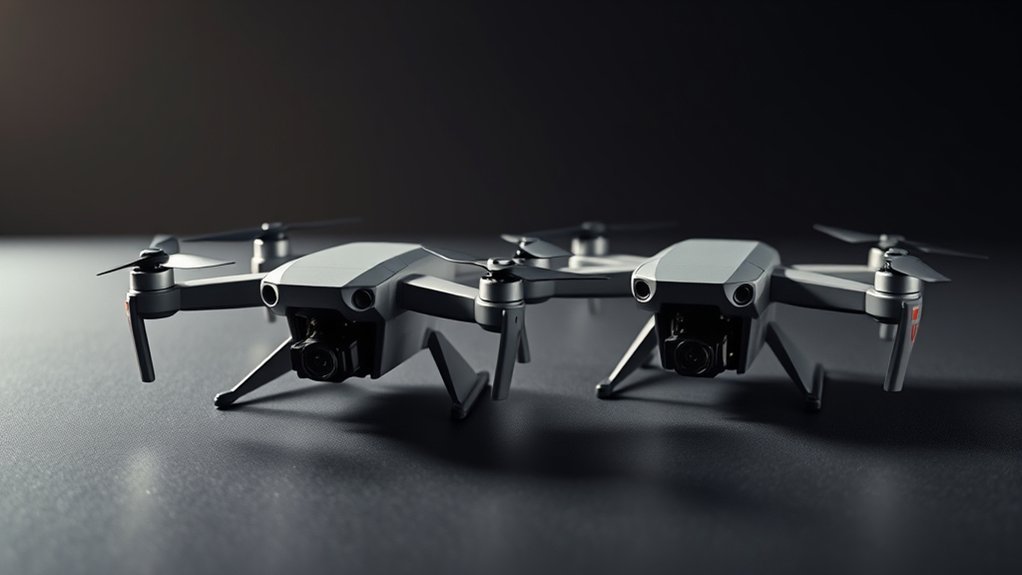
Upgrading is easiest to justify if the changes affect something you regularly notice in flight. Camera performance, battery endurance, transmission, controls, storage, and positioning are more meaningful than simply owning the newer generation.
Flight Experience
Avata 2 feels different mainly because it is lighter, adds Easy ACRO, and works with newer motion-control hardware. With DJI RC Motion 3, Easy ACRO can perform assisted flips, rolls, and 180° drifts without requiring full Manual-mode stick control.
The original Avata still offers Normal, Sport, and Manual flying options with compatible equipment. However, Avata 2 weighs roughly 33 g less and extends rated flight time, two changes that improve everyday usability without changing the basic cinewhoop-style FPV concept.
Neither aircraft should be treated as crash-proof. Integrated propeller guards can reduce the consequences of minor contact, but they do not make walls, branches, people, or other obstacles safe to hit.
Camera Quality
Avata 2 has the stronger camera system on paper. Its 1/1.3-inch sensor is larger than the original Avata’s 1/1.7-inch sensor, while both provide a maximum 155° field of view and 4K recording.
The original tops out at 4K/60fps. Avata 2 can record 4K/60fps in 4:3 and as high as 4K/100fps in 16:9, giving you additional slow-motion flexibility. DJI also moved from D-Cinelike on the original to D-Log M on Avata 2.
Stabilization is available on both. The original supports RockSteady and HorizonSteady, while Avata 2 uses RockSteady 3.0+ and HorizonSteady. Avata 2 can also record compatible wide-view footage for Gyroflow processing when electronic stabilization is disabled.
Safety Features
Both models use built-in propeller guards, but their vision systems differ. The original Avata has downward binocular vision and ToF sensing, while Avata 2 adds downward and backward visual positioning.
That does not mean Avata 2 has conventional obstacle avoidance. DJI explicitly states that Avata 2 does not support obstacle avoidance, so you still need to judge clearance and flight paths yourself.
For U.S. pilots, both aircraft are over 250 g and DJI lists both models as supporting FAA Remote ID. The FAA’s recreational flying rules require registration for recreational drones above 250 g and require visual line of sight or a co-located visual observer in direct communication with the pilot.
Warning: FPV goggles can prevent you from directly watching the aircraft and surrounding airspace. Follow the visual-line-of-sight, airspace, registration, and Remote ID rules that apply where you fly.
Controller Compatibility
Compatibility can determine whether an upgrade requires replacing more than the aircraft. According to DJI’s current goggles and controller compatibility list, both Avata models can work with DJI Goggles 2 or Goggles Integra when paired with DJI RC Motion 2 or DJI FPV Remote Controller 2.
The ecosystems then split. The original Avata also supports DJI FPV Goggles V2 and the original DJI Motion Controller. Avata 2 supports newer combinations including Goggles 3 or Goggles N3 with DJI RC Motion 3 or DJI FPV Remote Controller 3.
The exact goggles-and-controller pairing matters. A controller being compatible with Avata 2 does not mean it works with every Avata 2-compatible headset.
Battery Life
Battery endurance is one of Avata 2’s clearest upgrades. DJI rates the original Avata for around 18 minutes of operating or hovering time, while Avata 2 has an approximate maximum flight-time rating of 23 minutes and a maximum hovering time of about 21 minutes.
Those are controlled-test figures, not guaranteed recording times. Wind, aggressive acceleration, temperature, battery condition, and flight style can shorten actual sessions.
The battery designs also differ. The original uses a 2420 mAh, 35.71 Wh battery weighing about 162 g. Avata 2 uses a 2150 mAh, 31.7 Wh battery weighing about 145 g, yet the more efficient aircraft still carries the higher flight-time rating.
Transmission Range
Avata 2 upgrades the video link from DJI O3+ to DJI O4. That change raises DJI’s published unobstructed FCC transmission maximum from 10 km on the original Avata to 13 km on Avata 2.
Avata 2 also raises maximum transmission bitrate from 50 Mbps to 60 Mbps. DJI lists latency as low as 24 ms with Goggles 3 at 1080p/100fps under its test conditions.
These figures describe the radio system’s test limits, not permission to fly that far. Terrain, buildings, trees, interference, local transmission rules, battery reserves, and visual-line-of-sight requirements can reduce the usable distance dramatically.
Content Creation Tools
Both drones capture wide stabilized FPV footage, but Avata 2 gives creators more room for high-frame-rate recording and color work. Its 46GB of internal storage is also more than double the original Avata’s 20GB, reducing dependence on a microSD card for short sessions.
Avata 2 also supports Wi-Fi QuickTransfer to a phone at up to 30 MB/s under DJI’s laboratory conditions. DJI originally promoted LightCut integration for quick editing without first downloading all footage to the phone.
There is an important 2026 change: DJI’s Avata 2 download page states that LightCut updates and feature maintenance ended in September 2026 and directs users toward DJI Mimo or DJI Fly for continued workflows. Existing LightCut functionality may therefore be less important to an upgrade decision than it was at launch.
Upgrade Value
Avata 2 is most compelling if you regularly run into the original model’s shorter flight time, smaller sensor, 20GB storage, or older transmission and control ecosystem. The 23-minute rating, 1/1.3-inch sensor, O4 link, Easy ACRO, 46GB storage, and lighter aircraft are measurable changes rather than cosmetic ones.
If you already own an original Avata and are satisfied with 4K/60fps, 18-minute sessions, and your current goggles and controller, upgrading is less urgent. Replacing equipment solely for a spec increase may add less practical value than adding batteries or continuing to use accessories you already own.
For a first-time buyer comparing the two, also factor in the entire working setup rather than the aircraft alone. Goggles, controller compatibility, batteries, charging hardware, and available bundles can materially affect the real cost of entering either ecosystem.
Frequently Asked Questions
What Safety Features Prevent Crashes in Tight Indoor Spaces?
Neither DJI Avata nor Avata 2 has full obstacle avoidance. Both have integrated propeller guards, while the original uses downward positioning and Avata 2 uses downward and backward positioning. These systems can improve stability, but you must still actively avoid walls, furniture, people, cables, and other obstacles.
How Long Does Each Drone Take to Fully Charge?
DJI lists about 48 minutes to fully charge one original Avata battery with a DJI 65W Portable Charger. Avata 2 takes about 45 minutes from 0% to 100% through its 60W Two-Way Charging Hub, while charging the battery inside the aircraft at up to 30W takes about 88 minutes.
Which Controller Options Are Compatible With Both Models?
Both models can use DJI RC Motion 2 or DJI FPV Remote Controller 2 when paired with compatible DJI Goggles 2 or Goggles Integra. Avata 2 additionally supports newer RC Motion 3 and FPV Remote Controller 3 combinations, while the original Avata supports older hardware including the original DJI Motion Controller.
Can Either Drone Fly in Windy Coastal Conditions Reliably?
Both models have a published maximum wind-resistance rating of 10.7 m/s, or Level 5. That rating is not a promise of safe flight in every coastal wind because gusts, turbulence, distance, battery reserve, and the return route all matter. Avoid flying when conditions leave too little control or battery margin.
What Storage Capacity Supports High-Bitrate 4K Recording?
Use a microSD card that meets DJI’s recommended speed specifications rather than choosing capacity alone. The original Avata supports microSD cards up to 256GB, while DJI’s Avata 2 recommendations include U3, A2, V30 microSDXC cards from 64GB through 512GB. Avata 2 also provides 46GB of internal storage versus 20GB on Avata.
Conclusion
The DJI Avata 2 brings substantial upgrades without changing what makes the Avata line appealing: protected propellers, immersive goggles, and wide-angle FPV footage. Choose the upgrade for its larger sensor, longer endurance, O4 transmission, Easy ACRO, storage, and newer accessory support; keep the original if those gains do not solve a limitation you actually have.
Sources
- DJI Avata 2 Specifications: camera, weight, flight time, storage, transmission, charging, and sensing specifications.
- DJI Avata Support and Specifications: original Avata camera, battery, storage, transmission, weight, flight time, and wind-resistance details.
- DJI Goggles and Motion Controller Compatibility: current Avata and Avata 2 goggles and controller combinations.
- Federal Aviation Administration Recreational Flyer Rules: U.S. registration, visual-line-of-sight, and Remote ID requirements.
- DJI Avata 2 Downloads: current software downloads and September 2026 LightCut maintenance status.