The UK electric mountain bike market in [2026] offers a wide spread of choices for different riders and budgets. From the high-powered Electric Bike 52V 25Ah to the more affordable ANCHEER, each model brings distinct strengths in range, motor output, and comfort. Jasion, PASELEC, and other 1000W options add further variety. What separates the best from the merely capable becomes clearer when the details are compared more closely.
Key Takeaways
- The 52V 25Ah 4000W electric bike is the most powerful option, with dual motors and 38 MPH top speed.
- ANCHEER is a budget-friendly UK pick, offering 500W power, 19.8 MPH speed, and up to 55 miles of range.
- Jasion EB5 MAX suits riders needing stronger climbs, with a 2000W peak motor and up to 65 miles per charge.
- The 500W electric mountain bike for adults is a simple commuter choice, but its 25–30 mile range and lower speed are limited.
- PASELEC stands out for long range and comfort, with 70 miles, dual suspension, and hydraulic disc brakes.
Electric Bike 52V 25Ah 4000W Dual Motors
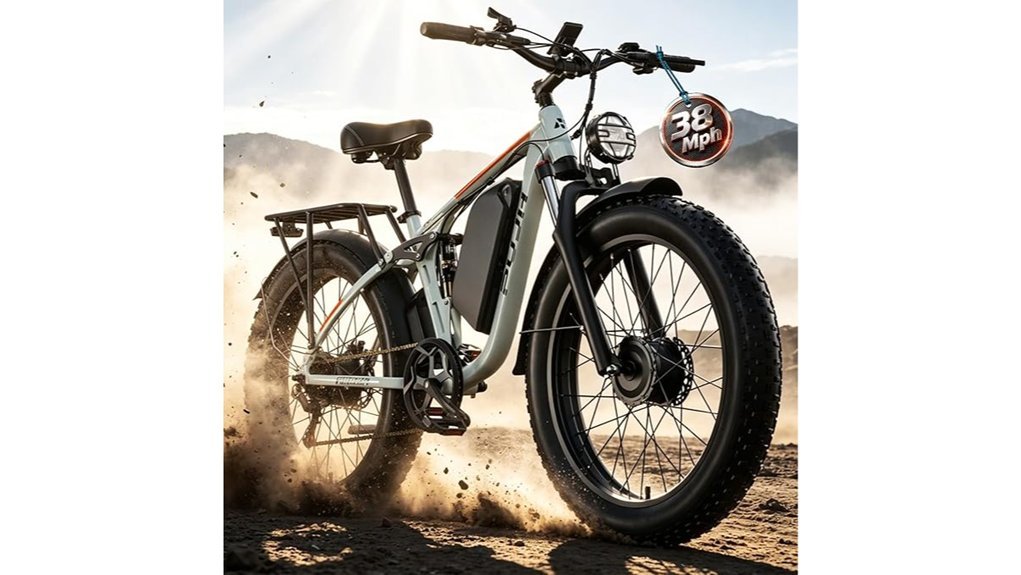
The Electric Bike 52V 25Ah 4000W Dual Motors is best suited to riders who need serious power for steep climbs, off-road trails, and heavy-load riding. Its dual brushless motors deliver strong torque, rapid acceleration, and top speeds near 38 MPH, while the 52V 25Ah battery supports an estimated 40 to 110 miles. A 7-level suspension system and 24×4.0 fat tires improve stability on rough terrain. Dual hydraulic brakes provide controlled stopping. Five riding modes, a 6061 aluminum frame, and useful commuting features add versatility.
Best For: Riders who want a powerful dual-motor electric bike for steep climbs, off-road riding, and carrying heavier loads.
Pros:
- Dual brushless motors deliver strong torque, fast acceleration, and up to around 38 MPH.
- 52V 25Ah battery offers an impressive estimated range of 40 to 110 miles.
- 7-level suspension, fat tires, and dual hydraulic brakes improve comfort, grip, and control.
Cons:
- Heavier and more complex than a standard single-motor e-bike.
- High power and speed may be more than casual commuters need.
- The large battery and performance components can make charging and maintenance less convenient.
ANCHEER Electric Mountain Bike 26″ 19.8MPH 48V Battery
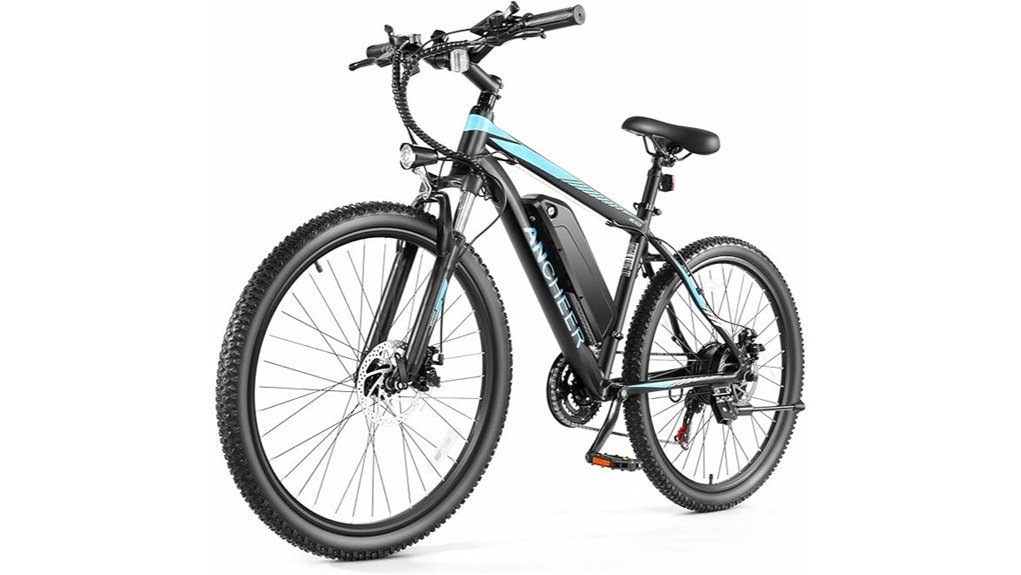
With a 48V battery and 500W motor, the ANCHEER suits riders wanting affordable trail-ready power. Its removable 374Wh battery supports up to 55 miles in low assist, while throttle mode reaches 19.8MPH for quicker progress on roads or trails. A 21-speed drivetrain, lockable front suspension, and front and rear disc brakes add control across mixed terrain. The LCD display reports speed, mileage, and gear position. Built with an aluminium alloy frame and carbon steel fork, it arrives 85% assembled. SGS certification to UL2849 and one-year parts support strengthen its practical appeal.
Best For: Riders who want an affordable, trail-ready electric mountain bike for commuting, light off-road riding, and easier hill climbing.
Pros:
- Up to 55 miles of range in low assist mode with a removable 48V battery
- 500W motor and throttle mode provide useful speed and flexibility on roads or trails
- 21-speed drivetrain, lockable suspension, and disc brakes improve control and comfort
Cons:
- 85% pre-assembled, so some setup is still required
- 19.8 MPH top speed may feel limited for riders seeking faster e-bike performance
- Battery range depends heavily on assist level, terrain, and rider weight
Electric Mountain Bike for Adults, 1000W 26″ Ebike
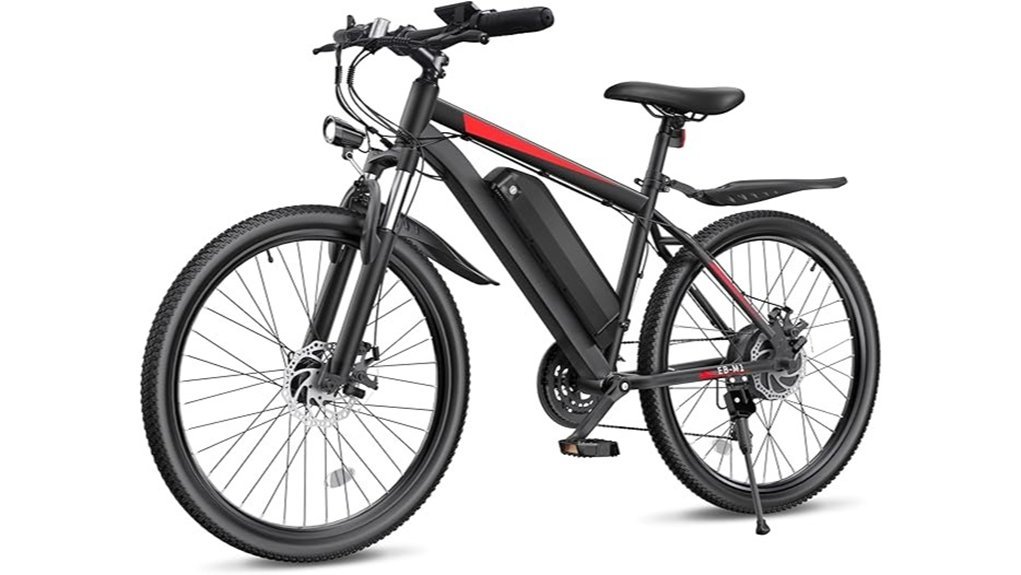
Built for adults seeking power and versatility, this 26″ electric mountain bike suits steep climbs and rough trails. Its 500W brushless motor delivers a 1000W peak and reaches 20 mph, making it practical for commutes, workouts, and outdoor rides. The removable 48V 374.4Wh battery is IPX5 waterproof and provides 25-30 miles in electric mode or 40-50 miles with pedal assist, recharging in 4-5 hours. Front suspension, a soft seat, fenders, and a bright headlight improve comfort and control. Five riding modes, UL certification, and simple assembly add confidence.
Best For: Adults who want a powerful, versatile 26″ electric mountain bike for commuting, workouts, and tackling steep or rough terrain.
Pros:
- 500W brushless motor with 1000W peak power for strong climbing and trail performance
- Removable waterproof battery offers solid range and fairly quick 4-5 hour charging
- Front suspension, soft seat, fenders, and bright headlight improve comfort and usability
Cons:
- Top speed is capped at 20 mph, which may feel limiting for riders wanting more speed
- 374.4Wh battery capacity may be modest for longer-distance riders
- Assembly is only 85% complete, so some final setup is still required
Jasion EB5 MAX Electric Mountain Bike (2000W, 48V 15Ah)
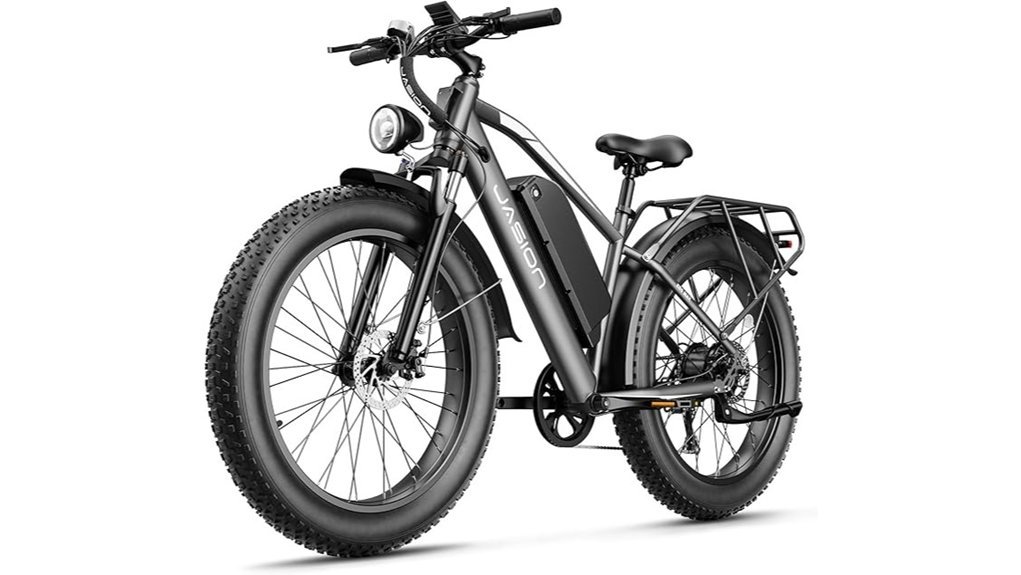
For riders seeking serious power, the Jasion EB5 MAX delivers a 2000W peak motor and 28+ MPH speed. It climbs steep inclines efficiently and provides brisk acceleration for demanding rides. The 48V 15Ah battery offers up to 65 miles with pedal assist or 35 miles on throttle, and it is removable and lockable. A color LCD, password-protected dashboard, and bright front and rear lights improve control and visibility. Pre-installed fenders, 26 x 4.0 puncture-resistant fat tires, lockable suspension, and 180 mm dual disc brakes support comfort, grip, and stopping power. It also includes a rear rack and requires no assembly.
Best For: Riders who want a powerful electric mountain bike for steep climbs, long-range commuting, and trail riding with added comfort and utility.
Pros:
- 2000W peak motor with 28+ MPH speed and strong hill-climbing performance
- Long-range 48V 15Ah removable, lockable battery with up to 65 miles of pedal-assist range
- Fat tires, lockable suspension, dual disc brakes, rear rack, and bright lights improve ride quality and practicality
Cons:
- High power and speed may be more than casual riders need
- Heavier build from fat tires and larger battery can make handling less nimble
- Throttle range is shorter than pedal-assist range, which may limit full-power rides
Electric Bike for Adults, 26″ 1000W Peak Motor
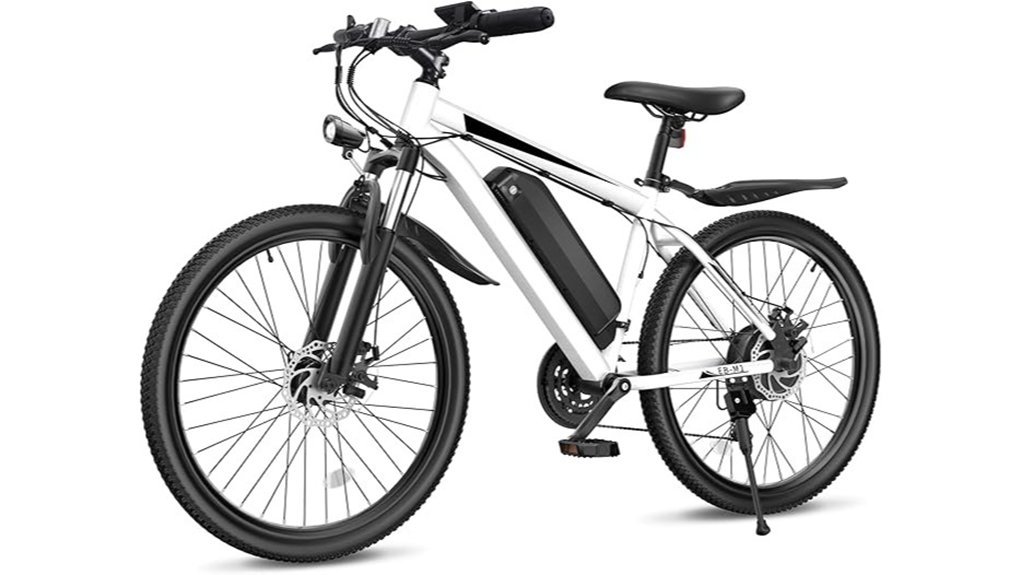
The 26-inch e-bike suits adults tackling steep climbs and rough UK trails. Its 500W brushless motor, peaking at 1000W, delivers strong acceleration and a 20mph top speed. A 48V 374.4Wh removable IPX5 battery supports 25-30 miles in electric mode or 40-50 miles with pedal assist, with a full charge taking about 4-5 hours. Front suspension, a soft seat, fenders, and a bright headlight improve comfort and control. An LCD display, five PAS levels, throttle, cruise, and booster modes add versatility. It arrives 85% assembled, with UL-certified safety and a 12-month warranty.
Best For: Adults who want a versatile 26-inch e-bike for commuting, hill climbing, and trail riding with strong assist, decent range, and easy setup.
Pros:
- Strong 500W motor with 1000W peak output for quick acceleration and steep climbs
- Long battery life with up to 40-50 miles in pedal-assist mode and a removable waterproof battery
- Comfort and safety features like front suspension, fenders, bright headlight, LCD display, and UL certification
Cons:
- 20mph top speed may feel limited for riders wanting a faster e-bike
- Range can drop depending on rider weight, terrain, and road conditions
- 85% assembly still requires some final setup before riding
PASELEC 1300W Fat Tire Electric Mountain Bike
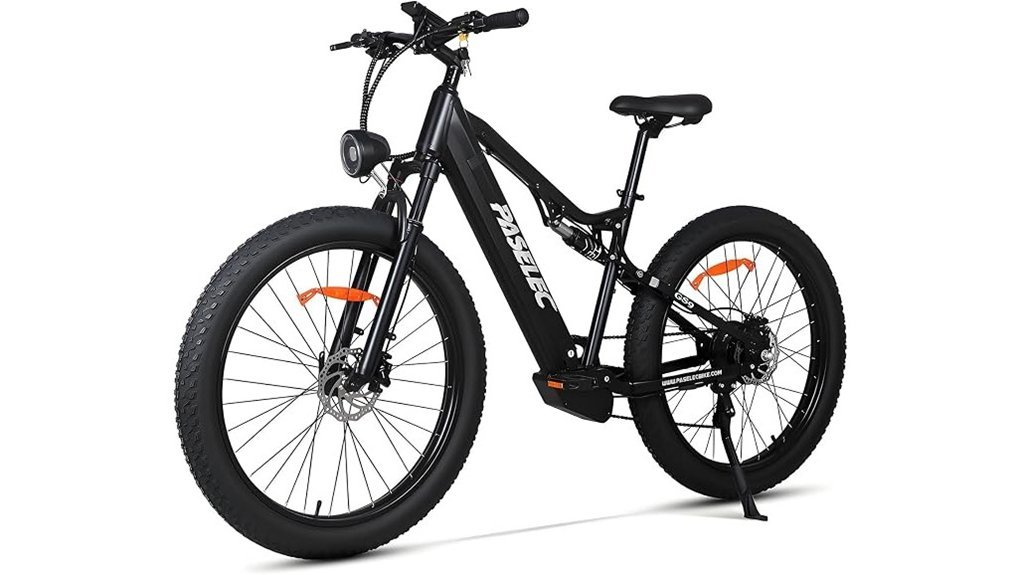
PASELEC’s 1300W fat tire e-mountain bike suits riders who want power and stability. Its peak brushless motor delivers 70N.M of torque, reaches 28 mph, and handles 30-degree climbs with ease. The 48V 15.6Ah removable battery charges in 4 to 6 hours and offers up to 70 miles of range. 27.5 x 3.0 puncture-resistant tires, dual hydraulic disc brakes, and dual suspension improve control on rough ground. Five ride modes, an 8-speed Shimano drivetrain, and an LCD display add flexibility. The aluminium frame supports 330 pounds, with 90% pre-assembly and a 12-month warranty.
Best For: Riders who want a powerful, stable fat-tire e-bike for commuting and off-road adventures on gravel, snow, roads, and trails.
Pros:
- Strong 1300W peak motor with 70 N.M torque and up to 28 mph top speed
- Long-range 48V 15.6Ah removable battery with up to 70 miles of range
- Dual hydraulic disc brakes, dual suspension, and puncture-resistant fat tires improve safety and control
Cons:
- At about 64 pounds, it is relatively heavy to lift or transport
- 90% pre-assembled still requires some setup before riding
- Maximum speed and power may be more than casual riders need
Factors to Consider When Choosing an Electric Mountain Bike UK
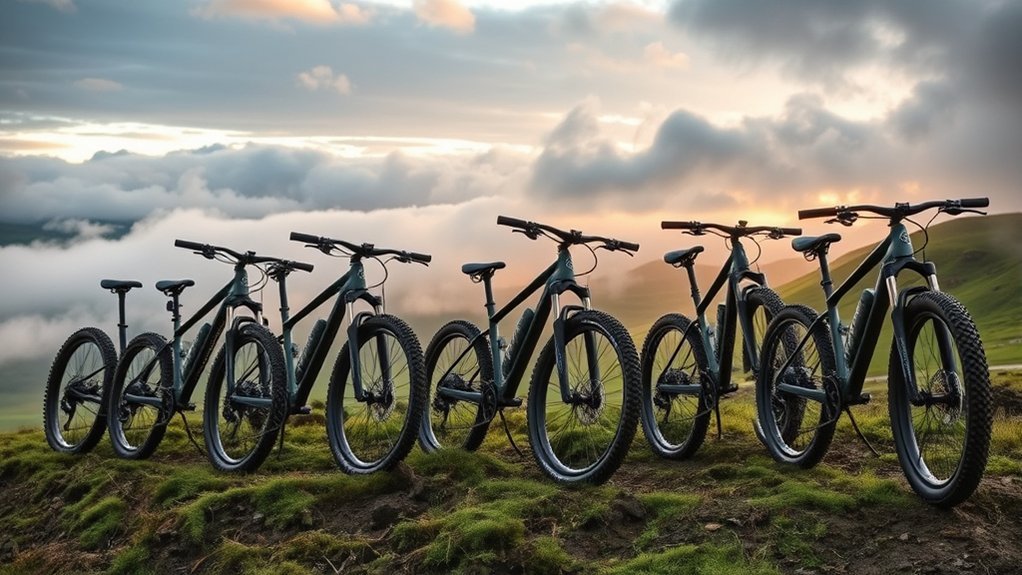
When choosing an electric mountain bike in the UK, motor power and battery range are often the first factors to assess, as they shape speed, hill-climbing ability, and riding distance. Suspension type, brake system, and tire size also matter because they influence comfort, control, and stability on varied terrain. A balanced choice depends on matching these features to the rider’s terrain and expected use.
Motor Power
Motor power is one of the most important factors to weigh when choosing an electric mountain bike in the UK, as it directly affects torque, climbing ability, and overall performance on rough terrain. Power is usually stated in watts: 500W is common on entry-level models, while 1000W to 4000W systems deliver stronger pull, higher speeds, and better load handling. Torque, measured in Newton-meters, matters just as much; around 160 Nm can provide quick acceleration and confident hill climbing. Peak figures, such as 1000W peak, show the short bursts available for rapid starts or clearing obstacles. The best choice depends on use. Commuting may suit moderate output, whereas demanding off-road riding benefits from higher-powered motors with greater versatility and responsiveness across varied conditions.
Battery Range
Battery range is the next major factor to weigh after motor output, because power is only useful if the bike can sustain it over the distance planned. Some electric mountain bikes claim up to 110 miles on a charge, although real-world distance depends on riding mode and conditions. Battery size, often shown in Ah or Wh, gives a useful guide; a 25Ah pack usually outlasts a 15Ah one. However, range falls with heavier riders, steep climbs, rough trails, and adverse weather. Assist settings also matter: pedal assist conserves more energy than full throttle. Charging time should not be ignored, either, since many batteries need four to six hours to refill. For riders planning longer outings, both capacity and recharge speed deserve close attention.
Suspension Type
Suspension type is a major factor in how an electric mountain bike feels on the trail, with dual suspension generally delivering better shock absorption and stability than a hardtail. This setup helps maintain control over rocky descents, roots, and uneven ground, while a hardtail can suit riders who prefer a simpler, lighter bike for less demanding routes. Adjustable suspension forks add versatility, letting the bike respond well to both rough trails and smoother roads. Suspension travel also matters: more travel improves comfort and impact absorption on aggressive off-road rides. A lockable fork can firm the front end for efficient pedalling on flatter sections, then open it up again for technical terrain. Weight should also be considered, since lighter builds often sacrifice plushness, while heavier systems usually feel more planted.
Brake System
After suspension and handling, the brake system is the next key area to assess on an electric mountain bike. Hydraulic disc brakes are generally preferred because they offer strong stopping power and dependable performance in varied weather conditions. Dual hydraulic setups can improve control and stability, which is valuable on steep descents or when carrying extra weight. Brake disc size also matters; rotors of 180 mm or more help manage heat better and reduce fade during long, demanding rides. Maintenance should be considered too, since hydraulic systems often need more specialised care than mechanical disc brakes. Finally, brake effectiveness is influenced by weight distribution and frame design, so a balanced bike will usually deliver more predictable braking and better rider control on technical terrain.
Tire Size
Tyres play a major role in how an electric mountain bike grips, handles, and feels on the trail. Larger tyre sizes create a bigger contact patch, which improves traction and stability across loose, wet, or uneven ground. This extra surface area can also help distribute weight more evenly, reducing slip on challenging terrain. Fat tyres, usually 4 to 5 inches wide, add noticeable comfort by absorbing shocks from rocks and roots, making them well suited to rough landscapes. A 26-inch tyre remains a common choice because it balances agility with stability, supporting both steep climbs and technical descents. Overall, tyre size shapes handling closely: larger diameters roll more smoothly over obstacles, while smaller options tend to feel more responsive and easier to manoeuvre.
Riding Modes
Riding modes shape how an electric mountain bike performs, from steady pedal assist for longer range to full throttle for extra power on steep climbs. Pedal assist is often the most versatile option, supporting natural input while conserving energy over mixed terrain. Throttle-only mode can deliver immediate acceleration without pedalling, which suits short bursts of power on gradients or technical sections. Pure pedal mode lets the bike function like a conventional mountain bike, useful when exercise is the priority. Some models add cruise control, helping maintain a consistent pace on long trails. Walking assist is also valuable when pushing the bike uphill or negotiating awkward sections. A broad spread of modes gives riders more control, allowing the effort level to match terrain, distance, and personal preference.
Frame Material
Frame material is another important factor in choosing an electric mountain bike, especially when comparing weight, handling, and long-term durability. Aluminum frames are lightweight, corrosion-resistant, and generally require less upkeep, making them a practical choice for many UK riders. Steel frames are stronger and more durable, but they add noticeable weight and can need more maintenance because of rust risk. Carbon fiber offers the best strength-to-weight ratio, delivering high performance and a very responsive feel, though usually at a higher price. Frame choice also affects stiffness and ride comfort. A sturdier structure can absorb shocks more effectively on rough trails, improving control and comfort. In practice, the best material depends on whether priority lies with low weight, durability, responsiveness, or long-term value.
Assembly Support
Assembly support is an important practical consideration when choosing an electric mountain bike in the UK, as many models arrive 85-90% pre-assembled and only need basic final setup before riding. Buyers should check whether the remaining work is manageable, especially if they have limited mechanical experience. Many brands supply user manuals, instructional videos, and step-by-step assembly guides that make the process more straightforward. Some also offer lifetime technical support, which can be useful if questions arise after delivery. A 12-month warranty for the motor and battery is common, adding reassurance after assembly. Reviewing support options before purchase helps reduce delays, avoid mistakes, and improve the ownership experience overall.
Frequently Asked Questions
Which UK Laws Apply to Electric Mountain Bikes?
UK electric mountain bikes are generally treated as EAPCs if the motor is limited to 250W, assistance cuts out at 15.5 mph, and pedals are used to move them. These can be ridden like ordinary bicycles. Anything more powerful or throttle-driven may be classed as a moped, requiring registration, insurance, a licence, and helmets. Local byelaws, highway rules, and product safety laws can also apply to ownership and use.
How Long Do Electric Mountain Bike Batteries Last?
Like a steady heartbeat, most electric mountain bike batteries last around 3 to 7 years, or roughly 500 to 1,000 charge cycles, before noticeable decline. Their lifespan depends on usage, terrain, storage, charging habits, and temperature. Regular full discharges shorten service life, while moderate charging and cool storage help preserve it. With careful care, some batteries remain reliable beyond that range, though capacity gradually fades over time.
Can I Ride an E-Mtb in the Rain?
Yes, an e-MTB can usually be ridden in the rain, as most are designed with weather-resistant components. However, caution remains important, since wet conditions reduce grip, braking performance, and visibility. The battery, motor, and display should be protected according to the manufacturer’s rating, and high-pressure washing should be avoided. After riding, the bike should be dried and checked for mud, water ingress, or worn drivetrain parts to prevent damage.
Are Electric Mountain Bikes Allowed on UK Trails?
Electric mountain bikes are allowed on many UK trails, but access depends on the trail type and local rules. On public roads and cycle paths, pedal-assist e-MTBs meeting legal limits are generally permitted. On bridleways, byways, and some forests, they are often allowed, while footpaths and restricted trails usually are not. Landowners, councils, and trail managers set specific rules, so checking signage and local access guidance is essential before riding.
How Often Should I Service an Electric Mountain Bike?
Like a cartographer checking a compass before a long climb, an electric mountain bike should be serviced every 6 to 12 months, depending on use. Heavy trail riding, wet conditions, or frequent battery drain can justify more frequent checks. A brief inspection after muddy rides is wise, while brakes, chain, drivetrain, tyres, and motor connections deserve professional attention at regular intervals to keep the machine dependable and safe.